Technology
-
KAIST solves oxygen problem blocking 3D memory for AI chips
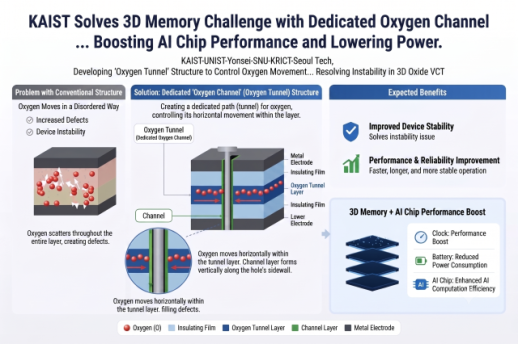
SEOUL, August 20 (AJP) - In a bid to stabilize memory stacked directly on top of artificial intelligence chips, a joint research team led by the Korea Advanced Institute of Science and Technology said Thursday it had developed an insulating film that steers oxygen atoms toward the parts of a vertical memory transistor that need them and away from the parts they damage, allowing the devices to achieve higher current flow and longer data retention. The device held its electrical cha
August 20, 2026
-
Researchers find technique to boost water-based battery performance
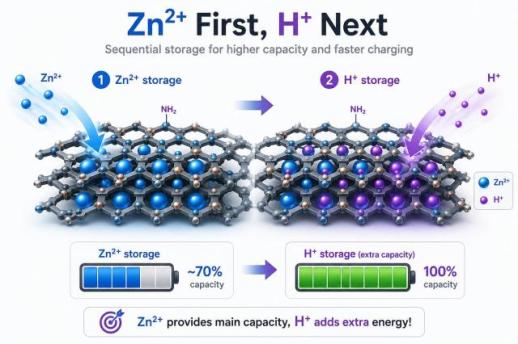
SEOUL, August 19 (AJP) - Developing safe and affordable batteries is essential for operating large-scale energy storage systems, but current water-based models struggle to store energy quickly and in large volumes. To resolve this, researchers have designed a new electrode material that increases both energy capacity and charging speeds by utilizing particles previously thought to degrade battery performance, the Korea Advanced Institute of Science and Technology said Wednesday. C
August 19, 2026
-
Kookmin University joins $1.2 mln project to develop vehicle security chip
SEOUL, August 19 (AJP) - A government-funded project has picked Kookmin University to build two of the main defenses for a new chip meant to keep hackers out of cars. The project runs from July this year to December 2030, four years and six months, on a budget of 10 billion won ($7.07 million). Kookmin University gets 1.7 billion won of that. The Ministry of Science and ICT and the National Research Foundation of Korea are paying for the work. Ranix, a Seoul chip design company
August 19, 2026
-
Brain tumor chip predicts which drug works for each patient
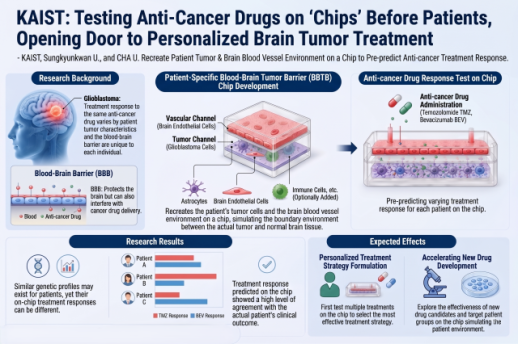
SEOUL, August 18 (AJP) - Patients with the deadliest form of brain cancer usually learn whether a drug works by taking it and waiting for the next scan. A South Korean research team has built a chip that can run that test first, outside the body, using cells taken from the patient's own tumor. The waiting is not free. Glioblastoma kills most patients within 15 months of diagnosis even after surgery, radiation and chemotherapy, and fewer than five percent live five years. Four
August 18, 2026
-
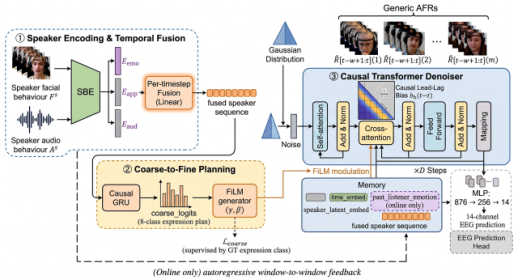
Sookmyung AI learns when to react, not just how
SEOUL, August 14 (AJP) - A research team at Sookmyung Women's University has built an artificial intelligence model that works out when a listener should react during a conversation, treating that as a separate question from what the reaction should look like. The model, named CaReDiff, took second place in the REACT26 Grand Challenge organized by ACM Multimedia, and the work has been accepted for an oral presentation session at the conference, which opens in Rio de Janeiro in
August 14, 2026
-
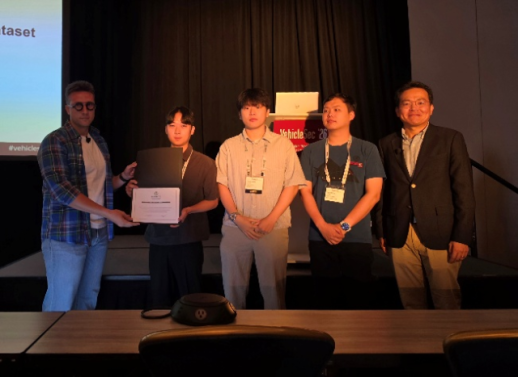
Researchers' hacking dataset wins best artifact award at VehicleSec
SEOUL, August 13 (AJP) - A record of real cyberattacks carried out on a moving car has won the best artifact award at the USENIX Symposium on Vehicle Security and Privacy, the main international meeting on the subject, held in Baltimore on Monday and Tuesday alongside the 35th USENIX Security Symposium, Kookmin University said Thursday. The winning submission cleared all three checks the symposium applies to research materials. Reviewers confirmed that the data was publicly availa
August 13, 2026
-
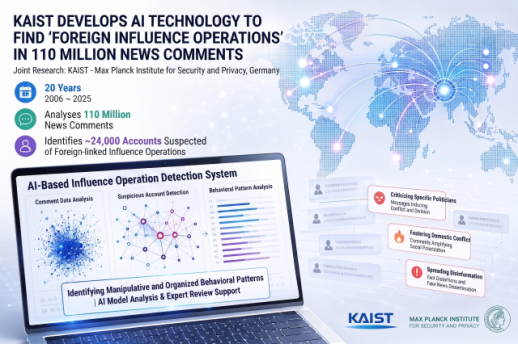
KAIST develops AI to detect foreign-linked online commenters
SEOUL, August 12 (AJP) - Software built to catch foreign influence campaigns online has long had the same blind spot. It can tell a platform which accounts look suspicious, but not why. A research team in South Korea says it has closed that gap with an artificial intelligence system that points to the exact words behind every judgment it makes, so a person can check the machine's reasoning instead of taking it on faith. Run across nearly two decades of comments on Naver News,
August 12, 2026
-
Kookmin shrinks self-driving AI to run inside cars
SEOUL, August 11 (AJP) - A self-driving car has to work out where every other vehicle, pedestrian and obstacle around it sits in three-dimensional space, and it has to do so many times a second on a computer bolted inside the car rather than in a data center. A South Korean university team says it has found a way to shrink the software that does the recognizing without losing accuracy. Kookmin University said Tuesday that two master's students in its artificial intelligence an
August 11, 2026
-
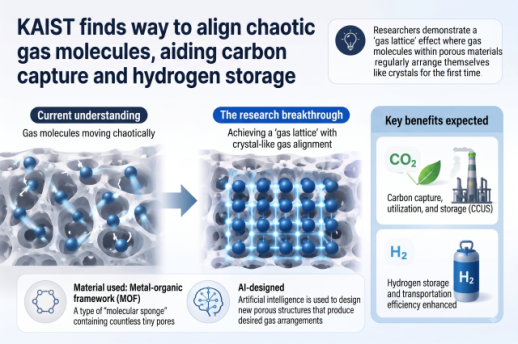
KAIST lines up gas atoms to pull gas mixtures apart
SEOUL, August 11 (AJP) - A South Korean research team has shown that gas atoms trapped inside a porous solid can be made to line up in a regular pattern, the way atoms line up in a crystal, instead of scattering wherever they land. The finding, so far demonstrated only in computer simulations, points to a different way of designing the materials that separate one gas from another. Korea Advanced Institute of Science and Technology said Tuesday that a team led by Kim Ji-han in its
August 11, 2026
-
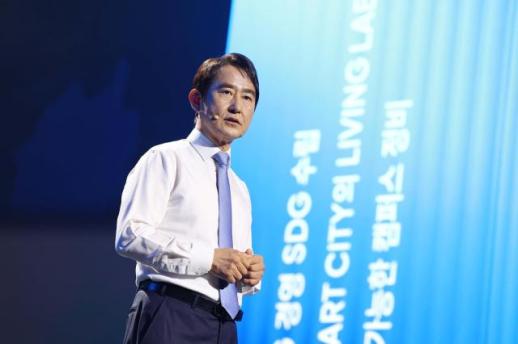
KAIST president unveils AI native campus vision
SEOUL, August 10 (AJP) - Artificial intelligence will run through teaching, research, administration and campus energy systems at the Korea Advanced Institute of Science and Technology under a plan its new president set out Monday, one that treats AI as a shared tool for every field of study rather than the property of specialists. Bae Choong-sik presented the plan at his inauguration as the 18th president of the Korea Advanced Institute of Science and Technology (KAIST), held at
August 10, 2026

