Technology
-
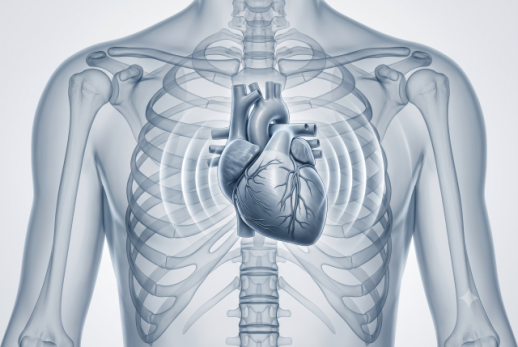
Researchers develop embryo-like stem cell heart model
SEOUL, August 25 (AJP) - By easing off the chemical signals normally used to force stem cells into heart tissue, researchers at Sookmyung Women's University and Sungkyunkwan University have grown a model that lengthens and bends on its own, reproducing a stage of human heart development that has been almost impossible to observe. Congenital heart disease is the most common birth defect in the world, occurring in about nine of every 1,000 live births since the mid-1990s
August 25, 2026
-
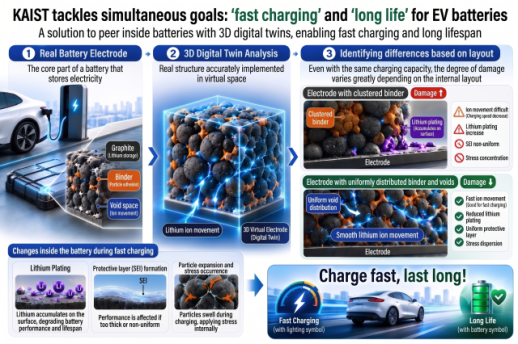
KAIST develops technique to detect fast charging damage
SEOUL, August 24 (AJP) - Fast charging can damage an electric vehicle battery in ways that standard capacity measurements do not reveal, researchers at the Korea Advanced Institute of Science and Technology said Monday, after building a three-dimensional virtual replica of the interior of a commercial lithium-ion cell. In a graphite electrode 50 micrometers thick, slightly less than the width of a human hair, shifting the adhesive that binds the electrode together from an even spr
August 24, 2026
-
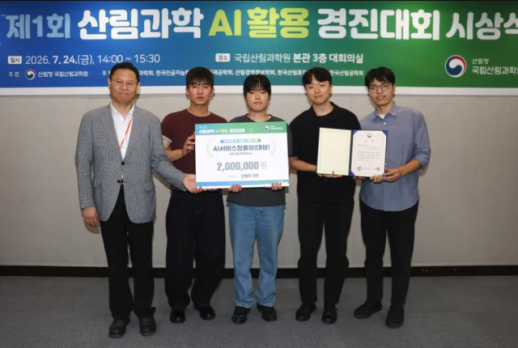
Kookmin students win forest management AI contest
SEOUL, August 24 (AJP) - A team of students from Kookmin University has won the top prize at South Korea's inaugural forest artificial intelligence contest by developing a tool that helps private landowners predict 30 years of revenue and carbon absorption. The web service, named MOFOM, addresses a longstanding challenge in South Korean forestry by democratizing access to fragmented government data. By simply entering a land parcel number, forest owners can instantly view econ
August 24, 2026
-
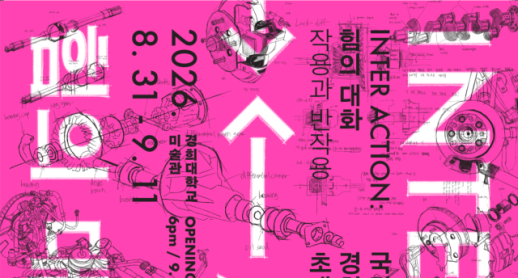
Kookmin engineering students exhibit 10 years of car drawings
SEOUL, August 21 (AJP) - Engineering students at a Seoul university have spent a decade learning to draw the machines they study, and the results are on public view this month and next in two exhibitions outside their own campus. The show is called The Drawing, and it runs at the BODA Gallery at Incheon Academy of Science and Arts through Aug. 27 before moving to the Kyung Hee University Museum of Art, where it stays through Sept. 11. Kookmin University is presenting it as part of
August 21, 2026
-
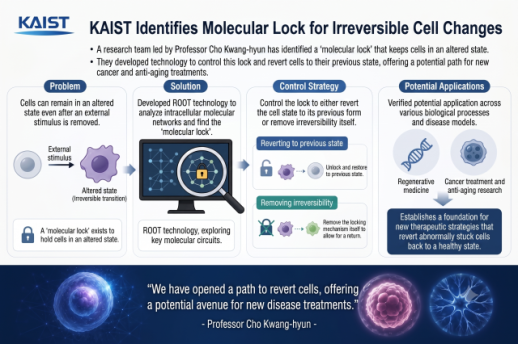
KAIST finds molecular lock that traps cells in cancer-like states
SEOUL, August 21 (AJP) - A cell that turns cancer-like tends to stay that way long after whatever triggered the change has gone. Researchers in South Korea say they have identified which molecular circuits hold it there and have shown in computer models how to release them. The method is called ROOT, short for Revelation Of the Original circuit of irreversible Transition. It was developed by a team led by Cho Kwang-hyun, a professor in the Department of Bio and Brain Engineering a
August 21, 2026
-
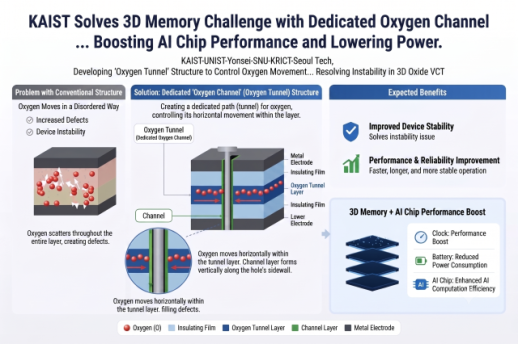
KAIST solves oxygen problem blocking 3D memory for AI chips
SEOUL, August 20 (AJP) - In a bid to stabilize memory stacked directly on top of artificial intelligence chips, a joint research team led by the Korea Advanced Institute of Science and Technology said Thursday it had developed an insulating film that steers oxygen atoms toward the parts of a vertical memory transistor that need them and away from the parts they damage, allowing the devices to achieve higher current flow and longer data retention. The device held its electrical cha
August 20, 2026
-
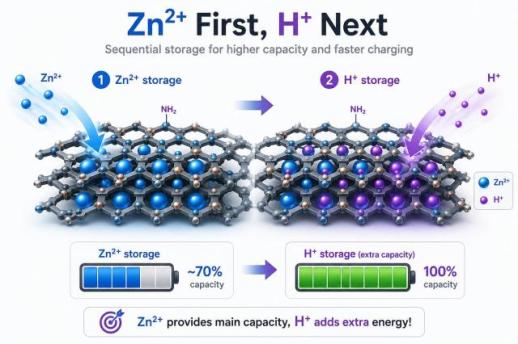
Researchers find technique to boost water-based battery performance
SEOUL, August 19 (AJP) - Developing safe and affordable batteries is essential for operating large-scale energy storage systems, but current water-based models struggle to store energy quickly and in large volumes. To resolve this, researchers have designed a new electrode material that increases both energy capacity and charging speeds by utilizing particles previously thought to degrade battery performance, the Korea Advanced Institute of Science and Technology said Wednesday. C
August 19, 2026
-
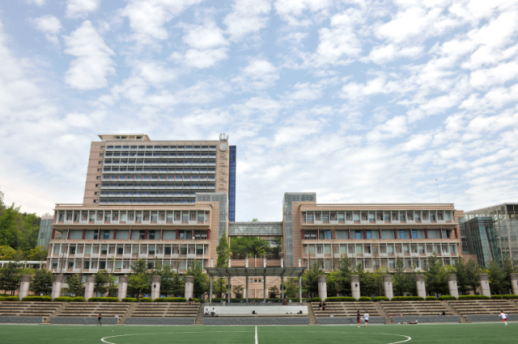
Kookmin University joins $1.2 mln project to develop vehicle security chip
SEOUL, August 19 (AJP) - A government-funded project has picked Kookmin University to build two of the main defenses for a new chip meant to keep hackers out of cars. The project runs from July this year to December 2030, four years and six months, on a budget of 10 billion won ($7.07 million). Kookmin University gets 1.7 billion won of that. The Ministry of Science and ICT and the National Research Foundation of Korea are paying for the work. Ranix, a Seoul chip design company
August 19, 2026
-
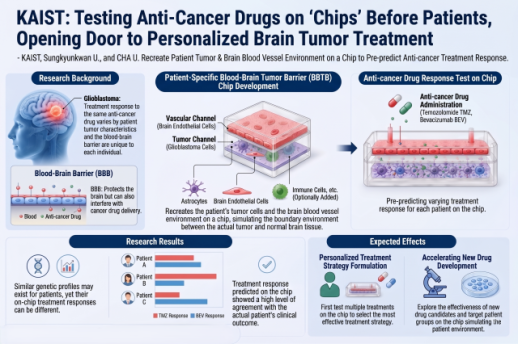
Brain tumor chip predicts which drug works for each patient
SEOUL, August 18 (AJP) - Patients with the deadliest form of brain cancer usually learn whether a drug works by taking it and waiting for the next scan. A South Korean research team has built a chip that can run that test first, outside the body, using cells taken from the patient's own tumor. The waiting is not free. Glioblastoma kills most patients within 15 months of diagnosis even after surgery, radiation and chemotherapy, and fewer than five percent live five years. Four
August 18, 2026
-
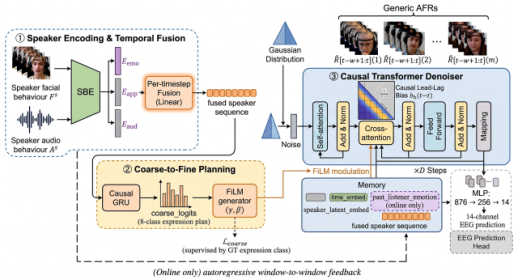
Sookmyung AI learns when to react, not just how
SEOUL, August 14 (AJP) - A research team at Sookmyung Women's University has built an artificial intelligence model that works out when a listener should react during a conversation, treating that as a separate question from what the reaction should look like. The model, named CaReDiff, took second place in the REACT26 Grand Challenge organized by ACM Multimedia, and the work has been accepted for an oral presentation session at the conference, which opens in Rio de Janeiro in
August 14, 2026

