

A file picture shows a U.S. RQ-4 Global Hawk surveillance plane in the air. [Reuters/Yonhap News Photo]
SEOUL -- South Korea has set up a high-altitude reconnaissance squadron with RQ-4 Global Hawk unmanned aerial vehicles to support ground troop actions by scanning and tracking the movement of enemy missiles and troops movements.
The creation of South Korea's Global Hawk squadron was confirmed on Friday at a meeting of military officials, chaired by Defense Minister Jeong Kyeong-doo, the defense ministry said. The first of Northrop Grumman's four RQ-4Bs South Korea has agreed to purchase was delivered on December 13. Three more RQ-4Bs are to be delivered in the first half of this year.
Global Hawk, a high-altitude remotely-piloted surveillance aircraft, provides a broad overview and systematic surveillance. RQ-4Bs will be run with mid-altitude unmanned air vehicles. Currently, South Korean troops operate seven types of UAVs. South Korea has bolstered intelligence capabilities by purchasing EA-18G Growlers and E-737 early warning aircraft.
Air force officials believe RQ-4s will enhance South Korea's operational capabilities as they will work together with advanced stealth jets. Pyongyang has taken a fussy attitude to Seoul's purchase of high-tech and advanced weaponry. South Korea would purchase 40 F-35As, with 13 already delivered.

Copyright ⓒ Aju Press All rights reserved.
Related News
-
 KAI Advances Technology for Direct Control of Drones from Manned Fighters
Korea Aerospace Industries (KAI) is accelerating its efforts to secure technology for directly controlling unmanned aerial vehicles (UAVs) from manned fighter jets, aiming to penetrate the future aerial combat market.According to industry sources, KAI will conduct the second formation flight of the FA-50 light attack aircraft and the multipurpose UAV AAP in December over the aviation center in Goheung, South Jeolla Province. The AAP is a high-speed prototype UAV weighing 150 kg that KAI is developing in-house.The key focus of this formation flight is to validate the technology for assigning and controlling missions directly from the FA-50 in flight, moving away from traditional ground control to direct collaboration with manned aircraft.A KAI official stated, "The pilot in the back seat of the FA-50 will demonstrate the ability to send flight commands directly to the UAV. Ultimately, our goal is to enhance performance so that artificial intelligence (AI) can set targets and execute missions tailored to the manned aircraft."KAI successfully completed the first formation flight of the FA-50 and AAP earlier this month, where the UAV was controlled from the ground using an AI program. KAI's focus on the Manned-Unmanned Teaming (MUM-T) initiative is part of its strategy to adapt to changes in the future fighter market and secure new revenue streams from its existing military aircraft business.Following the ongoing tests with the FA-50, KAI plans to conduct formation flights with the Korean Fighter eXperimental (KF-21). The company aims to increase the AAP's maximum speed from 790 km/h to 920 km/h (Mach 0.75) to ensure smooth collaboration with manned fighters. KAI is also enhancing the AAP's autonomous flight capabilities through its AI pilot, 'KAI-ROT.'The development of manned-unmanned teaming systems led by fighter jets is a global trend. European aerospace manufacturer Airbus is collaborating with U.S. defense contractor Kratos to jointly develop the unmanned fighter 'Valkyrie,' targeting operational deployment with the German Air Force by 2029. The U.S. Air Force has selected Anduril as a developer for Collaborative Combat Aircraft (CCA) and successfully tested a scenario where an F-22 pilot directed missions to an unmanned fighter during flight earlier this month.Market research firm Fortune Business Insights projects that the global next-generation autonomous combat aircraft market will expand from $2.68 billion last year to $23.98 billion (approximately 33.6 trillion won) by 2034.Lee Jun-gon, an adjunct professor at Konkuk University’s Department of Defense Acquisition, noted, "In the future, the number of manned fighters will gradually decrease, while UAVs will evolve to perform various missions, including reconnaissance and combat. For KAI, which has secured fighter manufacturing capabilities, the ability to integrate UAVs will become a competitive advantage going forward."* This article has been translated by AI.
-
 Hanwha eyes third Poland K9 deal after $1 bn quarterly profit milestone
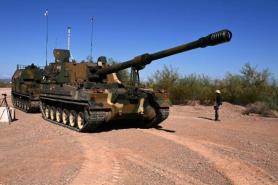
Hanwha Aerospace’s K9 self-propelled howitzer is seen in this undated file photo. Courtesy of Hanwha Aerospace SEOUL, July 31 (AJP) - South Korea's Hanwha Aerospace remained bullish on the second half after nearly reaching the $1 billion milestone in quarterly operating profit, supported by a record order backlog, mass production under Poland's second K9 execution contract, deliveries to Egypt and Australia, and negotiations for a third K9 deal with Warsaw. The company reported second-quarter operating profit of 1.37 trillion won ($951 million), up 59 percent from a year earlier, on consolidated sales of 9.29 trillion won, which rose 47 percent. The results were driven by steady deliveries from its land systems business in domestic and overseas markets, alongside strong contributions from affiliates Hanwha Ocean and Hanwha Systems. Hanwha Aerospace's land systems division generated 2.11 trillion won in sales and 533 billion won in operating profit, up 19 percent and 2 percent, respectively. Domestic revenue benefited from increased production of key weapons systems including the Chunho wheeled anti-aircraft gun system and Chungum anti-tank guided missile, while exports to Poland, Egypt and the Middle East proceeded as scheduled. The division's order backlog expanded to 38.3 trillion won at the end of June after securing additional export contracts, including a 940 billion won K9 self-propelled howitzer deal with Finland in April and an additional Chunmoo multiple rocket launcher contract with Estonia in May. A screen capture from Hanwha Aerospace’s second-quarter 2026 earnings presentation. During a conference call, executives said negotiations over a third K9 execution contract with Poland are progressing, with localization forming the centerpiece of the proposed agreement. "The third K9 execution contract is based on localization, and we are currently in detailed discussions," a company official said. "We expect to reach a conclusion as early as this year." The company also said construction has begun on its Chunmoo missile joint venture in Poland, with the factory scheduled for completion in 2029 and production to begin in 2030. In the United States, Hanwha Aerospace said it is awaiting the selection of a preferred bidder for the U.S. Army's next-generation self-propelled howitzer program, which could be announced around August following delays. The company is also close to finalizing the location of a planned U.S. ammunition manufacturing facility as part of its localization strategy. "We are at the stage just before finalizing the site for localization investment," the official said. "We hope to reach a conclusion in the second half and lead it to a contract." Hanwha Aerospace’s Chunmoo multiple rocket launcher system is seen in this undated file photo. Courtesy of Hanwha Aerospace Management said defense demand remains robust across Europe, the Middle East, Asia and the Americas. Rather than weakening exports, the growing emphasis on local production is becoming part of the company's strategy to secure larger overseas contracts. Hanwha Aerospace pointed to its localization projects—including the Chunmoo missile venture in Poland, K9 and Redback production in Australia, and industrial cooperation in Egypt—as examples of adapting to customers' procurement requirements. In the Middle East, executives said heightened geopolitical tensions continue to support demand for air-defense systems, although contract procedures could take longer amid regional uncertainty. They added that stronger demand for air-defense systems is complementing rather than replacing demand for traditional land systems. The aerospace division posted 760 billion won in sales and 37 billion won in operating profit, with revenue rising 17 percent from a year earlier as increased military programs helped the business return to profitability. The company also highlighted aircraft engines as its next strategic growth area. Earlier this month, Hanwha Aerospace and the Agency for Defense Development unveiled two domestically developed unmanned-aircraft engine prototypes—a 5,500-pound-class turbofan for stealth UAVs and a 1,400-horsepower turboprop for medium-altitude reconnaissance drones—and began ground testing. The program marks a technological shift from missile propulsion systems, which operate for minutes, to aircraft engines designed to run reliably for thousands of hours. Hanwha Aerospace said it intends to leverage the project to participate in future government programs developing indigenous 10,000-pound-class turbofan engines and other advanced aircraft propulsion systems. Shares of Hanwha Aerospace closed 6.0 percent higher at 917,000 won on Friday.
-
 Kazakhstan and China target $100bn in trade
Kazakhstan Deputy Prime Minister and Minister of National Economy Serik Zhumangarin (left) shakes hands with Chinese Vice Premier Ding Xuexiang (right) on the sidelines of the 9th China-Eurasia Expo in Urumqi on June 25, 2026. Courtesy of Kazakhstan Prime Minister's Office SEOUL, June 26 (AJP) - More than eight in every 10 containers shipped overland from China to Europe pass through Kazakhstan. That single statistic, more than any diplomatic formula, explains why the two countries spent this week in Urumqi pressing to deepen a commercial relationship already generating record numbers. On the sidelines of the 9th China-Eurasia Expo on Thursday (local time), Kazakhstan's Deputy Prime Minister and Minister of National Economy Serik Zhumangarin met with Ding Xuexiang, Vice Premier of the State Council of China. The talks, according to Kazakhstan's state-operated news agency Qazinform, covered trade expansion, joint investment, and transport infrastructure along the China-to-Europe corridor. Bilateral trade hit a record $48.7 billion in 2025. In the first five months of 2026, trade reached $22 billion, a 27 percent rise compared to the same period last year. Officials forecast the full-year total will exceed $50 billion. Zhumangarin set a more ambitious horizon. "Our main objective is to achieve bilateral trade of $100 billion in the near future," he said, calling for accelerated approval of a Trade and Economic Cooperation Program and Roadmap for 2027 to 2030. More than half of all bilateral trade flows through China's Xinjiang Uyghur Autonomous Region, the Kazakhstani government report noted, making it the primary commercial gateway between the two countries. Kazakhstan is expanding its border-crossing capacity. With the construction of a new crossing at Bakhty-Ayagoz, the combined capacity of three crossings on the Kazakhstan-China border will reach 100 million tons of cargo per year. The Chinese side confirmed it was ready to jointly build a third railway crossing, which officials said would improve the reliability and security of international transport routes. China has invested approximately $30 billion in Kazakhstan since the country's independence, making it one of the largest foreign investors in the Kazakhstani economy. Zhumangarin invited Chinese businesses to participate in projects centered on high value-added production, including deep processing of wheat and corn, full-cycle metallurgical production, and manufacturing of agrochemicals and unmanned aerial vehicles (UAVs). "Today, the exhibition featured advanced achievements in agrochemicals and drone manufacturing," he said. "We would like to invite these producers and investors to Kazakhstan. We are ready to provide all the necessary conditions for the localization of production." Ding reaffirmed China's interest in expanding cooperation with Kazakhstan in the digital economy, artificial intelligence, energy, and navigation technologies. Agricultural trade between the two countries has reached two billion US dollars. China has approved imports of 34 categories of Kazakhstani agricultural products. Nine more categories, including chilled meat, are currently under review.