

[Courtesy of DRX]
DRX competes in international tournaments of League of Legends, the world's most popular online game with more than 27 million daily players. The team consists of six pro gamers including Doran, Deft and Quad. DRX is well known for its stable and powerful play.
Kakao said in a statement on Tuesday that through the sponsorship deal, DRX members will bear characterized image of RYAN, the iconic mascot of Kakao's character franchise Kakao Friends, and other franchise characters will be used. Details of the sponsorship were not disclosed.
"With Kakao Friends' characters, we will expand the influence of Hallyu (Korean cultural wave) by creating content all global fans can enjoy and nurture the growth of an esports ecosystem," DRX CEO Choi Sang-in was quoted as saying.
Park Sae-jin
Experienced journalist and editor at AJU PRESS specializing in multilingual news. I cover international diplomacy, geolpolitics, and policy, consistently delivering highly accurate, compelling reporting for a worldwide audience.
Copyright ⓒ Aju Press All rights reserved.
Related News
-
 IMS Mobility CEO Jo Young-tak Acquitted in Kim Geon-hee Scandal
Jo Young-tak, CEO of IMS Mobility, has been acquitted of charges related to the so-called "Kim Geon-hee scandal," which involved allegations of embezzlement and breach of trust.On November 12, the Supreme Court's second division, led by Justice Kwon Young-jun, upheld the lower court's ruling regarding charges against Jo, including embezzlement and breach of trust under the Specific Economic Crimes Act.The court stated, "There is no error in the lower court's interpretation of the law regarding the establishment of breach of trust under the Specific Economic Crimes Act or the investigation targets under the Special Prosecutor Act."Jo was accused of misappropriating part of 18.4 billion won in investments raised from various companies, including Kakao Mobility, to purchase company shares and to pay 3.24 billion won to two subsidiaries that were in a state of complete capital erosion, causing financial harm to the company.Additionally, he was charged with embezzling 2.43 billion won by receiving funds under the guise of a loan from stock sale proceeds to cover personal debts, and for falsifying financial statements to reflect cash contributions during a capital increase.He was also accused of providing 84 million won in cash to a journalist in exchange for favorable coverage and instructing an employee to hide a PC in anticipation of a search by the special prosecutor's team led by Min Jung-ki.The first and second trial courts ruled that the allocation of investment funds to subsidiaries fell within reasonable management decisions made with prior consent from existing investors and board resolutions. They also noted that there were no separate recommendations for amendments from external auditors regarding the financial statements, leading to acquittals on charges of breach of trust, violation of the External Audit Act, and evidence concealment.Regarding the charges of embezzlement and breach of trust, the courts determined that they were not directly related to the allegations concerning Kim Geon-hee's investment funds and thus did not fall under the special prosecutor's investigation. They also ruled that the procedures for independently investigating and prosecuting the case without referral were invalid, resulting in the dismissal of charges.The acquittal of Min Kyung-min, CEO of Oasis Equity Partners, on breach of trust charges was also confirmed. The dismissal of charges against Kim Ye-seong's spouse, Jeong Mo, who was indicted for embezzlement, and former economic journalist Kang Mo, who faced breach of trust charges, was upheld.However, an IMS Mobility director, who was indicted for concealing evidence before a search, had his fine of 7 million won confirmed by the second trial court.Previously, the special prosecutor's office investigated whether Kim Geon-hee exerted influence during the 18.4 billion won investment process involving IMS Mobility, co-managed by Kim and Jo, but failed to establish a direct connection between the two. Kim was also acquitted of related charges by the Supreme Court in July, while the police special investigation team referred Jo and Kim to the prosecution in June for fraud related to deceiving investment companies to secure large sums of investment.* This article has been translated by AI.
-
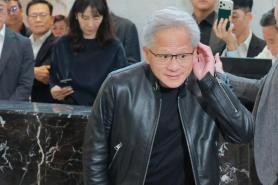 Korea gets a double shot of sobriety as AI saga adds romance-spy drama
Nvidia CEO Jensen Huang listens to a question from reporters during a briefing with SK Group Chairman Chey Tae-won at the SK Seorin Building in Jongno, central Seoul, June 8, 2026. AJP Yoo Dae-gil SEOUL, November 11 (AJP) - The AI saga has suddenly taken a romance-and-espionage turn, with its poster child Nvidia's Jensen Huang at the center and his Asian chipmaking buddies unwillingly drawn into the drama. In Taiwan, disbelief has greeted the controversy surrounding one of its most celebrated emigrants. Beijing has rejected the espionage allegations as a romantic affair becomes a national security issue ahead of an expected Trump-Xi meeting on the sidelines of APEC in Shenzhen next week. South Korea, the primary supplier of memory chips powering Nvidia's AI empire, is absorbing a double blow — the U.S. midterm results and the eruption of the scandal. Huang's confession compounded the pressure on Seoul's chip-heavy KOSPI, which has lost more than 12 percent since the Democratic election victories raised concerns about tighter curbs on data center construction in Republican strongholds such as Texas and Georgia. "I owe my family and all of you an apology," Nvidia's founder and chief executive wrote to employees on Nov. 8, admitting he had been unfaithful to his wife. Nvidia's board opened an independent investigation the same day into reports that he had been the target of a foreign intelligence effort. The reports center on Alice Huang, no relation, a former executive at Megaspeed, a Singapore-based buyer of Nvidia chips. U.S. officials believe she was recruited by China's Ministry of State Security, the New York Times and the Financial Times reported. No criminal charges against either have been reported, and Nvidia's board said it had "no reason to believe" that company secrets or U.S. national security had been compromised. The fallout reached Seoul before Nvidia's latest gathering here. Madison Huang, his daughter and a senior director at the company, canceled her trip to Nvidia AI Day Seoul a day before she was due to arrive. A planned meeting with Deputy Prime Minister and Science Minister Bae Kyung-hoon was also called off. For Korea, the stakes extend well beyond a canceled visit. With its chips, data centers, cars and robots increasingly wired into one foreign company, the question is how much of that relationship runs through one man. The business-as-usual facade was maintained. Launching AI Day at Seoul's COEX on Monday sans the Huangs, Nvidia screened a film that moved through Korea's chips, cars and ships before cutting to a StarCraft match under the caption: "This is the beginning of our friendship with Korea." Edited and compiled by AJP. Graphics AI Assisted In 1996, three years after Huang co-founded Nvidia, a letter arrived from someone he had never met: Samsung Chairman Lee Kun-hee. Lee wanted to connect Korean homes to broadband, build an industry around video games and stage a gaming Olympics. "In 1996, I received a letter from Korea," Huang recalled at a GeForce Gamer Festival in Seoul on Oct. 30, 2025, explaining what brought him to the country for the first time. Beside him stood Lee's son, Samsung Electronics Chairman Lee Jae-yong. Huang arrived in a country about to fall for StarCraft. Released in 1998, the game helped fuel the proliferation of internet cafes known as PC bangs, which numbered about 20,000 by the early 2000s. Many of their computers were assembled in Seoul's Yongsan Electronics Market, where Huang walked the aisles handing out business cards and pitching graphics cards. The processors built to render games later became engines of the AI boom. The salesman from Yongsan now leads the company at the center of it. Nvidia designs its chips but owns no fabrication plants. Samsung Electronics and SK hynix supply the high-bandwidth memory that sits alongside its AI processors, making Korea essential to the hardware behind its computing power. The relationship also runs in the other direction. A day after Huang shared fried chicken and beer with Lee Jae-yong and Hyundai Motor Group Executive Chair Chung Euisun in Seoul last year, Nvidia announced plans to supply more than 260,000 graphics processing units to the Korean government, Samsung, SK, Hyundai and Naver. He returned in June for grilled pork belly with SK Group Chairman Chey Tae-won, LG Group Chairman Koo Kwang-mo and Naver founder Lee Hae-jin. "Korea is in a very unique position in the world of physical AI," he told reporters in Seoul on June 8, describing a country equipped to support all five layers of the AI industry. The ambitions grew after he left. In July, SK Group and Nvidia signed letters of intent for an initiative they valued at more than $500 billion, spanning AI infrastructure and next-generation memory. Naver also unveiled plans for a $10 billion AI factory with Nvidia and Brookfield. On Nov. 6, Nvidia completed a $1 billion investment for a 4.13 percent stake in Naver. These ties now extend through equity ownership, procurement and engineering programs. Some projects remain statements of intent, but the relationship has acquired a structure beyond Huang's personal diplomacy. The government buys its Nvidia GPUs through server vendors rather than directly from Nvidia, Ryu Je-myung, second vice minister of science and ICT, told a National Assembly budget committee on Nov. 9. He said he expected contracted deliveries to remain on schedule. Nvidia CEO Jensen Huang throws the ceremonial first pitch before a KBO League game between the Doosan Bears and the Kiwoom Heroes at Jamsil Baseball Stadium in Seoul, June 7, 2026. AJP Yoo Dae-gil With SK Telecom and chip startup Rebellions, Nvidia announced plans to integrate Korean-designed AI processors into Nvidia's computing infrastructure. It also signed an agreement with Kakao Mobility on self-driving technology for Kia vehicles. Nvidia Korea, led by Jeong So-young, ran the two-day event as planned. Jeong told a physical AI forum in Seoul last month that Korea could assume a role in the supply chain for robots and other physical AI systems comparable to Taiwan's position in data centers. That prospect rests on Korea's manufacturing base and Nvidia's technology. Realizing it will require years of cooperation across companies. For now, Huang remains at the helm. Nvidia said he would continue as chief executive during the investigation, while its board expressed confidence in "Jensen and his leadership team." The independent directors on Tuesday retained Joon H. Kim, a former acting U.S. attorney in Manhattan, and his firm, Wachtell, Lipton, Rosen & Katz, to conduct the inquiry. The scrutiny is widening. President Donald Trump said the FBI was also examining the matter, and a shareholder has filed a proposed class action in federal court in San Jose, California. House Foreign Affairs Committee Chairman Brian Mast said he was prepared to subpoena Huang if he did not respond by Wednesday to a request for a closed-door briefing. For Korea, the uncertainty centers on the man who has made a complex industrial partnership feel personal. Huang, 63, has led Nvidia since its founding in 1993, and the board has not publicly named a successor. His appearances in Korea have carried a familiarity rarely associated with the head of a foreign technology supplier: handing out fried chicken outside a Gangnam restaurant and snacks labeled "HBM Chips" in Hongdae. Such gestures helped turn commercial interdependence into a public narrative of friendship. They also made Huang unusually difficult to separate from the company he represents. "Even if a personal risk arises for Jensen, Nvidia's technology, its chip ecosystem and its market dominance do not disappear overnight," said Kim Dae-jong, a business professor at Sejong University. Edited and compiled by AJP. Graphics AI Assisted "But at a founder-centered company, decision-making and outside trust are concentrated in one person, so growing leadership uncertainty can affect investment, contracts and technology cooperation, not just the share price," he said. Kim said Samsung Electronics and SK hynix, both of which count Nvidia as a key customer, should reduce their reliance on a single company and a single person. "Companies should do business by trusting systems and contracts, not people," he said. Thirty years after a letter from Seoul brought Huang to Korea, the deals he helped seal bear company names. The photographs still carry his face. AJP Takeaways - Nvidia CEO Jensen Huang admitted to being unfaithful to his wife in a message to employees on Nov. 8, 2026, and Nvidia’s board opened an independent investigation the same day into reports that he had been the target of a foreign intelligence effort involving Alice Huang, a former executive at Singapore-based Megaspeed. - Madison Huang, his daughter and a senior director at Nvidia, canceled her trip to Nvidia AI Day Seoul a day before she was due to arrive, and a planned meeting with Deputy Prime Minister and Science Minister Bae Kyung-hoon was called off. - In October 2025, Nvidia announced plans to supply more than 260,000 graphics processing units to South Korea. SK Group and Nvidia signed letters of intent in July 2026 for an initiative valued at more than $500 billion, and on Nov. 6, 2026, Nvidia completed a $1 billion investment for a 4.13 percent stake in Naver. - Nvidia said Huang, who has led the company since its founding in 1993, would remain CEO during the investigation. Its independent directors hired Joon H. Kim of Wachtell, Lipton, Rosen & Katz on Nov. 10, 2026 to lead the inquiry.
-
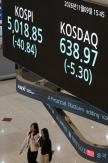 OPINION: KOSDAQ at 30 needs to grow up
Ticker at KRX lobby. AJP D/B Life begins at 30, so they say. Investors in KOSDAQ are still waiting for the junior stock market to grow into the promise of its birth as Korea’s answer to Nasdaq. The market turned 30 in July. By Thursday, its index stood more than 30 percent below its starting level on today’s scale. In an otherwise rewarding year for many stock markets, including its bigger sibling KOSPI, the KOSDAQ has lost about 22 percent. For two sessions this week, it seemed ready to shake off the gloom. The index gained 10.35 percent despite the Nvidia leadership drama and fears of a sharp U.S. Federal Reserve rate increase. Speculation about fresh government support gave investors something else to trade on. Then came the denial. The KOSDAQ ended Thursday down 1.22 percent at 696.53 after financial authorities dismissed reports that they would announce another support package Friday. It remained 43.34 percent below its April intraday peak of 1,229.42. President Lee Jae Myung on the day called for faster development of the KOSDAQ and reform of the venture capital ecosystem so innovative companies could raise funds as they grow. He urged consistent reforms to improve corporate value and shareholder returns, alongside measures to encourage long-term investment. Earlier in the morning, the Financial Services Commission (FSC), Financial Supervisory Service and Korea Exchange had denied online claims of an imminent package. The rumors included loosening or phasing out the daily 30 percent stock-price limit and measures to encourage retail trading. The FSC warned that spreading groundless rumors could constitute unfair trading. The positions are not formally contradictory. The president called for market development; regulators denied a specific announcement and its supposed contents. They were right to correct false information. But investors were left with another round of presidential encouragement and regulatory rebuttals, without a clearer understanding of when promised reforms would change the market they own. That gap is fertile ground for speculation. Broad pledges sustain expectations of official support. Rumors supply the missing details. Denials send investors scrambling to reassess them. Companies’ earnings and prospects struggle to compete with guesses about the next government announcement. The scoreboard shows why investors are so eager for relief. Source: Financial Supervisory Service. Compiled and edited by AJP. Graphics AI assisted. A longer history chart is more uncomfortable. The KOSDAQ is 30.35 percent below its July 1, 1996 base level of 1,000 on today’s scale. The original base was 100 before a tenfold rebasing in 2004. The comparison excludes dividends, and the companies making up the index have changed. Even with those qualifications, it is a poor anniversary portrait for a market created to finance Korea’s future. Nor is the weakness confined to its smallest companies. The KOSDAQ 150 closed at 1,149.35, down 47.27 percent from its March peak of 2,179.57. The index of its leading stocks has lost nearly half its value. Thirty years on, it remains a junior market whose successful companies have reasons to leave and whose investors repeatedly turn to the government for reassurance. The departures of NHN, now Naver, Kakao and Celltrion for the main board illustrate the problem. A Korea Capital Market Institute study found that the exit of stronger companies weakened KOSDAQ performance and could encourage further transfers. When growing up means moving elsewhere, the market loses the businesses that could demonstrate its own maturity. Some companies nurtured on KOSDAQ have succeeded elsewhere. Korea has produced corporate successes without building an equally successful destination for sustained investment in its growth market. Another weakness lies in the gap between financing innovation and evaluating it. Young technology companies may need years of research before producing meaningful revenue. Conventional earnings screens alone cannot distinguish a promising laboratory from a business surviving on its next capital raising. A November study by the Korea Capital Market Institute found that companies admitted through technology-special listing provisions often continued to report losses while investing in research after going public. Their aggregate five-year stock performance concealed a wide divide between a small number of strong winners and many laggards. Opening the listing gate is only the beginning of the market’s job. Investors need reliable information about what happens afterward. For a biotech company, that means clinical progress, cash requirements and the commercial significance of licensing agreements. For an industrial technology company, it means whether announced partnerships produce customers, revenue and cash flow. Repeated announcements cannot substitute for evidence of progress. External shocks compound these weaknesses. Higher interest rates make distant profits less valuable today, while uncertainty over AI spending can unsettle smaller suppliers. A market with credible disclosures and committed institutional investors is better equipped to assess those risks than one waiting for the next support rumor. The government already has a reform agenda. In March, the FSC outlined market segmentation, faster removal of failing companies and measures to broaden institutional participation. It also noted that the benchmark used in public fund management evaluations had been changed to include a 5 percent KOSDAQ component. Investors should now be able to judge implementation and results. Start with communication. The presidential office and financial authorities should publish a shared timetable identifying what has been approved, what remains under consultation and who is responsible for delivery. Rumor rebuttals should accompany accessible progress reports on actual reforms. A denial should leave investors better informed about policy. Then make remaining on KOSDAQ attractive to successful businesses. A credible upper segment could help if admission rests on sustained disclosure quality, governance and operating performance. It must give investors a useful distinction and companies a reason to stay. Attaching a premium label without changing the investment experience would accomplish little. Long-term capital also needs people equipped to deploy it. Independent research, specialist fund managers and evaluation periods that reflect the time needed to commercialize technology would help. Pension funds should retain investment discretion. Directing them to support an index would transfer the market’s problems to retirement savers without repairing its foundations. Investor protection must become visible in daily practice. Authorities should pursue manipulation and misleading disclosures promptly, scrutinize financing arrangements that dilute existing shareholders and enforce credible exit standards. Genuine research risk deserves patient capital. Concealing setbacks or repeatedly selling implausible promises does not. Reform should be measured by the quality of post-listing disclosures, progress toward commercialization, institutional ownership over time and the retention of strong companies. Listing counts, turnover spikes and a few buoyant sessions reveal far less about whether the market is doing its job. Expanding price limits might change trading behavior. Fresh incentives might bring buyers through the door. Neither gives those buyers a durable reason to remain shareholders. The president is right to emphasize long-term investment. His administration must now make that ambition concrete enough to displace the daily guessing game over stimulus. At 30, KOSDAQ needs investors who stay because companies deliver. Another rumor-driven rally would only postpone growing up. * The writer is managing editor of AJP. ** The views expressed are the writer’s own and do not necessarily reflect those of AJP.