

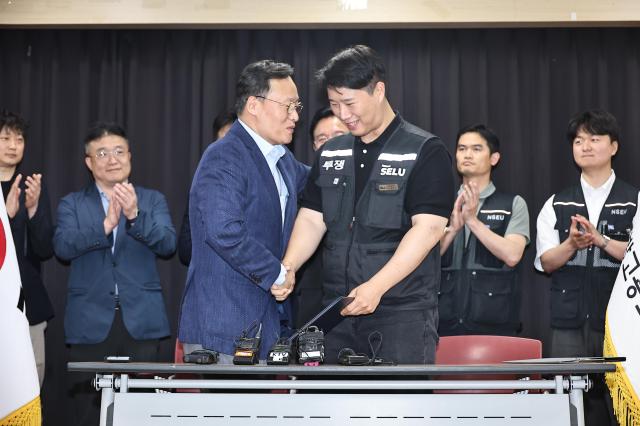
Samsung Electronics and its labor union have reached a tentative agreement after four rounds of marathon negotiations, successfully averting a strike.
According to industry sources on May 21, the two sides finalized the "2026 Wage and Performance Bonus Tentative Agreement" at 10:30 p.m. the previous day, deciding to postpone the union's planned strike. The core of this agreement addresses the contentious issue of institutionalizing performance bonuses through a strategy of "stock payments" and a "10-year written commitment."
The performance bonuses for the semiconductor (DS) division, which was the main point of contention, will now include a new "Special Management Performance Bonus" separate from the existing Excess Profit Performance Incentive (OPI), applicable for the next ten years. This compromise balances the union's demand for institutionalizing performance bonuses with the company's concerns about financial burdens.
Initially, the union had sought 15% of operating profit but ultimately agreed to a rate of 10.5%, aligning with industry standards. In return, the union successfully eliminated the previously proposed cap on the payment rate.
The OPI system will remain unchanged, as the company expressed caution about altering it due to concerns over future investment capacity and potential impacts on the broader industry. Ultimately, they opted to maintain the current system without changes.
The allocation ratio for performance bonus funding, which faced last-minute negotiations, was agreed upon at 40% for the entire division and 60% for individual business units. Consequently, 40% of the funds will be evenly distributed among three business units, while 60% will be allocated based on performance. Given the current management situation, a significant portion is expected to favor the memory division.
The wage increase rate was settled at a total of 6.2%, combining a base increase of 4.1% with a performance increase of 2.1%. This increase will be retroactively applied to salaries from March of this year. Additionally, improvements in welfare measures were included, such as the introduction of a housing loan system, increased childbirth and family benefits, and enhancements to shift work compensation.
Thanks to this dramatic agreement, the worst-case scenario of disruptions in semiconductor production has been avoided. The tentative agreement will be finalized through a vote among union members scheduled from 2 p.m. on May 22 to 10 a.m. on May 27.
* This article has been translated by AI.
Copyright ⓒ Aju Press All rights reserved.