

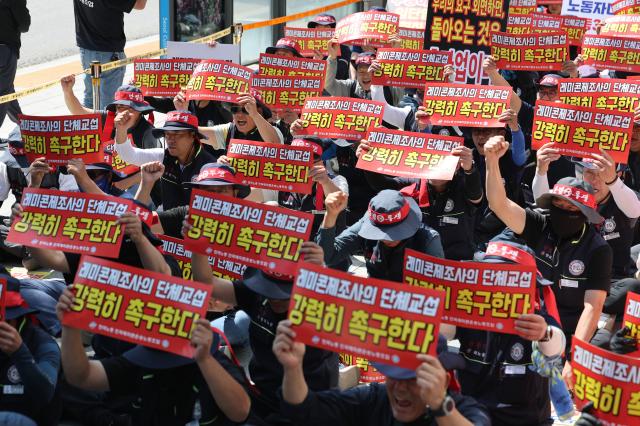
Economic groups expressed deep concern over the concrete transport union's strike in the Seoul metropolitan area, stating it is causing significant disruptions across the industry.
On June 11, six major economic organizations, including the Korea Economic Association, the Korea Chamber of Commerce and Industry, the Korea Employers Federation, the Korea International Trade Association, the Korea Federation of Small and Medium Enterprises, and the Korea Federation of Medium Enterprises, released a statement regarding the transport union's refusal to work.
The groups noted that the concrete industry is struggling with a utilization rate below 14% due to reduced volumes and rising costs from factors like fuel prices. They expressed disappointment that, despite reaching an agreement considering the national economy, the strike undermines this hard-won labor-management consensus.
They emphasized that concrete is a critical material for the construction industry, and any disruption in supply could lead to halts in major infrastructure projects. They particularly highlighted that the Seoul metropolitan area is home to vital construction sites related to semiconductor factories, housing, and infrastructure, warning that prolonged disruptions could have widespread negative impacts on the national economy.
The economic groups urged that, given the current crisis of high inflation and a downturn in the construction market, it is essential to focus on overcoming challenges and fostering cooperation rather than engaging in strikes. They called for reasonable solutions to pressing issues, including transport costs, through dialogue and compromise.
They also urged the government to actively support the swift resumption of negotiations and to implement measures to stabilize concrete supply and minimize on-site damages. The economic groups pledged to cooperate to ensure stability in construction sites and timely investments in advanced industries.
Previously, the concrete transport union had reached a tentative agreement with management to raise transport fees by 4,200 won per trip, but the proposal was ultimately rejected by 68.3% of union members.
* This article has been translated by AI.
Copyright ⓒ Aju Press All rights reserved.