

Iran is not just a country in the Middle East. It is the land of Cyrus the Great, a nation that stood against Rome for 700 years, and a civilization that connected East and West through the Silk Road. However, history alone cannot fully explain modern Iran. The true forces driving Iran are not merely military power, oil, or nuclear development programs. Instead, they stem from deeper spiritual foundations, religious worldviews, and a collective memory accumulated over thousands of years. In this war, the United States analyzed the Revolutionary Guard's capabilities and the scale of its nuclear facilities, calculating missile ranges and drone production capabilities. Yet, the core driving force behind Iran is far deeper than military bases. It is the flame of Zoroastrianism, the martyrdom spirit of Karbala, and the will for independence left by the Khomeini Revolution. While the U.S. focused on military strength, Iran viewed history; while the U.S. calculated the present, Iran calculated civilization.
Today, the world refers to Judaism, Christianity, and Islam as Abrahamic religions. However, tracing their spiritual roots deeper leads to the vast civilization of Zoroastrianism. Emerging around 1000 B.C. in the Persian region, Zoroaster viewed the human world as a constant struggle between good and evil. The worldview of the good god Ahura Mazda and the evil force Angra Mainyu later evolved into concepts of heaven and hell, final judgment, salvation, and demons, significantly influencing Judaism, Christianity, and Islam. Although Iran became Islamic after the 7th century, the spiritual traces of Zoroastrianism have not completely disappeared. Today, Iran's society strongly retains a moral worldview of justice versus injustice, good versus evil, resistance versus martyrdom, which has become a crucial pillar of national identity.
This Zoroastrian worldview has gained even greater spiritual strength through its intersection with Islam, particularly Shia Islam. While the vast majority of Muslims worldwide are Sunni, Iran is an exception. It is the central nation of the Shia world and can be considered the capital of Shia civilization. This stems from the Safavid dynasty in the 16th century. At that time, Persia had to confront the Sunni superpower Ottoman Empire and adopted Shia Islam as the state religion to maintain its unique civilizational identity. As a result, Iran has taken a completely different path from Saudi Arabia, another Islamic nation. The languages, histories, and worldviews differ significantly. While Saudi Arabia is the center of the Arab world, Iran is the heir to Persian civilization. Although they share the name of Islam, it is not an exaggeration to say they belong to fundamentally different civilizational spheres.
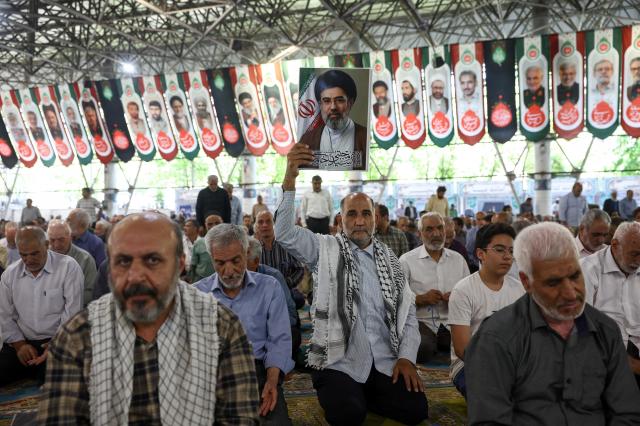
The core spirit of Shia Islam was born at Karbala. In 680 A.D., Imam Hussein, the grandson of the Prophet Muhammad, fought against the overwhelming forces of the Umayyad dynasty and was martyred. While it was a military defeat, Shia Islam remembers it as a martyrdom for justice. To this day, millions in Iran commemorate Hussein's sacrifice during the annual Ashura observance. This is not merely a religious event; it is a collective ritual reaffirming national identity. In the Shia world, sacrifice is not defeat but a testimony to uphold justice and a historical legacy passed on to future generations. Western strategists who believed they could subdue Iran through economic sanctions and military pressure failed to fully understand this spiritual structure.
Over the past half-century, Iran has faced numerous crises. The Iran-Iraq War, which began with the invasion by Saddam Hussein in 1980, lasted for eight years, resulting in an estimated one million casualties in both countries. Even after the war, U.S. economic sanctions continued. Iran was effectively excluded from international financial networks, faced restrictions on advanced technology imports, and struggled to freely export crude oil. Nevertheless, the Iranian regime did not collapse. Instead, these pressures strengthened a collective consciousness among many Iranians that "we do not succumb to foreign powers." While this may seem irrational from a Western perspective, it is a natural phenomenon when one understands Iran's history and religion.
The 1979 Islamic Revolution was a pivotal event that translated this spirit into a modern political system. At the time, the Pahlavi dynasty was one of America's most important allies in the Middle East, and Tehran was considered the most modernized city in the region. However, behind the facade of economic growth, anxiety over identity loss was growing. Ayatollah Ruhollah Khomeini capitalized on this sentiment. His revolution was not merely a religious one; it was an independence revolution aimed at breaking free from American influence and a national revolution to restore the pride of Persian civilization. The declaration, "We are not a satellite state of the United States," was not just a political slogan but a revival of the historical memory of Persia, which had resisted foreign powers for thousands of years.
The Revolutionary Guard, established after the revolution, is one of the key elements to understanding modern Iran. Western media often describe the Revolutionary Guard as a military organization, but its actual role is much more complex. They serve as a military force, intelligence agency, economic power, and political entity. Their influence extends across construction, energy, finance, and telecommunications. The Revolutionary Guard identifies itself as the guardian of the revolution and is not merely a military force protecting borders but an organization safeguarding the regime itself. In the current conflict, the Revolutionary Guard has played a crucial role in missile operations, drone attacks, information warfare, and managing pro-Iran networks abroad. While the U.S. is accustomed to confronting regular armies, it struggles to engage with the unique structure of the Revolutionary Guard.
Iran's nuclear development must also be understood in this context. While the West views it solely as a nuclear weapons issue, Iranians see it differently. Nuclear technology is not just an energy source; it symbolizes national pride and technological sovereignty. Interestingly, Iran's nuclear program began not after the revolution but during the pro-American Pahlavi dynasty, when the U.S. actually supported Iran's nuclear development. However, after the revolution, nuclear development took on new significance. It became a national will to secure independent scientific and technological capabilities despite foreign pressures. As U.S. sanctions intensified, nuclear technology gained even more symbolic meaning within Iranian society. When the nuclear agreement was reached in 2015, Iran viewed it not as a concession of rights but as an acknowledgment of its rights, and the subsequent U.S. withdrawal from the agreement reinforced the perception that "ultimately, we can only rely on ourselves for protection."
Ultimately, the biggest difference between the U.S. and Iran lies in their sense of time. The U.S. thinks in four-year election cycles and worries about quarterly economic indicators. Iran, however, remembers the Sassanid dynasty, the Safavid dynasty, Karbala, and the Khomeini Revolution. Events from 680 A.D. influence today's politics, and a dynasty from 500 years ago is part of today's national identity. What the U.S. fails to grasp is this long sense of time. While the U.S. focused on the present, Iran looked to history; while the U.S. calculated military power, Iran calculated civilization.
Although the 106-day war has ended, the U.S. now faces the task of studying Iran anew. Iran is not merely an oil state, a theocratic state, or an anti-American state. It is a nation that remembers the flame of Zoroaster, the martyrdom of Karbala, and the will for independence forged by the Khomeini Revolution. While the U.S. saw nuclear facilities, Iran saw civilization. While the U.S. calculated sanctions, Iran calculated generations. While the U.S. trusted military power, Iran trusted history and belief. And that difference was the essence of this war.
However, history is not completed by the past alone. For a civilization to survive, it must create a future. Now that the war has ended, Iran faces another monumental challenge: to create prosperity beyond mere survival and to achieve reconstruction beyond resistance. It is at this juncture that the country of South Korea begins to hold new significance. A new narrative is beginning, connecting post-war recovery, the new Silk Road, Tehran Road, the AI revolution, and the spirit of Hongik Ingan.
* This article has been translated by AI.
Copyright ⓒ Aju Press All rights reserved.