

SEOUL, July 06 (AJP) - Hyundai Motor reclaimed the 500,000-won threshold Monday, rising 2 percent even as the broader market retreated, after its growing robotics portfolio quietly stole attention from investors otherwise fixated on Samsung Electronics' earnings guidance due the following day.
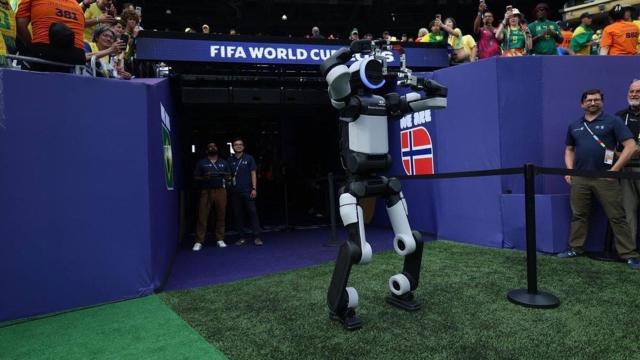
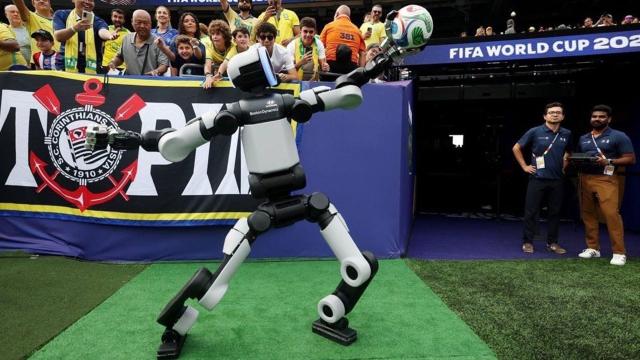
Boston Dynamics' Atlas humanoid robot, owned by Hyundai Motor Group, showcased a series of football-inspired celebrations during halftime of the Brazil-Norway World Cup round-of-16 match at MetLife Stadium in New Jersey on Sunday.
Before nearly 80,000 spectators, Atlas recreated signature goal celebrations associated with global stars including Harry Kane, Erling Haaland, Matheus Cunha and Son Heung-min before delivering the match ball to the referees.
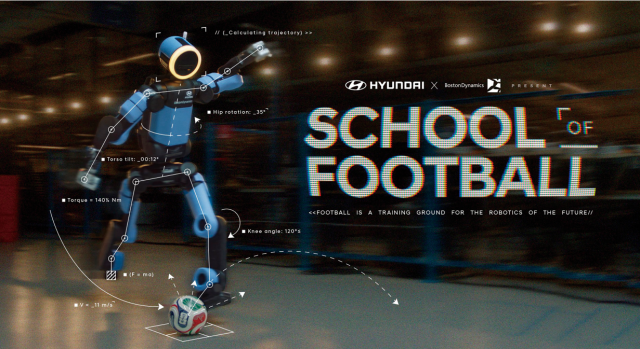
Hyundai said the performance demonstrated the same reinforcement-learning and whole-body control technologies it is developing for industrial applications.
The appearance formed part of Hyundai's "Next Starts Now" campaign. Brand marketing chief Ji Seong-won said the roughly five-year project was intended to bring advanced robotics into public view rather than simply advertise the company.
Unlike many Chinese humanoid demonstrations that have gone viral for choreographed dances and acrobatic performances, Hyundai emphasized practical mobility and industrial capability over spectacle, underscoring its strategy of building robots designed to work alongside humans rather than merely entertain them.
The industrial focus extends beyond humanoids.
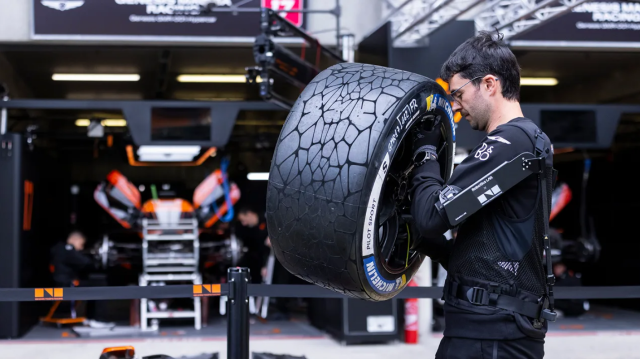
Hyundai's 1.9-kilogram battery-free wearable exosuit was deployed by Genesis Magma Racing's pit crew during June's 24 Hours of Le Mans, helping reduce shoulder strain during rapid tire changes.
The device has since been introduced to a young peach farmer in Eumseong through a NongHyup support program. A state-backed study found it reduced shoulder muscle activity by an average of 33 percent during fruit-harvesting work.
The demonstrations come as Hyundai targets annual humanoid production capacity of 30,000 units by 2028. Atlas is expected to begin parts-sequencing work at Hyundai Motor Group Metaplant America in Georgia that year before expanding into more complex assembly tasks by 2030.
The robotics initiative forms part of Hyundai's broader 125.2 trillion won domestic investment plan through 2030, including a robotics and AI data-center cluster in Saemangeum.
Investors appeared to welcome Hyundai's progress in what is increasingly described as "physical AI."
While the KOSPI fell 0.46 percent, automobile stocks led the market, climbing 3.45 percent.
Kia surged 5.72 percent, while Hyundai Motor rose 2.03 percent to 502,000 won. Hyundai Motor 2Woo B gained 4.44 percent and Hyundai Motor Woo advanced 3.97 percent.
Auto-parts manufacturers were the market's third-best-performing sector, rising 3.27 percent. Kumho Tire soared 29.96 percent to hit the daily trading limit, although no company-specific announcement appeared to explain the move. Insurance shares also outperformed, led by Samsung Fire & Marine Insurance, which climbed 5.64 percent.
Brokerages are increasingly trying to identify the long-term winners in humanoid robotics.
In a June report, CLSA analyst Brian Lee projected annual global humanoid production would exceed 1 million units by 2030, with the market reaching $320 billion by 2035.
CLSA ranked Tesla and Boston Dynamics well ahead of rival developers, arguing both benefit from large-scale manufacturing expertise and captive demand from their automotive businesses. Figure AI ranked a distant third.
The brokerage estimated Boston Dynamics' value at roughly 161 trillion won under its base-case scenario, well above the average 86 trillion won valuation assigned by other brokerages it surveyed.
Whether Hyundai's early positioning ultimately translates into a durable competitive advantage remains uncertain.
South Korea boasts the world's highest manufacturing robot density, with 1,220 robots for every 10,000 workers as of 2024, according to the International Federation of Robotics.
Scale, however, belongs to China. The country operates by far the world's largest industrial robot fleet, with more than 2 million units, and its collective humanoid robot output is expected to surpass Hyundai's 2028 production target as early as next year, according to industry estimates.

Copyright ⓒ Aju Press All rights reserved.
