

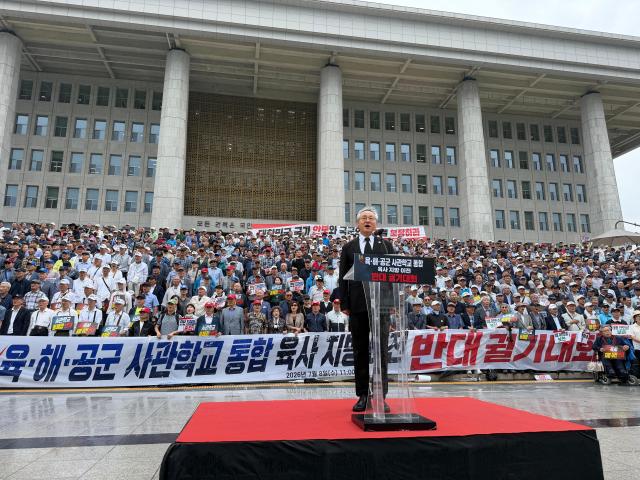
The rally, held on the steps of the main National Assembly building, was organized by opposition lawmakers Han Ki-ho and Lim Jong-deuk, together with alumni associations of the Army, Navy and Air Force academies, cadet parents, retired military officers and civic groups.
The turnout exceeded organizers' expectations despite heavy rain. After the hourlong demonstration, a delegation delivered a resolution to the National Assembly Speaker's office before heading to the Defense Ministry to submit the document to Defense Minister Ahn Gyu-back.
The protesters urged the government to scrap what they called a rushed and ill-conceived plan to merge the three military academies and relocate the Korea Military Academy.
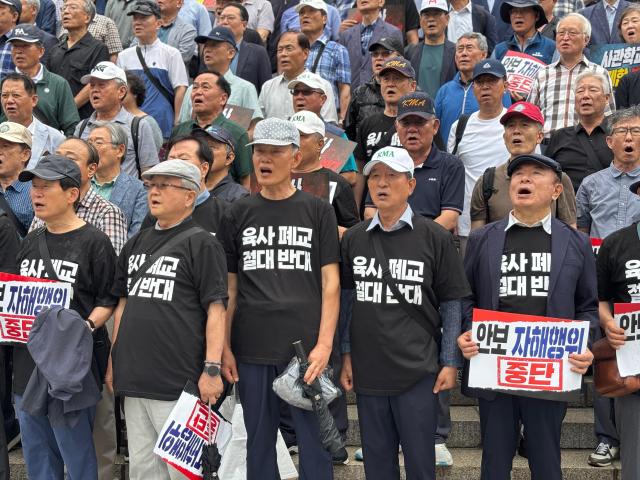
Han rejected the government's argument that the plan would strengthen joint operations among the armed services, saying it would instead create greater administrative complexity and costs.
A representative of the three academy alumni associations also described the proposal as a hasty policy that would neither improve jointness nor recruitment while offering little financial benefit.
"National security cannot be a subject of experiment," he said. "Nor should it become a sacrifice for political controversy."
In a resolution adopted at the rally, organizers said reforms to the officer training system should be based on thorough research, public consensus and consultation with military experts, retired officers, educators and cadet parents rather than political considerations.
"National security can never be a subject of policy experiments," the resolution said. "The officer training system that will be responsible for the future of the Republic of Korea should not be swayed by political interests."
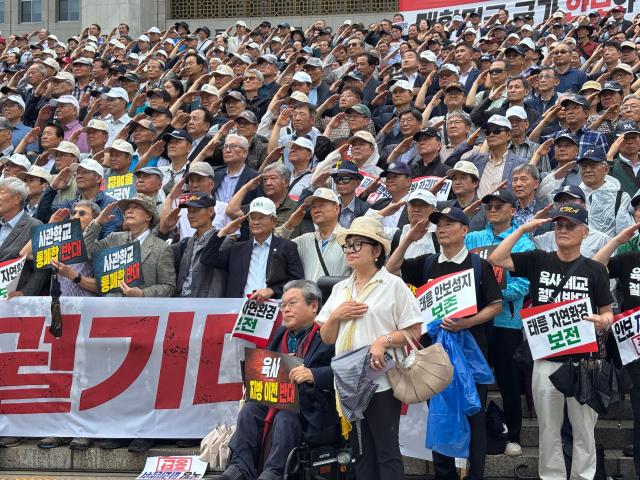
"Teaching cadets together is not jointness," Lee told AJP. "Jointness comes only after each service has developed its own expertise."
He argued that future officers should first receive service-specific training before learning to operate jointly, warning that integrating education too early could weaken professional standards rather than strengthen cooperation.
"The first step is to make them soldiers, then train them according to the characteristics of each service," he said. "Only after that can the Army, Navy and Air Force create real synergy through joint operations."
Representatives of the Navy and Air Force academy alumni associations echoed those concerns, arguing that a common curriculum would dilute each service's identity and specialized training.
A Navy academy representative said cadets must grow into officers "while seeing and feeling the sea," warning that two years of common education would erode naval professionalism.
An Air Force academy representative said officers responsible for air and space operations require specialized education from the outset, adding that the Air Force's operational culture "cannot be instilled in just two years."
Cadet parents also criticized the Defense Ministry for failing to communicate with those directly affected.
"Our children are confused and hurt by reports that the academies they chose could be merged and that the Korea Military Academy could be relocated," a parents' representative said. "The Defense Ministry has neither explained the plan to the cadets nor properly gathered their views."
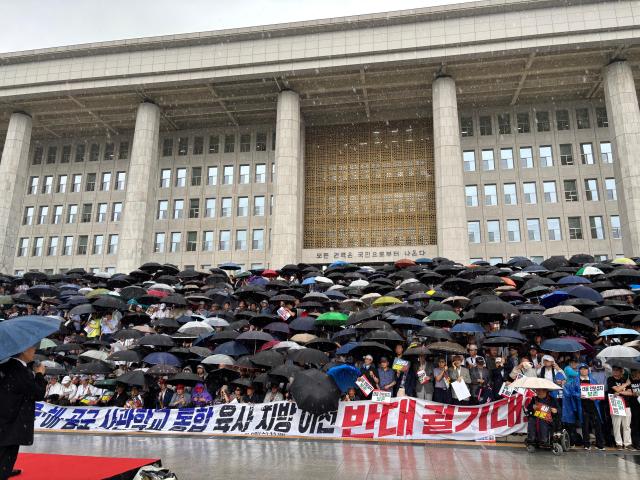
"If the government is concerned about falling application rates, it should improve the treatment of career soldiers, especially junior officers," Lee said. "That is how you attract talented people."
Under the government's proposal, cadets would receive a common curriculum during their first two years before selecting a service and undergoing specialized Army, Navy or Air Force training in their final two years.
Military sources have identified Jaundae, a military education and training complex in Daejeon, as a possible site for the common education program.

Copyright ⓒ Aju Press All rights reserved.
