

Children play in a fountain at Gwanghwamun Square as the daytime high in Seoul reached 32 degrees Celsius on July 28, 2026. AJP Yoo Na-hyun

Yoo Na-hyun
Photojournalist, AJU PRESS (AJP) Covering news, culture and society in South Korea through an Asian perspective.
Copyright ⓒ Aju Press All rights reserved.
Related News
-
 Hackers turn up heat on Europe's supermarket freezers
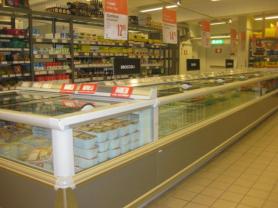
Freezer cabinets at a Willys supermarket in Falköping, Sweden. Unrelated to recent developments in Europe. ZURICH, November 03 (AJP) -Hackers have turned supermarket refrigeration systems against the food they were built to protect, forcing stores across Europe to discard spoiled goods after temperatures were reportedly raised to as high as 50 degrees Celsius. The attacks unfolded overnight into Monday, Nov. 2, about three weeks after a similar wave disrupted hundreds of French supermarkets. Retailers from Sweden to Portugal reported problems, exposing the vulnerability of internet-connected equipment that keeps the food supply cold. Supermarkets in Belgium, Estonia, Ireland, Luxembourg and the Netherlands were among those affected. Refrigeration disruptions were also reported in Finland, where investigators were still determining the cause. Carrefour said about 15 of its Belgian stores experienced problems. In Ireland, Musgrave reported a cyber incident affecting refrigeration systems at 13 SuperValu stores. Swedish chains ICA and Coop also reported disruptions, while an IKEA store in Mons, Belgium, confirmed an attack on its cooling equipment. The equipment at the center of the attacks consists of controllers that regulate temperatures, defrost cycles and alarms. Connecting them to the internet allows technicians to monitor and maintain refrigeration remotely. It can also give intruders a route to alter settings with immediate physical consequences. France’s cybersecurity response agency, CERT-FR, confirmed that the earlier compromises involved Danfoss AK-SM and AK-SC controllers, as well as Copeland and Dixell XWEB systems. It urged operators to remove exposed management interfaces from the public internet. The latest incidents resemble the French attacks in their timing and method, according to cybersecurity research firm Censys. Overnight changes to refrigeration settings left staff less able to intervene before food spoiled. No group had claimed responsibility, and researchers had not established whether the same attackers were behind both waves. Retailers were disconnecting equipment from the internet and updating systems after Monday’s disruptions. Danfoss urged customers to install security updates and keep refrigeration controllers off the public internet. The exposure extends beyond the stores already hit. In research published Oct. 22, Forescout identified 12,976 publicly accessible refrigeration-related online services across 6,017 distinct internet addresses in 99 countries and territories. Copeland and Dixell XWEB services accounted for 7,075 of those observations. Those figures do not represent 13,000 separate refrigerators or confirmed breaches. One internet address can expose several services, while one management interface can control multiple pieces of equipment. Forescout said similar systems support cold storage in agriculture and healthcare, widening the potential consequences beyond spoiled groceries. Its recommendations included securing remote maintenance, replacing unsupported equipment and monitoring unusual changes to temperatures and alarms. The incidents illustrate how a cyberattack can move beyond stolen information to interrupt the machinery that keeps essential supplies usable.
-
 Retro Consumer Trends Heat Up in South Korea with Captain Q and Nostalgic Snacks
Consumers are opening their wallets for retro products. The return of the liquor "Captain Q" after 11 years has sparked a wave of nostalgia marketing across the retail sector, including discontinued ramen, classic snacks, and retro fashion. This trend resonates with older generations as a trip down memory lane while appealing to younger consumers with curiosity and new tastes.According to the retail industry, Lotte Chilsung Beverage's limited edition "Captain Q Treasure Box," which was supplied to convenience stores and large supermarkets starting October 14, has completely sold out its initial batch of 10,000 sets. The remaining 2,000 sets from the total planned quantity of 12,000 began selling through the Nonghyup distribution channel last week. Since October 21, individual items have been gradually supplied to stores.At CU, all 10,000 individual Captain Q items and 1,200 limited edition sets were sold by October 25. GS25 reported that approximately 99% of its stock of both limited edition and individual items was sold by the same date. Captain Q consistently ranked 2nd or 3rd in daily search rankings on the "Our Neighborhood GS" and "Pocket CU" apps from October 15 to 26.Famous for the saying, "You wake up two days later after drinking it," Captain Q was first launched in 1980 and discontinued in 2015. The revived version maintains the original green bottle design while altering its ingredients and aging process. Sales data from CU shows that 37.9% of Captain Q purchases were made by consumers in their 30s, followed by 26.5% in their 40s, 18.4% in their 20s, and 17.2% aged 50 and above.The limited edition also added a collectible aspect. Among the 12,000 sets, 1,980 included a silver commemorative coin randomly placed inside, with the set priced at 19,800 won. The coin has been listed for resale on platforms with asking prices as high as 180,000 won.Three retro-themed advertisements featuring comedian Lee Sun-min have garnered a combined view count of approximately 12.26 million as of today. Due to the initial popularity, Lotte Chilsung Beverage has begun additional production. A company representative stated, "We are proceeding with additional production to ensure stable product supply."The revival of discontinued products is also gaining traction in the food industry. Nongshim has re-released the ramen "Bokkeummyeon" in limited quantities on October 27, responding to consumer requests. This product, discontinued in 2024, accounted for a significant portion of the re-release requests received by Nongshim over the past two years. Samyang Foods has joined the retro trend with its ramen "Samyang 1963," which reinterprets traditional manufacturing methods.Collaborations with long-standing brands are also thriving. GS25 expanded its product line to include butter cream bread and Oranda bread after selling 2.7 million units of ice cream in collaboration with Taegeukdang by the end of last month. Daiso has applied the original packaging designs to nine classic snacks, including Choco Pie, Joripong, and Matdongsan.The retro trend has also emerged in the fashion market this summer. According to Kakao Style's Zigzag, the search volume for summer season "jelly bags" surged by 3,798% from May 10 to June 9, while transaction amounts for "jelly shoes" increased by 3,397%. Jelly shoes, made of plastic and popular from the 1990s to early 2000s, have regained popularity with various colors and designs.Outlets and department stores are utilizing retro as experiential content. Lotte Premium Outlet in Uiwang is hosting a pop-up store displaying historical packaging and advertisements to celebrate the 40th anniversary of the World Cone until October 28. The Hyundai Seoul operated a pop-up from October 8 to 14, allowing visitors to enjoy nostalgic games like "Hancom Typing" and "Flip the Board" while purchasing limited edition products.Heo Kyung-ok, a professor in the Consumer Industry Department at Sungshin Women's University, stated, "For generations that experienced past products, it evokes memories, while younger generations find novelty and excitement in products they have not encountered before. The retro trend has always existed in various forms and can change in content and type."* This article has been translated by AI.
-
Salmon Struggle with Rising Temperatures as Summer Heat Extends
Research indicates that rising water temperatures slow salmon growth and show signs of liver dysfunction. Both freshwater and saltwater environments exhibit similar responses, highlighting the importance of managing high temperatures throughout the salmon farming process.On October 15, the Korea Institute of Ocean Science and Technology (KIOST) reported that a research team led by Dr. Kang Hye-min analyzed the effects of rising temperatures on the growth and liver function of juvenile Atlantic salmon.The team focused on the salmon's transition between freshwater and saltwater. While previous studies primarily concentrated on one environment, this research compared high-temperature stress responses across different salinity conditions.The experiment involved salmon in the 'smolt' stage, which undergo physiological changes to move from freshwater to saltwater. The researchers placed the salmon in separate tanks of freshwater and saltwater, then gradually increased the temperature in some tanks by 1 degree per hour, starting from the optimal growth temperature of 14 degrees.After reaching the target temperature, the salmon were observed for five days. Only the salmon in the 14-degree tank showed weight gain. No weight increase was observed at temperatures above 18 degrees, and at 26 degrees, some salmon in both freshwater and saltwater died.Blood tests also revealed abnormalities associated with high temperatures. Notably, in the 26-degree freshwater tank, the level of ALT, an enzyme used to assess liver damage, significantly increased. Additionally, protein levels in the blood decreased in both environments.Changes in gene activity related to high-temperature responses were also noted. Genes associated with heat shock proteins (HSP90), which help repair damaged proteins, and enzymes that protect cells from oxidative stress (GPX) showed altered activity in response to rising temperatures in both environments. This indicates that the salmon's bodies reacted defensively to prevent cellular damage due to perceived stress from elevated temperatures.The research team explained that these results demonstrate that high temperatures can impact salmon growth and physiological functions, regardless of salinity conditions.Along the Korean coast, prolonged high-temperature phenomena during summer are becoming more common. According to data released by the National Data Center in March, the number of days with high-temperature advisories nationwide increased from 47 days in 2021 to 71 days in 2024, and 85 days last year. Since salmon stop gaining weight at just 4 degrees above the optimal temperature of 18 degrees, concerns are growing that prolonged high temperatures during summer could lead to decreased growth and increased mortality in farming processes.Dr. Kang Hye-min stated, "As high temperatures recur every summer, managing water temperatures in aquaculture has become increasingly important. The findings from this study can serve as indicators for monitoring high-temperature stress throughout the entire process of farming salmon, from freshwater to saltwater."* This article has been translated by AI.