

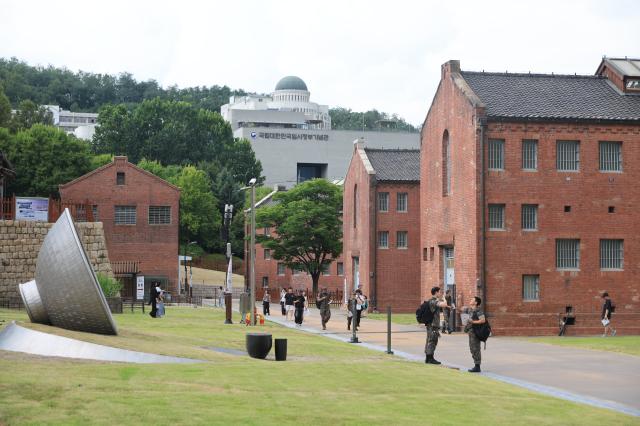
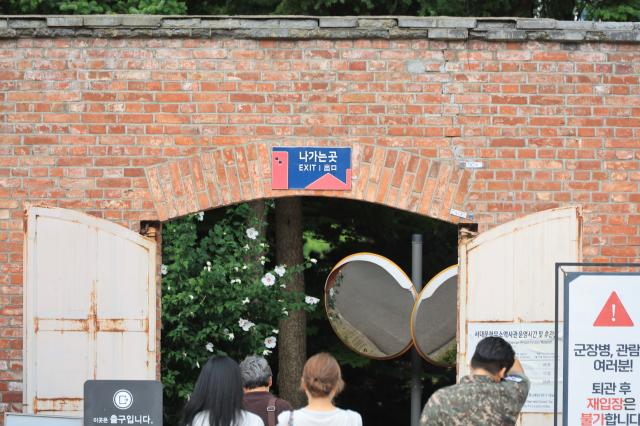
SEOUL, Aug. 15 (AJP) — On the afternoon before Liberation Day, visitors made their way through the gates of Seodaemun Prison History Hall in western Seoul.
Beyond the red-brick walls, Korean national flags hung in the summer air. People entering through the main gate seemed instinctively to slow their steps.
Aug. 15, 1945, was the day Korea was liberated from Japanese colonial rule. Koreans call it Gwangbokjeol — literally, "the day the light returned."
Before that light returned, many people gave up their own freedom behind these walls.
Seodaemun Prison preserves their memory.
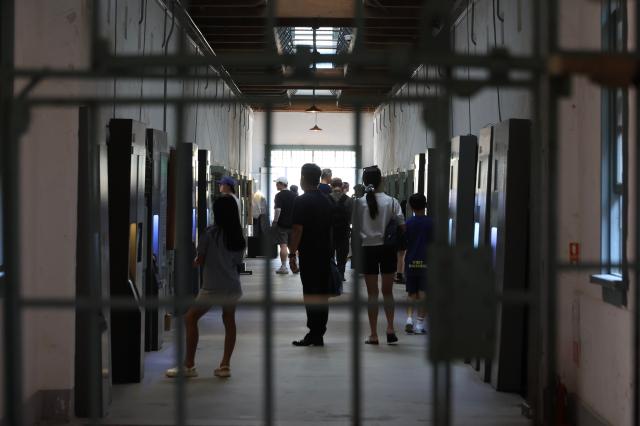
Inside the exhibition halls, narrow, dim corridors run past rows of cells. Near the bottom of each cell door is a small opening once used to pass food to prisoners.
It is barely large enough for an adult hand.
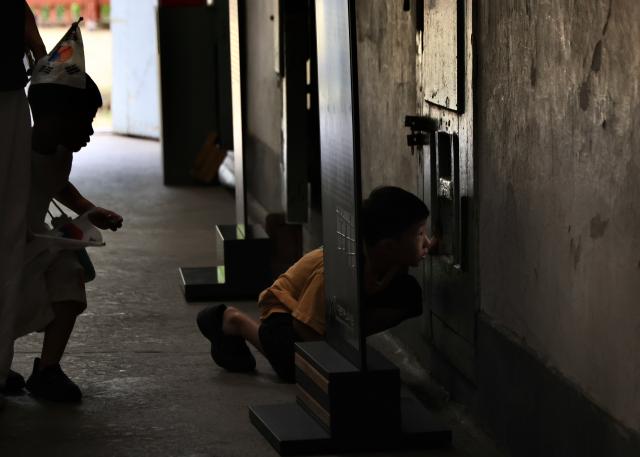
A child crouched before one of them for a long time, peering through the opening. No explanation seemed necessary. It was the kind of place that made visitors stop.
The red-brick cell blocks stretch outward in a radial pattern, designed so guards could watch several corridors from a central observation point.
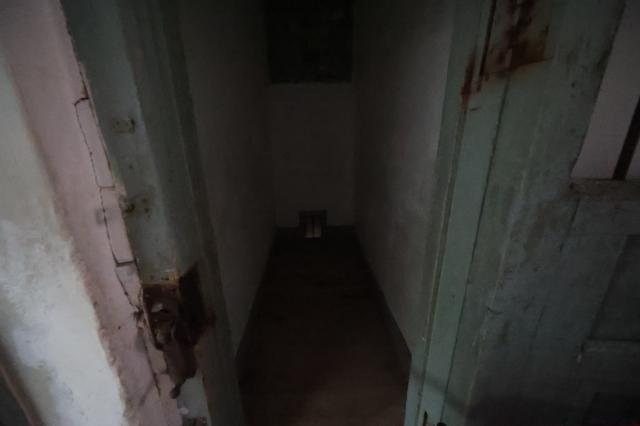
Inside the small cells were little more than narrow wooden floors and low ceilings. Many of those imprisoned here were young people, not so different in age from the students and young adults walking through the museum today.
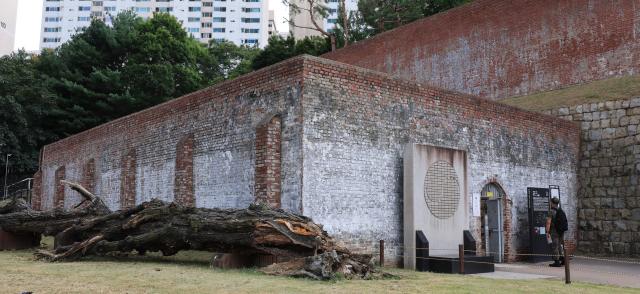
Near the end of the visitor route stands the execution building.
The atmosphere changed as people approached it. Visitors stopped before a sign explaining that independence activists had spent their final moments here.
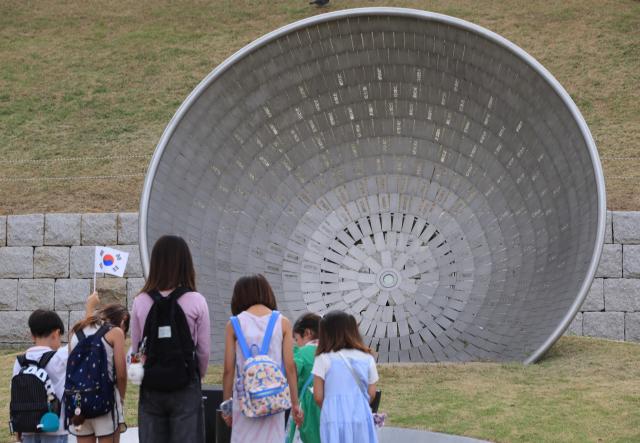
Outside the exhibition halls, a group of children stood in a line before a memorial and bowed their heads.
They may not have known every name or every face. But for a few moments, the courtyard fell quiet.
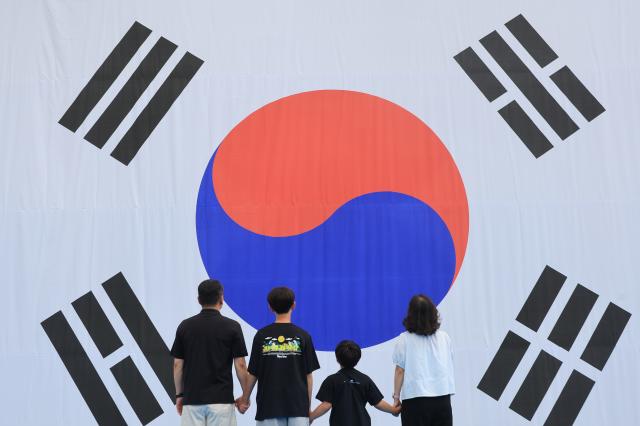
Elsewhere in the prison grounds, a giant Taegeukgi — the South Korean flag — hung against the brick buildings.
A family stood together beneath it, looking upward.
Against a place carrying such a heavy history, the ordinary sight of a family spending an afternoon together seemed unusually vivid.
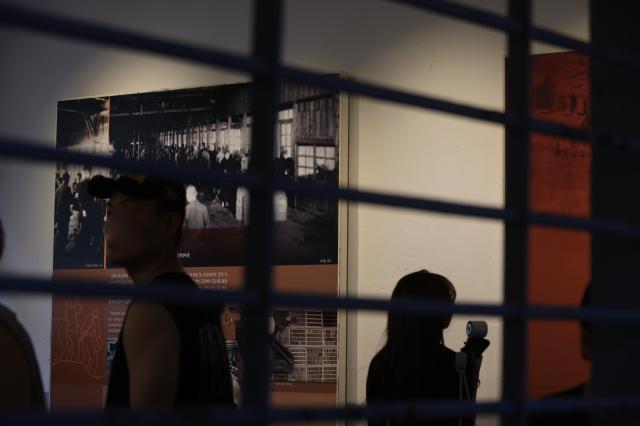
As visitors left, others remained inside the walls, walking at their own pace, stopping before cells and photographs, lingering where something caught their attention.
Liberation Day is not simply an anniversary of something that happened long ago.
It is also a reminder of a time when freedom was not assumed, and of those who lost theirs in the effort to recover it.
Eighty-one years ago, liberation came to people held behind these walls.
Today, visitors can walk through the same gates and leave freely.
Remembering the distance between those two moments may be what people carry with them when they step back outside.
Copyright ⓒ Aju Press All rights reserved.
