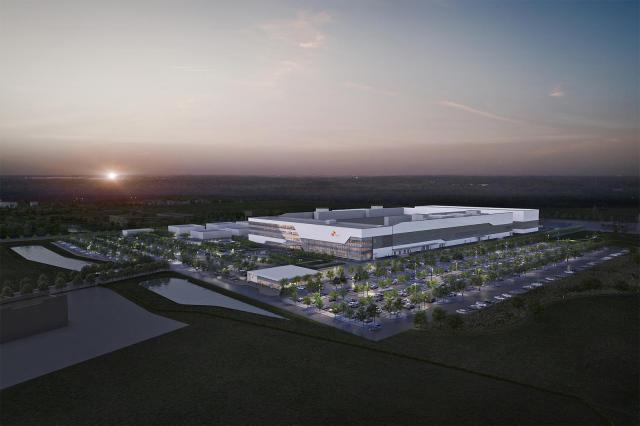
SEOUL, August 28 (AJP) -SK hynix has broken ground on a more than $4 billion HBM facility in Indiana and Samsung Electronics is preparing to bring its long-delayed Taylor, Texas fab online.
Both investments deepen South Korea's semiconductor footprint in the United States.
They nevertheless stop at the fault line Washington is increasingly pressing Korean chipmakers to cross — producing advanced memory wafers on American soil.
SK hynix's Indiana plant illustrates the distinction clearly. Cutting-edge wafers will continue to be made at the company's Korean fabs and shipped to West Lafayette, where they will undergo advanced packaging and testing before emerging as what SK hynix calls its first "Made in USA" next-generation HBM products from the second half of 2029.
Samsung's Texas strategy has drawn a similar boundary. Its Taylor complex is centered on leading-edge logic foundry production and research and development rather than a dedicated DRAM or NAND wafer fab.
The U.S. Commerce Department awarded Samsung up to $4.745 billion under the CHIPS Act to support more than $37 billion of planned investment in a broader Central Texas semiconductor ecosystem.
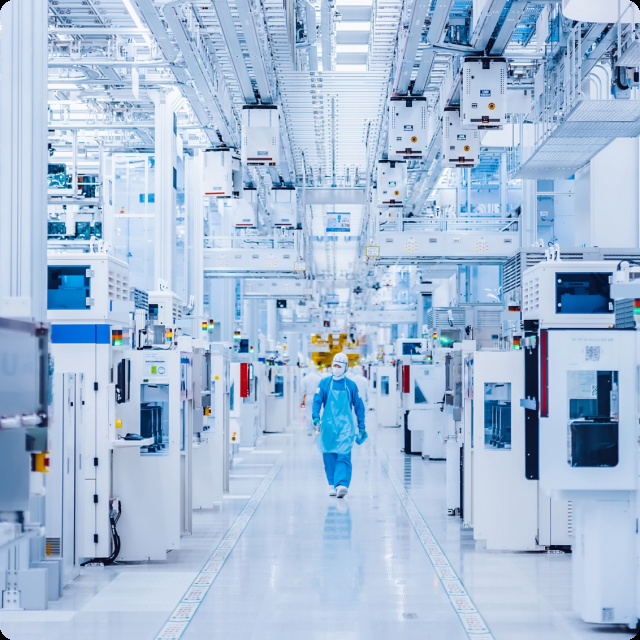
The Taylor project's first fab is moving toward operational readiness around year-end, although full-scale mass production could slip into early 2027, according to materials compiled on the project.
Samsung's existing Austin operation itself once made DRAM and NAND before exiting flash memory production in 2012 and becoming a foundry operation in 2017.
The division of labor has served an obvious purpose.
Samsung and SK hynix can put factories, jobs, packaging, R&D and customer-facing operations closer to the world's biggest AI market while keeping their most valuable memory manufacturing base — the dense combination of process technology, engineers, suppliers and production know-how built over decades — concentrated in Korea.
But Washington wants more. The Trump administration is considering broader semiconductor tariffs that could cover not only imported chips but products containing them, including servers, laptops and gaming consoles.
Commerce Secretary Howard Lutnick favors linking tariff relief to how much semiconductor production foreign companies commit to the United States, according to people familiar with the discussions cited by POLITICO and Reuters.
Country-specific quotas and a phase-in period are among the ideas under consideration, although no final framework has been adopted.
The proposal would turn tariffs into something much larger than a border tax. It would use access to the world's biggest technology market to dictate where part of the semiconductor supply chain is built.
The stakes are particularly high in memory.
Nvidia, AMD and Broadcom are among the biggest users of high-bandwidth memory for AI accelerators and servers, while Samsung and SK hynix together dominate global HBM supply. The chips have become indispensable to the enormous computing clusters being built by American hyperscalers.
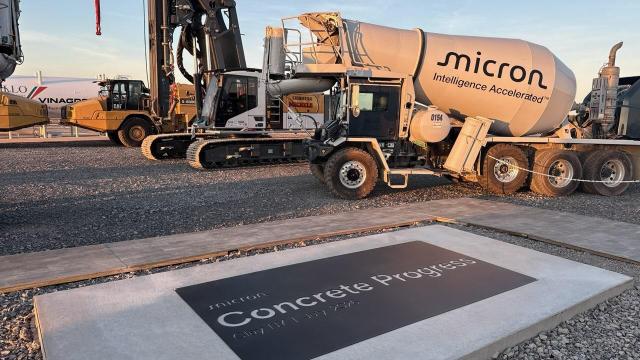
Lutnick already spelled out the objective in January after a groundbreaking ceremony for Micron Technology's new plant in New York.
"Everyone who wants to build memory has two choices: They can pay a 100 percent tariff, or they can build in America," he said. "That's industrial policy."
For Samsung and SK hynix, the important word is memory.
A tariff offset based simply on overall U.S. semiconductor investment could leave both Korean companies in relatively strong positions. Samsung already has a massive front-end manufacturing presence in Texas, while SK hynix is putting advanced HBM packaging and R&D in Indiana.
A system that specifically rewards memory wafer production, however, would change the equation.
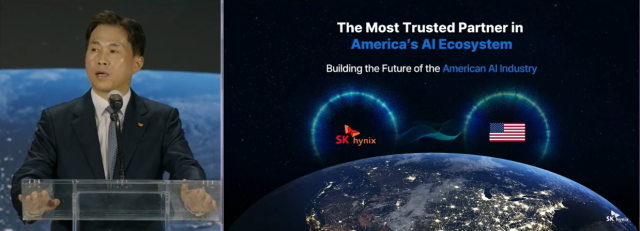
SK hynix's Indiana plant could produce finished HBM in the United States while still failing Washington's test if Commerce decides that the underlying DRAM wafers must also be fabricated domestically.
Samsung could face the same problem. Taylor demonstrates substantial U.S. manufacturing commitment, but a logic foundry does not solve Washington's dependence on imported DRAM, NAND and HBM.
The stakes for Korea extend beyond where Samsung and SK hynix spend their next few trillion won.
Advanced memory technology is formally treated as an economic-security asset under Korean law. Korea's designated national advanced strategic technologies include design, process and device technologies for advanced DRAM and 3D NAND, together with related stacking, assembly and testing technologies. Transfers of designated strategic technologies abroad require government approval.
The rules do not prohibit Samsung or SK hynix from building an overseas memory fab.
But moving leading-edge memory production abroad cannot be viewed purely as a corporate capital-allocation decision.
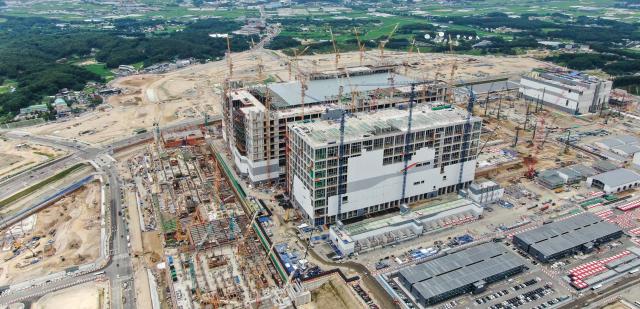
Seoul has its own national-security interest in where those fabs sit, fueled and accelerated by the AI boom.
SK hynix this month approved another 54 trillion won of investment in new fabs in Yongin and Cheongju, while its broader long-term strategy calls for hundreds of trillions of won in additional Korean capacity.
The government is simultaneously building semiconductor clusters, power networks, water infrastructure and talent programs around an industry that has become one of Korea's largest sources of exports, tax revenue and economic growth.
Diverting a meaningful share of future memory wafer investment to the United States would therefore carry a domestic cost even if Samsung and SK hynix retained ownership.
Factories create ecosystems. Equipment suppliers follow them. Engineers accumulate around them. Process knowledge deepens through repeated production. Future investment tends to flow toward places where previous capacity already exists.
A memory fab in America would consequently represent something considerably larger than another overseas plant.
It could begin shifting the gravitational center of an industry Korea has spent decades building at home.
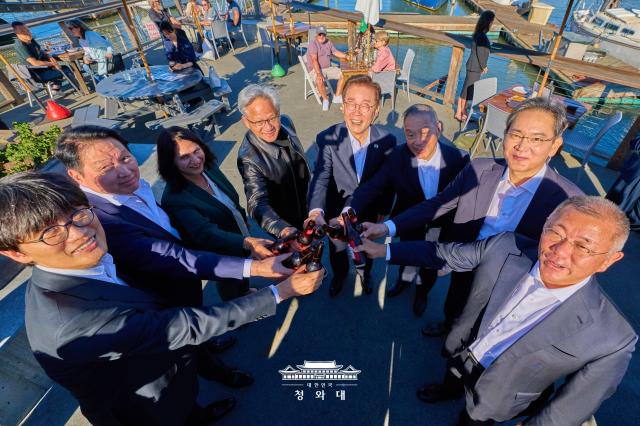
Korea's first line of defense is the semiconductor provision already secured in its trade agreement with Washington.
The November joint fact sheet says any U.S. Section 232 semiconductor tariffs on Korea should receive terms "no less favorable" than those offered under a future agreement covering a comparable volume of semiconductor trade.
Taiwan has since negotiated a deal linking preferential treatment and tariff-free semiconductor import allowances to enormous U.S. investment commitments, including at least $250 billion of direct investment by Taiwanese technology companies.
TSMC is predominantly a contract manufacturer producing logic chips designed by customers including Nvidia and Apple. Samsung and SK hynix own the memory designs, manufacturing processes and much of the production know-how behind the chips they sell.
Moving memory wafer fabrication therefore means relocating part of the technological core of their businesses, not simply adding another contract-manufacturing site.
Seoul can argue that Korean companies deserve equivalent tariff treatment based on the total economic value of their U.S. semiconductor investments rather than whether every stage of memory manufacturing has been transplanted.
The Trump administration's own January proclamation leaves room for such an argument. It contemplated a tariff-offset program for companies investing not only in U.S. semiconductor production but also in "certain parts" of the American semiconductor supply chain.
Korea's negotiating objective should be to make that definition as broad as possible.
Samsung's foundry fabs, SK hynix's advanced packaging plant, R&D centers, local sourcing, supplier investments and any future U.S. capacity should all count toward tariff-free quotas.
The formula would effectively be: more Korean investment in America without requiring Korea to surrender the center of gravity of its memory industry.
Seoul has another bargaining chip in the $200 billion strategic investment commitment negotiated with Washington.
Semiconductor projects could eventually be financed through project-specific special purpose vehicles involving Korean companies and government-linked investment structures. Korean officials have so far said chips are not the first target, but semiconductor investment remains a possible part of the arrangement if U.S. pressure intensifies.
Government-backed capital could make a U.S. expansion easier for Samsung or SK hynix.
Seoul, however, would have reason to demand something substantial in return: U.S. financing, long-term customer commitments, infrastructure support and durable tariff guarantees rather than concessions that could disappear with another policy shift.
Samsung and SK hynix also have leverage that governments cannot easily reproduce — their customers.
American technology companies are already warning Washington that broad chip tariffs could undermine the AI infrastructure boom the administration is trying to promote.
U.S. data centers remain dependent on enormous volumes of imported advanced semiconductors. Industry representatives argue that American manufacturing capacity simply cannot replace Asian supply quickly enough and that removing exemptions for data centers could raise costs or delay projects.
The contradiction is difficult for Washington to escape. The United States wants to dominate artificial intelligence while simultaneously threatening tariffs on many of the chips needed to build the computing infrastructure behind it.
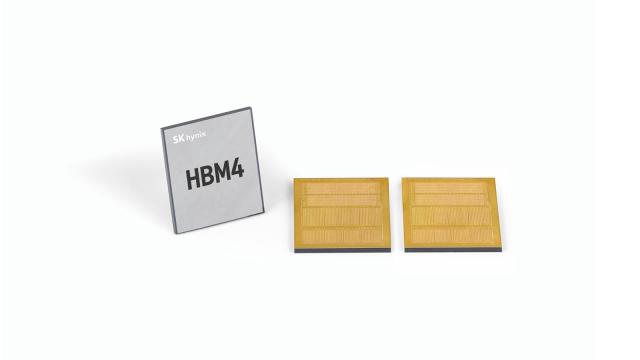
Memory is especially difficult to replace during the present AI boom. SK hynix expects tight supply conditions to persist as demand for HBM and other advanced memory continues to rise.
Samsung and SK hynix therefore have every incentive to negotiate alongside American hyperscalers, server makers, AI-chip designers and automakers rather than confront Washington alone.
Long-term supply agreements could be paired with tariff exemptions or quotas. Data-center exemptions could be preserved until meaningful U.S. memory capacity actually exists. A multi-year phase-in could give companies time to determine whether additional American manufacturing makes commercial sense.
Tariffs imposed immediately would raise U.S. costs long before they create a meaningful amount of additional domestic wafer capacity.
President Lee Jae Myung made essentially that argument when the 100 percent threat first surfaced in January, warning that duties imposed on Korean and Taiwanese semiconductor makers with dominant global market shares would eventually feed into higher chip prices in the United States.
Washington still may decide packaging, foundry investment and promises are no longer enough. Samsung would then have an advantage over SK hynix because Taylor already provides a large manufacturing campus and semiconductor infrastructure that could potentially be expanded.
Samsung could try to satisfy additional U.S. demands through another production line or future fab without starting entirely from scratch. SK hynix faces a more difficult choice.
Indiana is deliberately built around advanced packaging rather than front-end wafer fabrication. A Commerce Department formula based specifically on U.S.-made memory wafers could force the company to consider a second and far more expensive American project.
One possible fallback for both companies would be a limited, customer-backed U.S. memory fab, financed partly through U.S. incentives and Korea-U.S. investment vehicles, while next-generation process development, the bulk of advanced DRAM production and the principal HBM wafer base remain in Korea.
Another option would be to move mature or selected memory production to the United States while keeping the newest generations and their associated process technology at home.
Either course would amount to a significant concession.
SK hynix presented Thursday's groundbreaking as evidence that Korea and the United States can build an AI supply chain together. Washington's emerging tariff policy will determine whether allied specialization remains acceptable or whether America intends to reproduce virtually the entire semiconductor value chain inside its borders.
For Korea, the question is no longer whether Samsung and SK hynix will invest more in America. The harder question is how much of the memory value chain Korea can afford to move before investment in an ally begins hollowing out the strategic asset it is trying to protect.
AJP Takeaways
- A U.S. tariff-offset system tied specifically to domestic memory production could force Samsung and SK hynix to consider American memory fabs despite their already substantial U.S. investments.
- Seoul's preferred response is likely to be broader recognition of foundry, packaging, R&D and supplier investment, backed by U.S. customer pressure for exemptions and a lengthy phase-in.
- If Washington ultimately insists on front-end memory production, Korea's strategic red line will be preserving next-generation process technology and the main memory manufacturing ecosystem at home.

Copyright ⓒ Aju Press All rights reserved.