

SEOUL, September 28 (AJP) — South Korea's corporate credit card spending topped 60 trillion won ($45.4 billion) for the first time in the second quarter, rising 10.6 percent from a year earlier in line with a surge in corporate earnings from chip boom, central bank data showed.
Corporate credit card spending reached 61.7836 trillion won in the April-June period, the highest in the quarterly series, according to data from the Bank of Korea (BOK). Corporate users include companies, associations and public institutions.
The number of corporate credit cards stood at 11.75 million, up 1.3 percent from a year earlier, while the number of transactions increased 1.5 percent.
Average spending per transaction rose 9.0 percent to 179,320 won from 164,540 won a year earlier, compared with a 1.5 percent increase in transaction volumes.
Personal credit card spending increased 6.2 percent from a year earlier to 231.521 trillion won during the same period. Average spending per transaction rose just 0.7 percent to about 48,950 won.
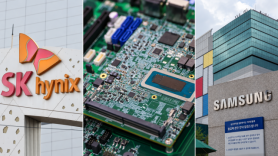
The increase in corporate card spending came as corporate earnings improved sharply, led by the semiconductor industry.
The BOK said gross operating surplus, which reflects income generated through corporate production, jumped 48.2 percent from a year earlier in the second quarter, the strongest increase since quarterly distribution-income statistics began in 2010.
Operating profits at semiconductor manufacturers increased sharply, while the improvement spread to other industries including chemicals, transport equipment, services and wholesale and retail trade, according to the central bank.
A separate second-quarter analysis by the Credit Finance Association also cited stronger global semiconductor demand, improved terms of trade and better corporate earnings among factors supporting card spending.
Under the association's separate approval-based measure, corporate card approvals rose 8.7 percent from a year earlier to 63.4 trillion won, while the number of approvals increased 1.4 percent.
The BOK expects the sharp increase in corporate income to spread gradually to households and the government through bonuses, dividends and tax payments, with the effects becoming more visible in the second half of the year.
AJP Takeaways
- South Korea's corporate credit card spending increased 10.6 percent from a year earlier to a record 61.7836 trillion won in the second quarter, topping 60 trillion won for the first time.
- Corporate credit card spending per transaction rose 9.0 percent while transaction volumes increased 1.5 percent, indicating a much larger increase in payment size than frequency.
- The Bank of Korea separately reported a 48.2 percent surge in corporate operating surplus, led by sharply higher semiconductor profits, while industry card data also pointed to improving corporate earnings as a factor supporting spending.

Kim Yeon-jae
Kim Yeon-jae is a journalist at AJU Press (AJP's English platform),
covering macroeconomics, international finance, and geopolitics.
He closely tracks central bank monetary policies, global energy supply chains,
and the Korean defense industry.
Copyright ⓒ Aju Press All rights reserved.
Related News
-
 BOK sees chip windfall spreading, inflation risks rising
Aju Business Daily Han Jun-gu, Yoo Na-hyun SEOUL, September 10 (AJP) - South Korea's exceptional chip windfall, already swelling corporate profits and public finances, is likely to reach households with a lag and can bolster not just consumption but also housing demand and inflation, the Bank of Korea (BOK) reiterated Thursday. The central bank said in its September Monetary Policy Report pointed to the first-half nominal gross domestic product that grew about 22 percent, the first increase above 20 percent since the early 1990s. Improved terms of trade contributed about 15 percentage points to the increase, compared with 3.8 percentage points from real growth and 3.1 percentage points from the domestic demand deflator. The improvement was largely driven by export prices, with DRAM and NAND flash memory prices rising three to five times from a year earlier. Prices of other IT products, chemicals and primary metals increased between 10 percent and 40 percent. The BOK said the current episode differs from previous periods of rapid nominal growth because rising export prices, rather than rapid real growth or domestic inflation, have been the dominant driver. Even during the 2015 - 2017 semiconductor upcycle, increases in export prices and the terms of trade were only about 20 percent and 50 percent, respectively, of the magnitude seen this time. The income gains are already visible in corporate earnings, investment and government revenue. Sales at IT companies, including semiconductor makers, jumped 76 percent in the first quarter, while their operating profit margin reached 42 percent. Facility investment increased more than 20 percent from a year earlier in both June and July. National tax revenue rose 17.4 percent from a year earlier to KRW 223 trillion ($165 billion) in the first half, with the central bank expecting stronger semiconductor earnings to lift corporate tax receipts further. The spillover to households, however, has been slower. Nominal wage growth eased to 2.1 percent in the second quarter from 3.4 percent in the first. The BOK said the sharp rise in nominal growth has yet to translate into a broad improvement in household income conditions. Bank of Korea (BOK)'s deputy governor Park Jongwoo answers reporters' questions at the central bank's press room in Seoul on Sept. 10, 2026. Courtesy of BOK Deputy Governor Park Jongwoo said the BOK's baseline assessment was that the semiconductor windfall would spread through the broader economy with a lag rather than remain confined to chip companies and related workers. Park said the unusually large scale of the income gains meant the effects were likely to appear first in regions benefiting directly from the semiconductor boom before spreading through channels including tax revenue. A longer-than-expected transmission lag, however, could limit the impact. He pointed to nominal gross national income as an indication of the scale of the income shock. Its growth exceeded 17 percent from a year earlier in the first quarter and reached 26.4 percent in the second, he said. Increases of that magnitude were more reminiscent of Korea's high-growth era and were changing the underlying conditions for consumption, asset markets and monetary policy, Park said. The household effect could become more visible next year, with the BOK estimating that bonus payments by major semiconductor companies alone could raise overall nominal wage growth by about 3 percentage points. Generated with ChatGPT Stronger household income would support consumption and the domestic recovery but could also intensify demand-side inflation. The BOK estimated that when the output gap is positive, the effect of a demand shock on core inflation is two to three times greater than when the output gap is negative. The effect also lasts three to four quarters longer. The eventual inflation impact will depend on how much of the additional income flows into domestic consumption rather than savings or asset purchases, the central bank said. Choi Chang-ho, director general of the BOK's Monetary Policy Department, said the unusually wide gap between income and production indicators was one reason the central bank was paying greater attention to nominal growth. Nominal income and real growth generally move in similar directions, Choi said. Income not immediately reflected in real growth could eventually feed into domestic demand and inflation or flow into asset markets, worsening financial imbalances. Housing is one potential channel. The BOK said large semiconductor bonuses could increase home-buying demand in areas benefiting directly from the chip boom, adding upward pressure to housing prices in the Seoul metropolitan area. Bonus payments and expectations for expanded employee housing loans have already coincided with steep price gains in Hwaseong's Dongtan district and other areas described in the report as the country's "semiconductor belt." Rapid nominal GDP growth could mechanically lower Korea's household debt-to-GDP ratio, but improved purchasing power could simultaneously increase housing demand and leverage. The BOK estimated that the household debt ratio could fall toward the lower end of the 80-to-85-percent range this year if nominal GDP grows between 15 percent and 20 percent. Korea remained sixth-highest among 44 economies tracked by the Bank for International Settlements at the end of 2025. The BOK raised its benchmark rate by 25 basis points in both July and August to 3.00 percent as stronger growth, persistent inflation and financial-stability risks increasingly pointed toward tighter policy. Park said the consecutive increases should restrain inflation with a lag, while improving income conditions could work in the opposite direction by strengthening demand. It is too early to determine which effect will ultimately prove stronger, he said. The central bank said it will determine the timing and pace of additional rate increases while monitoring inflation, growth and financial-stability conditions. AJP Takeaways - South Korea's nominal GDP grew about 22 percent in the first half, driven largely by soaring semiconductor export prices and improved terms of trade. - Corporate earnings, investment and tax revenue are already benefiting, while the improvement in household income has emerged more slowly. - The BOK expects the semiconductor windfall to spread through the wider economy with a lag rather than remain confined to chip companies and related workers.
-
 UPDATE: South Korea sees per-capita GNI top $40,000 this year
A Bank of Korea logo is seen at the central bank's headquarters in Seoul on April 30, 2026. Aju Business Daily Yoo Na-hyun *Updated with additional information from a Bank of Korea briefing SEOUL, September 8 (AJP) - South Korea's national income increased sharply in the second quarter amid surge in chip and other exports, pushing the gross savings rate to a historic high and placing the per-capita gross national income on track to top $40,000 this year. The Bank of Korea (BOK) said real gross national income (GNI) rose 15.6 percent from a year earlier and 3.1 percent from the previous quarter. Real personal gross disposable income increased 5.5 percent from a year earlier and 2.1 percent from the previous quarter. The annual increase in real GNI was the strongest since the fourth quarter of 1988, when it rose 15.7 percent. Real trading gains increased to 58.5 trillion won, up from 38.7 trillion won in the first quarter. Real net factor income from the rest of the world fell to 7.9 trillion won from 11.6 trillion won. Real GNI growth was still much higher than real GDP growth, which increased by 0.6 percent from the previous quarter. Real personal gross disposable income, a measure more closely tied to household purchasing power, rose 5.5 percent from a year earlier. Its 2.1 percent quarterly increase was also smaller than the 3.1 percent rise in real GNI. The income breakdown also showed sharply different rates of increase. Gross operating surplus jumped 18.5 percent from the previous quarter, the strongest increase since the series was first published in the second quarter of 2010. Compensation of employees rose 1.9 percent. The stretch in income bolstered the gross saving ratio 3.9 percentage points to 45.6 percent, the highest since the series began in 1970. Gross national disposable income increased 8.9 percent from the previous quarter while final consumption expenditure rose 1.6 percent, widening the gap between income and spending. The household net saving ratio increased to 9.7 percent from 8.8 percent, suggesting Koreans choosing to set aside extra income rather than spending it. Kim Hwa-yong, head of the BOK's National Accounts Department, said the higher saving rate could represent greater capacity for future consumption because income was rising faster than spending. The surge in national income has also sharply increased the likelihood that South Korea's per-capita GNI will exceed $40,000 for the first time this year. Kim Hwa-yong, head of the Bank of Korea's National Accounts Department, answers reporters' questions at a briefing room on the first floor of the central bank's annex building in Seoul on Sept. 8, 2026. Bank of Korea Kim said nominal GNI grew 21.8 percent in the first half and that the likelihood of reaching the milestone had increased significantly. The 21.8 percent increase was the strongest first-half growth in nominal GNI since 1991, when it rose about 21.9 percent. Nominal GNI increased 8.8 percent from the previous quarter and 26.4 percent from a year earlier to 846.9 trillion won ($629.2 billion). Nominal GDP rose 9.2 percent from the previous quarter to 834.9 trillion won and was 26.4 percent higher than a year earlier. The annual increase in nominal GDP was the strongest since the third quarter of 1979, when it rose 27.7 percent. The unusually large gap between nominal and real growth reflected a sharp rise in prices captured by the GDP deflator. The GDP deflator climbed 21.9 percent from a year earlier, while the domestic-demand deflator excluding inventories rose 3.6 percent. The export deflator surged 56.6 percent and the import deflator rose 21.0 percent. The average won-dollar exchange rate was 7.0 percent higher than a year earlier during the quarter. “The improvement in the terms of trade widened in the second quarter from the first quarter, and we expect the effect to continue,” Kim said. A stronger won could reduce gains generated through export prices, although lower import prices would offset part of the impact, he said. Semiconductor prices are also expected to improve in the third and fourth quarters on sustained demand, limiting the overall effect of exchange-rate movements. Real GDP expanded 0.6 percent from the previous quarter and 3.7 percent from a year earlier, unchanged from the advance estimate released in July. Manufacturing grew 1.4 percent, led by computer, electronic and optical products. Services expanded 1.0 percent on gains in wholesale and retail trade and accommodation and food services. Finance and insurance as well as information and communication also increased. Construction contracted 1.9 percent as civil engineering activity declined. On the expenditure side, private consumption rose 0.4 percent and government consumption increased 0.1 percent. Construction investment slipped 0.1 percent. Facilities investment edged up 0.2 percent, while intellectual property products investment increased 3.4 percent. Exports rose 1.3 percent, led by semiconductors and machinery and equipment, while imports gained 0.7 percent. Kim said improving corporate profitability could support further facilities investment. Non-residential building activity was increasing and the contraction in residential construction was narrowing, leaving room for construction activity to improve. The improvement was also spreading beyond semiconductors to other manufacturing industries, he said. Stronger consumption could eventually extend the gains to a broader range of industries, although the process would take time. The gross domestic investment ratio fell to 24.2 percent from 25.3 percent. Nominal gross capital formation, however, increased 4.3 percent during the quarter, meaning the decline in the ratio did not reflect an outright fall in investment. Kim said domestic investment continued to increase in absolute terms because gross national disposable income grew even faster. Higher corporate income also contributed to increased investment abroad. The BOK is scheduled to release full-year 2026 per-capita GNI with fourth-quarter national accounts data next March. AJP Takeaways - South Korea's real GNI rose 15.6 percent from a year earlier, the fastest increase since the fourth quarter of 1988, as improved terms of trade boosted real purchasing power. - South Korea's real personal gross disposable income increased 5.5 percent from a year earlier, below the 15.6 percent increase in real GNI. - South Korea's gross saving ratio reached 45.6 percent, the highest since the series began in 1970. The BOK said higher savings could provide room for future consumption. - South Korea's chances of reaching $40,000 in per-capita GNI this year increased significantly if the second half avoids a major shock and the won-dollar exchange rate remains stable.
-
 Korean Inc. bottom and top lines at 11-year high Q2 on chip boom
A processor mounted on a printed circuit board is displayed at the 2026 Electronics Manufacturing Korea exhibition. AJP Yoo Na-hyun SEOUL, September 09 (AJP) - Sales at South Korea's externally audited companies grew at their fastest pace since 2015 in the second quarter as a semiconductor boom bolstered both top and bottom lines of manufacturers. Sales rose 26.7 percent from a year earlier in the April-June period, accelerating from 13.5 percent growth in the first quarter, according to data released Wednesday by the Bank of Korea (BOK). The reading was the highest since the first quarter of 2015. Externally audited companies are firms that meet statutory thresholds, including asset-size requirements, and are required under South Korean law to undergo an external audit. The BOK estimated the figures from a sample of 4,260 companies out of 26,509 eligible firms as of the end of 2025. Manufacturers led the acceleration, with sales growth jumping to 39.6 percent from 21.1 percent in the previous quarter. Sales in the machinery and electrical and electronics sector rose 88.5 percent from a year earlier, compared with 52.1 percent growth in the first quarter. The increase was heavily concentrated in electronic, video and communications equipment, a category that includes semiconductors. Sales in the sector surged 119.7 percent from a year earlier, up from 75.7 percent growth in the previous quarter. Excluding the sector, manufacturing sales growth would have been 14.0 percent instead of 39.6 percent, the BOK said. Sales growth among non-manufacturers also rose 9.7 percent from 3.7 percent. Transportation sales rose 13.6 percent, up from 8.1 percent, as the Middle East war pushed up tanker and bulk-shipping rates and increased demand for air cargo. Wholesale and retail sales growth accelerated to 13.7 percent from 7.1 percent, helped by stronger business at semiconductor distributors and department stores. Construction sales rose 0.3 percent from a year earlier, returning to growth for the first time in eight quarters as work on semiconductor plants increased. Total assets increased 6.8 percent from the end of the previous quarter, compared with a 0.2 percent increase in the same period a year earlier. Profitability improved even more sharply. The operating profit-to-sales ratio rose to 16.9 percent from 5.1 percent a year earlier. The pretax profit-to-sales ratio climbed to 23.1 percent from 5.3 percent. Both were the highest readings since the first quarter of 2015. Manufacturers' operating margin surged to 24.0 percent from 5.1 percent a year earlier. The machinery and electrical and electronics sector posted an operating margin of 43.0 percent, up from 7.4 percent. The BOK said profits rose faster than sales because chipmakers have a high share of fixed costs, magnifying the impact of stronger revenue on earnings. The petroleum and chemical sector also benefited from wider refining margins amid the Middle East war, lifting its operating margin to 9.5 percent from 2.5 percent. Profitability outside manufacturing was weaker, with the operating margin for non-manufacturers edging down to 5.0 percent from 5.1 percent a year earlier. The transportation sector's operating margin fell to 4.8 percent from 7.0 percent as higher oil prices and longer alternative routes raised costs despite stronger sales. The improvement was also much stronger among large companies. Sales growth at large firms accelerated to 30.5 percent from 16.0 percent in the first quarter. Growth at small and midsized companies rose to 10.2 percent from 2.4 percent. Large companies' operating margin jumped to 19.1 percent from 5.1 percent a year earlier. The margin for small and midsized firms edged up to 5.3 percent from 5.0 percent. Corporate balance sheets improved overall. The debt-to-equity ratio fell to 84.5 percent from 87.0 percent in the first quarter. Borrowings and corporate bonds as a share of total assets declined to 22.8 percent from 23.9 percent. Smaller firms moved in the opposite direction. Their debt-to-equity ratio rose to 112.1 percent from 103.0 percent. Borrowings and corporate bonds as a share of assets increased to 31.1 percent from 30.7 percent. AJP Takeaways - Bank of Korea data showed corporate sales growth reached its strongest pace since 2015 as the semiconductor boom lifted manufacturing revenue and profits. - South Korean manufacturers accounted for much of the improvement, with gains heavily concentrated in electronic, video and communications equipment. - Middle East disruptions boosted transportation sales, while higher oil prices and longer alternative routes weighed on the sector's profitability.