

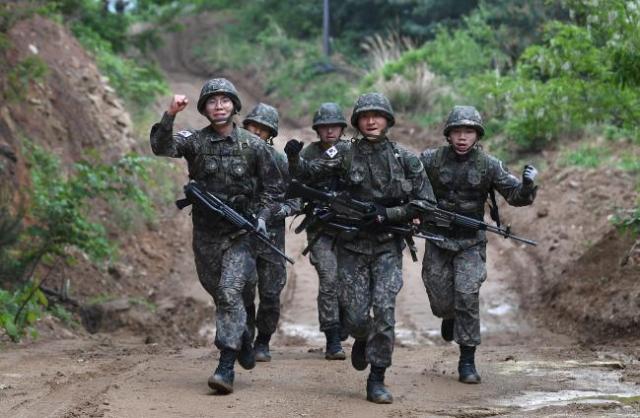
Now the government is revisiting a decades-old system that allows selected athletes and artists to pursue their careers instead of entering regular military service, as a shrinking recruitment pool adds urgency to longstanding questions over privilege.
Defense Minister Kang Shin-chul told a parliamentary audit Wednesday that the ministry’s goal was to gradually reduce the benefits and ultimately abolish them. Culture Minister Choi Hwi-young said his ministry would consult the sports and arts communities before discussing comprehensive reforms with defense and conscription authorities.
The latest reckoning followed South Korea’s men’s football gold at the Aichi-Nagoya Asian Games, which made most of the squad eligible for alternative service.
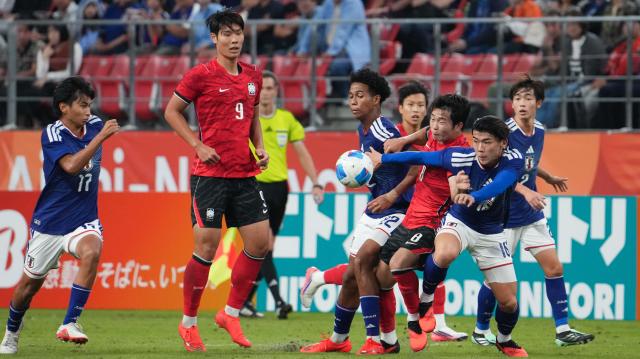
Their reactions revived a question that extends well beyond football. How much should sporting or artistic achievement count against an obligation borne by other young men?
Commonly described as an exemption, the benefit is formally a route to alternative service. Selected athletes and artists continue working in their fields for 34 months and must complete military training and 544 hours of community service using their skills.
They are excused from regular military service, rather than all service obligations.
Former competitive shooter Kim Ji-young, 29, said the system deserved reconsideration but cautioned against treating abolition as the only answer.
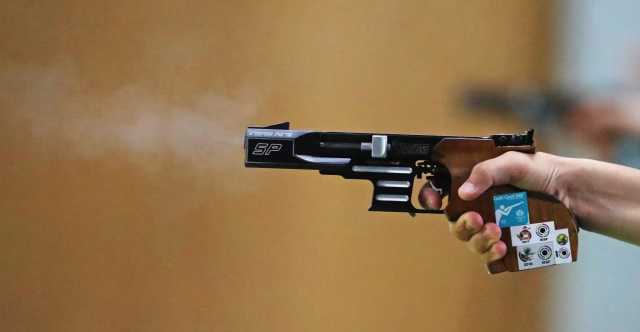
The emergence of globally influential popular culture has further complicated the justification.
“With popular culture artists such as BTS also raising Korea’s global profile, we need to discuss how far the concept of promoting national prestige should extend,” Kim said.
“The athletes’ achievements should absolutely be respected. But military service benefits are a separate issue from rewarding individual achievement,” he added. “Rather than simply abolishing the system, we could consider gradually narrowing eligibility or applying stricter criteria.”
Introduced in 1973, the program groups athletes and artists under the same service category, although their paths to eligibility differ considerably.
Athletes generally qualify by winning an Olympic medal or an Asian Games gold. Artists can qualify through high placements in designated music and dance competitions, including certain domestic events and international contests held in South Korea. A separate route covers practitioners trained in designated intangible cultural heritage.
Those differences have produced distinct arguments over fairness. In sports, the debate centers on which achievements warrant the benefit. In the arts, it also concerns access to qualifying competitions and confidence in their judging.
Government figures disclosed during an October 2025 parliamentary audit showed that 76 of the 86 artists who qualified between 2021 and July 2025 did so through competitions held in South Korea. Only 10 qualified through events overseas.
Three Korea-based international dance competitions accounted for 22 successful applicants. At the Korea International Modern Dance Competition, Korean nationals represented an average of 84 percent of participants, while their share of prize winners exceeded 70 percent each year.
The figures raised questions about how broadly international some qualifying events were. Earlier disputes had already exposed the difficulty of scrutinizing results issued abroad.
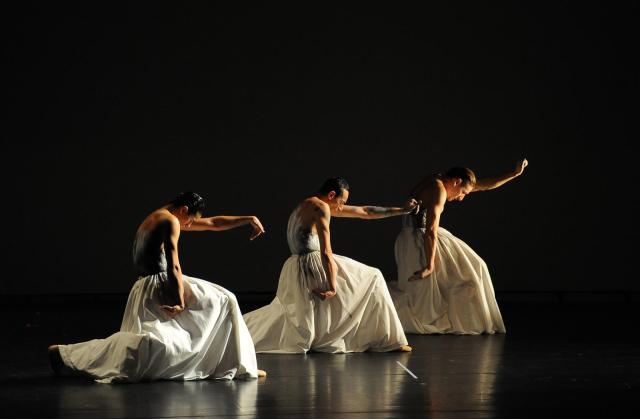
The competition was subsequently removed from the list of qualifying events. The episode illustrated the complications that arise when an artistic judgment by an overseas organizer determines a legal entitlement in South Korea.
For artists outside the eligible fields, the more fundamental question is why certain forms of achievement receive recognition while others do not.

“The arts are an extremely broad field. Classical musicians can qualify through certain competitions, but when have you seen someone in popular music receive the same benefit?” he said.
“For younger artists and university students, it can be frustrating when everyone is grouped together as working in the arts, but only certain fields receive the benefit.”
Kim questioned whether outright abolition could weaken an incentive for international achievement, while arguing that unequal access across disciplines had undermined the system’s credibility.
Opinion is also divided within sports.
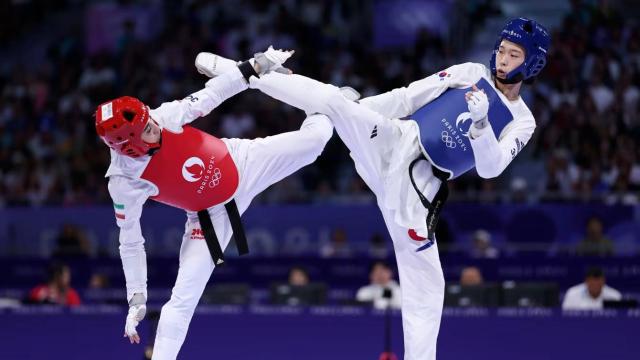
“I think an Olympic medal could still justify it because you are competing at the global level,” Choi said. “For an athlete, going into the military at the time when they are in their best form can have a major impact on their career.”
He saw less justification for extending the same benefit to an Asian Games gold medal, suggesting stronger financial or pension rewards instead.
“For the Asian Games, I think the military benefit could be abolished,” he said.
Former shooter Kim said recipients also had a responsibility to recognize how their relief at avoiding regular service might sound to those without that option.
“Those who receive military benefits need to think carefully about how their words and actions may be perceived by the public,” he said, calling for sports education to emphasize social responsibility alongside performance.
The government has yet to agree on a timetable or replacement framework. Kang’s remarks nevertheless point toward a more fundamental reconsideration than another adjustment to qualifying competitions.
At issue is whether a system created to reward national prestige can retain public support when the definition of that prestige has broadened and the number of young men available to serve has narrowed.
This article was contributed to by AJP reporter Joonha Yoo.

Copyright ⓒ Aju Press All rights reserved.
