
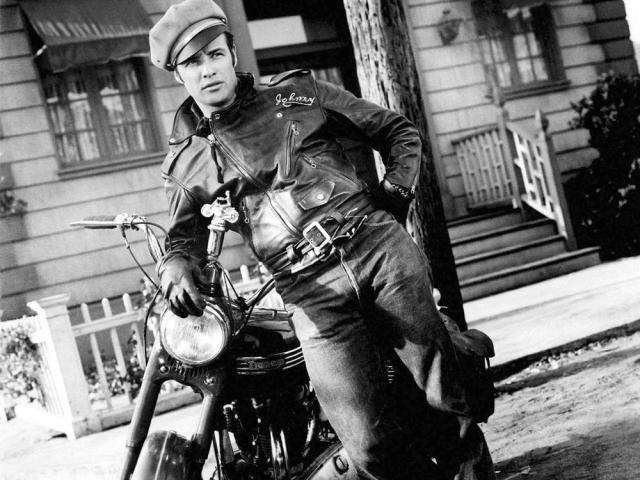
For years, a black leather jacket was enough to announce the arrival of one of the most powerful men in technology.
Jensen Huang would stride onto a stage wearing one, and the audience would know what to expect: a new processor, a bold prediction, perhaps another glimpse of a future in which artificial intelligence would transform nearly everything.
The jacket was more than clothing. It was a declaration of independence from the conventions of corporate America, a symbol of engineering audacity and, eventually, a visual shorthand for the extraordinary rise of Nvidia.
Then, in the space of a few days, the meaning of the jacket changed.
The man who had helped build the infrastructure of the AI revolution resigned from the company he co-founded 33 years earlier. Reports about his private relationships, including one involving a Chinese businesswoman suspected by American officials of intelligence connections, had raised questions reaching far beyond his marriage.
Nvidia entered an unexpected leadership transition. Colette Kress, its chief financial officer, became interim chief executive. Harvey C. Jones was appointed chairman of the board. The search for a permanent successor began.
And the black leather jacket, once a symbol of technological triumph, became an international joke.
In The New York Times, writer Anand Giridharadas published a satirical essay about Huang's supposed betrayal of the community of leather-jacket wearers. The Guardian followed with an examination of how the jacket had traveled from the rebellious cool of Marlon Brando to the uneasy symbolism of a Silicon Valley executive in crisis.
The humor was irresistible. But beneath it lay a serious question.
How does an article of clothing become the emblem of a multitrillion-dollar corporation? And what happens when the person wearing it can no longer carry the moral weight of the image he has created?
The deeper question is older than Silicon Valley, older than capitalism and older than the technologies now reshaping civilization.
Can a human being acquire the power to transform the world without acquiring the wisdom to govern himself?
From rebel style to Silicon Valley mythology
The black leather jacket has a long cultural history.
In the 1953 film The Wild One, Marlon Brando wore one as the leader of a motorcycle gang, turning a practical garment into a symbol of rebellion. James Dean helped give the style an aura of youthful defiance. David Bowie brought leather into the vocabulary of artistic reinvention.
The jacket suggested freedom from convention.
It belonged to the outsider, the restless artist, the person unwilling to accept the world as it had been handed down.
Huang brought that symbolism into the world of semiconductors.
Steve Jobs had his black turtleneck. Mark Zuckerberg had his plain T-shirts. Huang had his leather jacket.
Each outfit conveyed an idea about leadership.
Jobs suggested simplicity and concentration. Zuckerberg presented himself as a programmer unconcerned with unnecessary decisions. Huang offered something different: the engineer as rock star, the technologist as a figure of rebellion.
He was not merely selling chips. He was selling a vision of the future.
According to The Guardian, Huang has spoken of owning dozens of leather jackets. One Tom Ford jacket he wore was sold at a charity auction for $960,000.
The extraordinary price tells us something about the economics of symbolism. No one paid that amount simply for leather, stitching and design.
The buyer was purchasing an association with a man whose decisions had helped shape the AI economy.
In contemporary capitalism, the most valuable brands sell more than products. They sell identities, aspirations and myths.
The trouble begins when the mythology of a corporation becomes inseparable from a single individual.
When that individual succeeds, the company inherits his glamour. When he stumbles, the company inherits his vulnerability.
Huang's jacket was an extraordinarily effective marketing instrument. It was also a warning about the danger of building an institution around the image of one man.
The jacket itself did not change. The world looking at it did.

The armor that could not protect its wearer
Some of Huang's luxury jackets have been described as costing thousands of dollars. The more interesting question is what the jacket represented — and what it could not protect.
Onstage, it functioned almost like armor. It conveyed confidence in an industry defined by uncertainty. It suggested a leader comfortable with risk, someone who could see beyond the immediate limitations of technology.
Investors believed in that confidence. Engineers followed it. Governments took notice.
Yet an outward image of fearlessness tells us little about the inward condition of the person who wears it.
A leather jacket cannot make someone free. A business suit cannot make someone virtuous. And a remarkable record of achievement cannot eliminate the need for self-restraint.
The ancient Greeks understood the danger of exceptional success. They called it hubris: the arrogance that arises when individuals begin to mistake extraordinary ability for exemption from ordinary limits.
In Greek tragedy, the most compelling figures are often not villains. They are gifted people who have accomplished great things and gradually lose sight of the boundaries separating power from wisdom.
Huang's technological achievements remain extraordinary. He helped turn graphics processing into the foundation of modern AI computing. He guided Nvidia through changes that transformed the global semiconductor industry. Those accomplishments should neither be minimized nor erased.
But neither can they be used to avoid legitimate questions about personal conduct, conflicts of interest and corporate responsibility.
Precision matters. Huang's acknowledgment of marital infidelity does not establish involvement in espionage. Allegations concerning Chinese intelligence, sensitive commercial relationships and possible violations of export controls require evidence and independent investigation.
The resignation of a chief executive does not, by itself, prove every allegation that preceded it.
A civilized society must be capable of holding two thoughts at once: that extraordinary achievements deserve recognition, and that extraordinary power demands accountability.
Can the empire outlast its emperor?
Nvidia's immediate challenge is not merely finding another chief executive. It is discovering whether the institution Huang created can flourish without his singular presence.
For decades, he embodied an unusually integrated form of leadership. He understood graphics processors, software architecture, advanced computing systems and the economic possibilities created by connecting them.
Nvidia's success did not depend on one chip alone. It depended on an ecosystem encompassing GPUs, CUDA software, networking technologies, advanced memory, data-center systems and the developers who built applications around them.
Huang helped bring those elements into a coherent strategy. Such leadership is difficult to replace.
But it is also dangerous to assume that no institution can function without one extraordinary person. Kress now faces the task of preserving confidence while the board considers a permanent successor.
The company's next earnings announcement, scheduled for November 17, will be closely watched not only for financial results but for evidence of continuity.
Will Nvidia retain its most important engineers and architects? Will its product road map remain intact?
Will customers continue to trust its commitments? Can the board demonstrate that independent oversight is more than a corporate formality?
The answers will matter far more than the wardrobe of the next chief executive.
A corporation cannot manufacture loyalty as it manufactures semiconductors. It cannot purchase institutional wisdom as easily as it purchases equipment. And it cannot build a durable future merely by preserving the memory of a charismatic founder.
A great entrepreneur may create a great company. Only a mature institution can ensure that greatness survives its creator.
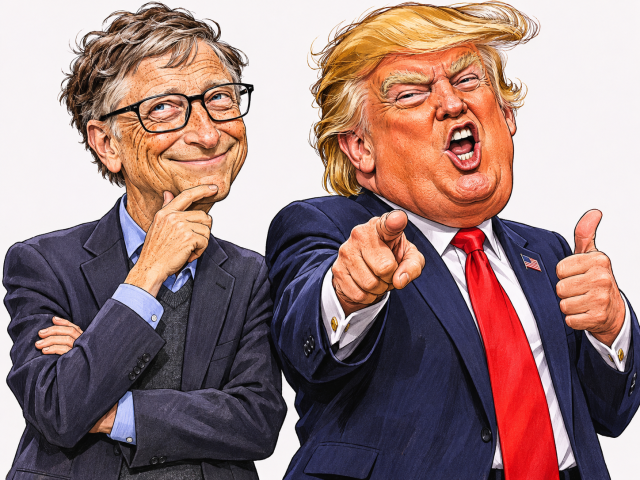
Bill Gates, Donald Trump and the burdens of exceptional power
Huang's predicament belongs to a larger story about the relationship between personal achievement and public responsibility.
Consider Bill Gates. As a co-founder of Microsoft, Gates helped shape the personal-computing revolution. His later philanthropic work has directed enormous resources toward public health, education and poverty reduction. These are significant accomplishments.
Yet his personal life and past associations have also attracted public scrutiny and controversy.
The existence of controversy does not erase his contributions. Nor do those contributions make every question about his judgment irrelevant.
And Donald Trump. His path from business and celebrity to the American presidency represents a different form of personal power.
Supporters admire his willingness to challenge established institutions and his ability to mobilize political loyalty. Critics argue that his rhetoric and exercise of authority can strain constitutional norms and public trust.
These competing assessments belong to the political life of a democracy. But the underlying principle should not depend on political affiliation.
No leader's personal charisma can substitute for law, institutional accountability and the responsibilities of public office.
Huang, Gates and Trump are very different men.
Their achievements, controversies and positions of authority are not interchangeable. It would be misleading to treat them as examples of identical misconduct.
What connects them is a more fundamental question. How should a society evaluate people whose influence becomes so great that their personal decisions can affect institutions, markets and public life?
We admire their ambition because ambition can create extraordinary things. But admiration becomes dangerous when it turns into exemption.
The stronger the individual, the greater the need for institutions that can say no. The more successful the leader, the greater the importance of self-knowledge. And the larger the consequences of a person's decisions, the less society can afford to confuse fame with wisdom.
The dragon that rose too high
Ancient East Asian philosophy offers a striking image for the dangers of unchecked ascent.
In the I Ching, or Book of Changes, the hexagram associated with creative power contains the warning: Hang long you hui — 亢龍有悔. The dragon that rises too high will have cause for regret.
In the traditional symbolism of East Asia, the dragon represents extraordinary power. It ascends toward the heavens, commands the imagination and embodies the dynamic forces of transformation.
Yet even the dragon must recognize its limits. The lesson is not that ambition is wrong. Without ambition, human civilization would scarcely advance.
The lesson is that ascent without self-awareness can become the beginning of decline.
Huang's leather jacket once resembled the armor of a technological dragon soaring above the world. It was a symbol of confidence, speed and the ability to transform industries. But clothing cannot protect a person from the consequences of human weakness.
The wisdom of the I Ching is not found in mocking someone who has fallen. It lies in recognizing that the higher one rises, the more necessary humility becomes. This principle applies beyond corporate leadership.
The United States cannot assume that technological superiority grants it unlimited control over the future.
China cannot assume that political determination alone will overcome every obstacle in advanced semiconductor manufacturing. South Korea cannot assume that personal relationships with powerful foreign executives will guarantee its industrial security.
Every form of power encounters limits. The wise leader recognizes them before events impose them.
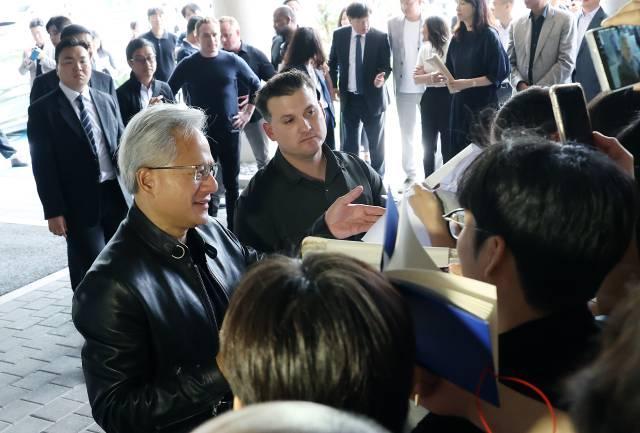
The strongest person masters himself
The ancient Chinese philosopher Laozi expressed the distinction between external strength and internal mastery with remarkable economy.
In Chapter 33 of the Tao Te Ching, he wrote: Zhi ren zhe zhi, zi zhi zhe ming. 知人者智,自知者明。
To understand others is wisdom; to understand oneself is enlightenment.
Then comes an even more powerful statement: Sheng ren zhe you li, zi sheng zhe qiang.
勝人者有力,自勝者強。
To overcome others is to possess strength; to overcome oneself is to be truly powerful.
These words might have been written for an age obsessed with artificial intelligence. Huang knew how to defeat competitors. He understood the relationship between computational architecture and industrial scale. He anticipated technological transformations that others failed to see.
But the capacity to win in the marketplace is not the same as the capacity to govern one's own desires.
External success can be measured in market capitalization, revenues, computing performance and technological influence.
Inner mastery has no comparable financial metric. It is tested through judgment, restraint, loyalty and responsibility.
The same distinction applies to Gates's wealth and philanthropy, Trump's political authority and the ambitions of governments competing for technological supremacy.
Power is not inherently corrupting, nor is ambition inherently immoral. But power without self-knowledge becomes dangerous. The essential question is not merely how much influence a person possesses. It is whether that influence remains subject to conscience.
An ancient Korean answer to the limits of power
There is another source of wisdom that deserves a place in this discussion. It comes from Korea's spiritual and philosophical heritage.
The Cheon Bu Gyeong — 天符經, often rendered in English as the Heavenly Talisman Scripture — is a brief text traditionally associated with Korean cosmological thought.
Its origins, transmission and interpretation remain subjects of scholarly debate. It would be mistaken to present any single reading as an uncontested historical fact.
But its symbolic language offers a compelling way to reflect on the relationship between human beings and the universe.
The text opens with: Il si mu si il — 一始無始一. And it closes with: Il jong mu jong il — 一終無終一.
These phrases have been interpreted as expressing a cosmic unity that transcends ordinary notions of beginning and end.
Reality is not simply a collection of isolated objects. It is an interconnected order in which apparent divisions may belong to a larger whole.
Near the heart of the text lies a phrase of particular importance: In jung cheon ji il — 人中天地一.
One possible philosophical rendering is: Within the human being, heaven and earth become one. The phrase should not be mistaken for a claim that human beings are gods or that they stand above nature.
It suggests almost the opposite. Human beings exist within a greater order. Their task is to embody, rather than violate, the relationship between heaven and earth.
Heaven may be understood as the realm of moral aspiration, principle and spiritual purpose. Earth represents material reality, the conditions of survival, work and economic life. Humanity stands between them, capable of bringing the two into meaningful harmony.
An idealism that ignores material reality becomes empty. A materialism that forgets moral purpose becomes destructive. A mature human being must reconcile both.
Leadership between heaven and earth
This is the philosophical force of In Jung Cheon Ji Il. It provides a particularly useful way of thinking about leadership.
Huang achieved extraordinary success in the material world. He helped build an enterprise that moved capital, technology and computing power across the globe.
But material success, however spectacular, does not establish inner completeness. Gates's career raises questions about the relationship between technological wealth, philanthropy and personal responsibility.
Trump's presidency raises questions about the relationship between political power, constitutional restraint and the moral obligations of leadership.
These men should not be judged by identical standards of conduct, because their circumstances differ.
But each confronts a version of the same philosophical challenge. Can the individual reconcile the practical realities of power with principles greater than personal desire? Can a leader act effectively in the world without becoming captive to the privileges of success? Can ambition remain accountable to conscience?
The ancient Korean phrase offers a profound answer. The true leader is not the person who possesses the greatest power, but the person who brings moral purpose and worldly responsibility into harmony within himself.
Heaven without earth is abstraction. Earth without heaven is appetite.
The human being must hold them together. That is not an antiquated religious formula.
It is a remarkably contemporary definition of mature leadership.
From a leather jacket to the semiconductor cold war
The significance of Huang's departure extends beyond the question of character. It has become entangled with the strategic competition between the United States and China.
Washington seeks to restrict Chinese access to the most advanced AI processors and the equipment required to manufacture them. Beijing is investing heavily in domestic alternatives, including processors developed by Huawei, manufacturing capabilities at SMIC and memory technologies pursued by Chinese producers.
The controversy involving Alice Huang and Megaspeed illustrates how difficult the technological boundary between the two countries has become.
A processor may remain physically inside a data center in Singapore or Malaysia while its computational capacity is accessed remotely by customers elsewhere.
The machine stays within one jurisdiction. Its economic value can travel through networks across borders.
For governments, this creates a new challenge. Export controls designed around the physical movement of goods must increasingly confront questions about cloud computing, ultimate users and the practical availability of advanced computational power.
That challenge is real.
But allegations about espionage, illegal diversion or government protection of particular individuals must still be tested against evidence.
National security is too important to be reduced to rumor. And the rule of law is too important to be suspended whenever a controversy becomes politically explosive.
For Korea, friendship is not a supply contract For South Korea, the consequences are especially significant.
Samsung Electronics and SK Hynix play major roles in the global memory industry, including the supply of high-bandwidth memory essential to advanced AI accelerators.
Their future cannot depend on the personal friendship of any one executive. The much-publicized camaraderie between Huang and leading Korean business figures — sometimes described through the Korean term kkanbu, meaning a trusted partner or close ally — may have helped symbolize industrial cooperation.
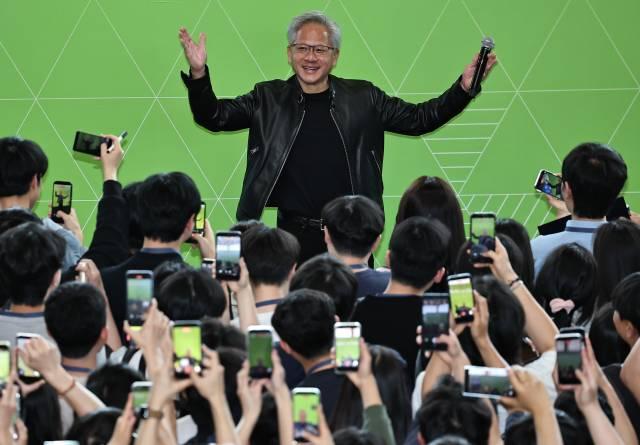
But friendship is not a supply contract. A photograph is not an industrial strategy.
Korean companies need technological leadership, diversified customers, long-term commercial agreements and reliable compliance with international regulations.
They must compete in a world where Nvidia remains powerful but where AMD, Broadcom and the major cloud companies are pursuing alternative architectures and custom processors.
The future will belong not simply to those who know powerful people, but to those whose technologies remain indispensable when powerful people depart.
What technology cannot teach us about being human
Artificial intelligence is extending human intellectual capabilities at a pace that would have seemed unimaginable only a generation ago.
Machines can process vast quantities of information, assist scientific discovery, accelerate engineering and perform tasks that once demanded extensive human labor. Robotics promises to reshape production and everyday life. Yet the central question remains unanswered.
Is human character developing as rapidly as human technology?
We can design processors of astonishing sophistication while remaining vulnerable to familiar impulses. We can build global information networks while damaging the trust of those closest to us. We can develop machines that analyze human behavior without necessarily understanding our own.
The philosophy of In Jung Cheon Ji Il suggests that civilization requires more than technical intelligence. It requires harmony among moral purpose, material life and the natural world.
Human beings are not separate from nature. Our lives remain finite. Our bodies depend on the earth. Our dignity is realized through relationships with other people.
Technology should therefore be judged not only by how much wealth it creates, but by the kind of human life it makes possible.
Bap, il and kkum: a human purpose for AI
In Korean, three simple words express an enduring philosophy of civilization: Bap, il and kkum — 밥, 일, 꿈.
Bap means a meal, but also suggests livelihood and the material foundations of existence. Il means work: the activity through which human beings create, contribute and accept responsibility. Kkum means dreams: the imagination, cultural aspiration and hope that give life meaning beyond survival.
A humane civilization needs all three.
Semiconductors help sustain modern economic life. Artificial intelligence is transforming the nature of work. But human beings must still decide what dreams these technologies should serve.
Without material security, freedom becomes precarious. Without meaningful work, prosperity can become hollow. Without dreams, technological progress loses its human purpose.
Only when livelihood, work and aspiration coexist can technology become civilization.
What remains when the jacket comes off? The black leather jacket will remain part of Jensen Huang's legacy.
For years, it represented innovation, independence and the confidence of a man who helped change the technological world.
Now it carries a more complicated meaning. It reminds us that the mythology surrounding a powerful individual can become inseparable from the fortunes of an institution. It reminds us that success does not eliminate vulnerability. And it reminds us that the most difficult form of leadership may be the governance of one's own conduct.
The jacket became a symbol of something much larger than fashion. It became the costume of an extraordinary corporate myth. And when the myth was shaken, the costume suddenly looked different.
Ancient wisdom offers a more enduring perspective. The I Ching warns of the dragon that rises too high. The Tao Te Ching teaches that the strongest person is the one who masters himself. And the Korean Cheon Bu Gyeong, through the phrase In Jung Cheon Ji Il, invites us to imagine a human being in whom heaven and earth are reconciled.
These teachings arise from different intellectual and spiritual traditions. But they converge on one essential truth.
Power is incomplete without restraint. Knowledge is incomplete without self-knowledge. And achievement is incomplete without responsibility.
That lesson applies to Huang, Gates and Trump, though their lives and responsibilities differ profoundly. It applies equally to corporations and governments.
The United States must exercise technological leadership without mistaking supremacy for unlimited authority. China must pursue technological independence without confusing national ambition with the power to overcome every constraint.
South Korea must protect its industrial future through capability, institutions and principled cooperation rather than dependence on individual relationships.
The greatest promise of artificial intelligence is not that machines may someday surpass human beings in calculation, memory or speed.
It is that humanity may use those machines to build a more dignified, creative and responsible civilization. But that future will require something technology alone cannot provide.
Conscience. The capacity to recognize limits. The discipline to place responsibility above appetite. And the wisdom to reconcile human ambition with the world that sustains it.
Greater than the semiconductors that move the world is the human conscience. Stronger than the power to rule the world is the discipline to govern oneself.
The leather jacket may be removed. The company may find another chief executive. The semiconductor industry may discover new leaders, new technologies and new centers of power.
But the fundamental human question will remain. Before we seek to master the world, can we learn to master ourselves? In Jung Cheon Ji Il.
Within the human being, heaven and earth become one. Perhaps that is where the wisdom of leadership begins. And perhaps that is where the civilization of artificial intelligence must ultimately find its soul.
* The author, Abe Kwak, is the Chairperson of the Asia-Pacific Media Association based in Seoul.
** The views expressed in this article are solely those of the author and do not necessarily reflect the editorial position of AJP.

Copyright ⓒ Aju Press All rights reserved.
Related News
-
 Naver and Kakao Mobility Confirm No Disruption in Collaboration with Nvidia
Naver and Kakao Mobility Report No Issues in Nvidia AI Infrastructure and Autonomous Driving ProjectsFollowing the resignation of Nvidia CEO Jensen Huang amid an affair controversy involving a woman accused of espionage, attention has turned to the business developments of domestic companies collaborating with Nvidia in the artificial intelligence (AI) sector.In the domestic IT industry, Naver, which has attracted significant investment from Nvidia, and Kakao Mobility, which recently signed an autonomous driving technology agreement, are both moving forward with their projects as planned, despite the leadership change at Nvidia.On November 13, Nvidia's board announced Huang's resignation and appointed Colette Kress as interim CEO. Huang stepped down from the board on the same day.Nvidia stated that it will continue to pursue its existing customer contracts, GPU supply, and next-generation product development as scheduled, despite the management changes.Huang co-founded Nvidia in 1993 and led the company for 33 years, transforming it from a graphics processing unit (GPU) manufacturer into the world's largest AI semiconductor company. He played a key role in developing AI semiconductor technology and spearheading major investments and strategic partnerships with global firms.KOSDAQ Struggles as 80% of Listed Companies See Stock Price DeclinesDespite government policies aimed at revitalizing the KOSDAQ market, individual stock prices have struggled to recover. This year, approximately 80% of KOSDAQ-listed companies have recorded negative returns, with some stocks plummeting by over 80%. Experts argue that fundamental reforms, including the exit of underperforming companies and restoring market confidence, are necessary before boosting the index.According to the Korea Exchange on November 13, the KOSDAQ index closed at 699.66, up 0.45% from the previous session. The number of declining stocks decreased significantly from 1,097 to 685, easing overall market pressure. President Lee Jae-myung's remarks during a policy meeting on the need for the exit of underperforming companies and increased transparency contributed to improved investor sentiment.However, the overall market performance remains weak. As of the closing price on this day, 1,391 out of 1,766 KOSDAQ-listed stocks had declined compared to the last trading day of the previous year, representing 78.8% of the total. This indicates that about 8 out of 10 KOSDAQ-listed companies have experienced stock price declines since the beginning of the year.The extent of the declines has also been significant. Among the stocks that fell, 226 saw declines in the range of 30% to 40%, while 24 stocks dropped by over 80%. As the upward momentum in the market weakens, losses for some investors have widened.Trading volume has also contracted. KOSDAQ trading volume decreased from 818.9 million shares at the end of last year to 416.8 million shares the previous day. Trading value also fell from 10.557 trillion won to 5.421 trillion won during the same period. The decline in both trading volume and value has resulted in reduced market activity.Data Breach Exposes Personal Information of 818 Participants in 'Everyone's Startup'Personal information of 818 participants in the 'Everyone's Startup' initiative, a startup support program by the Ministry of SMEs and Startups, was leaked due to a hacking incident involving a private AI solutions company.On November 13, the ministry reported that Amicus Rex, one of the 50 AI solution providers for the second phase of 'Everyone's Startup,' detected signs of an external hacking attack on its system at 8:30 a.m. on November 11.Subsequent investigations revealed that a total of 20,028 personal records were compromised, including those of the 818 participants in the second phase of the program.To validate ideas and commercialize them, 50 external AI solution providers operated AI solutions on their systems, with the ministry subsidizing the usage fees for participants. It was reported that personal data security was evaluated when selecting AI solution providers.Foreign Minister Park: Peace on the Korean Peninsula is a Shared InterestOn November 13, Foreign Minister Park emphasized that peace and stability on the Korean Peninsula are in the mutual interest of South Korea and China, highlighting the need for enhanced strategic communication between the two countries to advance the situation on the peninsula.According to Yonhap News, the two ministers expressed optimism about the upcoming meeting between the leaders of both countries during the Asia-Pacific Economic Cooperation (APEC) summit in Shenzhen next week during their remarks at the South Korea-China Foreign Ministers' Meeting held at the Diaoyutai State Guesthouse in Beijing.Minister Park stated, "The Korean Peninsula issue is a vital interest for South Korea, and peace and stability on the peninsula are in the shared interest of both countries. I hope we can continue to strengthen strategic communication between our nations to advance the situation on the peninsula."He added, "I expect that the leaders of both countries will meet in Shenzhen next week for the first time in 10 months, creating an important opportunity to further mature the strategic cooperative partnership between South Korea and China. I hope the friendship and trust established between the two leaders in Gyeongju will continue through Beijing to Shenzhen, strengthening the relationship between our countries."President Lee Calls for High-Level Task Force for Capital Market ReformOn November 13, President Lee Jae-myung stated, "There seem to be too many reform tasks that need to be addressed specifically for the exchange or capital market. I believe we should establish a high-level organization dedicated to this issue."During a policy meeting on capital market reform held at the Korea Exchange in Yeouido, President Lee emphasized the need for a dedicated task force (TF) for capital market reform.He remarked, "I think I made a mistake last year. I should have established a dedicated reform organization to push this forward vigorously, but I was too complacent, thinking it would go smoothly." He added that a survey should be conducted, opinions gathered, and tasks identified for legislation and implementation.He continued, "Let’s create a high-level organization that will focus on this issue beyond general administrative tasks. I suggest that both ruling and opposition parties in the National Assembly participate, along with private exchanges, investment institutions, and associations, to engage in vigorous discussions that will yield optimal solutions."He concluded by stating, "For issues with significant disagreements, let’s clarify the points of contention and report back so we can discuss and resolve them together."* This article has been translated by AI.
-
NVIDIA CEO Jensen Huang Caught in Alleged Honey Trap Amid AI Era
Intelligence agencies continue to wield the so-called 'honey trap'—using romantic relationships to extract confidential information—even in the age of artificial intelligence (AI). Jensen Huang, CEO of NVIDIA, has become embroiled in a scandal involving an affair with a woman suspected of passing information to the Chinese government.CNN reported that Huang resigned after a week of turmoil following reports of his affair with Alice Huang, who is suspected by U.S. authorities of having shared information with the Chinese government. Authorities are also investigating whether Alice Huang was involved in smuggling advanced AI chips.However, the specifics of how Alice Huang was recruited and whether any actual information was leaked remain unverified. The Chinese government has dismissed the espionage allegations as "baseless speculation." Isaac Stone Fish, founder of the corporate intelligence firm Strategy Risks, told CNN that the relationship itself poses a significant issue, regardless of whether any confidential information was actually shared.The 'honey trap' is a longstanding tactic in espionage. John Cipher, a former CIA officer, explained to CNN that authoritarian regimes can pressure agents by leveraging family connections or issues related to returning home to facilitate information gathering.The methods of honey traps vary, from exploiting sexual vulnerabilities to trained agents directly approaching and seducing targets. However, Cipher noted that it is often the case that intelligence agencies identify already established romantic relationships and then recruit one party to extract information.Historically, similar cases have recurred. During the Cold War, East Germany's secret police trained attractive men as 'Romeo spies' to approach female secretaries in West German government agencies and Western diplomatic missions. In China, a male Peking opera performer maintained a relationship for about 20 years with French diplomat Bernard Boursicot, who believed him to be a woman, and received embassy secrets in return.In the early 2000s, Katrina Leung, a Chinese-American FBI informant, was revealed to be a double agent passing secrets to China while also having a romantic relationship with her FBI handler.Experts predict that as AI technology becomes a cornerstone of national competitiveness, intelligence agencies will increasingly target executives in related companies. Peter Mattis, director of the Jamestown Foundation, assessed that since AI is broadly utilized across manufacturing, scientific research, and military sectors, any senior executive in AI firms could become a target for intelligence agencies.Cipher explained that even if the success rate of honey traps is only about 10%, successfully recruiting just a few individuals with critical information can yield significant results. Additionally, Stone Fish warned that this incident could further exacerbate distrust between the U.S. and China.* This article has been translated by AI.
-
Naver and Kakao Mobility Confirm Continued Collaboration with Nvidia Following Jensen Huang's Resignation
Jensen Huang, CEO of Nvidia, resigned amid an affair controversy involving a woman accused of being a Chinese spy, raising concerns about the ongoing projects of domestic companies collaborating with Nvidia in the artificial intelligence (AI) sector. In South Korea's IT industry, attention is focused on Naver, which has attracted significant investment from Nvidia, and Kakao Mobility, which recently signed an autonomous driving technology agreement. Both companies assert that they will continue their existing projects as planned despite the leadership change at Nvidia. On November 13, Nvidia's board announced Huang's resignation and appointed Colette Kress, the CFO, as interim CEO. Huang stepped down from the board on the same day. Nvidia stated that it will proceed with its major business operations, including existing customer contracts, GPU supply, and next-generation product development, as planned despite the management changes. Huang co-founded Nvidia in 1993 and led the company for 33 years, transforming it from a GPU manufacturer into the world's largest AI semiconductor company. He played a crucial role in developing AI semiconductor technology and spearheading large-scale investments and strategic collaborations with global firms. Given that key decision-making authority was concentrated in Huang, the industry is closely monitoring potential changes in Nvidia's global business strategy and its partnerships with domestic companies. Naver and Kakao Mobility, which have been expanding their collaboration with Nvidia in the AI sector, are particularly noteworthy. Naver has established a capital and technology partnership with Nvidia, securing a significant equity investment and jointly pursuing a global AI factory project. In June, Naver collaborated with Nvidia and global asset management firm Brookfield to build a gigawatt-scale AI factory. Last month, it signed a contract with Brookfield for computing infrastructure worth up to $9 billion and completed a capital increase investment of approximately 1.34 trillion won from Nvidia on November 6. Nvidia has become a major shareholder, acquiring 4.13% of Naver's shares. Naver plans to operate the AI factory based on Brookfield's infrastructure investment and Nvidia's GPU supply. A special purpose vehicle (SPV) funded by Brookfield will secure infrastructure such as GPUs and data centers, while Naver Cloud will provide AI computing services to external clients. The AI factory is set to begin operations in the first half of next year with a capacity of 55 megawatts (MW), expanding to 200 MW by 2028. Naver is also negotiating to secure Nvidia's next-generation GPU, 'Hopper,' and place large server orders. The industry is keen to see how additional collaborations with Nvidia will unfold to support the expansion of the AI factory project. However, Naver believes that the recent management changes will not have a direct impact on its established investment and business structure. A Naver representative stated, "We have already finalized major investment procedures and business structures, and Jensen Huang's resignation is a personal matter that will not affect our ongoing collaborative projects." Kakao Mobility recently signed a memorandum of understanding (MOU) with Nvidia to enhance Level 4 autonomous driving technology. On November 9, Kakao Mobility and Nvidia agreed to combine Kakao Mobility's self-developed autonomous driving AI technology with Nvidia's automotive computing platform and safety technologies to develop an autonomous driving system. Initially, Madison Huang, a senior director at Nvidia and Jensen Huang's daughter, was scheduled to visit South Korea to attend the signing ceremony, but her trip was canceled due to the controversy surrounding her father. Despite this, the MOU between the two companies was signed as planned. They aim to apply Nvidia's automotive AI computing platform, 'Drive AGX Orin,' along with sensor and computing technologies, to Kia's purpose-built vehicles (PBVs) to commercialize Level 4 autonomous driving services. Kakao Mobility maintains that there will be no disruptions to its technological collaboration and business initiatives. A Kakao Mobility representative stated, "Technical cooperation will proceed normally regardless of the management changes."* This article has been translated by AI.