
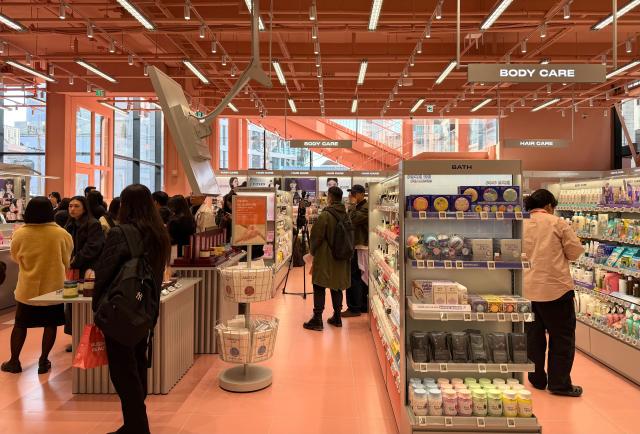
Guinness Atkinson Asset Management launched the Guinness Atkinson K-Beauty ETF, trading under the ticker KBTY, on the NYSE Arca exchange Friday, according to Bloomberg.
The fund tracks an index of 25 companies across South Korea's beauty industry, including Amorepacific, PharmaResearch, Kolmar Korea, APR, Pum-Tech Korea and Dongkook Pharmaceutical.
Unlike traditional cosmetics-focused investments, the ETF covers a broader range of businesses, from skincare brands and contract manufacturers to packaging suppliers and medical aesthetics companies.
The fund also includes medical aesthetics companies such as Classys and Hugel, which could benefit from rising demand for cosmetic treatments amid the growing popularity of GLP-1 weight-loss drugs.
The investment comes as Korean beauty products continue to gain international popularity, supported by the global influence of K-pop and Korean dramas.
South Korea's cosmetics exports reached a record $11.4 billion in 2025, making it the world's second-largest cosmetics exporter, according to figures cited by Guinness Atkinson from the Ministry of Food and Drug Safety.
Jim Atkinson, chief executive of Guinness Atkinson Asset Management, told Bloomberg that Korean beauty products have gained global appeal through their effectiveness, quality and competitive pricing.
He said the ETF was designed to capture long-term industry growth rather than simply capitalize on social media trends.
The fund charges an annual expense ratio of 0.55 percent and is expected to initially attract individual investors, although institutional interest could grow as the market develops.
However, Bloomberg noted that the popularity of consumer trends does not necessarily translate into sustained investment demand.
More than 320 ETFs have closed in the United States so far this year, including around two dozen thematic funds, according to Bloomberg.
One example is the Jakota KPOP & Korean Entertainment ETF, which sought to capitalize on the popularity of Korean music groups such as BTS and BLACKPINK but closed last year with just $1.4 million in assets.
Analysts warned that narrowly focused funds often struggle to attract enough investment to remain commercially viable.

Kim Hee-su
Kim Hee-su is a bilingual reporter at AJU Press, covering defense and foreign affairs. Before joining AJP in 2025, she worked at The Korea Times, where she wrote interview stories, including a profile of North Korean defector Kim Gum-hyok, and produced digital content. She also previously worked as a researcher for KBS News 9’s International News Department, supporting correspondents in 10 countries around the world. She graduated from the University of Toronto in Canada with a double major in Book and Media Studies and East Asian Studies.
Copyright ⓒ Aju Press All rights reserved.
Related News
-
 Lost in K-beauty, found in translation
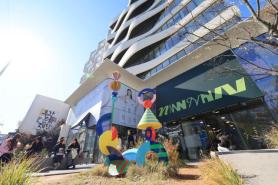
Visitors gather outside Olive Young N Seongsu in Seoul on Nov. 10, 2026, sitting near the entrance and taking a break from shopping. A colorful geometric installation stands in front of the glass-fronted building, creating a lively outdoor gathering space in the heart of Seongsu's shopping district. AJP Han Jun-gu SEOUL, November 10 (AJP) - Beauty shopping has become something of a ritual for visitors to South Korea, whether they arrive with a skincare shopping list or barely enough Korean to say hello. So AJP stepped into the K-beauty world of Olive Young as a pretend first-timer, armed with a smartphone, the Papago translation app and no particular expertise in cosmetics. The first Korean label refused to cooperate. The second translated in seconds. The difference wasn’t my Korean, which I was pretending not to know. It was my photography. That small discovery set the tone for a two-hour visit to Olive Young N Seongsu, South Korea’s largest Olive Young store. The mission: find out how far a foreign visitor could get with a phone, a translation app and a willingness to wander. First, though, I had to work out where everything was. A low-angle view shows the glass facade and distinctive curved white architectural features of the building housing Olive Young N Seongsu in Seoul on Nov. 10, 2026. The flagship store occupies a multi-story building in the busy shopping district near Seongsu Station. AJP Han Jun-gu Stop 1: Seongsu is always in season The weather may turn cold, but Seongsu rarely cools down. In this fashionable eastern Seoul neighborhood, tourists weave between cafes, shops and photo spots, with plenty of traffic on both the roads and the pavements. A minute or two from Exit 4 of Seongsu Station stands Olive Young N Seongsu, occupying a substantial slice of this busy shopping district. On Tuesday, a long queue had formed near an NCT DREAM pop-up. Fans emerging from the event carefully sorted merchandise and photo cards, while beauty shoppers rested nearby with bags at their feet. K-pop on one side, K-beauty on the other. An efficient arrangement for anyone hoping to fit both into one afternoon. Visitors rest on cushioned benches near interactive beauty displays at Olive Young N Seongsu in Seoul on Nov. 10, 2026. The first-floor interior features indoor plants, experimental lighting installations and a skincare display promoting slow-aging products, creating a lounge-like atmosphere. AJP Han Jun-gu Stop 2: A warm welcome for reluctant shoppers The entrance felt more like a lounge than a cosmetics shop. Opened in November 2024, Olive Young N Seongsu occupies about 4,628 square meters across a five-story building. Shopping and experience spaces fill the first three floors, with a members’ lounge on the fourth. High ceilings and broad windows kept the ground floor bright and open. There was a cafe, souvenir stamps to collect, a place to leave little handwritten messages and, crucially, seating. Even with customers coming and going, the space did not feel particularly noisy. Several men sat quietly while their companions shopped. Some looked quite settled. Whoever planned this floor had clearly spared a thought for the person who hears “just one thing” before a lengthy beauty-shopping expedition. Coffee, a comfortable chair and no obligation to develop an opinion on lipstick shades. A thoughtful provision. Tip: Agree on a meeting spot before splitting up. The first-floor seating is useful when one person’s quick browse becomes another person’s afternoon. Shoppers explore colored contact lenses and makeup products at Olive Young N Seongsu in Seoul on Nov. 10, 2026. A dedicated contact lens display features promotional portraits and rows of lens packages, while nearby counters showcase cosmetics from brands including LANEIGE. AJP Han Jun-gu Stop 3: Your perfect color may require an early start Upstairs, the pace picked up. Foundations, lipsticks and blushes filled the second floor, where shoppers compared shades and tried products at colorful displays. To the right was a makeup experience zone offering lighter sessions and more complete looks. Try a look, then shop for the products to recreate it: the route from curiosity to checkout was easy to follow. A personal color analysis booth caught my eye. These consultations help identify shades that suit a person’s complexion, information that can guide choices in makeup and clothing. I was curious. So, apparently, was everyone else. Registration had already closed for the day. The touchscreen showed that sign-ups had opened at 10 a.m. A customer who registered at 10:04 a.m. still had an estimated 150-minute wait when I checked. Four minutes after opening, and already a substantial commitment. My ideal color palette would have to remain a mystery. At least Papago did not require a reservation. Tip: If a color consultation or makeup session is the main attraction, check registration arrangements early. On this visit, turning up and hoping for the best did not work. A visitor uses a smartphone camera to examine product packaging at a MEDIHEAL skincare display inside Olive Young N Seongsu in Seoul on Nov. 10, 2026. The store offers a wide selection of Korean beauty products, with translation apps helping international shoppers read Korean-language labels. AJP Han Jun-gu Stop 4: Before blaming the app, check the photograph I opened Papago and approached the skincare shelves. First up was Real Barrier Ceramide Moisture Cleansing Foam, a facial cleanser marketed as removing impurities while helping skin retain moisture. I turned it around, photographed the Korean description with Papago’s camera translation feature and waited. The result was not especially enlightening. The photograph was blurry and taken at an awkward angle. My attempt to overcome the language barrier had run into a more basic problem: camera skills. For the second attempt, I picked up ROUND A’ROUND Green Tea pH-Balanced Cleansing Foam, a cleanser formulated with green tea. This time, I held the phone steady and made sure the text was clearly in view. Within seconds, the Korean description appeared in readable English. Two different packages hardly made for a scientific test, but the practical lesson was useful: give the app a clear label to work with. For a visitor trying to distinguish one cleansing foam from the next, being able to read what each product claims to do is a considerable help. Readable English is not a guarantee that every technical term has been translated perfectly. Still, it was enough to make the shelves feel much less impenetrable. Tip: Photograph labels straight on, keep the phone steady and check that the lettering is sharp. If the translation looks odd, try another photograph. A shopper picks up a blue tube of BRINGGREEN Bamboo Hyalu Lip Essence at Olive Young N Seongsu in Seoul on Nov. 10, 2026. The moisturizing lip treatment is displayed alongside other lip-care products, including Torriden lip essences, with electronic price tags showing promotional offers. AJP Han Jun-gu Stop 5: A beauty ranking, with one important distinction Papago also offered a starting point for shoppers who had arrived without a list. In the app’s Things section, a Beauty ranking highlighted products attracting international users’ attention through image translation activity. This was not an Olive Young sales chart. It showed what people were looking up — useful inspiration, with a different meaning from “bestseller.” The first five products on my screen covered a fair amount of beauty territory: • MEDIHEAL Madecassoside Essential Mask: a sheet mask marketed for soothing irritation-prone skin. • BRINGGREEN Bamboo Hyalu Lip Essence: a moisturizing lip treatment. • UNOVE Deep Damage Treatment: a hair-care treatment intended for damaged hair. • BIOHEAL BOH Probioderm 3D Lifting Cream: a moisturizer marketed for improving the appearance of firmness. • Beplain Mung Bean Low pH Cleansing Foam: a mildly acidic facial cleanser. Face, lips, hair: the list offered several possible shopping missions. It did not, however, tell me where to find everything. Around me, customers compared cleansers and added masks and creams to their baskets. I spent rather longer inspecting shelves before asking an employee for help. That worked. Papago could explain the label. Someone who knew the store could find the product. Tip: Use the ranking as a browsing aid, then show staff the product name or image if you get stuck. A translated description is useful; the correct shelf is better. The Men's Edit section at Olive Young N Seongsu in Seoul on Nov. 10, 2026. White illuminated shelves and central display stands showcase men's skincare and grooming products, with digital advertising screens promoting selected brands. AJP Han Jun-gu Stop 6: Come for the K-pop, stay for the face masks A TWS promotional area brought another dose of K-pop to the second floor. Nearby, a men’s skincare section was noticeably quieter. Elsewhere, shoppers moved between lip balms, makeup, cleansers, sheet masks, hand creams and snacks. Roughly 15 groups were waiting at checkout, with about four counters operating. Staff kept working and the queue moved steadily. Among the shoppers was Jingzhi Shao, a 21-year-old visitor from Beijing whose route to the store had begun with music. She first learned about Olive Young N Seongsu through Instagram. On Sunday, Nov. 8, she came to the neighborhood for an NCT DREAM pop-up and noticed the beauty store nearby. "I am a big fan of NCT DREAM," she said. Once inside, she found reasons to return. "There are just so many good and cute items here," Shao said. She was particularly keen on collaboration merchandise that could be difficult to obtain elsewhere. On an earlier visit, she had bought items from the Music & Worlds 26 collection associated with a pop-up at the Olive Young site. Skincare provided another incentive. Shao said face masks of comparable quality were difficult to find at such affordable prices in Beijing. K-pop had brought her to Seongsu. K-beauty was helping keep her there. A warm, wood-paneled lifestyle section at Olive Young N Seongsu in Seoul displays clothing, personal-care products and household goods on Nov. 10, 2026. A cushioned bench and carefully arranged shelves give the corner the appearance of a small living space rather than a conventional cosmetics display. AJP Han Jun-gu Stop 7: Follow your nose, then find a chair On the third floor, my progress slowed considerably. I may not have had strong feelings about cleansing foam, but fragrance was another matter. I browsed scents and used Papago to read Korean descriptions and ingredient information. Each photograph required a little care, and each fragrance deserved a little consideration. This was becoming a leisurely assignment. The store made lingering easy, with displays to explore and places to pause. A staircase near a corner led to the fourth-floor Olive Members Lounge, where a desk checked membership eligibility. This was not another public cafe. Access was for qualifying members, with drinks and desserts offered through membership benefits. The menu has included coffee, tea, tarts, pound cakes and tiramisu, although selections can vary. For everyone else, the first-floor cafe and seating remained available. By this point, I had developed a much deeper appreciation of the chairs. Tip: Do not count on the upstairs lounge as a public rest stop. Check eligibility before making plans around the coffee and cake. Stop 8: Two hours, zero purchases By the time I finished, roughly two hours had passed. I had browsed skincare and makeup, investigated Papago’s beauty ranking, missed my chance at a color consultation and spent longer than intended among the fragrances. I had bought nothing. Not a sheet mask, not a cleansing foam, not even an emergency lip balm. For someone with only a passing interest in cosmetics, spending two hours in a beauty store without getting bored was an achievement in itself. The appeal extended beyond the shelves: space to wander, products to try, pop culture to browse and somewhere to sit when enthusiasm outlasted stamina. Papago largely passed its part of the test. Clear photographs produced readable descriptions, and the ranking supplied ideas when I had none. Finding a specific product still sometimes required a member of staff. This was a test of the shopping experience, rather than the skincare. I left better informed about what was on offer, with no evidence yet of a brighter complexion. For anyone accompanying a committed beauty shopper, there are two perfectly respectable approaches: settle down with a coffee or follow them around three floors and count it toward the day’s exercise. I chose the latter. My wallet was pleased. My feet were less enthusiastic.
-
 Hyundai Glovis Partners with Southeast Asia's Largest Shopping Platform Shopee to Support K-Beauty Exports
Hyundai Glovis has teamed up with Shopee, Southeast Asia's largest online platform, to assist domestic cosmetics brands in entering overseas markets.As of this month, Hyundai Glovis has begun providing logistics services for domestic cosmetics brands under a global e-commerce logistics partnership signed with Shopee Korea, the company announced on October 26.Shopee is an e-commerce platform with approximately 700 million users, primarily in Southeast Asia and Taiwan. With the recent increase in local demand for Korean cosmetics, it has become a key sales channel for domestic brands. The K-beauty category on the platform is gaining popularity.Through this collaboration, Hyundai Glovis will offer an integrated 'End-to-End (E2E) logistics solution' that encompasses the entire supply chain, from domestic cargo pickup to air and sea transportation, customs clearance, local licensing, and fulfillment services.The partnership will also support varying licensing procedures and local logistics processes across different countries. The two companies plan to expand their service areas starting from Southeast Asia to include Latin America in the future.Hyundai Glovis is also accelerating its efforts to increase non-affiliated sales. The company aims to raise the proportion of non-affiliated sales, currently reported at around 30% in the first half of this year, to 40% by 2030.A Hyundai Glovis official stated, "We expect that the synergy between Shopee's platform influence and Hyundai Glovis's global logistics network will enhance competitiveness for domestic brands in their overseas expansion process."Meanwhile, Hyundai Glovis is expanding its global logistics hubs, recently signing a memorandum of understanding with the Philadelphia Port Authority for port expansion development. The company plans to strengthen its logistics services by integrating terminal operations and inland transportation beyond its existing finished vehicle transportation and storage business.* This article has been translated by AI.
-
K-Beauty Expands Its Reach in Latin America with Skincare and Skin Boosters
South Korean beauty companies are expanding their sales channels and product offerings in Latin America. With increasing consumption of Korean cosmetics in Brazil and Mexico, they are now pushing to supply skin boosters in addition to skincare and scalp care products. This strategy aims to secure a sales base tailored to the demand and distribution environment of each country.According to industry sources on October 18, APR plans to officially launch two types of Mediheal skin boosters based on poly-nucleotides (PN) in Chile this November. Following some overseas shipments in the first half of this year, the company is set to fully launch its medical beauty business in Latin America.The products include 'Age-R,' which is applied to the skin, and 'Age-R Plus G,' which is administered via subcutaneous injection. APR began operating its PN product production line in Pyeongtaek, Gyeonggi Province, in July. The company has also established a regulatory response organization for each country. After gaining distribution experience in Chile, it plans to expand supply to neighboring countries.Latin America is emerging as a new growth market for K-Beauty. According to data released by NielsenIQ (NIQ) in July, K-Beauty sales in Brazil and Mexico increased by 135% year-on-year through the first quarter of this year. Globally, K-Beauty sales rose by 53% compared to the previous year.Brazil and Mexico are markets where global beauty companies have established production and distribution networks. Companies like L'Oréal and Unilever have set up manufacturing facilities and research and development hubs there. Ulta Beauty opened its first overseas store in Mexico last year, and U.S. cosmetics company e.l.f. Beauty announced last month that it would begin sales through Sephora in Brazil.Domestic companies are broadening their product lines and sales channels to meet local demand. Amorepacific targets hydration and anti-aging needs in Mexico's dry climate. Since entering the market in 2023, it has expanded its offerings to include Innisfree and Mise-en-scène, covering color cosmetics and hair care. In June, the dermatological brand Aestura entered Sephora stores and official online platforms across Mexico.LG Household & Health Care is targeting the scalp care and skincare markets with its Dr. Groot and The Face Shop brands. Recently, at the '2026 Mexico K-Expo,' LG Household & Health Care conducted scalp diagnosis and product experience events, planning to expand offline with major distributors. The company also aims to strengthen its online channels, including the Latin American e-commerce platform Mercado Libre.However, tariffs and regulatory requirements are variables affecting market expansion. Brazil is noted for its high tariffs and complex product registration and certification processes, which are seen as barriers to entry. In Mexico, which does not have a free trade agreement (FTA) with South Korea, cosmetics are subject to tariffs of about 25%. An industry insider stated, "Latin America shows a higher interest in color cosmetics than in skincare, where K-Beauty has strengths. The regulatory systems in Mexico and Brazil also differ, making country-specific strategies crucial."* This article has been translated by AI.