
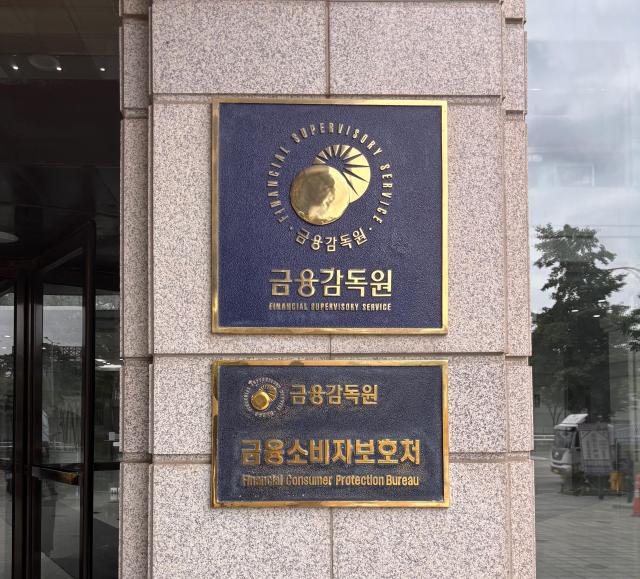
The warning came during a meeting with chief information security officers and security officials from 28 virtual asset service providers, including cryptocurrency exchanges. The regulator urged firms to follow emergency cybersecurity guidelines and thoroughly inspect externally accessible systems, IT assets and application programming interfaces (APIs), which allow software systems to communicate.
The move followed a series of hacking incidents across the financial sector that raised concerns over the safety of customer funds and personal information.
Lee Jong-oh, an FSS deputy governor in charge of digital and IT supervision, said recent attacks had exploited previously undetected system weaknesses that hackers identified rapidly using AI. He stressed that routine security checks alone were insufficient and urged companies to strengthen safeguards across their operations.
The regulator also warned that stolen assets and leaked customer data could undermine confidence in the broader cryptocurrency market.
Tags: Financial Supervisory Service, FSS, South Korea Cryptocurrency, Crypto Hacking, AI Cyberattacks, Virtual Asset Service Providers, Cybersecurity, Cryptocurrency Exchanges

Ryu Yuna
Yuna Ryu covers finance, capital markets and Southeast Asian affairs.
She is drawn to the questions that numbers raise and the stories that data alone cannot answer.
Prior to journalism, she worked at Hyundai Motor Company and the Singapore Chamber of Commerce, focusing on business strategy and international affairs. She has also hosted diplomatic receptions and international conferences as an MC.
Ryu holds a master's degree in Media and Communication from Korea University, where her research focused on neuroscience-based studies of media effects.
Copyright ⓒ Aju Press All rights reserved.
Related News
-
 HUG Signs Agreement with Hana Asset Trust for Rental Security Trust, 850 Households Apply
The Housing and Urban Guarantee Corporation (HUG) announced on the 20th that it has signed a 'business agreement to activate the rental security trust' with Hana Asset Trust.The rental security trust is a leasing model where tenants deposit their security deposits with HUG, which then manages the funds and pays the landlord a monthly rent from the generated profits. Tenants can reside without additional rent burdens while entrusting their deposits to HUG, and landlords receive regular income from the management of the deposits.Under this agreement, both institutions will collaborate on information exchange and joint promotion to expand private participation in the rental security trust.HUG has received applications for participation in the rental security trust for 850 households from Hana Asset Trust and plans to approve them sequentially by the first half of next year. Hana Asset Trust intends to expand its participation in the project, considering the ability to secure monthly agreed profits and reduce rental guarantee fees.Earlier, on the 12th, HUG also signed a business agreement with MDM Plus, a real estate development, finance, and leasing company, and received applications for participation from 20 households. Future applications will be gradually increased.Choi Jong-won, acting president of HUG, stated, "This agreement is significant as it broadens the participation base of the rental security trust through collaboration with major private companies," adding, "We expect that increased new participation from interested companies will energize the recruitment of landlords."* This article has been translated by AI.
-
Stealth Cheating Discovered at College Entrance Exam, Prompting Security Alerts
Concerns over advanced electronic cheating using artificial intelligence (AI) and miniature devices became a reality during the 2027 College Scholastic Ability Test, leading to unprecedented security alerts not only on the exam day but also for subsequent university essay and interview tests. Despite the education authorities mobilizing unprecedented preventive measures such as 'button stickers' and 'emergency disaster texts' right before the exam, the discovery of miniature filming and communication devices inside the exam hall in Yongin caused a major upheaval. The government has urgently suspended the disposal of last year's exam papers and has entered a comprehensive verification phase.According to police and education authorities on November 19, miniature cameras and earphones were found in a high school exam hall in Cheoin-gu, Yongin, where the College Scholastic Ability Test was being conducted. The education authorities notified the police of the discovery immediately after recognizing the equipment on site. No separate 112 emergency call was received, and the police plan to launch a full investigation once they receive detailed circumstances from the Gyeonggi Provincial Office of Education.The discovery has gained significant attention as it was confirmed shortly after the Education Ministry held a briefing on measures to prevent cheating. Earlier, Deputy Minister Choi Eun-ok stated during a briefing at 11 a.m. that day, "As of 8:30 a.m., 22 smartphones have been detected in nine cities and provinces nationwide due to the emergency disaster text sent out." The emergency disaster text was designed to trigger forced vibrations to detect prohibited electronic devices brought into the exam room, even if mobile phone notifications were turned off.During the briefing, Deputy Minister Choi explained, "Students detected will be handed over to the exam headquarters after the first session for a thorough check of whether they possess advanced devices such as miniature cameras," adding, "So far, there have been no reports of advanced device usage other than smartphones among the 22 detected." Furthermore, she emphasized that the distribution of alternative writing instruments designated as prohibited items and 'button attachment stickers' to block button cameras was completed without issues before the start of the first session. However, the actual discovery of miniature cameras and earphones in the Yongin exam hall revealed the limitations of the exam hall security system, rendering the authorities' announcements ineffective.On the same day, Prime Minister Han Seung-soo issued an emergency directive to halt the disposal of last year's exam papers. According to the Prime Minister's Office, Han instructed the Education Ministry to maintain the storage status of last year's exam papers until further notice. Typically, exam papers are kept at the exam school for one year before being disposed of on a date set by each school, and this year's exam coincides with the deadline for disposing of last year's papers.The Prime Minister's directive is seen as a proactive measure to secure objective materials for comparison and verification in light of growing public concerns over intelligent cheating using AI, especially since similar cheating suspicions were raised during last year's exam as well.Depending on the results of the police investigation and the Education Ministry's inquiry, the detected examinees will face severe legal and administrative penalties based on the type of offense. According to the Higher Education Act and the Education Ministry's regulations on handling cheating during the College Scholastic Ability Test, if electronic devices like the 22 smartphones detected by the emergency disaster text are simply possessed and not submitted before the start of the first session, the exam scores for that year will be completely invalidated. However, in cases of simple possession without intentional exam disruption or organized cheating, eligibility for the next year's exam will be maintained.In contrast, if intelligent and organized cheating is confirmed, such as filming the exam papers and transmitting them externally or receiving answers from AI or external accomplices, the penalties will be significantly increased. Not only will the exam scores for that year be invalidated, but eligibility for the next year's College Scholastic Ability Test will also be revoked, and as stated by the Education Ministry, charges such as 'obstruction of public duty by deception' will apply, leading to criminal prosecution and legal penalties.The emergency situation in the exam environment is expected to extend beyond the exam day to the upcoming university entrance exams. Typically, major universities' essay and interview tests begin the weekend following the College Scholastic Ability Test, but individual university exam halls tend to have relatively lax supervision and security screening compared to the exam halls for the College Scholastic Ability Test.An education sector official pointed out, "As miniature devices and AI technology combine, the existing security system centered on visual checks by supervisors and metal detectors has reached its limits," urging that the entrance exam security system must be comprehensively overhauled to include measures such as signal detection comparable to those used during the College Scholastic Ability Test, starting with the university essay exams this weekend.* This article has been translated by AI.
-
Privacy Commission Urges Enhanced Security Measures Against Java4Shell Vulnerability
The Personal Information Protection Commission (PIPC) has urged public institutions and private companies to implement urgent security measures regarding the high-risk security vulnerability known as 'Java4Shell' found in the Java execution environment.Concerns have arisen that this vulnerability could lead to breaches of personal information processing systems and large-scale data leaks, prompting requests for checks on Java versions and enhanced management of application programming interfaces (APIs) and database (DB) access rights.Made public on November 18, 'Java4Shell' is a security vulnerability that allows attackers to execute arbitrary commands remotely on target systems without separate authentication. The Ministry of Science and ICT and the Korea Internet & Security Agency (KISA) have provided guidance on response measures for this vulnerability.Java is a programming language and execution environment used in various operational systems of public institutions and businesses. If this vulnerability compromises personal information processing systems, it could lead to data leaks.The PIPC specifically warned that if the database access rights granted to application services exceed what is necessary for business operations, or if there is inadequate management of abnormal bulk queries and downloads of personal information, large-scale data leaks could occur.In response, the PIPC has called for swift security measures from personal information processors developing and operating Java-based systems.First, they should check the Java version used in their systems and implement measures against the vulnerability. This includes not only the Java installed on the operating system but also Java embedded in open-source software and application execution containers.Management of APIs linked to the system must also be strengthened. Unnecessary APIs should be disabled, and DB query rights should be limited to the minimum necessary for business operations. If there are concerns about the leakage of credential information such as authentication keys and tokens, they should be reissued, and API requests that lack authentication or access rights or do not comply with security policies should be blocked by default.Control over DB access paths should also be enhanced. Unnecessary full query rights granted to DB access accounts for applications should be revoked, and access rights should be limited to the necessary data and scope of work. In particular, when using Java-based DB management tools, direct access to the DB from external sources should be restricted, allowing access only to authorized administrators.The PIPC stated, "Each company and institution should check the access records and history of personal information queries and exports, including systems operated by entrusted companies, and it is advisable to manage the risk of personal information breaches considering the possibility of system compromise or circumvention of authentication and authority systems."* This article has been translated by AI.