

KISA and the Korea Media and Communications Commission (KMCC) disclosed the figures at a session in Seoul that reviewed this year's illegal spam trends and the results of opening the agency's spam data to outside partners.
The two bodies use artificial intelligence to automatically sort and analyze the flood of spam reported by the public. They then pass the findings to government agencies and private firms, which use them to screen out illegal messages and calls.
The 500 million texts were caught by an AI-based malicious message filter that Samsung Electronics launched with KISA in March last year. The filter draws on spam reports supplied by the agency.
LG Uplus began sharing voice spam data with KISA in July to sharpen the spam detection of ixi-O, its AI call assistant. Spam numbers flagged by ixi-O feed into KISA's real-time blocking system, which cut off about 12 million calls in the first three months.
The National Police Agency, the Financial Supervisory Service and the Ministry of Food and Drug Safety are among the government bodies that also use the data. They rely on it to open investigations, suspend phone numbers and block malicious web addresses.
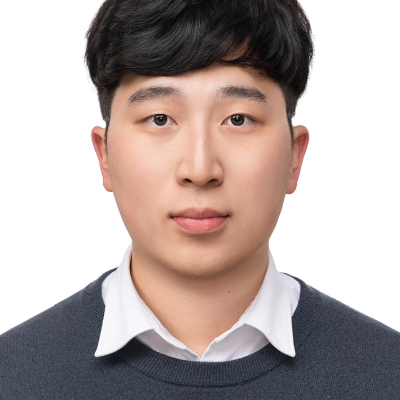
Kim Dong-young
Kim Dong-young is a bilingual journalist at AJU Press (AJP), covering Korean tech, energy, and bio/pharma.
He reports from the field at events like CES and APEC, runs AJP's YouTube channels,
and is pursuing a master's at Sogang's MOT program.
Copyright ⓒ Aju Press All rights reserved.
Related News
-
 'Instead of Creating AI, Focus on Using It'... Analyzing Domestic Beneficiary ETFs from Anthropic's IPO
Artificial intelligence (AI) developer Anthropic raised a record amount of funds on its first day of trading on NASDAQ, closing 17.1% higher than its offering price. As the capabilities of advanced AI models are confirmed, profit-taking sales have emerged following a short-term surge, leading analysts to suggest that investors should now focus on exchange-traded funds (ETFs) that invest in companies that 'use AI well' and sectors with strong profit resilience.According to the financial investment industry on November 20, Anthropic, which went public on November 19 (local time), closed at $97.17, up 17.1% from its offering price of $83. The IPO raised a total of $107.3 billion (approximately 143 trillion won) and set a record for the largest IPO ever, surpassing SpaceX's $86.2 billion in June. After opening at $111.5, the stock briefly surpassed $115 but closed below $100 as profit-taking increased.Market expectations that had been concentrated on leading AI companies and the semiconductor and infrastructure value chain are now stabilizing, with attention shifting to ETFs focused on 'strength' characterized by profit resilience and improved profitability rather than mere expansion.In 2027, 85.2% of the expected increase in net income for the S&P 500 is concentrated in the information technology (IT) sector (67.1% in semiconductors and equipment), while forecasts suggest that the growth rate of AI capital expenditures (CAPEX) by big tech companies will peak this year and slow down next year. Consequently, it is advised to reduce dependence on the AI infrastructure cycle and focus on the expansion of AI usage, changes in consumer channels, and profit resilience.The most notable area is the theme of 'AI utilization and software agents,' which enhances productivity and reduces costs through AI adoption. The large language model (LLM) token spending index has dropped to less than half of its peak in June, significantly reducing the burden of AI usage fees.Numerous products investing in U.S. AI software and agent companies are also listed on the domestic stock market. These include 'SOL U.S. AI Software' (109.12 billion won), 'TIGER U.S. AI Software TOP4 Plus' (53.59 billion won), and 'KODEX U.S. AI Software TOP10' (46.23 billion won).Products targeting the commercialization benefits of AI assistants (agents) include 'KODEX U.S. AI Agent Active' (32.92 billion won), 'HANARO U.S. Agent AI TOP2+' (10.49 billion won), and 'PLUS U.S. AI Agent' (3.49 billion won).As companies increase their use of AI, the demand for data protection and identity verification in the cybersecurity theme is also highlighted as a key alternative.Among the domestically listed products, 'TIGER Global AI Cybersecurity' with total assets of 85.95 billion won is representative. It tracks the 'Indxx Cybersecurity' index, which includes key global cybersecurity companies, allowing investment in the global security industry growth without currency exchange in the domestic market.As consumer spending habits change amid high inflation, themes related to consumer goods and retail have also emerged as defensive stocks. Approximately 80% of consumers using AI for online purchases (59.7% on Amazon, 19.5% at large discount stores) ultimately complete their payments at large retail chains, indicating that major retail networks with competitive pricing and delivery capabilities maintain their dominance.Domestic listed products include 'KODEX U.S. S&P 500 Consumer Staples,' which encompasses the entire U.S. consumer staples sector, and 'KODEX U.S. S&P 500 Consumer Discretionary,' which invests in the consumer discretionary sector.Jang Ji-young, a researcher at Hana Securities, stated, 'Next year, as revenue growth slows and high capital costs continue, it will be important to focus on sectors with lower profit volatility and improved profitability rather than size. It is time to expand investment targets to sectors with actual AI utilization and independent growth drivers beyond AI infrastructure development.'* This article has been translated by AI.
-
 AI cheating tests Korea's cradle-to-grave score obsession
In a subway in Seoul during rush hour. AJP Yoo Na-hyun SEOUL, November 20 (AJP) - In South Korea, passing an exam rarely means the testing is over. After 12 years of school comes the suneung, then English scores, recruitment tests and professional licenses, with civil service exams and law school admissions for those chasing security. Koreans call the tally “spec,” as though a person’s prospects could be read off a list of measurable parts. Artificial intelligence can now answer the questions built to separate the exceptional from the ordinary. That leaves Korea with two problems at once: how to stop cheating, and whether its exams still measure what society needs. The debate acquired a painful urgency Thursday when Lee Jin-woo, a 32-year-old perfect scorer on the Legal Education Eligibility Test, or LEET, was found dead amid allegations of exam misconduct. The allegations had not been established before his death. Police said they would continue investigating to determine the facts. His case unfolded as students nationwide sat the College Scholastic Ability Test, known as the CSAT or suneung, under heightened scrutiny over concealed electronic devices. By Friday, two major teachers’ organizations were calling for changes that extended well beyond the examination hall. Both argued that inspecting clothing and glasses more closely could not resolve the underlying challenge posed by AI. An exam supervisor holds a metal detector at Yongsan High School in Seoul on Nov. 19, 2026, as students take the 2027 College Scholastic Ability Test (CSAT). Suh Yi-Jong, a sociology professor at Seoul National University, pointed out the disruption raises a more fundamental question about what Korea rewards. “Older generations believe written tests like the suneung or the LEET are a fair way to judge people,” he told AJP. “Young people are now asking whether that is really right.” “AI can already solve problems that have set answers,” he said. “We have to ask whether testing based on rote learning still suits the AI era. Shouldn’t we be assessing what AI cannot do, such as values?” “Korea has judged people through competition since the gwageo,” he said, referring to the state examinations of the country’s dynastic era. “We have to ask whether the same methods will still fit in 2030 or 2050, when today’s young people will be living their lives.” “Even as a professor myself, I think we need to reconsider whether going to university is necessary,” he said. The price of staying in the race Korea’s pursuit of credentials has an economic logic. University prestige and professional qualifications can influence access to jobs offering better pay, protection and long-term security. The Organization for Economic Cooperation and Development’s 2026 survey of Korea links intense educational competition to divisions in the labor market. The gap between desirable jobs and less secure employment encourages young people to compete for credentials that might place them on the better side of that divide. The preparation begins long before university. A view of Seoul from Namsan Tower central Seoul. AJP Yoo Na-hyun. Households spent 27.5 trillion won ($20.6 billion) on private education for schoolchildren in 2025, according to the Ministry of Data and Statistics and the Education Ministry. Although total expenditure fell 5.7 percent, average monthly spending among participating students rose 2 percent to 604,000 won. For participating high school students, it reached 793,000 won. The survey covers supplementary academic instruction and activities such as music and sports, rather than exam preparation alone. Even so, it illustrates the substantial household investment in education outside regular schooling. Preparation continues into adulthood. In May 2026, 14.5 percent of economically inactive people aged 15 to 29 were preparing for employment examinations, government figures showed. The measure covers young people outside the labor force, rather than all young Koreans. Families and students are responding to the opportunities available to them. That makes reform more difficult: changing an examination will have limited effect if the rewards attached to the credential remain overwhelmingly unequal. When the machine gets full marks The technological challenge is becoming harder to dismiss. An analysis released Friday by Democratic Party lawmaker Hwang Jung-a’s office found that an Anthropic Claude model correctly answered all 40 introductory accounting questions from this year’s first-stage tax accountant examination. The office supplied images of the questions without answers or explanations and marked the responses against the official answer key. The experiment was conducted after the examination. The same analysis reported that 66 actual candidates scored at least 90 in the subject this year, compared with two last year. But no connection between that increase and AI use was established. A model’s ability to solve an examination does not demonstrate that any particular candidate used it. That distinction is essential in a controversy where suspicion can spread faster than verification. “Whether LEET top scorers actually used new technology, and whether that should be treated as cheating, are separate questions,” Suh said. “In the past, when someone did well on an exam, we assumed they had studied hard,” Suh said. “Now, when we see someone do well, we may wonder whether they wore smart glasses or used something we don’t know about. It’s a real headache.” A teacher tests smart glasses on a mathematics practice test paper during a training session ahead of the 2027 CSAT. Courtesy of Seoul Metropolitan Office of Education The result is a problem of trust as much as security. An examination must identify misconduct without making achievement itself grounds for suspicion. The Korean Federation of Teachers’ Associations described instructions to place stickers over buttons, inspect all glasses and visually check collars and sleeves. It said directions were changing even on the day before the CSAT. “There are limits to preventing cheating with advanced devices through teachers’ visual inspections and additional invigilators alone,” the federation said. It proposed a national examination security center under the prime minister, alongside a broader reassessment of education. “In the AI era, we must fundamentally reconsider what to teach and which competencies to assess,” it said. The Korean Teachers and Education Workers Union reached a similar conclusion. “AI technology is advancing by the day, but our university admissions system still treats scores on tests that require students to select predetermined answers quickly and accurately as an important criterion for university entry,” the union said. The OECD cautions that Korea’s efforts to reduce the weight of the CSAT have also made admissions more complicated. A broader range of requirements can create additional demand for private preparation. Reform can therefore reproduce the advantage it was intended to reduce. Interviews, portfolios and project work would still need transparent criteria and credible checks on who produced the work. Changing the format cannot, by itself, guarantee fairness. The larger challenge is to preserve accountability without allowing a score, a qualification or an allegation to become a verdict on an entire person. Writing on the professional networking platform Remember Connect on Thursday, Seoul National University business professor Shin Jae-yong urged the public to reconsider its tendency to elevate people on the strength of their academic backgrounds and credentials. He called for firm accountability for wrongdoing while leaving people a way to rebuild their lives. “I hope for a society that neither overvalues people because of their education and credentials nor turns a person’s wrongdoing into a rejection of their entire worth,” he wrote. Korea can strengthen the security of its examination rooms. The more demanding task is to reconsider how much of a person’s future it asks a score to decide.
-
AI's Impact on Exams: Reevaluating Qualifications for Talent
Cheating using artificial intelligence (AI) is shaking the trust in exams. Cases have been detected in college entrance exams, national qualification tests, middle and high school internal assessments, and university classrooms. Ensuring fairness in corporate hiring evaluations has also become a pressing issue. As AI becomes more commonplace, the methods of cheating may diversify. Strengthening supervision and enhancing detection technology are necessary. However, merely tightening surveillance in exam rooms will not resolve the issue. We must ask ourselves what we are trying to verify through exams and what opportunities we intend to provide to individuals.Exams are a mechanism of fairness that our society has built over time. Standardized questions and grading criteria reduce the potential for subjective judgment by evaluators. In fields where specialized knowledge is directly linked to life, safety, and rights, rigorous knowledge verification is even more critical. However, just because scores are objective does not mean they can fully assess a person's capabilities and qualities. While we can verify how much someone knows, it is difficult to determine how that knowledge will be applied based solely on scores. AI has made it challenging to judge abilities based on answers alone. The quality of the answers or the excellence of the results does not necessarily indicate the author's understanding and reasoning skills. Using AI to present one's abilities is undoubtedly a form of cheating. Ultimately, it is a matter of honesty and responsibility. We must question whether the process was as legitimate as the outcome.For a long time, our society has regarded grades and academic credentials as indicators of outstanding talent. However, high intellectual ability does not guarantee correct judgment. There have been numerous instances where individuals, despite being well-versed in laws and regulations, have violated principles, and those with expertise have ignored the safety and rights of others. Events that have eroded social trust are deeply intertwined with a lack of ethical awareness and responsibility rather than ignorance. Acquiring skills and using those skills correctly are two different matters. It is time to reflect this difference in our selection criteria.Quantifying character as a separate score is not the solution. A brief interview may not prove a person's character. If evaluators' preferences or biases come into play, even the fairness that score-based exams have maintained could be undermined. We need to consider how to assess judgment in situations where interests conflict, as well as the consideration for others and the responsibilities that come with choices, while maintaining the function of verifying knowledge and expertise. Evaluators must also exhibit humility and ethical responsibility, but a fair system that does not rely on individual goodwill must come first.Evaluation systems are not merely scales measuring already acquired abilities. They also serve as standards showing what abilities society values and what attitudes it rewards. In a society where scores dictate success, both schools and students are likely to cling to scores. Conversely, if we respect honest judgment and responsibility toward the community alongside intellectual achievement, the direction of learning could change. Changing evaluation criteria is about deciding what kind of individuals we want to cultivate, who we want to provide opportunities to, and whom we want to entrust with authority.The spread of AI cheating also presents an opportunity to reconsider the premises of knowledge-based evaluation. The humanities have long contemplated human dignity, respect for others, and communal responsibility, which are now values that cannot be ignored in education and selection processes. A society that misuses knowledge may be more dangerous than one that lacks knowledge. In an era where AI generates answers, exams must not only assess the ability to obtain those answers but also inquire about the individuals who will use them.* This article has been translated by AI.