
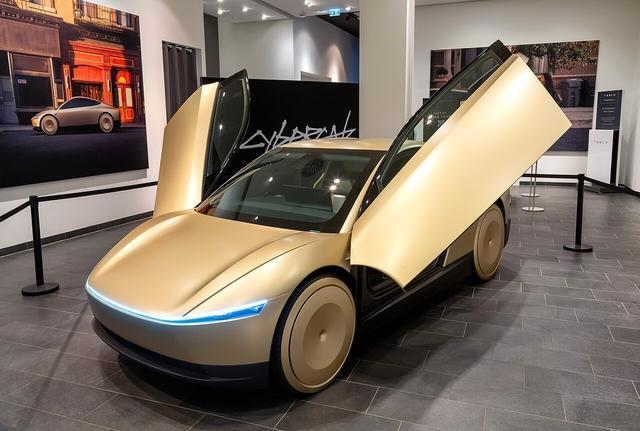
Now, a potential competitor has arrived. Tesla has begun deploying its Cybercab, a two-seat electric vehicle designed without a steering wheel or pedals, in its U.S. robotaxi fleet. Samples arrived in Anseong, Gyeonggi Province, on Nov. 12.
Tesla has stayed atop Korea's import market throughout the year since February. In June, Elon Musk celebrated Tesla's feat in Korea - the Model Y topping South Korea’s monthly vehicle sales in May — ahead of domestic models, not just other electric vehicles.
The figures cited in the post put Model Y sales at 8,762, ahead of the Kia Sorento’s 7,836 and Hyundai Grandeur’s 5,183. Tesla’s total sales reached 10,866 that month, exceeding BMW and Mercedes-Benz combined.
Whether Tesla can translate that showroom success into a driverless taxi business is another question.
The U.S. automaker has yet to announce plans to launch the Cybercab in South Korea. But its arrival raises questions about the competitiveness of domestic autonomous driving companies and whether foreign-made vehicles would face the same regulatory requirements as those developed locally.
“So far, we understand that Tesla has not expressed an intention to apply for a permit for the Cybercab. I have not heard of any overseas expansion plans for the vehicle,” Park Jung-hyuk, director of the autonomous driving policy division at the Ministry of Land, Infrastructure and Transport, told AJP on Friday.
Self-driving in the slow-motion lane
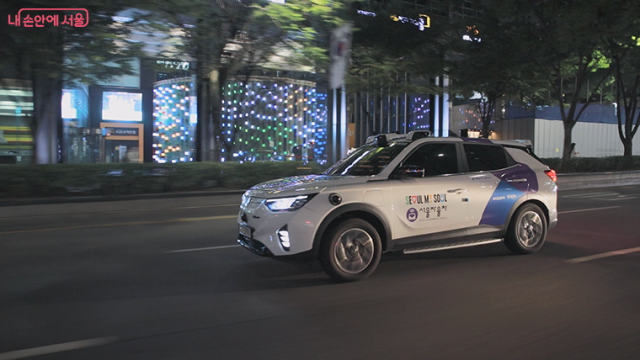
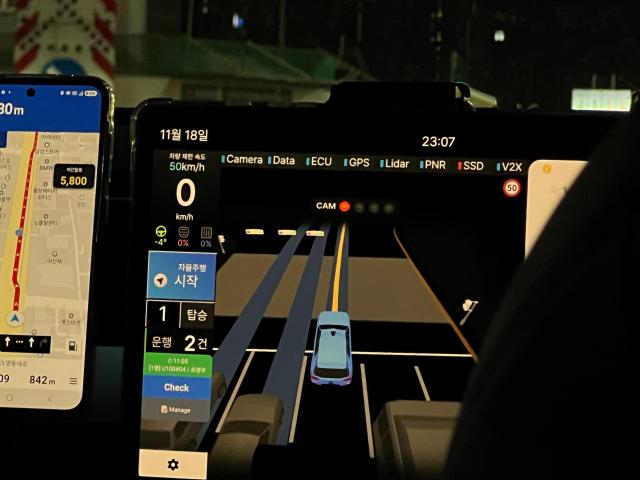
Seoul launched its autonomous taxi service on Sept. 26, 2024, with three vehicles operating in designated areas of Gangnam and Seocho.
The service initially offered free rides to familiarize passengers with autonomous driving technology and verify its safety in urban traffic. The city recorded 7,754 rides through the end of February this year, reporting no accidents attributable to autonomous driving technology during the period.
The fleet expanded to seven vehicles in March before the service became fee-based on April 6. Another expansion on Aug. 20 brought the total to 19.
According to the Seoul Metropolitan Government, the service recorded 15,140 cumulative rides through July 31, including 6,176 paid trips.
Passengers can book vehicles through the Kakao T application between 10 p.m. and 5 a.m. on weekdays within a designated area covering 20.4 square kilometers. Fares range from 4,800 won to 6,700 won, depending on the time of travel, without additional charges based on distance or travel time.
Autonomous driving developer SWM operates 13 vehicles based on KG Mobility’s Korando e-Motion and Torres EVX, while Kakao Mobility operates six modified Kia EV6 vehicles.
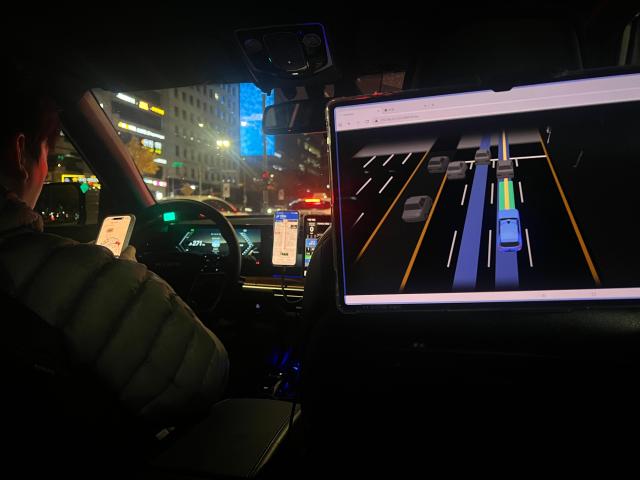
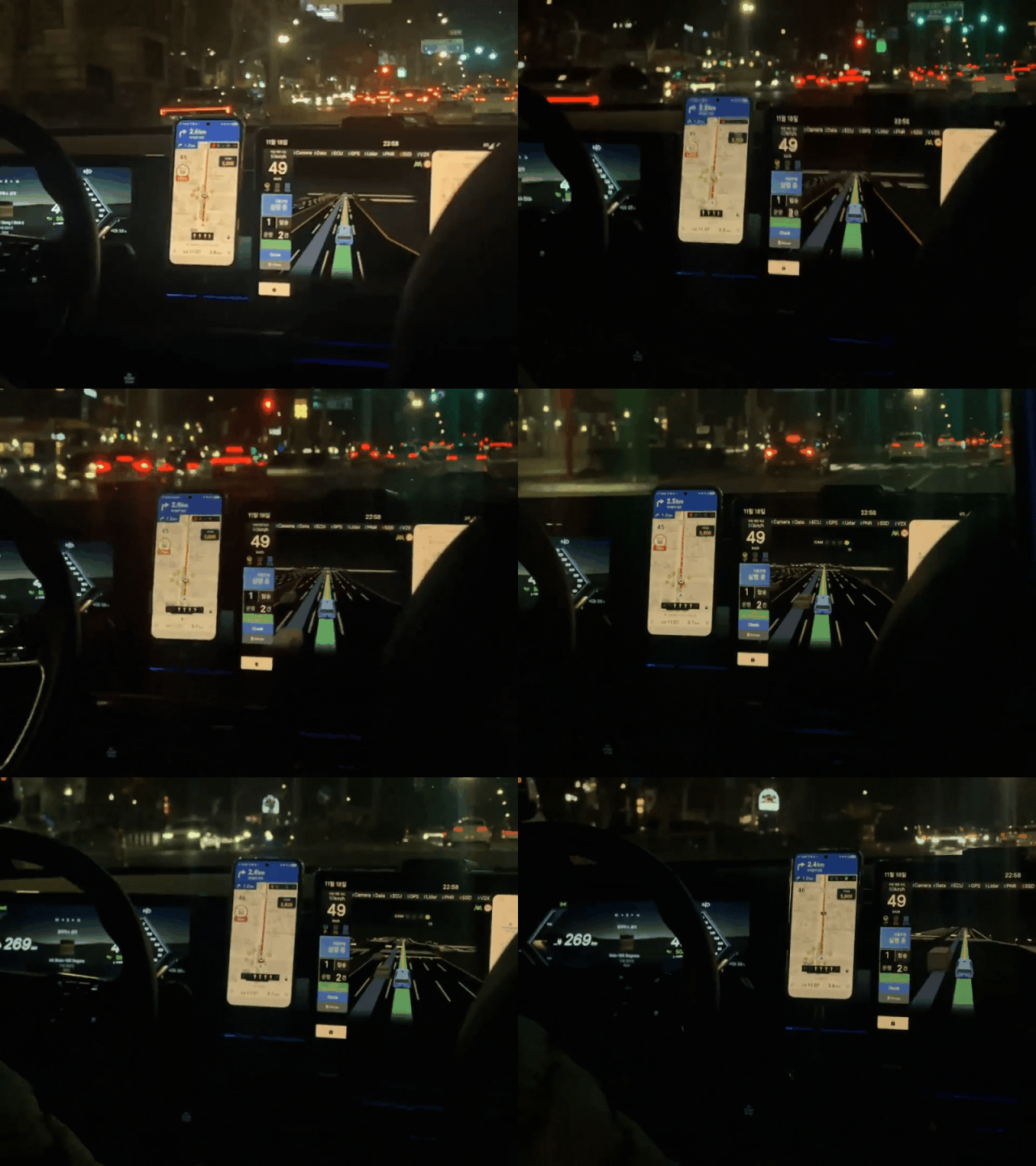
The vehicles use cameras and other sensors to identify pedestrians, surrounding traffic and obstacles. Technologies such as radar and LiDAR measure distances and generate three-dimensional representations of the driving environment.
Kakao Mobility said in August that it had spent five months developing an urban driving AI planner based on end-to-end technology, in which an integrated artificial intelligence model handles functions ranging from environmental perception to vehicle control.
The company has also developed algorithms to respond to unpredictable situations, including jaywalking, illegally parked vehicles and motorcycles, and has been collecting daytime driving data since June.
The city is preparing to introduce three additional vehicles targeting Level 4 autonomy in Sangam, western Seoul, in December. Level 4 allows a vehicle to drive without human intervention within specified operating conditions.
“Initially, the driver’s seat will be left empty, but a safety manager will sit in the front passenger seat because of safety considerations,” an official from the Seoul Metropolitan Government’s future transportation division told AJP.
“As the technology develops, we will gradually expand toward fully unmanned operations.”
Tesla’s head start in scale and data
Unlike the modified production vehicles operating in Seoul, the Cybercab was developed specifically for driverless transportation, combining Tesla’s camera-based autonomous driving technology with a dedicated vehicle platform.
Tesla’s third-quarter earnings report said its overall robotaxi service had accumulated nearly 2 million miles, or 3.2 million kilometers, of unsupervised driving by the end of September. Its service in Austin, Texas, operates 18 hours a day.
The company’s established presence in South Korea also provides a growing base of vehicles using its driving software.
According to data submitted for an October parliamentary audit, 238,968 Tesla vehicles were registered in the country as of
the end of September. Of those, 53,477 were capable of using Tesla’s Full Self-Driving (FSD) software.
Some 30,303 vehicles had used the system, accumulating 91.8 million kilometers of driving on Korean roads.
The FSD system currently available in South Korea requires active human supervision and is distinct from fully driverless robotaxi technology.
Tesla’s integrated manufacturing and software business also differs from the operating structure of Seoul’s autonomous taxi program, which relies on modified vehicles and central government funding.
Different regulatory hurdles
Park said vehicles that have already satisfied automotive safety certification requirements can obtain temporary operating permits relatively easily after being equipped with autonomous driving systems.
“It is relatively easy for vehicles that have already been self-certified to operate. The vehicles currently operating in Gangnam are based on certified production vehicles that have been modified,” he said.
Vehicles such as the Cybercab, which lack conventional driving controls, would require separate consideration under South Korea’s automotive safety framework.
The government currently provides safety exemptions for uncertified vehicles undergoing research, experimentation and technology demonstrations. However, foreign companies seeking to import commercially developed vehicles may find it more difficult to qualify.
“For domestic vehicles, the purpose is research and experimentation. But if a foreign vehicle is brought into the country after its research and experimentation have already been completed, the purpose of granting an exemption becomes less clear,” Park said.
“The government grants exemptions to allow vehicles that do not meet existing standards to undergo demonstrations. It is not easy to grant such exemptions to foreign vehicles.”
South Korea’s autonomous vehicle commercialization law nevertheless provides a performance certification framework covering both domestically manufactured and imported vehicles.
On Nov. 13, the transport ministry introduced detailed certification regulations, including a general requirement for operating records covering at least 180 days and 10,000 kilometers.
Separate approval is required to verify a vehicle’s suitability for the road, weather and communications conditions of its intended operating area.
A Seoul city official said vehicle safety certification falls under the jurisdiction of the central government, while local authorities issue passenger transportation permits.
“For vehicles without a driver’s seat, safety standards different from those applicable to existing vehicles are necessary. Those standards are currently being discussed and revised at the central government level,” the official said.
Chinese competitors already testing Korean roads
While Tesla has no confirmed plans to introduce its robotaxi service in South Korea, Chinese autonomous driving technology is already being tested in Seoul.
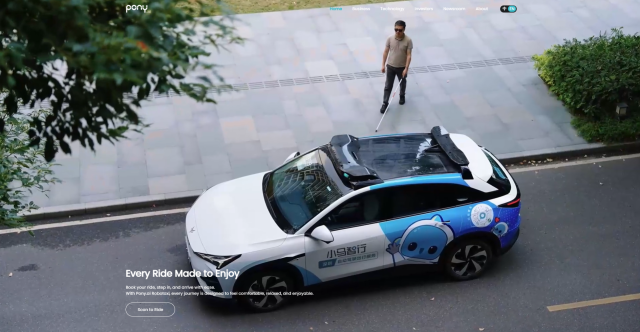
In August, South Korean autonomous driving company FutureLink announced a partnership with Chinese robotaxi developer Pony.ai to introduce 200 next-generation autonomous taxis, targeting fully unmanned operations by 2028.
FutureLink has been testing modified Hyundai Kona Electric vehicles equipped with Pony.ai technology in Gangnam since last year.
“Chinese vehicles are already operating under temporary permits. There are about 10 of them, but Seoul has not granted them permits for paid transportation services,” Park said.
He said he understood that security concerns, including the potential transfer of driving information overseas, were among the issues being considered.
The government is preparing additional regulations governing autonomous vehicle data, cybersecurity and remote monitoring.
“We are preparing to make it mandatory for autonomous driving service providers to locate their servers in South Korea and store their data domestically,” Park said.
Under a regulatory reform plan announced on Oct. 23, the government aims to prepare legislative amendments in the first half of 2027, followed by detailed data security standards in the second half.
Government push for commercialization
Seoul acknowledged in an August policy announcement that South Korea remained focused on small-scale demonstrations while the United States and China were pursuing large-scale commercialization of driverless robotaxis.
The city aims to expand its autonomous taxi fleet in Gangnam and Sangam to 50 vehicles by 2027. Further expansion will involve consultations with the existing taxi industry.
On Oct. 1, Seoul signed an agreement with Hyundai Motor and the Seoul Bus Transportation Association to establish an industrial ecosystem for Level 4 autonomous buses.
The initiative calls for dedicated vehicle development, standardized sensors and AI training data, and the sharing of driving information with domestic technology companies.
The city plans to conduct technology development and demonstrations in 2027 and 2028, begin large-scale deployment in 2029 and introduce 500 autonomous city buses by 2030.
The transport ministry is also pursuing a citywide autonomous driving demonstration project in Gwangju involving Hyundai Motor, Autonomous A2Z and RideFlux.
The project calls for 200 autonomous vehicles, with the first scheduled to begin operating on Nov. 30 and 120 expected to be deployed by the end of this year.
The ministry plans to expand similar demonstration projects to other local governments from 2027, targeting more than 1,000 autonomous vehicles participating in trials nationwide by 2030.
Joonha Yoo
Joonha Yoo is a bilingual journalist at AJU Press (AJP), covering music, culture, entertainment and Korea’s automotive industry.
Raised in Fort Collins, Colorado, he often writes from the scene, bringing firsthand detail to stories ranging
from BTS comeback concerts to unique cultural events that catch the world's eye.
Copyright ⓒ Aju Press All rights reserved.
Related News
-
 Teen Caught Driving Taxi with Fake License on First Day of Work
아버지의 이름으로 택시운전 자격증을 딴 10대가 운행 첫날 교통사고를 내 명의도용 사실이 들통났다. 17일 연합뉴스에 따르면 여수경찰서는 공문서 부정행사, 위계에 의한 업무방해 혐의로 A(19)씨를 입건했다. A씨는 지난 7일 오전 11시 50분께 광주특별시 여수시 문수동 도로에서 손님을 태우고 택시를 운전하다가 다른 승용차를 들이받았다. 운전 자격을 취득하고 택시를 운행한 첫날 발생한 사고였다. A씨는 경찰 조사 과정에서 자신의 이름과 생년월일을 댔다가 택시 운전자격증과 인적 사항이 다른 사실이 들통났다. A씨는 교통안전공단에서 아버지의 면허증을 이용해 시험을 치르고 자격증을 땄고 택시 회사에 취업한 것으로 드러났다. 택시 운전 자격시험은 만 18세 이상, 운전면허를 보유하고 운전경력 1년 이상이어야 응시할 수 있다. 경찰은 A씨가 면허증을 취득했지만 운전경력이 짧아 아버지 명의로 자격시험을 치른 것으로 보고 있다. 10대 아들이 50대 아버지 행세를 했는데도 자격 시험장은 물론 택시회사도 파악하지 못했다. 교통안전공단은 A씨의 택시 운전 자격을 취소하고 시험 관리를 강화하겠다고 밝혔다.* This article has been translated by AI.
-
Taxi Workers' Union Calls for Fund to Support Job Transition Amid Autonomous Vehicle Rollout
The Korean National Taxi Workers' Union (전택노련), which has previously demanded 'data sovereignty' and 'job security' ahead of the introduction of autonomous taxis, is now calling for a fund to support job transitions for workers.This fund is not merely a coexistence fund; it is specifically aimed at job transitions for taxi workers and will be discussed at the 'Social Dialogue on Autonomous Driving' meeting organized by the Ministry of Land, Infrastructure and Transport on the 25th.According to industry sources on the 16th, the union plans to propose the establishment of a worker transition fund at the meeting. They will also present concrete alternatives beyond the previously mentioned roles of monitoring and emergency response for existing taxi workers.The worker transition fund is intended to provide resources to help taxi workers move into new roles as autonomous taxis become operational. The proposal emphasizes joint contributions from the government and companies involved in platforms and autonomous driving to invest in retraining existing taxi drivers and discovering new job opportunities.The union believes it is essential to secure new job areas for existing taxi drivers to remain in the labor market during the era of autonomous driving. They argue that relying solely on roles like monitoring and emergency response will not suffice for adequate job transitions. Therefore, they plan to explore new job opportunities in areas requiring human involvement, such as support for transportation for vulnerable populations and caregiving services.Industry experts estimate that as the era of autonomous driving progresses, about 40% of existing taxi workers will need to transition to new roles. Given the aging workforce in the taxi industry, they argue that support should go beyond merely changing job roles to include professional training that helps workers settle into stable employment.The scale of the fund and the contribution ratios from different companies will be discussed in the future. With the mobility industry projecting 2029 as the year for the commercialization of autonomous driving, the union insists that concrete measures for worker transitions must be established before implementation. They also plan to conduct research to calculate the costs associated with necessary training and the operation of new services.This fund proposal builds on the union's previous demands for data sovereignty and job security, evolving into a concrete action plan.The union has long argued for the recognition of the value of data accumulated by taxi drivers during their operations, while also insisting that if existing jobs are eliminated due to the introduction of autonomous taxis, workers' employment must be guaranteed.This time, they have advanced their demands for the value of data and job security to propose that the government and companies jointly establish a fund to cover the costs of retraining and designing new job roles.Meanwhile, the dialogue group, which was launched earlier this year, has held a total of six meetings to date. Participants include the Ministry of Land, Infrastructure and Transport, the taxi industry, labor representatives, and platform companies, discussing licensing systems and operational plans for autonomous taxis.In February, corporate and individual taxi operators and Kakao Mobility presented related topics, while Uber presented in March. In April, the Ministry proposed multiple institutional scenarios based on the premise of introducing autonomous taxis.Discussions have included various options, from allowing only existing taxi license holders to operate autonomous taxis to establishing a separate licensing system for autonomous vehicles.A representative from the union stated, 'We are not trying to obstruct the autonomous driving business; rather, we aim to identify roles that require human involvement in the era of autonomous driving so that workers can take on new roles. The government, platform companies, and businesses related to autonomous driving should jointly invest in ways for workers to sustain their livelihoods.'* This article has been translated by AI.
-
BYD Electric Taxi Sales Surge 15-Fold in South Korea, Overtakes KGM
Chinese electric vehicle manufacturer BYD has seen its taxi sales in South Korea increase more than 15-fold over the past year, surpassing KG Mobility (KGM) to become the third-largest supplier after Hyundai Motor and Kia. Although there remains a significant gap with domestic competitors, analysts predict that BYD will continue to expand its presence in the South Korean market, particularly in the personal taxi segment.According to data from the Ministry of Land, Infrastructure and Transport obtained by lawmaker Kang Deuk-gu of the Democratic Party, BYD registered 305 new electric taxis from January to August this year, a dramatic rise from just 20 during the same period last year.This growth has positioned BYD as the third-largest supplier of new electric taxis, following Kia (3,582 units) and Hyundai (2,928 units) for the same timeframe. This marks a significant advancement for BYD, which has only been actively selling in the domestic market for about a year. The company has moved up one rank from last year, overtaking KGM, which saw its registrations decline from 320 to 212 units, a drop of approximately 33.8%.BYD's rapid expansion can be attributed to its cost-effective strategy. Electric vehicles generally incur lower maintenance costs compared to LPG vehicles, and BYD's initial purchase prices are lower than those of major electric models currently offered by domestic manufacturers. This aggressive pricing strategy is allowing BYD to penetrate the electric taxi market effectively.For instance, BYD's mid-sized electric SUV, the Sea Lion 7, is priced at 44.9 million won, which is over 2 million won cheaper than Hyundai's mid-sized electric SUV, the Ioniq 5, which starts at 47.35 million won. The price difference compared to the mid-sized electric sedan Ioniq 6 (48.56 million won) is even greater, reaching 3.66 million won.This cost-effective approach is particularly resonating in the personal taxi market. From January to August, 94.1% of BYD's new registrations were for personal taxis (287 units), while only 18 units were registered for corporate taxis. Given that personal taxis accounted for 81.3% of all new electric taxi registrations during this period, BYD's strategy appears to be effective in this segment.Looking ahead, BYD is expected to continue expanding its presence, starting with personal taxis and eventually moving into corporate sectors. However, domestic manufacturers still dominate in terms of cumulative electric taxi registrations. As of the end of August, Hyundai held a market share of 54.1%, followed by Kia at 41.7%, KGM at 3.0%, and BYD at 0.8%.Nonetheless, the narrowing gap is likely just a matter of time. BYD reportedly received inquiries from rental and corporate taxi companies early in its market entry but declined them, fearing that rapid supply through large corporations could cement a low-cost brand image. A BYD representative stated, "If the brand image becomes fixed, it could be quite challenging to escape that later on. For now, we are focusing on individual customers."* This article has been translated by AI.