
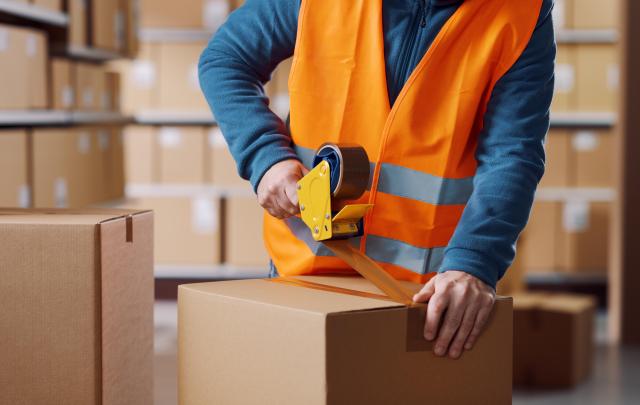
SEOUL, November 29 (AJP) - South Korea's Ministry of Employment and Labor on Sunday urged employers to limit consecutive night shifts and give extra rest to people working between midnight and 4 a.m., the hours that keep the country's overnight delivery services running.
The recommendations cover warehouse staff who sort parcels for early-morning delivery. This group has drawn public attention after a series of workers died during night shifts at logistics centers run by Coupang, South Korea's largest e-commerce company.
In South Korea, shoppers can order groceries and household goods late at night and find them at their door before they wake up. The service depends on warehouse workers who pick, pack and sort orders through the night, and on drivers who deliver them before dawn.
In November 2025, two contract workers collapsed and died within five days of each other during night shifts at Coupang warehouses in Gyeonggi Province, which surrounds Seoul. One of them, a man in his 50s, collapsed at about 2 a.m. while picking orders on a shift scheduled to run from 6 p.m. to 4 a.m.
Three months earlier, another worker in his 50s collapsed and died while sorting goods in a freezer at a Coupang warehouse in Yongin, south of Seoul.
Labor groups have blamed the long overnight shifts. Police said some of the workers had pre-existing health conditions and ordered autopsies to determine the causes of death.
Authorities have formally linked at least one such death to work. Jang Deok-joon, 27, died at home in October 2020 after finishing a night shift sorting goods at a Coupang warehouse in Chilgok, North Gyeongsang Province. The state-run Korea Workers' Compensation and Welfare Service ruled in February 2021 that his death was caused by overwork, and Coupang apologized.
At a joint parliamentary hearing on Dec. 30, 2025, Coupang's interim chief executive, Harold Rogers, apologized again to Jang's family and to the family of a Coupang driver who died in a crash while making early-morning deliveries on Jeju Island. "I acknowledge all responsibility and am sincerely sorry for their deaths," he said.
The new guidelines were drawn up by a panel of labor, business and government representatives working on ways to cut actual working hours. They call on employers and workers to agree on keeping consecutive night shifts to three days or fewer, citing existing health standards that already set that limit for shift workers and nurses.
Employers can also guarantee at least 24 hours off before a worker moves from a night shift to a morning shift, and at least 48 hours off after two or more consecutive nights, the guidelines say.
The hours between midnight and 4 a.m., which the guidelines call the "ultra-late-night" period, get separate treatment because the health and safety risks are higher. Employers are asked to check strictly whether work in those hours is truly necessary, to try to offer longer breaks than the law requires or short naps during the shift, and to allow more recovery time once the shift ends.
Tasks that become more dangerous when workers are drowsy should be moved out of those hours where possible, and closer supervision is required when they cannot be.
If health checkups find sleep disorders or heart and blood vessel problems, employers should reduce the worker's hours or move the worker to day shifts.
Night work in South Korea is paid at a 50 percent premium. Employers may give time off instead of the extra pay, and the guidelines call for additional leave on top of that for work done between midnight and 4 a.m.
The guidelines are not legally binding. Delivery drivers who bring orders to doorsteps before dawn are not covered, because their work falls under a separate law governing delivery services. The ministry said it would work with the Ministry of Land, Infrastructure and Transport to discuss measures for them.
To encourage change, the government will expand a program that subsidizes companies for up to a year when they cut working hours without reducing pay and hire new staff. From next year, employers that reduce work between midnight and 4 a.m. will receive an extra 200,000 won ($149) per worker, and support for overhauling shift systems, long working hours and safety-related work will extend to companies with 300 or more employees.
Park Sae-jin
Experienced journalist and editor at AJU PRESS specializing in multilingual news. I cover international diplomacy, geolpolitics, and policy, consistently delivering highly accurate, compelling reporting for a worldwide audience.
Copyright ⓒ Aju Press All rights reserved.
Related News
-
 US Criticizes South Korea's Fines on Coupang, Reviews Response Measures
The White House criticized South Korea's repeated imposition of fines on Coupang, claiming that Korea has violated its commitments made with President Donald Trump, according to a report by the conservative US outlet Fox News on the 25th (local time). The US State Department also stated that it is reviewing policy measures to respond to discrimination against American companies, raising the possibility that the Coupang issue could escalate into a Korea-US trade conflict.According to the report, a White House official claimed that despite the South Korean government’s promise to treat American tech companies, including Coupang, fairly as stated in the fact sheet released during the Korea-US tariff negotiations last November, it has taken discriminatory actions. The official added that the White House expects the South Korean government to adhere to its commitment to treat American companies fairly.A State Department official also asserted that the Korean Fair Trade Commission continues to 'attack' American companies, claiming this threatens the broader context of the Korea-US alliance. The State Department indicated that it is actively reviewing various policy options to respond if discriminatory measures are determined.However, a spokesperson for the US Embassy in Korea told Fox News that "all investigations and decisions by the Korean government, including the fines imposed on food delivery service companies for anti-competitive practices, have been conducted legally under relevant laws" and that "the right to legal remedies under Korean law is also fully guaranteed."Coupang was fined a total of 624.68 billion won (KRW) in June related to a data breach affecting approximately 37.55 million individuals and the unauthorized collection of member records that occurred at the end of last year. In response, Coupang filed for a cancellation and suspension of the fine on September 7. However, the suspension request was dismissed by the court this month.Amid Coupang's extensive lobbying, criticism of the South Korean government continues in the US Congress. Representative Darrell Issa (California), a hardliner within the Republican Party who has raised concerns about discrimination against American companies in Korea, identified the Fair Trade Commission Chairman as a 'key figure' in the discriminatory policies against US businesses, arguing that his policies unfairly target American tech companies and individuals, jeopardizing the Korea-US alliance.Founded in 2010, Coupang operates primarily in Korea but is a publicly traded company based in Seattle on the New York Stock Exchange. Coupang claims to have made the largest contribution to US foreign direct investment (FDI) in Korea over the past decade.* This article has been translated by AI.
-
Coupang Recovers User Base After Data Breach, Faces 900 Billion Won Regulatory Fines
Coupang has effectively recovered its user base after a massive data breach, but regulatory pressures and legal disputes continue. Although customer metrics have rebounded, including record-high Wow membership numbers, the total fines imposed by the Personal Information Protection Commission and the Fair Trade Commission have exceeded 900 billion won (KRW) this year. The ongoing conflict regarding the designation of Coupang Inc. Chairman Kim Beom-seok as the same person adds to the uncertainty surrounding management. According to app and retail analytics service WiseApp & Retail, Coupang's monthly active users (MAU) reached 34,309,109 in October. This figure is 99.7% of the 34,398,407 users recorded in November of last year when the data breach occurred. Notably, the user count, which had dropped to 33,123,043 in February, has since increased by 1,186,066 over the past eight months. The number of Wow members has also reached an all-time high. Chairman Kim stated during the third-quarter earnings conference call on November 4 that "the increase in Wow membership is due to the return of existing members and the influx of new members compared to the same period last year and the previous quarter." Despite the recovery in customer metrics, regulatory burdens remain. In June, the Personal Information Protection Commission imposed a fine of 624.68 billion won (KRW) for the data breach and unauthorized collection of users' online activity records. Of this amount, the fine related to the data breach was 423.57 billion won (KRW), while the fine for unauthorized collection of activity records was 201.11 billion won (KRW). Legal proceedings regarding the fines are ongoing. On November 5, the court dismissed a request to suspend the enforcement of the fine related to the data breach, which amounts to over 423.57 billion won (KRW). Conversely, on November 6, the court suspended the effectiveness of the fine related to unauthorized collection of activity records, amounting to over 201.11 billion won (KRW), until the first-instance ruling on the main case is made. The final financial impact of both cases may change depending on the outcome of the main lawsuits. The Fair Trade Commission has also imposed sanctions. On November 9, the commission decided to impose a fine of 300.8 billion won (KRW) on Coupang Eats for requiring partner companies to provide the same or more favorable trading conditions as other delivery applications. This fine is a provisional amount, and further confirmation procedures remain. When combined with the fines from the Personal Information Protection Commission, the total reaches 925.48 billion won (KRW). Additionally, the Fair Trade Commission is expected to reassess whether the bundling of Wow membership with Coupang Eats and Coupang Play services constitutes unfair tying. The conflict surrounding Chairman Kim's designation as the same person is also a variable. In April, the Fair Trade Commission changed the designation of Coupang's same person from the corporation to Chairman Kim, but the court suspended the effectiveness of this decision in July. Coupang maintains that Chairman Kim and his relatives do not hold shares in domestic affiliates, eliminating concerns about private profit extraction. The Fair Trade Commission's secretariat has reportedly sent a review report suggesting that Coupang and Chairman Kim should be prosecuted for allegedly submitting false designation materials and has initiated a review process. The issue of whether Chairman Kim's brother, Kim Yoo-seok, is involved in the management of domestic affiliates remains a point of contention. An industry insider stated, "The recovery of Coupang's user base after the data breach indicates that its customer base remains solid," but added, "The potential for large fines and additional regulatory actions means that how much legal uncertainty can be resolved will be a significant variable for future management."* This article has been translated by AI.
-
Coupang Faces Trust Issues and Ongoing Losses One Year After Data Breach
One year after the data breach incident, Coupang is struggling with declining profitability and trust. While consumers have returned due to the convenience of logistics, the ongoing operating losses for three consecutive quarters and the backlash from the political sphere and public opinion remain unresolved challenges.According to a disclosure by the U.S. Securities and Exchange Commission (SEC) on the 18th, Coupang Inc. recorded a revenue of 14.22 trillion won (KRW) in the third quarter of this year, setting a new record for quarterly revenue. However, the operating loss continued at 642.3 billion won (KRW). This marks three consecutive quarters of losses, following losses of 354.5 billion won (KRW) in the first quarter and 835 billion won (KRW) in the second quarter. The cumulative operating loss for the first three quarters of this year amounts to 1.83 trillion won (KRW), equivalent to the operating profit of 1.9 trillion won (KRW) that Coupang earned over the three years from 2023 to 2025.Beyond financial losses, the decline in brand trust and corporate image is viewed as a serious crisis. Analysts suggest that the widespread 'de-Coupang' movement following the incident was driven by consumer feelings of betrayal regarding Coupang's response to the situation, which went beyond a simple security breach.Particularly, the controversy surrounding the so-called 'U.S. shield' has stirred public and political outrage. In February, Harold Rogers, the interim representative of Coupang's Korean subsidiary, testified at a U.S. House hearing that the investigation by the South Korean government was aimed at U.S. companies. Following this, when the U.S. Congress criticized the South Korean government's and National Assembly's responses in a report, Coupang faced accusations of attempting to evade responsibility and regulation through U.S. politics, despite generating most of its revenue in the South Korean market.The attitude of the management exposed during the National Assembly hearings and last month's government audit has also fueled controversy. Founder Kim Beom-seok avoided attending the National Assembly citing overseas commitments, while the foreign executives who attended provided vague responses and rejected a compensation adjustment plan of 100,000 won (KRW) per person from the Consumer Dispute Mediation Committee, leading to criticism for lacking a sincere apology.In response to the critical public sentiment, Coupang is focusing on strengthening technical security measures to prevent recurrence and is making efforts to restore trust. They have stated that they significantly increased investments in information protection, including a complete overhaul of the encryption key management system, the introduction of passkeys, and advanced monitoring of abnormal signs.Experts believe that it will be difficult to reverse public opinion in the short term and that Coupang must solidify its revenue base by enhancing the inherent benefits and utility of its platform. Professor Lee Jong-woo of Namseoul University’s Department of Retail Marketing stated, “While the absence of alternative platforms and large-scale coupon distribution have restored user numbers, the damaged trust is a matter that will take time to resolve. As the previously strong advantages of fast delivery and membership services are being offset by competitors, Coupang must move towards providing new shopping benefits and enhancing the platform's utility that consumers can feel.”Professor Seo Yong-gu of Sookmyung Women’s University’s Department of Business Administration noted, “It seems that consumers are returning to Coupang based on rational judgments such as overwhelming delivery speed and cost-effectiveness, separate from emotional backlash. Thoroughly controlling chronic operational risks such as large logistics center fires and safety incidents, along with establishing a foothold in global markets like Taiwan, will be key to a rebound in future performance.”* This article has been translated by AI.