

Journalist
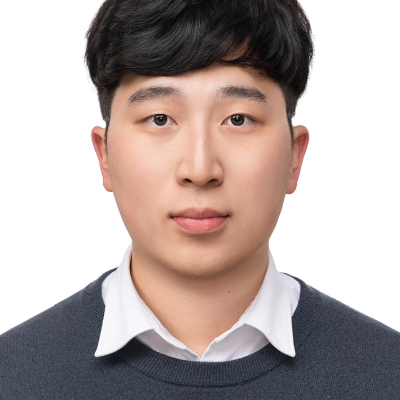
Kim Dong-young김동영
davekim0807@ajupress.com
ReporterSamsung Biologics, CJ CheilJedang, LG Chem, Celltrion, Naver, Krafton, Nexon, Hyundai Mobis etc. & energy, game, food, bio, petrochemical, AI
Kim Dong-young is a bilingual journalist at AJU Press (AJP), covering Korean tech, energy, and bio/pharma.
He reports from the field at events like CES and APEC, runs AJP's YouTube channels,
and is pursuing a master's at Sogang's MOT program. "I try everything in this AI era that can improve yet preserve the facts. Journalism still serves as my core."
He reports from the field at events like CES and APEC, runs AJP's YouTube channels,
and is pursuing a master's at Sogang's MOT program. "I try everything in this AI era that can improve yet preserve the facts. Journalism still serves as my core."
Latest by Kim Dong-young
-
 Hanwha QCells builds one of largest US renewable complexes SEOUL, July 10 (AJP) - Hanwha Solutions' QCells division has completed engineering, procurement and construction work on part of the Atlas Energy Park in Arizona, one of the largest renewable energy projects ever undertaken in the United States, and recently sold some of the assets. Located in La Paz County, the complex will comprise 14 solar and energy storage projects, with 2.8 gigawatts of solar generation and 5.7 gigawatt-hours of storage capacity due to come online by 2028. Spanning about 63.66 square kilometers, roughly 22 times the size of Seoul's Yeouido district, it ranks among the biggest renewable developments in the country. QCells will handle the EPC for every project in the park and supply all modules for the solar installations. Two solar plants totaling 357 megawatts, which the company developed and built in-house, were sold in May. Active in the US solar and storage EPC market since 2017, QCells has completed or is pursuing North American projects exceeding 11 gigawatts of solar and 6 gigawatt-hours of storage as of 2026. The company plans to expand further to meet surging demand driven by the spread of artificial intelligence data centers. "Atlas Energy Park is a symbolic project that once again proves Qcells' EPC capabilities, our local US supply chain and our comprehensive expertise spanning development, construction and asset sales," said Chris Hodrick, head of QCells' EPC business division. 2026-07-10 09:35:02
-
 Naver poised to challenge Coupang on its specialty turf: logistics SEOUL, July 09 (AJP) - Naver, a distant No. 2 in South Korea's ecommerce market, is crossing into the one territory long dominated by Coupang as it prepares its first directly operated logistics network, abandoning the asset-light strategy that defined its shopping business for two decades. The move marks a wholesale reversal for the internet giant, which has long relied on outside partners to store, haul and deliver merchants' goods while focusing on search traffic and marketplace technology. According to industry officials, Naver is scouting warehouse sites on both sides of the Han River, weighing land purchases, acquisitions of existing fulfillment centers and long-term leases across the greater Seoul area. The timing is difficult to overlook. Coupang, whose Rocket Delivery service transformed Korean ecommerce and built a logistics moat rivals have struggled to cross, is navigating one of the most challenging periods in its history following the country's largest-ever personal data breach. South Korea's privacy watchdog imposed a record 624.7 billion won ($415.6 million) fine on June 11 after determining that a breach exposed the personal information of more than 33 million accounts—roughly two-thirds of the country's population and nearly all of Coupang's users. "This was not advanced hacking but negligent management," PIPC Chairperson Song Kyung-hee said, citing the company's failure to maintain basic security safeguards. The controversy has also spilled into Washington. Coupang, listed in New York and backed by U.S. investors, spent about $1.79 million on lobbying in the first quarter. A July 1 staff report by the U.S. House Judiciary Committee accused Seoul of discriminating against an American-owned company through excessive regulation and punitive enforcement. Earlier this year, U.S. investors Greenoaks and Altimeter petitioned for a Section 301 trade investigation before withdrawing the request as the Office of the U.S. Trade Representative considered a broader review of South Korea's digital trade practices. More importantly for competitors, the fallout is beginning to show up in business performance. Coupang posted its first monthly decline in domestic sales in eight years last month, suggesting the prolonged controversy may finally be denting consumer momentum. Into that opening steps Naver. For years, the company sought to counter Rocket Delivery without pouring billions into warehouses. It instead built the Naver Fulfillment Alliance in 2020 with CJ Logistics before adding fulfillment startups such as Fassto and Pumgo. Sellers chose logistics partners while Naver supplied the shoppers, shopping algorithms and promised delivery dates. The asset-light model kept costs low and allowed rapid expansion without owning a single warehouse. But as delivery itself became the product, its biggest strength increasingly became its biggest weakness. Shipping cut-off times, inventory placement, returns and delivery quality are ultimately decided on the warehouse floor—and Naver never owned the floor. Coupang did. The ecommerce leader has invested more than 10 trillion won in nine mega fulfillment centers and 227 delivery camps, layering automation onto a nationwide logistics network that competitors have struggled to replicate. Naver now appears to have concluded that algorithms alone are no longer enough. The urgency is also reflected in its own business. Commerce revenue more than tripled to 3.69 trillion won in 2025 from 1.09 trillion won in 2020, lifting the segment's contribution to more than 30 percent of total revenue. Yet investors remain unconvinced. Naver trades at roughly one times book value, suggesting the market assigns little premium to one of Korea's largest internet platforms despite its dominance in search, payments, content and ecommerce. "We are also actively reviewing direct investment models in logistics," Naver CEO Choi Soo-yeon said during the company's first-quarter earnings call, adding the company would decide after weighing lower per-delivery costs against the value of logistics data. Industry observers believe the strategy could eventually extend beyond warehouses to the last mile itself, with Naver fielding its own couriers—a counterpart to Coupang's in-house "Coupang Friends." For now, Naver is stopping short of confirming such ambitions. "Expanding logistics is one of our key priorities, and we are reviewing various investment options, but nothing has been finalized. It may not necessarily take the same direct-delivery approach as Coupang," a company spokesperson told AJP. But the strategic direction is unmistakable. For 25 years, Naver believed ecommerce could be won without owning logistics. Now it is preparing to invest in the very infrastructure that made Coupang the country's dominant online retailer. If the plans materialize, they would represent more than a new logistics investment. They would amount to Naver abandoning one of its longest-held strategic assumptions—and taking the fight directly onto Coupang's turf. 2026-07-09 15:16:41
-
 Rebellions targets Seoul IPO next year, weighs US listing SEOUL, July 09 (AJP) - South Korea's Rebellions, a Samsung-backed artificial intelligence chip startup, plans to list on the main KOSPI exchange in the first half of next year, seeking to ride surging investor appetite for AI hardware. The company aims to debut in the first or second quarter of 2027 and will complete all filing paperwork by year-end, though the final timing hinges on market conditions, CEO Park Sung-hyun said in an interview on Wednesday (local time). JP Morgan and Samsung Securities are lead underwriters. "Real revenue is now being generated," Park said, adding that investors favored the KOSPI because the firm is tightly bound to the Korean government's sprawling AI infrastructure drive, one of the world's largest such commitments. Rebellions is leaning toward the blue-chip KOSPI over the tech-heavy KOSDAQ, a choice that signals it sees itself among the country's established heavyweights rather than a speculative growth bet. It is also weighing a US listing, holding talks with both the New York Stock Exchange and Nasdaq, though it flagged American Depositary Receipts — the route taken by SK Hynix — as a likely vehicle. Founded in 2020, Rebellions designs neural processing units (NPUs) tuned for AI inference, the task of running trained models efficiently with an emphasis on speed and power savings. Demand for such chips has climbed sharply as AI agents proliferate, pitting the firm against a market where Nvidia towers over rivals. The startup vaulted to become the country's biggest AI chip player last year after merging with Sapeon Korea, the semiconductor unit of SK Telecom. Its backers now include Samsung Electronics, SK hynix and SK Telecom, alongside Wa'ed Ventures, the venture arm of Saudi state oil giant Aramco.\ In March, Rebellions closed a pre-IPO round of about 640 billion won ($425.4 million) — including 250 billion won from the state-run National Growth Fund — at a valuation of about 3.4 trillion won, part of Seoul's push to build a homegrown answer to Nvidia. 2026-07-09 15:03:02
-
 Police raid Kakao Pay over alleged leak of 40 million users' data to Alipay SEOUL, July 09 (AJP) - South Korean police have raided the headquarters of Kakao Pay over allegations that the fintech firm handed the personal data of about 40 million customers to Chinese payment service Alipay without their consent, escalating a probe that began in March. The Gyeonggi Nambu Provincial Police's anti-corruption and economic crime unit searched Kakao Pay's offices in the Bundang district of Seongnam over two days on Monday and Tuesday, seizing digital records tied to suspected violations of the credit information and electronic financial transaction laws. It marked the first raid since police opened the case in March at the request of the Financial Supervisory Service (FSS). Officers moved in to examine the full decision-making chain behind the firm's data-sharing arrangement, according to the authorities. Kakao Pay is suspected of transferring 54.2 billion pieces of personal data belonging to about 40 million customers to Alipay between 2018 and May 2024. The information was allegedly funneled to build a so-called "NSF score" model that Apple had outsourced to Alipay to gauge the likelihood that a user's account would fall short of payment. Those booked so far are Kakao Pay executives and staff along with the corporate entity, though their identities and number have not been disclosed. Police plan to question witnesses and suspects once analysis of the seized material is complete. The raid lands as South Korean regulators sharpen their response to a run of large-scale data failures. Last month, the Personal Information Protection Commission slapped a record 624.6 billion won ($415.6 million) fine on e-commerce leader Coupang over a breach that exposed the data of more than 33 million people, underscoring the mounting price of lax safeguards in the country's digital economy. Regulators have already come down hard on Kakao Pay. The commission fined the company 5.97 billion won in January last year, and the FSS in February issued an institutional warning, a heavy sanction, along with penalties of 12.98 billion won and 4.8 million won. Kakao Pay, which contends the transfer was lawful outsourcing, lost a related administrative suit on June 11, with the court ruling that data subjects could not be seen to have "clearly and specifically consented" to their information being used as a creditworthiness gauge. The company has appealed. 2026-07-09 13:44:05
-
 SK AX rolls out full-stack robotics service to build self-running factories SEOUL, July 09 (AJP) - SK AX announced it is launching a full-stack robotics service designed to steer South Korean manufacturers toward autonomous factories that can sense, decide and act on their own. The push, branded "Manufacturing RX" for robot transformation, aims to tackle chronic labor shortages and sagging productivity on factory floors by knitting robots, manufacturing execution systems and equipment data into a single, self-directing operation. SK AX's service spans the entire journey, from virtual vetting before a single robot is deployed to on-site autonomous control and plant-wide orchestration, with a digital twin first recreating floor plans. It later moves onto equipment layouts and material flows in a virtual space, running thousands of driving and task scenarios to flag collisions, bottlenecks and charging schedules in advance. Robots then run on physical AI built on a "vision-language-action" model, letting them read unexpected obstacles and adjust on the fly rather than repeat fixed motions. SK AX said it is already validating the digital-twin and robot-control systems in the semiconductor industry and is extending the projects into shipbuilding, with plans to widen the service to other sectors using proven pilot models. "The robot transformation of manufacturing is no longer about simply buying hardware but about the operational capability to keep robots running reliably and connected to the whole factory," said Kim Kwang-soo, head of SK AX's manufacturing service division, adding the company would help clients evolve into autonomous factories that never stop. 2026-07-09 09:33:23
-
 The missing ingredient in Korea's AI cake: a foundation model SEOUL, July 08 (AJP) - "Seize this opportunity," Nvidia CEO Jensen Huang exclaimed during his visit to South Korea last month, calling the country one of the few capable of owning the entire AI stack — from energy and memory to data-center infrastructure, AI models and applications. Huang may have overrated Korea. By almost every measure, South Korea is among the world's most enthusiastic adopters of artificial intelligence. Yet one crucial ingredient remains missing: a homegrown flagship foundation model. Generative AI reached 37.1 percent of Korea's working-age population in the first quarter of 2026, up from 25.9 percent in June last year, according to Microsoft's AI Economy Institute. The 43.2 percent increase was the largest among the countries surveyed over the period, far outpacing the roughly 19 percent rise in the United States. The institute said Asia is emerging as a major growth engine, with South Korea and several other economies recording rapid gains as AI tools become more useful in local languages and everyday workflows. "AI adoption continued to accelerate in Q1 2026, but the benefits are spreading unevenly. The Global North is pulling further ahead of the Global South, underscoring the need to address foundational gaps in electricity, connectivity, digital skills and local-language access," the institute said in its latest report. Korea's dependence on foreign frontier models became painfully tangible on June 12, when the U.S. Commerce Department abruptly blocked overseas access to Anthropic's newest models, Mythos 5 and Fable 5, citing national security concerns. Korean companies that had begun integrating the models into AI agents were forced to redraw development plans almost overnight. Although Washington restored access to vetted institutions on July 1, the episode served as a stark reminder that even a treaty ally can lose access to critical AI technology with little warning. For advocates of "sovereign AI" — the drive to build advanced models using domestic computing power, language and data — the incident transformed an industrial ambition into a strategic necessity. The government has since moved with unusual urgency. The Ministry of Science and ICT is reportedly discussing with the presidential office and fiscal authorities a plan to invest about 5 trillion won ($3.29 billion) from a semiconductor-driven tax windfall to secure roughly 10,000 of Nvidia's latest Vera Rubin GPU modules while launching an aggressive effort to bring leading Korean AI researchers back from overseas. The ministry has stressed that no final decision has been made. The proposal would mark a sharp departure from Seoul's current sovereign AI foundation-model program, which distributes only a few hundred GPUs to each of four teams — SK Telecom, LG AI Research, Upstage and Motif Technologies. Critics argue that spreading scarce computing resources so thinly leaves every participant too small to compete against frontier laboratories deploying tens of thousands of GPUs. Instead, the new proposal would concentrate all 10,000 GPUs on a single elite team capable of building a globally competitive model. "GPU is increasingly needed on a massive scale, but isn't the pace of securing it too slow?" President Lee Jae Myung said on June 26, urging lawmakers to lock related funding into the supplementary budget. South Korea is far from alone in its concerns. More than 60 countries have now published national AI strategies, while an increasing number — including France, India, the United Arab Emirates, Saudi Arabia, Japan and South Korea — have backed those strategies with dedicated computing infrastructure and state-supported foundation-model programs. France's Mistral AI, the UAE's Falcon, Saudi Arabia's HUMAIN and India's BharatGen each represent different approaches to the same objective: reducing dependence on foreign frontier models. Pressure is also mounting from China. Developers such as DeepSeek and Zhipu AI, themselves shut out of parts of the U.S. market, have been rapidly releasing increasingly capable open-weight models to capture global demand. The strategy weakens the case for relying exclusively on American AI while creating a different form of technological dependence. Underlying the race for chips and models is an even larger contest over infrastructure. Deputy Prime Minister and Science Minister Bae Kyung-hoon said on June 29 that countries worldwide plan to invest about $5.5 trillion, or roughly 8,400 trillion won, in AI data centers over the next five years. "Korea will invest 550 trillion won to build 8.4 gigawatts of AI data-center capacity by 2029 and attract more than 1,000 trillion won in total investment by 2035," Bae said. The infrastructure push dovetails with the country's biggest industrial gamble yet. Under the government's "three mega-projects" initiative, Samsung Electronics and SK hynix have pledged a combined 800 trillion won to build four next-generation memory fabs in the Honam region, shifting the center of gravity of Korea's power- and water-intensive semiconductor industry away from the Seoul metropolitan area. SK Group envisions building up to 15-gigawatt AI factories across the nation. James Ryu, president of SK AI Committee in an AI forum sponsored by the American Chamber of Commerce in Korea on July 2 argued Korea must evolve from a chip exporter to an AI token exporter to become an AI powerhouse. "We are selling the world's best memory chips while letting other countries build the token factories," he said. "In effect, we export components but import the finished AI product." He preached Korea must pursue five priorities to become a global AI token exporter: building gigawatt-scale AI factories, developing sovereign Korean foundation models, attracting global AI companies to operate AI factories in Korea, expanding domestic AI demand across healthcare, education, manufacturing and defense, and strengthening enabling technologies including power systems, cooling, HBM, CXL memory and advanced semiconductor packaging. Samsung SDS under Samsung Group also pursues the same vision with the plan to build a large AI data center at Solaseado in Haenam, South Jeolla Province, with construction scheduled to begin in the second half of this year. Officials acknowledge that securing sufficient electricity and industrial water will determine whether those ambitions become reality. The Honam semiconductor complex alone is expected to require roughly 650,000 tons of industrial water a day, while rebuilding Korea's AI talent pipeline remains an equally urgent challenge. Time, industry executives warn, is not on Korea's side. Frontier AI laboratories now release increasingly capable models at a breathtaking pace, narrowing the window for newcomers to catch up. Huang could be right that South Korea possesses many of the ingredients of an AI superpower. But it is yet to deliver the final layer where the greatest value is created: a globally competitive foundation model. Producing the world's best chips is no longer enough. The next race is to build the intelligence that runs on them. 2026-07-08 14:49:52
-
 S.Korea's digital industry sales top $913 billion in 2024 SEOUL, July 08 (AJP) - South Korea's digital industry generated 1,378 trillion won ($913.6 billion) in sales in 2024, up 9.3 percent from a year earlier, as the rapid embrace of artificial intelligence reshaped the country's industrial landscape. According to figures released by the Ministry of Science and ICT on Wednesday, digital industry sales accounted for 15.2 percent of all industry sales of 9,038 trillion won and exceeded half of the country's total manufacturing revenue. Digital foundation industries, spanning telecom and information and communication technology equipment, led the way with 615.8 trillion won, a 15.6 percent jump driven by swelling global AI investment and buoyant semiconductor exports. Digital platform providers logged 152.4 trillion won, up 15.2 percent, with e-commerce, portals and content services proving the busiest fields. Firms relying on brokerage platforms earned 214.1 trillion won, though about 60 percent flagged the mounting cost of listing across multiple platforms as their biggest headache. Automation, however, remains nascent: while kiosk ordering has spread through lodging and restaurants, robot serving reached just 0.4 percent of businesses surveyed. "The fact that digital industry sales keep climbing by more than 100 trillion won every year shows that digital transformation is spreading vigorously across our industries," said Lee Do-gyu, the ministry's director-general for information and communication policy. "We expect this trend to accelerate further with the AI transition." The survey, conducted by the ministry and the Korea Information Society Development Institute, polled about 10,323 businesses nationwide over four months from September to December last year through online, telephone and in-person interviews. 2026-07-08 14:43:49
-
 ESTsoft launches AI shopping assistant with CJ Olive Young SEOUL, July 08 (AJP) - ESTsoft, a South Korean AI service developer, announced it has launched a kiosk-based "AI Shopping Assistant" jointly with CJ Olive Young, one of the country's leading K-beauty retailers. The service will debut first at three Seoul stores popular with foreign tourists: the Dongdaemun History & Culture Park Station, Apgujeong Jungang and Ewha Jungang branches. The assistant is built on ESTsoft's real-time conversational AI avatar platform, Perso Interactive, and has been tailored specifically for K-beauty retail. It primarily targets foreign shoppers in their 20s and 30s, engaging customers through an AI avatar that communicates in eight languages. Key functions include language-barrier-free avatar service in eight languages, AI-driven product recommendations, barcode-based multilingual product information, automated handling of routine inquiries such as tax refunds, and a data dashboard tracking dwell time and customer behavior. For the recommendations, ESTsoft paired its in-house engine, AURA, with tens of thousands of Olive Young product listings to match customers by skin concerns, texture preference and intended use. Multilingual support emerged as the most requested feature in an internal survey of Olive Young staff, in which about 69.4 percent reported facing language barriers with customers and 54.8 percent said interpretation support was necessary. "This is meaningful because it allows us to resolve the language barrier issues that global retail stores face with overseas customers, while also contributing to improved store performance," said Chung Sang-won, chief executive of ESTsoft. An ESTsoft official told AJP that the company could not yet disclose any further expansion plans, citing confidentiality. 2026-07-08 10:38:15
-
 Kakao expands AI assistant's place recommendation, booking features SEOUL, July 08 (AJP) - Kakao announced that it has upgraded the place recommendation and booking functions of its AI assistant, Kanana in KakaoTalk, broadening the service well beyond its original restaurant focus. The update revealed Tuesday extends Kanana's reach into tourism and lodging, exhibitions, performances and cinemas, as well as everyday conveniences such as gas stations, convenience stores and auto repair shops, the company said. Users can now chat with Kanana about weekend plans or gatherings and receive context-appropriate suggestions, then explore, share and book venues within the same conversation. A discussion about weekend activities, for instance, can prompt Kanana to suggest exhibitions, pop-up events and nearby outings. When a visit to a particular area is registered with Kanana, its daily morning briefing adds details such as nearby restaurants, parking and menu information, and the assistant also proposes likely follow-up questions. Kakao plans further updates that would bring the multi-category recommendations of Kanana in KakaoMap to Kanana in KakaoTalk, letting the assistant bundle lodging, sightseeing and dining suggestions for trips such as an overnight getaway, and is reviewing a feature to map time-based itineraries through KakaoMap. The company said it intends to deepen ties with internal services while expanding external partnerships. "We will gradually expand agentic AI that interprets user intent and judges and combines the necessary functions on its own, moving beyond search that simply answers questions," said a Kakao spokesperson. 2026-07-08 08:32:50
-
 Npay launches venture capital investment platform to boost 'productive finance' SEOUL, July 07 (AJP) - Npay, Naver's fintech arm, unveiled a new venture capital investment platform, aiming to bridge the gap between promising startups and investors and channel more "productive finance" into South Korea's capital markets. The service, called Npay Startup, was launched Tuesday at a ceremony at Naver's 1784 headquarters in Seongnam, Gyeonggi Province, with officials from the Financial Supervisory Service and the venture investment industry in attendance. The project brings together three players in the venture capital ecosystem — capital providers such as securities firms, fund operators including venture capital firms and new technology financiers, and startups themselves — on a single system. It was jointly developed by the Financial Supervisory Service (FSS), the Ministry of SMEs and Startups, and Npay. Under the new system, investors post funding notices and compare standardized proposals, while fund operators can browse every notice in one place instead of submitting repetitive paperwork. Startups upload investor-relations materials directly, and artificial intelligence tools summarize key points and generate searchable company pages, which also appear in Naver's search results. "We hope this platform becomes core infrastructure linking innovative companies with investors and revitalizes productive finance," Lee said, adding that he expects wider industry participation to energize the venture capital market. Npay Startup will run as a pilot for about three months before Npay expands its verification systems and onboards more institutions. 2026-07-07 17:30:18