

Journalist
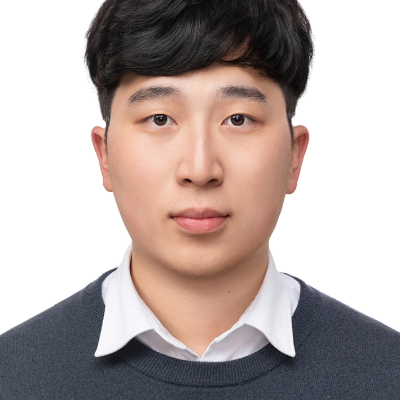
Kim Dong-young김동영
davekim0807@ajupress.com
ReporterSamsung Biologics, CJ CheilJedang, LG Chem, Celltrion, Naver, Krafton, Nexon, Hyundai Mobis etc. & energy, game, food, bio, petrochemical, AI
Kim Dong-young is a bilingual journalist at AJU Press (AJP), covering Korean tech, energy, and bio/pharma.
He reports from the field at events like CES and APEC, runs AJP's YouTube channels,
and is pursuing a master's at Sogang's MOT program. "I try everything in this AI era that can improve yet preserve the facts. Journalism still serves as my core."
He reports from the field at events like CES and APEC, runs AJP's YouTube channels,
and is pursuing a master's at Sogang's MOT program. "I try everything in this AI era that can improve yet preserve the facts. Journalism still serves as my core."
Latest by Kim Dong-young
-
 Lee names Dec. 3 'National Sovereignty Day' SEOUL, July 17 (AJP) - President Lee Jae Myung said he would designate every Dec. 3 as "National Sovereignty Day," vowing to preserve the spirit of the mass protests that turned back an attempted power grab so that it endures for generations to come. The date marks the night in 2024 when lawmakers rushed to parliament to overturn a short-lived martial law declaration, an episode Lee's supporters have cast as a peaceful democratic uprising they call the "Revolution of Light." "The National Sovereignty Government will remember and carry forward this great history without fail," Lee wrote in a post on his Facebook account, published on Constitution Day, Friday. Lee said his administration would systematically gather and preserve records of the revolution so that "K-democracy" could spread as a global model, adding that a presidential Committee of Light had been launched on Monday to steer the effort. The president invoked the founding charter promulgated on the same date in 1948, saying its declaration that sovereignty rests with the people had served for 78 years as the compass guiding the democratic republic. He extended thanks to citizens who, he said, had braved the depths of winter to defend the country's democracy. The presidential office was to host an evening reception for invited citizens to mark the committee's launch, where Lee and guests were to watch "Ran 12·3," a documentary by director Lee Myung-se chronicling the events surrounding the martial law crisis. The committee, first established in March, is tasked with collecting historical materials, designating a commemoration day and installing monuments, though the plan to make Dec. 3 a public holiday still requires legislation to advance through the National Assembly. 2026-07-17 10:01:32
 -
 North Korea condemns 'warmonger' South over RIMPAC role SEOUL, July 17 (AJP) - North Korea denounced South Korea's leading role in the U.S.-led Rim of the Pacific naval exercise, branding Seoul a "puppet warmonger" and warning of "proportional" countermeasures against the drill's participants. In a commentary carried by the official Korean Central News Agency (KCNA) on Friday, Pyongyang cast the biennial exercise as a rehearsal for war that was dragging the Pacific into dangerous turbulence, and said regional states had an inviolable right to bolster their own war deterrence in response. KCNA said the "reckless racket" of what it called international ruffians would inevitably invite a chain of proportional responses from countries seeking to firmly rein it in. It heaped scorn on the United States, South Korea and Japan alike, likening the drill to outsiders lighting a fire at a neighbor's doorstep. The commentary is notable for reviving the epithet "puppet," a term North Korean media had not aimed at the current South Korean government in about one year and three months, since an April 2024 incident involving a South Korean air force fighter jet. North Korea took particular aim at Seoul's expanded footprint, asserting that South Korea had joined "as a main force." The South Korean Navy, a RIMPAC participant since 1990, this year commanded the exercise's combined maritime component for the first time, overseeing the operations of a multinational fleet. Pyongyang also seized on the exercise's embrace of new technology, noting that artificial intelligence had been introduced and that the integrated operation of manned and unmanned weapons systems had been made a core training focus. "The Pacific has now turned into a battlefield thick with the smell of gunpowder, regardless of its name," KCNA said, warning that undesirable developments could soon unfold on the Korean peninsula. RIMPAC 2026, which the U.S. Navy says draws 30 nations, began June 24 and runs through July 31 in and around Hawaii, led by the aircraft carrier USS Theodore Roosevelt. 2026-07-17 09:14:11
 -
 CJ, Sajo raise food prices as post-election domino looms SEOUL, July 16 (AJP) - Two of South Korea's major food makers, CJ CheilJedang and Sajo Group, will raise prices on staple grocery items in the coming weeks, stoking fears of a fresh round of domino increases across an industry already straining under higher costs. CJ CheilJedang will lift prices on 27 products — including its flagship Hetbahn instant rice, dumplings and grilled fish — by an average of 8 percent at hypermarkets from July 30, with convenience stores following on Aug. 1. Increases range from 4 percent to 12 percent, with Hetbahn rising the most at 12 percent. The company attributed the move to persistent cost pressure from higher prices for raw materials and naphtha-based packaging. It excluded convenience-store staples favored by younger shoppers, such as Hetbahn Cupbahn and desserts, and pledged sweeping summer discounts from next month to ease the burden on consumers. Sajo Group will follow on Aug. 3, raising factory prices on canned goods, fermented pastes and cooking oils after concluding talks with hypermarket chains. Canned mackerel and saury will jump 20 percent and canned tuna 10 percent, while red-pepper paste, soybean paste and sesame and perilla oils will each climb 12 percent. Sajo had already raised prices on fish cakes and imitation crab by 6 to 7 percent on July 2. The two firms join a lengthening queue. Ottogi raised factory prices on 29 items from July 16, led by a 17 percent increase for pepper products, while Lotte Chilsung Beverage lifted prices on 44 products by an average of 5.3 percent from June 26 — its first adjustment in about two years. The wave has gathered pace since the June 3 local elections, as companies that had held back under the government's informal pressure to contain prices moved swiftly once the vote was over. The government expects further gains in food and dining prices in the second half, citing a stubbornly weak won, rising imported raw-material costs and mounting labor and logistics expenses — leaving households braced for a heavier grocery bill in the months ahead. 2026-07-16 15:19:56
 -
 Seoul aims for AI's top two, plans nationwide model this year SEOUL, July 16 (AJP) - South Korea's technology chief announced the country would push to break into the world's top two artificial-intelligence powers, buoyed by an international assessment ranking it third, and vowed to build a frontier model rivalling those Washington now guards as strategic weapons. Bae Kyung-hoon, Deputy Prime Minister and Minister of Science and ICT, told a presidential briefing on Thursday at the Cheong Wa Dae that a second round of model evaluations due in August could vault the country beyond its current third-place standing. A third assessment is scheduled for December, he added. Pressed by a citizens' panel on whether Korea could match the frontier-class models the United States has moved to restrict, Bae was emphatic. "I dare say the Republic of Korea can build one too," he said, arguing that the country could reach the highest tier of performance if its computing infrastructure were adequately backed. The bottleneck, he stressed, is hardware. Bae said about 10,000 graphics processing units would be enough to compete at that level, but noted that developers of sovereign foundation models had been receiving only 500 B200-class GPUs each, a figure that has since risen to about 735 — still far short of what the race demands. President Lee Jae Myung threw his weight behind the appeal, comparing years of under-investment to fighting rivals armed with electronic calculators while Korea made do with counting rods. Bae said additional budget for frontier-grade development would hinge on active support from fiscal authorities. The minister also pledged to release a security-specialized sovereign model within the year, training existing domestic models on additional security data to shore up self-reliance against an uncertain environment in which US access controls could tighten again at any moment. On physical AI, Bae said the government would develop a general-purpose model while building sector-specific variants in parallel, aiming within three years for a framework that can be deployed on site with as little as 100 to 1,000 hours of data. Localizing data, models and components, he said, would lay the groundwork for exporting the technology abroad. Bae unveiled plans for a nationwide service, "AI for All," to launch this year, expanding public AI agents and advancing toward one AI agent per citizen from 2027. Lee said strong multilingual support could draw middle-income nations into a cooperative bloc, and Bae cast the effort as the basis for a horizontal AI network free of dependence on the US-China duopoly. Under its "K-Moonshot" project, the ministry will begin work on a quantum computer by 2029, a cancer-focused AI bio model by 2028 and brain-computer interface technology by 2030, while a new "asset-ising failure" scheme, effective this month, will keep funding promising research even when it misses its targets. 2026-07-16 14:26:24
 -
 MBK, Meritz to inject 200 bln won lifeline into Homeplus SEOUL, July 16 (AJP) - Homeplus, the ailing South Korean supermarket chain teetering on the edge of liquidation, is poised to secure a last-minute rescue after its major shareholder and largest creditor tentatively agreed to provide 200 billion won ($134.5 million) in emergency operating funds. MBK Partners, the private equity firm that controls Homeplus, and Meritz Financial Group reached the provisional agreement on Wednesday, according to financial industry sources. The injection, if approved, could reverse a court decision that had pushed the chain toward collapse. Under the arrangement, MBK Chairman Kim Byung-ju is expected to personally guarantee Meritz's entire loan. Should he provide the guarantee, three Meritz affiliates — its insurance, securities and capital units — will convene board meetings on Thursday to weigh the debtor-in-possession financing. The Seoul Bankruptcy Court terminated Homeplus' court-led rehabilitation on July 3, but said the ruling could be overturned if the company raises 200 billion won and files an immediate appeal before the July 20 deadline. Homeplus abruptly shuttered all 67 of its stores this week, unable to cover electricity and gas bills. Rep. Min Byung-duk of the ruling Democratic Party, who visited a protest by Homeplus merchants outside the former presidential compound on Wednesday, voiced confidence that a resolution was imminent. "The 200 billion won issue will be resolved within tomorrow, and through this we will prevent Homeplus's bankruptcy and begin the work of reviving it in earnest," Min said. The party plans to hold a parliamentary hearing on July 27, summoning MBK and Meritz over the Homeplus crisis, though the session is likely to be shelved if the company files its appeal. 2026-07-16 07:56:59
 -
 A cartel ingredient behind Korea's sticky prices SEOUL, July 15 (AJP) - Even before the war in the Middle East reignited fears over higher food and fuel costs, South Koreans had grown accustomed to paying more at the checkout. Wars, supply-chain disruptions and inflation became familiar explanations every time prices climbed. Now, a wave of antitrust investigations suggests another force was also at work much closer to home. Regulators say some of the country's biggest food and fuel suppliers had been coordinating prices instead of competing, helping keep household bills elevated even as global commodity costs eased. The latest and largest case came on July 7, when the Korea Fair Trade Commission imposed a record 747.57 billion won ($501.5 million) fine on four dominant producers of starch and starch sugar — Daesang, Sajo CPK, Samyang and CJ CheilJedang. According to the regulator, the companies colluded on the timing and scale of price increases 13 times between May 2018 and October 2025. They not only agreed on when prices would rise but synchronized customer notification letters and even visited post offices together to confirm the notices had been mailed. The penalty eclipsed the previous record of 671 billion won imposed in May on seven flour millers, which itself surpassed the former record of 668.9 billion won levied against six liquefied petroleum gas suppliers in 2010. Taken together, this year's enforcement actions against sugar, flour and starch-sugar producers amount to roughly 1.83 trillion won in fines, according to the Korea National Council of Consumer Organizations, making 2026 one of the most aggressive years ever for Korea's antitrust watchdog. Nor has the crackdown stopped at supermarket shelves. In May, the commission fined the Korea Layer Association for publishing benchmark egg prices that effectively guided producers to keep prices elevated despite stable production costs. Earlier this month, prosecutors indicted the country's four largest oil refiners — HD Hyundai Oilbank, SK Energy, GS Caltex and S-Oil — over an alleged fuel price-fixing scheme that authorities say distorted competition worth roughly 26 trillion won in the aftermath of the U.S.-Iran conflict. Regulators have also opened proceedings against ten industrial lubricant manufacturers, while gas stations and farming cooperatives on Jeju Island have been penalized for coordinating pump prices. The breadth of the investigations points to a problem that extends well beyond isolated misconduct. What makes this year's crackdown particularly striking is not merely its scale but its familiarity. Many of the industries now under investigation have been caught before. Sugar producers were punished for collusion in 2005, flour millers in 2006 and LPG suppliers in 2010. Yet nearly two decades later, regulators say many of the same sectors slipped back into similar practices. Consumer groups argue the consequences have been visible in household budgets for years. The Korea National Council of Consumer Organizations estimates international wheat prices fell 15.2 percent between early 2022 and late 2025 while domestic flour prices rose 20.3 percent. During the same period, raw sugar prices increased just 7.8 percent, but retail sugar prices climbed 37 percent, widening the gap between production costs and what consumers ultimately paid for groceries and dining out. Why does collusion keep resurfacing in these markets? Economists point first to industrial structure. Many of Korea's food ingredient industries are tightly concentrated, with only a handful of producers dominating national supply. Their products are largely standardized commodities with little room for differentiation, demand remains relatively stable regardless of price, and new entrants face high barriers to entry. The four starch-sugar producers alone accounted for about 95.7 percent of the domestic starch market and 86.4 percent of the starch-sugar market. In such industries, economists say, the incentives to protect profit margins through coordination rather than competition can become difficult to resist, particularly during periods of volatile raw-material prices when customers are already expecting costs to rise. President Lee Jae Myung has framed the issue as one of market integrity as much as consumer protection. "Price-fixing that exploits market dominance is a cancerous element that blocks fair competition and undermines trust in the market," Lee said during a Cabinet meeting after recent enforcement actions. The government now hopes to change the economics of collusion itself. Until recently, critics argued many companies viewed administrative fines simply as another cost of doing business because the financial gains from coordinated pricing often exceeded the eventual penalties. To reverse that calculation, the Korea Fair Trade Commission strengthened its penalty guidelines in April, raising minimum surcharge rates by as much as twentyfold in some categories. "If a firm gains 30 percent and is sanctioned 15 percent, collusion cannot be stopped," KFTC Chairman Joo Byung-ki said, pledging to push for higher statutory penalty ceilings so illegal profits no longer outweigh the risks. In the starch-sugar case, regulators went beyond imposing fines. The companies were ordered to restore prices to competitive levels and report all subsequent price adjustments twice a year for the next three years. Not everyone believes harsher penalties alone will solve the problem. Cho Dong-geun, professor emeritus of economics at Myongji University, said regulators should distinguish clearly between unlawful collusion and legitimate business communication while focusing more closely on whether coordination actually harmed consumers. "Overcharging consumers is clearly wrong, but a certain degree of corporate freedom in business, including communication between firms, must also be recognized," Cho said. "If regulators examine more carefully how these practices affect corporate profitability and consumer welfare, and build a healthier competitive ecosystem rather than simply punishing price-fixing, they will be better prepared for future cases." For consumers, however, the issue remains straightforward. Global wheat prices have retreated. Sugar prices have moderated. Supply chains have largely normalized since the pandemic. Yet grocery bills remain stubbornly high. Whether this year's record-breaking penalties mark a genuine turning point will depend less on the size of the fines than on whether companies finally conclude that collusion costs more than it pays — and whether the next fall in raw-material prices is reflected not just in corporate balance sheets, but at the supermarket checkout. 2026-07-15 14:39:24
 -
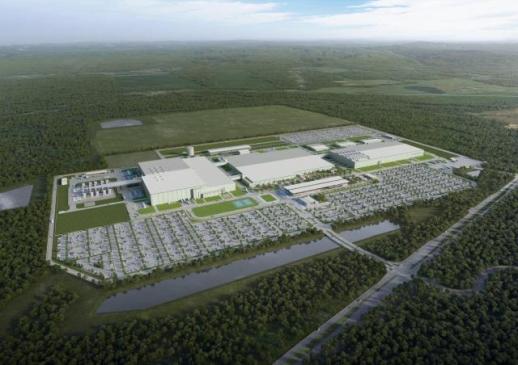 Hyundai-SK battery venture starts output at Georgia plant SEOUL, July 15 (AJP) - SK On and Hyundai Motor Group's battery joint venture has begun production at its northwest Georgia plant and started shipping electric-vehicle batteries to the automaker's flagship U.S. factory, local newspaper The Atlanta Journal-Constitution (AJC) reported on Tuesday (local time). The venture, known as Hyundai-SK Battery Manufacturing America (HSBMA), was established in 2023 with a combined $5 billion investment split evenly between the two companies. The plant in Bartow County is said to have entered mass production last month and has begun supplying cells to Hyundai Motor Group Metaplant America in Savannah. Sprawling across about 3 million square meters, the facility currently employs 3,500 workers and is designed for an annual capacity of 35 gigawatt-hours, enough to power roughly 300,000 electric vehicles a year. "HSBMA is in the early stages of production and plans to gradually scale up operations," a company spokesperson told AJC. Georgia extended $641 million in tax breaks and incentives to lure the project. Cells produced at the plant will be assembled into packs by Hyundai Mobis and supplied exclusively to Hyundai, Kia and Genesis EVs built in the United States, the group said when it unveiled the venture in April 2023. SK On already runs a separate battery plant, SK Battery America, elsewhere in the state. A rival joint venture between Hyundai and LG Energy Solution is also under construction near the Metaplant, though work stalled last year after a sweeping U.S. immigration raid led to the mass detention of Korean workers. 2026-07-15 10:26:47
 -
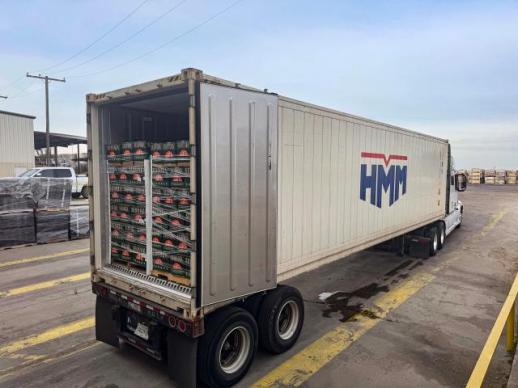 HMM leads California orange shipments to South Korea for fourth year SEOUL, July 15 (AJP) - HMM, South Korea's largest container carrier, said it had transported more California-grown oranges to the country than any rival for a fourth consecutive year. The Seoul-based shipping line revealed Wednesday that it carried 42 percent of all California oranges imported into South Korea this year, or about 3,060 twenty-foot equivalent units (TEU), according to Piers Data compiled by U.S. maritime research firm JOC. The figure marked the top position in the segment. HMM has held the lead since 2023, when it commanded a 25 percent share, or about 2,380 TEU, and has widened its margin even as overall orange imports declined. The company attributed the gains to steady container supply and tight vessel scheduling. Oranges and other perishables move in refrigerated "reefer" containers, prized as high-value cargo because they demand meticulous temperature control to preserve freshness across weeks at sea. HMM has leaned on that expertise to court new business, shifting premium goods such as Washington cherries from costly air freight to the ocean. The carrier is also riding the global appetite for Korean culture, ferrying rising volumes of K-food and K-beauty exports in reefer boxes. More recently, it has used a new West African feeder network, built on a hub-and-spoke model, to ship small domestic mackerel to a market where the fish outsells Russian and Japanese rivals on price. "As reefer transport technology advances, the range of goods is diversifying and the pace of change is quickening," said an HMM spokesperson. "We plan to improve profitability by expanding into new, high-value markets." 2026-07-15 09:32:34
 -
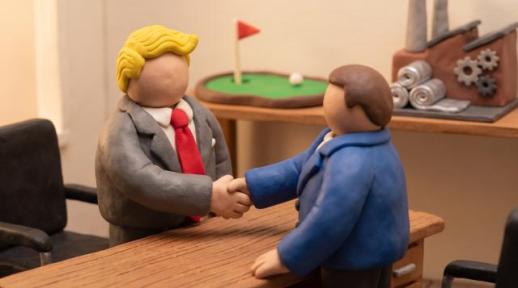 Trump got $2 million from Korean firm facing US trade probe SEOUL, July 15 (AJP) - The lead investor in a South Korean aluminum company contesting U.S. trade penalties paid $2 million last year to a holding company owned by President Donald Trump, according to a New York Times report that has renewed scrutiny of the president's foreign business dealings. The payment by Base Group, the parent of Korea Aluminium, surfaced for the first time in Trump's annual financial disclosure released in late June. The filing described it tersely as a "nonrefundable development fee" tied to a "letter of intent," offering no further detail. In statements to the Times, Base Group and the Trump family said the money related to an as-yet-unannounced golf course project in South Korea, and denied any link to the trade case. The Times said it found no evidence that Trump or his relatives had lobbied U.S. officials on the company's behalf. The disclosure lands at an awkward moment. Korea Aluminium has curbed shipments to the United States since the Commerce Department concluded in 2023 that a group of South Korean firms circumvented duties on Chinese-made aluminum by routing lightly processed metal through Korea. Base Group has courted the Trump family for nearly a decade, holding exclusive rights to sell Trump-branded wine in South Korea. In February, chairman Kim Sung-jip hosted Eric Trump in Seoul for meetings that drew executives from firms including SK Networks and Hana Bank. "Any suggestion that this transaction was driven by anything other than legitimate business considerations is pure fiction," Alan Garten, chief legal officer of the Trump Organization, said in a statement, adding that the payment had nothing to do with the trade dispute. The Base Group sum is a sliver of at least $125 million that Trump's holding company collected last year directly from foreign sources across more than a dozen countries. The White House and the Commerce Department both said the review of Korea Aluminium had not been swayed by political pressure, calling the agency's trade proceedings quasi-judicial and apolitical. A preliminary review released this month sided with U.S. producers and floated higher tariffs should the Korean firm ship Chinese-origin metal. 2026-07-15 08:04:33
 -
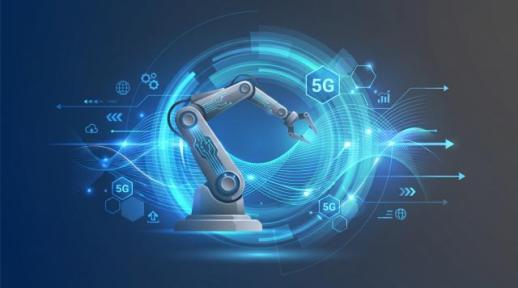 South Korea launches AI network to power industrial robots SEOUL, July 14 (AJP) - South Korea has begun building a next-generation communication network designed to run physical artificial intelligence on factory and shipyard floors. The Ministry of Science and ICT and the National Information Society Agency (NIA) held a kickoff meeting for the "Hyper-AI Network" project on Tuesday, which fuses standalone 5G with an AI-based radio access network, known as AI-RAN. The pilot network aims to prove out physical AI services such as welding, painting and patrol robots in industrial settings, with the government planning to widen the scope to humanoids from 2027. The state will pour about 17.2 billion won ($11.4 million) into the effort, selecting two consortia led by SK Telecom and KT as lead operators. SK Telecom's consortium will build an AI-RAN pilot network at SK Incheon Petrochem and KG Mobility sites, testing services including a four-legged patrol robot, unmanned autonomous transport and a low-power mode for humanoids. The project adopts a multi-vendor approach, simultaneously deploying AI-RAN equipment from Samsung Electronics, Ericsson, Nokia and HFR to gauge performance gains against conventional networks. KT's consortium will develop an "AI core orchestrator" that analyses network data in real time and fixes faults automatically, verifying a stable communication environment for swarms of robots at shipyards. Working with HD Hyundai Samho, KT will trial three services — AI welding robots, AI painting robots and autonomous robots that run telecom facilities — to measure gains in productivity and safety. "For physical AI to be realised safely and reliably at industrial sites, a hyper-AI network supporting ultra-low-latency, high-reliability communication and high-capacity uplink is essential," NIA President Kim Hyung-chul said. 2026-07-14 16:28:41