

Journalist
Kim Dong-young김동영
davekim0807@ajupress.com
ReporterSamsung Biologics, CJ CheilJedang, LG Chem, Celltrion, Naver, Krafton, Nexon, Hyundai Mobis etc. & energy, game, food, bio, petrochemical, AI
Kim Dong-young is a bilingual journalist at AJU Press (AJP), covering Korean tech, energy, and bio/pharma.
He reports from the field at events like CES and APEC, runs AJP's YouTube channels,
and is pursuing a master's at Sogang's MOT program. "I try everything in this AI era that can improve yet preserve the facts. Journalism still serves as my core."
He reports from the field at events like CES and APEC, runs AJP's YouTube channels,
and is pursuing a master's at Sogang's MOT program. "I try everything in this AI era that can improve yet preserve the facts. Journalism still serves as my core."
Latest by Kim Dong-young
-
 South Korea breaks ground on $791 million light source facility SEOUL, July 27 (AJP) - South Korea broke ground on a 1.16 trillion won ($791.5 million) fourth-generation synchrotron radiation facility, a flagship research complex the government hopes will free domestic scientists and industry from reliance on overseas laboratories. The Korea Light Source, or KLS, is being built on a site in Ochang, North Chungcheong Province, and is targeted for completion by the end of 2029, the Ministry of Science and ICT and the Korea Basic Science Institute said Monday. Once operational, the accelerator will hurl electrons to near light speed to generate brilliant beams capable of probing the structure of matter at the atomic scale, underpinning research in strategic fields such as semiconductors, batteries, new drugs and advanced materials. It will be about 100 times brighter than the country's existing third-generation source in Pohang. The project has not been without setbacks. Its completion date slipped from an original 2027 target after a contract with the POSCO E&C consortium was delayed, and construction bids were left unfilled several times before the deal was finally signed. "Now that the KLS has entered full-scale construction, we will put safety first and thoroughly manage every stage of the work," said Koo Hyuk-chae, first vice minister of science and ICT. "We will do our utmost to ensure a successful build so that researchers and industry can make use of world-class research infrastructure." When finished, the facility will make South Korea the world's sixth country to operate a fourth-generation circular light source. 2026-07-27 10:52:02
 -
 Celltrion confirms record quarterly profit above preliminary estimate SEOUL, July 27 (AJP) - Celltrion confirmed record second-quarter earnings on Monday that came in above its own preliminary estimate, as newer, higher-margin biosimilars and faster cost improvements outpaced the company's initial reckoning. Final audited revenue rose 45 percent from a year earlier to 1.39 trillion won ($953 million), while operating profit jumped 86.3 percent to 451.8 billion won, the biosimilar maker said in a regulatory filing. Both figures topped the preliminary numbers released on July 3, by about 93.7 billion won and 21.8 billion won respectively. Sales of newer products soared 76 percent year-on-year, lifting their share of total biologics revenue to 65 percent, up from the 60 percent-plus cited in the preliminary report. The company, which has launched 11 biosimilars globally, aims to build an 18-product portfolio by 2030, adding cancer and autoimmune treatments. It reaffirmed full-year targets of 5.3 trillion won in sales and 1.8 trillion won in operating profit, and said it now expects to exceed them. "This quarter confirmed our cash-generating power and business competitiveness, having achieved an operating margin above 30 percent even after absorbing R&D investment for future growth," said a Celltrion spokesperson, adding the company would keep reinvesting biosimilar cash flow into new drugs. Shares of Celltrion traded at 182,900 won per stock on 9:44 a.m., 2.96 percent higher than the previous session. 2026-07-27 09:44:54
 -
 Korean leaders meet Nvidia at San Francisco AI summit SEOUL, July 24 (AJP) - President Lee Jae Myung and a delegation of South Korea's leading executives and researchers are meeting Nvidia and its ecosystem partners at an AI summit in San Francisco this week to map out the country's push into artificial intelligence, the chipmaker said. The gathering builds on Nvidia founder and chief executive Jensen Huang's visit to Seoul last month, advancing what the company describes as a full-stack drive to widen Korea's AI infrastructure and expertise as the country angles to become a global hub for AI innovation. Huang is scheduled to meet Lee on the sidelines of the summit, alongside separate sessions with Korean and American business leaders. Lee departed Seoul for San Francisco on Friday at the start of a multi-nation overseas trip. On the eve of the summit, Huang hosted SK Group Chairman Chey Tae-won and teams from SK hynix, SK Telecom and Nvidia for dinner in Woodside, California — a warm-weather welcome to Silicon Valley for the visiting Korean executives. The two companies, longtime partners, said in June they would broaden their collaboration to jointly develop memory for Nvidia platforms spanning AI infrastructure, personal AI and physical AI. SK Telecom separately unveiled plans that month to build AI infrastructure supporting Korean innovation in physical AI and robotics. Nvidia and the Korea Advanced Institute of Science and Technology (KAIST) also announced a joint AI research lab in Seoul dedicated to agentic AI, the first such laboratory between a Korean university and a global technology company. 2026-07-24 16:03:16
 -
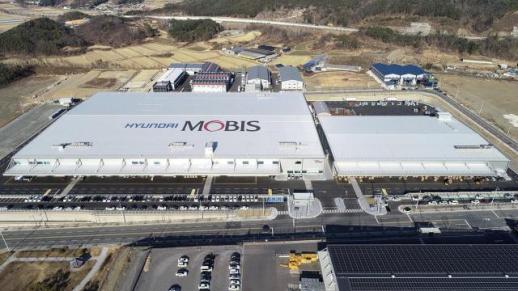 Hyundai Mobis posts record Q2 profit SEOUL, July 24 (AJP) - Hyundai Mobis announced that its second-quarter operating profit climbed 12.1 percent from a year earlier to 975.2 billion won ($665.7 million), as brisk sales of high-margin electronics components and a resilient after-sales parts business carried the auto parts maker. According to preliminary regulatory filings released Friday, revenue rose 2.4 percent to 16.32 trillion won, while net profit advanced 13.5 percent to 1.06 trillion won. Measured against the first quarter, the gains were sharper still — operating profit jumped 21.5 percent and net profit 20.1 percent. A richer product mix and company-wide cost discipline drove the improvement, Hyundai Mobis said. Electrification revenue slipped modestly on lower output at some automaker customers and memory chip costs remained a burden, but stronger sales to overseas carmakers and expanded shipments of high-value electronics parts more than offset the drag. The supplier spent 950.8 billion won on research and development in the first half, about 44 percent of its 2.16 trillion won annual plan, and booked $740 million in orders from global clients. "Some orders were delayed in the first half due to customers' strategy changes and a slowdown in the electrification market, but we plan to focus on securing first-time orders with new products and new customers to raise the quality of our order book," said a Hyundai Mobis spokesperson. The company declared an interim dividend of 1,500 won per share, with a record date of Aug. 10. It bought back about 910,000 shares worth 500 billion won between May and July, all of which are scheduled to be cancelled in August. Shares of Hyundai Mobis traded at 494,500 won per share at 10:35 a.m., down by 5.73 percent from the previous session. 2026-07-24 10:40:46
 -
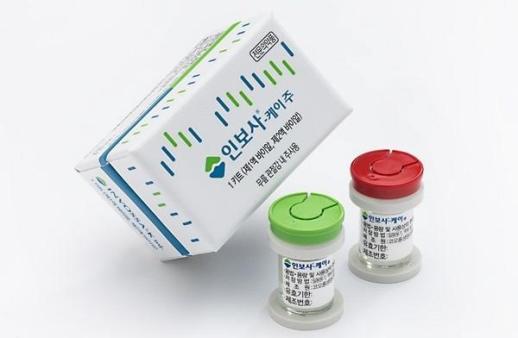 Kolon TissueGene extends slide as trial miss guts valuation SEOUL, July 24 (AJP) - Shares in Kolon TissueGene fell for a sixth consecutive session on Friday, extending a rout that has erased about three-quarters of the biotech firm's market value in a single week after its osteoarthritis gene therapy failed to outperform a placebo in a late-stage U.S. trial. The stock traded at 15,620 won as of 10:04 a.m. on the tech-heavy KOSDAQ, down 5,430 won, or 25.94 percent from the previous close. The shares had already hit the daily limit-down of about 30 percent for three straight sessions from Monday through Wednesday. The company disclosed on Monday that TG-C, a cell and gene therapy for knee osteoarthritis, missed both co-primary endpoints in its U.S. Phase 3 trial. Pain relief and joint function improved among patients who received the drug, but not by a statistically significant margin over placebo. Analysts pinned the miss on the placebo arm rather than the drug itself. "This failure stems not from a lack of efficacy in TG-C but from an unexpectedly strong placebo effect," said Wi Hae-joo, an analyst at Korea Investment & Securities, cutting the brokerage's rating to neutral from buy. The firm also lowered its assumptions for trial success probability and U.S. market share. A second U.S. Phase 3 study, coded 12301, is due to report in October, and the company is weighing whether an elevated placebo response skewed the first readout. Wi said the pain reduction seen in the treated arm mirrored earlier Phase 2 results, leaving room for success in the second trial if the placebo effect proves less pronounced. 2026-07-24 10:12:22
 -
 S. Korea cracks down on 26 firms over false diet food ads SEOUL, July 23 (AJP) - South Korea's Ministry of Food and Drug Safety said it had referred 26 companies for administrative penalties and filed criminal complaints against them for marketing diet products with false or exaggerated claims, in a scheme that moved about 600,000 units worth 11.5 billion won. The companies promoted 30 products, only eight of which were licensed as health functional foods, the ministry said at a briefing on Thursday. The remaining 22 were ordinary foods. Penalties may include business suspensions or corrective orders under the country's food labelling and advertising law. The products rode a wave of online weight-loss fads, among them the so-called "Olé-shot," a mixture of olive oil and lemon juice, and a so-called "natural Wegovy" combining olive oil with boiled eggs. Some were pitched as an "edible Wegovy" or invoked GLP-1, the class of blockbuster obesity drugs. Kim Ji-yeon, a professor of food science and biotechnology at Seoul National University of Science & Technology, dismissed the claims at the briefing. "There are no research findings that olive oil has anti-ageing effects," she said, adding that olive oil benefits the body only when it displaces saturated fat within a normal diet, not when taken as a supplement. She said there was no evidence lemon juice aids the liver in detoxification. Several firms produced short-form videos in which celebrities and pharmacists appeared to endorse the products, using AI-generated imagery and depictions of body tissue to suggest drug-grade effects such as appetite suppression and blocked fat absorption. The videos circulated repeatedly on Facebook and YouTube and funneled viewers to the sellers' own online storefronts. Phrases such as "rapid short-term weight loss" and "fat expulsion" appeared in the clips but were scrubbed from the linked sales pages, a tactic the ministry said exploited the difficulty of tracing advertisers behind clips that vanish after posting. Markups ran from 1.8 to 27.5 times the purchase price. In one case, a product bought for 2,000 won was sold for 60,000 won, generating 2.09 billion won in revenue. 2026-07-23 16:03:20
 -
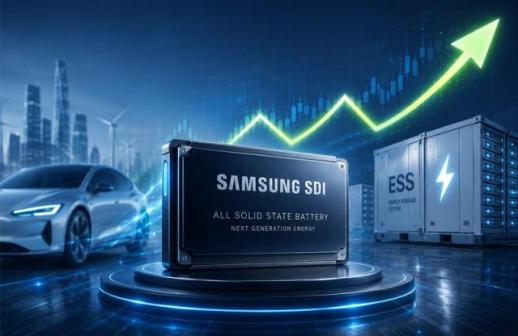 Korea's battery trio turns corner on ESS boom SEOUL, July 23 (AJP) - South Korea's three largest battery makers are seen to have bottomed out in the second quarter as AI boom-led energy storage demand and renewed appetite for EVs from Gulf conflict-induced oil price turbulence pulled them out of a near two-year slump. The reversal of fortune has most benefited Samsung SDI, the underdog among the trio, with analysts expecting it to return to an operating profit for the first time in seven quarters. That would end a losing streak dating back to the third quarter of 2024. The biggest catalyst has not been electric vehicles but energy storage systems (ESS), once considered the industry's backup engine, as AI-driven data center construction fuels surging demand for large-scale battery storage. Samsung SDI's ESS production lines have been running at full capacity. In March, its U.S. subsidiary secured a 1.5 trillion won ($1 billion) contract to supply prismatic ESS batteries to a U.S. energy company through 2029, following an earlier award worth more than 2 trillion won for lithium iron phosphate (LFP) cells. The company bills itself as North America's only non-Chinese producer of prismatic ESS batteries, a niche that has become increasingly valuable as customers seek to diversify supply chains. Government policy has further brightened the outlook. Advanced manufacturing production credits tied to Samsung SDI's U.S. output are projected to reach about 97.7 billion won this quarter, up 21 percent from the previous three months. "As promised earlier this year, we expect an earnings turnaround to be achievable this year," Samsung SDI Chief Executive Choi Joo-sun said at an event marking the company's 56th anniversary, citing new ESS projects and contracts with premium automakers. Among them was Samsung SDI's first-ever battery supply agreement with Mercedes-Benz, signed in Seoul in April, to provide high-nickel batteries for the German automaker's next-generation electric vehicles. The deal means Samsung SDI now counts all three of Germany's premium automotive brands among its customers. An unlikely boost to EV demand came from the Middle East. Oil prices surged as conflict around the Strait of Hormuz threatened energy supplies, prompting more consumers to consider electric vehicles. Domestic EV registrations jumped about 140 percent from a year earlier in April as drivers sought relief from rising fuel costs. The rebound has, at least temporarily, softened the industry's prolonged EV demand slowdown that followed reductions in government subsidies. Chinese manufacturers, however, continue to dominate the global EV battery market. LG Energy Solution, the country's largest battery maker, presented a more mixed picture. It returned to net profit with operating income of 113.3 billion won, but the result relied heavily on 241 billion won in U.S. advanced manufacturing tax credits. Excluding those incentives, its core business remained in the red, posting an underlying operating loss of roughly 127.7 billion won for a third consecutive quarter. Management nevertheless expects to achieve a subsidy-free turnaround by the fourth quarter. Its order pipeline, however, suggests underlying demand remains solid. The company secured more than 100 gigawatt-hours of new orders for its 46-series cylindrical EV batteries in the first quarter, lifting its order backlog above 440 gigawatt-hours. It also plans to expand its North American ESS production capacity to more than 50 gigawatt-hours by year-end. "The ESS ecosystem has kept expanding quietly, even as the market looked away," said Kim Hyun-soo, an analyst at Hana Securities. "After LG Energy Solution won an Oracle order in May, a Google order was confirmed last week. The industry is at the threshold of a genuine surge in hyperscaler ESS demand." SK On, the smallest of the three battery makers, is aiming to return to profitability in the second half. The company is relying on aggressive cost-cutting, including shutting excess production lines and integrating affiliates, alongside what it expects to be another wave of ESS orders from AI data centers and solar power projects. The industry's brightest prospects now rest on that storage boom. Yet the same geopolitical tensions supporting EV demand have also created fresh supply-chain risks. Disruptions around Hormuz have constrained sulfur shipments, affecting production of sulfuric acid used to refine battery-grade nickel and lithium. The squeeze has reinforced Korea's longer-term effort to reduce dependence on Chinese battery materials. Samsung SDI underscored that strategy when it announced a 1.6 trillion won cathode materials supply agreement with domestic producer L&F. In the near term, however, the market is preparing for a sharp decline in U.S. EV sales. "Because subsidies expired on Sept. 30, 2025, pull-forward demand concentrated sales between July and September, meaning this year's third quarter will face a much steeper year-on-year comparison," Kim said. "But that has been anticipated since the beginning of the year. From October, the base effect eases, making a return to year-on-year growth likely." Another question is whether CATL, the world's largest battery maker, can erode Korea's position as it rolls out its new sodium-ion battery brand, expands domestic sales and targets European customers. Some analysts expect only limited impact. "The U.S. ESS market will be shaped by supply-chain de-risking requirements needed to qualify for tax credits, so CATL's expansion is unlikely to undermine the competitiveness of Korean manufacturers," said Chang Jung-hoon, an analyst at Samsung Securities. For now, raw material constraints have yet to derail the sector's recovery. But with lithium markets already shifting from years of oversupply toward deficit, Korea's battery makers may ultimately find that restoring earnings is easier than securing the critical materials needed to sustain growth. 2026-07-23 14:19:02
 -
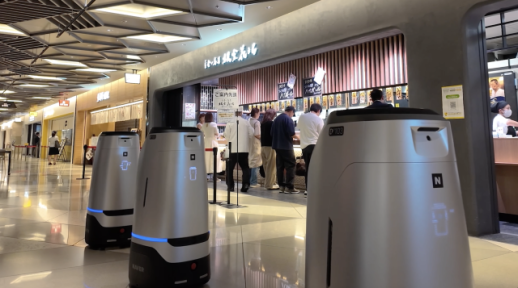 Naver exports smart-building tech to Tokyo tower in first commercial deal SEOUL, July 23 (AJP) - Team Naver, the consortium of Naver affiliates including Naver itself and Naver Cloud, announced it has deployed the smart-building technology behind its "1784" headquarters at a major Tokyo commercial complex. Working with NTT East and Mitsui Fudosan, the company revealed Thursday that it has fitted Tokyo Midtown Yaesu, a mixed-use office and retail tower in central Tokyo, with the autonomous robots, cloud-based control systems and digital-twin infrastructure it has honed at 1784 over four years. Under the deal, the three firms have launched a cloud-based robot delivery service, ferrying food and drinks ordered through the Line app from restaurants on the basement and fifth floors to offices on the seventh. Four robots navigate the tower using Naver's Rookie machines, its ARC brain fleet-control platform and ARC eye vision-based positioning technology. Crucially, the company said it optimized the system to run in ordinary buildings that lack the robot-only elevators and bespoke cloud setups engineered into 1784. The ARC brain platform links the robots to elevators and speed gates through cloud processing, letting them move seamlessly through spaces shared with people. The three companies plan to widen the partnership into indoor augmented-reality navigation and digital-twin-based building management, extending their reach across the physical-AI field, Team Naver said. The project was led by Naver Cloud's Japan business team, drawing on Naver Labs' robotics and vision technology. 2026-07-23 09:58:35
 -
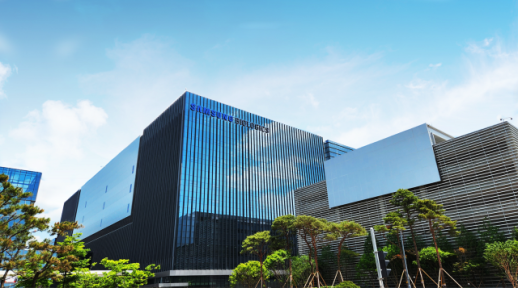 Samsung Biologics posts 30% jump in second-quarter revenue SEOUL, July 23 (AJP) - Samsung Biologics reported a 30 percent rise in second-quarter revenue to 1.32 trillion won ($894 million), lifted by full utilization of its first four plants and a favorable won-dollar exchange rate, the South Korean contract drugmaker said. According to regulatory filings released Thursday, operating profit climbed 23 percent from a year earlier to 586.4 billion won. The robust growth came despite the company's first-ever full walkout, a five-day strike from May 1 that halted some production batches after a parts-handling unit downed tools days earlier, choking the supply of raw materials. Samsung Biologics had estimated related losses at about 150 billion won. Shrugging off that disruption, the company said it expects to reach the upper end of its full-year 2026 revenue growth guidance of 15 percent to 20 percent, citing an expanding contribution from the fifth plant and the Rockville facility alongside the currency tailwind. The firm said it would open a European sales office in the Netherlands during the third quarter, adding to bases in New Jersey and Tokyo, and pointed to its acquisition of peptide specialist PolyPeptide Group and a secured site for a third bio campus as it pushes beyond antibody drugs into mRNA and antibody-drug conjugates. 2026-07-23 08:11:06
 -
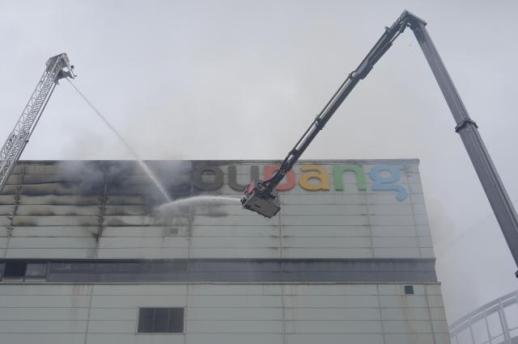 Coupang unit to fully compensate sellers for warehouse fire losses SEOUL, July 22 (AJP) - Coupang Fulfillment Services (CFS) announced Wednesday it will fully compensate third-party sellers for inventory destroyed in a fire at its logistics center in Incheon, moving to shield its merchant partners from mounting operational losses. The blaze, which broke out at the Seoknam-dong complex, gutted stock belonging to sellers enrolled in Rocket Growth, Coupang's fulfillment service in which merchants entrust goods to the company for storage and delivery. Compensation will extend beyond the area consumed by the flames to inventory left untouched by the fire, the company said, covering secondary damage such as delayed retrieval and dust contamination. As a result, stock held at the 31, 41, 42 and 43 centers — housed in the same building as the fire-hit No. 32 center, where inbound shipments had been suspended — also qualifies for reimbursement. The company said it will tally each seller's inventory and, from mid-August, individually notify merchants of their total compensation, expected payout dates and a pared-down set of requirements, waiving cumbersome documentation such as invoices and packaging footage. CFS added that it will run a dedicated Rocket Growth consultation channel offering one-on-one support, saying it would spare no effort to ensure its partners do not face managerial hardship because of the incident. 2026-07-22 15:21:45