

Journalist
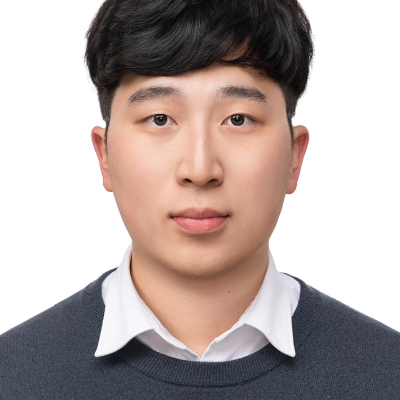
Kim Dong-young김동영
davekim0807@ajupress.com
ReporterSamsung Biologics, CJ CheilJedang, LG Chem, Celltrion, Naver, Krafton, Nexon, Hyundai Mobis etc. & energy, game, food, bio, petrochemical, AI
Kim Dong-young is a bilingual journalist at AJU Press (AJP), covering Korean tech, energy, and bio/pharma.
He reports from the field at events like CES and APEC, runs AJP's YouTube channels,
and is pursuing a master's at Sogang's MOT program. "I try everything in this AI era that can improve yet preserve the facts. Journalism still serves as my core."
He reports from the field at events like CES and APEC, runs AJP's YouTube channels,
and is pursuing a master's at Sogang's MOT program. "I try everything in this AI era that can improve yet preserve the facts. Journalism still serves as my core."
Latest by Kim Dong-young
-
 Samyang Foods joins culture ministry to lure Buldak fans to Korea SEOUL, July 31 (AJP) - South Korea's culture ministry announced it would sign a memorandum of understanding with instant-noodle maker Samyang Foods to promote overseas tourism, seeking to convert the global appetite for Korean food into visits to the country. The Ministry of Culture, Sports and Tourism said Friday the deal is designed to channel the worldwide popularity of K-food into tangible travel demand, pairing Korean tourism advertising with Samyang's products and content across large-scale online and offline promotions. Under the agreement, consumers who encounter Samyang products at local retail channels around the world would be steered toward Korea's tourism appeal, with QR codes embedded in Buldak stir-fried noodles and sauce products linking to travel information and events. The partnership will debut at the "Love Korea 2026" in Bangkok from Aug. 21 to 23, where a dedicated space will offer noodle tastings alongside Korean cultural experiences and games. The two sides will also run a joint campaign linking their official online channels. "We expect the government's Korean tourism content and the private sector's overseas marketing capabilities to create a synergy that raises the national brand," Culture Minister Chae Hwi-young said, adding that he hoped the effort would help Korea emerge as an "irreplaceable travel destination" for the world. 2026-07-31 09:15:34
-
 Korea bets on being indispensable in U.S.-China AI rivalry SEOUL, July 30 (AJP) - When the U.S. Federal Communications Commission (FCC) this week barred new imports of Chinese-made humanoid robots, it marked another escalation in the technology war that began with semiconductors and rare earths. More importantly, it showed that strategic competition has entered the age of physical artificial intelligence — where robots, AI models and communications networks are increasingly treated as national-security assets. For South Korea, the decision also sharpened a larger question: how does a middle power preserve its strategic autonomy when the world's two largest economies are steadily forcing countries to choose sides? The FCC on Tuesday (local time) placed foreign-made humanoid and quadruped robots, along with connected power inverters, on its national-security "Covered List," effectively blocking new models from receiving the authorization required to enter the U.S. market. Machines already operating in the field remain unaffected, but the door has largely closed for future Chinese entrants. "Following President Trump's leadership, the FCC will continue to do our part to secure America's critical supply chains, and, with today's action, the FCC is acting in lock step with our national security agencies to do just that," FCC Chairman Brendan Carr said. The unnamed target was unmistakable: China. The country accounts for an estimated 85 percent of the global humanoid robot market, and the restrictions fall most heavily on Unitree Robotics, whose backflipping G1 humanoid has become the symbol of China's rapidly advancing robotics industry. For Seoul, the story began with dirt. China's rare-earth export controls in April 2025 — tightened until U.S.-bound shipments of several critical minerals briefly fell to zero — demonstrated that supply-chain dependence itself had become a geopolitical weapon. Washington's response has steadily broadened from securing access to minerals toward reshaping the entire technology ecosystem. The latest robot restrictions are part of that broader strategy. This month, the Trump administration also convened a coalition of more than 20 countries, including Britain, Germany and Japan, to establish the security architecture and technical standards for sixth-generation wireless networks. The initiative, known as the Call to Action for 6G Leadership and Security, aims to ensure that the next communications infrastructure is designed largely outside China's technological sphere. "Today's action recognizes that 6G will be dramatically different from 5G, and that advancing U.S. and allied leadership requires a dramatically different playbook," said Arielle Roth, administrator of the National Telecommunications and Information Administration (NTIA). Taken together, the measures illustrate how Washington's strategy has expanded from controlling critical minerals to securing the entire AI technology stack — including semiconductors, communications networks, robotics and frontier AI models. Rare earths, batteries, advanced chips and artificial intelligence are increasingly treated not as separate industries but as components of a single strategic ecosystem. This is where South Korea occupies a different position from most middle powers. Rather than standing on the sidelines, Korea sits at the center of several supply chains Washington is trying to secure. Samsung Electronics and SK hynix dominate the world's advanced memory market, supplying the high-bandwidth memory (HBM) chips that underpin Nvidia's AI accelerators and much of today's generative AI infrastructure. That makes Seoul a partner Washington cannot easily sideline, even as strategic competition with Beijing intensifies. The importance of that relationship was evident last week in San Francisco, where President Lee Jae Myung unveiled what his office described as an "AI declaration" before meeting the leaders of America's most influential AI companies. Lee dined with Nvidia Chief Executive Jensen Huang, OpenAI CEO Sam Altman and Anthropic CEO Dario Amodei, alongside the heads of Samsung Electronics, SK Group and Hyundai Motor Group. "The Republic of Korea intends to dramatically expand its investment in artificial intelligence going forward, so we look forward to Anthropic's particular interest, investment and contribution," Lee said. The same pattern is emerging in physical AI. Ironically, the strongest Western challenger to China's Unitree is Boston Dynamics — an American robotics pioneer wholly owned by South Korea's Hyundai Motor Group. Its Atlas humanoid entered commercial deployment this year on Hyundai production lines, creating an unusual industrial identity: a robot designed in the United States, commercialized by a Korean conglomerate and positioned as part of the Western response to China's robotics rise. A similar dynamic is unfolding in frontier AI. In May, OpenAI expanded the government-focused tier of its Daybreak cybersecurity initiative to South Korea, making it the third participating country after the United States and Canada, and one of the first in Asia. "The latest cyber AI capabilities must not remain confined to a select few," Jason Kwon, OpenAI's chief strategy officer, said in Seoul, describing advanced AI security as a shared responsibility among trusted partners. Anthropic has adopted an even more selective approach. Its most capable model, Mythos, remains unavailable to the public and is shared only through Project Glasswing, an invitation-only program focused on autonomous vulnerability detection. In June, Anthropic expanded the initiative to roughly 150 organizations across about 15 countries. South Korea was among the beneficiaries, with the Korea Internet & Security Agency (KISA), Samsung Electronics, SK hynix and SK Telecom gaining early access. Yet the episode also underscored the limits of partnership. Barely a week after Korea joined the program, Anthropic temporarily suspended access to its most advanced models to comply with new U.S. export-control rules — a reminder that even close allies remain subject to policies ultimately written in Washington. Strategic value, however, does not eliminate vulnerability. South Korean manufacturers continue to rely heavily on Chinese processing of rare earths, while China remains one of their largest export markets. As Washington expands restrictions across more sectors, measures aimed primarily at Beijing inevitably create collateral risks for Korean companies operating between the world's two largest economies. For decades, South Korea prospered by navigating between competing powers. The AI era presents a different proposition. Rather than relying on neutrality alone, Seoul is increasingly betting on indispensability — supplying the memory chips, advanced manufacturing, cybersecurity expertise and industrial capabilities that neither Washington nor Beijing can easily replace. Whether that strategy proves durable will depend on forces largely beyond Seoul's control. Yet as the technology rivalry moves from critical minerals to robots, frontier AI models and the infrastructure that connects them, becoming indispensable may offer South Korea a stronger form of strategic insurance than attempting to remain equidistant between two increasingly irreconcilable superpowers. 2026-07-30 14:59:28
-
 ESS transition helps Samsung SDI swing to profit as peers lag SEOUL, July 30 (AJP) -Samsung SDI returned to the black in the second quarter, snapping seven consecutive quarters of operating losses as booming demand for energy storage systems powering AI data centers offset the prolonged electric-vehicle slowdown that continues to weigh on most Korean battery makers. According to regulatory filings released Thursday, the firm booked an operating profit of 203.8 billion won ($141.5 million) for the three months through June, reversing a loss of 397.8 billion won a year earlier and a first-quarter shortfall of 155.6 billion won. Revenue climbed 18.5 percent from a year earlier to 3.77 trillion won, while net profit vaulted to 471.6 billion won, up about 740 percent from the previous quarter. "We had originally expected a turnaround in the second half, but revenue growth and improving profitability came faster than anticipated, moving up the timing of our return to profit," said a Samsung SDI spokesperson, adding that it would keep pursuing sustainable growth and firmer margins. The battery division led the charge with an operating profit of 159.3 billion won, as sales of high-output cells for uninterruptible power supplies, backup battery units and power tools gained traction alongside brisk European electric-vehicle orders. Momentum also came from home. This month Samsung SDI cells were tapped for 21 of the 32 distribution lines in the government's first AI-based grid ESS program — about 66 percent of the volume, or roughly 420 megawatt-hours — the biggest share of any supplier and a lead over LG Energy Solution and SK On, positioning the firm ahead of a larger state ESS auction expected around September. Higher-margin products, expanding U.S. output and subsidies under the Advanced Manufacturing Production Credit of the Inflation Reduction Act, together with tariff refunds, further sharpened profitability. The electronic-materials arm chipped in an operating profit of 44.5 billion won, up 34.8 percent, buoyed by resilient semiconductor-material sales and film used in foldable smartphones. The result stood in relief against rival LG Energy Solution, which earlier the same day reported second-quarter operating profit of 113.3 billion won — down 77 percent from a year earlier, though a recovery from a first-quarter loss, as North American energy-storage demand cushioned a punishing slump in electric-vehicle sales. For LG, government support did the heavy lifting: about 241 billion won in IRA tax credits masked what would otherwise have been a 127.7 billion won operating loss, underscoring how heavily Korea's battery makers still lean on Washington's subsidies. Samsung SDI said it expects earnings to keep improving in the second half, pledging to ramp up prismatic LFP battery output in the United States and expand capacity for power-storage and uninterruptible-supply products as the data-center build-out accelerates. Shares of Samsung SDI traded at 354,000 won per stock at 2:11 p.m., down by 2.75 percent from the previous session. 2026-07-30 14:27:53
-
 Korea fines KT $37 mln over rogue base station breach SEOUL, July 30 (AJP) - South Korea's privacy watchdog has fined KT 53.98 billion won ($37.3 million) over a data breach in which rogue miniature base stations, or femtocells, were used to siphon the personal information of about 16,000 subscribers and route unauthorized micro-payments. The Personal Information Protection Commission said Thursday it had imposed the penalty at a plenary session the previous day, alongside corrective orders and a public disclosure order, and would separately file a criminal complaint against the carrier for deleting logs and giving false statements that obstructed the probe. Hackers extracted certificates from a lost KT femtocell and planted them in illicit devices to slip onto the carrier's mobile network, intercepting traffic that passed between users' handsets and the internal system, investigators found. They then combined the stolen data with names and birth dates to hijack payment verification texts and complete fraudulent purchases. The breach exposed the phone numbers and device identifiers of 16,647 subscribers, including budget-carrier users, while 368 people suffered about 240 million won in unauthorized charges, the commission said. KT had set the femtocell certificates to remain valid for a decade and imposed no restrictions on connecting IP addresses, allowing access through rival carriers or overseas networks, according to the regulator. It also failed to detect unauthorized connections, leaving hackers free to roam its internal network for roughly 11 months. "This security breach is an extremely critical matter directly tied to public trust in telecommunications services that are part of our daily lives," Minister of Science and ICT Bae Kyung-hoon said when the scheme first surfaced last year. The commission also referred rival LG Uplus to prosecutors for obstruction, saying the carrier had reinstalled operating systems and scrapped servers before the inquiry began, and vowed to tighten the law so firms that destroy evidence before a probe can face criminal charges or fines of up to 3 percent of total revenue. 2026-07-30 11:04:04
-
 LG Energy Q2 profit slides 77% on weak EV demand SEOUL, July 30 (AJP) - LG Energy Solution confirmed that its second-quarter operating profit tumbled 77 percent from a year earlier to 113.3 billion won ($78.6 million), as a prolonged slump in North American electric-vehicle demand continued to erode earnings at South Korea's largest battery maker. According to regulatory filings released Thursday, revenue rose 24.8 percent year-on-year to 7.56 trillion won, while the net loss came to 328.6 billion won, swinging back into the red. Still, the quarterly result marked a rebound from a first-quarter operating loss of 207.8 billion won, snapping two straight quarters of losses that stretched back to the final three months of last year. The turnaround leaned heavily on government support. The reported profit included about 241 billion won in tax credits under the Advanced Manufacturing Production Credit of the U.S. Inflation Reduction Act; excluding the subsidy, the company would have booked an operating loss of 127.7 billion won. Rising North American demand for energy-storage systems and firm cylindrical battery sales cushioned the blow, offsetting a demand chasm that has forced the temporary shutdown of the firm's Ultium Cells joint venture with General Motors in Ohio and Tennessee. Shares of LG Energy Solution traded at 320,000 won per stock at 9:53 a.m., 6.49 percent higher than the day before. 2026-07-30 09:56:34
-
 Korea uses more AC, pays less than Japan SEOUL, July 29 (AJP) - South Korea's households crank up their air conditioners more aggressively in summer than those in most advanced economies, yet they shoulder the lowest electricity bills among major nations, industry reports say. Per-capita cooling electricity consumption reached 191.5 kilowatt-hours in 2022, about a quarter of the 766.2 kWh recorded in the United States in 2020 but well above other major economies. The figure ran 1.2 times higher than Japan's 160.2 kWh in 2024, 1.5 times Italy's level, and a striking 12 times that of Germany. The gap reflects Korea's hot, humid summers, which keep cooling units humming far longer than Europe's drier heat. Despite that heavy usage, Korean households pay the least. Applying last year's average July to August consumption of 419 kWh for a four-person household, the monthly bill came to 77,760 won ($53.4), the cheapest among the seven countries surveyed. KEPCO reached the figure by running identical usage through the tariff schedules of overseas utilities including Tokyo Electric Power, France's EDF and Southern California Edison. Elsewhere, the same electricity cost far more. Japanese households would pay 165,983 won, 2.1 times the Korean level, while Germany topped the list at 230,149 won, close to triple. The pattern held on broader measures. Korea's residential rate of $0.127 per kWh ranked 81st among 144 countries tracked by GlobalPetrolPrices, below Italy, Germany, Japan and the United States. Among OECD members, only Canada, Hungary, Mexico and Türkiye charged households less. Still, the low headline price masks a steep progressive tariff. Summer rates climb through three tiers, and once monthly usage tops 450 kWh, the basic charge jumps to 7,300 won and the bill approaches 100,000 won, meaning a stretch of heavy cooling can send costs soaring. 2026-07-29 10:18:55
-
 Krafton unveils voice AI model topping Korean-language benchmarks SEOUL, July 29 (AJP) - South Korean game developer Krafton said it had released a voice artificial-intelligence foundation model, A.X K2 Raon-Speech, on the global platform Hugging Face, deepening its push into the technology it views as central to the future of gaming. The model, announced by Krafton on Wednesday, was developed under a government-led "sovereign AI foundation model" project overseen by the Ministry of Science and ICT, in which Krafton leads next-generation multimodal research as part of an elite team assembled by SK Telecom. It emerged as one of the results of the project's second phase. Built with about 21 billion parameters, A.X K2 Raon-Speech ranked first in overall Korean-language performance and third in English among openly released voice models below the 30-billion-parameter class, according to Krafton. The company said it evaluated the model across six areas — from speech recognition and synthesis to tool-calling — using 46 benchmarks spanning Korean and English. The model pairs a compact language model based on SK Telecom's A.X K2 with a speech encoder and codec that Krafton trained in-house, allowing it to interpret a speaker's voice and answer in fluent, natural-sounding speech. Conventional voice systems, which convert speech to text and back again, often strip away emotion and intonation along the way; Krafton said its model preserves those cues to craft more lifelike replies. The release builds on Raon, the AI brand Krafton launched in April with four open-source models, refining the earlier speech model's training approach with the company's own encoder and codec. "A.X K2 Raon-Speech is the fruit of Krafton's steady research into and refinement of AI foundation technology," said Lee Kang-wook, the company's chief AI officer, adding that the firm would keep advancing the foundations needed to build new gaming experiences, including AI-driven characters that understand a player's voice and respond in kind. 2026-07-29 09:34:13
-
 Celltrion to unveil obesity, cancer drug data as it pushes beyond biosimilars SEOUL, July 29 (AJP) - Celltrion announced it would release preclinical data for its next-generation obesity candidate this year and begin disclosing early clinical results for its antibody-drug conjugate (ADC) programs from the first half of 2027, as the South Korean drugmaker moves to widen its footing beyond biosimilars into novel therapies. The company, which built its name replicating blockbuster biologics, is now betting that the antibody expertise and global clinical, manufacturing and regulatory muscle honed over years of biosimilar work can accelerate its push into higher-value original drugs. First in line is CT-G32, a quadruple-action obesity candidate that Celltrion is advancing as a potential first-in-class therapy. The drugmaker is running GLP toxicology tests in 252 rats and 48 monkeys to nail down safe dosing, with results due at an academic conference in November and an Investigational New Drug application slated for February 2027. Should approval proceed smoothly, the first patients would be dosed in the second quarter of next year. Earlier preclinical work showed CT-G32 outperformed a rival triple-target agonist on weight loss while sparing lean muscle mass, the company said. Celltrion is simultaneously advancing four ADC and multi-antibody candidates that have entered patient dosing, two of which will wrap up their Phase 1 part-one studies this year, with topline readouts to follow through the first half of 2027. Two of the programs, CT-P70 and CT-P71, have already secured U.S. Food and Drug Administration fast-track status, targeting hard-to-treat cancers from non-small-cell lung to breast and prostate. The company is developing about 25 novel candidates in all and expects its roster of clinical-stage programs to more than triple from this year's levels by 2028, funneling the steady cash thrown off by its biosimilar franchise into research. "The unveiling of preclinical data for our next-generation obesity treatment late this year, followed by key clinical results for our cancer ADC candidates in the first half of next year, will mark a pivotal turning point where the market can gauge our drug-development capabilities and pipeline potential," said a Celltrion spokesperson. 2026-07-29 08:56:16
-
 US enlists South Korea, allies in 6G push to counter China SEOUL, July 28 (AJP) - The Trump administration launched a global partnership on sixth-generation wireless technology, rallying 25 governments including South Korea in a bid to shape the next era of telecommunications and blunt China's growing influence over the field. The initiative announced Monday (local time), dubbed the "Call to Action for 6G Leadership and Security," drew endorsements from major economies such as Japan, Britain, Germany and France, alongside Albania, Australia, Canada, Costa Rica, the Czech Republic, Denmark, Estonia, Finland, Greece, Honduras, Italy, Latvia, Lithuania, Norway, Panama, Paraguay, the Philippines, Romania and Sweden. The participating governments pledged to deepen cooperation over the coming 12 months and beyond, vowing to bolster the security, interoperability and resilience of next-generation networks. They agreed to designate government points of contact, pool technical resources and lay the groundwork for commercial deployment, while endorsing trustworthy artificial intelligence as central to secure 6G development. " Today’s action recognizes that 6G will be dramatically different from 5G, and that advancing U.S. and allied leadership requires a dramatically different playbook," said Arielle Roth, Assistant Secretary of Commerce for Communications and Information and National Telecommunications and Information Administration (NTIA) Administrator. The coalition gives shape to goals President Donald Trump set out last December in a policy paper, "Winning the 6G Race," which cast next-generation networks as a pillar of American national security, foreign policy and economic prosperity. Roth had first hinted at the plan in March, warning against embracing an existing model " built around censorship, surveillance and control" — a pointed jab at Chinese vendors such as Huawei and ZTE, whose equipment Washington has flagged as a security risk since Trump's first term. Political news outlet Politico said the alliance is designed to sharpen diplomatic coordination among allies ahead of next year's World Radiocommunication Conference in Shanghai, where 6G standards will be negotiated, and to keep China in check. Known formally as IMT-2030, 6G aims for theoretical peak speeds of about 1 terabit per second — roughly 50 times faster than current 5G — and latency as low as a ten-thousandth of a second. The first detailed specifications are expected around March 2029, with commercial rollout anticipated near 2030. 2026-07-28 14:19:07
-
 Why Nvidia needs Korea as much as Korea needs Nvidia SEOUL, July 27 (AJP) - When Jensen Huang toured Seoul last month, Nvidia's chief executive said he had found a full five-layer AI cake in South Korea. Over the weekend, he stayed true to that discovery, emerging as both the biggest customer and investor in that cake. Nvidia placed itself at the center of South Korea's all-out AI push as Huang headlined the government-hosted AI summit in San Francisco before joining President Lee Jae Myung and Korea's business leaders for a relaxed waterfront dinner over beer and fish and chips, replacing Seoul's trademark chimaek but preserving the easy camaraderie that has come to define Huang's relationship with Korea. At first glance, Korea's chip ecosystem was the centerpiece. Samsung Electronics and SK hynix dominate advanced memory, while the country combines world-class telecommunications, electronics manufacturing, automobiles, robotics and industrial production into one of the world's most complete AI supply chains. But beneath the celebratory mood lay an anxiety confronting the world's AI champion. Nvidia's growth rests on a simple equation: more data centers mean more graphics processing units sold, more high-bandwidth memory installed and more networking equipment deployed. That equation is increasingly running into a wall in the United States. The constraint is no longer chips or capital. It is electricity. Power has become the scarce resource in the AI race. Utility interconnection queues in major U.S. markets stretch for years, community opposition has slowed new projects, and transformers and other heavy electrical equipment remain in short supply. Even developers with financing and Nvidia GPUs in hand often cannot connect new facilities to the grid. Research by Sightline Climate estimates that 30 percent to 50 percent of large data-center projects expected globally this year could face delays because of power shortages, equipment bottlenecks and permitting hurdles. For Nvidia, every delayed data center represents GPUs that cannot be shipped, networking systems that cannot be installed and memory chips that remain unsold. A bottleneck in Virginia or Texas eventually shows up in demand forecasts in Santa Clara. Korea as Nvidia's second growth engine That is where South Korea enters—not as a beneficiary of Nvidia's expansion, but as an alternative engine of demand that America's grid cannot yet accommodate. President Lee Jae Myung has launched one of the world's most ambitious AI infrastructure drives, combining hyperscale AI data centers, sovereign AI models and industrial AI deployment under three national mega projects. The plan calls for roughly 18.4 gigawatts of AI data-center capacity by 2035. SK Group is expected to develop around 15 gigawatts, GS Group 2.4 gigawatts and Naver about 1 gigawatt, representing one of the largest coordinated AI infrastructure programs outside the United States. Layered on top is Seoul's sovereign AI initiative, encouraging Korean companies to build large language models optimized for the Korean language, domestic regulations and industrial applications. For Nvidia, those projects provide exactly what U.S. infrastructure constraints increasingly threaten: sustained demand. "South Korea has all the ingredients to become a global AI powerhouse—world-class networks and data centers, leadership in chip technology and vast industrial scale," Huang said. "Together with SK Telecom and SK hynix, we are building a new generation of AI factories that will power Korea's next wave of growth." Partnerships built for mutual gain The agreements announced during Lee's Silicon Valley visit illustrate why Nvidia's relationship with Korea extends well beyond supplier and customer. SK Group and Nvidia unveiled a strategic AI initiative valued at more than $500 billion. SK Telecom plans to build AI factories totaling up to two gigawatts using Nvidia's next-generation Vera Rubin computing platform while sourcing HBM4 memory from SK hynix. The first facility is expected to come online in 2027. The economics are compelling. Servers—primarily GPUs and memory—account for roughly 60 percent of the capital cost of a large AI data center. Every hyperscale AI factory therefore lifts Nvidia's processor sales while simultaneously expanding demand for SK hynix's advanced memory. "In the AI era, competitiveness depends not just on how effectively AI is utilized, but on how much intelligence we can produce," SK Group Chairman Chey Tae-won said. "We will help Korea evolve from an AI adopter into a global AI innovation hub." Hyundai Motor Group is pursuing another dimension of the partnership. Rather than simply buying chips, Hyundai plans to integrate Nvidia's Blackwell GPUs and Drive platform across autonomous vehicles, robotics and smart factories, turning Korea into a proving ground for physical AI. Naver, meanwhile, has paired Nvidia with global infrastructure investor Brookfield to expand its Sejong AI factory to 200 megawatts by 2028, supported by approximately 100,000 Vera Rubin GPUs. "Nvidia's planned strategic investment and our infrastructure supply agreement with Brookfield have propelled Naver's vision for the AI factory business into a robust execution phase," Naver founder and Chairman Lee Hae-jin said. "Leveraging our partnerships with global technology leaders, we will strengthen Korea's sovereign AI ecosystem and enhance the country's AI competitiveness." Together, the projects reveal Nvidia's broader strategy. Rather than relying overwhelmingly on U.S. hyperscalers, the company is cultivating national AI champions capable of building infrastructure at scale. Korea has become the most advanced example of that model. A golden era—if the lights stay on The week's grandest announcements came from conference stages, but its defining image came around a dinner table overlooking San Francisco Bay. Lee greeted Huang by joking that he had seen reports of the Nvidia chief enjoying chimaek during his Seoul visit and wished he had joined him. Huang laughed and replied that everyone in Korea seemed to love AI—from fried chicken restaurants to barbecue houses. He noted that Nvidia and Korea had worked together for more than 25 years, first through PC gaming and now through artificial intelligence. "From AI chips and physical AI to AI infrastructure, Korea has achieved remarkable results over the past year," Huang told Lee. "This is truly the beginning of Korea's golden era." Lee's response was brief. He hoped it was only the beginning. Whether that golden era arrives on schedule will depend on more than the chips Nvidia is eager to sell. Korea needs Nvidia's processors, software ecosystem and AI leadership to accelerate its ambitions. Nvidia, meanwhile, increasingly needs Korea's memory leadership, industrial manufacturing, coordinated investment and, above all, the electrical capacity to deploy the computing power that America's own grid is struggling to absorb. The relationship is no longer one-sided. Korea may have every layer of Huang's AI cake. Nvidia is helping bake it—but it also needs somewhere to serve it. 2026-07-27 13:57:40