

Journalist
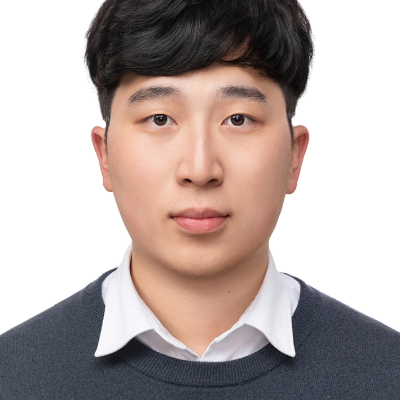
Kim Dong-young김동영
davekim0807@ajupress.com
ReporterSamsung Biologics, CJ CheilJedang, LG Chem, Celltrion, Naver, Krafton, Nexon, Hyundai Mobis etc. & energy, game, food, bio, petrochemical, AI
Kim Dong-young is a bilingual journalist at AJU Press (AJP), covering Korean tech, energy, and bio/pharma.
He reports from the field at events like CES and APEC, runs AJP's YouTube channels,
and is pursuing a master's at Sogang's MOT program. "I try everything in this AI era that can improve yet preserve the facts. Journalism still serves as my core."
He reports from the field at events like CES and APEC, runs AJP's YouTube channels,
and is pursuing a master's at Sogang's MOT program. "I try everything in this AI era that can improve yet preserve the facts. Journalism still serves as my core."
Latest by Kim Dong-young
-
 S-Oil launches biofuel-blended marine fuel for shipping SEOUL, July 22 (AJP) - S-Oil, South Korea's fourth-largest oil refiner, announced it had begun supplying a biofuel-blended marine fuel as it moves to capture growing demand for cleaner-burning fuels in the global shipping industry. The new product, known as B30 VLSFO, combines conventional very low-sulphur fuel oil with about 30 percent sustainable biofuel. Because it can be used without any modification to a vessel's engines, the refiner said, it offers shipowners an immediate and practical way to meet tightening emissions rules imposed by the International Maritime Organization and the European Union. The company produces VLSFO at its Onsan plant and links it to nearby biofuel production and storage facilities, a setup it said minimizes logistics and sharpens operational efficiency. The Ulsan port draws heavy demand for biofuel-blended marine fuel, driven largely by car-carrier vessels, positioning the refiner to serve major customers quickly and reliably. "In the biofuel-blended marine fuel market, competitiveness rests not only on product quality but on securing a stable feedstock supply and an efficient delivery system," a company official said. "Building on our existing bunkering business and the strong supply infrastructure in the Onsan area, we plan to provide customers with stable and competitive low-carbon fuel." 2026-07-22 14:41:48
 -
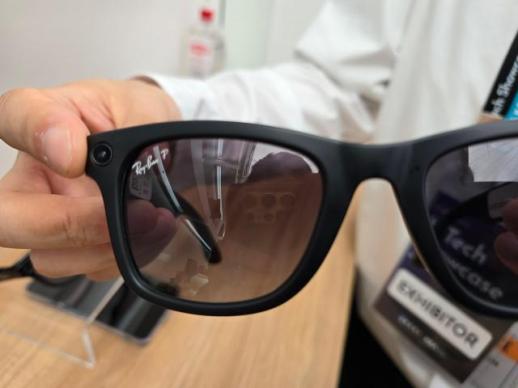 Korea's telecom trio begins selling Ray-Ban Meta AI glasses SEOUL, July 22 (AJP) - South Korea's three mobile carriers began selling Meta's "Ray-Ban Meta (Gen 2)" artificial-intelligence glasses from Wednesday, pairing the device with tariff-linked discounts as they race to push AI services beyond the smartphone. SK Telecom, KT and LG Uplus each said they would offer the AI eyewear through their retail and online channels, part of a broader strategy to extend smartphone-centered AI offerings onto new wearable devices and widen their AI ecosystems. Co-developed by Meta and global eyewear group EssilorLuxottica, the glasses respond to a spoken "Hey Meta" command, letting wearers converse with Meta AI for searches, recommendations, answers and real-time translation. The device carries a 12-megapixel ultra-wide camera capable of 3K ultra-high-definition video, open-ear speakers and five microphones, and runs for up to about eight hours on a charge — or up to about 48 hours with its charging case. The carriers sought to soften the price with handset discounts and dedicated plans. KT said it would grant members a 10 percent discount and, through device-only tariffs, bring the effective monthly cost to the 10,000 won ($6.76) or 7,000 won range, while LG Uplus offered device discounts of up to 80 percent depending on the plan chosen. SK Telecom, for its part, tied installment discounts to its premium "Best" plans and stocked the glasses at its online store and six outlets across Seoul and Gyeonggi Province. Each carrier also set up hands-on spaces — KT at 11 stores nationwide and SK Telecom at its six regional outlets — where shoppers can try the device's AI features and photo and video capture. The three companies said the launch marked the start of a wider push, with plans to expand their AI-device lineups and deepen AI-driven customer experiences linked to their telecom services. 2026-07-22 09:55:47
 -
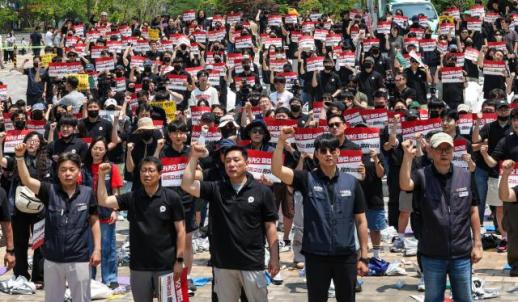 KakaoBank to go on full-day strike after wage talks collapse SEOUL, July 21 (AJP) -After mild hours-long log-off protests by workers across South Korea's top mobile platform Kakao group over the last month, the union at KakaoBank will go on a full-day strike on July 31 after wage negotiations collapsed. The KakaoBank union said Tuesday it decided to stage a one-day strike after mediation by the Gyeonggi Regional Labor Relations Commission ended without agreement, clearing the way for industrial action. "Our company did not engage sincerely in negotiations, and the gap between labor and management remains too wide," Seo Seung-wook, head of Kakao's branch of the Korean Chemical and Textile Workers' Federation, said during a picketing rally at Kakao's Pangyo headquarters. The strike will apply only to KakaoBank, while the union has yet to announce whether workers at other Kakao affiliates will follow with similar full-day action. About 300 union members, including those from KakaoBank, took part in Tuesday's lunchtime picketing protest, according to the union. Wearing black shirts and masks, they held placards reading "Negotiate sincerely," "Share our achievements fairly," and "Stop management's monopoly." The protest followed a series of "Logout Days," when union members voluntarily took annual leave or scheduled time off and logged out of internal systems for several hours. That action caused no disruption to KakaoTalk or other major services because it largely relied on voluntary participation and the company's automated operations. KakaoBank's labor and management had entered mediation after failing to reach a wage agreement, but negotiators were unable to narrow differences during talks held Monday. The labor commission subsequently suspended mediation, determining that the two sides remained too far apart to continue discussions. Under South Korean labor law, the decision allows the union to proceed with strike action after completing internal voting procedures, which it has now done. The broader Kakao union also staged a lunchtime picketing campaign Tuesday at the company's Pangyo campus, but no additional industrial action has been announced for Kakao Corp. or other affiliates, including Kakao Pay, Kakao Enterprise, DK Techin and XL Games. Tuesday's protest, held during employees' lunch break without marches or rallies, was designed to minimize disruption to business operations. Kakao's messaging platform, KakaoTalk, which is used by the vast majority of South Koreans, was not affected. The labor dispute centers on compensation. The union has argued that employees deserve a larger share of the company's performance, while management maintains that the union's demands would place an excessive financial burden on the business. Shares of KakaoBank were down 0.67 percent at 22,400 won as of 1:25 p.m. Tuesday. 2026-07-21 13:28:35
 -
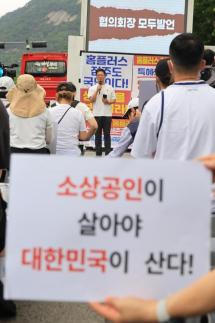 Homeplus earns final three-month chance to avoid liquidation SEOUL, July 21 (AJP) -Homeplus, South Korea's bankrupt supermarket chain, gained a three-month reprieve in what could be its final chance to stay afloat after a Seoul bankruptcy court on Tuesday overturned its earlier decision to terminate the retailer's rehabilitation process. The Seoul Bankruptcy Court canceled its July 3 order ending Homeplus' court-led rehabilitation and extended the deadline for creditors to approve a restructuring plan until Sept. 4. The decision came after Homeplus secured a 200 billion won ($134 million) debtor-in-possession (DIP) financing package led by Meritz Financial Group, allowing the retailer to meet the minimum liquidity requirement the court had previously said was necessary to keep the rehabilitation process alive. Earlier this month, the court terminated Homeplus' rehabilitation after ruling that the company had failed to secure the minimum 200 billion won in operating funds required to continue the proceedings. Homeplus immediately appealed after arranging the emergency financing, which was approved by Meritz Financial Group shortly before the July 20 deadline. The rescue package was made possible after MBK Partners Chairman Kim Byung-ju agreed to personally guarantee the entire loan extended by Meritz's insurance, securities and capital units, removing a key obstacle to the financing. The extension gives Homeplus until Sept. 4 to win creditor approval for a rehabilitation plan that will determine whether South Korea's once second-largest hypermarket operator can survive or ultimately be liquidated. The retailer remains in a precarious position despite the court's decision. Earlier this month, Homeplus shut all 67 of its remaining hypermarkets after running out of cash to pay suppliers, electricity bills and other operating expenses, leaving about 12,000 employees, hundreds of suppliers and thousands of shopping mall tenants facing an uncertain future. The nationwide shutdown marked the collapse of a retailer that once challenged E-mart for leadership of South Korea's discount store market and underscored the mounting pressures facing traditional brick-and-mortar retailers from e-commerce competition, heavy debt burdens and slowing consumer spending. Although independent tenants inside Homeplus shopping malls have been allowed to continue operating, normal retail operations remain suspended while the company pursues its restructuring. The latest court ruling also eases immediate pressure on lawmakers, who had planned to summon executives from MBK Partners and Meritz Financial Group to a parliamentary hearing later this month over the retailer's collapse. Whether the hearing proceeds is now expected to depend on the progress of the rehabilitation process. Homeplus' fate will now hinge on whether it can secure creditor backing for its restructuring plan before the Sept. 4 deadline. Failure to do so would again raise the prospect of liquidation, ending one of South Korea's largest retail chains after more than two decades. 2026-07-21 11:38:01
 -
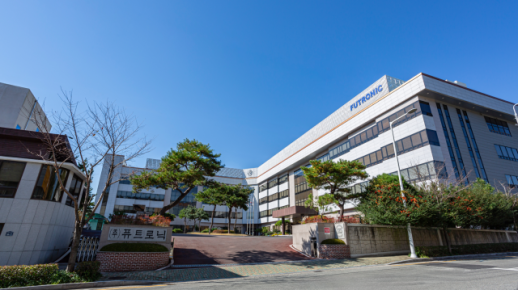 Blackstone buys Busan-based actuator maker Futronic SEOUL, July 20 (AJP) -Blackstone has bought a majority stake in South Korean actuator and motion-control technology company Futronic in a deal that values the Busan-based company at about 1 trillion won ($720 million), according to multiple local media outlets. The two companies are yet to announce the deal or disclose the financial terms. The investment is being made in partnership with Futronic founder and Chairman Ko Jin-ho, who will remain chairman and chief executive officer to lead the company's next phase of global expansion alongside Blackstone. Founded in 1993, Futronic has grown into a key supplier of actuators and motion-control systems for the global automotive industry, working with leading original equipment manufacturers from the early engineering and development stages. The company has broadened its business beyond traditional automotive applications into next-generation mobility, including humanoid and general-purpose robotics, reflecting rising demand for precision motion-control technologies.Futronic operates primarily from South Korea and the United States while continuing to expand its global manufacturing and customer base. Its client roster includes major global automakers such as General Motors, Ford, Volvo, Mercedes-Benz, Volkswagen, Nissan and Hyundai Motor, as well as several leading Chinese vehicle manufacturers. The company employed 216 people as of April 2026. 2026-07-20 13:36:56
 -
 Nvidia unveils Jetson Thor modules to broaden robotics, edge AI reach SEOUL, July 20 (AJP) - Nvidia has unveiled two new modules, the T3000 and T2000, built on its Jetson Thor architecture, in a bid to accelerate the large-scale deployment of robotics and edge artificial intelligence applications aimed at the mass market. The launch responds to rising demand for compact, power-efficient AI supercomputers capable of running foundation models directly at the edge, as general-purpose robots and autonomous machines move out of research labs and into commercial use across industries. The Jetson T3000 delivers 865 FP4 teraflops of AI computing performance in a form factor about half the size and power consumption of the higher-end T5000, pairing an Nvidia Blackwell GPU with an eight-core Neoverse Arm CPU and 32GB of memory. Nvidia said the module offers inference performance comparable to the T5000 on multimodal workloads while helping developers cut costs amid elevated memory prices. The T2000, offering 400 FP4 teraflops and 16GB of memory, extends the Thor architecture to a wider range of systems, serving as an entry point for developers building visual AI agents, autonomous mobile robots and industrial manipulators. Leading firms including 1X, Amazon Robotics, Boston Dynamics, Fanuc and Hitachi are already building systems on the Jetson AGX Thor platform, according to the company. Nvidia said newly released Jetson agent skills allow developers to automate memory optimization, achieving in days savings that once took weeks, with early adopters such as Ubtech and Connect Tech trimming memory use by as much as 15GB. The company also added Cosmos 3 Edge, a four-billion-parameter world foundation model, to its Thor lineup, enabling embodied systems to perceive their surroundings and predict actions in real time through on-device inference. 2026-07-20 10:38:40
 -
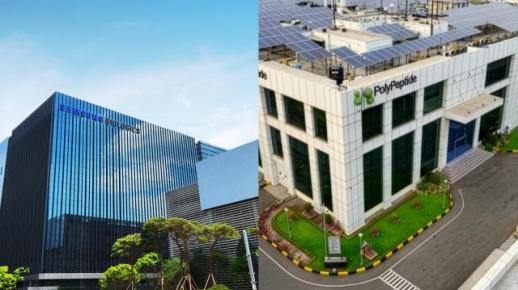 Samsung Biologics to buy PolyPeptide in record $2 billion deal SEOUL, July 20 (AJP) - Samsung Biologics announced it has agreed to acquire Switzerland's PolyPeptide Group, a specialist maker of peptide drugs, for about 2.7 trillion won ($1.81 billion), the biggest merger-and-acquisition deal in South Korea's pharmaceutical and biotech industry. The agreement, disclosed in a regulatory filing on Monday, marks the Korean contract manufacturer's formal entry into peptides, the chemical backbone of the fast-growing class of obesity and diabetes treatments that has reshaped global drug markets. Its share fell 1.86 percent to 1,370,000 won as of 10:15 a.m. in Seoul on concerns over the fundraising. Samsung Biologics said it aims to secure a 100 percent stake in PolyPeptide through the purchase of a controlling holding and a subsequent tender offer, with the transaction expected to close by the end of December. The move pushes the company beyond its core in antibody therapies, mRNA and antibody-drug conjugates into a field it has long signaled it would enter, adding manufacturing sites, technology and skilled staff in a single stroke. Spun off from Ferring's peptide unit in 1996 and based in Baar, PolyPeptide runs six production and research sites across five countries in Europe, the United States and India, employing about 1,500 workers and carrying a track record of more than 1,000 peptide programs. "This acquisition reinforces our long-term growth strategy by not only broadening our service portfolio with modality expansion into peptides including GLP-1, but by also boosting our geographic reach and proximity further within the US, Europe, and India," Chief Executive John Rim said, adding the deal would lift both corporate and shareholder value. Samsung Biologics will inherit PolyPeptide's existing contracts, allowing it to sustain order volumes from the moment the deal closes, while weighing further capacity expansion as peptide demand climbs. "After a comprehensive review of strategic options, the Board is convinced that Samsung Biologics’ offer is compelling for our shareholders, delivering an attractive cash price and immediate, certain value today," PolyPeptide Chairman Peter Wilden said. 2026-07-20 08:52:15
 -
 TSMC lifts forecasts as AI demand cools peak fears SEOUL, July 17 (AJP) - TSMC reported record second-quarter earnings and raised its annual revenue and capital spending forecasts, signaling confidence that artificial intelligence demand will keep powering the chip industry and tempering fears that the AI boom is nearing a peak. The world's largest contract chipmaker said Thursday that net profit for the April to June quarter jumped 77.4 percent from a year earlier to NT$706.56 billion ($22 billion), comfortably beating the NT$632.6 billion mean estimate of analysts polled by LSEG and marking a fifth straight record quarter. Revenue climbed 36.0 percent to NT$1.27 trillion, while operating profit rose 65.4 percent to NT$766.6 billion. The operating margin widened 10.7 percentage points to 60.3 percent, crossing the 60 percent threshold for the first time as high-performance computing sales, which include AI chips, surged 20 percent from the previous quarter. Guidance impressed investors more than the results themselves. TSMC projected third-quarter revenue of $44.6 billion to $45.8 billion, above market expectations, and raised its full-year dollar revenue growth forecast to slightly above 40 percent from a prior view of more than 30 percent, betting that resilient AI demand will offset softening smartphone and other consumer sales. The Taiwanese firm also lifted planned 2026 capital spending to between $60 billion and $64 billion, from $52 billion to $56 billion, earmarking 70 percent to 80 percent for advanced nodes and the rest for cutting-edge packaging and testing. The expansion targets capacity that will come on stream from the second half of 2027, underscoring longer-term confidence. To meet that demand, TSMC will pour an additional $100 billion into its operations in Arizona. The upbeat outlook did little to steady South Korean chip shares on Thursday, however, as Samsung Electronics tumbled 8.77 percent to 255,000 won and SK Hynix slid 11.53 percent to 1.842 million won, dragged down by an overnight sell-off in U.S. memory names amid worries over rising Chinese supply and cooling data-center spending. 2026-07-17 15:18:39
 -
 Chey urges patience on SK hynix as AI demand set to surge SEOUL, July 17 (AJP) - Chey Tae-won, chairman of the Korea Chamber of Commerce and Industry (KCCI), said that investors in SK hynix would be wiser to hold their shares than to trade them, arguing that memory chips remain indispensable to the artificial intelligence boom. "I don't know where the stock will be next month either, but the best way to preserve your wealth is to sit tight rather than buy and sell," Chey said Friday during an AI dialogue at the KCCI summer forum on the resort island of Jeju. The remarks came a day after the benchmark KOSPI tumbled 6.37 percent to close at 6,820.60, slipping back below the 7,000 mark, as SK hynix plunged 11.5 percent amid a broad selloff in semiconductor shares triggered by the Bank of Korea's first rate hike in three and a half years. Chey brushed aside the volatility, likening AI to a four-year-old child that would inevitably lean on memory as it matured. Demand, he said, was bound to climb at an exponential pace, a dynamic he credited for the tenfold surge in chip valuations. Turning to strategy, the chairman cast the AI race as a matter of national security rather than mere industry, describing a widening rift between an American push for quality and a Chinese drive for price. South Korea, he warned, could hope to beat neither on those terms alone. Instead, Chey urged Seoul to carve out a niche by laying its own infrastructure and building applications atop it, courting the neutral nations caught between the two superpowers. The country should sell computing capacity and large language models, he said, not memory chips alone. "In the future, we must shift our strategy toward exporting intelligence rather than products," Chey said, adding that Korea's edge would lie in offering something safer, or otherwise distinct, than what Washington or Beijing could provide. 2026-07-17 12:53:52
 -
 US caps foreign student visas at four years in sweeping overhaul SEOUL, July 17 (AJP) - The United States will limit foreign students, exchange visitors and journalists to fixed periods of stay under a sweeping rule finalized by the Department of Homeland Security, ending a decades-old system that let them remain as long as they kept up their studies or work. Under the rule, students on F visas and exchange visitors on J visas will be admitted for the length of their program, up to a maximum of four years, after which they must apply to U.S. Citizenship and Immigration Services for an extension of stay involving biometric vetting, background checks and fraud screening. The measure was published in the Federal Register on Thursday (local time) and takes effect 60 days later, in mid-September, meaning students arriving for the autumn term will fall under the new framework almost immediately. DHS said a sharp rise in visa holders had strained its capacity to monitor them. Foreign journalists on I visas will be admitted for 240 days, with extensions granted in further 240-day increments, while Chinese nationals face a tighter 90-day limit. The rule also halves the post-graduation grace period for F-1 students to 30 days and curbs their ability to switch academic programs. "For nearly half a century, the outdated 'duration of status' system has compromised national security and created an environment ripe for immigration fraud," said DHS Secretary Markwayne Mullin, adding that the change would strengthen oversight and curb abuse. The impact on South Koreans is unavoidable, as most master's and doctoral programs run beyond four years, leaving extension approvals to determine whether students can finish their degrees. According to the Korean Embassy in Washington, 11,861 Koreans held F-1 student visas in 2025, alongside 349 I-visa holders and 7,985 J-1 exchange visitors. Experts called it the most consequential shift to the student visa regime in decades, raising the bar for those lawfully in the country and forcing applicants worldwide to weigh extension procedures and their attendant risks when mapping out their studies. 2026-07-17 10:55:55