

Journalist

Kim Dong-young김동영
davekim0807@ajupress.com
ReporterSamsung Biologics, CJ CheilJedang, LG Chem, Celltrion, Naver, Krafton, Nexon, Hyundai Mobis etc. & energy, game, food, bio, petrochemical, AI
Kim Dong-young is a bilingual journalist at AJU Press (AJP), covering Korean tech, energy, and bio/pharma.
He reports from the field at events like CES and APEC, runs AJP's YouTube channels,
and is pursuing a master's at Sogang's MOT program. "I try everything in this AI era that can improve yet preserve the facts. Journalism still serves as my core."
He reports from the field at events like CES and APEC, runs AJP's YouTube channels,
and is pursuing a master's at Sogang's MOT program. "I try everything in this AI era that can improve yet preserve the facts. Journalism still serves as my core."
Latest by Kim Dong-young
-
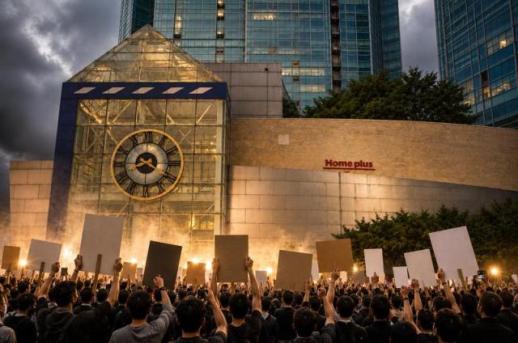 Homeplus goes dark, exposing the cost of Korea's biggest retail buyout SEOUL, July 14 (AJP) - Homeplus, once South Korea's second-largest hypermarket chain and a symbol of the country's modern retail boom, switched off the lights across its remaining stores on Monday after running out of cash, leaving roughly 12,000 employees, hundreds of suppliers and thousands of shopping mall tenants caught in what is becoming Korea's biggest retail collapse in decades. The nationwide shutdown marks the dramatic end of a company that once challenged E-mart for industry leadership and highlights the collision of three powerful forces reshaping the country's economy: the relentless rise of e-commerce, the long shadow cast by debt-fueled private-equity ownership and a bankruptcy system that often leaves workers and small businesses paying the highest price. Homeplus said it had exhausted the funds needed not only to purchase merchandise but also to pay electricity bills and other basic operating expenses, forcing it to suspend operations at its headquarters and all remaining hypermarkets. "Our operating funds are completely depleted, leaving us unable to cover merchandise payments or even the utility costs and other running expenses needed to keep stores open," the company said in a statement. Although tenants operating inside Homeplus shopping malls may continue trading independently if they choose, the closure effectively ends normal retail operations while the company waits to decide whether to appeal a court ruling that terminated its rehabilitation proceedings. The shutdown follows a Seoul court's July 3 decision to end Homeplus' corporate rehabilitation. The court left a narrow path for revival, saying it would reconsider if the retailer secured a 200 billion won ($133.9 million) emergency loan by the July 20 appeal deadline. With neither new financing nor a strategic investor emerging, that prospect has faded rapidly. Only two months ago, Homeplus still operated 67 stores after shutting 37 of its 104 outlets. Over the weekend, desperate clearance sales offering discounts of more than 50 percent drew long checkout lines but failed to generate enough cash to change the company's fortunes. Workers accuse MBK of abandoning the retailer Whatever hope remained disappeared Tuesday morning when MBK Partners abruptly canceled scheduled talks with Homeplus' labor union only hours before the first face-to-face meeting since the shutdown. Union leaders had planned to press MBK Vice Chairman Kim Kwang-il to provide emergency funding and support an appeal against the court's ruling. Instead, workers accused the buyout firm of abandoning both the retailer and its employees. "We still want to see Homeplus put back on its feet, and the best outcome would be a new owner through a fresh merger or acquisition," said Choi Cheol-han, general secretary of the Homeplus branch of the Korea Mart Labor Union. "For that to happen, extending the rehabilitation process beyond next week's deadline is absolutely essential." The union vowed to intensify protests after the canceled meeting. "An arrest warrant for MBK Chairman Kim Byung-ju and Vice Chairman Kim Kwang-il was sought once and dismissed, but we believe prosecutors should seek one again," Choi said. "Most importantly, the government needs to regulate leveraged buyouts more actively so other companies do not suffer the same fate." On Monday, union members rallied outside the former presidential compound in central Seoul, where one union leader attempted to approach the gates before police restrained him. Protesters accused the government of allowing speculative capital to destroy one of the country's largest retailers while standing aside. "The government says it will spend 500 billion won or even 1 trillion won after Homeplus is liquidated," Choi said. "But you should be paying for treatment while the patient is alive, not covering the funeral costs after death." Small merchants fear losing everything Employees are not the only victims. About 100 tenant merchants operating inside Homeplus shopping malls plan to stage their own protest Wednesday, arguing they had no role in decisions made by MBK Partners, Homeplus or creditors but now risk losing businesses built over decades. "We're different from the union. We invested our own money," a spokesperson for the National Association of Homeplus Tenant Merchants told AJP. "We had no say in the decisions made among MBK, Homeplus and Meritz, yet we may lose our livelihoods, which for many of us represent our life's savings." Many tenants said they still hope a new owner emerges rather than liquidation. "The company that exploited loopholes in the law bears responsibility," the spokesperson said. "But those who allowed those loopholes to exist also have responsibility. That's why we're protesting." From Samsung-Tesco success to private-equity casualty Homeplus' collapse began long before this year's cash crisis. The retailer started life in 1997 as Samsung C&T's retail business, opening its first hypermarket in Daegu before forming a joint venture with Britain's Tesco in 1999. The partnership transformed Homeplus into one of Korea's largest discount chains, competing head-to-head with Shinsegae's E-mart during the peak years of the hypermarket boom. At its height, the company operated roughly 140 stores nationwide. Everything changed in 2015. Struggling with financial problems at home, Tesco sold Homeplus to MBK Partners for approximately 7.2 trillion won, then the largest merger-and-acquisition deal in South Korean history. What was once celebrated as a landmark private-equity transaction has increasingly become a cautionary tale. Critics argue the debt used to finance the acquisition forced Homeplus into years of asset disposals just as Korean consumers shifted rapidly toward online shopping. While rivals invested heavily in digital platforms, logistics and store renovations, Homeplus was selling prime properties and using proceeds to reduce debt. By the time e-commerce permanently reshaped Korean retail, the company no longer had sufficient capital to reinvent itself. Who gets paid — and who doesn't If Homeplus ultimately files for bankruptcy rather than reviving rehabilitation, the consequences will extend far beyond employees. Under Korean insolvency law, a court-appointed receiver would liquidate company assets and distribute proceeds according to legal priority. Secured creditors would be repaid first. That hierarchy leaves many suppliers, particularly smaller businesses, facing potentially severe losses. Meritz Financial Group and other lenders hold collateral over many of Homeplus' properties, including roughly 1.3 trillion won in senior secured loans. Industry estimates suggest around 40 percent of Homeplus' roughly 800 suppliers are each owed more than 500 million won, with average exposure approaching 770 million won. Unlike rehabilitation, where unpaid invoices might eventually be recovered through continued business operations, bankruptcy would leave suppliers relying entirely on proceeds from asset sales after secured lenders are paid. Homeplus also owns approximately 62 store properties outright. If they are sold simultaneously, they could significantly increase supply in Korea's already sluggish commercial real estate market. "The unpaid bills owed to tenant businesses will become a very serious issue," said Jung Heung-jun, a professor specializing in labor relations at Seoul National University of Science and Technology. "The situation for employees may not be much easier either. Judging by MBK's conduct so far, I don't expect it to voluntarily assume moral responsibility beyond whatever legal obligations exist." "If roughly 12,000 workers lose their jobs, there is effectively no meaningful safety net beyond unemployment benefits," he added. "The prime properties have already largely been sold. Even if remaining stores are eventually acquired by companies such as E-mart or Lotte Mart, it's doubtful that would fully cover workers' wage claims." "MBK had opportunities to restore Homeplus' health," Jung said. "It is difficult to imagine the firm now accepting responsibility for preserving jobs at its own expense." Why Homeplus matters The collapse of Homeplus represents more than the failure of another retailer. It marks the end of an era for Korea's hypermarket industry while raising broader questions about the limits of leveraged buyouts, the social costs of corporate restructuring and whether existing insolvency rules adequately protect workers and small businesses. Meanwhile, the retail landscape has fundamentally changed. South Korea's online shopping market expanded to roughly 271 trillion won in 2025, with Coupang and Naver dominating grocery delivery and everyday consumer spending. E-mart and Lotte Mart survived by investing in private-label products, experiential retailing, omnichannel strategies and digital integration. Homeplus, burdened by acquisition debt and years of asset sales, lacked both the capital and the time to make the same transformation. The company said it will monitor developments until the July 20 appeal deadline before deciding whether to seek another chance at rehabilitation. Yet with MBK Partners and creditor Meritz Financial Group deadlocked over fresh financing, workers and merchants protesting in the streets, and confidence evaporating among suppliers, few industry observers believe the retailer can be revived in its current form. Even if a new owner eventually emerges, they say, Homeplus is unlikely ever again to become the national retail powerhouse that once stood shoulder to shoulder with E-mart. 2026-07-14 15:08:44
 -
 Naver, Kakao, telecoms and startups line up for Korea's free AI project SEOUL, July 14 (AJP) - South Korea's biggest technology names are jostling to join the government's "AI for All" project, a state drive to build a homegrown artificial intelligence service that every citizen can use free of charge, as the contest for a slice of the initiative gathers pace. Kakao and LG Uplus have confirmed their bids, while Naver, SK Telecom and KT are weighing entry, industry sources said on Tuesday. AI startups and mid-sized firms are also sounding out consortium tie-ups, sharpening a fast-forming rivalry. The Ministry of Science and ICT opened the public tender on Sunday, running it through Aug. 11, and plans to pick two to three operators. Winners must launch a nationwide general-purpose AI chatbot within the year, alongside public-service AI agents and specialized offerings. Bidders must build their services on domestic models, using homegrown AI that meets independent foundation-model standards for at least half of the system. Even firms with their own models must draw on rival Korean models for a further 30 percent, while foreign models are permitted only sparingly and excluded from state support. To ease the burden, the government will supply up to 512 of Nvidia's DGX B200 GPUs this year and, from 2027, cover operating costs from the state budget. In return, participants must forge their own revenue streams from the prompt data they accumulate. The lure is clear: low upfront costs, a vast pool of user data that doubles as fuel for model training, and a nationwide reference case prized in future public and corporate markets. Startups such as Upstage, which owns the Solar model, and NC AI, game maker NC's AI arm, are among those circling. Yet the risks run alongside the rewards. The domestic-model quota complicates consortium-building, and GPU support beyond this year, covering 2027 to 2030, hinges on talks between ministries and the National Assembly, leaving medium-term funding uncertain. The ministry aims to select operators next month and roll out the service by year-end after a September beta. 2026-07-14 14:43:50
 -
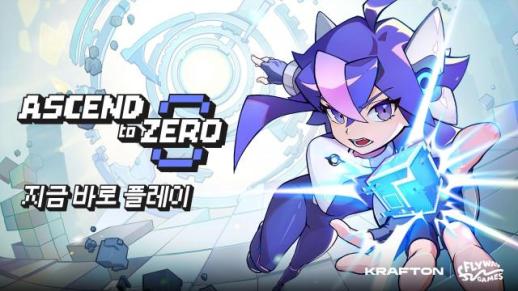 Krafton studio Flyway Games launches action roguelike 'Ascend to Zero' SEOUL, July 14 (AJP) - Krafton's creative studio Flyway Games launched its new action roguelike "Ascend to Zero" worldwide, releasing the title simultaneously as an Xbox Game Pass day-one offering. The game went live at Monday 4 p.m. Korea time across Xbox Series X|S, Xbox on PC, Xbox Cloud Gaming, the ROG Xbox Ally and Steam. Game Pass subscribers can play it at no additional cost. "Ascend to Zero" casts players as a fighter who wields the power to freeze time, battling swarms of enemies while assembling abilities and combat styles across repeated runs. The time-stop mechanic doubles as the game's central hook, rewarding aggression over caution. The title sells for 13,000 won ($8.69) in South Korea. Alongside the base game, Flyway released a "Supporter Pack" downloadable content bundle featuring golden skins for six avatars, an official soundtrack and a discounted deluxe edition combining the game and all DLC. As of Tuesday, the game is rated "Very Positive" on Steam, 95 percent of user reviews remaining positive. 2026-07-14 10:01:53
 -
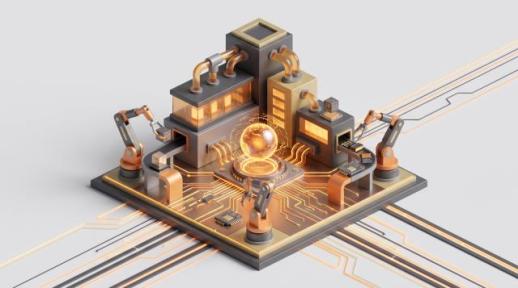 South Korea to steer record tax revenue into AI, physical AI push SEOUL, July 13 (AJP) - South Korea will channel its largest-ever projected tax revenue into a new future-response fund, pouring resources into three mega-projects led by artificial intelligence. Deputy Prime Minister Bae Kyung-hoon, who also serves as science and ICT minister, positioned physical AI as the country's next growth engine, pledging to "export Korea's factories to the world" on the back of a homegrown, full-stack platform. Speaking at the 2026 national fiscal strategy meeting chaired by President Lee Jae Myung at the Cheong Wa Dae in Seoul on Monday, Bae called the current race to secure a general-purpose physical AI platform "the golden time to marshal national capabilities." The government expects 2027 national tax revenue to top 500 trillion won ($332.6 billion), far above the earlier forecast of 412 trillion won. The windfall will seed a fund targeting youth, growth engines, regional development and talent, with semiconductors, AI data centers and physical AI taking top priority. Bae described AI data centers as the core infrastructure that mints the "production tokens" powering AI services, and said the ministry aims to secure 8.4 gigawatts of capacity by 2029 and 18.4 GW by 2035. Projects are already confirmed in Sejong, Donghae and Ulsan, with three to four more sites under review. Citing Morgan Stanley, Bae said physical AI represents a potential market of $60 trillion, about half of current global gross domestic product, and would spread beyond factory robots into defense, logistics, agriculture, caregiving and household chores. "The nation that seizes the general-purpose platform will lead future industrial competitiveness," Bae said, adding that the government would run three public-private bodies as "one team" to keep the mega-projects on track. 2026-07-13 15:45:00
 -
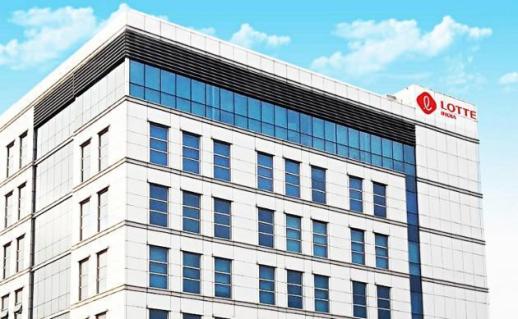 Lotte Wellfood's India unit posts 28% first-half sales growth SEOUL, July 13 (AJP) - Lotte Wellfood announced that first-half sales at its Indian subsidiary, Lotte India, climbed about 28 percent from a year earlier, as the company marked the first anniversary of merging its confectionery and ice cream operations there. According to the firm on Monday, India's ice cream division led the gains with 29 percent growth, driven by expanded supply from a new plant in Pune, Maharashtra, which began full-scale operations in February last year. Anchored by the Pune facility, the company broadened its rollout of Korean ice cream brands, including Dwaeji-bar, sold locally as Krunch, and Jawsbar, marketed under the name Shark. The confectionery arm grew 26 percent over the same period, a rise the company attributed to an aggressive push into traditional trade, the small neighborhood shops that dominate India's retail landscape. Lotte India plans to press ahead with integrating its southern, northern and western operations to maximize efficiency and lift profitability, targeting annual revenue of 1 trillion won by 2032. 2026-07-13 15:09:57
 -
 Batteries, hydrogen vie for future of freight SEOUL, July 13 (AJP) - The clean-energy contest that upended the passenger car is now rolling into the world's freight lanes, where a single winning technology is proving far harder to crown. Global automakers spent the past decade racing to electrify the family car. That race is largely settled: battery power won. The next front is the heavy truck, and here the map is messier, split between the battery cells that conquered the driveway and the hydrogen fuel cells betting on the long haul. Tesla and China's BYD are pressing the battery case. Hyundai Motor Company is pushing hydrogen. Unlike the passenger market, which consolidated around battery-electric cars, the commercial segment is fracturing along the lines of route, payload and duty cycle, with rival technologies settling into the niches that suit them. The backdrop is a passenger market that has already tipped. In South Korea, eco-friendly vehicles — hybrid, electric and hydrogen combined —accounted for 50.4 percent of new registrations in the first half of 2026, the first time the green share has cleared half a year, according to data researcher CarIsYou Data Research Center based on transport ministry records. Battery-electric registrations alone jumped 112.6 percent from a year earlier. The shift is global, as worldwide electric car sales are set to reach 23 million this year, close to 30 percent of all cars sold, the International Energy Agency said in May, up from a fifth of the market a year earlier. "Electric car sales set new records in close to 100 countries last year. The growing popularity of EVs has marked a major shift for car markets and the energy system as a whole – and it is providing some relief now amid the largest oil supply shock in history," said IEA Executive Director Fatih Birol. Freight is where the picture splinters. Tesla began high-volume output of its Class-8 Semi at a dedicated Nevada plant in the second quarter, targeting 50,000 units a year. The long-range version carries an 822-kilowatt-hour pack good for over 800 kilometers on a charge, the company says—economics aimed squarely at North American line-haul fleets. BYD is widening its own battery-truck push with its 8TT, first shown in 2018 as one of the heaviest Class-8 electric tractors on the U.S. market, has hauled containers around California's ports, though its roughly 320-kilometer range keeps it closest to shorter, repeatable runs. Meanwhile, Hyundai has taken the other road. The South Korean maker rolled out the world's first mass-produced hydrogen heavy truck, the Xcient, in 2020. With a range up to around 720 kilometers per charge, the truck has made it into Switzerland, Germany, the U.S. and Canada. In March, Hyundai shipped eight Xcient trucks to Uruguay to haul timber for the Kahirós green-logistics project—Latin America's first commercial deployment of hydrogen trucks, not a demonstration. "We will help decarbonize a critical part of the paper production value chain and demonstrate to the world that we can take action for a better future starting now," said Airton Cousseau, head of Hyundai Motor's Central and South America region, in a company statement. Analysts see the freight market splitting rather than consolidating. SNE Research, an energy market researcher, said the growth axis for hydrogen vehicles is moving away from passenger cars toward medium and heavy commercial trucks, long-haul freight, buses and port operations. It added that hydrogen is likely to complement battery power in long-distance, high-tonnage, high-utilization work rather than compete with it head-on. That leaves battery and hydrogen trucks advancing in parallel, each leaning on its strengths, with no single technology poised to reshape the segment the way batteries reshaped the car. For now, the freight lane belongs to no one. Where the passenger market picked a winner, the truck market looks set to keep several in play at once. 2026-07-13 13:57:26
 -
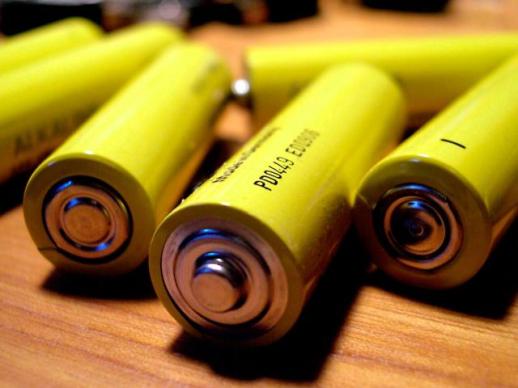 Global EV separator installations rise 21% in Jan-May as China tightens grip SEOUL, July 13 (AJP) - Global installations of battery separators for electric vehicles climbed more than 20 percent in the first five months of the year, with Chinese suppliers extending their dominance over the market. According to market researcher SNE Research on Monday, separator installations in pure-electric, plug-in hybrid and hybrid vehicles registered worldwide reached about 7.49 billion square meters in the January to May period, a 20.7 percent increase from a year earlier. Excluding China, installations rose a steeper 38.7 percent to about 2.61 billion square meters, pointing to a recovery in demand outside the world's largest EV market. A critical component that governs the safety, output and lifespan of lithium-ion cells, the separator has seen demand swell as EV adoption widens and automakers pack higher-energy-density cells into their vehicles. China's Semcorp held onto the top spot with about 2.21 billion square meters, up 15 percent on the year, while compatriots Senior and Sinoma grew 19 percent and 15 percent respectively. Fourth-ranked Gellec surged 72 percent, whereas Korea's SKIET slid 13 percent. Chinese firms commanded 89.6 percent of the market in the first quarter, up three percentage points from a year earlier, as Japanese suppliers slipped to 6.7 percent and Korean players to 3.7 percent. 2026-07-13 11:01:38
 -
 Homeplus set for bankruptcy filing as rehabilitation collapses SEOUL, July 13 (AJP) - Homeplus is expected to begin shutting stores this week and file for bankruptcy, moving into effective liquidation after a court ended its rehabilitation proceedings on July 3. With emergency operating funds all but out of reach and any chance of recovery fading, the focus has shifted to an orderly wind-down that limits harm to suppliers, employees and in-store tenants of South Korea's second-largest hypermarket chain. The retailer is weighing a phased halt to operations at some stores as early as this week, sources say, as dwindling facilities staff raise safety concerns and operating cash runs dry, leaving normal trading increasingly untenable. Weekend half-price sales on liquor and other stock drew shoppers long enough to form checkout queues, but the surge did little to change a company on the cusp of collapse. The appeal window runs through July 20, but the industry expects Homeplus to petition the court by July 16 at the latest, pursuing a rehabilitation-linked "affiliated bankruptcy" rather than an ordinary filing to blunt wider disruption. Affiliated bankruptcy preserves the priority of public-interest claims accrued during rehabilitation, whereas a separate ordinary filing after the termination becomes final could unsettle their legal standing and repayment. Homeplus' public-interest claims are estimated at about 1 trillion won ($677 million), much of it unpaid supplier bills and back wages. Beyond real estate pledged to Meritz-led creditors, Homeplus is understood to hold almost no cash assets, setting up a fierce contest among suppliers, tenants and junior creditors over a shrinking pool. Homeplus filed for rehabilitation in March last year and sought liquidity through the sale of its Express arm, but failed to offload the main business or raise fresh capital, leaving creditor recovery likely to drag on for a considerable time. 2026-07-13 09:27:50
 -
 Samsung SDI cells win two-thirds of Korea's first AI-powered grid ESS project SEOUL, July 10 (AJP) - Batteries made by Samsung SDI have been selected for the majority of South Korea's first government-backed program to build artificial-intelligence-powered energy storage systems along regional distribution lines. Six of the nine operators chosen for the Ministry of Climate, Energy and Environment's 2026 AI-based ESS deployment project will use Samsung SDI cells, industry sources said Friday. One operator opted for LG Energy Solution cells and two turned to SK On. Measured by capacity, consortia paired with Samsung SDI captured about 66 percent of the awarded volume. Those aligned with LG Energy Solution and SK On accounted for 22 percent and 12 percent, respectively. The project installs storage systems on lines carrying renewable power and leans on AI to run them efficiently, easing chronic grid congestion in the sun-drenched southwestern provinces where solar output has outstripped existing capacity. Samsung SDI plans to supply its all-in-one "SBB 1.5" solution, a 20-foot container packing high-nickel NCA prismatic cells, modules, racks and safety gear that plugs straight into the grid. LG Energy Solution, though supplying fewer cells, emerged as a marquee operator, teaming with Shinhan Asset Management to graduate from battery vendor to virtual power plant player. The company locked in the maximum allotment available to a single operator—seven distribution lines totaling 140 megawatt-hours—and said its AI forecasting and VPP platform would newly connect 40 megawatts of stranded solar capacity, absorbing an extra 52.4 gigawatt-hours of renewable power a year. 2026-07-10 16:00:38
 -
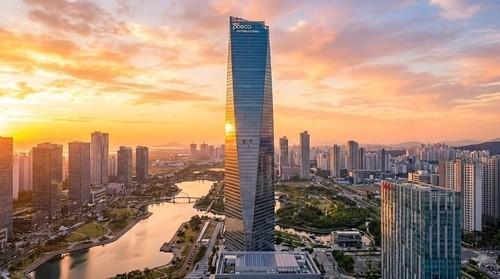 POSCO ties up with Mongolia in about $100 mln energy push SEOUL, July 10 (AJP) - POSCO International signed a memorandum of understanding with Newcom LLC, a leading Mongolian energy and infrastructure firm, to jointly develop energy projects worth about $100 million. The South Korean trading arm of POSCO Group said the deal, sealed in Ulaanbaatar on Thursday during President Lee Jae Myung's state visit, marks the group's bid to plant a foothold in Central Asia's energy market as it broadens beyond steel and batteries. Under the agreement, the two firms will build a district-heating business anchored on heat pumps, capturing waste heat from the cooling water of the Ulaanbaatar CHP-4 power plant and converting it into heating supply. POSCO International will oversee development, project financing and engineering, while Newcom handles local investment, permits and site securing. "Drawing on our heat-pump, renewable and energy-storage technologies, the government will firmly back Korean firms entering the eco-friendly energy market," Climate Minister Kim Sung-hwan said, pledging support for the transition. POSCO International said it would expand into follow-on renewable ventures with Newcom, including onshore wind, to seize an early position in the market emerging from Mongolia's energy transition. 2026-07-10 11:14:03