

Journalist
Lee Jung-woo이정우
cannes2030@ajupress.com
ReporterMinistry of Unification & North Korea, Politics, Foreign Affairs
I studied philosophy in college, and sociology and journalism in graduate school. I cover North Korea, South Korean politics, foreign affairs and films. I enjoy Nordic cinema, Indian cuisine and Japanese detective novels. I have a cat and like bright, acidic coffee.
"Were it left to me to decide whether we should have a government without newspapers, or newspapers without a government, I should not hesitate a moment to prefer the latter."
"Were it left to me to decide whether we should have a government without newspapers, or newspapers without a government, I should not hesitate a moment to prefer the latter."
Latest by Lee Jung-woo
-
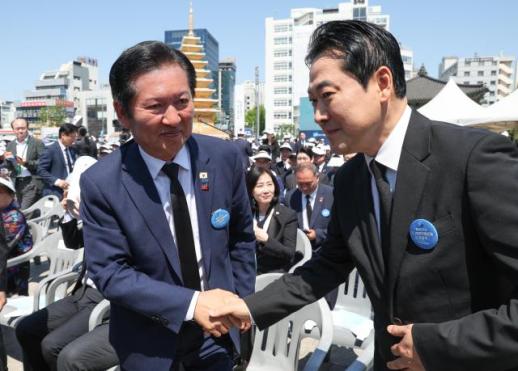 DP sweeps local elections but defeats in key races signal challenges ahead SEOUL, June 4 (AJP) - The ruling Democratic Party (DP) swept 12 of 16 metropolitan mayoral and gubernatorial races in this year's local elections on Wednesday, claiming an overall victory, but the results exposed growing vulnerabilities in Seoul and other battlegrounds that could reshape the political landscape. While the liberal party regained ground nationwide under President Lee Jae Myung, analysts said even a handful of defeats in high-profile races suggested voter dissatisfaction with the ruling camp despite its numerical advantage. The DP suffered a particularly painful loss in Seoul, widely regarded as the symbolic center of South Korean politics and a key barometer of centrist public opinion. The party also lost several closely watched parliamentary by-elections held simultaneously with the local elections including a tight race in the Buk district of the country's southern port city of Busan, where independent candidate Han Dong-hoon defeated DP candidate Ha Jung-woo in a dramatic reversal. Political observers said the mixed outcome reflected sophisticated "split-ticket voting" by the electorate, with voters backing the ruling party in many regional races while supporting conservative or independent candidates in strategically important contests. Despite losing Seoul, the DP lawmakers significantly improved their standing in the capital's district-level races. The party won 17 of Seoul's 25 district mayor posts, reversing the political map from the 2022 local elections, when conservatives held 17 districts and the Democrats controlled only eight. Still, defeats in Seoul and conservative strongholds raised concerns inside the ruling camp about waning support among moderates and voters in the capital regions. The June 3 elections also highlighted signs of changing political dynamics in the conservative stronghold of Daegu. DP candidate Kim Boo-kyum earned 45.05 percent of the vote in the Daegu mayoral race, an impressive improvement compared with the party's performance in the 2022 election. People Power Party (PPP) candidate Choo Kyung-ho won the race with 53.92 percent. In the previous local elections in 2022, PPP candidate Hong Joon-pyo won the Daegu mayoralty with 78.75 percent, while the DP candidate received only 17.97 percent. Although Kim fell short of victory, party officials viewed the result as evidence that regional political barriers in the country's southeast may be weakening. Attention is now shifting to the DP's upcoming national convention, expected as early as August, where party leader Jung Chung-rae is widely expected to seek another term. Jung is expected to argue that leading the party to victories in 12 metropolitan races justifies his reelection, while critics inside the party point to losses in Seoul and major by-elections as evidence of strategic failures. Potential challengers include Prime Minister Kim Min-seok and former party leader Song Young-gil, according to party officials. The results also intensified pressure on the PPP's leader Jang Dong-hyeok. Calls for Jang's resignation emerged within the party after conservatives failed to prevent the DP from dominating the nationwide gubernatorial races. However, Jang rejected demands to step down, saying Thursday that he would continue leading the party and seek a "new path" together with party members. Conservative lawmakers nonetheless argued that the party's overall defeat overshadowed gains in the parliamentary by-elections, where the opposition and independent conservative candidates secured several important victories. Lawmakers from the two major parties who spoke with AJP emphasized different priorities. The DP lawmaker stressed "humility," while the PPP lawmaker emphasized "unity." Rep. Kim Kyo-heung, a three-term politician from the DP, acknowledged the mixed public sentiment reflected in the election. "Even though the DP won the local elections overall, it lost the Seoul mayoral race, candidate Ha's race in Busan, the by-election in Pyeongtaek, and the mayoral elections in Ansan, Seongnam, and Yongin,” Kim said. "The DP governors, mayors, district heads, city council members, district council members and county council members elected in this election must remain humble," he added. A three-term lawmaker from the PPP said the opposition faced structural disadvantages. "In my experience, the first election held one year after a presidential election is always extremely difficult for the opposition," the lawmaker said. Yoon Sang-hyun, a five-term lawmaker from the PPP, said the local elections had been winnable for the party but that it lost because of internal divisions and a lack of vision. Yoon said the party had called for judgment against President Lee Jae Myung, but "that alone was not enough because we failed to speak about hope together." He said the only way for the PPP to win nationwide elections again was for politicians who share conservative values to unite, rather than divide into rival factions and fight each other. "If we split the party in two while fighting over who is pro-Yoon and who is anti-Yoon, we will once again forget why voters punished us yesterday," he added. 2026-06-04 18:05:54
-
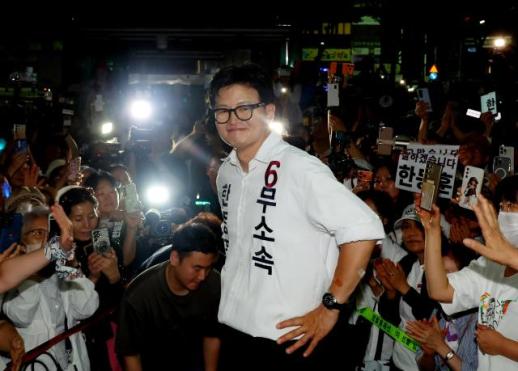 Two ex-justice ministers see contrasting fortunes in local elections' key battlegrounds SEOUL, June 4 (AJP) - Two former justice ministers, both once seen as potential presidential contenders in the liberal and conservative camps, saw sharply contrasting fortunes in Wednesday's local elections. Former leader of the main opposition People Power Party (PPP) and independent candidate Han Dong-hoon won a parliamentary by-election and is headed to the National Assembly, while Cho Kuk of the minor Rebuilding Korea Party (RKP) lost, casting doubt over his political future. Han won in the Buk district of the country's southern port city of Busan with 42.96 percent of the vote, narrowly beating Democratic Party (DP) candidate Ha Jung-woo, who received 41.26 percent, in a neck-and-neck race. PPP candidate Park Min-sik, who was expected to split the conservative vote and boost Ha's chances, trailed with a mere 15.76 percent. Han, once a close aide to disgraced former President Yoon Suk Yeol, served as justice minister under the Yoon administration before becoming PPP leader in July 2024. But he was later expelled from the conservative party late last year over dubious allegations that included hundreds of defamatory comments about Yoon and his wife posted on the party's online bulletin board. Han's overnight election victory has sparked speculation about a conservative realignment, with the PPP's internal rift over distancing itself from Yoon likely to intensify further. Han was among those who voted to lift Yoon's abrupt Dec. 3 declaration of martial law in 2024. Lawmakers aligned with Han within the PPP could push for his return to the party. The possibility of Han launching a new conservative party has also been raised. His victory is seen as laying the groundwork for him to emerge as a leading conservative contender in the next presidential election. PPP lawmakers told AJP that Han would return to the PPP and would not launch a new party. "His return to the party is a matter of timing, and there does not seem to be any discussion about launching a new party yet," PPP lawmaker Kim So-hee said. "Launching a new party would be difficult," she added. PPP four-term lawmaker Han Ki-ho said Han was unlikely to forcefully seek a return to the party and that the PPP would instead encourage him to rejoin. Dismissing speculation about a new party, he said, "Launching a new party is out of the question." "Once he enters the National Assembly, he will receive intense media attention, and if Han reflects the will of the people, the party will have no choice but to encourage him to join," Han added. "If Han maintains his soft, inclusive image, he will win public support." With 99.88 percent of the vote counted as of Thursday morning, Cho, the former fly-by-night justice minister who was released from prison after being convicted on charges of shoddy financial dealings and document forgery related to his children's school admissions, failed to secure a seat in Pyeongtaek, Gyeonggi Province, finishing third with 27.24 percent in a tight three-way race. PPP candidate Yoo Eui-dong led with 34.83 percent and was on course for victory, while Kim Yong-nam of the DP came in second with 28.77 percent. Analysts say Cho, who had been considered a potential presidential contender, suffered a major blow to his leadership after failing to enter the National Assembly, and that the result could deal a fatal hit to his political career. Cho's defeat is expected to affect not only his personal political standing but also the future of his party. With his defeat, a possible merger between the DP and the RKP is now expected to be put on hold for the time being. During the campaign, Cho launched fierce attacks against the DP candidate while also stepping up criticism of the DP leadership, further deepening the rift between the two parties. With the DP soon set to begin preparations for a national convention to elect a new party leader and Supreme Council members, discussions on a merger between the two parties are likely to be left to the next leadership. Kim Joon-hyung, a lawmaker from the RKP, said there are currently no discussions within the party about a merger with the DP. Kim said no one was talking about a merger even in the RKP lawmakers' group chat on Telegram. He expressed disappointment over the DP's attitude toward the RKP. "DP leader Jung Chung-rae also talked about 'solidarity,' but the 'solidarity' the DP referred to was violent and one-sided," he said. "Now that Cho has lost, we no longer have the leverage we once had, so the DP would become even more aggressive toward the RKP," he predicted. "Kim Boo-kyum, the party's candidate for Daegu mayor, and Kim Kyoung-soo, the party's candidate for South Gyeongsang governor, were defeated, while Seoul Mayor Oh Se-hoon and Han strengthened their standing as presidential contenders with their victories," he also said. 2026-06-04 12:40:15
-
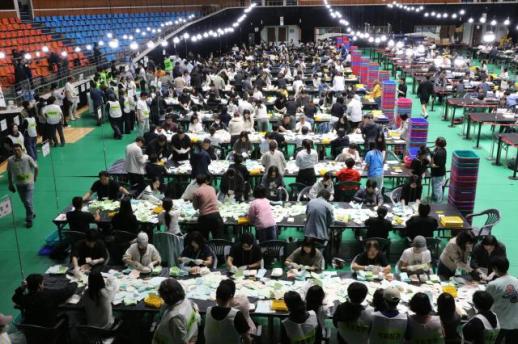 'I only made phone calls all day': Candidates share final hours before results SEOUL, June 03 (AJP) - What are candidates doing in the final hours before the results of South Korea’s June 3 local elections come in? AJP asked candidates across the country how they were spending election day as they waited for exit polls and vote counting to begin. For some, the day was spent making last-minute calls to encourage voter turnout. Others said they were thanking supporters, reflecting on the grueling campaign trail or quietly preparing for whatever political future awaits after the ballots are counted. “I desperately want to work alongside the residents of our region,” said Kim Young-bin, the Democratic Party (DP) candidate in the by-election for a parliamentary seat representing Gongju, Buyeo and Cheongyang in South Chungcheong Province. “Right now, I am calling voters one by one to encourage them to cast their ballots.” Yang Hyang-ja, the People Power Party (PPP) candidate for governor of Gyeonggi Province, said she had spent the entire day on the phone. “Today, I calmly spent the day making calls to encourage voting and to thank supporters,” she said. “I only made phone calls all day. I’m nervous. Regardless of the election result, I think of this as a new beginning for myself.” Lee Myung-soo, a candidate for South Chungcheong superintendent of education, said he would watch the exit polls and vote count “with the mindset of ‘Jininsa daechunmyeong,’” referring to the Korean expression meaning that one should do one’s best and then leave the outcome to heaven. Shim Wang-seop, the PPP candidate in the Incheon Gyeyang-gu by-election, said he was watching election coverage while reflecting on frustrations from the campaign. “I’m watching the election broadcasts and talking about what happened during the campaign period,” he said. “We should have been fighting against the Democratic Party, but instead we were competing against an independent candidate, which was utterly pathetic. Jeon Han-gil and his group were truly terrible people. They were devils wearing the mask of conservatives. I even felt sorry for the naive Kim Hyun-tae.” Park Il-ha, a former Dongjak District mayor now running for the Reform Party in the Dongjak mayoral race, said he was responding to messages from voters while waiting for results. “Residents did not turn away from the district mayor in this election,” he said. “Many people have been cheering me on and sending encouraging calls and text messages, and I’ve been responding to them while waiting for the results.” Lee Jung-hyun, the PPP candidate for mayor of Gwangju, said he spent part of the day climbing Mount Mudeung, a symbol of the southwestern city. “I encouraged election staff and then climbed Mount Mudeung in Gwangju,” he said. “Afterward, I’m having tea at the Uijae Museum of Korean Art while thinking about the direction the People Power Party should take in the future. I’m considering what the party can proactively do regarding the integration of Gwangju and South Jeolla Province, and how the party should change after the local elections.” Choi Hyun-deok, the DP candidate for mayor of Namyangju, said he was calmly awaiting the outcome. “I’ve spent the afternoon encouraging people to vote and making thank-you calls to supporters who have backed me throughout the campaign,” he said. “I’m calmly waiting for the results.” Yoo Ho-joon, the DP candidate for the Gyeonggi Provincial Council, said exhaustion from the campaign had taken a physical toll. “I’m calling people who helped with the election campaign to thank them,” he said. “I’m nervous, but at the same time excited because it feels like the end of a long campaign schedule is finally in sight. Physically, it was so demanding that I lost 10 kilograms during the campaign.” Lee Jin-hwan, the DP candidate for the Namyangju City Council, said he was already thinking about what comes next after the election. “I’m at the Namyangju campaign office waiting for the exit polls,” he said. “Starting tomorrow, after the vote count ends, I’m thinking about how we can change the region for the better.” 2026-06-03 19:35:53
-
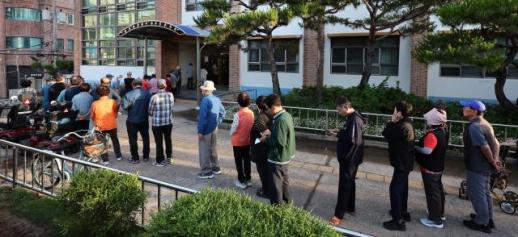
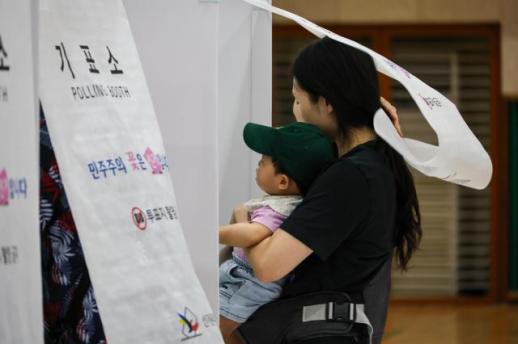 South Korea's local election turnout reaches 57.4% by 5 p.m. SEOUL, June 03 (AJP) - Voter turnout in South Korea’s June 3 local elections reached 57.4 percent as of 5 p.m. (0800 GMT) Wednesday, sharply higher than the level recorded at the same point in the previous local elections, according to the National Election Commission. The commission said 15,052,860 people had cast ballots nationwide during the 11 hours since voting began at 6 a.m. When combined with 10,564,571 early, overseas, shipboard and absentee voters, the total number of ballots cast reached 25,617,431 out of 44,649,908 eligible voters. The turnout was 9.8 percentage points higher than the 47.6 percent recorded at the same hour during the 2022 local elections. South Jeolla Province posted the highest turnout at 63.6 percent, while the southwestern city of Gwangju recorded the lowest at 51.5 percent. The election commission updates turnout figures hourly based on data collected from polling stations nationwide about 10 minutes earlier. At polling stations across the country, voters said they cast ballots despite frustration with political rhetoric and uncertainty over campaign promises. Grace Ryu, a 28-year-old resident of Seoul’s Songpa District, said she had doubts about whether candidates would follow through on their pledges. “Even after looking at the campaign promises, I couldn’t clearly tell what they were actually trying to accomplish, and seeing candidates focus on attacking each other made me question whether their policies would really be implemented,” she said, adding: “Still, I think not voting means giving up my rights voluntarily. I believe it’s important to vote based on my own judgment first and then speak about policies afterwards.” At a polling station in Maehwa-dong, Siheung, south of Seoul, 32-year-old voter Jung So-ri said that she hoped the election would lead to policies that provide tangible support for people struggling with economic difficulties. “I hope more policies come out that genuinely help ordinary people, whether in the economy or welfare sectors, so that everyone can worry a little less about their future and sleep more peacefully at night during these difficult times,” she said. She emphasized that voting was both a responsibility and a way for citizens to have a voice in politics. “I believe voting is a basic duty for citizens. Only by voting do people earn the right to speak about politics, and I think it is essential for the development of both the community where I live and the country as a whole,” Jung said. 2026-06-03 17:34:45
-
 South Korea's June 3 local elections seen as key test for Lee government and party leaders SEOUL, June 03 (AJP) - South Korea’s June 3 local elections are shaping up as a crucial political test one year after the launch of President Lee Jae Myung’s government, with the outcome expected to affect the administration’s governing momentum as well as the futures of several major political figures. The elections, the first nationwide vote since the change in government, are widely viewed as more than a contest over local power. Political observers say the results could trigger broader changes across both liberal and conservative camps ahead of the next presidential race in 2030. The ruling Democratic Party of Korea said Tuesday it classified nine of the country’s 16 metropolitan mayoral and gubernatorial races, including the western port city of Incheon, Gyeonggi Province and Gangwon Province, as leaning in its favor. Party officials said they expect to win at least nine regions and as many as 15. The main opposition People Power Party said it held advantages in conservative regions, including the southern city of Daegu and North Gyeongsang Province, while describing nine regions, including Seoul and the southern port city of Busan as battlegrounds. The conservative party projected it could win between two and 11 races. A victory for the ruling party would likely strengthen the Lee administration as it enters its second year in office and give the government and the party greater justification to push ahead with reform legislation. A poor showing for the ruling bloc, however, could weaken the administration early in its second year and force the Democratic Party to slow its legislative drive in the National Assembly, where it currently holds a majority. The elections are also expected to have major implications for the political futures of ruling party leader Jung Chung-rae and main opposition leader Jang Dong-hyeok. Both leaders have faced criticism for relying heavily on hard-line supporters while seeking to maintain control of their parties, making them vulnerable to internal backlash if the election results disappoint. Regional strongholds are seen as particularly important. Jung could face a weakened position within the ruling party if it fails to hold North Jeolla Province, while Jang could suffer a major political setback if conservatives lose Daegu, long considered the heartland of South Korea’s conservative movement. The North Jeolla gubernatorial race has drawn attention after independent candidate Kim Kwan-young, who was expelled from the Democratic Party over a controversy involving chauffeur service payments, mounted a reelection bid. Some ruling party supporters have framed the race as a referendum on Jung’s leadership. Several heavyweight politicians running in local races and parliamentary by-elections are also seen as trying to position themselves for future presidential bids. Former Prime Minister Kim Boo-kyum, the Democratic Party’s candidate for Daegu mayor, could emerge as a major presidential contender if elected. Analysts say a victory in the conservative stronghold would bolster his image as a symbol of national unity. Meanwhile, Oh Se-hoon, the People Power Party’s candidate for Seoul mayor, is seeking a fifth term. A win could strengthen his standing as a leading conservative presidential hopeful capable of appealing to both hard-line conservatives and moderates following the political fallout from former President Yoon Suk Yeol’s martial law declaration and subsequent impeachment. Attention is also focused on parliamentary by-elections involving former Justice Minister Cho Kuk and former ruling party leader Han Dong-hoon. Cho, running for a National Assembly seat in Pyeongtaek, Gyeonggi Province, is viewed by liberal observers as a potential future presidential contender if he returns to parliament. His party, the Rebuilding Korea Party, currently holds 12 seats in the National Assembly. Han, running as an independent candidate in Busan’s Buk-gu after being expelled from the People Power Party, is also seen as a possible future presidential candidate if elected. Political analysts say his return to parliament could reignite tensions with Jang and reshape the conservative opposition bloc, particularly if Han pushes a reform agenda centered on his opposition to Yoon’s martial law declaration. Both Cho and Han have pledged to remain in their constituencies and prepare for the 2028 general elections if they lose Tuesday’s races. 2026-06-03 16:21:38
-
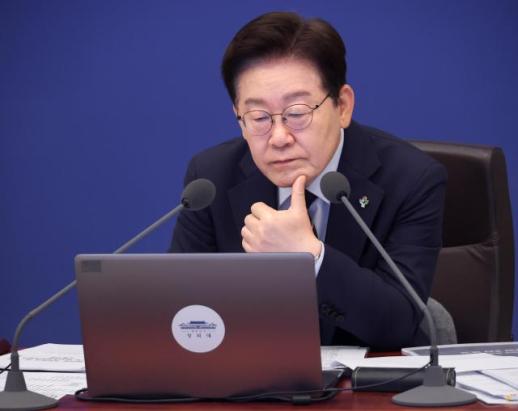 President Lee urges voters to cast ballots, cites Plato in election-day posts SEOUL, June 03 (AJP) - President Lee Jae Myung wrote in a post on X (formerly known as Twitter) at 8:55 a.m. (2355 GMT) on Wednesday, the day of South Korea’s June 3 local elections, “As Plato said, have you voted to avoid being ruled by the worst and lowest among us?” The remark referenced a quotation commonly attributed to Plato: “The heaviest penalty for declining to rule is to be ruled by someone inferior to yourself.” In another post uploaded to X at 2:03 p.m., Lee again encouraged people to vote, writing, “For the future of ourselves and our families, do not give up your right to vote. Let us find capable and loyal public servants and make sure to cast our ballots.” Lee argued in the post that urging people to vote could not be considered electioneering intended to benefit a specific candidate or political camp. He said that calls to participate in elections were “an expression emphasizing the basic principles of democracy and participation in elections,” and therefore did not constitute campaigning or a violation of political neutrality obligations. Lee also mentioned former Presidents Lee Myung-bak and Park Geun-hye. “In this regard, no one objects when former President Lee Myung-bak says, ‘I hope many citizens will vote,’ or when former President Park Geun-hye says, ‘Please make sure to participate in the election,’” Lee wrote. “That is because they are correct,” he added. 2026-06-03 14:58:23
-
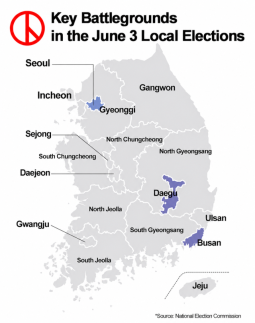 Key battlegrounds in spotlight as South Koreans prepare to go to polls SEOUL, June 2 (AJP) - South Koreans will go to the polls nationwide on Wednesday for this year's local elections to choose more than 4,200 officials including metropolitan mayors, provincial governors, local government heads and education superintendents, as well as fill other vacancies. Polling stations across the country will be open from 6 a.m. to 6 p.m. Seoul is considered the biggest battleground. As the country's political and economic center, major state institutions including presidential office Cheong Wa Dae, the National Assembly, the Supreme Court and the Constitutional Court, are all located in the capital. As of June 2025, 284 of the country's top 500 companies or 56.8 percent had their headquarters in Seoul. The Seoul Metropolitan Government's annual budget stands at around 51 trillion won (US$33.6 billion), accounting for nearly 10 percent of the national budget. In Seoul, Chong Won-o of the ruling Democratic Party (DP) faces former incumbent Seoul Mayor Oh Se-hoon of the main opposition People Power Party. According to a poll conducted by Korea Research for broadcaster MBC last week, Chong garnered 41 percent support, compared with 37 percent for Oh, putting the race within the margin of error. Compared with the previous survey conducted earlier in the week, Chong's support fell 2 percentage points while Oh's rose by 2 percentage points. Chong previously served three terms as mayor of Seongdong-gu, one of Seoul's districts. His political profile surged after President Lee Jae Myung publicly praised him on social media, saying, "He seems to work even better than I do." Oh, a four-term Seoul mayor, is seeking a fifth term. The southern port city of Busan, the country's second-largest city, is another battleground in the elections. Three former presidents — Kim Young-sam, Roh Moo-hyun and Moon Jae-in — built their political careers in the southeastern city of 3.2 million people. In Busan, DP candidate Chun Jae-soo is facing former incumbent Busan Mayor Park Heong-joon of the PPP. In multiple opinion polls commissioned by media outlets and released through May 27, the final day before the publication ban on election polls took effect under the Public Official Election Act, Chun led Park by as much as more than 10 percentage points, though the gap had been narrowing steadily. Still, the Busan mayoral race remains difficult to predict. In past elections, Democratic Party candidates who had consistently led in pre-election polls — and even won broadcasters’ exit polls — later lost after vote counting began. Chun ran for the National Assembly three times in Busan beginning in 2006 under the Democratic Party banner before finally winning a seat a decade later. He served three terms in Busan. Park previously served as a lawmaker in the 17th National Assembly and secretary-general of the National Assembly. He served as Busan mayor from the 38th through 39th terms and is seeking a third consecutive term. The Daegu mayoral election is also drawing unusual attention. No Democratic Party-affiliated candidate has ever been elected mayor of Daegu, but this year's race is unexpectedly close. Former Prime Minister Kim Boo-kyum of the DP is facing former Finance Minister Choo Kyung-ho of the PPP. According to the Korea Research's poll, Kim received 40 percent support, while Choo garnered 41 percent. Compared with another previous poll, Kim's support dropped by 3 percentage points while Choo's rose by 4 percentage points. Kim is a former four-term lawmaker who served as interior minister and later prime minister under the Moon Jae-in administration. He remains the first and only Democratic Party lawmaker ever elected from Daegu. Choo is a former three-term lawmaker who served as deputy prime minister for economic affairs and finance minister under the Yoon Suk Yeol administration. By-elections for 14 parliamentary seats are also being held alongside the local elections, prompting the media to dub them a "mini general election." South Korea's National Assembly has 300 seats in total. Among the 14 constituencies, the by-elections in Pyeongtaek in Gyeonggi Province and Buk district in Busan are attracting particular attention because major presidential hopefuls are running there. In Pyeongtaek, recent polls showed DP candidate Kim Yong-nam and Cho Kuk, candidate of the minor Rebuilding Korea Party (RKP), locked in a neck-and-neck race within the margin of error. Kim, a former prosecutor, served as a lawmaker in the 19th National Assembly under the Saenuri Party, the predecessor of the People Power Party, before leaving the conservative party and joining the Democratic Party. Cho currently leads the RKP, the third-largest party in the National Assembly, and previously served as senior presidential secretary for civil affairs and justice minister under the Moon administration. In Busan's Buk district, DP candidate Ha Jung-woo and independent candidate Han Dong-hoon are engaged in a tight race. Ha is an artificial intelligence expert who previously served as head of AI Lab and chief of the Cloud AI Innovation Center at South Korean tech company Naver. He also served as the presidential secretary for artificial intelligence (AI) policy and future planning under the Lee Jae Myung administration. Han, a former prosecutor, served as justice minister and leader of the PPP under the Yoon Suk Yeol administration. He was expelled from the party after clashing with the pro-Yoon leadership following Yoon's impeachment. 2026-06-02 17:48:50
-
 UPDATE: Korea-Africa Business Forum highlights growing strategic partnership SEOUL, June 02 (AJP) -South Korea hosted a large-scale business forum with African countries on the sidelines of a summit conference at a time global commodity market is being reshaped from the prolonged conflicts in the Gulf. The 2026 Korea-Africa Business Forum was held Tuesday at Lotte Hotel Seoul in central Seoul, bringing together about 300 government officials, diplomats and business leaders from South Korea and African countries. The forum was hosted by the Ministry of Foreign Affairs, jointly by the Korea-Africa Foundation, the Korea Trade-Investment Promotion Agency (KOTRA) and the Korea International Trade Association (KITA), and Yonhap News Agency. In his opening remarks, Foreign Minister Cho Hyun underscored the growing strategic importance of Africa amid global energy and supply chain challenges, emphasizing the need for “mutual prosperity and shared growth” between Korea and Africa. “The Korea-Africa Foreign Ministers’ Meeting held yesterday provided a valuable opportunity to review the achievements made since the 2024 Korea-Africa Summit and discuss a future vision for cooperation,” Cho said. The forum featured keynote speeches by Sung Kim, President for Strategic Planning at Hyundai Motor Company, and Wamkele Mene, Secretary-General of the African Continental Free Trade Area. The first session, titled “Driving Synergies through Korea-Africa Economic Cooperation: From K-Content to New Markets,” explored opportunities to deepen economic ties and expand business collaboration between Korea and African countries. The session was moderated by Caitlin Nash, CEO of Golden Thread Markets in South Africa. Speakers included Kim Myung-hee, Executive Vice President of KOTRA; Jung Tawon, Head of the Sub-Saharan Africa Region at Daewoo Engineering & Construction; Caleb Maru, CEO of Tech Safari in Kenya; and Nana Aba Anamoah, a Ghanaian media personality and founder of Women of Valour. The participants discussed ways to leverage Korea’s cultural influence, technological capabilities and industrial expertise to create new opportunities in African markets, while exploring avenues for broader economic cooperation and sustainable growth. The latter half of the forum shifted focus from diplomacy to practical business cooperation, with speakers highlighting Africa’s growing potential as a strategic market for Korean industries. During a special dialogue session on the future of Korea-Africa business ties, Victor Lawrence Villacisety, chairman and CEO of Villacisety, argued that Africa should no longer be viewed solely as a source of raw materials, describing the continent instead as an emerging center for global innovation and industrial growth. The Ghanaian businessman introduced his company’s large-scale smart industrial city project near Accra and said he plans to create a “K-Tech Town” within the development to help Korean companies establish a foothold in Africa with fewer risks and greater institutional support. The forum’s third session brought together senior African officials for discussions on cooperation in critical minerals and energy — sectors expected to become increasingly important amid the global supply chain race. Foreign ministers from Gambia, Tunisia and Rwanda, along with Mozambique’s minister for planning and development, called for a more equal partnership model between Korea and African nations. Rather than limiting cooperation to resource extraction, they stressed the need for joint participation in development projects and a fairer sharing of economic gains. Beyond the conference hall, the event also served as a showcase for Korean consumer brands targeting Africa’s fast-growing markets. K-beauty and K-food exhibition booths installed at the entrance of the venue drew heavy attention from African delegates and business participants. Ten Korean companies selected through a highly competitive screening process displayed products tailored to local demand, including hair care products designed for African consumers, vegan cosmetics, premium Korean tea and health drinks. An employee of Korean cosmetics brand Life With Corporation, Sohn Luna, 30, who participated in the event, said it was “a great opportunity to promote the brand.” “Because many parts of Africa have dry climates, a lot of people showed interest in moisturizing products,” Sohn said. She added that while the company currently exports only to Tanzania, “African visitors showed much greater interest than we had expected today, so I believe demand in Africa will continue to grow in the future.” Dana Mopulunga, CEO of South African pharmaceutical company Bernika Health, said the forum made her feel that “there are a lot of opportunities” for economic cooperation between Korea and Africa. She added that she plans to visit Korea again to further discuss business cooperation with Korean partners. 2026-06-02 12:36:35
-
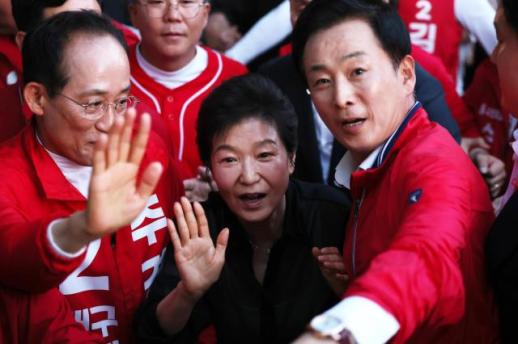 Ex-presidents return to campaign trail to rally conservatives ahead of local elections SEOUL, June 1 (AJP) - Former Presidents Lee Myung-bak and Park Geun-hye on Sunday intensified their support for conservative candidates ahead of the upcoming June 3 local elections, making high-profile campaign appearances in the traditional conservative strongholds of the southeastern cities of Busan and Daegu in a bid to rally voters amid dim prospects. The two former disgraced presidents, both of whom previously received prison sentences in separate corruption scandals before later being pardoned, have collectively joined campaign events 10 times in May alone as the main opposition People Power Party (PPP) seeks to prevent what many within the party fear could be a sweeping defeat by the ruling Democratic Party. Lee, who served from 2008 to 2013, appeared with the PPP's Busan mayoral candidate Park Heong-joon and local lawmakers in Busan. His trip marked Lee's first campaign stop outside the Seoul metropolitan area during this election season. Lee previously met Seoul mayoral candidate Oh Se-hoon in central Seoul on May 15 and separately met Gyeonggi gubernatorial candidate Yang Hyang-ja and Seoul education superintendent candidate Cho Jeon-hyuk later in the month. Park, South Korea's first female president who served from 2013 to 2017, campaigned in Daegu's famous Seomun Market alongside the PPP's Daegu mayoral candidate Choo Kyung-ho and local lawmakers. Park has been campaigning extensively across the southeastern region in recent weeks. She previously visited Seomun Market with Choo on May 23 and later traveled to multiple cities including Okcheon, Daejeon, Gongju, Jinju, Yangsan, Ulsan, Busan, Wonju and Hoengseong. PPP lawmakers defended the involvement of the two former presidents as necessary to consolidate conservative support amid concerns over declining party unity after impeached former President Yoon Suk Yeol's martial law debacle in 2024. Rep. Yoo Sang-bum of the PPP said Park was motivated by fears that conservatives could collapse politically in Daegu, long considered the "heart of conservatism." "I think former President Park Geun-hye decided to support the campaign because she felt an urgent sense that conservatism should not completely collapse while seeing a Democratic Party wave even in Daegu," Yoo said. "Various candidates who felt a sense of crisis that conservatives could collapse in this local election requested support from Park." Yoo added that conservative voters were now regrouping around Park. "There had not been a central axis for conservatives, but Park's visits to places like Daegu are helping conservative forces unite around her," he said. "Unlike a month ago, when many expected the Democratic Party to win overwhelmingly, recent local election polls show several competitive races. I believe the two former presidents played a major role in consolidating conservatives." Rep. Park Sung-min of the People Power Party also defended the strategy. "The presidency belongs to the DP, the National Assembly belongs to the DP, and the judiciary belongs to the DP," Park said. "One-party dominance inevitably becomes corrupt, so the PPP is trying to prevent one-party rule by utilizing every possible resource." Still, some ruling party lawmakers privately questioned the electoral impact of the appearances. An anonymous four-term PPP lawmaker said the former presidents' support "may help somewhat, but it is unreasonable to expect a decisive change in the election." DP candidate Kim Sang-wook, who is running for mayor of Ulsan, dismissed the campaign appearances as ineffective. "Campaigning by former presidents from the People Power Party side is increasing, but citizens are close to indifferent," Kim said. "It appears the PPP is trying to wage this election not through policies but through political camp mobilization." 2026-06-01 16:57:16
-
 Early voting for local elections hits record high, but final turnout remains to be seen SEOUL, June 1 (AJP) - Early voting for South Korea's June 3 local elections wrapped up with a record-high turnout, fueling speculation that final turnout could surpass a previous record of 60.2 percent seen in the 2018 local elections, the highest level in nearly three decades. The National Election Commission (NEC) on Sunday said 10.49 million of the country's 44.64 million eligible voters cast ballots during the two-day early voting period held Friday and Saturday, for a turnout rate of 23.5 percent. The figure was 2.9 percentage points higher than the previous record of 20.6 percent set in the 2022 local elections. Since early voting was introduced nationwide in 2014, the highest early voting rate in any national election was 36.9 percent in the 2022 presidential election. South Jeolla Province recorded the highest early voting rate among the country's 16 major administrative regions at 39.0 percent, followed by North Jeolla Province at 35.1 percent and the southwestern city of Gwangju at 27.8 percent. The southeastern city of Daegu had the lowest turnout at 18.7 percent. Other southeastern regions, including Busan at 21.3 percent, North Gyeongsang Province at 22.4 percent and Ulsan at 22.5 percent, also fell below the national average. In the Seoul metropolitan area, Gyeonggi Province recorded 21.0 percent, Incheon 21.6 percent, and Seoul 23.8 percent. Early voting in 14 by-elections held alongside the local elections reached 24.1 percent, slightly higher than the rate for the local elections. Of the 2.26 million eligible voters, about 546,000 cast early ballots. Among the by-election districts, Buan, Gimje and Gunsan in North Jeolla Province recorded the highest early voting rate at 42.6 percent, followed by Buyeo, Cheongyang and Gongju in South Chungcheong Province at 30.2 percent. Busan Buk Gap, where candidates including the Democratic Party (DP)'s Ha Jung-woo, the conservative People Power Party (PPP)'s Park Min-sik and independent candidate Han Dong-hoon are competing, posted a relatively high early voting rate of 25.6 percent. Busan's fiercely contested Buk district, where candidates including Ha Jung-woo of the ruling Democratic Party (DP), Park Min-sik of the main opposition People Power Party (PPP) and independent candidate Han Dong-hoon are competing, saw a relatively high early voting rate of 25.6 percent. By contrast, Daegu's Dalseong district recorded the lowest early voting rate in the by-elections at 17.6 percent. Pyeongtaek in Gyeonggi Province, where candidates from five parties are running, also saw relatively low participation at 18.4 percent. Meanwhile, strong turnout has raised expectations that overall participation in this year’s local elections could rise significantly. Local elections in South Korea have traditionally seen lower turnout than presidential or general elections. Only two local elections have recorded turnout above 60 percent: the first nationwide local elections in 1995, which saw 68.4 percent turnout, and the 2018 local elections, which recorded 60.2 percent. In the 2022 local elections, final turnout was just 50.9 percent despite record early voting of 20.6 percent, suggesting that early voting mainly changed the timing of participation rather than significantly boosting overall turnout. Experts say the high early voting turnout reflects the establishment of stable early voting, as voters become more familiar with it. Ha Sang-eung, a professor of political science and international relations at Sogang University, said, "In effect, the voting period extends to three days when the two-day early voting period is counted." Ha predicted that final turnout would be higher than in the previous local elections, but not exceptionally high. "In closely contested regions, many people may still vote on election day even if early voting turnout is high. But in less competitive regions, turnout is unlikely to be high even if early voting participation is strong," he said. "Contrary to conventional wisdom, high turnout does not necessarily benefit any particular political party," he also said. "Especially in local elections, regional differences are significant, so a high overall turnout does not favor any specific party," he added. But Ha dismissed claims by some far-right conservatives linking early voting to election fraud as "the most absurd and groundless rumor imaginable." 2026-06-01 15:31:34