

Journalist
Lee Jung-woo이정우
cannes2030@ajupress.com
ReporterMinistry of Unification & North Korea, Politics, Foreign Affairs
I studied philosophy in college, and sociology and journalism in graduate school. I cover North Korea, South Korean politics, foreign affairs and films. I enjoy Nordic cinema, Indian cuisine and Japanese detective novels. I have a cat and like bright, acidic coffee.
"Were it left to me to decide whether we should have a government without newspapers, or newspapers without a government, I should not hesitate a moment to prefer the latter."
"Were it left to me to decide whether we should have a government without newspapers, or newspapers without a government, I should not hesitate a moment to prefer the latter."
Latest by Lee Jung-woo
-
 Why 'Teach You a Lesson' is resonating around the world — and beyond the screen SEOUL, June 16 (AJP) - The latest Netflix K-drama "Teach You a Lesson" is taking the world by storm because, quite literally, classrooms around the world may be in need of a figurative whipping of their own. Forbes recently called it one of the best dramas of the year despite criticism over excessive violence, racism and some over-exaggerated acting, because it ultimately offers "a hopeful perspective on justice in a corrupt world." For teachers actually working in schools, that may not be an exaggeration. Kim Hanna, a middle and high school teacher with 15 years of classroom experience, said "Teach You a Lesson" resonated deeply with many educators because it reflected realities they confront every day. One scene that particularly stood out to her was when the fictional bureau tasked with restoring school authority declared that it would stand alongside teachers facing malicious complaints. "The drama points out that malicious complaints are pressuring innocent teachers and depriving them of the opportunity to become the kind of teachers they aspire to be," Kim said. "The fact that there is someone fighting for teachers is heartwarming." Kim said most educators enter the profession with a strong sense of mission and a desire to guide students responsibly. "But in reality, even ordinary disciplinary guidance can lead to malicious complaints or legal action. Many teachers end up feeling powerless, as though they can do nothing, or begin to question their own professional abilities," she said. Kim identified what she considers the most serious problem in schools today: the growing use of child-abuse allegations against teachers engaged in legitimate educational activities. According to Kim, a student known for impulsive and violent behavior attempted to assault a classmate. When the teacher intervened to stop the attack, the student kicked the teacher to the ground, climbed onto the teacher's chest and pulled the teacher's hair. "The teacher only grabbed the student's wrist to prevent further violence," Kim said. "Yet the parent later accused the teacher of assaulting the student." She said the parent subsequently posted messages criticizing the teacher on local online parenting forums and internet communities, damaging the teacher's reputation before filing a child-abuse complaint. "The unfortunate reality is that incidents like this are not rare in Korean schools," she said. Article 17, Paragraph 5 of South Korea's Child Welfare Act prohibits emotional abuse. However, Kim said the provision's ambiguity has created unintended consequences in schools. "Because the standard is unclear, even legitimate disciplinary guidance can result in child-abuse reports," she said. K-drama having real power But the drama has already hit home in South Korea, showing that it can do more than entertain — it can shape public debate and potentially influence policy. The questions it raises are no longer confined to television screens. How should schools respond when teachers can no longer maintain order? Who should protect both teachers' rights and students' right to learn when existing systems fail? New education leaders are now trying to answer those questions. Gyeonggi Province's incoming education superintendent Ahn Min-seok is among the first policymakers attempting to turn that conversation into concrete action by proposing a Gyeonggi-style Educational Rights Protection Bureau within the provincial education office. The proposal immediately sparked criticism on social media, with some arguing that a progressive educator advocating such a body was effectively endorsing a return to corporal punishment. Ahn rejected that interpretation. "The name comes from the drama 'Teach You a Lesson.' In reality, it cannot operate exactly as it does in the series," Ahn told AJP. "We cannot solve problems through violence, and I believe children should not be struck even with a flower." Still, he argued that the current system is no longer capable of addressing problems in schools quickly and effectively. "The key is to protect both teachers' rights and students' right to learn," he said. "We need to prevent situations in which a severely disruptive student infringes upon a teacher's authority and undermines the learning rights of other students as well." Ahn said he has long envisioned a new system in which responsibility no longer falls solely on individual teachers but is instead assumed institutionally by education authorities. "There is now a need for an institutional body within the education office that can take responsibility for this role," he said. To begin the process, the Gyeonggi education transition committee will hold a public forum next week titled, "Why and How Should a Gyeonggi-Style Educational Rights Protection Bureau Be Established?" The forum will gather experts, students, parents and teachers to discuss ways to protect both teachers' rights and students' learning rights. Ahn also revealed that teachers with military backgrounds, including former members of the Marine Corps and South Korea's special forces, have volunteered to participate. "Many have sent messages saying, 'I will become Gyeonggi's Na Hwa-jin,'" he said. In the series, Na Hwa-jin, played by actor Kim Mu-yeol, is a former Special Forces captain turned inspector for a fictional Educational Rights Protection Bureau, leading a team dispatched to schools engulfed by bullying, corruption and collapsing authority to protect victims and restore order. "Realistically, we may be able to secure 20 to 30 people capable of fulfilling such a role," Ahn said. But he repeatedly emphasized that violence would have no place in the system. "In schools facing serious crises, where teachers can no longer maintain order, these personnel would be deployed not for violent retaliation but for guidance and intervention to restore the educational environment," he said. "If a former special forces inspector simply enters a classroom, that alone can create a sense of authority." Ahn said the debate is ultimately about restoring schools' ability to function rather than reviving old disciplinary practices. "Student rights and teachers' rights should not be viewed as opposing values," he said. "They are rights that must be respected simultaneously. While protecting students' human rights, we must also institutionally guarantee teachers' legitimate authority to guide and discipline students in educational settings." As Forbes noted, "Like all films and dramas in this world, one would hope to have some sort of escapism — because in reality, especially those who have been affected by school injustice, there are those who don't have that luxury." That may explain why "Teach You a Lesson" is resonating far beyond Netflix audiences. For many teachers, students and victims of physical and cyberbullying, the issues depicted in the series are not fiction but everyday reality. And perhaps that is the drama's greatest achievement: not offering an escape from reality, but forcing society to confront it. 2026-06-16 18:33:29
-
 Lee invites Pope Leo XIV to Seoul in hopes for Vatican peace diplomacy SEOUL, June 16 (AJP) - South Korean President Lee Jae Myung on Monday invited Pope Leo XIV to visit Seoul for the 2027 World Youth Day gathering, raising hopes that the trip could become a stepping stone toward the first papal visit to North Korea as Seoul revives its push for peace on the Korean Peninsula. The invitation came during Lee's 30-minute one-on-one meeting with the pope at the Vatican, where the two leaders discussed dialogue, reconciliation and ways to improve relations between the two Koreas. The meeting marked the first known discussion between Lee and Pope Leo XIV on Korean Peninsula issues since the pontiff's election earlier this year and signaled Seoul's intention to once again enlist the Vatican's moral authority to support regional peace efforts. National Security Adviser Wi Sung-lac said Lee explained South Koreans' aspirations for peace and outlined his government's policy vision while reaffirming the Vatican's support for reconciliation. "Both sides shared the view that dialogue, reconciliation and cooperation remain necessary despite current difficulties," Wi told reporters. According to South Korean officials, ways to improve inter-Korean relations were discussed, and the possibility of a future papal visit to North Korea was also believed to have been raised, although neither side disclosed details. The Vatican later issued a statement confirming Lee's audience with the pope as well as his separate meeting with Vatican Secretary of State Cardinal Pietro Parolin. No pope has ever visited North Korea despite repeated efforts over the past quarter-century. The first notable attempt came in 2001, when South Korean Catholic leaders formally asked Pope John Paul II to visit Pyongyang, arguing that such a trip could help advance reconciliation between the two Koreas. Church officials at the time said North Korean leader Kim Jong Il had indicated a willingness to invite the pope. The strongest push came in 2018 during a period of active inter-Korean diplomacy. Then-President Moon Jae-in personally conveyed North Korean leader Kim Jong-un's invitation to Pope Francis during a visit to the Vatican. Francis responded positively, saying he would be willing to visit if he received a formal invitation from Pyongyang. South Korean officials said at the time that the pope strongly supported efforts to advance peace on the Korean Peninsula and encouraged Seoul to continue pursuing dialogue. Despite those exchanges, the visit never materialized as diplomatic momentum faded. The idea also survived into the administration of former President Yoon Suk Yeol. Rep. Kwon Young-se, a five-term lawmaker who served as unification minister under Yoon, told AJP that Pope Francis had been particularly enthusiastic about visiting North Korea. "Cardinal Lazarus You Heung-sik, who is close to the pope, was also very supportive of a visit to North Korea, so I discussed the issue of a papal visit with him many times," Kwon said. According to Kwon, the Vatican had already created a favorable atmosphere internally and made its own efforts to facilitate such a trip. However, Pyongyang never responded. "The Catholic Church, unlike Protestantism or Buddhism, exclusively dispatches priests from the Vatican, and I heard from the Vatican that North Korea is very uncomfortable with priests entering the country from outside," he said. "I hope a papal visit to North Korea can be realized, but it will probably be very difficult to make it happen," he added. Still, Seoul sees an opportunity in 2027. South Korea will host 2027 World Youth Day, one of the Catholic Church's largest global events, which typically attracts hundreds of thousands of young pilgrims from around the world. If Pope Leo XIV accepts Lee's invitation, it would mark the first papal visit to South Korea since Pope Francis visited in 2014. 2026-06-16 11:05:51
-
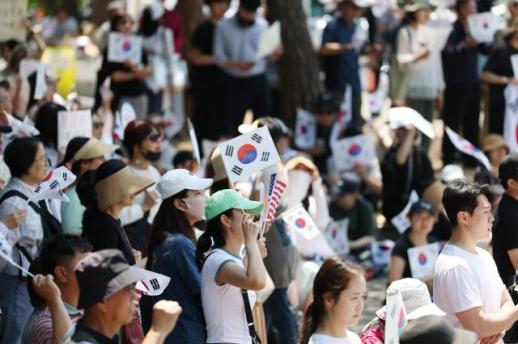 Behind the Jamsil protests: The pro-democracy politics of young Koreans SEOUL, June 15 (AJP) - Unlike their clear-cut elders, young South Koreans are neither right nor left. They are simply pro-democracy, and intolerant when they believe it is under attack — whether through a martial law declaration or a shortage of ballot papers. The generational divide has become increasingly visible in recent months as South Koreans in their 20s and 30s have emerged as a new political force, distancing themselves from the country's deeply entrenched ideological camps while mobilizing around what they see as threats to democratic norms. The latest example came after widespread ballot shortages during the June 3 local elections, an administrative failure that triggered protests led largely by younger citizens and ignited a broader debate over trust in South Korea's electoral institutions. Unlike older generations, whose political identities have long been shaped by Cold War-era divisions between conservatives and progressives, many younger Koreans have shown little loyalty to either camp. Instead, they have increasingly rallied around procedural fairness, transparency and institutional accountability. For more than a week, demonstrators occupied areas around a vote-counting center in Seoul's Jamsil district, demanding accountability from election authorities and, in some cases, calling for a rerun of the election. The protests drew significant participation from people in their 20s and 30s, many of whom organized through online communities rather than traditional civic organizations. But as far-right groups attempted to frame the controversy as evidence of election fraud, many younger protesters deliberately sought to distance themselves from such narratives. On June 11, users of the online platform DC Inside launched a new forum called the "Voting Rights Gallery," saying its purpose was to restore public confidence in elections and protect citizens' right to vote. A similar distinction emerged offline. At a rally near Hongik University Station on Saturday, organizers prohibited all flags except placards calling for a new election. National flags and political banners commonly associated with conservative and far-right protests were banned. About 40 people attended, according to organizers. University students have also sought alternative avenues for civic engagement. One example is "One Vote Record," a website compiling statements from student governments nationwide. According to the platform, 396 statements issued by 215 universities most frequently referenced democracy, voting rights, trust and fairness. Ninety-six percent of the statements mentioned democracy, while 94 percent referred to political participation rights and 87 percent highlighted concerns about trust or fairness. Experts say the movement reflects anxieties over institutional competence rather than belief in systemic election fraud. "The first responsibility is to separate two issues that can too easily become confused: the administrative failure itself, and the much broader claim that the election was fraudulent," said Emily Flore St. Denny, a political scientist at the University of Copenhagen. "A shortage of ballot papers is a serious failure because it affects the equal exercise of voting rights. It deserves a full and independent public investigation. But it should not automatically be allowed to become evidence for fraud unless there is evidence of fraud," she said. Robert Gulotty, a political scientist at the University of Chicago, said political leaders have a responsibility both to improve election administration and to reject unfounded allegations. "Parties and people have a responsibility to hold their own politicians to account when they try to argue that elections are fraudulent when they are not," Gulotty said. Peter Chen, a senior lecturer at the University of Sydney, said governments must focus on building institutional resilience. "Trust and confidence in elections should be a core performance measure," he said, adding that independent electoral bodies, stronger resources and anti-misinformation strategies are essential. The issue has become politically sensitive for President Lee Jae Myung, whose administration has condemned disruptive protest tactics while acknowledging public frustration. On Monday, Lee wrote on X that demonstrators should refrain from violating the rights of others while expressing their views. He cited reports that activities at sports facilities near the Jamsil election site had been disrupted and instructed police to investigate allegations of obstruction and restricted public access. "Freedom of expression and public debate must be protected," Lee said previously. "But actions that cross the line cannot be tolerated." Political analysts warn that authorities' handling of the controversy could have lasting consequences for public trust. "Democracy depends not only on citizens accepting the winners they prefer, but also on accepting losses they dislike," St. Denny said. "When trust in election administration collapses, electoral defeat is no longer interpreted as defeat but as a form of theft." Yet some scholars argue that the intensity of public engagement itself signals democratic resilience rather than decay. "South Koreans still believe in democracy enough to participate massively," said Timothy Koskie, a researcher on trust at the University of Sydney. "They believe in it enough to protest a lot. Consequently, it just isn't accurate to say that Korea's trust in democracy has collapsed." Lawmakers from both the ruling and opposition parties largely agreed that younger voters no longer fit conventional ideological labels. "I think the young people are being very wise in drawing a line between themselves and those who claim election fraud," said Rep. Kwon Chil-seung. "The younger generation has a balanced view of this situation." Rep. Song Ki-heon said many politicians still struggle to understand younger voters. "I feel that there are not many politicians who understand the sentiments of people in their 20s and 30s," he said. For younger South Koreans, democracy itself — not party affiliation — has become the cause worth defending. 2026-06-15 18:00:14
-
 Opposition hits post-election high as Lee's ratings continue to slide SEOUL, June 15 (AJP) - South Korea's main opposition gained further ground in the aftermath of the June 3 local elections, recording its strongest support since former President Yoon Suk Yeol's impeachment and President Lee Jae Myung's victory in the subsequent snap election. A Realmeter survey found support for the conservative People Power Party (PPP) rose for a third straight week to 44.3 percent, its highest level since Lee took office, widening its lead over the ruling Democratic Party to 6.3 percentage points, outside the margin of error. The Democratic Party's support fell to 38.0 percent, slipping below 40 percent for the first time since the second week of August last year. At the same time, Lee's job approval rating dropped 3.7 percentage points from a week earlier to 51.5 percent, extending a monthlong decline that has erased nine percentage points from its mid-May peak of 60.5 percent. Negative assessments rose 3.2 percentage points to 44.2 percent, while 4.3 percent were undecided. Realmeter attributed the deterioration in public sentiment to lingering fallout from the June 3 local elections, including ballot shortages and vote-counting errors that have fueled criticism of the National Election Commission and triggered demands for investigations by civic groups and university students. The pollster also cited persistent economic pressures, including a weak won and elevated inflation, as weighing on the administration. The nationwide survey of 2,515 eligible voters aged 18 and older was conducted between June 8 and June 12 through automated mobile phone interviews. Realmeter said the PPP appeared to have broadened its appeal beyond its traditional base by attracting some centrist, progressive and younger voters after taking a hard-line stance on the election controversy, including calls for a parliamentary investigation and a special counsel probe into alleged election mismanagement. The ruling party's decline reflected growing criticism over its handling of the election outcome and intensifying internal divisions. Pressure has mounted on Democratic Party leader Jung Chung-rae, with several lawmakers openly questioning his leadership and calling for him to take responsibility for the result. Lawmakers Hwang Myung-sun and Lee Un-ju, both considered close to President Lee, have publicly raised concerns about Jung's leadership. During a closed-door caucus meeting on June 11, some lawmakers reportedly urged him to resign. Jung's supporters have countered that there are no grounds under party rules for his immediate departure and that he should remain in office until the party leadership race next month. Support for the minor Rebuilding Korea Party stood at 3.7 percent, followed by the New Reform Party at 2.8 percent and the Progressive Party at 1.2 percent. A protest in Seoul's Jamsil, triggered by the ballot shortage crisis in the June 3 local elections, entered its 11th day on Monday. 2026-06-15 15:16:50
-
 UK's Indo-Pacific minister in Seoul to boost cooperation with South Korea SEOUL, June 12 (AJP) - U.K. Minister for the Indo-Pacific Seema Malhotra has been in Seoul this week as she seeks to deepen cooperation with South Korea across various sectors and address shared global challenges. During her three-day visit which began on Thursday, Malhotra has been meeting with South Korean government officials and business leaders to discuss cooperation in advanced technologies, clean energy, and defense, according to the British Embassy in Seoul. She arrived from Viet Nam as part of a broader regional trip that reflects Britain's commitment to strengthening partnerships across the Indo-Pacific. Her visit also comes amid growing ties between the two countries under their "Global Strategic Partnership" (GSP), as they seek to strengthen economic resilience and address regional and global security challenges. "I am pleased to be making my first visit to Korea, one of the U.K.'s closest partners in Asia," Malhotra said in a statement released by the embassy. "In a more uncertain world shaped by conflict, economic disruption and climate change, trusted partnerships matter more than ever," she said. "That is why I am here to deepen our Global Strategic Partnership, which is driving secure, mutually beneficial growth, strengthening our economic resilience, and supporting our long-term security across both the Indo-Pacific and Euro-Atlantic." South Korea and the U.K. have developed a growing economic partnership, with bilateral trade in goods and services reaching 17 billion pounds (US$23 billion) last year. The two countries are also preparing to sign an upgraded free trade agreement later this year. The revised pact is expected to modernize bilateral trade by maintaining tariff-free access for most goods, strengthening services trade, and adding provisions on digital trade and supply chains. Energy security and resilient supply chains are among the key topics of Malhotra's visit. The embassy said both countries share a strong interest in protecting freedom of navigation and maritime security as globally integrated trading economies. Malhotra is expected to discuss international security issues including Russia's war in Ukraine and Britain's continued support for Kyiv, while also raising concerns about growing military ties between Moscow and Pyongyang. She is also expected to reaffirm London's commitment to peace and stability on the Korean Peninsula and to the complete denuclearization of North Korea, in line with U.N. Security Council resolutions. As part of her other schedule in Seoul on Thursday, Malhotra met K-pop girl group NMIXX, along with Colin Crooks, the British ambassador to Seoul, as they were appointed promotional ambassadors for the embassy's campaign, "Girls Can Dream, Girls Can Achieve: Nothing Is Impossible for a Girl Who Dreams." The campaign is designed to inspire girls to take the lead in shaping their own dreams and futures and to pursue their goals with confidence. 2026-06-12 16:46:20
-
 Another fire breaks out at SK hynix's plant in Cheongju SEOUL, June 12 (AJP) - A fire broke out at SK hynix's chip plant in Cheongju, North Chungcheong Province on Friday, injuring one worker and forcing about 4,000 employees to evacuate. The fire came less than two weeks after a similar incident at the same plant on June 1. According to workers and fire officials, flames started at around 9:55 a.m. in a gas room on the second floor of its M15X facility at the plant. The fire was fully extinguished within about 10 minutes after the automatic sprinkler system was activated. The fire is believed to have occurred while six workers were mixing fluorine and nitrogen inside the room. Fluorine is toxic to humans. All employees were immediately evacuated due to concerns over a possible gas leak. Fire authorities said no gas leak was detected, but about 13 workers who complained of symptoms such as dizziness were taken to an on-site hospital. One worker at the scene suffered a first-degree burn to his ankle, while the rest were apparently found to have no health issues. With authorities reportedly still unable to determine the cause of the fire earlier this month, SK hynix had launched a companywide campaign from June 4 to June 10 in response to a series of recent incidents. The M15X facility is one of SK hynix's key production bases for manufacturing next-generation high-bandwidth memory (HBM) chips, a critical component used in artificial intelligence (AI)-related applications. 2026-06-12 14:29:24
-
 Italy honors Lee with highest state decoration SEOUL, June 12 (AJP) - Italy rolled out a red carpet and gave some of its highest state honors to President Lee Jae Myung during his state visit on Thursday, highlighting deepening ties as the two countries upgraded their relationship to a special strategic partnership and expanded cooperation in technology, defense, and trade. Lee received the Knight Grand Cross of the Order of Merit, Italy's highest-ranking state decoration, typically awarded to foreign heads of state and individuals deemed to have made exceptional contributions to Italy. It marked the first time since taking office that Lee has received such a state honor from a foreign government. The ceremonial welcoming event began even before Lee landed in Rome. Two Italian fighter jets escorted South Korea's presidential aircraft after it entered Italian airspace, a gesture reserved for visiting heads of state. "This was not a courtesy extended to will meet with U.S. President Donald Trump to clearly convey our position on the NTE Report and non-tariff barriers, and reaffirm South Korea's commitment to implementing bilateral cooperation initiatives, including the implementation of the Joint Fact Sheet." 2026-06-12 11:34:03
-
 Korea's ruling party explores second year's challenges in an in-house forum SEOUL, June 11 (AJP) -South Korean President Lee Jae Myung has restored the dignity of the country's hard-won democracy, but what lies beyond can define the true scorecard of the liberal government, according to the ruling party's in-house seminar amid sagging approval rating following disappointing local election results. At a forum at the National Assembly in Yeouido, hosted by the office of Rep. Sohn Myung-soo of the ruling Democratic Party (DP) Thursday, persistent challenges such as demographic decline and economic uncertainty as well as a widening wealth gap and inequality were highlighted, although self-congratulatory reflections dominated the talk. DP leader Jung Chung-rae under scrutiny over election accountability had only praises for the president. "The country has entered an era of a 'Korea Premium,'" Jung said, citing rising international confidence in the country and improvements in economic indicators. He argued that Lee's leadership had strengthened the country's global standing and positioned South Korea among advanced nations. Jung also described the Lee government as the product of a "revolution of light," referring to the public movement that led to the ouster of disgraced former President Yoon Suk Yeol over his botched martial law debacle. He added the Lee administration was committed to democratic governance and improving citizens' lives. Rep. Han Jeoung-ae said the government had navigated a series of challenges over the past year, including political instability, a presidential election, U.S. tariff negotiations and regional security tensions. She said South Korea had demonstrated the resilience of its democracy and achieved strong economic growth, but noted that many households had yet to feel the benefits. "High inflation and a weak currency continue to put pressure on people's livelihoods," Han said. Yoon Chang-ryeol, the minister of government policy coordination, said the administration had focused on restoring growth, improving public safety and expanding communication with citizens. He pointed to economic growth that reached its highest level in more than five years, a rebound in the stock market, the restoration of research and development spending and stronger measures against crimes affecting ordinary citizens. "Of course, we cannot be satisfied with the achievements of just one year," Yoon said, citing low birth rates, regional decline and widening inequality as long-term challenges. Several speakers stressed that the administration's second year should focus on structural reforms rather than short-term achievements. Hong Sung-kook, an adviser to the ruling party, said Korea was facing a rare opportunity to strengthen its economic position through growing exports and advances in key industries such as semiconductors and artificial intelligence. However, he warned that the country continued to face a "K-shaped" economic structure in which gains are unevenly distributed across society. "If we fail to make structural changes over the next year, it will be difficult to do so in the future," Hong said. Lee Chul-hee, a professor of economics at Seoul National University said the government had made notable progress in labor policy, public safety and social welfare but had fallen short on long-term issues such as education reform and population policy. He called for stronger monitoring of government policy implementation and greater attention to emerging challenges including artificial intelligence, immigration policy and wealth inequality. Jung Sung-eun, a professor at Konkuk University's Graduate School of Public Administration, said the first year of the administration had focused on restoring democracy and constitutional order. The next four years, he said, should be devoted to institutionalizing "popular sovereignty" through reforms including changes to the prosecution and police systems, expanded public participation and constitutional revision. On foreign policy, Rep. Kim Young-bae said the administration had pursued a "pragmatic diplomacy centered on national interests" while seeking to normalize relations with major powers including the United States, China and Japan. Kim said Seoul had successfully managed pressure from Washington over tariffs and economic security issues while rebuilding ties with Beijing and advancing cooperation with Tokyo. He also cited the administration's efforts to strengthen the U.S.-South Korea alliance, including discussions on revising the bilateral nuclear cooperation agreement and introducing nuclear-powered submarines. Asked by AJP how South Korea planned to address potential U.S. concerns about nuclear proliferation related to its pursuit of nuclear-powered submarines, Kim said securing the support of U.S. President Donald Trump would be a key factor in the process. He said discussions were underway within the U.S. government and argued that a stronger South Korean military operating within the framework of the alliance would ultimately benefit both countries and align with broader U.S. strategic interests. Kim added that building trust with Washington across a range of issues, not only security matters, would be essential to advancing the discussions. DP leader Jung declined to comment when asked by reporters about recent calls within the DP for his resignation to account for some major losses including Seoul mayorship in local elections. 2026-06-11 18:01:19
-
 Korea's ruling front humbles as approval rating droops in election aftermath SEOUL, June 11 (AJP) - The honeymoon period had been unprecedentedly longer for South Korean President Lee Jae Myung compared with past leaders, but it eventually came to an end. Just before departing for a European tour on Wednesday, Lee took time for a moment of self-reflection. In a post on X, he apologized to the public and pledged to "work harder" with greater modesty and openness after a string of polls showed his approval ratings falling sharply in the aftermath of the June 3 local elections. The remarks echoed the contrite tone Lee adopted days earlier during a news conference marking the first anniversary of his inauguration, when he described the ruling party's disappointing local election performance as "a warning from the people." Lee's approval rating, which had remained comfortably above 60 percent throughout much of his first year in office, has fallen rapidly since the local elections exposed growing voter fatigue with the ruling camp and signaled a revival of the conservative opposition. A survey conducted by the Korea Society Opinion Institute on Monday and Tuesday and released Wednesday showed Lee's approval rating falling 9.4 percentage points from late May to 50.4 percent. Negative assessments rose 10.5 percentage points to 45.7 percent, narrowing the gap between approval and disapproval to within the survey's margin of error for the first time since he took office. Support for the governing Democratic Party slid in tandem, dropping 4.7 percentage points to 38.6 percent, while the opposition People Power Party climbed 6.5 points to 38.1 percent. The decline was particularly pronounced among younger voters and in the southeastern industrial belt. Disapproval reached 62.3 percent among voters in their 20s and 59.9 percent among those in their 30s, while negative views also surged in the Busan-Ulsan-South Gyeongsang region. A separate survey released Wednesday suggested the political momentum may be shifting even more dramatically. The poll, conducted by Cho Won C&I for Straight News from June 6 to June 8, showed support for the PPP at 41.6 percent, edging past the DP at 40.4 percent. It marked the first time the conservatives outpaced the liberals since Yoon's martial-law stunt and impeachment. The same survey showed Lee's approval rating dropping 13.3 percentage points to 50.6 percent, while disapproval climbed 12.5 percentage points to 45.5 percent. Taken together, the polls suggest the June 3 local elections may have served as a watershed moment — one that has shaken what once seemed an iron DP grip on power and clouded the party's once-comfortable path to extending its rule into another term. Rep. Park Sun-won of the DP told AJP the waning numbers were "deeply distressful." Lawmakers from both parties cited a combination of factors behind the shift in public opinion, including the ballot paper shortage controversy during the local elections, growing unease over the ruling party's legislative agenda, and the emergence of new conservative leadership figures. The ballot shortage incident, which forced some polling stations to suspend voting temporarily and left voters waiting for extended periods, sparked nationwide criticism and allegations that citizens' voting rights had been compromised. "The decisive cause was the infringement of citizens' voting rights resulting from the ballot paper shortage incident," said PPP lawmaker Park Sung-hoon. Park also cited a range of factors that fueled public resentment toward what he described as the ruling camp's growing arrogance, including its push for the special prosecutor bill on canceled prosecutions, the politicization of the Starbucks controversy and the consolidation of conservative voters during the local elections. The legislation, championed by the DP, seeks to investigate allegations of politically motivated prosecutions under the previous Yoon administration. Critics, however, argue that parts of the bill could effectively grant a special prosecutor authority to nullify existing indictments, making it one of the most contentious legislative proposals in recent months. "Through the local elections, the public warned that the Lee Jae Myung administration and the DP were acting too arrogantly and doing whatever they wanted," said PPP lawmaker Ahn Sang-hoon. Calling the bill a symbol of overreach, Ahn said voters were bewildered that the ruling party appeared determined to revive the proposal immediately after the election. Ahn also cited concerns over housing policy and efforts to support the stock market through the National Pension Service, while attributing the PPP's improving fortunes to growing expectations surrounding Seoul Mayor Oh Se-hoon and former Justice Minister Han Dong-hoon. Their victories in the local elections were widely viewed as strengthening the reform-minded wing of the conservative party and broadening its appeal among moderate voters. PPP lawmaker Woo Jae-jun similarly argued that public expectations for change within the opposition had helped boost the party's support. "I think expectations that our party will change before the DP have been reflected in the PPP's approval ratings," he said. Even within the ruling party, some lawmakers acknowledged growing public frustration."The ruling party must be humble and inclusive," a three-term DP lawmaker said on condition of anonymity. "During this local election, we became complacent." The lawmaker also criticized what he described as excessive enthusiasm for stock market promotion by the government and ruling party, arguing that many ordinary investors had not benefited from recent market gains while foreign capital continued to leave Korean equities. He added that the party must use its upcoming national convention to reorganize its leadership and reconnect with voters before public dissatisfaction hardens into a more lasting political trend. 2026-06-11 16:53:18
-
 UK's Princess Anne to visit Seoul next month SEOUL, June 10 (AJP) - Britain's Princess Anne will visit South Korea next month for a series of engagements to enhance bilateral relations between the two countries, the British Embassy in Seoul said on Wednesday. Anne, known formally as the Princess Royal, will travel to Seoul from July 13 to 15 with her husband, Sir Tim Laurence, a retired British Royal Navy officer. During their stay here, the royal couple will attend an event to commemorate the 75th anniversary of the Battle of Imjin River and honor British soldiers who fought in the Korean War (1950–1953). The princess, who previously visited South Korea during the 2018 Winter Olympics in Pyeongchang, will also participate in several events aimed at boosting cooperation in areas such as maritime manufacturing, advanced technology, research, and education, as well as supporting charitable organizations and other causes she is involved with. British Ambassador to South Korea Colin Crooks said her upcoming visit would symbolize the "strength and warmth" of relations between the two countries. "There are fond and longstanding ties between the Royal Family and the Republic of Korea, from Her late Majesty Queen Elizabeth II's visit in 1999 to the three State Visits by Korean Presidents to the United Kingdom since," Crooks said in a statement. Anne, who turned 75 in August last year, is the only daughter of the late Queen Elizabeth II and Prince Philip and the younger sister of King Charles III. She has held the title of Princess Royal since 1987. Widely regarded as one of the hardest-working members of the British royal family, Anne has carried out official duties on behalf of the monarchy for decades and serves as patron or honorary president of more than 300 organizations. A former elite equestrian, she became the first member of the British royal family to compete in the Olympic Games when she represented Britain at the 1976 Montreal Olympics. She has also been closely associated with youth charity Save the Children for more than 50 years. After wrapping up her itinerary here, she will leave for Thailand as her next stop in Asia. 2026-06-10 15:49:46