

Journalist

Ryu Yuna류윤아
Julia37@ajupress.com
ReporterFinancial Supervisory Service (FSS) & finance, capital markets, Southeast Asian affairs
Yuna Ryu covers finance, capital markets and Southeast Asian affairs.
She is drawn to the questions that numbers raise and the stories that data alone cannot answer.
Prior to journalism, she worked at Hyundai Motor Company and the Singapore Chamber of Commerce, focusing on business strategy and international affairs. She has also hosted diplomatic receptions and international conferences as an MC.
Ryu holds a master's degree in Media and Communication from Korea University, where her research focused on neuroscience-based studies of media effects. "Beyond every statistic is a human story waiting to be heard."
She is drawn to the questions that numbers raise and the stories that data alone cannot answer.
Prior to journalism, she worked at Hyundai Motor Company and the Singapore Chamber of Commerce, focusing on business strategy and international affairs. She has also hosted diplomatic receptions and international conferences as an MC.
Ryu holds a master's degree in Media and Communication from Korea University, where her research focused on neuroscience-based studies of media effects. "Beyond every statistic is a human story waiting to be heard."
Latest by Ryu Yuna
-
 FSS warns overseas property funds can lead to total losses SEOUL, August 10 (AJP) — Investors in publicly offered overseas real estate funds can lose their entire principal, South Korea's financial watchdog warned, cautioning that the products are riskier than their property backing suggests. According to a report released by the Financial Supervisory Service (FSS) on Monday, along with a list of major dispute cases involving overseas real estate funds, to raise awareness of the risks such funds bear. Overseas funds typically buy property with loans from local financial institutions, a leveraged structure that magnifies losses. If the senior loan is not repaid by maturity, the lender can enforce its security and force a sale of the property. Principal losses follow. Local loan agreements may also trigger a cash trap, under which rental income goes to the lender rather than the investor. FSS said distributions can stop once the loan-to-value ratio is breached or vacancy rates climb. Getting money out early is rarely an option. Most real estate funds are set up as closed-end products that bar redemption before maturity. Investors who say the lockup was never explained to them will find that argument hard to win. The FSS said such claims are unlikely to be recognized as mis-selling, because the restriction is intrinsic to how a real estate fund works and is usually spelled out in the prospectus. Money can be slow to come back even after maturity. "The timing of recovery can be delayed depending on the sale of the property or the liquidation process," the FSS said. "Even if investors vote against an extension at the beneficiaries' meeting, recovery can be delayed if the fund does not hold enough cash." Fund maturities are normally set to match the tenant's lease term. When market conditions deteriorate, the maturity gets extended past it, raising the risk that the tenant moves out and the space sits empty. Rental income falls, asset values drop, and investors lose principal. The regulator also told investors to think twice before signing a confirmation that the product was explained to them. Once that signature is on the document, holding the seller liable for a failure to explain becomes difficult. Investors should weigh their own investment horizon and how much loss they can absorb before buying, the FSS said, even when a salesperson is recommending the product. "If the sales staff's explanation is insufficient, investors must ask for further explanation before signing," the regulator said. AJP Takeaways • South Korea’s Financial Supervisory Service (FSS) warned on August 10, 2026, that investors in overseas real estate funds can lose their entire investment because borrowing can magnify even relatively small declines in property values. • Overseas real estate funds may suspend distributions when “cash trap” provisions are triggered, allowing lenders to retain rental income even when tenants continue paying rent. • Investors may be unable to redeem overseas real estate fund investments before maturity and can face additional repayment delays if underlying properties cannot be sold on time. • The Financial Supervisory Service advised investors to check loan-to-value (LTV) conditions, vacancy rates, major tenant lease expirations and renewal prospects before investing. • The regulator also warned investors to fully understand product risks before signing statements confirming that risks were properly explained, as such documents could affect later compensation claims. 2026-08-10 17:36:08
 -
 EcoPro BM higher as $900 million fundraising backs nickel project SEOUL, August 10 (AJP) —Shares of KOSDAQ-listed battery materials maker EcoPro BM rose Monday after the company spelled out how it would use proceeds from its 1.2 trillion won ($850 million) rights offering, with nearly two-thirds earmarked for a nickel smelter project in Indonesia. As of 2:55 p.m., the stock was trading at 114,300 won ($81), up 6.82 percent, after rising as high as 115,400 won earlier in the day. According to a revised securities registration statement filed with South Korea's Financial Supervisory Service (FSS) on Aug. 7, the company kept the size of the fundraising and planned share issuance unchanged from its original June 30 announcement. It plans to issue 9,900,990 new shares at an estimated 121,200 won each. The FSS had requested revisions to the registration statement on July 14. The company submitted an amended filing on July 24 and voluntarily revised it again on Aug. 7, this time providing more details on how the proceeds will be used. Of the roughly 1.2 trillion won to be raised, 915 billion won will be used for investments in other companies, 150 billion won for facilities and 135 billion won for working capital, according to the filing. The largest allocation within the investment funds, 765 billion won, will go toward Bahodopi Nickel Smelting Indonesia (BNSI), a nickel smelter located in Indonesia Green Industrial Park (IGIP). EcoPro BM plans to begin investing in BNSI from the fourth quarter after raising the money through the rights offering. The investment is part of EcoPro Group's broader plan to invest a total of $1 billion in the BNSI project. Including outside investors, the overall investment is expected to reach about $1.85 billion. The project was 39.2 percent complete by the end of July, with initial design and groundwork already finished. The company expects construction to be completed by March 2027, according to the filing. The new shares will first be offered to existing shareholders, with any remaining shares offered to the public. However, adding nearly 9.9 million new shares could reduce existing shareholders' stakes by increasing the total number of shares outstanding. The revised registration statement is scheduled to take effect on Aug. 25. Ahead of that, the company plans to hold a second briefing for retail shareholders on Aug. 21 to explain details of the offering. EcoPro BM, spun off from parent EcoPro in 2016, makes cathode materials used in electric-vehicle batteries. AJP Takeaways • EcoPro BM shares rose 6.82 percent to 114,300 won as of 2:55 p.m. on Aug. 10, 2026, after the company detailed its 1.2 trillion won ($850 million) rights offering. • EcoPro BM plans to allocate 765 billion won of the proceeds to Bahodopi Nickel Smelting Indonesia (BNSI), a nickel smelter in Indonesia Green Industrial Park (IGIP). • The BNSI project was 39.2 percent complete as of July 31, 2026, and EcoPro BM expects construction to be completed by March 2027. • EcoPro Group plans to invest a total of $1 billion in BNSI, while the overall project is expected to attract about $1.85 billion including outside investors. 2026-08-10 15:31:37
 -
 KOSDAQ-listed biotech Alteogen rallies on BlackRock stake SEOUL, August 10 (AJP) — Shares of South Korean biotech firm Alteogen jumped more than 15 percent Monday after BlackRock, the world's largest asset manager, disclosed that its combined holdings in the company had crossed 5 percent. As of 11:17 a.m., Alteogen was trading at 346,500 won ($244.74), up 13.77 percent from the previous session. The rally followed a regulatory filing submitted Friday by BlackRock Fund Advisors, which showed that the firm and its affiliated entities held a combined 2,694,448 shares of Alteogen, equivalent to a 5.03 percent stake, as of July 31, according to South Korea's Financial Supervisory Service (FSS). That was up by 24,273 shares from 2,670,175 shares, or 4.98 percent, a day earlier, taking the combined stake above South Korea's 5 percent disclosure threshold. Under the country's capital markets law, investors and their related parties are required to report their holdings once their combined stake in a listed company reaches 5 percent. The reported 5.03 percent represents the combined holdings of funds and client accounts managed by BlackRock Fund Advisors and its affiliated investment managers. No individual fund or client held 5 percent or more on its own, according to the filing. BlackRock Fund Advisors accounted for the largest portion, with 1,524,675 shares, or 2.84 percent. BlackRock Institutional Trust Company followed with 486,925 shares, or 0.91 percent, while while its U.K.-based advisory unit held 431,760 shares, or 0.81 percent. Smaller stakes were held by other affiliated investment managers, including BlackRock Investment Management (UK) Limited at 0.27 percent, BlackRock Japan at 0.06 percent, while entities in Canada, North Asia, Australia, Singapore, the Netherlands and Taiwan each held 0.03 percent or less. AJP Takeaways • Alteogen shares jumped more than 15 percent on Aug. 10, 2026, after BlackRock disclosed that its combined holdings in the South Korean biotech company had exceeded 5 percent. • BlackRock Fund Advisors and its affiliated entities held 2,694,448 Alteogen shares, or 5.03 percent, as of July 31, 2026, up from 4.98 percent a day earlier. • BlackRock Fund Advisors was the largest holder among the reporting entities with a 2.84 percent stake, followed by BlackRock Institutional Trust Company at 0.91 percent and BlackRock Advisors (UK) Limited at 0.81 percent. 2026-08-10 11:21:27
 -
 South Korea warns of new voice-phishing scam laundering stolen funds SEOUL, August 10 (AJP) — South Korean scammers are using loan offers to gain access to low-credit borrowers’ bank accounts and launder money stolen through voice phishing, the Financial Supervisory Service (FSS) warned Monday. The warning came after the regulator found that criminal groups were increasingly using gift certificates to move stolen funds instead of transferring the money or withdrawing it from ATMs, making the proceeds harder to trace. The scheme begins with people who have low credit scores and may struggle to obtain conventional loans. Posing as employees of savings banks or other financial institutions, scammers tell them that repeated gift certificate purchases can build a transaction record and help them qualify for financing. They then offer to handle the purchases and ask for the applicants’ bankbooks and debit cards, making the request appear to be part of the loan process. Handing over a bank account or debit card can itself be illegal in the country. Under the Electronic Financial Transactions Act, doing so can carry up to five years in prison or a fine of up to 30 million won ($21,600). Those who provide their banking information knowing it will be used for crime could also face criminal charges, the FSS said. Once the accounts are secured, the fraudsters target other victims, offering to replace their existing loans with lower-interest ones. One of them then poses as an employee of the victim’s current lender and demands immediate repayment, falsely claiming that the new loan application breaches the existing agreement. The target is then told to send the repayment to a personal account — one obtained earlier from a low-credit loan applicant, claiming that using the lender’s official account would leave a record of the supposed loan violation. As soon as the money is transferred, it is used to buy large amounts of gift certificates, which are quickly converted into cash. The cash is then converted into cryptocurrency and ultimately sent to operators overseas, according to the FSS. The regulator also stressed that legitimate refinancing is handled between financial institutions and does not require customers to send repayments to personal accounts. “Any claim that buying gift certificates will help you get a loan is a scam,” the FSS said, urging consumers never to hand over their bankbooks or debit cards. Those who have already done so should immediately contact their financial institution to block the card and suspend transactions, then report the case to police, it added. In response, the FSS worked with major retailers and gift certificate issuers to cut the purchase limit at unmanned kiosks from 5 million won ($3,600) per transaction to 1 million won per transaction and per day. Larger purchases must now be made in person at store counters. 2026-08-10 10:18:02
 -
 Korean ants suffer twice as losses become fake spectacle SEOUL, August 07 (AJP) - Forty years of savings. Gone. A leveraged bet on SK hynix. A 78.7 percent loss. Some 2.2 billion won ($1.5 million) wiped out. A brokerage screenshot appeared to prove every painful detail. The post, uploaded to local community platform Danggeun on July 30, claimed an investor had gone bankrupt after pouring four decades of savings into a leveraged exchange-traded fund tied to SK hynix. It was devastating…except that it was also fake. The image was doctored. It had been copied from a real post uploaded a day earlier to an investment community run by Toss Securities. Someone multiplied the purchase, sale and loss amounts by 10 while leaving the 78.7 percent loss rate unchanged. “The numbers looked familiar, so I checked again. Someone had added a zero to the image I posted,” the original investor said after the manipulated version began circulating. The claim also failed to match the ETF’s trading history. The poster said the investment had been made shortly after the product’s launch. But an investor who bought at the listing price of 23,450 won and held until the date of the post would have lost about 60 percent. A 78.7 percent decline would have required the ETF to fall to around 5,000 won, a level it had never reached. The fabricated loss nevertheless spread as Korean retail investors were already nursing heavy losses after a sharp reversal in semiconductor and AI stocks. From FOMO to ‘dishwashing’ During the rally, fear of missing out drew investors into stocks that had already surged. After the reversal, another term returned to Korean investment communities: seolgeoji, or “dishwashing.” The slang refers to late investors left with losses after earlier buyers sell at high prices. The expression became widespread during Korea’s 2020–2021 housing boom, when younger buyers borrowed heavily to buy homes near the top of the market. It has now moved into stocks. A recent online post titled “People in their 20s and 30s got stuck doing the dishes in real estate, and now stocks too” linked the expression to young investors who borrowed to buy shares and suffered losses. Other posts complained that investors who entered because of FOMO had been left “doing the dishes.” Korean retail investors are commonly called “ants,” reflecting their large numbers and relatively small individual holdings. Social media and the herd Research suggests online investment communities can reinforce herd behavior among retail investors. A 2022 study by researchers at Chosun University examined posts on Naver Finance discussion boards and trading data for 971 KOSPI- and KOSDAQ-listed companies between 2018 and 2021. Published in Frontiers in Physics, the study found that higher social-media activity was associated with stronger herding among retail investors. The relationship became more pronounced after the COVID-19 pandemic. A 2025 study by Konkuk University researcher Hohyun Kim, published in Finance Research Letters, also found that investors who used social media for investment information tended to have shorter investment horizons. The effect was stronger among younger investors and those who were more confident in their investment knowledge. Neither study establishes that online posts directly cause investors to buy or sell. But they show how social media can reinforce two forces already familiar in markets: following the crowd and chasing short-term returns. The fake SK hynix screenshot shows another side of the same phenomenon. A real loss of 220.4 million won was already substantial. By adding a zero, someone turned it into a far more dramatic story of bankruptcy and financial ruin. Profits and losses are both widely shared in Korean investment communities. During rallies, screenshots of large gains can fuel FOMO. During selloffs, images of large losses can amplify fear and regret. Financial authorities have also warned that online communities, social media and video platforms can be used for unfair trading, including cases in which investors buy shares before promoting them online and sell after others push up the price. The altered SK hynix screenshot has not been linked to such a scheme. But it illustrates how easily private investment results can be copied, manipulated and recirculated once they become online content. The market loss was real. The extra zero was not. 2026-08-07 17:42:56
 -
 KOSPI extends losses as SK hynix tumbles on Nvidia memory concerns SEOUL, August 07 (AJP) - South Korean stocks fell for a second straight session Friday, dragged down by SK hynix as renewed Strait of Hormuz concerns and weakness in United States tech shares fueled foreign selling. The benchmark KOSPI closed 0.60 percent lower at 6,258.77, extending Thursday's 4.58 percent drop. The index opened 1.09 percent higher at 6,365.07 and climbed as high as 6,415.60 before reversing course. It briefly fell to 6,158.73 before paring losses toward the close. Foreign investors sold a net 863 billion won ($604 million) worth of KOSPI shares, extending their selling streak to a second session. Individuals and institutions bought a net 267.4 billion won and 579.1 billion won, respectively, offsetting some of the decline. Foreigners had started the session as net buyers before turning sellers during the day, while retail investors moved in the opposite direction. In the KOSPI200 futures market, however, foreign investors remained net buyers, purchasing about 230 billion won. Chip stocks were at the center of the selloff. SK hynix fell 4.88 percent, making it one of the biggest drags on the KOSPI, while Samsung Electronics bucked the weakness with a 0.22 percent gain. SK hynix came under pressure after reports that Nvidia may use less high-bandwidth memory (HBM) than originally planned in Rubin Ultra, its next-generation AI chip for data centers. The news raised concerns over HBM demand, particularly for SK hynix, which has greater exposure to high-bandwidth memory than its domestic rival. Overnight weakness in U.S. technology shares added to concerns over the semiconductor sector. SanDisk plunged 6.81 percent and Western Digital tumbled 13.03 percent following their earnings releases, while SK hynix's U.S.-listed American depositary receipts fell 4.97 percent. Renewed tensions surrounding the Strait of Hormuz weighed on broader risk sentiment. Brent crude futures climbed 3.8 percent to $82.49 a barrel after reports that Iran was considering legislation that would prohibit vessels linked to the U.S., Israel and other hostile countries from passing through the key waterway. Investors also remained cautious ahead of the U.S. employment report due later Friday, which could provide fresh clues on the Federal Reserve's interest-rate outlook. Elsewhere among large-cap stocks, SK Square dropped 3.20 percent to 939,000 won, Hyundai Motor lost 1.13 percent to 395,500 won, Samsung Life Insurance fell 4.17 percent to 275,500 won and HD Hyundai Heavy Industries slipped 0.20 percent to 506,000 won. NAVER sank 7.08 percent to 210,000 won. Battery, biotechnology and defense shares, however, provided pockets of strength. POSCO Holdings rose 3.76 percent to 331,000 won, while LG Energy Solution climbed 4.35 percent to 360,000 won, Samsung Electro-Mechanics gained 3.99 percent to 1,278,000 won, Samsung Biologics advanced 2.77 percent to 1,556,000 won and Hanwha Aerospace climbed 4.08 percent to 1,097,000 won. Solar stocks also rallied on expectations that South Korean producers could benefit from new U.S. trade measures targeting China. Hanwha Solutions surged 11.51 percent to 32,750 won and OCI Holdings jumped 11.68 percent to 272,500 won after the U.S. announced a 15 percent tariff targeting Chinese polysilicon and related products. The divergence was also reflected at the sector level. Securities stocks fell 2.41 percent, construction shares declined 2.07 percent and electrical and electronics stocks lost 1.29 percent. Chemical shares, meanwhile, gained 4.37 percent and health care stocks advanced 4.20 percent. The junior KOSDAQ also succumbed to profit-taking after a sharp five-session rally. The index closed 0.36 percent lower at 798.81, ending a five-session winning streak after briefly climbing as high as 814.80. It had regained the 800-point level Thursday for the first time in 15 trading days but slipped back below the threshold after surging roughly 24 percent over the previous five sessions. Foreign and institutional investors sold a net 253.9 billion won and 102.9 billion won worth of KOSDAQ shares, respectively, while individuals bought a net 340.4 billion won. Foreigners have now been net sellers on the junior market for five consecutive sessions. Semiconductor and robotics shares led the declines on the junior market. Rainbow Robotics fell 5.01 percent to 465,000 won, Jusung Engineering dropped 4.20 percent to 127,800 won, Wonik IPS declined 4.64 percent to 88,300 won, EO Technics lost 3.57 percent to 324,500 won and Leeno Industrial slipped 1.79 percent to 65,700 won. Biotechnology and battery stocks moved in the opposite direction. Alteogen gained 3.92 percent to 305,000 won, HLB jumped 5.97 percent to 37,300 won and ABL Bio rose 3.96 percent to 86,600 won. EcoPro BM advanced 4.39 percent to 107,000 won, while EcoPro added 2.87 percent to 86,000 won. Trading turnover reached 24.70 trillion won on the KOSPI and 5.24 trillion won on the KOSDAQ. Trading on alternative exchange Nextrade's pre-market and main-market sessions totaled 12.21 trillion won. In the currency market, the Korean won weakened to 1,418.00 per dollar from 1,416.10 at the previous close. Regional markets showed a mixed picture. Japan's Nikkei 225 edged down 0.12 percent to 65,606.71. In contrast, China's Shanghai Composite rose 1.02 percent to 3,940.04 and Hong Kong's Hang Seng Index gained 0.53 percent to 25,666.31, supported by stronger-than-expected Chinese trade data. AJP Takeaways • South Korea’s KOSPI fell 0.60 percent to 6,258.77 on Aug. 7, 2026, extending its decline for a second consecutive session after a 4.58 percent drop on Aug. 6. • SK hynix fell 4.88 percent on Aug. 7, 2026, after reports that Nvidia may use less high-bandwidth memory in its next-generation Rubin Ultra AI chips, raising concerns about future HBM demand. • Foreign investors sold a net 863 billion won worth of KOSPI shares on Aug. 7, 2026, while individual and institutional investors were net buyers. • Brent crude rose 3.8 percent to $82.49 a barrel as renewed concerns over the Strait of Hormuz increased geopolitical and inflation risks for global markets. • The KOSDAQ fell 0.36 percent to 798.81 on Aug. 7, 2026, ending a five-session winning streak after gaining roughly 24 percent over the previous five trading days. • Hanwha Solutions and OCI Holdings surged 11.51 percent and 11.68 percent, respectively, as investors bet that new U.S. tariffs on Chinese polysilicon and related products could benefit South Korean solar companies. • The South Korean won weakened to 1,418.00 per U.S. dollar on Aug. 7, 2026, from 1,416.10 at the previous close. • Regional markets were mixed on Aug. 7, 2026: Japan’s Nikkei 225 fell 0.12 percent, while China’s Shanghai Composite rose 1.02 percent and Hong Kong’s Hang Seng Index gained 0.53 percent. 2026-08-07 17:32:29
 -
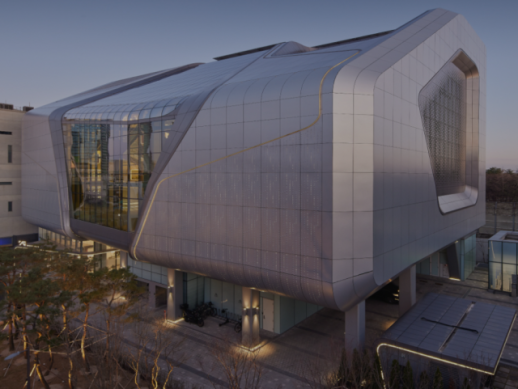 YG Entertainment shares rise on new album revenue SEOUL, August 07 (AJP) — Shares of YG Entertainment rose Friday after the K-pop agency reported a 31 percent jump in second-quarter operating profit, driven by new releases from its groups TREASURE and BABYMONSTER. As of 1:42 p.m., shares of the company were trading 1.11 percent higher at 41,050 won, after rising as much as 3.20 percent to an intraday high of 41,900 won. Operating profit for the April-June period rose 31.2 percent from a year earlier to 10.97 billion won ($7.3 million), according to a preliminary earnings filing with the Financial Supervisory Service (FSS) on Friday. Revenue rose 27.2 percent on year to 127.76 billion won, while net income fell 32.8 percent to 7.55 billion won. YG attributed the stronger results to album releases by TREASURE and BABYMONSTER, which also boosted sales of related merchandise, alongside continued demand for the artists’ digital content. Looking ahead, the company expects the growth trend to continue in the second half, supported by major artists as well as newer groups. BIGBANG, one of the best-known second-generation K-pop groups, will mark its 20th anniversary with a world tour spanning 33 shows across 19 cities, beginning with three concerts at Goyang Stadium, northwest of Seoul, from Aug. 21 to 23. BABYMONSTER is on its second world tour, covering South America, Oceania and Europe, while TREASURE is planning further overseas performances, including a Hong Kong show in September. YG also plans to debut a new boy group in September to support further growth. AJP Takeaways • YG Entertainment's second-quarter 2026 operating profit rose 31.2 percent year on year to 10.97 billion won ($7.3 million), while revenue increased 27.2 percent to 127.76 billion won. • YG Entertainment shares traded 1.11 percent higher at 41,050 won as of 1:42 p.m. on Aug. 7, 2026, after reaching an intraday high of 41,900 won. • YG Entertainment said releases from TREASURE and BABYMONSTER, related merchandise sales and demand for digital content helped drive second-quarter earnings growth. • BIGBANG will begin its 20th-anniversary world tour on Aug. 21, 2026, with the tour scheduled to span 33 shows across 19 cities. • YG Entertainment plans to debut a new boy group in September 2026 as it looks to sustain growth alongside ongoing activities by BABYMONSTER and TREASURE. 2026-08-07 14:44:25
 -
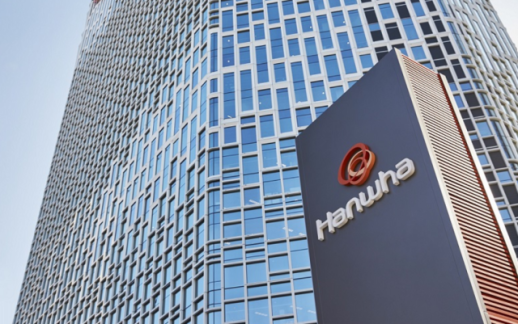 Hanwha Solutions and OCI shares benefit from U.S. solar curbs SEOUL, August 07 (AJP) —Shares of South Korean solar producers gained upside momentum after the United States erected new price and tariff barriers against low-cost polysilicon and solar imports, raising expectations that Korean producers could gain ground as Washington pushes more of the solar supply chain onto U.S. soil. As of 10:56 a.m., Hanwha Solutions was trading at 32,750 won, up 7.73 percent from the previous session. The stock had surged as much as 26.81 percent to an intraday high of 38,550 won shortly after the opening bell before trimming gains. OCI Holdings, another South Korean solar-materials producer seen as a potential beneficiary, rose 2.66 percent to 250,500 won after jumping as much as 18.24 percent to 288,500 won earlier in the session. The rally came after U.S. President Donald Trump signed a proclamation Thursday imposing minimum import prices on polysilicon and major solar products alongside a 15 percent tariff on downstream polysilicon derivatives under Section 232 of the Trade Expansion Act. The measures take effect Dec. 4. Washington set minimum import prices at $21 per kilogram for polysilicon, $100 per kilogram for ingots and wafers, 22 cents per watt for solar cells and 38 cents per watt for solar modules. Imports entering below those levels will face an additional charge equal to the gap between their declared value and the minimum price. In addition, ingots and downstream polysilicon derivatives will face a 15 percent tariff. The measures apply broadly rather than exclusively to China, but their biggest competitive impact is expected to fall on low-cost Chinese and China-linked supply chains that have come to dominate global solar manufacturing. The White House said global polysilicon production has increased more than 270 percent since 2020, while the U.S. share of global production capacity plunged from 50 percent in 2005 to less than 2 percent in 2024. For Hanwha Solutions, the advantage lies increasingly inside the United States. Its solar unit Hanwha Qcells is building out a vertically integrated manufacturing chain at its Cartersville complex in Georgia, covering ingots, wafers, cells and finished modules. Qcells began producing solar cells at the facility in June and expects the plant to reach annual capacity of 3.3 gigawatts each for ingots, wafers and cells and 3.5 GW for modules when fully operational. Together with its Dalton plant, Qcells expects its U.S. module capacity to reach 8.6 GW. That domestic footprint leaves Hanwha less exposed to import barriers than solar manufacturers dependent on bringing finished cells and modules into the United States and could give it greater pricing power as Washington raises the floor for imported products. The Trump administration is also offering incentives to companies willing to expand U.S. production of polysilicon, ingots, wafers and cells, potentially giving Hanwha another route to offset tariff costs as it deepens investment in its American supply chain. OCI Holdings stands to benefit from a different part of the new regime. Its Malaysian subsidiary OCI TerraSus produces polysilicon, which will be subject to the new $21-per-kilogram minimum import price but not the additional 15 percent tariff imposed on downstream products such as ingots, wafers, cells and modules. The price floor could help narrow the cost disadvantage faced by non-Chinese polysilicon makers against heavily discounted supply in the global market, increasing the relative appeal of OCI's Malaysian output to U.S. solar manufacturers seeking non-Chinese supply. The proclamation also gives special treatment to products from major U.S. trade partners including South Korea, Japan and the European Union. For covered Korean products, the combined existing U.S. tariff and additional Section 232 duty will be capped at 15 percent. Washington left room for further relief as well, allowing the Commerce Department and U.S. Trade Representative to modify the minimum-price and tariff measures for trading partners that adopt substantially equivalent import restrictions. The latest action marks a sharp turn from the uncertainty Korean solar companies faced before the Section 232 decision, when Seoul had urged Washington to avoid sweeping restrictions that could penalize Korean investment in the U.S. AJP Takeaways • Hanwha Solutions shares rose 7.73 percent to 32,750 won as of 10:56 a.m. on Aug. 7, 2026, after surging as much as 26.81 percent earlier in the session. • The United States will introduce minimum prices for polysilicon and key solar components and impose a 15 percent tariff on certain solar products starting Dec. 4, 2026. • Hanwha Solutions could benefit because its solar unit, Hanwha Qcells, produces key solar components in Georgia, reducing its exposure to U.S. import barriers. • OCI Holdings could also benefit because polysilicon produced by its Malaysian subsidiary Terasys will not face the new 15 percent tariff and will instead be subject to the minimum-price rule. • The measures could weaken the price advantage of Chinese solar suppliers in the U.S. market, improving the competitive position of Korean and other non-Chinese producers. 2026-08-07 11:47:45
 -
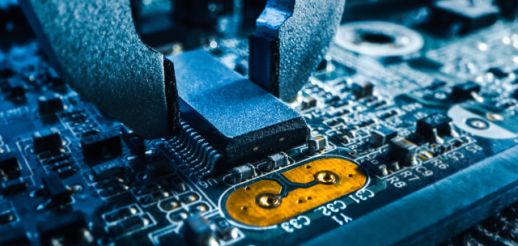 Semiconductor parts maker Dongwon Parts seeks KOSDAQ listing SEOUL, August 07 (AJP) — South Korean semiconductor parts maker Dongwon Parts has launched its initial public offering (IPO) process, seeking a KOSDAQ listing after a sharp rise in earnings driven by stronger demand from global chip equipment makers. The company said Friday it submitted a preliminary listing application to the Korea Exchange (KRX), with Samsung Securities serving as the lead underwriter. Revenue rose to 92.3 billion won ($64.7 million) last year from 59.5 billion won a year earlier, while operating profit jumped to 7.8 billion won from 1.1 billion won, as demand from global semiconductor equipment makers increased. Founded in 1997, Dongwon Parts manufactures parts used in semiconductor equipment for etching, deposition and cleaning — processes used to shape, build and clean the thin layers that make up semiconductor chips. Its main products include showerheads and chamber parts used inside chipmaking equipment. Showerheads spread gases evenly across semiconductor wafers during production, while chamber parts form part of the enclosed space where chips are processed. The company has not unveiled the names of its core clients. Using technology that drills tiny holes with high precision, Dongwon Parts supplies parts to major U.S. chip equipment makers, including Lam Research and Applied Materials. Direct exports and sales to global equipment makers account for 51 percent of its revenue. To support those customers, it handles most of the manufacturing process itself, from preparing and machining materials to assembling and inspecting finished products. Keeping these steps in-house allows the company to supply assembled modules and develop prototypes more quickly. The company plans to follow the standard listing process, backed by its earnings and global customer base. It will not use a special listing track that allows promising technology companies to go public even if they do not yet meet standard financial requirements. Cho Deok-hyung, CEO of the company, said rising investment in equipment used to produce AI chips, high-bandwidth memory (HBM) and more advanced chip packages is creating new opportunities for the company. “The KOSDAQ listing will help us strengthen our semiconductor parts business and expand into new industries using metal 3D printing technology,” he added. AJP Takeaways: • Dongwon Parts applied for preliminary approval to list on South Korea's KOSDAQ market on Aug. 7, 2026, formally launching its initial public offering (IPO) process. Samsung Securities is the lead underwriter. • Dongwon Parts recorded revenue of 92.3 billion won ($64.7 million) and operating profit of 7.8 billion won in 2025, up from 59.5 billion won and 1.1 billion won, respectively, in 2024. • Founded in 1997, Dongwon Parts makes parts for semiconductor equipment used in chipmaking processes such as etching, deposition and cleaning. Its customers include major U.S. chip equipment makers Lam Research and Applied Materials. • Dongwon Parts plans to pursue the standard KOSDAQ listing process and expand beyond semiconductor parts by using metal 3D printing technology in new industries. 2026-08-07 10:51:33
 -
 FSS to tighten rules on ELS products to protect investors SEOUL, August 6 (AJP) - As the South Korean stock market remains highly volatile with the benchmark KOSPI tumbling more than 4 percent on Thursday alone, market analysts expect a set of new government measures to protect investors in structured products unveiled the previous day to help contain market jitters while easing investor anxiety. The measures, outlined by the Financial Supervisory Service (FSS), followed three months of discussions with the Korea Financial Investment Association (KOFIA) and executives from the country's 10 largest securities firms after investors suffered heavy losses from equity-linked securities (ELS) products linked to Hong Kong's Hang Seng China Enterprises Index, which plunged and triggered large principal losses. The FSS' deputy governor Seo Jae-wan said the ELS losses exposed weaknesses in protecting investors, requiring preventive measures to address them. Under the measures, set to take effect gradually later this year, securities firms are required to send a one-time alert when the underlying asset of a high-risk ELS approaches within 10 percentage points of the knock-in barrier, the threshold at which principal losses may begin. The alert is intended to give investors more time to decide whether to continue holding the product or redeem it early. Securities firms will also be required to notify investors when early redemption becomes available and provide guidance to prevent automatic reinvestment in similar products. Before new products go on sale, it will be mandatory for securities firms to strengthen risk checks during the initial stage, establish clearer standards for selecting underlying assets, and assess whether products are exposed to excessive concentration or heightened market volatility. Consumer protection, compliance and sales departments will also be required to be more actively involved in the product approval process, while a chief consumer protection officer (CCO) will have the authority to delay products if they lack adequate investor safeguards. Securities firms will also need to provide clearer information when selling structured products. Summary documents should include annualized and actual returns, recent movements in underlying asset prices, and key features, such as issuers' early redemption rights, to help investors better understand the risks and possible returns. Post-sale monitoring will also be strengthened. High-risk products will be reviewed quarterly instead of annually, and reports to boards of directors will be required every six months rather than once a year. Securities firms will also set internal standards to detect and monitor potentially unsuitable sales, especially those involving elderly investors. KOFIA plans to revise its self-regulatory rules in September, and securities firms are expected to update their internal policies and establish systems for providing ELS risk alerts by year-end. AJP Takeaways: - South Korea's Financial Supervisory Service (FSS) announced new investor protection measures for structured products on Aug. 6, 2026, following heavy losses in equity-linked securities (ELS) tied to Hong Kong's Hang Seng China Enterprises Index. - Securities firms will be required to send investors a risk alert when the underlying asset of a high-risk ELS comes within 10 percentage points of its knock-in barrier, the threshold at which principal losses may begin. - The reforms strengthen oversight across the entire product lifecycle, including product design, approval, sales practices and post-sale monitoring, with stricter governance requirements for securities firms. - Sales documents will include clearer information on actual and annualized returns, recent underlying asset performance and key product features, including issuer early redemption rights, to help investors better understand risks. - The Korea Financial Investment Association (KOFIA) plans to revise its self-regulatory rules in September 2026, while securities firms are expected to complete the systems needed for ELS risk alerts by the end of 2026. 2026-08-06 17:49:45