

Journalist

Ryu Yuna류윤아
Julia37@ajupress.com
ReporterFinancial Supervisory Service (FSS) & finance, capital markets, Southeast Asian affairs
Yuna Ryu covers finance, capital markets and Southeast Asian affairs.
She is drawn to the questions that numbers raise and the stories that data alone cannot answer.
Prior to journalism, she worked at Hyundai Motor Company and the Singapore Chamber of Commerce, focusing on business strategy and international affairs. She has also hosted diplomatic receptions and international conferences as an MC.
Ryu holds a master's degree in Media and Communication from Korea University, where her research focused on neuroscience-based studies of media effects. "Beyond every statistic is a human story waiting to be heard."
Latest by Ryu Yuna
-
 Korean issues in short-term debt hit record high H1 SEOUL, August 04 (AJP) —South Korean companies increasingly turned to short-term borrowing in the first half as higher funding costs and a sluggish capital market outside the semiconductor sector pushed issuers away from longer-term financing. According to the Financial Supervisory Service (FSS) on Tuesday, companies raised a record 1,272.8 trillion won ($917 billion) through commercial paper (CP) and short-term notes during the January-June period, up 68 percent from a year earlier, while equity and corporate bond issuance fell 15.6 percent to 126.6 trillion won. Electronically registered short-term notes — debt securities with maturities of up to one year sold directly to investors — surged to a first-half record 990 trillion won ($713 billion), nearly doubling from a year earlier. Commercial paper, unsecured short-term promissory notes, also reached a record 282.7 trillion won, up 19 percent. The shift reflected growing reliance on short-term funding by both financial institutions and non-financial companies, which together issued an additional 441.9 trillion won in short-term debt from a year earlier. Issuance of asset-backed commercial paper also increased by 7.1 trillion won. Brokerages were among the biggest issuers as surging retail stock trading increased demand for margin financing and settlement funding. For non-financial companies, however, the move underscored the widening divide in corporate credit markets. With long-term borrowing costs remaining elevated, lower-rated issuers increasingly opted for shorter maturities instead of locking in expensive bond financing. According to the Korea Financial Investment Association, yields on three-year BBB-minus unsecured corporate bonds stood at 10.258 percent, more than double the 4.462 percent yield for AA-minus issuers. The sharp funding premium effectively shut many lower-rated borrowers out of the long-term bond market. The deterioration was also evident in direct financing. Total equity and corporate bond issuance dropped 15.6 percent from a year earlier to 126.6 trillion won, driven largely by weaker corporate bond issuance. Equity fundraising fell 29.6 percent to 2.98 trillion won as initial public offerings declined to 28 from 42 a year earlier and most listings were relatively small. Rights offerings also dropped 29.5 percent to 1.96 trillion won because there were fewer large capital raisings exceeding 100 billion won. Corporate bond issuance declined 15.2 percent to 123.6 trillion won. Corporate bond sales plunged 31.5 percent to 25.9 trillion won, primarily because companies issued fewer refinancing bonds. Refinancing dominated issuance. Debt rollovers accounted for 72.9 percent of proceeds, while only 23.6 percent funded operating expenses and just 3.6 percent financed capital investment, highlighting limited appetite for new investment despite improving economic growth. Financial bond issuance fell 7.2 percent overall as weaker issuance by non-bank financial institutions offset modest increases by banks and financial holding companies. Asset-backed securities issuance also declined 30.6 percent to 7.3 trillion won. 2026-08-04 13:15:28
-
 KOSPI slides after historic rally as chip stocks plunge SEOUL, August 3 (AJP) - South Korea's stock market tumbled on Monday, with Samsung Electronics and SK hynix both sinking more than 8 percent, sending the country's benchmark KOSPI back below 6,300 points. The decline erased much of Friday's historic rebound, which proved short-lived. The index closed 5.12 percent lower at 6,257.45 as foreign and institutional investors extended heavy selling despite aggressive buying by retail investors. Individuals snapped up a net 4.65 trillion won (US$3.3 billion) worth of shares, but it was not enough to offset net sales of 1.95 trillion won by institutions and 2.83 trillion won by foreign investors. Foreign investors also remained net sellers in the KOSPI 200 futures market, adding pressure to the broader index. The junior KOSDAQ, however, bucked the broader downward trend, rising 2.44 percent to 737.35 as investors shifted buying toward biotechnology and robotics shares. The decline came even after U.S. investment bank Morgan Stanley took a favorable stance, raising its rating on South Korean equities from "equal weight" to "overweight," indicating a more positive outlook and its view that South Korean stocks could outperform. It said the recent market turmoil was mainly caused by technical factors rather than a deterioration in corporate fundamentals. The bank said much of the recent deleveraging had already run its course, with the wave of forced selling largely over, and reiterated its year-end KOSPI target of 9,000. The market, however, remained under pressure from short-term profit-taking following last Friday's record-setting rally, when the KOSPI surged 17.91 percent on strong foreign buying and growing optimism over global investment in artificial intelligence (AI). Samsung Electronics plunged 8.76 percent to 239,000 won, while SK hynix tumbled 8.79 percent to 1,567,000 won. The South Korean won also weakened, with the dollar trading at 1,430.8 won, up from 1,424.0 won in the previous session, as foreign investors continued selling domestic stocks. Despite the sharp pullback in semiconductor leaders, the broader AI supply chain remained more resilient. Samsung Electro-Mechanics rose 3.42 percent to 1,181,000 won, while Hyosung Heavy Industries gained 3.23 percent to 2,495,000 won and LS Electric added 1.95 percent to 188,400 won. Hyundai Motor rose 1.29 percent to 393,000 won as investors rotated into robotics plays after the United States tightened restrictions on Chinese robot imports, fueling expectations that Korean companies could gain market share. Affiliate Hyundai AutoEver surged 4.94 percent to 382,500 won while Hyundai Mobis climbed 3.68 percent to 493,500 won. Doosan also jumped 5.81 percent after investors welcomed its planned acquisition of SK Siltron. Sentiment was further boosted after Eugene Investment & Securities raised its target price, citing stronger long-term growth prospects from the deal. The divergence was even more pronounced on the KOSDAQ, where biotechnology and robotics stocks extended recent gains. Alteogen climbed 2.92 percent to 317,500 won, HLB added 0.98 percent to 30,900 won and Rainbow Robotics gained 5.89 percent to 458,500 won. Among the day's biggest movers, ALT, an AI media and telecommunications device maker, rose 29.97 percent to 1,492 won. Wonik Holdings, a semiconductor and display materials company surged 29.97 percent to 19,860 won, Cosmo Robotix jumped 21.30 percent to 17,880 won and home appliance maker Winix soared 21.45 percent to 5,860 won. The KOSDAQ's strength triggered a buy-side sidecar for the second consecutive session during morning trading, signaling continued investor demand for high-growth sectors even as large-cap semiconductor shares declined. Across Asia, Japan's Nikkei 225 fell 0.94 percent to 63,754.90 as a stronger yen weighed on exporters and technology stocks, while China's Shanghai Composite slipped 0.59 percent to 3,809.66. Hong Kong's Hang Seng Index bucked the regional trend, rising 0.30 percent to 25,962.22 supported by bargain hunting in technology shares after recent market volatility. 2026-08-03 17:50:24
-
 Korea's 40C heat sends KOSDAQ-listed cooling appliance stocks soaring SEOUL, August 03 (AJP) — Cooling appliance stocks on South Korea's junior KOSDAQ market rallied Monday as record-breaking heat and prolonged tropical nights fueled demand for air conditioners, fans and dehumidifiers. Winix, which manufactures dehumidifiers and other home appliances, jumped 21.45 percent to close at 5,860 won. Paseco and Shinil Electronics, both known for electric fans and seasonal home appliances, gained 10.44 percent and 3.56 percent, respectively. SPG, a motor manufacturer whose products are widely used in cooling appliances and industrial equipment, rose 14.90 percent. The gains came as the country experienced one of its most severe heat waves on record, with temperatures climbing above 40 degrees Celsius in some areas. Investors piled into shares of cooling appliance makers on expectations that demand would remain strong despite broader market volatility. Early consumer data also suggest that demand is accelerating. According to the Korea Consumer Agency, inquiries about air conditioners in June surged 111 percent from the previous month, while those for electric fans climbed 109 percent. Forecasters expect the heat wave to continue. The Korea Meteorological Administration (KMA) warned on Monday that "parts of the Jeolla and Gyeongsang regions are expected to experience life-threatening levels of extreme heat, with maximum temperatures reaching 39 degrees Celsius." The agency issued its highest-level heat warnings for parts of South Jeolla and South Gyeongsang provinces. The agency urged people to avoid unnecessary outdoor activities, stay in air-conditioned places and remain hydrated. It also advised people to check on family members, neighbors and elderly people living alone, and to call emergency services if anyone shows signs of heat-related illness. 2026-08-03 16:22:20
-
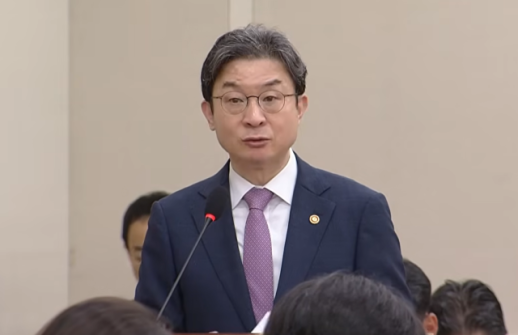 Seoul weighs flexible leverage ratios as ETF turmoil prompts broader reforms SEOUL, August 03 (AJP) — South Korea is preparing legislation that would give regulators the authority to lower leverage ratios on single-stock leveraged exchange-traded funds (ETFs) during market turmoil. According to financial authorities on Sunday, the Financial Services Commission (FSC) is drafting amendments to the Financial Investment Services and Capital Markets Act, the country's primary law governing capital markets and investment products, to establish a legal basis for swift market-stabilization measures during periods of extreme volatility. The proposed changes would allow regulators to lower the current two-times leverage ratio of single-stock leveraged ETFs when needed. Existing rules require investor approval before any change can be made, limiting the authorities' ability to respond swiftly when markets come under stress. Authorities are drawing on Hong Kong's newly introduced variable leverage ratio framework, which allows leverage to be adjusted within a predetermined range according to market conditions. FSC Chairman Lee Eog-weon said lowering leverage could help reduce volatility, adding that investor protection and legal safeguards would be taken into account when drafting the legislation. Beyond leverage adjustments, officials are considering further steps to curb speculative trading. These include capping investment in single-stock leveraged ETFs at around 20 percent of an individual's investment portfolio, requiring investors to complete simulated trading before buying the products, raising the current 30 million won ($21,600) minimum cash deposit requirement, and allowing temporary trading restrictions or suspensions during periods of severe market stress. For now, any changes to leverage ratios are not expected to take effect immediately. In the meantime, regulators will first assess the impact of measures introduced on July 31 before deciding whether additional restrictions are necessary. Early indications suggest the existing measures are already having an impact. On July 31, the first day the higher minimum cash deposit requirement took effect, turnover in single-stock leveraged ETFs fell to about 3 trillion won from roughly 12.4 trillion won a day earlier. The impact is also spilling over into the broader ETF market. The Korea Exchange has told asset managers that reviews of new ETF listing applications may take longer than usual this month. While new applications are still being accepted, delays in the review process could postpone the launch of new ETF products. Meanwhile, global investment bank Morgan Stanley struck a more bullish tone on South Korea despite another sharp market decline. With the KOSPI down about 5 percent at 6,264.89 on Monday afternoon, the investment bank upgraded South Korean equities to "Overweight," arguing that the recent unwinding of leveraged positions had eased valuation pressures and created an attractive entry point for investors seeking exposure to the artificial intelligence (AI) trade and the semiconductor supercycle. It said the KOSPI could eventually reach 9,000, implying about 36 percent upside from current levels. The dramatic market swings also drew political attention. Jeong Jeom-sig of the conservative People Power Party (PPP) on Sunday called for a parliamentary investigation into the recent stock market turmoil, arguing that the KOSPI's 16.17 percent two-day plunge followed immediately by a 17.91 percent one-day rebound reflected abnormal market conditions and called for a thorough investigation. "The stock market has been turned into something resembling a casino," he said. "We propose a parliamentary investigation to determine what caused the recent market turmoil." 2026-08-03 15:54:13
-
 KOSDAQ robot stocks rise on U.S. curbs targeting Chinese rivals SEOUL, August 03 (AJP) — Robot stocks on South Korea's junior KOSDAQ market extended their gains Monday after the United States tightened restrictions on Chinese-made robots, while Samsung Electronics' expanded push into robotics reinforced expectations for long-term industry growth. TXR Robotics, which develops warehouse automation and logistics robots, jumped 29.93 percent to 17,450 won ($12.60), hitting the daily trading limit. SPG, a maker of precision motors and gear reducers for industrial and service robots, gained 9.62 percent to 103,700 won, while Rainbow Robotics, known for its humanoid and collaborative robots, rose 5.77 percent to 458,000 won. The rally built on momentum that began after Samsung unveiled its expanded robotics strategy in late July. Although the sector briefly pulled back during broader technology-driven market selloffs on July 24 and 28, buying interest remained resilient as investors continued to focus on the sector's long-term growth prospects. Adding to that momentum, last week's U.S. Federal Communications Commission (FCC) decision to tighten approval rules for new foreign-made humanoid and four-legged robots further lifted sentiment. The FCC said the restrictions are intended to protect national security by preventing connected robots from collecting sensitive data or disrupting critical infrastructure if hacked. The tighter U.S. rules are expected to make it more difficult for Chinese robot makers to expand in the American market, potentially opening new opportunities for Korean manufacturers. However, analysts cautioned that the extent of any benefit will depend on how broadly the measures are implemented and whether local companies can strengthen their presence in North America. Samsung's recent organizational overhaul also underscored its commitment to robotics as a future growth business. The company upgraded its robotics task force into a dedicated business unit and established a Future Robotics Division to oversee investments and strategy for next-generation robots, including humanoid, medical and logistics robots. The division also brings together a former Boston Dynamics strategy executive and a robotics professor from Seoul National University. Analysts said the restructuring could accelerate decision-making and encourage broader investment across the country's robotics ecosystem. They also expect several developments later this year — including Tesla's planned expansion of Optimus humanoid robot production, updates from Boston Dynamics and a possible unveiling of Samsung's own humanoid robot — to keep investor attention on the sector. Separately, TXR Robotics said Monday it had developed a loop-type tilt tray sorter, an automated system that sorts packages in logistics centers, providing an additional boost to investor sentiment. 2026-08-03 11:33:50
-
 Brokerage sees long-term buying opportunity in KOSDAQ's Ecopro BM SEOUL, August 03 (AJP) — Shares of South Korean battery materials maker Ecopro BM fell more than 11 percent on Monday after Hana Securities slashed its target price by 40 percent, but the brokerage argued the selloff has already priced in most near-term risks, leaving room for a recovery as long-term battery demand strengthens. The brokerage cut its target price to 154,000 won ($111) from 257,000 won, saying demand is expected to remain weak as major European customers delay new electric-vehicle projects until at least the first half of next year. It also pointed to weaker demand in North America's energy storage system (ESS) market. One of the company’s major customers is now buying nickel-cobalt-aluminum (NCA) battery materials from multiple suppliers instead of relying on a single company, a shift that is expected to reduce Ecopro BM's sales. Reflecting the weaker near-term outlook, the brokerage said third-quarter revenue is expected to reach 539.8 billion won ($389 million), down 6 percent from the previous quarter and 14 percent from a year earlier, while operating profit is expected to fall to 13.2 billion won, down 27 percent from the previous quarter and 74 percent from a year earlier. The earnings slowdown has also reduced its earnings per share (EPS) to 585 won, pushing its trailing price-to-earnings (P/E) ratio to 161.2. Ecopro BM, which was spun off from parent company Ecopro in 2016, makes high-nickel cathode materials used in lithium-ion batteries for electric vehicles and energy storage systems. It has been a key supplier to the fast-growing battery industry as global demand for EVs and energy storage continues to expand. Despite the near-term challenges, Hana securities said investors should look beyond the current earnings slowdown. The brokerage expects orders set to begin contributing from 2028 are expected to drive a strong recovery in annual earnings, while battery stocks have historically been valued based on profits expected two to three years ahead rather than current results. It added that the current share price already reflects most of the downside risks while failing to fully account for the company's long-term earnings potential, making the recent weakness a buying opportunity for long-term investors. 2026-08-03 10:13:17
-
 Record foreign buying sends Seoul's chip titans to daily limit SEOUL, July 31 (AJP) — South Korea's stock market staged one of the most dramatic reversals in its history Friday as record foreign buying and twin near-30 percent surges in Samsung Electronics and SK hynix erased days of panic selling, signaling that global investors remain convinced the artificial-intelligence investment boom is far from over. Foreign investors snapped up a record 7.18 trillion won ($5.2 billion) worth of KOSPI shares, fueling the benchmark index's 17.91 percent rally to 6,595.45 and adding about 834 trillion won to the market's capitalization in a single session. The tech-heavy KOSDAQ jumped 11.63 percent to 719.76. Institutions added another 1.18 trillion won, while retail investors booked profits, selling a net 8.25 trillion won. The buying was overwhelmingly concentrated in semiconductors, with SK hynix attracting a record 3.6 trillion won in foreign purchases, after drawing nearly 5 trillion won earlier in the day. SK hynix soared 29.95 percent to 1,718,000 won, locking at the daily upper limit and marking its biggest one-day gain since Korea widened daily trading bands to 30 percent in 2015. Samsung Electronics surged 26.81 percent to 262,500 won, the largest single-day advance in the company's history. The rally spread rapidly across Korea's semiconductor ecosystem. Samsung Electro-Mechanics climbed 29.92 percent, while SK Square, SK hynix's largest shareholder, jumped 29.91 percent to its daily ceiling. Hanmi Semiconductor, Jusung Engineering and numerous chip-equipment makers also rallied sharply as investors poured money into companies tied to AI infrastructure. According to Korea Exchange data, the semiconductor and semiconductor-equipment sector surged 28.4 percent, the strongest performance among all industries. Electronics equipment advanced 26.7 percent, electrical equipment gained 21.2 percent, telecommunications equipment rose 15.0 percent, while display equipment and components climbed 11.8 percent. The catalyst arrived overnight from Wall Street. Microsoft reassured investors by maintaining plans to spend roughly $190 billion on AI infrastructure this year, saying Azure cloud demand continues to outstrip available computing capacity despite record investment. A day later, Amazon reinforced that message by lifting its planned 2026 capital expenditure to about $220 billion from $200 billion, after reporting its fastest Amazon Web Services growth in more than four years. Chief Executive Andy Jassy said demand for AI computing remains well ahead of available capacity and that much of the company's future cloud infrastructure has already been reserved. Together, the earnings reports effectively dispelled growing concerns that hyperscale AI investment was beginning to slow after months of unprecedented spending. The reversal was particularly striking because it came only days after one of the steepest selloffs Korean semiconductor stocks had experienced in years. Earlier this week, fears over China's rapidly expanding memory-chip industry, questions about whether hyperscalers would curb AI spending, and forced deleveraging tied to single-stock leveraged ETFs triggered a foreign exodus from Korean equities. SK hynix and Samsung Electronics together lost hundreds of trillions of won in market value as hedge funds unwound positions and leveraged products accelerated selling pressure. Friday suggested global investors had reached the opposite conclusion. Rather than viewing recent volatility as the start of an AI downturn, overseas funds treated the correction as a buying opportunity, returning to the companies they see as indispensable suppliers to the world's AI infrastructure expansion. The breadth of the rally also reflected confidence that AI spending extends well beyond memory chips. Continued investment in AI data centers is expected to support demand for high-bandwidth memory and conventional DRAM while driving fresh orders for advanced packaging, semiconductor manufacturing equipment, precision components and electronic materials throughout Korea's supply chain. More broadly, Friday's record inflows underscored how closely Seoul's fortunes have become tied to Wall Street's AI trade. Microsoft and Amazon's earnings immediately translated into the largest foreign buying spree in Korean stock-market history, highlighting Samsung Electronics and SK hynix's increasingly central position in the global AI supply chain. According to Rayliant Global Advisors, the 60-day correlation between the KOSPI and the Nasdaq 100 has climbed to roughly 0.50, the highest level since 2021, as Korean equities increasingly move in tandem with expectations for U.S. hyperscaler AI investment rather than traditional domestic economic drivers. The rally also highlighted a valuation paradox. Despite generating operating margins of around 70 percent at Samsung Electronics' semiconductor division and more than 76 percent at SK hynix, the two companies continue to trade at valuation multiples well below many global AI beneficiaries that produce only a fraction of their profits. Friday's spectacular rebound therefore represented more than a relief rally after a week of forced selling. It marked a renewed vote of confidence that the AI infrastructure build-out remains intact and reaffirmed South Korea's position at the heart of that investment cycle. For global investors, Seoul is increasingly no longer simply an export-driven market tied to China or consumer electronics. It has become one of the world's clearest proxies for the AI supercycle, where Wall Street's commitment to spend hundreds of billions of dollars on artificial intelligence can trigger record capital flows into Korean semiconductor stocks overnight. 2026-07-31 16:45:42
-
 ETF boom pushes public funds to overtake private funds for 1st time SEOUL, July 31 (AJP) - South Korea's public investment funds overtook private funds in total assets for the first time in the first half of this year, driven by surging demand for exchange-traded funds (ETFs) as retail investors poured money into the stock market. According to the Korea Financial Investment Association (KOFIA) on Friday, public funds jumped 47.3 percent from the end of last year to 897.4 trillion won (US$646 billion), while private funds grew 9.2 percent to 837.1 trillion won. As a result, public funds accounted for 51.7 percent of the overall fund market, up from 44.3 percent six months earlier, overtaking private funds for the first time. The broader fund market also expanded rapidly. Total assets under management in domestic public and private funds reached 1,735 trillion won ($1.25 trillion) at the end of June, up 26 percent from the end of last year. The increase more than doubled the 11.4 percent growth recorded in the previous six months. The turnaround was driven largely by ETFs, which are publicly traded investment funds that track stocks, bonds or other assets and can be bought and sold like shares. ETF assets surged 72.4 percent to 512.4 trillion won during the six-month period, far outpacing the 23.3 percent growth recorded by public funds excluding ETFs. ETFs accounted for 57.1 percent of public fund assets at the end of June, up from 48.8 percent six months earlier. Equity ETFs led the expansion, with assets more than doubling to 326.3 trillion won, while derivative ETFs increased 52.4 percent to 104.8 trillion won. The ETF boom also reinforced investors' preference for domestic assets. Assets invested in South Korea rose 30.4 percent to 1,137 trillion won at the end of June, lifting their share of total fund assets to 65.6 percent from 63.4 percent six months earlier. South Korean equity funds more than doubled to 282.9 trillion won, rising 125.2 percent. Overseas investment funds also expanded, though at a slower pace, growing 18.5 percent to 597.1 trillion won. The trend was equally evident in fresh money entering the market. Net inflows totaled 126.3 trillion won during the first half, including 96.9 trillion won into public funds and 29.3 trillion won into private funds. Equity funds attracted the largest inflows at 50.9 trillion won, followed by money market funds (MMFs) with 28.4 trillion won, derivative funds with 12.2 trillion won and balanced funds with 10.6 trillion won. Bond funds were the only category to post net outflows, with about 3 trillion won leaving the sector. 2026-07-31 14:07:33
-
 Chip bonanza translates into tax bumper for Seoul SEOUL, July 31 (AJP) -South Korea's stock boom, which saw the main index KOSPI double in the first half, has delivered an unexpected windfall for government coffers, lifting tax revenue by 33 trillion won ($23.8 billion) above last year's level as trading activity, corporate profits and performance bonuses surged. National tax revenue reached 223 trillion won in the January-June period, up 17.4 percent from a year earlier, according to the Ministry of Economy and Finance on Friday. The collection pace reached 53.7 percent of this year's supplementary budget target of 415.4 trillion won and is the second-highest first-half collection ratio in the past five years. The bumper tax haul was driven primarily by a surge in securities transaction taxes, income taxes and corporate taxes as the AI-fueled rally in semiconductor and technology shares spilled over into the broader economy. Securities transaction tax revenue more than quadrupled to 6.8 trillion won, an increase of 5.2 trillion won, or 338.7 percent, from a year earlier. Listed share trading value ballooned to 1,911 trillion won in May, nearly five times the 390 trillion won recorded a year earlier, while the restoration of the securities transaction tax rate further boosted receipts. The related rural development tax also climbed 175.1 percent to 10.1 trillion won, reflecting the sharp rise in KOSPI trading volumes. Income tax receipts increased 10.4 trillion won, or 15.9 percent, to 75.7 trillion won, supported by larger performance bonuses, higher payrolls and increased capital gains taxes as housing transactions recovered. Corporate tax revenue rose 9.6 percent to 49.3 trillion won on improving corporate earnings, while value-added tax collections increased 12.2 percent to 44.8 trillion won, helped by stronger imports and lower tax refunds. Customs duties also rose 5 percent from a year earlier as import values expanded. The ministry said the first-half figures have yet to reflect the record profits now being generated by South Korea's semiconductor industry. "Semiconductor-related operating profits and the performance bonuses associated with them have not yet been reflected in tax revenue," a ministry official said. "They will begin to be incorporated through August's interim corporate tax payments." That suggests the government's tax windfall could grow further in the second half as Samsung Electronics and SK hynix book combined second-quarter operating profits of around 150 trillion won, equivalent to roughly 6 percent of South Korea's annual nominal GDP. 2026-07-31 13:24:21
-
 SK's Chey buys first SK hynix stake before 20% rebound SEOUL, July 31 (AJP) —SK Group Chairman Chey Tae-won made his first direct purchase of SK hynix shares just one day before the AI memory giant rebounded more than 20 percent, turning his buy-the-dip move into an immediate paper gain. A regulatory filing with the Financial Supervisory Service on Thursday showed Chey purchased 3,620 common shares of SK hynix earlier in the day at an average price of 1,353,677 won per share. The investment was worth about 4.9 billion won ($3.5 million) based on the purchase price. By 10:50 a.m. Friday, SK hynix had surged to 1,613,000 won, lifting the value of the stake to roughly 5.84 billion won and generating an unrealized gain of nearly 940 million won in less than a day. The filing marked Chey's first reported direct holding in the world's second-largest memory chipmaker. The stake represents less than 0.01 percent of the company's 730.5 million outstanding shares. The purchase came after a steep correction in South Korea's semiconductor sector. SK hynix and other AI-linked chipmakers have been under heavy selling pressure since late June as investors questioned whether the pace of global artificial intelligence infrastructure spending could be sustained. The selloff was amplified by heightened volatility following the launch of single-stock leveraged exchange-traded funds tied to major semiconductor companies. The market rebounded sharply Friday as foreign investors returned to semiconductor stocks after a strong rally in U.S. technology shares overnight and growing expectations that hedge-fund deleveraging had largely run its course. Chey had already signaled confidence in the industry's long-term prospects. Speaking at the Korea Chamber of Commerce and Industry's Jeju Forum on July 17, he said memory demand would continue to expand despite near-term market swings. "Memory demand will continue to grow, so the stock should rise over the long term," Chey said. "Rather than buying and selling repeatedly, simply holding shares is a better way to preserve wealth." The latest purchase appears to reinforce that conviction, with Chey personally adding SK hynix shares during one of the sector's sharpest corrections before the stock staged a powerful rebound. 2026-07-31 10:53:10