

Journalist

Ryu Yuna류윤아
Julia37@ajupress.com
ReporterFinancial Supervisory Service (FSS) & finance, capital markets, Southeast Asian affairs
Yuna Ryu covers finance, capital markets and Southeast Asian affairs.
She is drawn to the questions that numbers raise and the stories that data alone cannot answer.
Prior to journalism, she worked at Hyundai Motor Company and the Singapore Chamber of Commerce, focusing on business strategy and international affairs. She has also hosted diplomatic receptions and international conferences as an MC.
Ryu holds a master's degree in Media and Communication from Korea University, where her research focused on neuroscience-based studies of media effects. "Beyond every statistic is a human story waiting to be heard."
Latest by Ryu Yuna
-
 Seoul weighs individual cap if leveraged ETF speculation persists SEOUL, July 28 (AJP) —South Korea is considering imposing an individual investment cap on single-stock leveraged exchange-traded funds (ETFs) should speculative trading persist despite recent market stabilization measures, the country's financial chief said Tuesday. Financial Services Commission Chairman Lee Eog-weon said authorities will first assess whether tighter rules taking effect Friday, including a higher minimum cash deposit requirement, are sufficient to cool speculative demand. If investor appetite remains elevated, additional measures are being prepared, he said. One proposal under review would limit investment in single-stock leveraged ETFs to no more than 20 percent of an individual's total financial investment portfolio. Authorities are also considering requiring investors to complete simulated trading, undergo periodic training and demonstrate a minimum level of investment experience before being allowed to trade the products. Lee made the remarks during a meeting with major securities firms serving as liquidity providers (LPs), including Korea Investment & Securities, NH Investment & Securities and Kiwoom Securities, as well as leading asset managers such as Samsung Asset Management, Mirae Asset Global Investments, KB Asset Management and Shinhan Asset Management. He also urged asset managers to spread ETF rebalancing trades more evenly throughout the trading day rather than concentrating orders near the market close, saying end-of-day rebalancing has amplified market volatility. "While rebalancing earlier in the trading day could increase tracking error or return uncertainty, it could also reduce closing-price volatility, curb front-running and lower operational risks," Lee said. Turning to liquidity providers, Lee noted that some single-stock leveraged ETFs have attracted more than 20 LPs, fueling trading among LPs themselves and increasing arbitrage activity. Rather than introducing prescriptive regulations, authorities expect liquidity providers to reduce unnecessary trading by adjusting the size, frequency and timing of their quotes within existing pricing parameters, he said. The meeting followed the FSC's July 16 package of market stabilization measures aimed at reducing volatility in single-stock leveraged ETFs. The package suspended new product launches and advertising, moved forward the introduction of a 30 million won ($21,000) minimum cash deposit requirement to July 31, strengthened mandatory investor education with tougher assessments and an additional one-hour training session, and tightened rules governing ETF price deviations, which are scheduled to take effect on Aug. 19. Lee said the measures were introduced after demand for the products grew far faster than expected as volatility in semiconductor stocks intensified following the launch of single-stock leveraged ETFs, fueling speculative trading and sharp swings in the broader market. 2026-07-28 13:28:46
-
 KOSPI rebounds as AI bets outweigh China memory threat SEOUL, July 27 (AJP) — South Korean stocks rebounded Monday after investors looked past the blockbuster debut of Chinese memory chipmaker CXMT and instead focused on fresh artificial intelligence (AI) partnerships, allowing chip shares to recover from early declines. The benchmark KOSPI closed at 6,755.75, up 0.97 percent after reversing an early decline triggered by more than 2 trillion won in foreign selling. The junior KOSDAQ outperformed, rising 2.22 percent to 764.86. The session opened on a cautious note as investors reacted to CXMT's record-breaking Shanghai debut, which briefly made the Chinese DRAM maker the largest company on the mainland by market capitalization. The listing reignited concerns that China's rapid expansion in memory chips could intensify competition for Samsung Electronics and SK hynix. CXMT raised nearly 58 billion yuan through its initial public offering (IPO), with the proceeds expected to increase further if an overallotment option is fully exercised. The fresh capital is expected to accelerate investment in high-bandwidth memory (HBM) and other AI-related memory technologies, raising fears that the company could narrow the technology gap with global industry leaders over time. The uncertainty initially weighed on semiconductor shares, with the KOSPI briefly falling about 0.7 percent as foreign investors stepped up selling. Sentiment, however, improved through the afternoon as attention shifted from competitive risks to the longer-term outlook for AI infrastructure spending, with weekend announcements from the AI Summit in Silicon Valley further supporting risk appetite. Samsung Electronics signed a memorandum of understanding (MOU) with Broadcom covering potential cooperation worth up to $200 billion over five years, while SK hynix secured letters of intent for long-term memory supply agreements totaling $750 billion with customers including Nvidia and Microsoft. The renewed optimism helped chipmakers reverse course by the close. Samsung Electronics climbed 1.8 percent to 254,000 won and SK hynix gained 3.24 percent to 1,816,000 won. Among other large-cap stocks, Samsung Biologics rose 1.78 percent to 1,545,000 won, LG Energy Solution gained 1.06 percent to 333,000 won and KB Financial Group added 0.64 percent to 172,600 won. SK Square fell 1.17 percent despite the broader rebound in chip-related shares. Internet platform operator Naver jumped 8.43 percent to 225,000 won after announcing a roughly $1 billion private placement to Nvidia alongside a plan to cancel about 1 trillion won worth of treasury shares. LG Electronics climbed 1.83 percent to 172,300 won after saying its liquid-cooling solution for AI data centers had obtained Nvidia certification, while LG CNS also advanced more than 3 percent. Defense stocks underperformed after disappointing earnings from Hyundai Rotem heightened concerns over future order momentum. Hanwha Aerospace tumbled 8.17 percent to 899,000 won. The KOSDAQ outperformed as investors also welcomed President Lee Jae Myung's meetings with leading Silicon Valley venture capital firms, raising expectations for greater overseas funding for Korean startups. Robotics developer Rainbow Robotics jumped 6.57 percent to 446,000 won, while semiconductor equipment maker Jusung Engineering climbed 6.31 percent to 149,900 won and chip equipment supplier Wonik IPS gained 5.47 percent to 106,000 won. Biopharmaceutical developer Alteogen rose 3.83 percent to 312,000 won, battery materials makers EcoPro and EcoPro BM advanced 3.20 percent and 2.03 percent to 80,600 won and 110,500 won, respectively, while drug developers HLB and ABL Bio edged up 0.48 percent and 0.28 percent. The Korean won weakened against the U.S. dollar, with the greenback trading at 1,469.80 won as of the market close, up from Friday's close of 1,466.60 won, as foreign investors remained net sellers despite the recovery in equities. Analysts also continued to monitor the impact of tighter regulations on single-stock leveraged exchange-traded funds (ETFs), which will take effect on Friday. Meritz Securities said higher minimum deposit requirements and the exclusion of substitute securities from deposit calculations are likely to reduce speculative turnover, although trading in Samsung Electronics- and SK hynix-linked leveraged ETFs remains elevated. The brokerage said persistent concentration in the two chipmakers could leave the broader market more vulnerable to liquidity swings. Seoul's recovery was broadly mirrored across the region. Japan's Nikkei 225 added 0.66 percent to 65,038.00, while China's Shanghai Composite rose 1.15 percent to 3,858.25 as investors cheered CXMT's landmark debut. Hong Kong's Hang Seng Index also gained 1.11 percent to 25,241.00. Investors are now turning their attention to a packed week of corporate earnings and policy decisions. SK hynix is scheduled to report earnings on Wednesday, followed by Samsung Electronics the next day, with investors watching whether management can ease concerns that the memory upcycle is nearing its peak. Earnings from Microsoft, Meta and Amazon, along with the Federal Reserve's July policy meeting, are expected to provide further direction on AI spending and interest rates. 2026-07-27 16:48:05
-
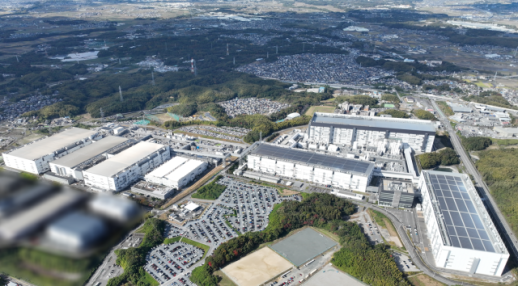 Korea's AI chip ETF frenzy poised to spread to Tokyo SEOUL, July 27 (AJP) —The chip-linked leveraged ETF frenzy that turned South Korea into a proving ground for AI-fueled speculative trading is poised to spill over to Japan. U.S. asset managers are seeking to launch the first single-stock leveraged exchange-traded funds tied to Japanese chipmaker, modeled after single-stock instruments on Samsung Electronics and SK hynix to ride on the AI chip fever. According to Bloomberg on Monday, U.S. firms including Kogi Strategies, GraniteShares and Turtle Capital have filed to list leveraged and inverse ETFs tracking Kioxia shares and its American depositary receipts. At least nine products, including 2x leveraged and inverse ETFs linked to Kioxia, are currently under review by U.S. regulators. If approved, the products would mark the first U.S.-listed single-stock leveraged ETFs based on a Japanese company. Supporters expect strong demand for the products as investors continue to pour into AI-related stocks, while critics warn they could further amplify volatility. The concern stems from the way leveraged ETFs operate. Because the funds must rebalance their positions at the end of each trading day to maintain their target exposure, those large trades can add to market volatility and make price swings bigger. "The experience in South Korea shows that leveraged ETFs distort normal market mechanisms and significantly increase volatility," Andrew Jackson, head of Japanese equity strategy at Ortus Advisors, told Bloomberg. He added that such products could further fuel speculative trading in AI-related shares and create a more challenging environment for long-term investors. Bloomberg pointed to South Korea as a recent example. Rapid growth in leveraged ETFs tied to Samsung Electronics and SK hynix was followed by wider market swings, prompting regulators to suspend approvals for new single-stock leveraged ETFs. The debate also come as Kioxia has become one of Japan's most volatile large-cap stocks. After briefly becoming the country's most valuable listed company during the AI rally, its shares have fallen about 42 percent over the past month to 51,350 yen on Monday and are down about 3.3 percent over the past five trading days. Meanwhile, U.S. issuers are also targeting other major Japanese stocks. Turtle Capital has also filed for leveraged ETFs tied to SoftBank Group, Nintendo and bitcoin-focused Metaplanet. Direxion and Themes ETF Trust are separately seeking similar products linked to Tokyo Electron, Toyota Motor and Lasertec. 2026-07-27 15:18:53
-
 Silicon Valley VC courtship lifts KOSDAQ on hopes for startup capital SEOUL, July 27 (AJP) — President Lee Jae Myung's Silicon Valley outreach to some of the world's most influential venture capital firms gave South Korea's startup-heavy KOSDAQ a lift on Monday, even as enthusiasm surrounding his AI diplomacy over the weekend failed to spill over to the broader stock market. While headlines focused on Lee's meetings with Nvidia, Broadcom and other technology giants, Monday's attention shifted to his separate gathering with six leading U.S. venture capital firms, fueling expectations that Korean startups could gain greater access to global funding. The benchmark KOSPI traded lower as investors instead watched the blockbuster Shanghai debut of Chinese memory chipmaker CXMT, whose shares surged about 500 percent in their first trading session, reinforcing competitive concerns in the semiconductor sector. The KOSDAQ, however, outperformed as buying spread across artificial intelligence, robotics and deep-tech names. Industrial automation company Hyundai Movex jumped 14.7 percent to 22,050 won. Rainbow Robotics, backed by Samsung Electronics, climbed 6.0 percent to 443,500 won, while robotic automation developer Cosmo Robotics gained 2.6 percent to 14,680 won. Investors viewed Lee's Silicon Valley meetings as a potential catalyst for improving Korean startups' access to overseas venture funding rather than an immediate earnings driver. "The biggest structural weakness of the KOSDAQ has been that many technology companies have struggled to clearly differentiate themselves and secure sufficient capital for long-term growth," said Baek Jong-min, an analyst at Yuanta Securities. "If cooperation with leading Silicon Valley venture capital firms leads to actual investment, it could enhance the global credibility of Korean technology companies and provide a meaningful positive signal for the market." The optimism was reinforced by Lee's pledge to make South Korea "the world's best environment for investment and entrepreneurship" through easier visa rules, deeper cooperation with overseas investors and expanded financial and global-market support for startups. As part of the initiative, the National Pension Service signed investment cooperation memorandums of understanding with Andreessen Horowitz, Sequoia Capital, General Catalyst, Lightspeed Venture Partners, New Enterprise Associates and Khosla Ventures. The six venture firms collectively manage roughly $313 billion in assets, while the NPS oversees about 1.69 quadrillion won ($1.2 trillion). The agreements are intended to identify promising Korean startups, expand cross-border investment opportunities and strengthen venture ecosystems in both countries. Presidential Policy Chief Kim Yong-beom said the meetings were intended to deepen investment cooperation between global technology companies and South Korea's AI sector. "The purpose was to combine the technology and capital of global Big Tech companies with Korea's capabilities not only in semiconductors but across the entire AI ecosystem, including infrastructure, models and physical AI, to generate tangible investment and cooperation," Kim said after the summit. He described the meetings as "a giant global initiative" prepared jointly with major technology companies seeking strategic investment cooperation with South Korea, rather than a one-off diplomatic event. The lineup underscored the significance of the meeting. Sequoia Capital was an early investor in Apple, Nvidia and Google. Andreessen Horowitz backed Meta and Instagram during their early growth, while Khosla Ventures invested in OpenAI before the generative AI boom. Andreessen Horowitz recently opened a Seoul office, highlighting growing interest among global investors in South Korea's startup ecosystem. Still, whether those discussions translate into concrete investment commitments remains to be seen. For now, the meetings have offered the KOSDAQ a sentiment boost rather than a structural turning point. The startup-heavy market has struggled to keep pace with the KOSPI's AI-driven rally, and investors say only sustained capital inflows from global venture firms would change that narrative. 2026-07-27 15:06:01
-
 SK nears call on SK Siltron sale as AI lifts valuations SEOUL, July 27 (AJP) - SK Group will decide this week on whether to proceed with the sale of semiconductor wafer maker SK Siltron after surging semiconductor demand prompted a reassessment of the deal. The group's board is scheduled to discuss the proposed sale on Friday, industry sources said. The meeting comes more than seven months after Doosan was named the preferred bidder, with negotiations yet to be finalized. The prolonged negotiations have raised questions about whether the deal will ultimately go through. SK Siltron is South Korea's sole dedicated semiconductor wafer producer and the world's third-largest supplier of 12-inch silicon wafers, a core material used in semiconductor manufacturing. The proposed deal covers SK Corp.'s 70.6 percent stake in SK Siltron, including shares held through a total return swap (TRS) agreement. Negotiations over Chairman Chey Tae-won's separate 29.4 percent stake are expected to follow once the sale of SK Corp.'s holdings is completed. Shares of SK Corp. were 0.95 percent lower at 624,000 won. Since naming Doosan as the preferred bidder on Dec. 17, the group has repeatedly delayed a final decision, saying only that the terms of the deal would be finalized through ongoing negotiations. Much has changed since then. The AI-driven semiconductor boom has increased the value and strategic importance of wafer makers like SK Siltron, raising questions over whether the group should still proceed with the sale. The shift has also intensified debate over whether divesting the company fits SK's broader AI ambitions. Chey has pledged to double the group's memory chip production capacity within five years and recently described the global race for semiconductor supply as "chaos" amid soaring AI demand. At the same time, its restructuring efforts have eased pressure to dispose of assets. The holding company's first-quarter operating profit surged 760 percent from a year earlier to 3.67 trillion won, while the number of group affiliates has fallen from 219 to 151 over the past two years as part of its rebalancing program. Still, industry observers say the group is unlikely to abandon the deal altogether. Backing out after naming Doosan as the preferred bidder without a major change in circumstances could hurt the group's credibility and strain its relationship with Doosan. Funding needs may also keep the deal on track. The group continues to face funding needs for its overseas AI expansion, including a planned 400 billion won investment in an AI company established by SK hynix in the United States. Last week's court ruling ordering Chey to pay 944 billion won in property division has further fueled speculation that asset sales could continue. However, shares of major global wafer makers have climbed sharply this year, with Japan's Shin-Etsu Chemical up about 40 percent and Taiwan's GlobalWafers gaining more than 200 percent, raising expectations that SK Siltron's value could be revised before the deal is finalized. Industry officials expect the deal to be finalized once both sides agree on a new valuation reflecting today’s chip market. 2026-07-27 10:43:05
-
 FSS flags settlement-date pitfall for overseas stock tax breaks SEOUL, July 27 (AJP) —South Korean investors may lose part of their tax breaks on overseas stock sales if transactions settle after program deadlines, even when the trades themselves were executed on time, the Financial Supervisory Service (FSS) warned Monday. The regular reminded that capital gains tax deductions under the Repatriation Individual Account (RIA) program are determined by the settlement date rather than the trade date, meaning investors who sell too close to the deadline could receive a smaller tax benefit than expected. The caveat was issued amid rising demand. Introduced to lure funds from overseas stock investments back into South Korea's capital market, the program provides tax incentives to eligible investors who reinvest their proceeds in domestic assets. As of the end of June, cumulative RIA accounts had reached 313,594, with assets under management totaling 2.656 trillion won ($1.9 billion), according to the regulator. The program offers tax incentives to investors who sell overseas stocks acquired by Dec. 23, 2025, and reinvest the proceeds in South Korean equities. Investors whose transactions settle by the end of May receive a 100 percent deduction on eligible capital gains, while the deduction falls to 80 percent for settlements completed by the end of July and 50 percent by the end of December. The difference can be significant. For an investor realizing a 20 million won ($14,400) capital gain, the tax burden rises from about 330,000 won if eligible for the 80 percent deduction to about 1.65 million won once the deduction falls to 50 percent. To illustrate the risk, the FSS cited a complaint from an investor who sold overseas stocks on May 29 expecting to qualify for the full 100 percent deduction before the May 31 deadline. However, because the transaction was settled on June 2, the investor qualified for only an 80 percent deduction. The regulator also reminded investors that the tax benefit is conditional. Proceeds from overseas stock sales must be reinvested through the RIA account in eligible domestic assets and held for at least one year. Eligible investments are limited to locally listed stocks, domestic equity funds including exchange-traded funds, and cash deposits held within the account. Net purchases of overseas stocks through accounts outside the RIA during the holding period may also reduce the available deduction. It also issued guidance on other investment products. It cautioned investors considering Individual Management Account (IMA) products that early termination may be restricted and that charges can extend beyond basic management fees to include sales commissions, administrative fees and performance fees. Separately, the regulator warned that investors using bank-managed money trust products investing in ETFs may incur additional trust fees ranging from 0.03 percent to 2.0 percent, as well as early redemption fees of up to 1.0 percent, potentially leaving actual returns below advertised target yields. 2026-07-27 09:36:58
-
 KOSPI leads Asian retreat on oil jitters, capping sidecar-ridden week SEOUL, July 24 (AJP)— South Korean stocks suffered another sharp selloff Friday as surging oil prices driven by escalating Middle East tensions and mounting interest-rate concerns fueled broad risk aversion, sending both the KOSPI and KOSDAQ into sell-side sidecars for a fifth consecutive trading session. The benchmark KOSPI closed at 6,690.62, down 5.72 percent, and the junior KOSDAQ fell 5.32 percent, to 748.22, as foreign and institutional investors accelerated selling despite heavy buying by retail investors. The plunge followed another weak session on Wall Street overnight, where technology shares came under pressure and rising oil prices added to concerns over the global inflation outlook. Samsung Electronics and SK hynix bore the brunt of the selloff as foreign investors rapidly unwound positions in the two semiconductor heavyweights. Samsung Electronics tumbled 7.59 percent to 249,500 won, while SK hynix dropped 8.34 percent to 1,759,000 won. Foreign investors dumped a net 1.76 trillion won worth of SK hynix shares and 873 billion won of Samsung Electronics, while institutions also emerged as the largest sellers of both companies, offloading 867.3 billion won and 858.8 billion won, respectively. The SK Group was also in focus after the Seoul High Court largely upheld its revised divorce ruling ordering Chairman Chey Tae-won to pay former wife Roh Soh-yeong 944 billion won in the property settlement. SK Square fell 9.17 percent amid the broader market selloff. Selling spread across other large-cap technology and cyclical names. Samsung Electronics preferred shares lost 7.33 percent to 177,100 won, Samsung Electro-Mechanics fell 8.43 percent to 1,326,000 won, Hyundai Motor declined 7.18 percent to 401,000 won, and LG Energy Solution slipped 5.32 percent to 329,500 won. Financial shares also weakened, with Samsung Life Insurance falling 3.49 percent and KB Financial losing 2.72 percent, while Samsung C&T declined 5.00 percent. Among industrials, HD Hyundai Heavy Industries dropped 2.51 percent, and Kia slumped 12.88 percent, making it one of the day's biggest losers among blue chips. Defensive buying was limited. Samsung Biologics climbed 10.08 percent to 1,518,000 won, while Hanwha Aerospace gained 2.19 percent and Shinhan Financial edged up 0.58 percent. The weakness was equally pronounced on the junior KOSDAQ market. Among heavyweights, HLB was the lone gainer, rising 4.33 percent to 31,300 won. Biotechnology company Alteogen slipped 1.96 percent to 300,500 won, while battery materials makers EcoPro and EcoPro BM fell 7.35 percent and 8.38 percent, respectively. Drug developer LegoChem Biosciences tumbled 17.62 percent, semiconductor equipment makers Jusung Engineering and PSK dropped 13.97 percent and 8.34 percent, respectively, while semiconductor equipment supplier Wonik IPS lost 11.30 percent. Precision parts maker Leeno Industrial declined 7.71 percent and biotech firm ABL Bio edged down 2.56 percent. The Korean won, however, was broadly steady, with the dollar trading at 1,464.50 won, compared with 1,466.8 won in the previous session. The market rout came as investors grappled with a deteriorating macroeconomic outlook. Brent crude climbed back toward $100 a barrel and the yield on the benchmark U.S. 10-year Treasury note rose above 4.7 percent, reinforcing concerns that higher energy prices could keep inflation elevated and delay monetary easing. Adding to the cautious mood, Alphabet shares fell 6.89 percent after the company unveiled a sharply higher AI spending plan despite beating quarterly revenue estimates. The selloff was mirrored across regional markets. Japan's Nikkei 225 dropped 2.79 percent to 64,572.00, Hong Kong's Hang Seng Index declined 1.16 percent to 24,919.50 and China's Shanghai Composite fell 1.61 percent to 3,814.20. 2026-07-24 17:30:50
-
 AI boom rewrites "Happy Forever" in Korea's biggest divorce battle SEOUL, July 24 (AJP) — A handmade birthday poster once wished SK Group Chairman Chey Tae-won and Roh Soh-yeong "Happy Forever." Nearly four decades later, their marriage has ended in a 944 billion won ($642 million) property settlement shaped not only by family history and corporate succession, but also by an artificial intelligence boom that transformed the value of Chey's fortune. The Seoul High Court on Friday largely upheld its earlier landmark ruling in what has become known as South Korea's "divorce of the century," ordering Chey to pay Roh 944 billion won after reducing the property division from the 1.38 trillion won awarded in the previous appellate decision. The court reaffirmed that Chey's SK Inc. shares remain marital property subject to division while excluding 30 billion won linked to former President Roh Tae-woo, the ex's late father, from calculating her legal contribution, in line with last year's Supreme Court ruling. Yet the retrial became about far more than correcting an accounting issue. Between the original appeal and Friday's judgment, SK Inc.'s value surged alongside the global artificial intelligence rally as SK hynix emerged as one of Nvidia's most important suppliers of high-bandwidth memory chips. The judges directly addressed that extraordinary appreciation. "The respondent's share price rose sharply after the close of arguments in the previous appellate proceedings," the court said in an explanation released after the ruling. Rather than simply updating the valuation to reflect today's much higher market price, however, the court struck a middle ground. "The increase cannot be regarded as having been unaffected by the respondent's managerial contribution," it said. The judges concluded that allowing either spouse alone to capture gains or losses after the marriage had effectively ended would undermine the purpose of equitable property division. "If profits or losses arising from the disposition of shares after judicial divorce are attributed only to one spouse, it would not accord with the purpose of fairly liquidating and dividing marital property," the court said. Instead, the court kept the valuation date at the close of arguments in the original appellate proceedings but reflected the subsequent surge by adjusting the division ratio itself. It awarded Roh one-third of the marital estate while allowing Chey to retain the remaining two-thirds. "The substantial rise in the respondent's share price after the previous appeal is taken into account in determining the division ratio," the court wrote, adding that the appreciation also reflected "the respondent's managerial contribution." The judges further ruled that Chey should retain ownership of his SK Inc. shares because they underpin management control of South Korea's second-largest conglomerate. "The respondent shall continue to hold the shares, while the portion lacking in the applicant's share shall be compensated in cash." That leaves Chey facing a cash obligation of 944 billion won plus statutory interest after the judgment becomes final. AI turns domestic divorce into global corporate case The litigation has attracted attention far beyond South Korea because it unfolded alongside one of the biggest wealth creations in modern semiconductor history. SK hynix has become one of the world's largest beneficiaries of the AI boom through its dominance in high-bandwidth memory chips powering Nvidia's AI accelerators. This month the chipmaker raised about $26.5 billion through the largest U.S. equity offering ever completed by a foreign issuer. Its rise substantially increased the value of SK Inc., the holding company through which Chey controls the sprawling SK Group. Even after Friday's reduced award, Chey still faces nearly 1 trillion won in cash payments should the ruling stand, renewing market attention on whether SK Group could accelerate asset sales, including the long-discussed disposal of silicon wafer maker SK Siltron. A marriage that mirrored corporate Korea Chey and Roh married in 1988, uniting one of South Korea's most influential business families with the daughter of then-President Roh Tae-woo. Their marriage survived financial crises, corporate restructurings and Chey's imprisonment. While behind bars following his conviction for corporate crimes, Chey cemented his control over SK's holding company through the merger of two SK affiliates, strengthening his grip over the conglomerate. During that period he also wrote a 229-page book, New Exploration, Social Enterprise, arguing that governments should create incentives encouraging companies to solve social problems. He received his second presidential pardon in August 2015. Later that year, he publicly announced his intention to divorce after revealing he had fathered a daughter with another woman, bringing one of South Korea's highest-profile marriages to a dramatic end. Chey's partner, Kim Hee-young, who uses the English name Chloe, later established the T&C Foundation in 2018, a nonprofit supporting scholarships and educational programs. The couple made their first official public appearance together the following year. At the event, Chey reflected publicly on his personal life. "I reflected on my past and realized that I had lived my life wrongly," he said, adding that he had come to see himself as "a coldhearted businessman with zero sympathy." Formal divorce proceedings began in 2017 after efforts to reach a settlement failed. From $50 million to nearly $1 billion The family court in 2022 ordered Chey to pay Roh 66.5 billion won in property division and 100 million won in alimony, concluding that much of his SK-related wealth could not be treated as jointly accumulated marital property. Roh appealed the ruling, calling the award "a denial of women's commitment to the household." Her persistence dramatically changed the outcome. The Seoul High Court in 2024 increased the property award to about 1.38 trillion won and raised alimony to 2 billion won, finding that Roh's decades of child-rearing, household responsibilities and public role as the spouse of a chaebol chairman had materially contributed to the formation, maintenance and growth of the marital estate, including the value of Chey's SK Inc. holdings. The Supreme Court later upheld the divorce and the 2 billion won alimony award but sent only the property division issue back for reconsideration, ruling that 30 billion won linked to former President Roh Tae-woo could not legally be counted as Roh's contribution to the marital estate. Friday's judgment reduced the payment to 944 billion won, but preserved the central legal principle. "The shares held by the respondent constitute property subject to division," the court said, finding that both spouses contributed to "the formation, maintenance and increase in value" of those assets during their marriage. For Roh, the legal battle ultimately transformed what began as a 66.5 billion won ($50 million) award into one of the largest divorce settlements ever ordered in Asia. Even after the retrial reduced the previous record award, she emerged entitled to nearly 1 trillion won, vindicating her long-running argument that decades devoted to supporting one of South Korea's largest business empires deserved far greater recognition than the trial court had initially granted. "Happy Forever" For all the attention on AI, corporate control and billion-dollar shareholdings, the case ultimately traces the unraveling of a marriage that lasted nearly four decades. Before leaving the family home after 37 years, Roh wrote that the hardest item to pack away was not jewelry or artwork but a handmade birthday poster created by their three children. The drawing showed their parents dressed as a bride and groom beneath hearts and stars. Written underneath were two words that, in retrospect, became the most poignant line in South Korea's biggest divorce battle: "Happy Forever." 2026-07-24 16:59:02
-
 Court largely upholds landmark SK divorce ruling, cuts payout to 944 billion won SEOUL, July 24 (AJP) — A South Korean appeals court on Friday largely reaffirmed its landmark ruling in the country's "divorce of the century," ordering SK Group Chairman Chey Tae-won to pay 944 billion won ($642 million) to his former wife, Roh Soh-yeong, after the Supreme Court sent the property division case back for retrial. The Seoul High Court's Family Division 1 reduced the property settlement from its previous 1.38 trillion won ruling but maintained that Roh is entitled to one of the largest divorce awards ever ordered in South Korea. The court did not explain its reasoning in open court. The decision follows the Supreme Court's ruling last October, which upheld the couple's divorce but ordered the Seoul High Court to reconsider only the property division after finding legal flaws in its earlier judgment. The top court left intact the previous 2 billion won alimony award. The long-running dispute has centered on whether Chey's stake in SK Inc., the holding company of South Korea's second-largest conglomerate, should be treated as marital property and how it should be valued. The case has attracted nationwide attention as the value of SK Inc.'s stake in AI memory chip leader SK hynix has soared during the years-long litigation. Chey, 65, and Roh, 65, have been embroiled in one of South Korea's most closely watched divorce battles since Roh sought a divorce and a share of the group's wealth after Chey publicly acknowledged an extramarital relationship. Following Friday's ruling, Chey's legal team said it was "sorry for causing public concern" and would decide whether to appeal again after reviewing the written judgment. The case is expected to return to the Supreme Court if Chey files a further appeal, extending a legal battle that has become a closely watched test of how South Korean courts treat inherited corporate wealth in divorce proceedings. 2026-07-24 14:23:31
-
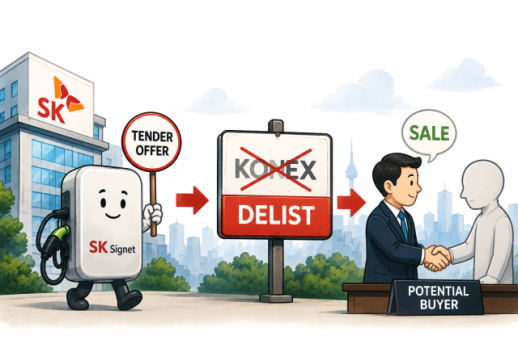 SK to delist EV charging subsidiary ahead of planned sale SEOUL, July 24 (AJP) - SK Inc. launched a tender offer for minority shareholders of its electric vehicle charging subsidiary SK Signet as it moves to delist the company ahead of a planned sale, according to a company disclosure on Friday. SK is offering 8,200 won (US$5.90) per common share for up to 10.07 million shares, equivalent to 25.07 percent of the company's fully diluted share count. The tender offer runs from Friday through Aug. 24, with settlement scheduled for Aug. 26. The offer price is more than 20 percent above the stock's one-month average price, allowing shareholders to exit before the planned delisting and sale. SK currently owns 74.9 percent of the EV charger maker. According to a tender offer filing submitted to the Financial Supervisory Service (FSS), it plans to delist SK Signet if the tender offer secures enough shares. If not, SK said it will acquire the remaining shares through a comprehensive share exchange, making SK Signet a wholly owned subsidiary. The filing also disclosed that SK signed a non-binding memorandum of understanding (MOU) with a potential buyer on July 15 for a potential sale of the company. The deal has yet to be finalized. SK said the tender offer is intended not only to facilitate the sale process but also to provide minority shareholders with an opportunity to dispose of their holdings at a premium as part of its commitment to responsible management and shareholder protection. The offer price was based primarily on the company's one-month average share price, reflecting volatility in the KONEX market. The company aims to complete the delisting and conversion into a wholly owned subsidiary in the fourth quarter before completing the sale in the first quarter of next year. SK Signet, acquired by SK in 2021, manufactures fast and ultra-fast EV charging systems. The company has struggled as the global EV market slowed, swinging from a 3 billion won operating profit in 2022 to operating losses of 149.4 billion won in 2023, 242.8 billion won in 2024 and 48.4 billion won in 2025. 2026-07-24 10:41:53