

Journalist

Ryu Yuna류윤아
Julia37@ajupress.com
ReporterFinancial Supervisory Service (FSS) & finance, capital markets, Southeast Asian affairs
Yuna Ryu covers finance, capital markets and Southeast Asian affairs.
She is drawn to the questions that numbers raise and the stories that data alone cannot answer.
Prior to journalism, she worked at Hyundai Motor Company and the Singapore Chamber of Commerce, focusing on business strategy and international affairs. She has also hosted diplomatic receptions and international conferences as an MC.
Ryu holds a master's degree in Media and Communication from Korea University, where her research focused on neuroscience-based studies of media effects. "Beyond every statistic is a human story waiting to be heard."
Latest by Ryu Yuna
-
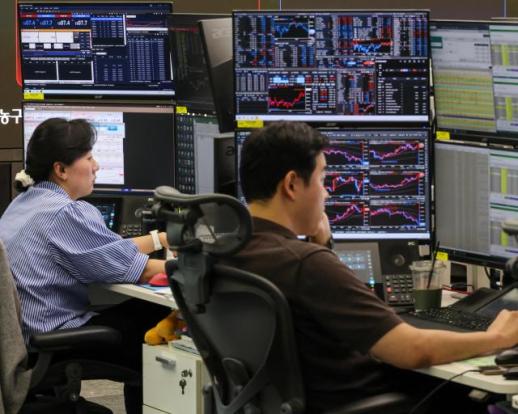 Reality bites as Korea's retail investors struggle to escape leverage trap SEOUL, July 23 (AJP) - Reality bites, and it takes a strong stomach to survive the KOSPI reality show, where billions of won in retail wealth disappear every trading day. Panic flashes across online stock forums. "Save me. I'm trapped at 22,000 won," one investor wrote, unsure whether to sell or keep holding a Samsung Electronics 2x leveraged exchange-traded fund bought near that price. The desperation reflects what is becoming a familiar pattern. According to the Korea Financial Investment Association, brokerages forcibly liquidated 59.6 billion won ($43 million) worth of shares purchased on margin Tuesday, the highest amount since July 10, when forced selling reached 81.6 billion won. It also marked the second consecutive session above 50 billion won after Monday's 52.8 billion won. Investor deposits — cash available in brokerage accounts for stock purchases — shrank by 5.83 trillion won in a single day to 106.69 trillion won. Outstanding margin loans, however, rose by 225.7 billion won to 33.56 trillion won, suggesting many retail investors remain willing to borrow despite mounting losses. The losers are leaving, but plenty more are waiting to buy the dip. Despite nearly 20 percent declines in both the KOSPI and KOSDAQ over the past month, speculative appetite remains remarkably resilient. Seoul's stock market, until recently the world's best-performing major equity market this year, has joined the ranks of the worst performers in July. The decline in investor deposits does not necessarily mean the speculative fever has broken. Deposits fall whenever investors buy stocks, withdraw cash or settle transactions. But when deposits decline while margin borrowing continues to rise, the pattern suggests demand is increasingly being financed with leverage rather than fresh cash. Yang Jun-sok, professor of economics at the Catholic University of Korea, said policymakers originally hoped to redirect speculative money away from real estate and into productive investment through the stock market. Instead, the rally exceeded expectations. "At first, the government encouraged people to invest in the stock market," Yang said. "Now it finds itself with another speculative force to calm." South Korea's benchmark KOSPI became the world's best-performing major stock index this year as the AI boom propelled Samsung Electronics and SK hynix sharply higher. At one point, the two chipmakers accounted for more than half of the benchmark's market capitalization, leaving the index unusually dependent on just two AI-related stocks while amplifying volatility through leveraged products tied to them. The government has since tightened controls on single-stock leveraged ETFs, suspending new listings and banning promotional campaigns until market conditions stabilize. Authorities also raised the minimum cash deposit for new or additional purchases to 30 million won from 10 million won and plan to increase the minimum trading unit from one share to 20 shares later this year while strengthening investor education, risk disclosures and safeguards against excessive price deviations. The measures are intended to slow new speculative demand rather than force existing investors to unwind their positions. Officials have also stopped short of delisting the products altogether, arguing that doing so could trigger another wave of selling. Presidential Policy Chief Kim Yong-beom said Sunday that delisting the funds was "hard to imagine" because of the market disruption it could cause. Instead, regulators are exploring ways to reduce volatility, including narrowing gaps between market prices and net asset values and easing selling pressure generated by ETF rebalancing near the market close. The government's challenge is to engineer what economists call an orderly deleveraging — reducing leverage gradually without triggering a disorderly cascade of forced liquidations. In theory, margin borrowing should slow, existing loans should be repaid over time and forced selling should steadily diminish. So far, the numbers suggest otherwise. Although outstanding margin loans remain below their June peak, they increased again in the latest session, indicating leveraged dip-buying remains alive. "There are still people saying stocks should be bought when they become cheaper," Yang said. "That means demand has not yet been suppressed." Evidence of investor distress is nevertheless mounting. The proportion of overdue margin purchases ending in forced liquidation climbed rapidly from 1.1 percent on July 16 to 4.6 percent Monday and 5.7 percent Tuesday. Under Korea's margin trading rules, investors who fail to settle purchases within two business days face automatic liquidation at the market opening, adding to selling pressure and increasing the likelihood of further margin calls. Yang said repeated warnings from regulators, academics and market professionals, along with mandatory investor education, have done little to curb speculative demand. "In the end, investors may have to learn the hard way," he said. "Unless they experience forced liquidations themselves, they will continue to view leveraged ETFs as useful and relatively safe. The market itself created that false sense of security." He recalled a legal dispute following the 1997 Asian financial crisis, when a Korean state-owned financial institution unsuccessfully sued a U.S. investment bank in New York after suffering losses on complex derivatives. The court rejected the institution's argument that it had not fully understood the products. "Fundamentally, investors have a responsibility to understand what they are buying, even if nobody explains it to them, especially when the product is complex," Yang said. "That is what Korean investors are now learning." Faster deleveraging before a bigger shock "Korea's market rose too far, too fast," Yang said. "Because the rally developed over such a short period, it may be better to reduce leverage quickly rather than drag the adjustment out." He argued Korea's AI-driven rally far outpaced comparable gains in the United States or Taiwan. While the S&P 500 reached repeated record highs over several years and Taiwan's benchmark remained broadly diversified despite TSMC's dominance, Korea's surge became unusually concentrated in a handful of AI-related shares. The Bank of Korea's first interest-rate increase since January 2023 — raising the policy rate to 2.75 percent on July 16 — is part of that effort to cool speculative excess. The government's dilemma is becoming increasingly clear. It wants to reduce leverage and curb speculation without triggering the kind of market collapse that would inflict heavy losses on millions of retail investors and undermine confidence in its broader capital-market agenda. 2026-07-23 16:31:23
-
 South Koreans top longevity as well as suicide in OECD scale SEOUL, July 23 (AJP)—South Koreans are among the world's longest-living people, but also have the highest suicide rate in the OECD. According to the Ministry of Health and Welfare's analysis of the OECD Health Statistics 2026 released Thursday, South Korea again recorded the highest suicide rate among OECD members in 2023. A total of 24.8 people per 100,000 died by suicide, more than double the OECD average of 10.9. Despite that grim statistic, the country ranked among the world's longest-lived nations. Life expectancy at birth for babies born in 2024 reached 83.7 years, 2.5 years above the OECD average of 81.2 years. Only Switzerland (84.2 years), Japan (84.1), Spain (84.0) and Sweden (83.8) ranked higher, placing South Korea among the world's longest-lived countries. South Korea also recorded relatively few deaths that could have been prevented through better public health measures or timely medical care. The rate stood at 139 deaths per 100,000 people, compared with the OECD average of 208.8. It has steadily improved over the past decade, falling from 194.0 in 2013 to 154.0 in 2018 and 139.0 in 2023. Koreans also visited doctors more frequently than people in any other OECD country. The average person made 17.9 visits a year, nearly 2.7 times the OECD average of 6.6. Healthcare spending, however, remained relatively modest. Current health expenditure accounted for 8.5 percent of GDP, below the OECD average of 9.3 percent. Annual healthcare spending reached about $5,098 per person in 2024, rising at an average annual rate of 8.5 percent over the past decade, outpacing the OECD average of 6.1 percent, partly due to the country’s rapidly aging population. At the same time, the country continued to face a shortage of doctors. It had 2.6 practicing doctors per 1,000 people, including practitioners of traditional Korean medicine, compared with the OECD average of 4.0. Only Costa Rica ranked lower. The total nursing workforce, including nurses and nursing assistants, stood at 9.8 per 1,000 people, slightly above the OECD average of 9.7. However, the number of registered nurses alone was 5.5 per 1,000, well below the OECD average of 8.8. Meanwhile, the smoking rate among people aged 15 and older was 13.2 percent, close to the OECD average of 12.7 percent, while annual alcohol consumption averaged 7.6 liters per person, below the OECD average of 8.3 liters. Weight-related indicators were comparatively favorable, although the trend is worsening. Korea had the second-lowest share of overweight and obese adults among OECD countries at 37.3 percent, behind only Japan's 25.3 percent and well below the OECD average of 58.7 percent. Still, the proportion has continued to climb, rising from 30.8 percent in 2014 to 33.7 percent in 2019 and 37.3 percent in 2024. 2026-07-23 16:04:30
-
 Korea's SME loan delinquencies hit 11-year high SEOUL, July 23 (AJP) —South Korean small and medium-sized enterprises (SMEs) are falling behind on bank loan repayments at the fastest pace in 11 years, further exposing an economy heavily dependent on large chipmakers and a few big manufacturers. According to data released Wednesday by the Financial Supervisory Service (FSS), the delinquency ratio, the share of bank loans that were more than one month overdue, rose to 0.67 percent at the end of May from 0.61 percent in April and 0.64 percent a year earlier. It marked the highest level since October 2016, when the restructuring of major shipbuilders and shipping companies, including STX Offshore & Shipbuilding and Hanjin Shipping, pushed the large corporate loan delinquency rate to a record 2.67 percent. Banks recorded 3.3 trillion won ($2.4 billion) in newly delinquent loans during May, up from 2.9 trillion won the previous month, while they cleared 1.5 trillion won of bad loans through write-offs and sales, down from 1.6 trillion won a month earlier. The monthly new delinquency ratio also edged up to 0.13 percent from 0.12 percent in April. The deterioration was driven primarily by corporate borrowers. The delinquency ratio on corporate loans jumped to 0.84 percent from 0.74 percent a month earlier and 0.77 percent a year earlier. Among them, the ratio for SMEs rose to 1.00 percent from 0.90 percent a month earlier and 0.95 percent a year earlier, reaching its highest level since May 2015. Delinquencies among large corporations also climbed to 0.27 percent from 0.22 percent a month earlier and 0.15 percent a year earlier, the highest since September 2021. Within the SME sector, the delinquency ratio for incorporated SMEs increased to 1.11 percent from 0.98 percent a month earlier, while that for sole proprietors rose to 0.84 percent from 0.78 percent. The rise reflects prolonged weakness in domestic demand has made it harder for smaller businesses that rely heavily on local consumption to repay their loans. Another factor is the government's push to steer more bank lending toward businesses with growth potential rather than household borrowing. While the policy has expanded funding for these companies, some are taking longer to generate stable cash flow, making it harder for some companies to repay their loans. Kim Young-do, a senior researcher at the Korea Institute of Finance (KIF), said in a February report that banks could face growing pressure to expand lending to businesses while limiting the risks that come with it. While household loan delinquencies also rose from the previous month to 0.45 percent, they remained below the 0.47 percent recorded a year earlier, indicating that the overall increase was driven mainly by corporate borrowers. The FSS warned that delinquency rates could continue to rise as corporate lending expands and higher interest rates increase borrowing costs. The regulator said it would encourage banks to clean up bad loans and set aside more money to absorb potential losses. 2026-07-23 10:10:51
-
 Foreign investors' return lifts KOSPI ahead of key big tech earnings SEOUL, July 22 (AJP) - Foreign investors extended their buying streak to a third consecutive session on Wednesday, helping lift the benchmark KOSPI higher despite caution among investors ahead of U.S. big tech earnings, which could determine whether the recent rally in artificial intelligence (AI)-related stocks can be sustained. The KOSPI rose 0.74 percent to close at 6,797.70 points after surging as much as 6 percent during the session, but gave up most of its gains in late trading. The junior KOSDAQ, meanwhile, fell 0.30 percent to 751.09. Foreign investors purchased 2.61 trillion won (US$1.9 billion) worth of KOSPI shares, bringing their net buying over the past three sessions to 3.46 trillion won, according to the Korea Exchange. The latest inflows mark a sharp turnaround in foreign investors’ stance after weeks of heavy selling. They dumped 19.8 trillion won during the week spanning late June and early July before trimming their net selling to 4.1 trillion won the following week. They then returned as net buyers last week and have further accelerated their purchases this week. The buying spree was concentrated in semiconductor and technology shares, with foreign investors purchasing a net 3.18 trillion won worth of electrical and electronics stocks over the past three trading sessions. Samsung Electronics, the key beneficiary of the inflows, rose 0.58 percent to close at 260,500 won, while SK hynix edged down 0.33 percent to 1,830,000 won as investors locked in profits following recent gains. Among other large-cap technology shares, Samsung Electro-Mechanics climbed 2.67 percent to 1,345,000 won and Samsung Electronics preferred shares gained 2.27 percent to 185,100 won, while Samsung Biologics fell 1.65 percent to 1,372,000 won. Automakers outperformed, with Hyundai Motor advancing 4.76 percent to 418,000 won and Hyundai Mobis jumping 6.99 percent to 513,000 won. Shipbuilder HD Hyundai Heavy Industries also gained 2.88 percent to 464,500 won, while Samsung C&T rose 3.06 percent to 354,000 won. On the junior KOSDAQ, robotics shares remained a bright spot despite the broader index's decline, as Samsung Electronics' newly established robotics division continued to fuel expectations for physical AI. Robotics software developer NRobotics jumped 29.89 percent to 2,390 won and service robot maker Hyulim Robot gained 9.70 percent to 6,900 won, while Lightron Fiber-Optic Devices rose 6.67 percent. The broader index, however, gave up its early gains as profit-taking spread across technology shares. The recent sell-off, which sent the KOSPI down about 20 percent this month, has made valuations more attractive, encouraging foreign investors to return to the market. Wall Street investment banks Morgan Stanley and JPMorgan have also struck a more optimistic tone on South Korean stocks. Morgan Stanley maintained its 9,000-point KOSPI target this week, saying the recent selloff has brought the market close to a bottom. JPMorgan also reaffirmed its 12-month target of 12,500, citing resilient corporate fundamentals and continued earnings momentum led by semiconductors. The positive outlook has also been driven by expectations that the AI-driven memory-chip upcycle will last longer than previously anticipated. Morgan Stanley said concerns over tighter memory supply in 2027 and 2028 have increased, describing the recent pullback in semiconductor shares a buying opportunity. A stabilizing South Korean won has also improved sentiment toward local assets by easing concerns over foreign capital outflows. The currency weakened slightly on Wednesday, however, with the dollar-won exchange rate rising to 1,479.50 in afternoon trading from 1,473.40 in the previous session. Still, analysts cautioned that whether foreign buying develops into a sustained trend will largely depend on earnings from U.S. technology giants, beginning with Alphabet after the U.S. market closes Wednesday. Alphabet, one of the world's four largest hyperscale cloud operators, previously projected capital spending of $180 billion to $190 billion this year, roughly double last year's level, as it expands AI infrastructure. If the company maintains or raises its spending outlook for next year, expectations for memory demand could strengthen further, providing another catalyst for Korean chip stocks. The cautious mood was reflected across Asia. Japan's Nikkei 225 erased an intraday gain of more than 2 percent to end 0.18 percent lower, while Taiwan's benchmark index rose 1.34 percent even as chipmaker TSMC slipped 0.41 percent. 2026-07-22 17:42:34
-
 Busan fever sweeps Asia as Taiwanese lead new tourism boom SEOUL, July 22 (AJP) - Busan has emerged as one of Asia’s hottest urban escapes, drawing travelers with its beaches, seafood, cinematic coastal scenery and the hometown appeal of BTS members Jimin and Jungkook. Chinese can now be heard across the southern port city, but increasingly it is not the Mandarin typically associated with mainland visitors. Taiwanese travelers have become one of Busan’s largest and fastest-growing visitor groups, helping transform the city from a secondary stop after Seoul into a destination in its own right. A new expression circulating on social media in Taiwan, mainland China and Japan captures the mood: “Busan sickness.” The phrase describes the lingering longing travelers feel after leaving the city. Once commonly associated with “Seoul sickness,” the post-trip nostalgia appears to have shifted southward as Busan gains a stronger identity among young Asian travelers. The boom is visible in the numbers. Busan welcomed 1.94 million foreign visitors in the first five months of 2026, up 40 percent from a year earlier and 78.4 percent from the same period in 2019, according to the Busan Tourism Organization’s latest data. The figure represented 22.2 percent of South Korea's 8.72 million inbound visitors during the period, meaning more than one in five foreign tourists visiting Korea traveled to Busan. While nationwide inbound tourism grew about 21 percent, Busan expanded at nearly twice that pace, cementing its status as one of Asia's fastest-rising urban tourism destinations. In May alone, the city received 460,683 international visitors, a 42.9 percent increase from a year earlier and 83.7 percent above the pre-pandemic level recorded in May 2019. The most striking change has come from Taiwan. Some 84,502 Taiwanese visitors traveled to Busan in May, up 46.3 percent from a year earlier and more than four times the May 2019 level. They accounted for 18.3 percent of all foreign visitors that month, nearly matching mainland Chinese travelers, who made up 19.4 percent. Over the January-May period, Taiwan was Busan’s largest single visitor market, with 375,322 arrivals and a 19.4 percent share. Mainland China followed with 359,981 visitors, or 18.6 percent, while Japan accounted for 233,685, or 12.1 percent. Mainland Chinese tourism is also recovering rapidly. Their arrivals nearly doubled from a year earlier to 89,275 in May and were almost three times the corresponding 2019 level. But the strong Taiwanese presence has changed the linguistic and cultural complexion of Busan’s tourism districts, particularly around Haeundae, Gwangalli and popular shopping areas. The city’s broader tourism surge has also translated into heavier spending. Foreign visitors spent 132.2 billion won ($95 million) in Busan in May, more than 2.5 times January’s 51.2 billion won, according to city data. Busan retained its position as South Korea’s second-largest destination for foreign tourist spending after Seoul for a third consecutive month. The appeal is also reflected in online sentiment. An analysis by Yanolja Research of 11,270 Chinese-language travel posts on Xiaohongshu and 18,694 reviews on Ctrip ranked Busan first in overall satisfaction among eight Asian cities, ahead of Tokyo and Singapore, with an average score of 4.723 out of five. Nature accounted for 38.2 percent of Busan-related mentions, followed by food at 23.8 percent. The finding suggests that the city’s appeal comes less from the sheer number of attractions than from the concentration and intensity of the experiences it offers. Busan’s first advantage is its highly photogenic landscape. Unlike the dense and relentlessly paced capital, Busan is increasingly perceived as a place that feels distinctly Korean but is less exhausting. Its geography places expansive coastlines beside urban neighborhoods, giving travelers beaches, cafés, markets and nightlife within a relatively compact area. Haeundae, Gwangalli and Gamcheon Culture Village have long appealed to social media users. More recently, attractions that let visitors experience the sea rather than merely view it have widened the city’s draw. The Haeundae Blueline Park beach train, promoted on Xiaohongshu as a “train running by the sea,” has become one of the city’s most recognizable images. Yacht tours, Skyline Luge and the X the Sky observatory have similarly helped turn Busan’s coastline into an activity-driven tourism product. Affordability is another strength. Local dishes such as pork-and-rice soup and milmyeon wheat noodles offer inexpensive alternatives to the increasingly costly dining scene in Seoul. That value has proved especially attractive to Taiwanese visitors, who can reach Busan on direct flights to Gimhae International Airport in about two hours. Travelers from parts of Japan enjoy similarly easy access, allowing Busan to function as a convenient weekend destination rather than an extension of a longer trip to Seoul. Yanolja Research said Busan was moving beyond its traditional image as a city of beaches and scenery by combining marine resources with transportation, observation decks, leisure activities and entertainment. The result, it said, was a new model of an “Asian experiential tourism city” built around the sea. The latest tourism figures suggest the model is working. Busan is no longer merely South Korea’s second city or a seaside add-on to Seoul. For a growing number of Asian travelers, it has become the Korean city they miss once they leave. 2026-07-22 16:08:54
-
 S&P lifts Samsung outlook as AI memory boom gathers pace SEOUL, July 22 (AJP) — Global ratings agency S&P Global Ratings has made its call on Samsung Electronics, betting that an AI-driven memory supercycle will drive at least two more years of strong earnings growth. The agency revised its outlook on the chipmaker to positive from stable, saying favorable industry conditions, including strong demand for high-bandwidth memory (HBM) and a prolonged supply shortage, are likely to support memory prices through 2027. "The positive outlook reflects our expectation that Samsung will strengthen its technological competitiveness, expand its market share in HBM and foundry businesses, and deliver solid operating performance over at least the next two years as the memory industry continues its structural growth," S&P said. The stock rose 3.86 percent to 269,000 won in Wednesday afternoon trading following the outlook. The optimism rests on a widening gap between AI demand and chip supply. The ratings agency expects Samsung to be among the biggest beneficiaries of the AI-driven memory supercycle, as investment in hyperscale data centers continues to outpace new semiconductor capacity. Some DDR5 chip prices have already risen three- to fourfold from a year earlier. It also sees memory shortages persisting for at least two more years as AI infrastructure spending continues to accelerate. The world's four largest hyperscale cloud operators are projected to quadruple capital spending from 2024 levels to around $1 trillion by 2028, with much of the money directed toward AI infrastructure, while meaningful supply growth is not expected before then. Reflecting that outlook, the agency forecasts Samsung's annual revenue will reach a record 683 trillion won ($495 billion) in 2026 before climbing to 821 trillion won in 2027. EBITDA, a widely used measure of operating earnings, is expected to surge from around 91 trillion won in 2025 to 393 trillion won in 2026 and 502 trillion won in 2027. The agency also expects this cycle to be less volatile than previous memory booms. As shortages persist, customers are increasingly seeking long-term supply agreements lasting three to five years. The growing use of customized memory products should also give chipmakers clearer order visibility and help protect earnings when the market eventually turns. Samsung's advances in HBM technology further reinforce that outlook. According to S&P, Samsung has advanced its HBM technology by pairing its latest 1c DRAM with a 4-nanometer base die in next-generation HBM4 chips, while largely fixing the production yield issues that affected its earlier HBM3E products. The agency also sees improving prospects for Samsung's foundry business. It said yields on its most advanced manufacturing processes are beginning to stabilize. At the same time, capacity constraints at Taiwan Semiconductor Manufacturing Co. could give Samsung an opportunity to win more orders as an alternative supplier. Backing that expansion, Samsung's annual capital expenditure is projected to rise from 52 trillion won in 2025 to between 81 trillion won and 84 trillion won over the next two years. Even so, S&P expects the balance sheet to remain resilient. Strong cash generation is forecast to lift free cash flow from 33 trillion won last year to 201 trillion won this year and 288 trillion won in 2027. 2026-07-22 14:34:48
-
 KOSDAQ gains new life from robotics jolt SEOUL, July 22 (AJP) - Robotics stocks jolted the lethargic KOSDAQ market awake on Wednesday as investors bet that Samsung Electronics’ newly elevated robotics ambitions, military demand and Nvidia’s physical AI vision could turn South Korea’s equipment supply chain into the next major technology theme. Industrial robotics and automation company T-Robotics hit the daily ceiling, surging 29.95 percent to 12,540 won and leading gains on the secondary market. The main KOSDAQ index advanced 2.8 percent to 774.54 as of 11:30 a.m. The buying swept through nearly every corner of the robotics chain. Actuator and precision-gear supplier SPG jumped 23.33 percent to 81,400 won, automation equipment maker Coses climbed 23.02 percent to 26,450 won and Samsung-backed humanoid robot developer Rainbow Robotics advanced 19.81 percent to 493,000 won. Motion-control component maker Samhyun rose 16.19 percent to 32,650 won, while industrial robot manufacturer Robotstar gained 15.11 percent to 67,800 won. Robot actuator and platform developer Robotis added 14.72 percent to 226,000 won, robot software company Clobot climbed 13.98 percent to 26,500 won and home-service robot maker Everybot rose 11.42 percent to 14,050 won. The spark came from Samsung Electronics which on Tuesday said it had established the RX, or Robotics eXperience, Division to take charge of robotics strategy, core technology development and business execution as it seeks to build the sector into a new growth engine. The move marks Samsung’s most significant organizational push into robotics since it began expanding the business in 2021 and raised expectations that the country’s largest technology company could pull a wider network of parts suppliers, software developers and equipment makers into the physical AI race. Investors also found a more immediate trigger in the military. Rainbow Robotics and Hyundai Rotem are expected to begin deploying the RB-01K military robot dog with the South Korean Army later this year. Rainbow Robotics manufactures the quadruped platform, while Hyundai Rotem equips it with military sensors, remote-control systems and weapons-related technology for combat use. The project has put suppliers such as SPG under the spotlight because actuators — the motorized joints that allow the robot’s four legs to bend, balance and move — are among the most critical components in a quadruped system. The army could eventually deploy as many as 1,000 units. The robot dogs are expected to patrol bases, enter hazardous areas before soldiers and respond to terrorist threats, allowing the military to carry out more missions with fewer personnel. The image of four-legged machines moving ahead of troops is no longer confined to demonstrations or science fiction. Since Russia’s full-scale invasion in 2022, Ukraine has expanded the use of unmanned ground vehicles to move supplies, evacuate wounded soldiers and inspect dangerous terrain. The U.S. military has tested robot dogs for patrol, surveillance and explosive detection, while China has showcased armed quadruped robots in military exercises as part of its AI-driven modernization campaign. Nvidia Chief Executive Jensen Huang’s remarks during his Seoul visit last month also continued to reverberate through the market. Huang described robotics as South Korea’s next major growth industry, arguing that the country’s position as a global manufacturing powerhouse gives it an advantage in deploying physical AI across factories, logistics networks and other industries. His comments helped reinforce the idea that South Korea could become not merely a user of industrial robots but a broader production base for the sensors, actuators, software and machine intelligence needed to make them operate autonomously. Wednesday’s rally also carried the force of a rebound after months of steep losses. According to IBK Investment & Securities, the combined market value of major domestic robotics companies more than tripled from about 16 trillion won in August last year to 49 trillion won in early June, only to collapse to 23 trillion won as of July 20. Samsung’s latest move has restored some of the excitement, but the brokerage cautioned that the sector’s next leg higher will depend less on organizational announcements and futuristic demonstrations than on whether investment produces commercial products, repeat orders and tangible earnings. 2026-07-22 11:26:23
-
 Seoul steps in as ETF crash takes toll on retirees and minors SEOUL, July 21 (AJP) - A crash inevitably leaves collateral damage, and the nearly 50 percent plunge in leveraged exchange-traded funds (ETFs) linked to chip behemoths Samsung Electronics and SK hynix has hit some of South Korea's most vulnerable investors, wiping out retirement savings and money invested on behalf of minors. "Were we guinea pigs?" one investor wrote after watching losses mount in the newly launched single-stock leveraged ETFs. "Will anybody help?" another asked. The outpouring of anger quickly shifted toward the government, which approved the products near the peak of the semiconductor rally. Surely, investors knew the risks. But many ants, as retail investors are known in South Korea, took the government's approval as an endorsement, believing products cleared by regulators could not be excessively dangerous. Their jitters intensified after Bae Jae-kyu, chief executive of Korea Investment Management and widely regarded as the pioneer of Korea's ETF industry, publicly urged investors to stop buying single-stock leveraged and inverse ETFs. Although his company manages the products, Bae warned that sharp daily price swings can destroy returns through daily compounding. Unlike conventional ETFs, leveraged and inverse funds are designed to deliver twice a stock's daily return rather than twice its cumulative performance over time. When prices repeatedly rise and fall, gains and losses are calculated on a constantly changing investment base, causing value to erode regardless of the longer-term direction of the underlying shares. As a result, both leveraged and inverse ETFs can lose money even when the underlying stock ends little changed. Bae illustrated the effect using SK hynix-related ETFs. Between May 27 and July 16, SK hynix shares fell 17.9 percent. A 2x leveraged ETF theoretically should have declined about 35.8 percent, but instead plunged 47.5 percent, extending losses by another 11.7 percentage points because of volatility drag. A 2x inverse ETF should theoretically have gained 35.8 percent over the same period. Instead, it lost 31.1 percent as repeated daily swings steadily eroded returns. His warning came only after retail investors had already poured unprecedented sums into the products. Demand exploded after Korea introduced its first single-stock leveraged ETFs in late May, attracting investors across virtually every age group—including retirees and minors. According to data submitted by the Korea Institute of Financial Investment (KIFIN) to Rep. Kang Myung-gu of the opposition People Power Party, 1.16 million investors completed the mandatory basic leveraged ETF course during the first half, nearly 19 times more than a year earlier and already six times last year's total. Seoul has made a three-hour mock-trading session in addition to online basic course mandatory for trading high-risk products like leveraged ETFs. Despite the hassle, nearly 690,000 investors also completed the additional education required to trade single-stock leveraged ETFs between April and June. Investors in their 40s accounted for the largest group with 210,745 participants, followed by those in their 50s with 189,308 and those in their 30s with 176,488. More than 70,000 investors aged 60 or older also completed the training, along with 5,596 minors who obtained parental consent. The enthusiasm translated into massive inflows. Between May 27 and July 16, investors poured a net 13.4 trillion won ($9.6 billion) into 16 leveraged and inverse ETFs linked to Samsung Electronics and SK hynix. SK hynix leveraged products alone attracted 8.5 trillion won, while Samsung Electronics leveraged ETFs drew another 4.7 trillion won. Inverse products received only 146.6 billion won. The reversal in chip fortunes proved devastating. The KODEX SK hynix Leveraged ETF, the most heavily purchased product, lost 47.5 percent from launch through July 16, while its Samsung Electronics counterpart dropped 41.7 percent. Products designed to profit from falling prices fared little better. The SOL SK hynix Futures Single Stock Inverse 2X ETF lost 31.1 percent over the same period, while the PLUS Samsung Electronics Futures Single Stock Inverse 2X ETF fell 8.9 percent. Wild swings across the broader market compounded the damage. According to the Korea Exchange, the KOSPI's average intraday fluctuation reached 6.75 percent between July 1 and July 16, the highest since comparable records began in 1987, surpassing the peaks recorded during both the 2008 global financial crisis and the 1997 Asian financial crisis. Three of the 10 highest monthly average intraday fluctuations over the past two decades have occurred this year. The VKOSPI volatility index, often referred to as Korea's "fear gauge," climbed to 96.94 on June 29, its highest level since the index was introduced in 2009. Analysts said fragile investor sentiment, widespread use of leveraged products and weak institutional buying had amplified volatility, allowing even modest negative news to trigger indiscriminate selling. The growing investor angst has reached the highest government level. President Lee Jae Myung on Tuesday ordered financial authorities to draw up "swift and thorough" stabilization measures for controversial single-stock leveraged ETFs, saying the government must not neglect retail losses. Speaking at a Cabinet meeting, Lee said the products had helped keep domestic capital from flowing overseas but had also amplified market volatility. "They nonetheless have become a source of grievance for investors, haven't they?" he said, instructing regulators to review additional investor protection measures while reassessing the role of high-risk investment products. Opposition lawmakers have been ratcheting up attacks on the government for encouraging excessive speculation by approving the products, arguing that older and underage investors could not have fully understood the risks they were taking. 2026-07-21 16:50:39
-
 Lee orders review of leveraged chip ETFs after retail investor losses SEOUL, July 21 (AJP) — President Lee Jae Myung on Tuesday ordered financial authorities to draw up "swift and thorough" stabilization measures for controversial single-stock leveraged exchange-traded funds (ETFs), saying the government must address mounting losses suffered by retail investors who piled into the products after regulators approved their launch. Speaking at a Cabinet meeting, Lee pointed to the divided views over leveraged ETFs linked to Samsung Electronics and SK hynix, which were introduced in late May when both semiconductor giants were enjoying a powerful rally that had helped propel the benchmark KOSPI to record highs. The president said the products had helped keep domestic capital from flowing overseas but had also amplified market volatility. Financial Services Commission Chairman Lee Eog-weon defended the products, saying similar single-stock leveraged ETFs are widely available in overseas markets and were introduced as part of efforts to advance South Korea's capital market. "They nonetheless have become a source of grievance for investors, haven't they?" President Lee replied. He said public criticism was increasingly being directed at the government because the ETFs were launched near the peak of the semiconductor rally before sharp declines inflicted heavy losses on retail investors. Calling for authorities to consider "various factors," Lee instructed regulators to prepare comprehensive measures to stabilize the market and better protect investors while reviewing the role of such high-risk investment products. 2026-07-21 16:06:29
-
 New AI rules take effect in South Korea SEOUL, July 21 (AJP) - Stricter regulations on the use of artificial intelligence (AI) took effect across industries on Tuesday, requiring businesses to disclose the use of generative AI and label AI-generated content. Under the regulations as part of the so-called "AI Basic Act," the country's first legal framework for artificial intelligence, companies developing or operating AI services must notify users when generative AI is used and label AI-generated content. Those whose systems could significantly affect people's rights or safety must also assess potential risks and impacts and put internal governance and risk management systems in place. To avoid discouraging innovation under the stricter rules, the government, however, is also rolling out incentives to help foster the domestic AI industry. Verified AI products and services will receive preferential treatment in public procurement as well as bonus points in bid evaluations. Other measures include funding for startups, job training, broader access to public data for AI development, and subsidies aimed at improving access to AI services for older adults, people with disabilities, job seekers and other underserved groups. Major South Korean tech companies including Kakao, KT, LG Uplus, Naver, SK Telecom, as well as AI startup Upstage have already strengthened their AI governance and expanded labeling of AI-generated content to comply with the new law. But some industry workers say uncertainty still remains over how much generative AI must be used before content-labeling requirements apply, and whether the same standards apply when AI-generated content is edited or reviewed by humans. They also say that the lack of clear definitions for AI with high potential impact could increase costs for assessment and delay product launches, particularly for startups with fewer resources than large tech companies. These debates come as major economies take different approaches to AI-related regulation. The U.S. and Japan have focused on promoting innovation, while the European Union has adopted a risk-based framework that imposes different obligations depending on the potential risks posed by AI. A one-year grace period will be given to businesses before full enforcement, allowing authorities to gather industry feedback and establish more detailed guidelines. 2026-07-21 11:28:01