

Journalist

Ryu Yuna류윤아
Julia37@ajupress.com
ReporterFinancial Supervisory Service (FSS) & finance, capital markets, Southeast Asian affairs
Yuna Ryu covers finance, capital markets and Southeast Asian affairs.
She is drawn to the questions that numbers raise and the stories that data alone cannot answer.
Prior to journalism, she worked at Hyundai Motor Company and the Singapore Chamber of Commerce, focusing on business strategy and international affairs. She has also hosted diplomatic receptions and international conferences as an MC.
Ryu holds a master's degree in Media and Communication from Korea University, where her research focused on neuroscience-based studies of media effects. "Beyond every statistic is a human story waiting to be heard."
Latest by Ryu Yuna
-
 South Korea opens door to three more tech firms on KOSDAQ SEOUL, July 31 (AJP) — South Korea moved three more technology companies a step closer to the stock market after the Korea Exchange approved their preliminary applications for a KOSDAQ listing. The Korea Exchange's KOSDAQ Market Division said Thursday that Melcon, a manufacturer of precision temperature and humidity control equipment, Lablup, an artificial intelligence infrastructure software developer, and MBD, a medical device company, had passed the exchange's listing eligibility review after approval by the Kosdaq Listing Committee. The companies will now move forward with initial public offering (IPO) procedures ahead of their market debut. Founded in 2003, Melcon makes temperature and humidity control equipment used in semiconductor and display production. The company supplies its equipment to major semiconductor manufacturers worldwide. It reported 41.8 billion won ($30.1 million) in revenue and 6.16 billion won in operating profit last year. The offering will be led by Daishin Securities, one of South Korea's leading securities firms. Lablup, established in 2015, develops software that helps companies build, manage and deploy artificial intelligence (AI) applications by simplifying AI infrastructure and computing resources. Its platform is designed to support users ranging from small development teams to large organizations running extensive AI systems. The company posted 6.72 billion won ($4.8 million) in revenue and 679 million won in operating profit last year. NH Investment & Securities, another major South Korean brokerage is leading its IPO process. Medical device developer MBD also secured preliminary approval despite remaining in the red, underscoring the junior market's efforts to support growing companies. Founded in 2015, the company develops 3D cell culture platforms that use patient-derived tumor cells to support cancer research, drug development and treatment testing. The technology is designed to help predict how patients will respond to cancer therapies while reducing reliance on animal testing in preclinical research. It reported 1.52 billion won ($1.1 million) in revenue and an operating loss of 5.63 billion won last year. Hana Securities is serving as the lead manager for the offering. 2026-07-31 09:58:56
-
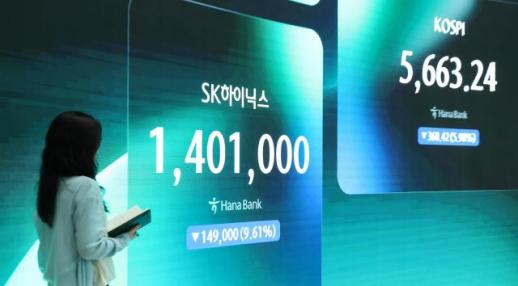
 KOSPI extends losses as chipmakers' strong earnings fail to lift sentiment SEOUL, July 30 (AJP) - South Korean stocks extended losses for a third straight session on Thursday, with the benchmark KOSPI hovering around 5,600 points despite strong foreign and institutional buying, as retail investors sold shares following this week's market rout. The index opened higher and appeared likely to climb back above 6,000 points, but fell in afternoon trading as concerns over semiconductor demand, renewed tensions in the Middle East and a weak overnight session on Wall Street weighed on investor sentiment. The government announced a set of new stricter rules to limit leveraged single-stock ETFs, but concerns about chip stocks and global risks remained the bigger focus for traders. Foreign investors purchased a net 1.33 trillion won ($960 million), while institutions bought a net 66.3 billion won, cushioning the market after Tuesday's panic-driven plunge. Retail investors, however, turned net sellers, unloading 1.42 trillion won after two consecutive sessions of bargain buying. Despite posting record quarterly earnings, Samsung Electronics failed to lift market sentiment. Its shares slipped 0.72 percent to 207,000 won, while SK hynix tumbled 5.64 percent. Defense stocks bucked the broader market after the U.S. resumed airstrikes against Iran for the first time in about a week. Hanwha Aerospace jumped 6.79 percent to 865,000 won, while Korea Aerospace Industries gained 2.72 percent. LG Energy Solution climbed 6.49 percent to 320,000 won, Samsung Biologics rose 3.25 percent to 1,527,000 won, HD Hyundai Heavy Industries advanced 3.23 percent to 448,000 won and KB Financial added 4.56 percent to 167,400 won. But SK Square fell 6.00 percent to 799,000 won and Samsung Electro-Mechanics slid 14.58 percent to 879,000 won. On the junior KOSDAQ, battery materials makers outperformed despite the broader weakness. EcoPro, a battery materials producer, rose 4.75 percent to 70,600 won, while affiliate EcoPro BM, a cathode materials maker, gained 4.21 percent to 96,500 won. Biopharmaceutical company Alteogen slipped 1.06 percent to 279,500 won, robotics developer Rainbow Robotics fell 9.14 percent to 373,000 won, semiconductor equipment maker Jusung Engineering tumbled 15.33 percent to 98,300 won, chip testing equipment maker Leeno Industrial dropped 5.15 percent to 55,200 won, biopharmaceutical company HLB fell 4.16 percent to 29,950 won, and chip equipment supplier Wonik IPS declined 8.29 percent to 76,300 won. But the South Korean currency strengthened with the dollar trading at 1,439.5 won from 1,446.7 won in the previous session. Analysts said recent market indicators suggest selling pressure from foreign investors may be beginning to ease. Since May, cumulative net short futures positions, which had swelled to nearly 22 trillion won, have been cut by more than half, while net selling in the cash market has also moderated. BNK Investment & Securities said the KOSPI has already reached its first technical downside target after plunging nearly 40 percent over the past month, raising the possibility of a technical rebound. However, it said any recovery could remain limited unless buying momentum strengthens after the index broke below its upward trendline. The brokerage attributed the recent selloff to global investors reducing exposure to technology stocks, continued foreign selling and fund outflows from semiconductor-focused equity funds after chip shares lost momentum in late June. Whether foreign buying continues will depend not only on corporate earnings and valuations but also on broader global risk sentiment including the risk of renewed unwinding in yen-funded carry trades. Sustained overseas inflows would be an early sign that selling pressure is fading and confidence is gradually returning to the market. Regional markets offered little additional direction, reflecting continued caution over the global economic outlook and spending on AI-related technologies. Japan's Nikkei 225 rebounded 0.71 percent on bargain hunting after recent losses, while Hong Kong's Hang Seng Index edged up 0.21 percent. China's Shanghai Composite slipped 0.62 percent as persistent concerns over the property sector and slowing domestic demand weighed on sentiment. Investors also looked to upcoming earnings from major U.S. technology companies for signs of whether heavy AI investment would continue to drive semiconductor demand. 2026-07-30 17:34:05
-
 Seoul's ETF fallout leaves a costly lesson and search for accountability SEOUL, July 30 (AJP) - Funeral flowers stood outside the National Assembly, while online protesters called for the "death of single-stock leveraged ETFs." Seoul authorities have been rolling out one emergency action after another for damage control as the epic downward spiral in chip stocks themed around single-stock leveraged ETFs hemorrhaged investors from pensioners to teenagers. The public anger soon evolved into a broader debate over who should bear responsibility for one of the biggest retail-investor wipeouts in recent years. Regulators are now tightening rules on single-stock leveraged exchange-traded funds (ETFs), while the financial industry has agreed to overhaul trading practices to reduce the products' impact on the broader market. Yet some economists argue that restricting risky products cannot eliminate speculative demand and may instead discourage investors from learning how to manage risk. Following an emergency market review meeting chaired by Finance Minister and Deputy Prime Minister Koo Yun-cheol, the government announced four additional measures late Wednesday. The package caps individual holdings of single-stock leveraged ETFs at 20 percent of total investment assets, introduces an excessive-order surcharge modeled on the futures market, requires investors to complete simulated trading before purchasing the products and creates a legal basis for emergency market-stabilization measures, including temporary leverage adjustments similar to Hong Kong's variable-leverage framework. The new measures will complement a separate package of safeguards taking effect Friday. They include raising the minimum cash requirement for new or additional purchases to 30 million won ($20,600) from 10 million won, increasing the minimum trading unit to 20 shares, suspending new leveraged ETF launches, restricting securities firms' marketing activities and strengthening investor-education requirements. The latest steps followed a two-day market rout that exposed how quickly leveraged bets on South Korea's artificial-intelligence champions could unravel. The benchmark KOSPI plunged 10.84 percent on Tuesday and another 5.98 percent on Wednesday after falling as much as 12.6 percent intraday. Koo said single-stock leveraged products had amplified market swings by funneling investor money into a narrow group of companies. "We will manage the overall volume by setting individual investment limits," he said after chairing the emergency market review meeting at the Government Complex Seoul. Industry shifts trading practices Alongside the tighter regulations, the financial industry unveiled its own measures to reduce the products' influence on underlying share prices. The move reflects growing concern that ETF rebalancing has itself become a source of market volatility. At an emergency meeting hosted Wednesday by the Korea Financial Investment Association (KOFIA), chief executives from eight asset managers and liquidity providers (LPs) at major securities firms agreed to spread ETF rebalancing trades throughout the trading day instead of concentrating large buy and sell orders near the market close. Leveraged ETFs must rebalance their positions every trading day to maintain their target leverage ratio. When large volumes of buying and selling are concentrated toward the close, they can amplify swings in the underlying shares. Spreading those trades throughout the session is intended to reduce that feedback loop. Participants also pledged to reduce unnecessary LP trading, closely monitor ETF premiums and discounts, strengthen investor risk disclosures and cooperate with the government's investor-protection measures, including the higher minimum cash requirement and expanded investor education. Together, the government's regulations target speculative demand, while the industry's voluntary changes are designed to lessen the market impact of ETF trading itself. Even if the stock recovers, the ETF may not While the new rules may temper market volatility, they cannot change the mathematics behind leveraged ETFs. Hanyang Securities said Thursday that even if Samsung Electronics and SK hynix eventually recover to their previous price levels, investors in the corresponding leveraged ETFs could still suffer substantial losses because of the products' daily compounding structure. Between May 27, when the products were launched, and July 22, Samsung Electronics fell 15.2 percent while its associated leveraged ETFs lost an average of 40.2 percent. SK hynix declined 18.4 percent, but the corresponding leveraged ETFs dropped 49.4 percent. The brokerage also modeled a hypothetical scenario in which both stocks experienced the same day-to-day gains and losses but ultimately finished exactly where they started. Despite the full recovery in the underlying shares, Samsung-linked leveraged ETFs still lost an average of 14.4 percent, while SK hynix-linked products declined 21.1 percent. Single-stock leveraged ETFs are designed to deliver a multiple of a stock's daily—not cumulative—return. Because leverage is reset every trading day, gains and losses compound unevenly, meaning investors can lose money even if the underlying stock eventually returns to its starting point. The phenomenon is widely known as volatility drag. The findings underscore the need for stronger investor education, with Hanyang Securities arguing that many retail investors continue to buy two-times leveraged ETFs without fully understanding how the products work or the risks they carry. Can tighter rules break the vicious cycle? Yang Jun-sok, professor of economics at the Catholic University of Korea, said the latest measures are likely to reduce market-wide volatility but would do little to shield investors who have already accumulated heavy losses. Yang compared the new restrictions with South Korea's market-wide short-selling ban imposed in late 2023 after regulators uncovered illegal short-selling by several global investment banks. The ban helped calm volatility, he said, but came at the cost of capital-market development. By restricting access to a broader range of investment products and strategies, it reduced opportunities for retail investors to gain practical experience in managing risk. The policy also fueled complaints that individual investors had been unfairly excluded from higher-return strategies, adding to pressure to lift the restrictions. "One role of a mature capital market is to introduce various financial products and help investors — particularly retail investors — develop risk-management skills," Yang said. "When potentially risky products are repeatedly restricted or banned, investors may instead come to believe that anything still allowed by regulators is inherently safe." He argued that speculative demand itself is unlikely to disappear. Instead, investors may simply seek increasingly risky products overseas without improving their understanding of the risks involved. "If South Korea develops a reputation for not allowing higher-risk investment products, it could ultimately limit the growth and competitiveness of its capital market." Whether the latest restrictions ultimately succeed may depend less on limiting access to leveraged products than on whether they reduce the speculative behavior that fueled the boom in the first place. If investors simply migrate to higher-risk products overseas, South Korea could end up with a calmer market at home but little improvement in retail investors' understanding of risk. 2026-07-30 16:27:53
-
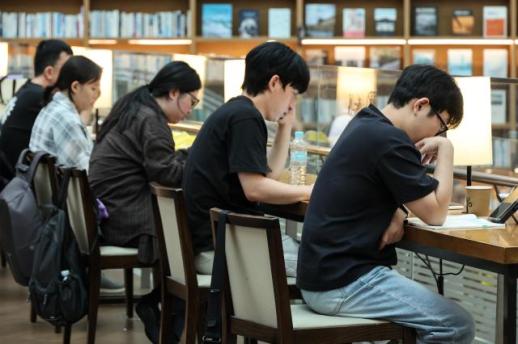 Most Korean jobseekers feel "on hold" rather than unemployed SEOUL, July 30 (AJP) —Active jobseekers theoretically fall under the "unemployed" in South Korea, but most of them see themselves as being "on hold" or in "rest mode," reflecting a growing sense of uncertainty and defeat rather than withdrawal from the labor market, a survey showed. According to a survey of 1,412 job seekers conducted by career platform Saramin, 63.3 percent said they considered themselves to be in a "resting" or "taking a break" phase. The finding underscores a gap between South Korea's official labor classifications and how many job seekers perceive their own status. Under the country's labor statistics, people actively seeking work are classified as unemployed rather than economically inactive. Even those preparing for employment by studying or acquiring new skills are not included in the official "taking a break" category. The survey, however, found that many use the term more broadly to describe the emotional reality of prolonged job hunting. The perception was widespread across age groups, with 62.4 percent of respondents in their 20s, 66.1 percent in their 30s and 65.8 percent in their 40s describing themselves that way. The figure was lower among those aged 50 or older at 53.9 percent. The biggest reason cited was the inability to secure a full-time job, selected by 70.9 percent of respondents. Others said they felt unproductive (37.9 percent), believed they were simply letting time pass (34.6 percent), were not engaged in paid work such as part-time jobs (28.9 percent), or were recovering physically or mentally before returning to work (20.6 percent). Respondents could choose more than one answer. Yet most respondents remained actively engaged in their job search. More than four in five, or 81.4 percent, said they had either been looking for work continuously over the past year or had resumed their job search after taking a break. They had applied for an average of 30.3 job postings during that period. Their willingness to find work also remained strong. Some 86.6 percent said they hoped to find a job within the next month, while the number of newly registered resumes on Saramin rose 14.4 percent from the second half of last year. Different meanings were attached to the "taking a break" phrase. While 34.8 percent associated it with helplessness or giving up on job hunting, 28.5 percent viewed it as a period of regrouping before the next opportunity. Another 20.1 percent said it meant waiting for a job that met their expectations, while 13.4 percent associated it primarily with leisure or time off. Saramin said many job seekers use the expression not because they have left the labor market, but because it captures the uncertainty and pressure of an increasingly prolonged job search. 2026-07-30 14:24:04
-
 Seoul mulls 20% cap on single-stock leveraged ETFs SEOUL, July 30 (AJP) -South Korea's financial authorities are moving toward tougher curbs on single-stock leveraged exchange-traded funds, proposing to limit such products to a fixed share of retail investors' portfolios after a sharp selloff exposed the risks of heavy speculation in semiconductor stocks. At an emergency meeting among key financial policymakers on Wednesday, Finance Minister Koo Yun-cheol, Bank of Korea Gov. Shin Hyun-song, Financial Services Commission Chairman Lee Eog-weon, Financial Supervisory Service Gov. Lee Chan-jin and presidential economic adviser Ha Joon-kyung agreed to pursue additional measures aimed at containing volatility that has intensified in recent weeks. Under discussion is a 20 percent of an individual's total investment assets as an illustrative ceiling, although the final threshold has yet to be determined. The move follows a violent correction in South Korean equities, where leveraged bets concentrated in Samsung Electronics and SK hynix have amplified market swings through mandatory end-of-day portfolio rebalancing. "The participants shared the view that single-stock leveraged ETFs have contributed to stock market volatility and agreed to swiftly pursue additional measures," the Ministry of Finance and Economy said after the meeting. Authorities are also considering imposing higher trading costs on investors engaging in excessive order activity by extending a surcharge mechanism currently used in the futures market to single-stock leveraged ETF trading. In addition, regulators plan to require simulated trading alongside the existing mandatory investor education program before retail investors can trade the products. The government will also seek legal authority to temporarily lower leverage ratios during periods of market stress, similar to Hong Kong's variable leverage framework. Under such a system, regulators could reduce the leverage of a 2x ETF to 1.5x if volatility becomes excessive. Officials said implementation details and the timetable would be finalized after consultations with regulators and industry participants. The latest measures come on top of restrictions unveiled earlier this month. Beginning Friday, investors seeking to purchase additional single-stock leveraged ETFs will be required to maintain a minimum cash deposit of 30 million won ($20,600), up from 10 million won. The requirement will apply to both domestic and overseas single-stock leveraged ETFs. From August, mandatory investor education will be extended from two hours to three hours, while trading from November will be limited to increments of 20 shares to discourage excessive turnover. 2026-07-30 07:31:33
-
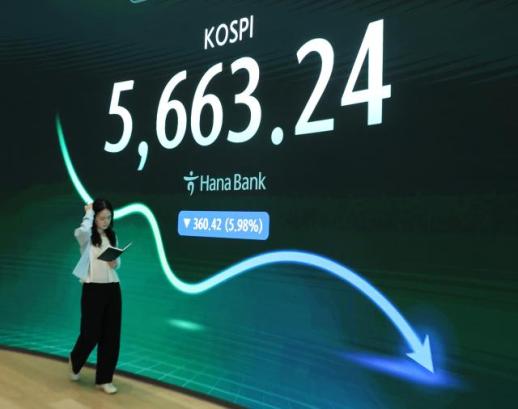 KOSPI rolls back to April, KOSDAQ to January 2025 levels as AI rally unravels SEOUL, July 29 (AJP) - It's only Wednesday, but South Korea's main bourse has already lost nearly 20 percent from its recent high, with the KOSPI retreating to early-April levels and the KOSDAQ to January 2025 as investors interpreted SK hynix's record second-quarter earnings as evidence that the AI-driven semiconductor boom may be maturing. The benchmark KOSPI closed 5.98 percent lower at 5,663.24, while the tech-heavy KOSDAQ fell 6.12 percent to 662.68 after both indexes recovered from intraday losses of more than 10 percent. Earlier in the session, both markets triggered 20-minute circuit breakers as heavy selling swept through the bourse, just a day after the KOSPI suffered its steepest decline in nearly five months. What began as a semiconductor-led correction quickly snowballed into a broader unwinding of South Korea's AI-driven rally. The rout erased about 2,807 trillion won ($2 trillion) in market value from KOSPI-listed companies, exposing how heavily the rally had depended on just two AI champions. SK hynix has lost about 1,051 trillion won in market value since its recent peak, shrinking from roughly 2,080 trillion won to 1,029 trillion won, a decline of 50.5 percent. Samsung Electronics has shed about 680 trillion won, falling from approximately 2,067 trillion won to 1,387 trillion won, down 32.9 percent. The combined market capitalization of KOSPI-listed companies has dropped from about 7,413 trillion won at its recent peak to roughly 4,606 trillion won, erasing nearly 38 percent of market value, according to Korea Exchange data. At the rally's peak, Samsung Electronics and SK hynix together accounted for more than 40 percent of the KOSPI's weighting, helping propel the benchmark to repeated record highs. As sentiment toward the two chipmakers reversed, the broader market quickly followed. Record profits no longer enough SK hynix became the immediate catalyst after reporting record second-quarter earnings that nevertheless fell short of investors' elevated expectations. The world's second-largest memory chipmaker posted record quarterly revenue of 79.21 trillion won and operating profit of 60.54 trillion won for the April-June period, driven by robust demand for high-bandwidth memory chips used in AI accelerators. Its operating margin reached an all-time high of 76.1 percent. Yet even record earnings failed to satisfy investors, reinforcing concerns that exceptional profits were no longer enough to justify AI-driven valuations. During its earnings call, SK hynix reiterated that AI infrastructure investment by hyperscale cloud providers would remain strong beyond next year, said it had secured long-term supply agreements with about 10 major customers and unveiled plans to invest nearly 50 trillion won this year to expand production capacity. Rather than reassuring investors, the outlook raised fresh questions over whether hyperscale spending could continue expanding fast enough to justify another wave of memory-industry capacity investment. The lack of more concrete shareholder-return measures added to the disappointment. SK hynix shares plunged 18.8 percent to 1,258,000 won, while SK Square, whose value is closely tied to its stake in the chipmaker, tumbled 12.0 percent to 403,500 won. Samsung Electronics reversed an early gain to finish 8.0 percent lower at 277,500 won, while Samsung Electro-Mechanics dropped 11.2 percent to 121,000 won. Selling quickly spread beyond semiconductors. Hyundai Motor fell 7.0 percent to 284,500 won, LG Energy Solution lost 7.1 percent to 345,000 won, Samsung Biologics declined 5.3 percent to 1,148,000 won, KB Financial Group slid 8.4 percent to 112,000 won, Samsung Life Insurance dropped 7.4 percent to 136,800 won and Shinhan Financial Group fell 6.4 percent to 69,000 won. Foreign investors started the session as net buyers but turned into sellers as losses accelerated. Individuals also sold shares, while institutional investors absorbed part of the pressure through net purchases, including flows believed to be linked to exchange-traded funds. Concerns had already been building before the earnings release. Investors were reassessing the enormous capital spending required to sustain the AI infrastructure boom, questioning whether hyperscale investment would generate sufficient returns and whether memory-chip earnings were approaching a cyclical peak. China's rapid semiconductor advances added another layer of concern. The blockbuster Shanghai debut of memory maker ChangXin Memory Technologies, together with reports of progress in domestic chipmaking equipment, reinforced fears that China's memory industry was narrowing the technology gap with global leaders. At the same time, expectations of further Bank of Japan rate hikes revived fears of another yen carry-trade unwind. Higher Japanese yields and a stronger yen reduced the appeal of financing overseas investments with cheap yen borrowings, prompting investors to trim leveraged positions across Asian equities, particularly AI-related trades that had attracted heavy foreign inflows. The weakness spread across the region. Japan's Nikkei 225 fell 1.49 percent to close at 61,434.19 as Kioxia Holdings and chip-equipment maker Kokusai Electric tumbled, while Taiwan's benchmark dropped 3.76 percent to 40,039.18. Leverage accelerated the sell-off The market's structure magnified the decline. Retail investors had piled into single-stock leveraged ETFs during the rally, using products designed to deliver twice the daily return of Samsung Electronics and SK hynix. As the shares plunged, those leveraged bets quickly unraveled, triggering another wave of forced selling. Margin calls on investors who had borrowed to buy semiconductor shares and leveraged ETFs further accelerated the decline. Trading in inverse products linked to individual chipmakers also surged as investors rushed to profit from the downturn. Because leveraged and inverse ETFs rebalance their portfolios daily, sharp one-way moves can generate additional buying or selling in the underlying shares, reinforcing volatility. The collateral damage was equally severe. As the market crumbled, panic spread among retail investors. Online stock forums were flooded with desperate posts such as, "Please save me. I'll never invest in stocks again," "I was a fool for believing SK hynix would reach 5 million won," and "How much further can it fall? My hands are shaking." Kim Yong-beom, the presidential chief policy secretary, said single-stock leveraged ETFs should not bear sole responsibility for the market's volatility. Speaking during President Lee Jae Myung's visit to Brazil, he argued that South Korea's market structure—not just leveraged products—had amplified the swings. He cited the heavy weighting of Samsung Electronics and SK hynix in the benchmark index, the dominance of active retail investors and the widespread use of derivatives as structural factors magnifying market moves. "A 10-point move at the center of the market can easily become a 20- or 30-point move in Korea because of the characteristics of our market," he said. The Financial Services Commission has already suspended new listings of such products and will raise the minimum cash requirement for new or additional investments from 10 million won to 30 million won. Even so, Wednesday's sell-off suggested that positions accumulated during the AI rally remained large enough to destabilize the broader market. On the KOSDAQ, individuals were net sellers while foreign and institutional investors were net buyers. Biotechnology heavyweight Alteogen fell 7.3 percent, battery materials maker EcoPro BM dropped 8.9 percent and its parent EcoPro lost 8.2 percent. Robotics developer Rainbow Robotics slid 9.1 percent, semiconductor equipment makers Jusung Engineering and Wonik IPS fell 10.4 percent and 9.6 percent, respectively, while precision-parts supplier Rino Industrial declined 7.5 percent. Drug developer HLB also dropped 6.8 percent. PharmaResearch, a medical aesthetics company, bucked the broader market by rising 3.2 percent. By the close, few corners of the market had been spared. 2026-07-29 17:24:31
-
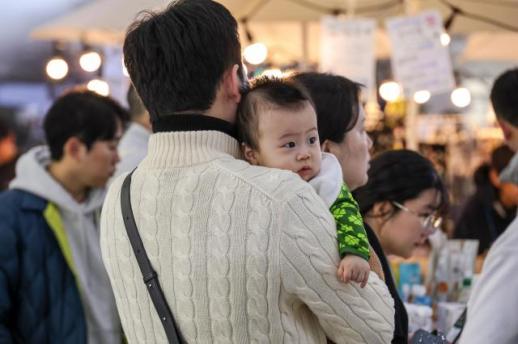 South Korea's birthrate rises for 23rd straight month SEOUL, July 29 (AJP) - South Korea's birthrate continued to show signs of recovery in May, with the number of newborns increasing for the 23rd straight month, according to data released by the Ministry of Data and Statistics on Wednesday. Some 23,160 babies were born in May, up 13.6 percent from a year earlier. The country’s total fertility rate, which measures the average number of children a woman is expected to have over her lifetime, also rose to 0.85 from 0.75 a year earlier, while the number of marriages declined from a year earlier. The latest figures extended a steady recovery that has been underway since July 2024. During the first five months of this year, the number of newborns reached 122,694, up 15.2 percent from the same period last year. The increase was led by women in their 30s, the country's largest childbearing age group. The birth rate for women aged 30 to 34 rose to 78.0 births per 1,000 women from 69.7 a year earlier, while that for those aged 35 to 39 increased to 58.0 from 48.1. Among women aged 25 to 29, the rate edged up to 20.6 from 20.1, and for those aged 40 and older it increased to 4.7 from 4.2. By contrast, the rate for women aged 24 and younger fell to 1.9 from 2.3. First-born children accounted for 63.0 percent of all births, up 1.3 percentage points from a year earlier. However, the share of second-born children edged down 0.2 percentage points to 31.7 percent, while that of third-or-later children fell 1.1 percentage points to 5.3 percent. Births rose across the country, with Jeju the only region to record a decline. Seoul recorded 4,227 births, up 17.7 percent, while Gyeonggi Province saw births rise 13.8 percent to 7,075, compared with a 3.1 percent decline in Jeju. The increase came despite a slowdown in marriages. A total of 20,368 couples married in May, down 6.4 percent from a year earlier, with Incheon the only region to record an increase. Even so, cumulative marriages for the first five months of this year rose 3.9 percent from a year earlier. The total number of divorces stood at 36,240 over the same period, up 0.2 percent on-year. In May, divorces totaled 7,122, down 3.9 percent from a year earlier. Despite the recovery in births, South Korea's population continued to decline naturally. The number of deaths rose 3.8 percent from a year earlier to 29,573 in May. However, the natural population decline, calculated as the difference between births and deaths, narrowed to 6,413 from 8,103 a year earlier, as births grew faster than deaths. Ulsan, Sejong and Gyeonggi Province were the only regions where births exceeded deaths, while all other regions recorded natural population declines. 2026-07-29 15:08:40
-
 How South Korea became Asia's AI ETF test case SEOUL, July 28 (AJP) — Not long ago, Nvidia was the trade that defined the artificial intelligence boom. Today, investors are searching for the next AI winner—and using increasingly leveraged financial products to amplify those bets. That search is reshaping not only Asia's semiconductor industry but also its capital markets. As investors crowd into a handful of AI champions, exchanges are racing to launch new products while regulators grapple with where to draw the line between financial innovation and market stability. South Korea has emerged as Asia's real-world test case. Its AI-driven stock rally transformed Samsung Electronics and SK hynix into the foundation of one of the world's busiest single-stock leveraged exchange-traded fund (ETF) markets, offering regulators—and rival financial centers—a preview of both the opportunities and the risks. Hong Kong moved first by listing Asia's first single-stock leveraged and inverse ETFs in 2025. Japan may be next, with proposed leveraged products linked to memory-chip maker Kioxia. China, meanwhile, is steadily expanding the pool of semiconductor companies that could underpin similar products as Beijing builds domestic AI champions. Increasingly, the race is shifting from semiconductor fabs to capital markets, where exchanges, asset managers and regulators are shaping the next generation of AI investment products—and the rules that govern them. Asia's single-stock leveraged ETF story began in Hong Kong. Seeking to strengthen its position as a regional ETF hub, Hong Kong Exchanges and Clearing approved Asia's first single-stock leveraged and inverse ETFs in 2025, initially allowing investors to take amplified long or short positions in companies including Samsung Electronics and SK hynix without directly trading derivatives. Since then, the market has expanded to products linked to global technology companies such as Nvidia and Tesla, reflecting Hong Kong's strategy of competing through increasingly sophisticated exchange-traded products rather than market size alone. If Hong Kong pioneered the products, South Korea demonstrated how quickly the market could grow. The country's AI rally turned Samsung Electronics and SK hynix into magnets for leveraged investment, attracting billions of dollars into products offering two-times exposure to the chipmakers at the center of the global AI infrastructure boom. Just as importantly, South Korea became a case study in the risks. As assets under management expanded, regulators warned that funds designed to track individual stocks could themselves begin influencing trading in those shares. The debate quickly shifted from investor demand to whether leveraged ETFs had become large enough to amplify volatility in the underlying market. South Korea's experience has drawn attention well beyond its borders. Hong Kong-listed leveraged ETFs tied to Samsung Electronics and SK hynix have attracted substantial assets, while U.S. issuers have proposed additional leveraged products linked to Korean semiconductor stocks. Yang Jun-sok, professor of economics at the Catholic University of Korea, said South Korea's experience had likely influenced the development of similar products elsewhere in Asia. "South Korea's single-stock leveraged ETFs have had some influence," Yang said. "As long as a handful of stocks continue to outperform, demand for these products is inevitable. Once that demand exists, more developed financial markets will create products to meet it." Japan may offer a glimpse of the industry's next phase. Several U.S. asset managers have proposed leveraged and inverse ETFs linked to memory-chip maker Kioxia as optimism grows over AI infrastructure spending. Unlike South Korea, where leveraged ETFs followed a surge in retail demand, Kioxia's proposed products are emerging before a comparable trading boom has taken hold. That marks an important shift. Rather than responding to investor enthusiasm, asset managers are increasingly attempting to identify tomorrow's AI winners before the market fully prices them in. Whether that becomes a lasting regional trend remains uncertain. "I think it's still too early to call this a lasting trend," Yang said. "Regulators in other markets have become more aware of the risks these products can pose to market stability, and investors also understand how volatile single-stock leveraged ETFs can be." "If the current concentration of gains in AI and semiconductor stocks begins to fade, demand for single-stock leveraged ETFs is also likely to weaken," he said. China has yet to become a major market for single-stock leveraged semiconductor ETFs. Even so, Beijing's drive to build a self-sufficient semiconductor industry is steadily expanding the universe of companies around which such products could eventually be built. The blockbuster Shanghai debut of ChangXin Memory Technologies (CXMT) highlighted investor appetite for China's domestic semiconductor champions. As Beijing pours investment into memory chips, AI hardware and advanced manufacturing, asset managers are gaining an expanding list of companies that could support future leveraged products. Today's ETFs revolve around Samsung Electronics, SK hynix and Kioxia. Tomorrow's could include a much broader range of Chinese chipmakers. Yang said South Korea's experience has already helped raise international awareness of both the opportunities and risks of single-stock leveraged ETFs. "These products have attracted considerable interest abroad, especially on social media," Yang said. "That has increased awareness not only of their potential returns but also of their risks." As single-stock leveraged ETFs spread across Asia, regulators are increasingly confronting the same question: how much leverage is too much? South Korea has responded by slowing the market. Authorities suspended approvals for new single-stock leveraged ETFs and ETNs, tightened investor suitability requirements and accelerated stricter minimum cash-deposit rules as speculative trading intensified during the AI rally. Hong Kong has taken a different approach. Rather than restricting access, regulators introduced a framework allowing issuers to temporarily reduce target leverage ratios during periods of market stress instead of forcing funds to maintain fixed two-times exposure under all conditions. The broader lesson extends well beyond leveraged ETFs. The AI boom is changing not only which companies investors buy but also how capital markets package those companies into increasingly concentrated investment products. That demand is unlikely to disappear simply because regulation becomes stricter. As investors hunt for Asia's next AI champion, the competition is no longer confined to semiconductor fabs. It is increasingly being fought in capital markets, where exchanges compete to build the next generation of AI investment products and regulators race to keep pace with the risks they create. 2026-07-28 17:12:22
-
 China chip fears send KOSPI plunging over 10% SEOUL, July 28 (AJP) - China's growing push into semiconductors rattled South Korea's stock market on Tuesday. Shares of Samsung Electronics and SK hynix crashed, sparking panic across the market. The sell-off was severe enough to activate automatic trading halts on both the benchmark KOSPI and the junior KOSDAQ, including sidecars and circuit breakers designed to curb sharp market declines. The KOSPI tumbled 10.84 percent to 6,023.66, briefly falling below the 6,000-point mark during the session. The KOSDAQ dropped 7.72 percent to 705.85, also slipping below 700 intraday before paring some losses by the close. The selloff followed another sharp decline in U.S. semiconductor stocks overnight, with Nvidia falling 4.99 percent and the Philadelphia Semiconductor Index losing 2.23 percent. Micron Technology, Sandisk and AMD also declined, while SK hynix's U.S.-listed shares dropped 7.47 percent, slipping below their recent offering price. Investor sentiment weakened further after Chinese memory chipmaker CXMT surged more than 400 percent on its market debut the previous day, becoming the world's most valuable listed semiconductor company. Investor sentiment weakened further after Chinese memory chipmaker CXMT surged more than 400 percent in its market debut the previous day, becoming one of the most valuable listed companies in the world's most populous country. Separate reports that China has begun mass-producing deep ultraviolet (DUV) lithography equipment also fueled concerns that the country's semiconductor industry is advancing faster than expected, prompting another round of profit-taking across technology shares. Foreign investors dumped 4.97 trillion won worth of KOSPI shares, while retail investors bought 4.33 trillion won and institutions purchased 678 billion won. Samsung Electronics led the decline, plunging 13.39 percent to 220,000 won, its lowest closing price since April 30 and its steepest one-day drop of the year. Foreign investors dumped 1.63 trillion won worth of the shares, marking the second-largest net selloff on the main board. SK hynix fell even further, dropping 14.65 percent to 1,550,000 won, its lowest closing price since early May and its second-largest one-day decline of the year, just short of its record 15.37 percent fall on July 13. Foreign investors offloaded a net 3.21 trillion won worth of the stock, the largest net selling by foreign investors, while institutions bought a net 907.7 billion won, far from enough to offset the heavy foreign selling. Losses spread rapidly across other major blue-chip stocks. Samsung Electro-Mechanics slid 15.92 percent, SK Square lost 15.60 percent, Samsung Electronics preferred shares fell 12.01 percent, and Samsung C&T declined 10.16 percent. Other major stocks similarly suffered steep losses, with Hyundai Motor falling 9.68 percent, HD Hyundai Heavy Industries down 7.30 percent, Kia off 6.60 percent, and LG Energy Solution lower by 5.71 percent. KB Financial, Shinhan Financial and Hanwha Aerospace also declined 4.29 percent, 3.90 percent and 2.67 percent, respectively. Samsung Biologics was the only major stock to finish higher, edging up 0.26 percent. The KOSDAQ also came under heavy pressure. Among heavyweights, Alteogen fell 4.97 percent, EcoPro BM dropped 7.87 percent, EcoPro lost 9.80 percent, Rainbow Robotics declined 10.20 percent, and Jusung Engineering slid 14.08 percent. The South Korean won strengthened against the U.S. dollar, with the greenback trading at 1,460.1 won, compared to 1,468.5 won in the previous session. The semiconductor-driven sell-off spread across broader Asian markets. Japan's Nikkei 225 fell 3.83 percent, while China's Shanghai Composite declined 1.16 percent. In contrast, Hong Kong's Hang Seng Index edged up 0.17 percent. 2026-07-28 17:12:02
-
 South Korea's elderly top 20%; working population slips below 70% SEOUL, July 28 (AJP) —South Korea's aging deepened last year, with those aged 65 or older topping 20 percent of the population, more than doubling the share of children aged 14 or younger, while the working-age population fell below the 70-percent threshold for the first time, census data showed Tuesday. According to the 2025 Population and Housing Census released by the Ministry of Data and Statistics, people aged 65 and older accounted for 20.7 percent of the population, or 10.72 million. Children aged 14 and younger made up just 10.1 percent, leaving the elderly population more than twice as large. The shift accelerated over the past year. The number of seniors increased by 601,000, or 5.9 percent, while the youth population fell by 196,000, or 3.6 percent. The working-age population, defined as those aged 15 to 64, fell by 393,000 to 35.87 million, with its share of the total population slipping to 69.2 percent — the first time it has fallen below the 70 percent mark since comparable records began in 2015. The decline has continued since 2018. The old-age dependency ratio — the number of people aged 65 and older per 100 working-age residents — climbed to 29.9 from 27.9 a year earlier, meaning roughly three working-age people now support one senior. The aging index — the number of seniors for every 100 children under 15 — also climbed to 205.2 from 186.7 a year earlier. The country's median age rose to 46.8 years, up 0.6 years from the previous year. People in their 50s accounted for the largest share of the population at 16.7 percent, followed by those in their 60s at 15.3 percent and 40s at 14.8 percent. The data also highlighted continuing changes in marriage patterns. Among 43.23 million Korean adults aged 18 and older, 29.6 percent were single, while 56.3 percent were married and 14.1 percent were divorced or widowed. Marriage was increasingly delayed among younger adults. More than half of Koreans in their 30s were unmarried, with the share reaching 54.7 percent. The figure dropped to 21.9 percent among those in their 40s, while 96.0 percent of people in their 20s or younger were unmarried. The trend was also reflected in household composition. One- and two-person households accounted for 66.1 percent of all ordinary households, while the average household size fell to 2.16 people. Regionally, Seoul recorded the country's highest unmarried rate at 37.1 percent and the lowest marriage rate at 51.1 percent. South Jeolla Province posted the lowest unmarried rate at 22.2 percent, while Sejong recorded the highest marriage rate at 64.4 percent. Despite the sweeping demographic changes, the country's total population was little changed. As of Nov. 1, 2025, the population stood at 51.82 million, up just 12,000 people, or 0.02 percent, from a year earlier. Behind the broadly stable population, Korean nationals continued to decline while the foreign population expanded. The number of Korean nationals fell by 50,000, marking a fifth consecutive annual decline driven largely by persistently low birth rates. Meanwhile, the foreign population rose by 70,000, or 3.2 percent, to 2.11 million, largely reflecting increases in international students, trainees and seasonal workers. Foreign residents also remained substantially younger than the domestic population. Nearly 90 percent of foreigners were of working age, compared with 68.4 percent of Korean nationals, highlighting their growing role in offsetting labor-force shortages as the country's population continues to age. 2026-07-28 14:12:32