

Journalist

Ryu Yuna류윤아
Julia37@ajupress.com
ReporterFinancial Supervisory Service (FSS) & finance, capital markets, Southeast Asian affairs
Yuna Ryu covers finance, capital markets and Southeast Asian affairs.
She is drawn to the questions that numbers raise and the stories that data alone cannot answer.
Prior to journalism, she worked at Hyundai Motor Company and the Singapore Chamber of Commerce, focusing on business strategy and international affairs. She has also hosted diplomatic receptions and international conferences as an MC.
Ryu holds a master's degree in Media and Communication from Korea University, where her research focused on neuroscience-based studies of media effects. "Beyond every statistic is a human story waiting to be heard."
Latest by Ryu Yuna
-
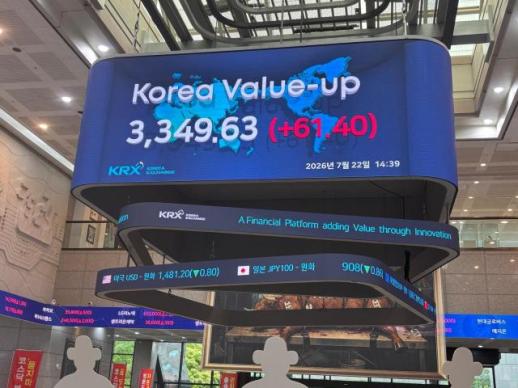 Korean Inc. doles out over $5 bn in July cash dividends SEOUL, August 06 (AJP) — South Korean companies doled out more than 7.4 trillion won ($5.3 billion) in cash dividends in July, led by Samsung Electronics and Hyundai Motor, as businesses stepped up shareholder returns under the government's drive to improve corporate value. According to the Korea Exchange (KRX) on Thursday, 90 listed companies, including 58 on the main KOSPI market and 32 on the junior KOSDAQ market, announced cash dividend payments totaling about 7.4 trillion won during the month. Samsung Electronics accounted for about 2.5 trillion won of the total, while Hyundai Motor approved dividends worth about 700 billion won. Major banking groups also expanded shareholder returns through share buybacks and share cancellations. Shinhan Financial Group and KB Financial Group each announced shareholder return measures worth 700 billion won, while Hana Financial Group and Woori Financial Group unveiled plans worth 250 billion won and 150 billion won, respectively. Separately, six companies disclosed new plans aimed at improving corporate value in July, bringing the cumulative total to 747 since May 2024. Of those, 348 are listed on the main KOSPI market and 399 on the junior market. Companies that have made such disclosures now account for 84.6 percent of the country's total stock market capitalization. On the KOSPI alone, the figure rises to 88.4 percent. Looking ahead, another seven companies notified the exchange that they intend to make similar disclosures, exceeding the typical monthly pace of one to three companies during the first half of the year. The trend has also drawn strong investor interest. The KRX Value-up Index closed at 3,162.13 at the end of July, up 75.9 percent from a year earlier and outperforming both the KOSPI and the KOSPI 200 over the same period. Assets under management for 13 ETFs tracking the index also climbed to 3.4 trillion won, nearly seven times their level at launch. Looking ahead, the KRX said it will hold regional briefing sessions in September to help high-dividend companies, low price-to-book (P/B) companies and specially listed firms prepare their value-improvement plans. The sessions will offer guidance on drafting the plans, improving P/B ratios, meeting disclosure requirements and strengthening communication with shareholders. AJP Takeaways • As of July 2026, 90 South Korean listed companies announced cash dividends totaling 7.4 trillion won ($5.3 billion), according to the Korea Exchange (KRX). • Samsung Electronics accounted for approximately 2.5 trillion won in dividends, while Hyundai Motor approved about 700 billion won in shareholder payouts. • Companies that have published Corporate Value Enhancement Plans now represent 84.6 percent of South Korea's total stock market capitalization and 88.4 percent of the KOSPI market capitalization. • The Korea Exchange Value-up Index rose 75.9 percent year over year to 3,162.13 at the end of July 2026, while assets under management in 13 related exchange-traded funds (ETFs) increased to 3.4 trillion won. • The Korea Exchange plans to hold regional briefing sessions in September 2026 to encourage more listed companies to adopt Corporate Value Enhancement Plans and strengthen shareholder communication. 2026-08-06 14:58:42
-
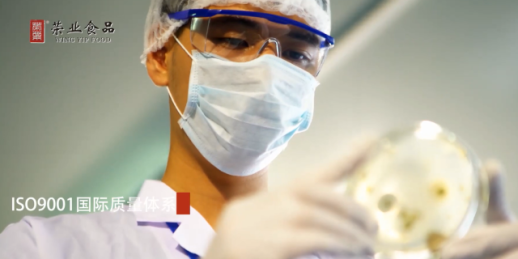 KOSDAQ-listed processed meat producer seeks capital boost SEOUL, August 6 (AJP) - KOSDAQ-listed processed meat producer Wing Yip Food said Thursday that its chairman and major shareholders will further increase their stakes by investing 20.8 billion won in newly issued shares to strengthen the company's capital base. According to a disclosure filed with the Financial Supervisory Service (FSS), its chairman, Wang Xiantao, purchased 18,355 shares the previous day at an average price of 1,148 won per share, spending about 21.1 million won entirely with his own funds. The purchase increased his holdings to 2.02 million shares or a 16.08 percent stake. Wang also reportedly plans to acquire an additional 237,533 shares next month, equivalent to about 1.89 percent of the company's outstanding shares. In addition to his planned purchases between Sept. 7 and Oct. 6, Wang Tingfeng, the largest shareholder of the Hong Kong-based Chinese company, also plans to invest 20.8 billion won in newly issued shares. At an extraordinary shareholders' meeting later in the day, the company is seeking approval for a 36.8 billion won fundraising plan to strengthen its capital base, meet South Korea’s stricter listing requirements and improve corporate and shareholder value. The new shares are scheduled to be issued on Sept. 7, which the company expects will help boost its market capitalization. Meanwhile, its shares opened 0.6 percent higher at 1,166 won and climbed as much as 2.5 percent to 1,188 won before paring gains to trade 0.9 percent lower at 1,149 won. Listed on the junior KOSDAQ market in 2018, Wing Yip Food manufactures Chinese-style processed meat products including lap cheong, bacon and ready-to-eat sausages. AJP Takeaways: • Wing Yip Food announced on Aug. 6, 2026 that chairman Wang Xiantao had increased his stake by purchasing 18,355 shares on the open market and plans to buy an additional 237,533 shares between Sept. 7 and Oct. 6, 2026. • Wing Yip Food's controlling shareholder, Wang Tingfeng, plans to invest 20.8 billion won by purchasing newly issued shares as part of the company's 36.8 billion won capital-raising plan. • The company said the combined insider investment and share issuance are intended to strengthen its capital base, comply with South Korea's tightened listing maintenance requirements, and enhance corporate and shareholder value. • Wing Yip Food, listed on the KOSDAQ since 2018, manufactures Chinese-style processed meat products, including lap cheong (Chinese sausage), bacon and ready-to-eat sausages. 2026-08-06 14:42:41
-
 KOSPI heads back south on overnight Wall Street tech retreat SEOUL, August 06 (AJP) — The roller-coaster ride in Seoul headed back south Thursday, as South Korean stocks tracked an overnight pullback in U.S. tech shares that spread across the region's semiconductor sector. The KOSPI fell 4.13 percent to 6,325.82 as of 10:08 a.m. local time, with losses deepening as the session wore on. Foreign investors were the biggest sellers, offloading a net 1.14 trillion won ($798 million) in shares. Retail investors bought a net 995.6 billion won, while institutions added 117.8 billion won. The junior KOSDAQ slipped 1.04 percent to 791.27. Retail investors bought a net 180.1 billion won ($126 million) worth of shares, while foreign and institutional investors sold 169.0 billion won and 10.9 billion won, respectively. Semiconductor stocks led the decline after weakness in U.S. chip shares overnight. SK hynix plunged 8.27 percent to 1,530,000 won, following a 2.17 percent drop in its U.S.-listed ADR. Samsung Electronics fell 4.47 percent to 235,000 won. The weakness spread across the broader AI supply chain. SK Square tumbled 10.81 percent to 998,000 won, and Samsung Electro-Mechanics slid 9.81 percent to 1,223,000 won. Elsewhere, Hyundai Motor slipped 1.24 percent to 399,500 won, and Samsung Life Insurance fell 4.76 percent to 280,000 won. Samsung Biologics was unchanged at 1,491,000 won. LG Energy Solution and KB Financial were among the few gainers, rising 0.45 percent to 337,000 won and 0.41 percent to 171,400 won, respectively. On the KOSDAQ, losses were concentrated in semiconductor equipment and battery-related shares. AI drug developer Alteogen slipped 0.36 percent to 276,000 won. Battery materials makers EcoPro and EcoPro BM fell 0.36 percent and 1.38 percent, to 82,000 won and 100,300 won. AI robotics developer Rainbow Robotics edged up 0.21 percent to 485,000 won, while semiconductor equipment makers Jusung Engineering and Wonik IPS dropped 5.95 percent and 7.37 percent, to 134,400 won and 90,500 won. Among biopharmaceutical stocks, HLB fell 0.57 percent, ABL Bio rose 0.75 percent, Peptron climbed 4.37 percent, and chip substrate maker Simmtech jumped 5.73 percent to 108,900 won. Wall Street's mixed finish overnight dampened sentiment. The Dow Jones Industrial Average rose 0.49 percent, but the S&P 500 slipped 0.17 percent and the Nasdaq Composite fell 0.83 percent as investors took profits in technology shares. Chipmakers were among the weakest performers on Wall Street. Advanced Micro Devices tumbled more than 7 percent after its outlook disappointed investors, while Nvidia bucked the trend, rising 3.44 percent on hopes that its AI infrastructure partnership with SpaceX could support future demand. Weak economic data added to the cautious mood. U.S. private employers added just 44,000 jobs in July, well below expectations of 75,000, and growth in the services sector also fell short of forecasts. In currency markets, the Korean won strengthened to 1,417.30 against the dollar, from the previous session's close of 1,426.50. In the wider region, Japan's Nikkei 225 fell 1.73 percent to 65,153.65 as weakness in U.S. technology shares and profit-taking weighed on semiconductor and electronics stocks. AJP Takeaways • KOSPI dropped 4.13 percent to 6,325.82 as of 10:08 a.m., with foreign investors selling a net 1.14 trillion won ($798 million) in shares. • Semiconductor stocks led the losses, tracking an overnight slump in U.S. chip shares; SK hynix fell 8.27 percent and Samsung Electronics dropped 4.47 percent. • KOSDAQ fell 1.04 percent to 791.27, dragged down by semiconductor equipment and battery makers. • Wall Street closed mixed overnight — the Dow rose but the S&P 500 and Nasdaq fell — after AMD's disappointing outlook and weak U.S. jobs data hit tech shares. • The won strengthened to 1,417.30 against the dollar, while Japan's Nikkei 225 fell 1.73 percent on similar tech weakness. 2026-08-06 10:50:50
-
 South Korean investors turn cautious after leveraged ETF frenzy SEOUL, August 5 (AJP) - Just weeks ago, South Korea's stock market looked less like an equity market than a high-stakes casino as some observers put it. Retail investors poured hundreds of trillions of won into newly launched single-stock leveraged exchange-traded funds (ETFs) linked to the country's two major chipmakers Samsung Electronics and SK hynix, fueling one of the sharpest boom-and-bust cycles in the country's stock market history. Circuit breakers were activated on consecutive trading days for the first time, as investors who had borrowed heavily to buy stocks were forced into widespread selling as prices collapsed. Regulators, meanwhile, came under fire for failing to curb the rapid spread of highly speculative products. But the mood has shifted. Both regulators and investors are now navigating a gradual retreat from leverage after one of the most volatile episodes in the country's stock market history. The clearest sign is how quickly leverage itself is disappearing. Trading in 16 leveraged and inverse ETFs linked to Samsung Electronics and SK hynix has collapsed since regulators raised the minimum cash deposit requirement to 30 million won (about US$20,000) on July 31. Turnover fell from roughly 12.4 trillion won on July 30 to about 3 trillion won on the day the rule took effect, before dropping again to around 1.2 trillion won two trading days later — about one-tenth of the level seen before the regulation. Other indicators also point to a broad reduction in risk-taking. According to the Korea Financial Investment Association (KOFIA), outstanding margin loans — money borrowed from brokerages to buy stocks — fell below 30 trillion won at the end of July for the first time in six months. The balance has shrunk by nearly 10 trillion won from its June 24 peak of 38.6 trillion won, meaning more than a quarter of margin financing has disappeared in little over a month. Loans backed by stocks also declined sharply. Outstanding balances fell to about 25.4 trillion won as of July 31, down nearly 3 trillion won from 28.1 trillion won on March 5. The decline was compounded by a wave of forced liquidations after the market's sharp selloff, as investors either repaid debt voluntarily or had their positions liquidated by brokerages after failing to meet margin requirements. Those liquidations totaled 103.8 billion won on July 30 and 122.0 billion won on July 31 following consecutive market-wide circuit breakers. Taken together, the data point to a broad deleveraging across South Korea's retail investment market rather than a retreat confined to leveraged ETFs alone. For regulators, that appears to be the intended outcome. Authorities tightened suitability requirements and tripled the minimum cash deposit for single-stock leveraged ETFs after the products came to dominate ETF trading within weeks of their launch. Officials argued the products had magnified volatility by encouraging short-term speculation around just two companies that dominate the country's equity market. Early data suggest the measures are beginning to have the intended effect. Trading in single-stock leveraged ETFs has fallen sharply while the broader market has remained orderly, indicating that speculative activity has cooled without causing broader market disruption. Investors, meanwhile, also appear to be drawing lessons from one of the most violent corrections in the market's history. The KOSPI has recovered above the 6,300 level after plunging nearly 44 percent from its late-June peak, but margin borrowing and leveraged ETF trading remain well below the levels seen before the selloff. The contrast suggests many retail investors are still reluctant to return to highly leveraged bets. That shift is no longer confined to the domestic market. After buying a net $3.79 billion of the Direxion Daily Semiconductor Bull 3X Shares ETF (SOXL), a leveraged fund designed to deliver three times the daily return of the Philadelphia Semiconductor Index, in July, Korean retail investors turned into net sellers at the start of August. On Aug. 3 alone, they sold a net $664 million — nearly one-fifth of their total July purchases — before returning to modest net buying the following day. The selling did not signal a broader retreat from U.S. equities. Korean investors remained net buyers of U.S. stocks, purchasing a net $278 million in early August, while rotating into semiconductor companies including Micron Technology, Sandisk and SK hynix's U.S.-listed ADR, all of which ranked among their most-bought stocks over the period. The pattern suggests investors are becoming more selective, shifting away from leveraged products while maintaining confidence in the long-term AI investment theme. The retreat from leverage, however, does not mean the underlying risks have disappeared. It is changing who bears them. According to Bloomberg, demand has surged for over-the-counter derivatives known as "crash puts" or "stability notes." The products are designed to protect investment banks against the unlikely but potentially devastating scenario in which a stock loses roughly half of its value in a single trading session. Instead of keeping that risk themselves, banks pay other investors to take it on in exchange for higher returns. Goldman Sachs and BNP Paribas have reportedly marketed such products linked to Samsung Electronics and SK hynix, offering double-digit returns to investors willing to absorb losses if an extreme one-day market collapse occurs. South Korea's experience reflects a broader trend. As leveraged ETFs continue to expand globally, financial institutions are developing increasingly sophisticated ways to redistribute the risks created by those products rather than keeping them on their own balance sheets. The speculative frenzy may be cooling. Whether the risks have been reduced - or simply redistributed - may prove to be the market's next lesson. AJP Takeaways: — South Korea's retail investors have sharply reduced leverage since July 31, 2026, after regulators tripled the minimum cash deposit requirement for single-stock leveraged exchange-traded funds (ETFs) from 10 million won to 30 million won. — Trading in Samsung Electronics and SK hynix leveraged and inverse ETFs has fallen by about 90 percent, with daily turnover dropping from roughly 12.4 trillion won on July 30, 2026, to around 1.2 trillion won two trading days after the new rules took effect. — Margin borrowing has also declined significantly. Outstanding margin loans fell below 30 trillion won at the end of July 2026 for the first time in six months, down nearly 10 trillion won from the June 24, 2026 peak. — Outstanding loans backed by stocks declined to about 25.4 trillion won as of July 31, 2026, indicating that investors are relying less on borrowed money to invest in equities. — According to Bloomberg, investment banks including Goldman Sachs and BNP Paribas have marketed over-the-counter derivatives such as "crash puts" and "stability notes" that transfer extreme market risk to investors willing to accept higher potential returns. 2026-08-05 17:53:47
-
 KOSPI rebounds above 6,500 as foreign investors return amid global chip rally SEOUL, August 5 (AJP) - South Korean stocks extended their rally on Wednesday, with the benchmark KOSPI climbing back above 6,500 as foreign investors returned to the market as net buyers. The rally was further supported by strength in global semiconductor shares and easing Middle East tensions. The KOSPI closed 3.76 percent higher at 6,598.26 after rising as much as 6,674.66 intraday. The surge triggered a buy-side sidecar early in the session, while the junior KOSDAQ gained 2.42 percent to 799.59 after briefly climbing above the 800-point level for the first time in 13 trading days. Foreign investors drove the advance, purchasing a net 1.45 trillion won (US$1.04 billion) worth of KOSPI shares, while individuals and institutions sold a combined 1.47 trillion won to lock in profits following recent gains. Despite the strong buying in the cash market, foreigners remained modest net sellers of KOSPI200 futures, unloading a net 135.7 billion won. Semiconductor heavyweights once again led gains after a strong overnight rally in U.S. technology stocks. SK hynix jumped 5.77 percent to close at 1,668,000 won, while Samsung Electronics gained 2.50 percent to 246,000 won. Samsung Electro-Mechanics soared 14.43 percent to 1,356,000 won, and SK Square added 5.57 percent to 1,119,000 won as buying spread across the Artificial Intelligence (AI)-related semiconductor supply chain. Automakers also traded higher, with Hyundai Motor rising 3.06 percent to 404,500 won and Kia gaining 2.62 percent to 133,000 won. Among industrial and defense names, Samsung C&T climbed 7.75 percent to 347,500 won, HD Hyundai Heavy Industries advanced 5.38 percent to 509,000 won, Doosan Enerbility gained 5.48 percent to 77,000 won, and Hanwha Aerospace edged up 0.30 percent to 1,007,000 won. Financials and other large-cap stocks also finished higher, with Samsung Life Insurance rising 5.76 percent to 294,000 won, KB Financial adding 1.13 percent to 170,700 won, LG Energy Solution gaining 2.13 percent to 335,500 won, and Samsung Biologics inching up 1.02 percent to 1,491,000 won. Sentiment was boosted after Wall Street rallied overnight. The S&P 500 and Dow Jones Industrial Average both closed at record highs, while the Nasdaq gained 2.59 percent. The advance was fueled by optimism that the United States and Iran were nearing an agreement to reopen the Strait of Hormuz, easing concerns over global energy supplies and pushing U.S. crude oil futures down 5.7 percent. Technology shares also advanced after Advanced Micro Devices (AMD) reported better-than-expected second-quarter revenue and earnings and issued third-quarter sales guidance above market forecasts, reinforcing confidence that AI spending remains resilient. AI software company Palantir Technologies also surged 29.45 percent after reporting strong quarterly results, while Nvidia gained 2.56 percent, Micron Technology rose 7.62 percent and Intel climbed 10.84 percent. The gains pushed the Philadelphia Semiconductor Index higher and lifted semiconductor shares globally. SK hynix's U.S.-listed ADRs also advanced 8.17 percent overnight, reinforcing bullish sentiment toward South Korean chipmakers. The KOSDAQ rose for a fourth straight session, bringing its four-day gain to about 24 percent. Among major stocks, Alteogen rose 3.75 percent after announcing a 500 billion won licensing agreement with a global pharmaceutical company. Rainbow Robotics gained 3.64 percent, while Jusung Engineering and Wonik IPS climbed 5.07 percent and 1.24 percent, respectively. Optical communication stocks outperformed after reports that the United States is preparing restrictions on imports of certain Chinese-made components used in data centers. Lightron closed at the daily 30 percent limit, while Taihan Fiberoptics jumped 18.57 percent. Trading activity remained elevated, with turnover totalling 25.5 trillion won on the main board and 6.3 trillion won on the junior market. The currency market also reflected the improved sentiment. The Korean won strengthened to 1,426.50 per dollar from 1,432.50 won in the previous close. Regional markets also advanced. Japan's Nikkei 225 climbed 3.66 percent to 66,300.44, while China's Shanghai Composite gained 1.47 percent to 3,878.43 and Hong Kong's Hang Seng Index edged up 0.21 percent to 25,907.17. 2026-08-05 17:32:13
-
 FSC pushes back on Bloomberg's 'uninvestable' claim SEOUL, August 05 (AJP) — South Korea's financial regulator has rejected a Bloomberg column that described the country as becoming "uninvestable," saying the assessment relied on inaccurate data and overlooked the country's economic fundamentals. The Financial Services Commission (FSC) in a statement released late Tuesday said there was no basis for concerns that South Korea could be regarded as an uninvestable market, saying the country has emerged as an irreplaceable part of the global artificial intelligence (AI) supply chain and continues to attract investment. The response came after Bloomberg columnist Shuli Ren argued in a recent column titled "South Korea is Becoming Uninvestable, Too" that even investors who remain optimistic about the global AI boom could choose to stay away from South Korean stocks because of growing concerns over the market's volatility. The FSC disputed the statistics cited in the column, claiming they did not match officially verified data and that the source of the figures was unclear. The regulator noted that forced liquidations involving margin loans and unpaid purchases averaged about 3,000 accounts per day in June, far below the 360,000 accounts cited. It also added that the country’s economic fundamentals remained solid, citing second-quarter GDP growth of 3.7 percent from a year earlier and a record current account surplus of $38.61 billion in May. It said expectations for listed companies' earnings have continued to improve on optimism over the AI and semiconductor industries, even after the KOSPI reached its recent peak. According to FnGuide data cited by the FSC, projected earnings for KOSPI-listed companies rose from 644 trillion won ($465 billion) at the end of March to 978 trillion won as of Tuesday. Notably, forecasts continued to improve after the KOSPI's late-June peak, rising from 930 trillion won to 978 trillion won. Turning to the recent market turbulence, the regulator said the sharp volatility since mid-June reflected a combination of factors rather than a deterioration in the country's economic fundamentals, adding that market conditions were beginning to stabilize. It pointed to recent measures targeting single-stock leveraged exchange-traded funds (ETFs), saying the government was working to curb risks associated with the products while maintaining overall market stability. Daily turnover in the ETFs fell to 1.3 trillion won on Tuesday, down from 12.4 trillion won before the higher minimum cash deposit requirement took effect on July 30 and 19.4 trillion won at its peak on June 25. "We will continue to manage short-term market volatility while advancing measures to strengthen the capital market and support long-term growth," the FSC said. AJP Takeaways: — On Aug. 5, 2026, the Financial Services Commission (FSC) rejected a Bloomberg opinion column that described South Korea as becoming "uninvestable," saying the assessment relied on inaccurate data and did not reflect the country's economic fundamentals. — The FSC said South Korea remains an important destination for investment, citing its role in the global artificial intelligence (AI) and semiconductor supply chain, stronger corporate earnings expectations and support from domestic and international investment banks. — The regulator said forced liquidations involving margin loans and unpaid purchases averaged about 3,000 accounts per day in June 2026, disputing the Bloomberg column's reference to 360,000 accounts. — The FSC said recent market volatility reflected multiple factors rather than weakening economic fundamentals and pointed to a sharp decline in trading of single-stock leveraged exchange-traded funds (ETFs) following tighter regulations introduced on July 30, 2026. — The Financial Services Commission said it will continue managing short-term market volatility while pursuing measures to strengthen South Korea's capital market and support long-term growth. 2026-08-05 14:18:11
-
 Kakao Games trims losses, eyes recovery with new lineup SEOUL, August 05 (AJP) — Shares of South Korean game developer Kakao Games fell Wednesday morning trading after the company reported lower second-quarter revenue, although its operating loss narrowed from the previous quarter. According to a filing with the Financial Supervisory Service (FSS) Wednesday, the company posted revenue of 75.0 billion won ($54 million), down 35.2 percent from a year earlier, while its operating loss narrowed to 23.0 billion won from 25.5 billion won in the previous quarter. The stock was trading 4.7 percent lower at 7,950 won in the morning trading. Revenue fell as sales from existing games continued to decline and no major new titles were released during the quarter. Although the company remained in the red, ongoing restructuring efforts helped reduce its operating loss from the previous quarter. Mobile game sales totaled 52.7 billion won, while PC online game revenue rose 51 percent from a year earlier to 22.3 billion won, serving as a key support for the quarter. Meanwhile, net loss widened to 57.0 billion won from 39.5 billion won, and pretax loss increased to 64.5 billion won from 45.8 billion won. Looking ahead, the company plans to launch a series of major new titles from the third quarter as it seeks to revive earnings. It will open pre-registration later this month for its Korean fantasy multiplayer online role-playing game (MMORPG) "Dokkaebi's World," inspired by Korea's traditional folklore and mythical goblins known as dokkaebi, ahead of its planned launch in October. The upcoming lineup also includes adventure game "Dungeon Arise" and zombie survival game "God Save Birmingham," both scheduled for release later this year. "Odin Q: Valkyries Call," the latest game in the Odin series, is planned for early next year. The company has also secured global publishing rights for "ArcheAge S: Strait of Freedom" and "Guardian Maiden," a collectible action game, as it expands its future lineup. It is also developing new games based on popular Korean webtoons and comics with The Grimm Entertainment, a South Korean webtoon production company. Separately, Kakao Games is stepping up shareholder returns. Its plans include cancelling 500,000 treasury shares, introducing restricted stock units (RSUs), transferring part of its capital reserve to retained earnings, and encouraging executives to increase their shareholdings. "We will focus on delivering high-quality games with strong global potential while strengthening the foundation for sustainable growth," Chief Executive Officer Lee Si-woo said. "We will continue to roll out new titles while maintaining transparent communication with users and shareholders." AJP Takeaways — Kakao Games reported second-quarter 2026 revenue of 75.0 billion won ($54.3 million), down 35.2% from a year earlier. — Kakao Games’ second-quarter 2026 operating loss narrowed to 23.0 billion won from 25.5 billion won in the first quarter of 2026. — Kakao Games plans to begin pre-registration for the Korean fantasy MMORPG Dokkaebi’s World in August 2026 and target a full launch in October 2026. — The company plans to release Dungeon Arise and God Save Birmingham later in 2026, followed by Odin Q: Valkyries Call in early 2027. — Shareholder-return measures include cancelling 500,000 treasury shares, introducing restricted stock units, reallocating capital reserves to retained earnings and increasing executive share ownership. 2026-08-05 10:58:33
-
 KOSDAQ continues to outperform KOSPI after tightened rules on leveraged ETFs SEOUL, August 4 (AJP) - South Korea's junior KOSDAQ outperformed the benchmark KOSPI for a third straight session on Tuesday, extending its broad rally. Tighter regulations on single-stock leveraged exchange-traded funds (ETFs) reduced trading in chip stocks, broadening gains to biotechnology, robotics and other growth stocks. The KOSDAQ closed at 780.72 points, up 5.88 percent, while the KOSPI gained 1.62 percent to 6,358.95. The latest gain marked the third consecutive session of KOSDAQ outperformance since stricter rules on single-stock leveraged products took effect on July 31. The KOSDAQ closed at 780.72 points, up 5.88 percent, while the KOSPI gained 1.62 percent to 6,358.95. The latest advance marked the third consecutive session of KOSDAQ outperformance since stricter rules on these EFFs took effect on July 31. Under the revised rules, the minimum cash deposit required to trade them was raised to 30 million won (US$21,600) from 10 million won, and investors can no longer use stock or ETF holdings to meet the requirement. The measures followed sharp volatility in leveraged products linked to the country's two chip giants Samsung Electronics and SK hynix. Turnover in the 16 leveraged and inverse ETFs tied to Samsung Electronics and SK hynix fell from 12.45 trillion won on July 30 to 1.39 trillion won on Monday, down 88.9 percent from the day before the new rules took effect. Despite sharp intraday swings, Samsung Electronics and SK hynix both finished higher. Samsung Electronics, which briefly fell as much as 4.80 percent after opening 2.09 percent higher, recovered late in the session to close up 0.21 percent at 240,000 won. SK hynix also rebounded from an intraday decline of as much as 5.36 percent after rising more than 4 percent earlier in the day, ending 0.64 percent higher at 1,577,000 won. Elsewhere on the KOSPI, Hanwha Aerospace surged 9.25 percent to 1,004,000 won, LG Energy Solution climbed 3.96 percent to 328,500 won, Samsung Biologics advanced 3.72 percent to 1,476,000 won and SK Square rose 3.41 percent to 1,060,000 won. While the slowdown does not necessarily mean money has flowed directly into the junior stocks, market participants said reduced concentration in Samsung Electronics and SK hynix has created room for investors to rotate into previously overlooked sectors. Foreign investors also reinforced the shift by buying KOSDAQ shares before the new rules took effect. They were net buyers for four consecutive sessions from July 28 through July 31, despite two circuit breakers during the market selloff, favoring growth stocks such as Rainbow Robotics, Alteogen, EcoPro, PharmaResearch, Techwing and Robotis. The rotation remained evident on Tuesday. Alteogen jumped 9.29 percent to 347,000 won, HLB gained 11.17 percent to 34,350 won, ABL Bio soared 13.24 percent to 80,400 won and LigaChem Biosciences climbed 15.20 percent to 109,900 won. Robotics shares also advanced, with Robotis rising 7.89 percent to 232,500 won and Rainbow Robotics adding 1.85 percent to 467,000 won, while battery materials makers EcoPro and EcoPro BM gained 5.94 percent to 82,000 won and 5.89 percent to 102,500 won, respectively. Still, some analysts cautioned against assuming money leaving leveraged ETFs has flowed directly into individual KOSDAQ stocks. According to Hyundai Motor Securities, retail investors' net purchases of domestic equity ETFs excluding single-stock leveraged products rose from 2.2 trillion won between May 27 and the end of June to 4.7 trillion won in July, suggesting many simply switched to other ETF products rather than individual shares. Nevertheless, institutional investors bought a net 543.4 billion won worth of KOSDAQ shares on Tuesday, offsetting net sales of 277.2 billion won by foreign investors and 258.7 billion won by retail investors, helping extend its rally. Across Asia, Japan's Nikkei 225 gained 0.32 percent to close at 63,957.53, extending strength in technology-related shares. China's Shanghai Composite rose 0.33 percent to 3,822.28, while Hong Kong's Hang Seng Index fell 0.77 percent to 25,807.95 as investors locked in recent gains. 2026-08-04 17:25:58
-
 AI startup XIIlab's shares soar as new contract fuels earnings hopes SEOUL, August 4 (AJP) - Artificial intelligence (AI) startup XIIlab saw its shares rise on the junior KOSDAQ on Tuesday. The stock closed at 11,020 won (US$7.93), up 17.23 percent from the previous session, after surging as much as 30 percent during the session to hit the daily price limit of 12,220 won. The rise came after the startup announced that it had signed a contract worth 30.7 billion won with BNINC, an AI infrastructure provider, to supply software for the National IT Industry Promotion Agency's project to procure next-generation high-performance AI computing resources including 2,016 NVIDIA Vera Rubin GPUs. The deal, valued at nearly three times the company's annual revenue, raised expectations for a sharp increase in future earnings. Running from Aug. 4 through March 2027, the deal follows a series of major AI infrastructure projects secured by XIIlab. Earlier this year, it signed a contract with Samsung SDS to support the construction of AI computing infrastructure, which provides the high-performance computing power needed for AI development. It also won a contract last month to supply software for NVIDIA Spectrum-X, a networking platform designed to enable AI servers to communicate more efficiently. Founded in 2010, XIIlab develops AI software that analyzes video to identify people, objects and events. It also creates synthetic data for AI training and develops GPU-based software used in AI computing systems. 2026-08-04 16:37:51
-
 BECUAI hits daily limit on return from capital reduction SEOUL, August 04 (AJP) — Shares of South Korean artificial intelligence (AI) data company BECUAI surged to the daily 30 percent trading limit on Tuesday as trading resumed following a capital reduction, while growing demand for licensed AI training data added to positive sentiment. The stock was trading at 2,990 won ($2.15), up 30 percent from the previous close Tuesday, according to the Korea Exchange. Trading resumed after the company reduced the number of outstanding shares to 6.29 million from 31.45 million. While the capital reduction did not change the company's underlying value, investor sentiment was supported by expectations that the move would help improve shareholder value following a prolonged decline in the stock price. The company said inquiries from domestic and global technology companies have increased after The New York Times sued OpenAI for using its copyrighted articles to train AI models without permission. The case has prompted AI companies to place greater emphasis on licensing news content from publishers to reduce legal risks. The company is also stepping up efforts to boost shareholder value. Chief Executive Officer Im Kyoung-hwan, the company's largest shareholder, plans to increase his stake by about 3 percent through open-market purchases. BECUAI will also hold an investor relations presentation hosted by the KOSDAQ Association on Aug. 10 to introduce its business and growth strategy to institutional investors, shareholders and the media, according to a Korea Exchange filing. Founded in 1998, BECUAI supplies licensed news, video and image data used to train AI models. It also develops AI software and services for corporates, including Samsung Electronics, LG, SK Telecom and KT. 2026-08-04 15:15:33