

Journalist

Ryu Yuna류윤아
Julia37@ajupress.com
ReporterFinancial Supervisory Service (FSS) & finance, capital markets, Southeast Asian affairs
Yuna Ryu covers finance, capital markets and Southeast Asian affairs.
She is drawn to the questions that numbers raise and the stories that data alone cannot answer.
Prior to journalism, she worked at Hyundai Motor Company and the Singapore Chamber of Commerce, focusing on business strategy and international affairs. She has also hosted diplomatic receptions and international conferences as an MC.
Ryu holds a master's degree in Media and Communication from Korea University, where her research focused on neuroscience-based studies of media effects. "Beyond every statistic is a human story waiting to be heard."
Latest by Ryu Yuna
-
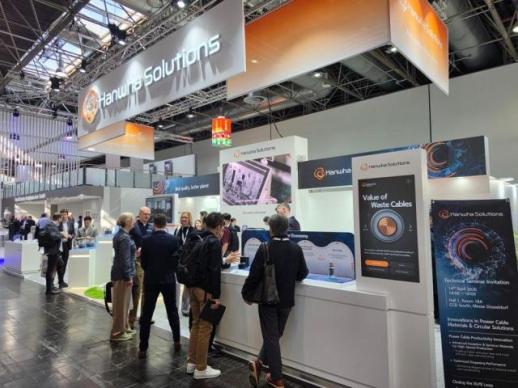 Hanwha Solutions rights issue cut to $810 million after 21% discount SEOUL, July 21 (AJP) -Hanwha Solutions has bowed to regulatory scrutiny by finalizing on Monday a scaled-back 1.17 trillion won ($810 million) rights offering, less than half the 2.4 trillion won it originally planned to raise. The final fundraising reflects months of regulatory intervention and investor backlash that forced repeated revisions to one of South Korea's largest equity offerings this year, before a slide in the company's share price further reduced the proceeds through a lower issue price, its disclosures showed. The Hanwha Group energy and chemicals unit set the final subscription price at 22,100 won per share, about 21 percent below the preliminary issue price of 27,900 won announced last month. The company will issue 53 million new shares, raising 1.1713 trillion won through a shareholder rights offering. Any unsubscribed shares will be offered in a public subscription on July 27-28, with the new shares scheduled to begin trading on Aug. 11. The final amount compares with the 1.48 trillion won expected under the preliminary pricing and is less than half the 2.4 trillion won fundraising plan unveiled in March. Shares on Tuesday opened nearly 2 percent lower from Monday's close at 26,250 won. The company also revised how it will use the proceeds. Investment in facilities will remain unchanged at 907.7 billion won, while funds earmarked for debt repayment have been reduced to 263.6 billion won from the previously planned 571 billion won. Hanwha Solutions said it will bridge the funding gap through internal financing, including additional liquidity secured in the United States. The rights issue has been under unusually close scrutiny since its announcement in March. The Financial Supervisory Service twice ordered Hanwha Solutions to revise its securities registration statement, saying the filing lacked sufficient disclosure on matters material to investors' decision-making. The regulatory action delayed the offering and forced the company to provide more detailed explanations of its financing plans and capital allocation. The original proposal called for raising 2.4 trillion won, with 1.5 trillion won allocated to debt repayment and 900 billion won for investments in its solar and other growth businesses. The scale of the issuance, equivalent to roughly 42 percent of outstanding shares, triggered an immediate market backlash, sending Hanwha Solutions shares down more than 20 percent over two trading sessions. Minority shareholders criticized the transaction as placing the burden of balance-sheet repair on existing investors through substantial dilution despite the group's aggressive expansion strategy. The offering was subsequently reduced to about 1.7 trillion won during the review process before the continued decline in the company's share price lowered the final issue price and trimmed the proceeds further to 1.17 trillion won. The transaction also renewed scrutiny of the Hanwha Group's broader capital-raising strategy. Earlier this year, Hanwha Aerospace was forced to revise its record 3.6 trillion won rights offering after investors objected to the scale of dilution despite the defense company's strong cash generation. The company eventually cut the offering to 2.3 trillion won and replaced part of the financing with capital from group affiliates. The repeated pattern of announcing large equity offerings, suffering sharp share-price declines and subsequently restructuring the fundraising has intensified debate over the group's capital allocation and treatment of minority shareholders. To bolster confidence in the latest fundraising, Hanwha Corp., which owns about 36.7 percent of Hanwha Solutions, committed to fully subscribe to its allotted shares and purchase an additional 20 percent through oversubscription, investing about 843.9 billion won. Employee shareholders will subscribe on July 22, followed by existing shareholders on July 22-23. Any remaining shares will be offered to the public on July 27-28, with payment due on July 30. 2026-07-21 09:29:37
-
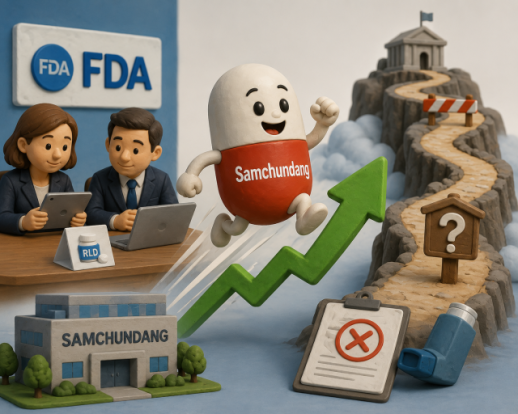 Samchundang Pharm shares surge on hopes for diabetes generic SEOUL, July 20 (AJP) - KOSDAQ-listed drugmaker Samchundang Pharm saw its shares soar on Monday amid expectations that its diabetes drug would move a step closer to entering the U.S. pharmaceutical market. Its shares surged 29.82 percent to close at the daily trading limit of 239,000 won after the drugmaker said it had received a written response from the U.S. Food and Drug Administration (FDA) regarding its oral semaglutide generic, a pill for Type 2 diabetes, although the approval process remains far from complete. The FDA feedback came before the filing of an abbreviated new drug application (ANDA), which is required to market generic medicines in the U.S. However, it is only part of the early process and does not involve an assessment of the drug itself. Samchundang has yet to file its ANDA, meaning regulators have not begun reviewing the application for approval and could still request additional studies or documentation, or reject the submission. The FDA identified Danish drugmaker Novo Nordisk's Rybelsus, an oral semaglutide treatment for Type 2 diabetes, as the reference listed drug (RLD) for Samchundang's generic version. Samchundang said the FDA's response itself marked an important step in the development of its drug and its future commercialization efforts. Investors seem overly excited, as the drug is still a long way from approval as Samchundang has yet to file its ANDA, and the FDA has not begun a formal review of the application. Another key question is whether Samchundang's existing bioequivalence (BE) data will be sufficient. BE studies determine whether a generic drug is absorbed by the body at a similar rate and to a similar extent as the reference medicine. Even after a formal review begins, regulators can still require additional clinical studies, potentially delaying approval. Jordan-based drugmaker Hikma Pharmaceuticals, for example, received an FDA Complete Response Letter (CRL) for its generic version of Advair Diskus, a widely used asthma medication, and had to conduct another clinical trial before resubmitting its application. 2026-07-20 17:49:48
-
 Bio, fashion IPOs seek to inject life into subdued KOSDAQ SEOUL, July 20 (AJP) — South Korea's KOSDAQ, which turned 30 this month but has fallen 14 percent this year while the KOSPI has surged more than 60 percent, will look to a handful of biotechnology and fashion IPOs this week to revive its subdued listing market. The listings come as the KOSDAQ's fundraising market remains sluggish. Only 25 companies debuted on the exchange in the first half, down from 37 a year earlier, while total IPO proceeds fell to 740 billion won ($534 million) from more than 1 trillion won, according to the Korea Exchange. The second-half IPO calendar begins with strong investor demand for HL Genomics, a manufacturer of active pharmaceutical ingredients (APIs) used in medicines for chronic diseases. Founded in 2000, the company supplies pharmaceutical ingredients for cardiovascular, allergy, diabetes, obesity and neuropsychiatric treatments. It is scheduled to begin trading on Friday. Institutional investors subscribed 714.5 times the shares on offer during bookbuilding, enabling the company to price its IPO at 21,500 won, the top of its target range. Retail investors also showed robust demand, subscribing 667.2 times the shares available and depositing about 4.6 trillion won. The offering raised about 55.1 billion won, giving HL Genomics a market capitalization of roughly 167.3 billion won at the offer price. The company has posted operating profits for 19 consecutive years, supported by stable demand from its parent, Hanlim Pharmaceutical, while steadily expanding sales to external customers. Revenue rose 2.5 percent to 28.9 billion won ($20.8 million) in 2025, while operating profit increased 3.3 percent to 9.3 billion won. It has maintained an average operating margin of 32.3 percent over the past three years. Next in the waiting is Ingenia Therapeutics, a U.S.-based biotechnology company developing treatments for eye and kidney diseases, which is conducting institutional bookbuilding this week for a KOSDAQ listing through depositary receipts (DRs), allowing overseas companies to trade on the Korean exchange. Its lead drug candidate, MK-8748, is a late-stage treatment for retinal diseases. The asset became part of U.S. drugmaker Merck's pipeline after its acquisition of British biotech company EyeBio in 2024. Ingenia plans to list 5 million DRs at a target price of 12,000 won to 14,500 won apiece. Its retail subscription has been postponed to July 30-31 from the originally scheduled July 23-24. Delicious, the operator of K-fashion wholesale platform ShinSangMarket, will also begin institutional bookbuilding from July 23 to 29 ahead of its IPO. The company plans to offer 2.2 million shares at a target price of 5,000 won to 7,000 won, with retail subscriptions scheduled for Aug. 3-4. 2026-07-20 14:05:27
-
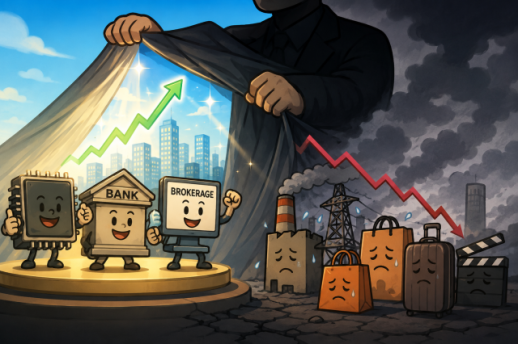 Four in 10 Korean listed firms face weaker Q2 SEOUL, July 20 (AJP) —Nearly four out of 10 South Korean listed companies are expected to post weaker second-quarter earnings than previously anticipated as the economic fallout from the prolonged Middle East conflict spread across much of corporate Korea, with the windfall from the semiconductor and stock market rally largely confined to a handful of industries. According to financial data provider FnGuide, operating profit forecasts for the April-June quarter were revised lower for 94 of 233 listed companies covered by at least three brokerages over the past three months. Steelmakers, utilities, retailers, travel operators and entertainment companies recorded the steepest downward revisions as soaring oil and energy prices drove up raw material and transportation costs, while sluggish domestic demand continued to squeeze margins. Among major companies, Hyundai Steel suffered the largest downgrade, with its second-quarter operating profit forecast slashed 48.1 percent over the past three months. Higher iron ore prices, rising freight costs and a prolonged slump in the domestic construction sector eroded profitability, while lower steel prices supplied to automakers added further pressure. Korea Electric Power Corp. followed with a 30.7 percent reduction in its earnings forecast as higher crude oil, liquefied natural gas and coal prices sharply increased fuel costs. Other companies facing sizeable earnings downgrades included CJ ENM and E-Mart. Hyundai Motor's second-quarter operating profit estimate was lowered 12.1 percent as weaker vehicle sales in China and the Middle East, together with production disruptions caused by factory fires, weighed on earnings. Consumer-serving businesses saw substantial downward revisions on inflation and higher interest rates. Hana Tour posted the steepest cut in the sector, with its operating profit forecast reduced 52.0 percent as weak currency and high oil prices dampened overseas travel demand. CJ Freshway's earnings estimate fell 17.4 percent after the food distributor stepped up investment in its online business amid a prolonged downturn in the restaurant industry. E-Mart's operating profit outlook was lowered 25.8 percent as its Starbucks Korea unit, SCK Company, is expected to swing to an operating loss following weaker sales tied to its controversial Tank Day promotion. Entertainment companies also came under pressure as rising production costs met softer consumer demand. YG Entertainment's operating profit estimate dropped 36.1 percent after the agency increased spending ahead of comeback promotions for BABYMONSTER and TREASURE. Game and media companies including Netmarble, Neowiz, SOOP and CJ ENM also saw earnings forecasts trimmed as weaker household spending weighed on game sales and television advertising. CJ ENM is expected to narrow losses on the back of strong original content on TVING and the popularity of Korea Baseball Organization broadcasts. However, sluggish television advertising and fewer productions at its U.S. subsidiary Fifth Season are expected to limit the recovery. Banks benefited from wider lending margins, lifting second-quarter operating profit forecasts for KB Financial Group, Shinhan Financial Group and Hana Financial Group by between 100 billion won and 300 billion won compared with estimates three months ago. Brokerages also emerged as major beneficiaries of the stock market rally. Mirae Asset Securities' second-quarter operating profit estimate more than doubled to about 1.9 trillion won from roughly 800 billion won three months earlier as trading volumes surged. 2026-07-20 10:39:13
-
 FSS chief warns of greater market volatility after BOK's rate hike SEOUL, July 16 (AJP) - Financial Supervisory Service (FSS) chief Lee Chan-jin on Thursday warned that market volatility could intensify after the Bank of Korea (BOK) raised its benchmark interest rate. It also called for financial institutions to strengthen their preparedness against potential risks. The warning followed the central bank's decision to raise its benchmark rate by 25 basis points earlier in the day, a move Lee said was largely in line with market expectations. Speaking at a financial market monitoring meeting, Lee pointed to elevated volatility in South Korea's stock market. "Continued instability in the Middle East and the possibility of further U.S. interest rate hikes could further increase volatility in financial markets," he said. Lee instructed officials to closely monitor sector-specific risks that could arise from higher interest rates, including tighter financing conditions for companies and increased debt-servicing burdens for vulnerable borrowers. The FSS said it will also strengthen oversight of financial institutions and closely monitor margin lending and unsettled stock trading at brokerages, as heightened market volatility could trigger forced liquidations and amplify losses for retail investors. It added that it will respond promptly to any signs of market stress. The regulator will also continue monitoring the foreign exchange market following South Korea's transition to 24-hour won trading, including exchange rate movements, trading volumes and financial institutions' foreign currency funding conditions. 2026-07-16 17:21:20
-
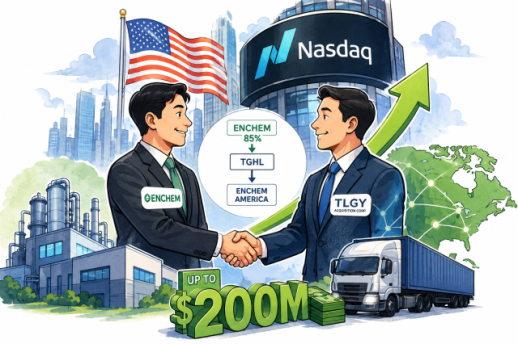 KOSDAQ-listed battery materials maker seeks Nasdaq debut through SPAC merger SEOUL, July 16 (AJP) - South Korean battery materials maker Enchem on Thursday unveiled its plans to list its U.S. affiliate on Nasdaq through a merger, aiming to tap U.S. capital markets for its North American expansion. The announcement of the plan sent its shares up 17.99 percent to 25,250 won, after the KOSDAQ-listed stock climbed as high as 26,900 won earlier in the day. Under the plan, its U.S. affiliate Enchem America will merge with TLGY Acquisition Corp., a Nasdaq-listed special purpose acquisition company (SPAC). The merger, expected to be completed by this fall, will allow Enchem America to become part of a Nasdaq-listed company, providing access to U.S. public capital markets without a traditional initial public offering (IPO). In return, Enchem will receive TGHL shares, giving it an 85 percent stake in the Nasdaq-listed company and allowing it to retain control of its U.S. business. Following the merger, TGHL will own Enchem America, while Enchem will remain its largest shareholder. However, Enchem's ownership stake could be diluted if TGHL issues new shares to raise funds. The company aims to raise up to $200 million from global investors with the exact amount and timing depending on market conditions and investment agreements. The funds will be used to expand Enchem America's manufacturing capacity, strengthen its North American supply chain and support future growth. The company said the Nasdaq listing would improve financial flexibility and broaden its funding options. 2026-07-16 16:32:36
-
 KOSDAQ-listed biotech Alteogen slides amid rival technology concerns SEOUL, July 16 (AJP) - Shares of South Korean biotech company Alteogen have fallen sharply this week after Samsung Bioepis filed a patent application for a similar drug-delivery technology. The move raised concerns that Samsung Bioepis could challenge Alteogen with a competing technology that converts intravenous drugs into subcutaneous injections. Both companies, however, dismissed the concerns, saying the market reaction was excessive and the technologies are not direct competitors. Samsung Bioepis said its latest patent application covers purification technology for hyaluronidase, an enzyme used in under-the-skin drug delivery. However, speculation that Samsung Bioepis is developing a similar treatment technology sent Alteogen shares sharply lower. The KOSDAQ-listed biotech stock plunged 11.69 percent on Tuesday to close at 279,500 won. After a slight rebound the following day, shares fell again on Thursday, dropping 3.12 percent in early trading. Investors worried that the patent application signaled Samsung Bioepis' entry into the subcutaneous drug delivery market, where Alteogen has built a strong position with its ALT-B4 technology, which enables medicines typically given by intravenous (IV) injections to be administered through quick under-the-skin injections. Samsung Bioepis, however, said investors had misunderstood the patent, saying it is intended to support the manufacturing process for hyaluronidase rather than the development of a subcutaneous (SC) drug delivery platform. "The patent application is still pending," a Samsung Bioepis official said. "No decision has been made on which products the technology may be applied to." It further elaborated that it has not started clinical trials using the technology or applied for regulatory approval. Instead, Samsung Bioepis said it is currently focused on developing an affordable version of Keytruda, a top-selling cancer drug from Merck. The company aims to complete a global Phase 3 trial this year and launch the product after Keytruda's South Korean patent expires in 2028. Meanwhile, Alteogen sought to ease investor concerns, saying Samsung Bioepis' patent relates to manufacturing processes rather than the key technology behind Alteogen's drug delivery platform. It said ALT-B4 is protected by its own patent and is fundamentally different from Samsung Bioepis' manufacturing technology. Alteogen said Keytruda Qurex will continue to be protected by U.S. patents until 2043. It also said products using other hyaluronidase technologies are unlikely to be approved as biosimilars to Keytruda Qurex under current regulations. The latest dispute seems to reflect how closely investors are watching developments in under-the-skin drug delivery, one of the pharmaceutical industry's fastest-growing areas. Alteogen generates revenue by licensing its ALT-B4 technology to global pharmaceutical companies, making concerns over potential competitors especially sensitive for investors. 2026-07-16 15:53:41
-
 KOSPI slips below 7,000 again as Morgan Stanley sparks chip sell-off SEOUL, July 16 (AJP) - South Korean stocks swung sharply lower shortly after the market opened on Thursday, giving up much of the previous session's explosive gains as investors cashed in on the rally following another overnight sell-off in U.S. semiconductor shares. Fresh concerns over artificial intelligence (AI)-related infrastructure spending, sparked by a cautious report from U.S. investment bank Morgan Stanley, added to the pressure on technology stocks. Investor sentiment weakened further after the Bank of Korea raised its benchmark interest rate by 25 basis points to 2.75 percent on Thursday, adding to the headwinds for equities. The benchmark KOSPI fell 4.91 percent to 6,926.65 in early trading, falling back below the 7,000 mark a day after soaring over 6 percent. The Korea Exchange activated the temporary curb on program sell orders at around 9:10 a.m. as the decline accelerated. The junior KOSDAQ also dropped 2.45 percent to 809.08, suggesting the extreme volatility gripping Seoul's stock market. The retreat followed a mixed session on Wall Street. Although last month's index for producer prices fell 0.3 percent from the previous month and annual producer inflation eased to 5.5 percent from 6 percent, reducing expectations of further Federal Reserve tightening, investors rotated out of semiconductor shares. Sentiment was further dented by a report from Morgan Stanley, which warned that rising electricity costs and tighter environmental regulations were leading to delays and cancellations of data-center projects, reviving concerns that the AI infrastructure investment boom could be losing momentum. The renewed worries weighed heavily on chip stocks. The Philadelphia Semiconductor Index fell 2.08 percent, and Micron Technology plunged 7.94 percent. Marvell Technology, Intel and AMD lost 7.27 percent, 4.43 percent and 3.46 percent, respectively. SK hynix ADR tumbled 9.00 percent as concerns emerged over potential delays in data-center construction, adding pressure to Korean chipmakers. The weakness quickly spilled over to Seoul's technology sector. Samsung Electronics and SK hynix came under renewed selling pressure as investors unwound positions following the previous session's sharp rally, with profit-taking spreading across semiconductor-related stocks. Samsung Electronics fell 5.72 percent to 263,500 won, while SK hynix slid 8.36 percent to 1,908,000 won. Samsung Electro-Mechanics dropped 7.86 percent, SK Square lost 9.41 percent and Samsung Electronics preferred shares declined 4.84 percent as selling spread across chip-related and Samsung affiliates. But not all sectors joined the selloff. Battery makers outperformed, with LG Energy Solution rising 2.84 percent, while financials also attracted buying as KB Financial gained 2.26 percent. Samsung Biologics edged up 0.43 percent among large-cap defensives. Auto-related stoks were mixed, with Hyundai Motor falling 2.19 percent while affiliate Kia was little changed, up 0.14 percent. Shipbuilders remained resilient as HD Hyundai Heavy Industries advanced 1.91 percent and Hanwha Aerospace gained 0.86 percent. Shinhan Financial also climbed 2.98 percent. KOSDAQ's heavyweights also retreated, with Alteogen slipping 1.73 percent to 283,500 won, EcoPro BM falling 2.15 percent to 118,300 won and EcoPro losing 3.12 percent to 83,700 won. Jusung Engineering dropped 7.30 percent, Rainbow Robotics declined 5.23 percent, Wonik IPS fell 8.48 percent, PSK lost 6.60 percent and Reno Industrial shed 5.01 percent soon after the open. The declines were partially offset by gains in select biotech names, with HLB rising 2.88 percent to 35,700 won and Kolon TissueGene advancing 2.70 percent to 80,000 won. Investors are also awaiting the government's review of single-stock leveraged exchange-traded funds tied to Samsung Electronics and SK hynix. Officials are expected to discuss possible measures later in the day after President Lee Jae Myung called for a swift review, amid concerns that the products have amplified volatility in the Korean stock market. Attention is also shifting to TSMC's second-quarter earnings later in the day, which may set the tone for semiconductor stocks. 2026-07-16 10:07:17
-
 Korean sovereign bonds emerges as Asia's standout bond trade: MarketAxess SEOUL, July 15 (AJP) — While foreign investors have grown increasingly selective across Asia's bond markets, South Korea has emerged as the region's lone standout, attracting uninterrupted monthly inflows into government debt as global funds bet on the country's semiconductor-driven economy and forthcoming inclusion in one of the world's most influential sovereign bond indexes. "Korea has certainly been an interesting market when we look at Korean Treasury Bonds," Roheet Shah, head of dealer sales for Asia-Pacific at MarketAxess, a Nasdaq-listed electronic bond trading platform, told AJP. "It's the only market where we've seen consistent month-on-month net buying so far this year." The steady inflows sharply contrast with other Asian bond markets—including Indonesia, Malaysia, Thailand, Singapore, the Philippines, Hong Kong and China—where foreign demand has ebbed and flowed with changing expectations for U.S. interest rates and domestic monetary policy. At the center of Korea's outperformance is its phased entry into the FTSE World Government Bond Index (WGBI), one of the world's most widely followed sovereign debt benchmarks tracked by global asset managers, pension funds and central banks. "WGBI inclusion is probably one of the dominant technical drivers of the KTB market," Shah said. Korea began joining the index in April and is scheduled to complete the process in November. Market estimates suggest the inclusion could ultimately attract between $50 billion and $60 billion in foreign capital. "Since the inclusion began, market inflows saw around 37 trillion won worth of Korean Treasury Bonds based on MarketAxess platform data." Official figures underscore the momentum. Foreign investors bought a net 5.9 trillion won of Korean bonds in July after purchasing 13.9 trillion won in June, according to the Financial Supervisory Service. Net purchases have reached 62.9 trillion won so far this year, putting 2026 on track to rival last year's record inflows. More importantly, Shah said the buying has broadened well beyond passive index-tracking funds. "Foreign buying from April to June has already exceeded the level seen during the same period last year, based on MarketAxess platform data." The inflows have come from central banks, global asset managers, macro hedge funds and Japanese institutional investors positioning ahead of Korea's full WGBI inclusion, suggesting the rally is being supported by active portfolio allocations rather than purely mechanical index demand. Structural reforms have reinforced that appeal. Longer foreign-exchange trading hours, streamlined settlement procedures and easier market access have significantly improved Korea's competitiveness among global fixed-income markets. "We've also seen improving market accessibility. Together, these factors have helped create a deep and liquid capital market." Perhaps the strongest endorsement of Korea's bond market is that overseas demand has remained resilient even as expectations for Bank of Korea rate hikes have strengthened. "As I mentioned, we've seen net buying month after month despite concerns over increased bond supply and potential Bank of Korea rate hikes." Investor expectations have shifted markedly over the course of the year. "Conversations with our clients have clearly shifted from expectations of rate cuts at the beginning of the year to rate hikes." According to Shah, stronger semiconductor exports, AI-related investment and improving economic momentum have steadily pushed investors toward a more hawkish outlook for Korean monetary policy. Since the Bank of Korea raised both its inflation and growth forecasts in May, markets have increasingly focused on inflationary pressures, the weaker won and financial stability risks. Even so, MarketAxess sees an important distinction between domestic and overseas investors. Local investors generally expect a 25-basis-point increase in the near term followed by another move later this year, lifting the benchmark policy rate from 2.50 percent to 3.00 percent. Overseas investors also believe the next move is likely to be upward, but remain less convinced that Korea is entering a prolonged tightening cycle. Most continue to price in only 25 to 50 basis points of additional hikes. That divergence reflects what Shah describes as Korea's increasingly "two-speed economy." "Semiconductor exports and investment remain very strong, but domestic demand continues to lag. Weak private consumption and the challenges facing small businesses suggest the recovery is not broad-based." The uneven recovery leaves policymakers confronting a difficult balancing act. Inflation, currency weakness and buoyant financial markets argue for tighter monetary policy, while fragile domestic demand limits how aggressively rates can be raised without undermining growth. "That creates a policy dilemma for the Bank of Korea," Shah said. "Inflation and won stability argue for higher interest rates, while the domestic economy isn't strong enough to absorb a substantial or sustained hiking cycle." MarketAxess trading data suggest global investors are already positioning for precisely that scenario. Although foreign investors continue to add Korean government bonds overall, demand has become increasingly concentrated in longer maturities. Bonds with less than two years remaining have experienced persistent selling as traders prepare for higher policy rates, while seven-to-ten-year and twenty-to-thirty-year maturities continue to attract steady inflows driven by WGBI positioning and long-term institutional allocations. The pattern suggests overseas investors are looking beyond the next Bank of Korea meeting. Rather than abandoning Korean government bonds because of near-term tightening risks, they appear to be treating Korea as a long-term strategic allocation within global sovereign debt portfolios—a distinction that could determine whether the country's exceptional run of foreign inflows extends well beyond the completion of its WGBI inclusion later this year. 2026-07-15 17:27:49
-
 Korea's National Museum sees 7 million annual visitors after record H1 SEOUL, July 15 (AJP) —South Korea's National Museum is on pace for another record year as domestic and foreign visitors flock to one of the country's fastest-rising cultural landmarks. The National Museum of Korea welcomed 3.8 million visitors in the first half of 2026, up nearly 40 percent from a year earlier and already exceeding its total attendance for all of 2024, according to data released Tuesday. Foreign visitors have been a major driver of the increase. Nearly 165,400 overseas tourists visited the museum during the first six months of the year, up 68.8 percent from a year earlier, reflecting growing international interest in Korean culture beyond K-pop and television dramas. Attendance has remained strong throughout the year. Monthly visitors exceeded 700,000 during the winter school holidays and again in May, while another 536,000 people visited in June. With South Korea's summer vacation season approaching, officials expect visitor numbers to climb further. Recent special exhibitions have also helped attract crowds, including The Korean Table: Food, Nature, and Life, which explores the roots of Korean culinary culture, and Amazing Thailand: Masterpieces of Thai Art, the first major exhibition in Korea showcasing Thailand's history and artistic heritage. If current trends continue, annual attendance is expected to exceed 6 million for a second consecutive year after crossing that threshold for the first time in 2025. It could even top 7 million, a figure that would rank second worldwide under The Art Newspaper's 2025 global museum attendance survey. The surge, however, is straining the institution's facilities. The museum averaged about 17,000 visitors a day in June, well above its estimated daily capacity of 15,000. To ease congestion, the museum recently raised parking fees on weekends and public holidays. Experts have also renewed calls to expand exhibition space as visitor numbers continue to outgrow the existing facilities. Director general of the museum Yu Hong-june has previously proposed constructing a second permanent exhibition building and expanding the museum's management structure, saying peak-season attendance can exceed 40,000 visitors a day. To handle the summer rush, opening hours will be extended from July 27 through Aug. 17. During that period, the museum will operate from 9 a.m. to 6 p.m., one hour longer than usual, while Wednesday and Saturday evening hours until 9 p.m. will remain unchanged. It will also reduce privately run guided tours from seven sessions a day to five to better manage visitor traffic. 2026-07-15 11:06:25