

Journalist

Ryu Yuna류윤아
Julia37@ajupress.com
ReporterFinancial Supervisory Service (FSS) & finance, capital markets, Southeast Asian affairs
Yuna Ryu covers finance, capital markets and Southeast Asian affairs.
She is drawn to the questions that numbers raise and the stories that data alone cannot answer.
Prior to journalism, she worked at Hyundai Motor Company and the Singapore Chamber of Commerce, focusing on business strategy and international affairs. She has also hosted diplomatic receptions and international conferences as an MC.
Ryu holds a master's degree in Media and Communication from Korea University, where her research focused on neuroscience-based studies of media effects. "Beyond every statistic is a human story waiting to be heard."
Latest by Ryu Yuna
-
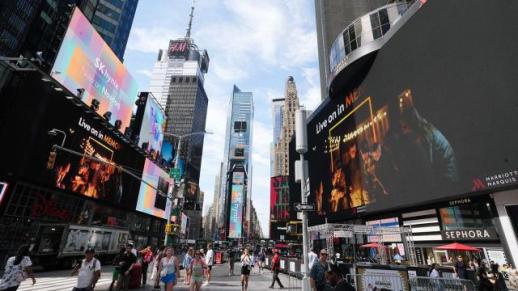 SK hynix ETF frenzy heads to Wall Street after record ADR debut SEOUL, July 13 (AJP) -A wave of leveraged exchange-traded funds tied to SK hynix's newly listed American depositary receipts is set to hit Wall Street this week, extending the AI chipmaker's explosive rise from South Korea's stock market to the world's largest financial market and raising fresh concerns that the trading frenzy which reshaped Seoul could spread to New York. At least six ETF products from U.S. issuers including Leverage Shares, ProShares, GraniteShares and CorgiFunds are scheduled to begin trading on July 13 and 14 U.S. time after SK hynix completed the largest U.S. listing ever by a foreign company. Most of the funds will offer either two-times leveraged exposure or inverse bets linked to the daily performance of SK hynix's Nasdaq-listed ADRs, allowing investors to magnify gains or profit from declines in one of the world's hottest artificial intelligence stocks. Leverage Shares plans to launch the 2x Long SK Hynix Daily ETF under ticker SKHX alongside the SKHZ short ETF, while ProShares will debut the leveraged SKHU fund. GraniteShares is preparing the leveraged SKUU and inverse SKDD products, while CorgiFunds and Direxion are also introducing leveraged vehicles. The launches follow SK hynix's blockbuster Nasdaq debut on Friday, when its ADRs surged 13.08 percent from the offering price to close at $168.49 after the company raised $26.5 billion in the second-largest equity offering in U.S. history behind only SpaceX. The speed with which ETF issuers have rushed to launch derivative products underscores the extraordinary investor appetite surrounding AI infrastructure stocks, particularly companies at the center of the high-bandwidth memory boom powering generative artificial intelligence. Single-stock leveraged ETFs have become a lucrative niche for fund managers in recent years, with products tied to Nvidia, Tesla, Alphabet and AMD attracting heavy trading volumes. Similar products tracking SpaceX appeared almost immediately after the aerospace company's U.S. listing, setting records for first-week ETF trading activity. Unlike conventional ETFs, leveraged funds seek to deliver a multiple of a stock's daily return by using swaps, futures and other derivatives. The products reset every trading day, making them short-term trading instruments rather than long-term investment vehicles. Their arrival on Wall Street also exports a phenomenon that has already transformed South Korea's equity market. Leveraged ETFs linked to SK hynix and Samsung Electronics have exploded in popularity since launching in Seoul in late May. Combined assets in the products have grown to more than 13 trillion won ($8.6 billion), while cumulative trading value has exceeded 212 trillion won in little more than a month. Semiconductor shares and related leveraged ETFs now account for more than 70 percent of total trading on Korea's main bourse, making the AI rally increasingly concentrated in just a handful of securities. Bank of Korea officials have warned that mandatory daily rebalancing by leveraged funds can amplify price swings as issuers are forced to buy rising stocks and sell falling ones to maintain target leverage. The central bank has cautioned that the products increase concentration risk and can reinforce momentum during periods of market stress. The Korea Exchange chairman has also publicly expressed regret over approving single-stock leveraged ETFs, arguing that they have contributed to excessive volatility in Samsung Electronics and SK hynix, while some lawmakers have called for the products to be abolished altogether. 2026-07-13 07:55:23
-
 SK hynix ADR: An epic Korea Inc. drama from penny stock to blockbuster SEOUL, July 10 (AJP) - Few Korean stocks have rewarded investors—or punished them—as dramatically as SK hynix. The memory chipmaker, whose Nasdaq American depositary receipts became the largest U.S. equity offering ever by a foreign issuer this week, once traded at just 135 won, making it one of the cheapest technology shares on the Korea Exchange and a dismal reminder of Korea Inc.'s collapse in the aftermath of the Asian financial crisis. Its fortunes have ridden the semiconductor industry's roller-coaster boom-and-bust cycle ever since. Originally founded as Hyundai Electronics, the company entered the memory-chip business in 1983 and listed on the Korea Stock Exchange in December 1996 at 20,000 won per share. The stock briefly climbed to 49,600 won before the Asian financial crisis upended the country's corporate landscape and the global chip industry. A government-led restructuring forced Hyundai Electronics to acquire LG Semicon in 1999. The deal created a larger national memory champion but also saddled the company with heavy debt just as global DRAM prices collapsed. The breakup of Hyundai Group following the financial crisis added to the strain, pushing the chipmaker into a severe liquidity crunch. Renamed Hynix Semiconductor in 2001, the company entered creditor-led restructuring as mounting losses and debt pushed it toward collapse. By 2003, its shares had plunged to 135 won. Foreign and institutional investors largely abandoned the stock, leaving it dominated by short-term retail traders willing to gamble on its survival. The recovery was anything but immediate. Hynix returned to profitability in 2003 and exited creditor management in 2005, but another memory downturn and the 2008 global financial crisis dragged its shares back toward 5,000 won. The repeated reversals reinforced the market's view of memory chips as one of the technology industry's most punishingly cyclical businesses. The decisive turning point came in 2012, when SK Telecom acquired control of Hynix for about 3.4 trillion won, ending more than a decade of financial uncertainty and giving the company the resources to pursue long-term technological investments. The company was subsequently renamed SK hynix. The acquisition gave the chipmaker not only capital but also the patience to invest through another uncertain phase of the memory cycle. SK hynix poured money into advanced memory technologies, including high-bandwidth memory, years before artificial intelligence created explosive demand for the product. The company developed the world's first HBM in 2013, when the technology had few obvious commercial applications. Demand remained limited for years, but SK hynix continued investing while rivals treated the product as a niche segment. That persistence eventually reshaped the company. As Nvidia's AI accelerators became the backbone of generative artificial intelligence, HBM emerged as one of the world's most strategically important semiconductor products. SK hynix's early lead allowed it to become the dominant supplier just as AI infrastructure spending began to surge. Investors rewarded that technological advantage with one of the sharpest re-ratings ever seen in South Korea's stock market. SK hynix shares climbed from around 250,000 won in July 2025 to nearly 3 million won less than a year later, briefly making the company South Korea's most valuable listed corporation. Even after retreating to 2.186 million won as of Thursday, the stock remained almost tenfold higher than a year earlier, ranking it among the world's best-performing large-cap semiconductor shares. The rally unfolded in several waves. The shares spent much of the second half of 2025 below 500,000 won before breaking above 1 million won in April 2026. They crossed 2 million won the following month and approached the 3 million-won mark in June as optimism over record earnings, expanding AI infrastructure investment and the Nasdaq ADR offering intensified. The rise was not merely a surge in price. It also marked a fundamental reassessment of what kind of company SK hynix had become. According to KRX Data Marketplace, its price-to-earnings (PER) ratio climbed from 10.34 times on July 10, 2025, to a peak of 47.05 times in late June 2026 before easing to 35.81 times. The dramatic expansion reflected investors' growing willingness to value SK hynix less like a conventional memory producer and more like an essential supplier to the global AI industry. Foreign investors remained central to the rally. They owned approximately 50.01 percent of SK hynix shares as of July 10, according to Korea Exchange data. Although foreign ownership had declined from a peak of 56.25 percent in September 2025 as investors locked in gains, overseas shareholders still controlled about half of the company. Institutional participation also expanded through semiconductor-focused funds and single-stock leveraged exchange-traded funds, drawing a wider range of investors into a stock that had once been treated largely as a speculative turnaround bet. This week's Nasdaq ADR debut marked another milestone rather than the beginning of the transformation. For many investors, the listing represented the culmination of a comeback that began more than two decades ago, when Hynix was fighting simply to survive. The ADRs were priced at $149 each, raising approximately $26.5 billion in the largest U.S. equity offering ever by a foreign issuer. Each ADR represents one-tenth of a common share, with the offer priced at a slight premium to the company's Seoul-listed stock. The blockbuster deal offered a stark contrast to the company's darkest period. A chipmaker once reduced to a 135-won penny stock had returned to global capital markets as the world's leading AI memory supplier and the issuer of Wall Street's largest-ever foreign share sale. Whether the current AI boom proves to be another turn in the semiconductor cycle or the beginning of a structural shift remains one of the market's biggest debates. But few companies have traveled farther than SK hynix. Its journey from a debt-ridden casualty of Korea Inc.'s post-crisis collapse to one of the world's most valuable AI chipmakers has already secured its place as one of the most extraordinary corporate turnarounds in South Korean capital-market history. 2026-07-10 16:12:14
-
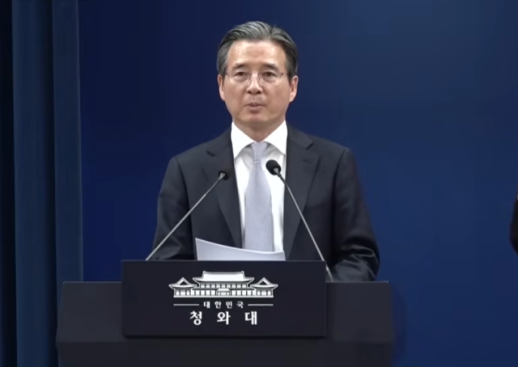 South Korea to reassess single-stock leveraged ETFs amid volatility concerns SEOUL, July 10 (AJP) - South Korea's newly-introduced single-stock leveraged exchange-traded funds (ETFs) are under scrutiny after those linked to the country’s largest two chipmakers suffered heavy losses, raising concerns about market volatility and investor protection. In a press briefing at Cheong Wa Dae on Friday, chief presidential secretary for policy Kim Yong-beom said that the government has been holding regular meetings with the country's top financial policymakers including officials from the Ministry of Finance and Economy, the Financial Services Commission, the Bank of Korea and the Financial Supervisory Service, to come up with measures. "We are continuously monitoring market conditions while considering whether any adjustments are needed," Kim told reporters, referring to the side effects of such ETF products since their market debut on May 27. "We will closely examine its impact on the market and whether any changes or measures are needed to protect investors," he added. His comments came amid growing debate over whether these products are amplifying volatility in South Korea's stock market, which has seen sharp ups and downs over the past year, driven largely by an unprecedented semiconductor rally. Unlike conventional ETFs that track a basket of stocks or a market index, single-stock leveraged ETFs seek to deliver twice the daily return of a single stock. In South Korea, these products are concentrated almost entirely on Samsung Electronics and SK hynix, allowing investors to amplify gains when share prices rise but magnifying losses when they decline. They faced growing scrutiny after sharp swings in the shares of the two chip giants resulted in steep losses for many retail investors. Calls for tighter oversight have also emerged from political circles, with lawmaker Ahn Cheol-soo of the main opposition People Power Party (PPP) urging earlier this week that the products be delisted, saying they had turned the country's stock market into a "casino" and describing them as a "policy failure." 2026-07-10 15:49:37
-
 KOSDAQ Turns 30 Amid Declining Investor Interest and Market Challenges The KOSDAQ, launched in 1996 with aspirations of becoming "Korea's NASDAQ," marked its 30th anniversary, but the celebratory atmosphere was notably absent.Once a thriving platform for venture and biotech companies, the market is now experiencing a rapid decline in trading and liquidity as investments shift towards large-cap semiconductor stocks amid a surge in artificial intelligence (AI) investments. Retail investors, who once heavily favored KOSDAQ, are increasingly moving their funds to Samsung Electronics and SK Hynix, further weakening the market's support from individual investors. While discussions on market reforms continue, concerns are growing that without restoring investor confidence, the KOSDAQ may struggle to escape a prolonged downturn.The KOSDAQ's struggles have become more pronounced this year. While the KOSPI has surged over 80% due to the AI semiconductor rally, the KOSDAQ has fallen more than 10% since the beginning of the year, making it one of the worst-performing markets among major global exchanges. On its 30th anniversary on July 1, the KOSDAQ index remained at 929, failing to reach its initial launch index of 1,000 points in 1996, and it dropped to 785 on July 9. The market's overall health is rapidly deteriorating, with declines in trading volume, investor funds, and individual trading activity.One significant factor affecting market sentiment was the launch of a single stock leverage ETF for Samsung Electronics and SK Hynix on May 27. This high-risk product, which aims to double the daily returns of specific stocks, has faced criticism as a "gambling ETF" due to its volatility. However, amid the AI investment boom, retail investors have shifted their funds away from KOSDAQ growth stocks in biotech and healthcare towards semiconductor leverage ETFs and large-cap AI semiconductor stocks.Since the ETF's launch, the KOSDAQ has set new record lows seven times. During the same period, the KOSPI rose by 2.3%, while the KOSDAQ fell by 8.8%.The trend is also reflected in ETF performance. According to KOSCOM's ETF investment information platform, "ETF CHECK," the KODEX KOSDAQ 150 ETF, which tracks the KOSDAQ 150 index, has dropped 13.9% in the past month. In contrast, a long-short strategy that bets on KOSPI strength and KOSDAQ weakness has yielded high returns, with the KODEX 200 Long KOSDAQ 150 Short Futures recording a 9.04% return, while the opposite strategy, KODEX KOSDAQ 150 Long KOSPI 200 Short Futures, has seen a 12.63% loss.This shift is also evident in the flow of funds. As of July 7, investor deposits had decreased to 112.2 trillion won, down from 139.7 trillion won a month earlier, marking the lowest level in nearly three months. During the same period, retail investors sold a net 1.41 trillion won worth of KOSDAQ stocks.Trading activity has also contracted sharply. According to data from the Korea Exchange (KRX), KOSDAQ trading volume was approximately 306 trillion won in the ten trading days leading up to the ETF launch from May 13 to 26. However, from May 27 to June 11, immediately after the launch, it dropped to 209 trillion won, and in the most recent ten trading days (June 24 to July 7), it fell to 145 trillion won. In just over a month, trading volume has shrunk to half its previous level.Retail investors have been leaving the KOSDAQ even more rapidly. In the ten trading days following the ETF launch, individual trading volume on the KOSPI increased by 4.1%, while KOSDAQ individual trading volume plummeted by 37.9%. In the most recent ten trading days, KOSDAQ individual trading volume has decreased by 60.6% compared to before the launch, while the KOSPI's decline was limited to 28.2%. Retail investors, often referred to as "ants," currently account for about 79% of KOSDAQ trading, down from 84-87% during the retail investment boom of 2020-2021. As individual funds exit, KOSDAQ's liquidity is inevitably shrinking.In the past, retail investors flocked to the KOSDAQ in search of growth stocks in biotech and healthcare. However, the current AI investment boom and the strong performance of Samsung Electronics and SK Hynix have drawn demand towards high-risk, high-reward single stock leverage ETFs.The KOSDAQ's structural limitations are becoming increasingly evident. Major companies like Naver, Kakao, and Celltrion have transitioned to the KOSPI after achieving growth, and Alteogen, currently the top company by market capitalization, is also seeking to move to the KOSPI. As quality companies continue to leave, the number of so-called "zombie companies" has increased, and repeated capital increases have undermined investor trust.In response to the 30th anniversary, the Korea Exchange held "KOSDAQ CONNECT 2026" and is pursuing reforms, including strengthening listing maintenance requirements, improving technology-based listings, and implementing a three-tier market structure divided into premium, standard, and managed markets. Jeong Eun-bo, chairman of the Korea Exchange, stated, "We will make KOSDAQ a trusted market through a 'many births, many deaths' structure."However, many in the market argue that institutional improvements alone are insufficient. Without nurturing new representative companies to lead in the AI era and restoring investor confidence, the KOSDAQ risks remaining a "transit point for companies heading to the KOSPI" rather than a market for future enterprises.Investment expert Kim Jeong-hoon noted, "As delisting requirements are tightened, it is crucial to create a structure where growth-validated companies can conduct proper IPOs rather than increasing technology-based listings. Recently, there have been numerous cases where companies that failed to attract institutional demand during the pre-IPO process traded below their offering price shortly after listing, further eroding trust in the IPO market."He also pointed out the lack of communication from companies with investors, stating, "Many KOSDAQ-listed companies lack dedicated investor relations personnel. A system for actively communicating with shareholders needs to be improved." He added, "Amid the AI investment boom, market attention is focused on Samsung Electronics and SK Hynix, making it difficult to feel the effects of policy changes."While it is too early to determine whether the shift of retail funds is a structural change, analysts warn that if the trend of capital concentration in AI semiconductor-related products continues and new investment inflows do not recover, a meaningful rebound for the KOSDAQ will be challenging.As the KOSDAQ celebrates its 30th anniversary, it continues to experience growing pains. The challenge now is to create reasons for investors who have left for AI semiconductors to return, and to foster the growth of companies and market trust that will serve as the starting point for that return. 2026-07-10 08:04:00
-
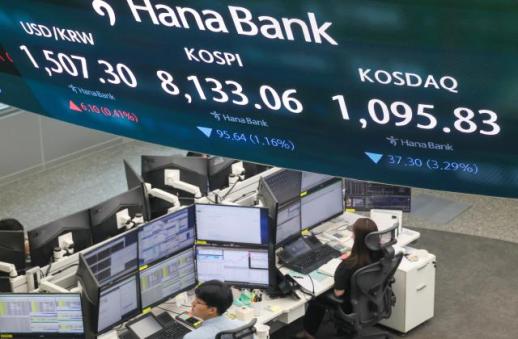 KOSPI paradox – few winners among retail investors SEOUL, July 09 (AJP) — "I demand a refund," wailed a day trader on social media after SK hynix shares plunged from their near 3 million won peak in June. Memes of disbelief, despair and fury quickly spread across Korean investing forums. The complaint captured the contradiction of this year's Korean stock market. The benchmark KOSPI nearly doubled through June to become one of the world's best-performing equity markets, yet a large majority of retail investors are losing money. Trading data from a major domestic brokerage showed that an average 73.5 percent of investors in the 50 most-purchased Korean stocks remained underwater at the end of June, meaning they bought shares above current prices. In half of those stocks, more than 80 percent of investors were sitting on losses. The average return of the 50 stocks still reached 20.5 percent, but that figure masked an exceptionally narrow rally. The five best-performing stocks gained an average of 198 percent, suggesting that a handful of AI beneficiaries generated most of the market's advance while the majority delivered mediocre or negative returns. Nowhere was that concentration more evident than in semiconductors. According to Korea Exchange data, Samsung Electronics and SK hynix ranked as the two most-bought stocks by retail investors this year through July 8, attracting net purchases of roughly 51.9 trillion won and 48.3 trillion won, respectively. As semiconductor shares kept climbing, latecomers increasingly piled into the market through single-stock leveraged ETFs in an attempt to catch up. Many instead bought near the top. Shinhan Securities data illustrate the paradox. Despite SK hynix rising roughly tenfold from last summer, half of them or 45.7 percent of its shareholders were still losing money as of Thursday afternoon because many entered only after the rally had become widely celebrated. The average investor still showed a healthy 76.8 percent gain thanks to earlier buyers, but the headline return concealed the large number of recent entrants now sitting in the red. Samsung Electronics investors fared somewhat better. Average returns stood at 72.2 percent, while about 63 percent of investors remained profitable. Analysts said the pattern reflects a familiar retail tendency to chase momentum after prices have already risen sharply, leaving investors exposed when sentiment reverses. Overseas bet proved smarter. Among the 50 most-purchased foreign stocks, only 44.2 percent of investors were underwater on average during the first half, while average returns reached 44.7 percent — more than twice the comparable figure for Korean shares. The difference reflected a broader AI rally in the United States, where gains spread across chipmakers, software companies, cloud providers and infrastructure firms. Korea's advance, by contrast, rested overwhelmingly on its two semiconductor champions. That dependence made the market especially vulnerable once doubts emerged over whether the AI memory boom had peaked. Foreign investors have since sold roughly 40 trillion won worth of KOSPI shares over 13 consecutive sessions, concentrating their selling on semiconductor heavyweights after several global investment banks questioned the durability of the memory-chip supercycle. Retail investors who had amplified their exposure through leveraged ETFs found the reversal even more painful. According to Korea Exchange data, the KODEX Samsung Electronics Single Stock Leveraged ETF surged from its listing price of 20,000 won on May 27 to an intraday high of 31,325 won before tumbling to 15,535 won on Thursday, about 22 percent below its debut price. The KODEX SK hynix Single Stock Leveraged ETF followed a similar pattern. It climbed from 20,000 won to as high as 44,000 won before falling back to around 21,400 won, wiping out more than half of its peak value. Because such products are designed to deliver multiples of daily returns rather than long-term performance, volatility itself steadily erodes returns, making them particularly punishing during sharp reversals. Investor frustration has become increasingly visible online. "It's only a matter of time before it converges to zero," one user wrote on the Naver Finance message board for the Samsung Electronics leveraged ETF. Another posted: "Don't expect Samsung Electronics to rise if everyone's buying leveraged ETFs. Know what you're buying." 2026-07-09 18:00:38
-
 KOSPI's fragile rebound fails to calm jittery investors SEOUL, July 09 (AJP) - South Korean stocks snapped a three-day losing streak on Thursday, closing marginally higher after surrendering most of their early gains in a volatile session that underscored the fragility of investor sentiment. The benchmark KOSPI closed at 7,291.91, up 0.62 percent. The index opened 3.31 percent higher and briefly climbed above the 7,500 level, but the early rally quickly faded after Bahrain and Kuwait sounded warning sirens and Qatar issued emergency security alerts following renewed U.S. strikes on Iran, reviving fears of a wider Gulf conflict. The index later slipped into negative territory before recovering into the close. Even after the modest rebound, the main index remained nearly 800 points below its 8,088.34 close on July 3, following a slide to 7,246.79 a day earlier. Retail investors were net sellers, unloading 1.33 trillion won, while foreign and institutional investors purchased a net 146.1 billion won and 1.29 trillion won, respectively. Semiconductor shares led the rebound after suffering steep losses over the previous two sessions. Samsung Electronics edged up 0.18 percent to 278,000 won, while SK hynix jumped 5.30 percent to 2,186,000 won, supported by bargain hunting and optimism ahead of its planned American depositary receipt (ADR) listing on Nasdaq on Friday. Among other heavyweight stocks, SK Square rose 4.49 percent to 1,327,000 won, Samsung Electro-Mechanics gained 0.95 percent to 1,493,000 won, and KB Financial Group added 0.23 percent to 171,400 won. Losses were concentrated in autos, financials and healthcare. Hyundai Motor fell 3.68 percent to 445,500 won, LG Energy Solution slipped 0.63 percent to 313,500 won, Samsung Life Insurance dropped 5.78 percent to 326,000 won, Samsung C&T declined 4.18 percent to 378,500 won, Samsung Biologics lost 2.79 percent to 1,325,000 won, Kia slid 7.65 percent to 144,800 won, Hanwha Aerospace fell 8.45 percent to 953,000 won, HD Hyundai Heavy Industries eased 1.93 percent to 507,000 won, and Shinsegae slipped 2.14 percent to 105,000 won. The KOSDAQ also recovered from intraday volatility, rising 1.15 percent to close at 794.00 after briefly climbing to 819.69, but ultimately failed to reclaim the 800-point level. Institutional investors bought a net 308.1 billion won worth of KOSDAQ shares, while foreign investors added 22 billion won. Retail investors remained net sellers, offloading 321.5 billion won. Jusung Engineering surged 11.50 percent, while EcoPro gained 1.79 percent and Rainbow Robotics rose 0.58 percent. On the downside, Alteogen fell 4.31 percent, EcoPro BM lost 0.98 percent, ABL Bio slipped 1.23 percent, and LigaChem Biosciences declined 1.83 percent. Elsewhere in the region, Japan's Nikkei 225 climbed 1.38 percent to 67,743.85, rebounding alongside semiconductor-related shares. Advantest and Tokyo Electron were among the major gainers after reports that China may allow limited sales of Nvidia's H200 chips to selected domestic AI firms lifted chip sentiment. China's Shanghai Composite added 1.65 percent to 4,036.59, extending gains despite earlier inflation concerns. Hong Kong's Hang Seng Index was the lone major loser, slipping 0.70 percent to 24,030.18. 2026-07-09 17:51:44
-
 Seoul leads broad Asian rebound after three-day rout SEOUL, July 09 (AJP) — South Korean stocks led a broad Asian rebound Thursday as chip heavyweights surged ahead of SK hynix's highly anticipated Nasdaq ADR debut, while the Bank of Korea's upbeat view on the semiconductor cycle helped outweigh growing skepticism over AI valuations on Wall Street. As of 10:37 a.m., the benchmark KOSPI jumped 2.87 percent to 7,454.62 after tumbling more than 10 percent over the previous three sessions. The junior KOSDAQ climbed 3.66 percent to 813.70, also rebounding from a nearly 10 percent decline this week. Chipmakers spearheaded the recovery after the Bank of Korea said the recent correction in domestic equities was unlikely to develop into a prolonged downturn, citing improving earnings prospects for semiconductor companies. The central bank also said the global chip upcycle should remain intact as AI adoption broadens and major technology companies continue pouring investment into AI infrastructure. The upbeat domestic assessment contrasted with a more cautious tone overseas. Goldman Sachs said overnight that while companies are still expected to beat earnings estimates, strong results alone may no longer be enough to sustain the AI-driven rally because investor expectations have become increasingly demanding. Samsung Electronics rose 3.15 percent to 286,250 won after sliding 6.25 percent in the previous session to its lowest close since May 20. SK hynix rallied 7.90 percent to 2,240,000 won after falling 5.68 percent to its weakest finish since June 5, buoyed by expectations ahead of Friday's American depositary receipt (ADR) debut on Nasdaq. The gains spread across technology and large-cap stocks. SK Square climbed 5.98 percent, LG Energy Solution advanced 4.60 percent, Samsung Electro-Mechanics added 3.45 percent, Samsung Electronics preferred shares rose 3.32 percent, Samsung C&T gained 2.78 percent and KB Financial advanced 1.81 percent. HD Hyundai Heavy Industries edged up 0.97 percent, while Samsung Biologics and Shinhan Financial Group were little changed, rising 0.29 percent and 0.09 percent, respectively. Losses were confined to a handful of cyclical names. Hanwha Aerospace fell 3.75 percent, Kia dropped 3.64 percent, Samsung Life Insurance lost 3.03 percent and Hyundai Motor slipped 2.05 percent. The won weakened against the dollar to 1,506.80 from the previous close of 1,498.50 despite a return of foreign buying. Overnight, Wall Street finished mixed as renewed military tensions between the United States and Iran kept investors cautious. The Dow Jones Industrial Average fell 1.09 percent and the S&P 500 lost 0.28 percent, while the Nasdaq Composite edged up 0.20 percent. Elsewhere in Asia, Japan's Nikkei 225 rose 2.08 percent and Hong Kong's Hang Seng Index gained 0.18 percent. China's Shanghai Composite was the regional laggard, easing 0.02 percent. 2026-07-09 10:58:45
-
 AI peak fears hammer Asia, KOSPI for second straight session SEOUL, July 08 (AJP) - A wave of panic selling triggered by fears that the AI chip boom may have peaked swept through Asia's technology-heavy markets on Wednesday, sending the KOSPI sharply lower for a second straight session and triggering sell-side sidecars on both the KOSPI and KOSDAQ as escalating Middle East tensions compounded the rout. The benchmark KOSPI tumbled 5.35 percent to 7,246.79, while the tech-heavy KOSDAQ slumped 5.56 percent to 785.00. The KOSPI opened 2.7 percent lower, briefly rebounded nearly 2 percent in early trading, then reversed course and fell more than 6 percent intraday before closing at its lowest level in seven weeks. The slide pushed the market's capitalization below 6,000 trillion won for the first time since May 20. As stock index futures extended their losses, the Korea Exchange activated sell-side sidecars on the KOSPI at 1:31 p.m. and on the KOSDAQ two minutes later. The two chip heavyweights remained at the center of the rout. Samsung Electronics fell 6.25 percent to 277,500 won, its lowest close since May 20, while SK hynix dropped 5.68 percent to 2,076,000 won, its weakest finish since June 5. The selloff extended into a second day after Samsung Electronics reported record operating profit but weaker-than-expected revenue, reinforcing concerns that the semiconductor cycle may be nearing its peak. Those worries intensified after Morgan Stanley warned in a recent report that the memory market was approaching its peak growth rate. Rebalancing by single-stock leveraged exchange-traded funds appeared to amplify the decline. Leveraged ETFs tied to Samsung Electronics and SK hynix fell between 10 percent and 13 percent, with all 14 funds trading below their 20,000-won listing price. The weakness quickly spread across the broader market. SK Square fell 6.34 percent to 1.27 million won, Samsung Electronics preferred shares lost 6.22 percent to 186,900 won and Samsung Electro-Mechanics plunged 10.25 percent to 147,900 won, making it one of the day's worst-performing blue chips. Most other large-cap stocks also retreated. Hyundai Motor fell 3.55 percent to 462,500 won, LG Energy Solution lost 4.97 percent to 315,500 won, Samsung Life Insurance slid 7.73 percent to 346,000 won, Samsung C&T dropped 6.95 percent to 395,000 won, Samsung Biologics declined 4.15 percent to 1.363 million won, HD Hyundai Heavy Industries fell 6.34 percent to 517,000 won, Hanwha Aerospace lost 7.22 percent to 1.041 million won, KB Financial eased 1.27 percent to 171,000 won and Shinhan Financial slipped 1.20 percent to 107,300 won. Kia stood out as the lone major gainer, rising 2.02 percent to 156,800 won on expectations of stronger earnings supported by growing sales of eco-friendly vehicles. Investor sentiment deteriorated further after military tensions between the United States and Iran intensified following attacks on commercial vessels near the Strait of Hormuz, adding geopolitical uncertainty to already fragile market confidence. The Korean won strengthened sharply to 1,503.40 per dollar from 1,528.20 in the previous session on foreign return to the KOSPI. 2026-07-08 17:29:08
-
 Ants deserting the KOSDAQ nest for chip harvest SEOUL, July 08 (AJP) — The KOSDAQ has long been the playground of Korea's "ants," the moniker in Korea for retail investors, who dominate the country's junior stock market. Now the colony is on the move. The tech-heavy junior market, which recently turned 30, has retreated more than 10 percent so far this year, ranking among the world's weakest performers, while the benchmark KOSPI has surged more than 82 percent. Its sluggish performance owes much to the desertion of its primary players — the ants who have jumped ship to ride the AI wave sweeping the bigger bourse. Individual investors who once chased aggressive returns in biotech, healthcare and other growth stocks on the KOSDAQ are increasingly migrating to large-cap semiconductor bets on the main bourse, drawn by the artificial intelligence boom and newly launched single-stock leveraged exchange-traded funds tied to Samsung Electronics and SK hynix. Since leveraged ETFs linked to the two chip giants debuted on May 27, the KOSDAQ has set seven new yearly lows. Over the same period, the KOSPI gained 2.3 percent, while the junior market fell 8.8 percent. According to Koscom's ETF CHECK, KODEX KOSDAQ150, the country's largest ETF tracking the KOSDAQ150 index, was down 13.9 percent over the past month as of Wednesday afternoon, underscoring broad weakness across the junior market. The contrast is also visible in long-short strategies. KODEX 200 Long KOSDAQ150 Short Futures, which benefits when large-cap shares outperform the junior market, returned 9.04 percent over the past month. Its mirror strategy, KODEX KOSDAQ150 Long KOSPI200 Short Futures, lost 12.63 percent. The shift extends beyond market performance. Investor deposits — cash held in brokerage accounts for future stock purchases — fell to 112.2 trillion won as of Monday, down from 139.7 trillion won a month earlier and the lowest level in nearly three months. Over the past month, retail investors also turned net sellers of KOSDAQ shares, unloading a net 1.41 trillion won. Trading activity tells the same story. According to Korea Exchange Data Marketplace, total KOSDAQ trading value fell from about 306 trillion won during the 10 trading sessions from May 13 to May 26, immediately before the ETF launch, to 209 trillion won during the following 10 sessions from May 27 to June 11. It declined further to 145 trillion won during the latest 10-session period from June 24 to July 7. Retail trading showed an even sharper contrast. During the first 10 trading sessions after the May 27 launch, retail trading value on the KOSPI rose 4.1 percent from the preceding 10-session period, while retail trading on the KOSDAQ fell 37.9 percent. By the latest comparable period, retail trading on the junior market had dropped 60.6 percent from its pre-launch level, compared with a 28.2 percent decline on the KOSPI. Retail investors account for roughly 79 percent of KOSDAQ trading volume, according to KRX data, making changes in their behavior a key measure of liquidity and sentiment. During the retail-investing boom sparked by the COVID-19 pandemic in 2020 and 2021, individual investors accounted for 84 percent to 87 percent of KOSDAQ trading. Traditionally, investors seeking high-risk, high-return opportunities gravitated toward biotechnology, healthcare and other growth companies listed on the KOSDAQ. Leveraged exposure to Korea's two largest semiconductor companies has now provided an alternative: speculative upside backed by strong earnings and the global AI investment boom. Whether the shift proves temporary or structural remains unclear. But as long as retail money remains concentrated in chip-linked products and fresh cash stays thin, a meaningful KOSDAQ recovery may remain elusive. The KOSDAQ closed Wednesday 5.56 percent down at 785, far below its debut at 1,000 points on July 1, 1996. 2026-07-08 17:10:08
-
 South Korea urges US to reconsider proposed tariffs over alleged forced-labor imports SEOUL, July 8 (AJP) - South Korea urged the U.S. earlier this week to reconsider its proposed tariffs on imports linked to forced labor, according to the Office of the United States Trade Representative (USTR). In a statement submitted to the USTR last Monday, South Korea said it believes the proposed action against the country "is unwarranted and needs to be revised," while sharing Washington's concerns over the "use of forced labor in global supply chains and the need for its elimination." The statement argued that the USTR's conclusion "relies on certain case studies that illustrate how the importation of forced labor goods from specific economies burdens or restricts U.S. commerce," adding that it "appears not to have sufficiently taken into account Korea has doubts as to the basis for the conclusion that it has burdened or restricted U.S. commerce through the importation of such goods," it said. It also pointed out that the International Energy Agency (IEA)'s report cited by the USTR does not identify South Korea as importing polysilicon produced with forced labor or exporting related processed products to the U.S. It also stressed that South Korea remains committed to implementing a pledge made in a joint fact sheet with the U.S. after the two countries reached a broader bilateral trade deal last fall. The statement came in response to the USTR's proposed tariffs under Section 301 of the U.S. Trade Act of 1974, announced early last month. The USTR said 60 economies including South Korea had failed to impose or effectively enforce bans on imports of goods made with forced labor, concluding that such practices unreasonably burden or restrict U.S. commerce. It then proposed additional tariffs of 10 to 12.5 percent on economies that have adopted or committed to importing goods produced with forced labor. 2026-07-08 15:26:01