
Journalist

Candice Kim
candicekim1121@ajupress.com
-
 SK hynix determined to defend lead through talent and HBM investment SEOUL, January 14 (AJP) - Over the past year, South Korea’s memory chipmaker SK hynix has nearly quadrupled its market value and overtaken Intel in sales to become the world’s third-largest semiconductor company after behind Nvidia and Samsung Electronics. The turning point came in 2025, a decisive year for the AI-driven chip upcycle. Global semiconductor sales jumped 21 percent to $793 billion, led by AI processors, high-bandwidth memory (HBM) and networking chips, according to preliminary data released by Gartner on Tuesday. “AI semiconductors — including processors, high-bandwidth memory and networking components — continued to drive unprecedented growth in the semiconductor market, accounting for nearly one-third of total sales in 2025,” said Rajeev Rajput, senior principal analyst at Gartner. The momentum is set to intensify. “AI infrastructure spending is forecast to surpass $1.3 trillion in 2026,” he added. HBM propels SK hynix past Intel SK hynix climbed to third place as its global revenue surged 37 percent on year to about $61 billion in 2025, powered by explosive demand for HBM used in Nvidia’s AI accelerators. Intel slipped to fourth, with its market share falling to around 6 percent — roughly half the level it commanded in 2021. Kim Duk-ki, a professor of semiconductor systems engineering at Sejong University, said Intel’s long-standing dominance has steadily eroded. “Intel once sat firmly on the throne, but its competitiveness has weakened in recent years,” Kim said. “Even with strong backing from the U.S. government and renewed efforts to rebuild its foundry business, its long-term direction remains uncertain.” By contrast, he said, SK hynix’s rise reflects more than a cyclical rebound. “Given the structural shift driven by AI, this should not be viewed as a temporary phenomenon,” Kim said. “The gap between SK hynix and Intel could persist for some time.” From memory supplier to “full-stack AI” player To cement its lead, SK hynix has decided to invest 19 trillion won ($14 billion) to build an advanced AI memory packaging plant in Cheongju, North Chungcheong Province. HBM lies at the heart of the strategy. The technology stacks multiple DRAM layers and integrates them with graphics processing units (GPUs) into a single package. Taiwan Semiconductor Manufacturing Co. (TSMC) currently leads advanced packaging, combining SK hynix’s HBM with Nvidia GPUs using its proprietary Chip-on-Wafer-on-Substrate (CoWoS) process — now a standard for high-end AI chips. SK hynix’s decision to build large-scale packaging facilities is widely seen as an attempt to move beyond the role of a component supplier and realize its vision of becoming a “full-stack AI memory creator.” Its local competitor Samsung Electronics has been pitching its turnkey solution that combines foundry manufacturing, HBM supply and advanced packaging under one roof. The investment is also set to elevate the strategic value of SK hynix’s Cheongju campus as an AI semiconductor production hub. The site already hosts NAND fabs M11, M12 and M15, as well as the P&T3 facility handling back-end processes. To secure next-generation DRAM capacity, SK hynix has committed nearly 20 trillion won to its M15X fab. Originally scheduled for later completion, the facility opened its cleanroom last October and is now installing equipment, with mass production expected to begin as early as the second half of this year. Talent war intensifies As SK hynix climbs the global rankings, it is also investing heavily to secure future growth by retaining and attracting talent. The AI-driven memory supercycle has translated into record performance bonuses, intensifying competition across South Korea’s semiconductor industry. SK hynix recently revamped its profit-sharing system, linking employee bonuses more directly to operating profit and removing caps that previously limited payouts. Industry estimates suggest that if current earnings momentum holds, average bonuses could exceed 100 million won ($75,000) per employee this year, with some projections pointing even higher next year if profits continue to surge. The widening compensation gap is already being felt at rival Samsung Electronics, where employees in the memory division have raised concerns over disparities in rewards despite sharing in the same industry upcycle. The issue has added to labor tensions and renewed calls for changes to performance-based pay structures. The effects are visible upstream as well. Competition ratios for semiconductor majors at universities with recruitment agreements with SK hynix — including Hanyang, Chung-Ang, Sogang and Korea University — have climbed to between 9:1 and 11.8:1, sharply above the average 5.31:1 ratio across 11 elite Seoul-based universities. With AI processors generating more than $200 billion in sales last year and HBM accounting for nearly a quarter of the global DRAM market, Gartner forecasts that AI-related chips could represent more than half of total semiconductor revenue by 2029. 2026-01-14 17:09:29
 -
 Trump's Taiwan chip 'big deal' reshapes foundry race, puts Korea in strategic bind SEOUL, January 13 (AJP) - After extracting concessions from Japan and South Korea, U.S. President Donald Trump is now pressing another semiconductor powerhouse — Taiwan — using trade leverage to pull advanced chip manufacturing onto U.S. soil. Under an emerging deal, Washington plans to cut tariffs on Taiwanese goods to 15 percent from 20 percent in exchange for a major expansion of Taiwan Semiconductor Manufacturing Co.’s U.S. manufacturing footprint, according to a report by The New York Times. TSMC would commit to building at least five additional semiconductor facilities in the United States. The arrangement reflects Trump’s broader strategy of tying trade relief to domestic investment, particularly in industries deemed critical to national security. U.S. officials have indicated that companies expanding production in America could be exempted from potential national-security tariffs imposed under Section 232 of U.S. trade law. For TSMC, the deal would significantly accelerate its transformation of Arizona into a mega-cluster for advanced chips. The Taiwanese chipmaker is already operating one plant in the state and is completing a second scheduled to open in 2028, with more fabs planned for the late 2020s. The new commitment would lift TSMC’s total U.S. investment to an estimated $165 billion, covering advanced manufacturing, packaging facilities and research centers. Samsung Electronics, TSMC’s closest rival in contract chipmaking, has a smaller but expanding U.S. presence. The Korean tech giant operates two fabs in Austin, Texas, and is preparing to begin production at a new foundry in Taylor, Texas, where it has shifted its focus to next-generation two-nanometer technology. The Taylor site is designed to accommodate multiple fabs, though only one is currently nearing completion. The widening gap in U.S. capacity between the world’s two largest foundries comes at a sensitive moment for South Korea. The country’s semiconductor exports hit a record $173.4 billion last year, with shipments to the United States accounting for nearly one-fifth of the total amid surging demand for AI-server memory. Industry watchers say the Trump-TSMC deal could pull Korea’s chipmakers in opposing directions. On one hand, rising geopolitical and tariff risks surrounding Taiwan may prompt major U.S. customers to diversify supply chains, potentially benefiting Samsung’s foundry business as an alternative production base. On the other, TSMC’s push to build a fully integrated “all-in-U.S.” ecosystem — spanning manufacturing, advanced packaging and R&D — is expected to further lock in American customers, raising barriers for rivals seeking new contracts. The policy shift is also likely to intensify competition for investment dollars. If the U.S. manufacturing race accelerates, Korean chipmakers may need to significantly increase North American capital spending beyond current plans, adding pressure to cash flow at a time when the industry is already investing heavily in advanced packaging and high-bandwidth memory for artificial-intelligence systems. For now, officials in Seoul are closely watching how Washington formalizes the deal — particularly the scope of tariff exemptions under Section 232 and how U.S. authorities define a qualifying “facility.” Those details could determine whether Trump’s Taiwan chip “big deal” becomes a catalyst for broader supply-chain diversification — or a turning point that further entrenches TSMC’s dominance on American soil, forcing Korea’s chip champions to rethink their long-term strategy. Kim Yang-paeng, a senior researcher at the Korea Institute for Industrial Economics and Trade, said it was difficult to draw a direct line between Washington’s demands on Taiwan and their impact on South Korea, but warned of growing pressure on the global semiconductor ecosystem. “The fact that the U.S. is asking Taiwan to build more fabs does not necessarily mean the same demands will automatically apply to South Korea,” Kim said. “Korea already has broader industrial cooperation with the United States in areas such as shipbuilding and automobiles, which puts it in a different position from Taiwan.” Still, he cautioned that a rapid expansion of TSMC’s U.S. manufacturing capacity could exacerbate oversupply risks and accelerate the shift of global semiconductor production toward America. “If the U.S. increasingly becomes the center of chip manufacturing,” Kim said, “the room for Korea to expand its foundry business over the long term could narrow.” 2026-01-13 16:30:03
 -
 Strong memory prices, weak won fuel electronics inflation in Korea SEOUL, January 12 (AJP) - Soaring memory chip prices, compounded by a weak won, are pushing up the cost of electronics in South Korea, from laptops and smartphones to AI-driven devices such as robots and autonomous systems. All computing devices rely on memory chips, and the rapid expansion of hyperscale data centers and artificial intelligence has tightened global supply. As chipmakers prioritize high-performance memory for AI servers, device manufacturers and retailers are scrambling to secure components, driving up prices across the electronics market. “Simply put, today is the cheapest day to buy a laptop,” said a vendor at Seoul’s Yongsan electronics shopping mall, a longtime barometer of consumer electronics demand. Woo, a manager at Seoul’s Yongsan electronics shopping mall, said the shortage stems from chipmakers diverting conventional DRAM capacity to high-bandwidth memory used in AI workloads, leaving limited supply for consumer devices. “Demand is surging, but inventories are tight, and buyers are willing to pay a premium to secure components,” he said. “That has effectively doubled prices. This has been going on for the past two to three months, and I expect the market to remain tight at least through April or May.” Despite rising prices, sales have yet to slow meaningfully, he added. “Even with higher costs, people who need PCs right away are still buying,” Woo said. “At our store alone, around 100 custom PC orders were registered over the weekend, and in some cases deliveries are being delayed because supply cannot keep up.” Many consumers, however, are hesitating. Kim Beom-jin, an office worker browsing during his lunch break, said he recently postponed a purchase. “I was looking to buy a laptop, but when I came back, I was shocked by the price,” he said. “Now I’m trying to decide whether this is the right time to buy or if I should wait.” Memory prices have risen sharply since the second half of last year. The average selling price of DDR eight-gigabit DRAM jumped from about $1.3 in March to roughly $8 in November, as major producers — Samsung Electronics, SK hynix and Micron — shifted capacity toward high-bandwidth memory for hyperscale servers and AI accelerators. The increase in contract prices has already filtered through to device makers. PC manufacturers including HP and Dell have raised prices, citing higher component costs. Market researcher TrendForce said the impact is becoming increasingly visible. The firm forecasts that PC DRAM contract prices could rise by as much as 60 percent in the first quarter of 2026, a move expected to translate into 5 to 15 percent increases in retail prices for laptops and smartphones this year. Import costs are adding to the pressure. Statistics Korea data show prices for computer equipment and peripherals rose 15.2 percent in the fourth quarter of 2025 from the previous quarter, while semiconductor components, including memory chips, jumped 28.4 percent from a year earlier. The increase has been amplified by a weak won, as the currency hovered around 1,480 versus the U.S. dollar in December, losing more than 8 percent from 1,362 won in late June. Supply constraints remain tight. TrendForce estimates that PC DRAM prices rose 15 to 20 percent between the fourth quarter of 2025 and the first quarter of 2026, while server DRAM prices surged more than 25 percent amid booming demand from AI data centers. With chipmakers allocating more than forty percent of wafer capacity to high-bandwidth memory, supplies of conventional DRAM for PCs and smartphones have tightened. The impact is increasingly visible at retail. Average prices for gaming laptops equipped with Nvidia’s RTX 4060 have risen 25.5 percent since early 2024, while the cost of a standard 32-gigabyte DDR5 memory kit has jumped 62.5 percent over the same period. Mid-range custom PC builds are now about thirty percent more expensive than two years ago. Smartphone prices are also climbing. Samsung’s next flagship Galaxy S model, expected to launch in 2026, is projected to be priced at around 1.93 million won, about 13 percent higher than the 2024 version, according to industry estimates. Apple’s iPhone Pro models are expected to be priced nearly twenty percent higher than two years earlier. Kim Duk-gi, a professor of semiconductor systems engineering at Sejong University, said the current price surge reflects the inherently cyclical nature of the memory industry, now amplified by an unprecedented wave of AI investment. “Memory is produced on a continuous, twenty-four-hour cycle, unlike logic chips that are designed to meet specific demand,” Kim said. “With the rapid expansion of AI data centers, demand has surged much faster than supply can adjust. That is why we are now in a shortage phase, but structurally, the industry will eventually swing back to oversupply.” Kim added that the tight market is unlikely to ease quickly. “The shortage is still relatively recent, so it will be difficult to resolve in the near term,” he said. “For now, elevated prices are likely to persist.” Counterpoint Research estimates that in 2026, memory components could account for up to 35 percent of a device’s retail price, marking what it describes as the peak of “component-driven inflation” in the global electronics sector. 2026-01-12 16:58:33
 -
 Musk says Tesla's humanoid robot could outperform top surgeons within three years SEOUL, January 10 (AJP) - Tesla CEO Elon Musk said humanoid robots could surpass the world’s best human surgeons within three years, arguing that rapid advances in artificial intelligence and robotics will transform healthcare faster than many expect. Musk made the remarks on the “Moonshots” podcast hosted by U.S. physician and engineer Peter Diamandis, outlining his vision for Tesla’s Optimus robot and the future of medical care. “Right now there’s a shortage of doctors and great surgeons,” Musk said. “It takes a super long time to learn how to be a good doctor, and even then, the knowledge is constantly evolving. Doctors have limited time, they make mistakes.” Asked when Optimus could outperform the best surgeons, Musk replied: “Three years. And by the way, that’s three years at scale. There will probably be more Optimus robots that are great surgeons than there are all surgeons on Earth.” The SpaceX founder said the pace of development in humanoid robots should be viewed through what he called “exponential growth” in three areas — AI software capability, AI chip performance and mechanical precision — adding that Optimus could eventually become capable of performing complex procedures more consistently than humans. Some medical experts, however, have questioned Musk’s timeline. Arthur Caplan, a bioethicist at New York University’s Grossman School of Medicine, told The Independent that the claim that robots could outperform the best human surgeons within three years was “not credible,” citing the complexity of surgery and the difficulty of programming for human variability. Musk’s comments have also sparked debate on social media, where users have clashed over the implications of his remarks. While some expressed concern about the future of medical professions and patient safety, others questioned the credibility of Musk’s predictions, arguing that expectations for humanoid robots are running ahead of current technological reality. The Tesla CEO has previously said Optimus could enter commercial production in 2026, positioning humanoid robots as a central pillar of the company’s long-term strategy alongside electric vehicles and artificial intelligence. 2026-01-10 17:28:26
 -
 U.S. dietary guidelines recommend kimchi, overhaul federal nutrition advice SEOUL, January 10 (AJP) - The United States government on Friday released updated 2025–2030 Dietary Guidelines for Americans that, for the first time, include fermented foods such as kimchi as part of recommended diets and mark a significant shift in federal nutrition policy. Health and Human Services Secretary Robert F. Kennedy Jr. and Agriculture Secretary Brooke Rollins jointly unveiled the guidelines at a White House briefing in Washington, saying the recommendations will guide federal nutrition standards over the next five years, including school meals, military food programs and assistance schemes such as SNAP (Supplemental Nutrition Assistance Program). The new guidelines emphasize eating whole, minimally processed foods and increasing intake of protein, healthy fats, vegetables, fruits and whole grains. They move away from diets centered on ultra-processed foods and added sugars, which are strongly discouraged, and raise the recommended daily protein intake from 0.8 grams to 1.2–1.6 grams per kilogram of body weight. A notable addition in the guidelines is the inclusion of fermented foods — including kimchi, sauerkraut, kefir and miso — under recommendations for supporting gut health alongside vegetables and high-fiber foods. The document cites the importance of diverse microbiome health in its dietary guidance. The guidelines also ease past negative assessments of animal-based foods such as red meat, eggs and seafood, and allow consumption of whole-fat dairy products and animal fats, while continuing to caution against dairy products with added sugars. Kennedy described the overhaul as a “return to real food” and part of the government’s broader effort to address chronic disease, which officials say is driven in large part by highly processed diets. The Dietary Guidelines for Americans are updated every five years by the Department of Health and Human Services and the Department of Agriculture. The 2025–2030 edition reflects what federal officials described as the most significant reset of national nutrition policy in decades. 2026-01-10 16:27:49
 -
 North Korea warns South Korea over alleged drone incursions SEOUL, January 10 (AJP) - North Korea on Saturday accused South Korea of sending drones into its airspace last year and earlier this month and warned that Seoul would “pay the price” for what it called repeated violations of its sovereignty. In a statement carried by the Korean Central News Agency, a spokesperson for the North’s military general staff said a South Korean drone was detected on Sunday flying northward over the border area near Ganghwa Island before being shot down and forced to crash near Kaesong. The spokesperson also claimed that another drone launched from Paju in Gyeonggi Province on Sept. 27 last year crossed into North Korean airspace over Hwanghae Province and was brought down through electronic warfare. North Korea said the downed drones carried surveillance equipment and video footage of areas inside the country. South Korea’s defense ministry rejected the claims, saying its military did not operate drones on the dates cited by Pyongyang. “Our military did not conduct any drone operations on the days North Korea claims,” the ministry said on Saturday, adding that the drones shown by North Korea were not models operated by South Korea’s armed forces. Defense Minister Ahn Gyu-baek said the allegations were “completely untrue” and suggested that the two Koreas could conduct a joint investigation if necessary. The presidential office said it convened a National Security Council working-level meeting to assess the situation, adding that President Lee Jae-myung had ordered a thorough investigation into the matter. North Korea said drone activities by South Korea near the border had continued even after a change of government in Seoul, calling the South its “most hostile enemy” and warning that further actions would not be tolerated. 2026-01-10 14:37:59
 -
 UPDATE: Five killed in multi-vehicle crash on Seohae–Yeongdeok Expressway in South Korea * Updated with additional information SEOUL, January 10 (AJP) - Five people were killed on Saturday morning after a multi-vehicle collision on the Seohae–Yeongdeok Expressway in South Korea’s North Gyeongsang Province, police said. The crashes occurred near the Namsangju interchange in Sangju, involving around 20 vehicles. Police confirmed that four people riding a Sonata sedan were killed, while a truck driver also died in a separate crash near the same area. Traffic has been suspended in both directions near the crash site as authorities carry out recovery operations. Fire officials said they are checking for any additional casualties. Police said slippery road conditions, possibly caused by black ice, may have contributed to the accidents, which appeared to occur almost simultaneously along the stretch of highway. The Sangju city government issued emergency text alerts urging drivers to slow down, maintain safe distances and take extra caution on icy roads, especially on uphill sections and shaded areas. Police said traffic toward Cheongju remains blocked and advised motorists to use national roads as detours. 2026-01-10 10:03:42
 -
 In AI-driven infrastructure, the scale of memory demand is unfathomable SEOUL, January 09 (AJP) - The memory cycle shaping today’s intelligence-driven computing is being defined less by consumer gadgets than by infrastructure — a shift underscored by the latest performance of industry leader Samsung Electronics. The South Korean tech giant reported operating profit of 20.0 trillion won ($14 billion) for the October–December quarter, more than tripling from a year earlier and marking its strongest three-month result on record. Revenue rose 22.7 percent to 93.0 trillion won, according to preliminary earnings released Thursday. While the numbers recall the last memory supercycle in 2018, the forces behind the current upswing are fundamentally different. The center of gravity in memory demand had already shifted from smartphones and PCs to data centers in the late 2010s. Artificial intelligence has now accelerated that transition — not only in scale, but in intensity. “The industry’s growth engine moved from smartphones and PCs to data centers after 2017,” said Ahn Ki-hyun, secretary general of the Korea Semiconductor Industry Association. “What is different now is that AI is no longer just a corporate tool. As individuals increasingly use AI services, demand for GPUs and memory is expanding on an entirely new scale.” From cloud cycle to AI-driven expansion According to TrendForce and Counterpoint Research, average selling prices for DRAM jumped 45–50 percent in the fourth quarter, while NAND prices rose more than 30 percent, as chipmakers shifted capacity toward high-margin AI memory such as high-bandwidth memory (HBM) and DDR5. At Samsung, the device solutions (DS) division is estimated to have generated about 16–17 trillion won in operating profit during the quarter, with HBM shipments to AI server customers emerging as the primary growth engine. The demand shift is also visible in how memory consumption is structured. Data from World Semiconductor Trade Statistics (WSTS) show that data centers now account for more than half of global memory demand, up sharply from roughly a quarter during the previous supercycle — effectively turning cloud service providers into the industry’s largest customers. HBM, once a niche product used mainly in graphics and specialized computing, has become a central profit driver. TrendForce estimates that HBM’s share of total DRAM revenue has climbed from less than 5 percent in 2022 to more than 30 percent in 2025, even though its shipment volume remains far smaller than conventional memory — a reflection of its premium pricing and strategic importance in AI servers. Ripple effects across the memory market The pivot toward AI memory is reshaping the broader market as well. As manufacturers prioritize HBM and DDR5, output of legacy products such as DDR4 has tightened sharply, triggering a rare price surge of more than 30 percent for DDR4 in late 2025 — an unusual development in a segment long regarded as commoditized. “The rise of AI is changing the structure of the memory industry,” Ahn said. “Today, it is not just enterprises but individuals using AI services that are driving demand for GPUs, and that directly translates into higher demand for advanced memory.” Behind the surge is an unprecedented wave of capital spending by global technology firms. Amazon, Microsoft, Alphabet and Meta together are expected to invest well over $300 billion this year in data centers, custom chips and AI infrastructure, cementing cloud providers — and increasingly AI service platforms — as the new center of gravity in the semiconductor cycle. Industry researchers estimate that AI server shipments are growing at a compound annual rate of more than 20 percent, while power consumption at data centers is projected to rise nearly 175 percent by 2030 from 2023 levels — a signal that memory demand is likely to remain structurally elevated. A longer cycle for memory makers For Samsung, the shift reinforces a broader strategic realignment. The company is repositioning its memory business away from the short swings of consumer-electronics cycles and toward a role as a core enabler of AI infrastructure, betting that the combination of HBM, advanced packaging and foundry capabilities will anchor earnings even as traditional device markets remain volatile. As the memory industry moves deeper into the AI era, analysts increasingly view the current upcycle not as a short-lived rebound but as the beginning of a longer structural phase — one in which data centers and AI workloads, not smartphones, set the pace of global semiconductor demand. 2026-01-09 16:32:15
 -
 UPDATE: Korea's LG Electronics slips into first Q4 loss in a decade despite record 2025 sales * Updated with additional information SEOUL, January 09 (AJP) - LG Electronics posted record annual revenue in 2025 but swung to an operating loss in the fourth quarter for the first time in a decade, weighed down by weaker display demand and rising costs tied to higher memory prices and its transition toward AI-driven products. In earnings guidance released Friday, the South Korean home-appliance and consumer electronics maker said consolidated revenue for the full year reached 89.2 trillion won ($66 billion), up 1.7 percent from a year earlier and the highest level on record. Operating profit for the year totaled 2.48 trillion won, down 27.5 percent from 2024. For the October–December period, revenue came to 23.85 trillion won, but the company reported an operating loss of 109.4 billion won, marking its first fourth-quarter loss since 2015. LG said the quarterly loss was mainly due to a slower-than-expected recovery in demand for its display products and higher marketing spending amid intensifying competition. The company also cited one-off costs related to a voluntary retirement program in the second half, saying the measures are expected to help ease fixed-cost burdens over the medium to long term. Shares of LG Electronics closed down 3.5 percent at 89,000 won on Friday. LG Electronics said it will release finalized earnings, including net profit and a detailed breakdown by business division, later this month. 2026-01-09 11:09:42
 -
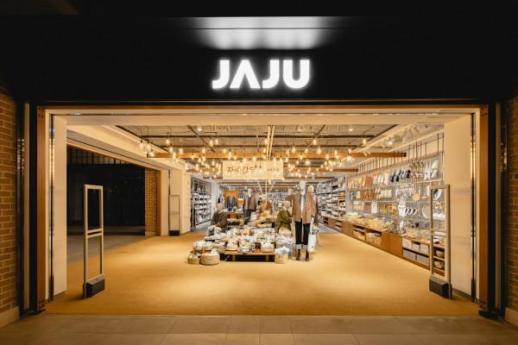 Shinsegae Casa completes acquisition of Jaju, targets 500 bln won in revenue this year SEOUL, January 08 (AJP) - Shinsegae Casa said on Wednesday it has completed the acquisition of the operating business of lifestyle brand Jaju, finalizing the transaction on Dec. 31 as it moves to broaden its portfolio beyond furniture. The company said the deal will help expand its business scope from home interiors to everyday lifestyle categories such as household goods and fashion, reducing earnings volatility tied to housing cycles and construction market conditions. Shinsegae Casa, which posted revenue of 270 billion won ($200 million) last year on the back of its flagship furniture brand Casamia, said it now aims to lift sales to 500 billion won this year as Jaju and its newly launched fashion label Jaa are added to the group. The company said it will operate six lifestyle brands and platforms — Casamia, Materasso, Cucine Lella, Good.com, Jaju and Jaa — while stepping up efforts to generate synergies across product planning, distribution, marketing and sourcing. In a statement, a Shinsegae Casa official said, “This acquisition provides a solid foundation for us to scale up our business and emerge as a leading player in South Korea’s home-furnishing market. Going forward, we will redefine the industry landscape by delivering a differentiated value proposition centered on premium lifestyle sensibilities.” 2026-01-08 14:49:46