


Latest by
-
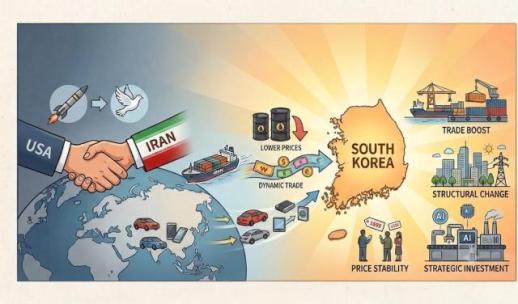 U.S.-Iran Peace Talks and the Future of the South Korean Economy The U.S. and Iran's move toward a peace agreement has brought renewed hope to South Korea's economy, which has been mired in high inflation, high exchange rates, and high interest rates. Amid a transformative boom in the artificial intelligence (AI) sector, the semiconductor industry is experiencing robust growth, yet economic polarization is deepening more than ever. The gap is widening between those receiving substantial bonuses and those struggling for survival, as well as between those inheriting wealth through real estate and those facing the burden of rising rental costs due to the disappearance of jeonse (long-term lease) options. The end of the U.S.-Iran conflict represents a significant macroeconomic shift. However, it should not be viewed merely as a bonus for economic recovery. It must serve as a crucial moment to address structural challenges and fundamentally transform our economy. According to analyses from major research institutions like the Hyundai Research Institute, a 10% drop in international oil prices could lead to an approximate 0.27% increase in South Korea's GDP and a 0.41% rise in gross national income (GNI). While the numerical benefits of reduced costs for key industries like refining and chemicals and improved trade balances are important, the core issue lies elsewhere. We must utilize the financial relief from falling oil prices to invest in transitioning from a high-energy-consuming manufacturing structure to an eco-friendly, high-efficiency industrial framework. Only by leveraging this opportunity can we achieve meaningful structural improvements. Stimulating domestic demand and stabilizing prices for ordinary citizens must also be approached with a focus on changing the economic structure. The Korea Development Institute (KDI) states that in a context of severely depressed domestic consumption, falling oil prices can act as a strong catalyst, potentially lowering consumer prices by about 0.46%. Reducing distribution and logistics costs, along with easing pressures from rising public utility fees, will help restore the purchasing power of households, invigorating the private consumption market, which accounts for nearly half of GDP. We must not settle for merely increasing consumption. The focus should be on bridging the gaps created by high inflation. We need to address the chronic structural vulnerabilities of small businesses and local economies while promoting a virtuous cycle of household income distribution. This is an opportunity to transform a fragile domestic economy, which has relied on debt, into a self-sustaining and robust structure. Geopolitical instability in the Middle East has led to a flight of capital toward the safe-haven U.S. dollar, resulting in the excessive depreciation of the Korean won. The agreement between the two countries will help calm market fears and stabilize exchange rates, improving profit margins for businesses. It will also alleviate the dual challenges of soaring shipping costs and prolonged logistics timelines. We must not limit ourselves to merely securing price competitiveness or short-term profit preservation. Now is the time to fundamentally diversify supply chains that are overly concentrated in specific regions and sectors, while making bold investments in next-generation semiconductors, AI, and aerospace—key strategic technologies that will shape the future of humanity. The financial resources and market stability gained from reduced geopolitical risks should empower our tech companies to gain an edge in the global competition for technological supremacy. With external uncertainties easing, it is the optimal time for the government and businesses to collaborate on bold regulatory reforms and push for a significant transition to high-value-added advanced industries. We must overcome the limitations of an economy that has been reactive to external shocks and focused on short-term fixes. We need to ensure that the positive external factors do not result in just a slight uptick in growth rates, but instead provide the wisdom and agility necessary to withstand the impending global multifaceted crises.* This article has been translated by AI. 2026-06-15 14:18:00
 -
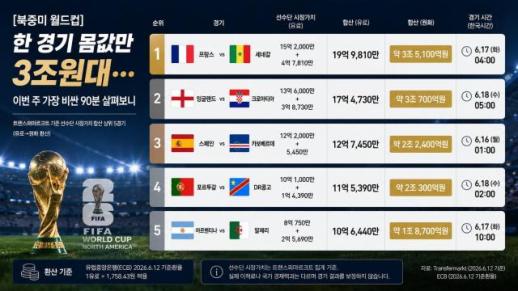 World Cup Match Valuations Reach Astronomical Heights As the group stage of the 2026 FIFA North American World Cup heats up this week, players with astronomical market values are set to take the field. According to the football transfer market site Transfermarkt, the market values of the participating national teams are as follows: France is valued at €1.52 billion, England at €1.36 billion, Spain at €1.22 billion, and Portugal at €1.01 billion. Argentina is valued at €807.5 million. The most expensive match will be the France-Senegal game, scheduled for June 17 at 4 a.m. KST. Combining France's market value of €1.52 billion with Senegal's €478.1 million brings the total to €1.9981 billion. Based on the European Central Bank's exchange rate of €1 = 1,758.43 won as of June 12, 2026, this amounts to approximately 3.51 trillion won. Another notable match is the England-Croatia game on June 18 at 5 a.m. KST. England's market value is €1.36 billion, while Croatia's is €387.3 million. Together, they total €1.7473 billion, roughly equivalent to 3.07 trillion won. The Spain-Cabo Verde match on June 16 at 1 a.m. KST shows an even more pronounced disparity. Spain's team is valued at €1.22 billion, while Cabo Verde is valued at just €54.5 million. Their combined value is €1.2745 billion, or about 2.24 trillion won. The significant difference in valuations is striking, with Spain's team worth more than 22 times that of Cabo Verde. The Portugal-DR Congo match on June 18 at 2 a.m. KST also features a large valuation gap. Portugal is valued at €1.01 billion, while DR Congo is at €143.9 million. Their combined market value is €1.1539 billion, approximately 2.03 trillion won. The Argentina-Algeria match on June 17 at 10 a.m. KST has a combined market value of €1.0644 billion, or about 1.87 trillion won, with Argentina valued at €807.5 million and Algeria at €256.9 million. However, it is important to note that Transfermarkt's market values are estimates based on factors such as player age, club affiliation, contract status, performance, and potential, and do not necessarily reflect actual transfer fees or national economic strength. * This article has been translated by AI. 2026-06-15 14:18:00
 -
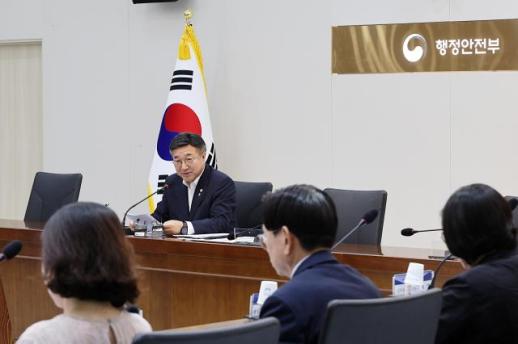 Pre-issue Your Certificates: Gwangju-Jeonnam Special City Launches, Services Halted As the Gwangju-Jeonnam Special City is set to launch on July 1, the issuance of various civil documents, including resident registration and building permits, will be temporarily restricted. The Ministry of the Interior and Safety urged residents to obtain necessary documents in advance. On June 15, the ministry announced that due to the integration of information systems ahead of the special city's launch, some civil services will be suspended from June 27 to 28 and from 6 p.m. on June 30 until 9 a.m. on July 1. This measure is part of the transition mandated by the Special Act on the Establishment of Gwangju-Jeonnam Special City, aimed at securely integrating 495 administrative information systems previously operated by the two local governments. To minimize public inconvenience, the ministry plans to phase out services during low-usage periods, such as weekends and nighttime. Initially, from 6 p.m. on June 26 to 9 a.m. on June 29, five services, including building permit issuance, local tax payments, and water bill inquiries, will be unavailable. Following this, from 6 p.m. on June 30 to 9 a.m. on July 1, 78 public services, including resident registration and land registry issuance, will be temporarily halted. The suspension of resident registration issuance will apply only to residents with addresses in Jeollanam-do and Gwangju. However, services such as tax certificates and income certificates from the National Tax Service will be restricted nationwide. For instance, a resident living in Yeosu, Jeollanam-do, who is temporarily in another region may also face restrictions on obtaining their resident registration during this time, necessitating prior verification. The ministry is notifying the public about the service interruptions through the Government 24 portal, as well as via cable TV subtitles, social media card news, and agency newsletters. The ministry advised, "Please check in advance whether your usual services will be suspended and obtain necessary civil documents as early as possible."* This article has been translated by AI. 2026-06-15 14:18:00
 -
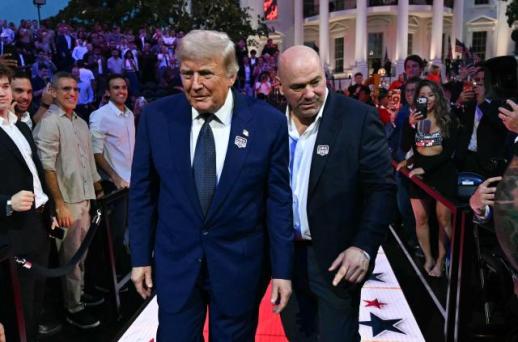 UFC Octagon Set Up on White House Lawn for Unprecedented Event President Donald Trump attended the 'UFC Freedom 250' event on the South Lawn of the White House on June 14, 2026. The event coincided with Trump's 80th birthday and the announcement of a peace agreement with Iran, marking an unusual private commercial sports event at the White House. According to the Wall Street Journal, the event was briefly delayed due to the possibility of thunderstorms. Trump emerged from the Oval Office alongside his close associate, UFC CEO Dana White, to cheers from the crowd celebrating his birthday. Country singer Jack Brown performed the national anthem as military aircraft flew over the White House, which a Paramount+ commentator described as a "surreal scene." A 92-foot-tall, 600-ton steel structure known as 'The Claw' was erected on the South Lawn, with over 4,000 guests invited. Trump sat in the front row next to his wife, Melania, with family members, cabinet officials, Republican lawmakers, and military personnel in attendance. As the first match began, the crowd chanted "USA," and Trump's favorite song, the Village People’s "Y.M.C.A.," played during the event. Seven matches were held, including a lightweight title fight between Ilia Topuria and Justin Gaethje, and an interim heavyweight title match featuring Alex Pereira and Ciryl Gane. The fighters wore gloves in red, white, and blue, reminiscent of the American flag. The event was officially planned as part of the celebration for the 250th anniversary of the founding of the United States. The White House stated in a press release that it would be "one of the most exciting nights in American history" and that such a spectacle at the "people's house" was a fitting tribute to the 250th anniversary of independence. White emphasized that "this country was built on fighting," highlighting how UFC represents America's resilient spirit. However, the event was not without controversy. The Wall Street Journal noted that it was an unusual spectacle even by Trump’s standards, combining corporate sponsorship with VIP access in a public space. Logos of sponsors such as Bud Light, Crypto.com, Polymarket, and Morgan & Morgan were displayed on stage, and the event was exclusively broadcast on Paramount+. Brendan Ballou of the anti-corruption group Public Integrity Project told the BBC that the sale of sponsorship packages, broadcasting rights, and advertising at the White House and Lincoln Memorial raised concerns about corruption. He pointed out, "The fundamental question we should be asking as a nation is whether we should use our most sacred national monuments to enrich the president and his associates." Trump is known to have financial ties to the UFC. Public records indicate that he purchased shares in TKO, the parent company of UFC, valued between $15,000 and $50,000 in March of this year. Debate continues over the public funding involved. The Associated Press reported that more than seven federal agencies were involved in preparing for the event. The BBC estimated that local authorities spent between $10 million and $12 million in federal funds on security and road control. UFC fans and Trump supporters gathered at the large screen set up in Ellipse Park in front of the White House, while related events took place throughout downtown Washington, D.C. Protests also occurred outside the venue, with some demonstrators criticizing the use of the White House and Lincoln Memorial for political events and commercial sports. One protester told the Wall Street Journal, "This is not his house; it is our house," calling the event "disgusting." The Wall Street Journal analyzed that the event provided Trump, facing challenges such as the Iran war, inflation, and declining approval ratings, with an opportunity to project a strong image. Notably, Trump's approval ratings are nearing the lowest levels of his political career, and support among young men, a key demographic for UFC, is also waning. Trump's connection with White dates back to the early 2000s when Trump’s Atlantic City Taj Mahal hosted UFC events that were often shunned due to concerns over violence. Since then, Trump has frequently attended UFC events to appeal to young male and conservative fight fans as he sought to revive his political career. 2026-06-15 14:18:00
 -
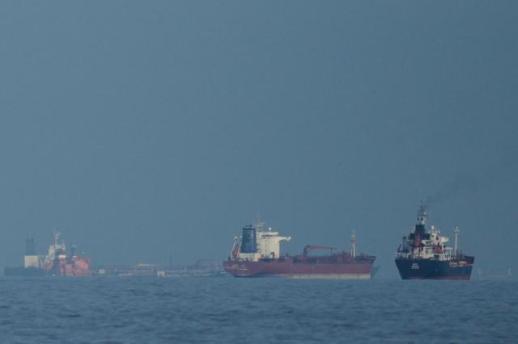 US-Iran Peace Agreement Could Push Brent Crude Prices Down to $80 As expectations grow for the reopening of the Strait of Hormuz following a temporary peace agreement between the United States and Iran, analysts predict that Brent crude oil prices could fall to around $80 per barrel by the end of the year. If the strait remains open and oil exports normalize, the geopolitical risk premium that has inflated prices during Middle Eastern conflicts may decrease. According to a report by Vivek Dhar, an analyst at the Commonwealth Bank of Australia, Brent crude futures could drop to $80 per barrel by year-end, assuming a swift resumption of oil and petroleum product exports through the Strait of Hormuz. This projection was made on June 14, local time. Dhar noted that even if the volume of oil passing through the strait recovers to only 60-70% of pre-war levels, the market could revert to previous forecasts of oversupply. He pointed out that alternative pipelines bypassing Hormuz and ongoing increases in supply from non-OPEC+ countries this year could alleviate concerns about supply shortages, even without a full normalization of shipping traffic. Following news of the agreement, international oil prices have already begun to decline. The nearest Brent crude futures contract fell 3.9% to $83.90 per barrel. According to the Associated Press, West Texas Intermediate (WTI) crude also dropped to $80.85. However, the speed of actual export resumption remains uncertain. The AP reported that oil-laden vessels have been stranded in the Persian Gulf for over three months, and safe navigation assurances and insurance will be necessary to resume shipping. Additionally, it may take time for new tankers to arrive and load oil after the stranded vessels depart. The pace of normalization may vary among oil-producing countries. Saudi Arabia and the United Arab Emirates have alternative transport routes, allowing them to increase production relatively quickly. In contrast, Iraq faces significant production halts and complex reactivation of oil fields, which could slow its recovery.* This article has been translated by AI. 2026-06-15 14:09:00
 -
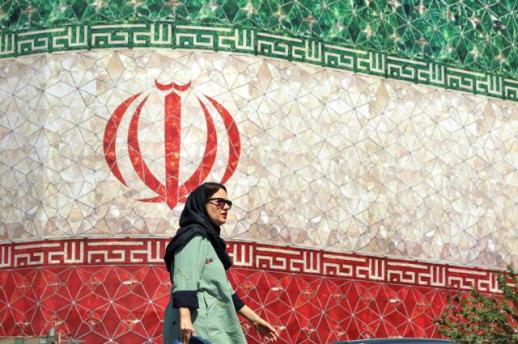 ASIA INSIGHT: End of 106-day war and beginning of new Middle East How US-Iran End of War Changes World Order June 15, 2026 is highly likely to be recorded as a turning point in modern Middle Eastern history. On this day, US President Donald Trump announced that negotiations to end the war between the United States and Iran had reached a final settlement, which was officially confirmed by the Iranian government and the mediating nation, Pakistan. Both sides are scheduled to sign a memorandum of understanding on the end of the war in Switzerland on the 19th. The war, which lasted for 106 days since the United States and Israel launched massive airstrikes on Iranian nuclear and military facilities on February 28, has effectively come to an end. A period of 106 days can be seen as either short or long. However, those 106 days were a time when decades of hostile relations between the US and Iran, Israel's security anxieties, sectarian conflicts in the Middle East, the international energy order, and the hegemonic rivalry between the US and China all collided at once. This war was not simply a military clash involving exchanges of missiles and drones, but a geopolitical collision condensing the core contradictions of 21st-century international politics. The war is over, but history begins now. The true winners and losers of this war will be determined by what kind of order is established in the place where the gunfire has ceased. 106 Days of War, How It Started and How It Ended The direct trigger for this war was a preemptive strike by the US and Israel. The US and Israel determined that Iran had practically reached the stage right before possessing nuclear weapons. Reports from the International Atomic Energy Agency and analyses by Western intelligence agencies assessed that Iran had secured a significant level of highly enriched uranium. From Israel's perspective, there were not many options. The moment Iran acquired nuclear weapons, the strategic balance in the Middle East would completely collapse. Since its founding, Israel has survived while constantly surrounded by hostile nations. Therefore, Iran's nuclear armament was not merely a security issue but a matter of national survival. The US also decided that it could no longer neglect Iran's nuclear development. Since taking office, the Trump administration maintained the position that it would absolutely not tolerate Iran's nuclear armament. Ultimately, at the end of February, the US and Israel carried out massive airstrikes. However, contrary to expectations, Iran did not collapse. Iran chose asymmetric warfare instead of direct frontal combat. Long-range missiles, drones, naval blockades, and proxy attacks utilizing pro-Iranian armed groups followed. With Hezbollah in Lebanon, Houthi rebels in Yemen, pro-Iranian factions in Syria, and Shiite militias in Iraq all mobilizing, the front lines instantly expanded across the entire Middle East. The world grew tense. In particular, as the Strait of Hormuz was virtually paralyzed, international oil prices skyrocketed and financial markets were engulfed in anxiety. When the strait, through which more than 20 percent of the world's crude oil cargo passes, was shaken, the entire Asian economic bloc suffered a shock. But as time passed, the US, Iran, and Israel all began to realize the limitations of war. The US failed to topple the Iranian regime, and Iran failed to drive the US out of the Middle East. Israel also failed to secure complete security. Eventually, all three countries came to acknowledge the reality that the cost of continuing the war had become far greater than the cost of seeking peace. Netanyahu's Calculation, Between Victory and Burden To understand this war, one cannot leave out Israeli Prime Minister Benjamin Netanyahu. Netanyahu is a leader who has maintained the most hardline anti-Iran stance in history. For decades, he has argued that Iranian nuclear armament could bring about a second Holocaust. In fact, Netanyahu achieved his goals to some extent in this war. Many of Iran's nuclear facilities were hit, and its military infrastructure also suffered heavy losses. Pro-Iranian proxy groups across the Middle East took significant damage as well. However, it was not a complete victory. Israel spent massive amounts on military expenditures, while tourism and investment shrank. Above all, the public began to feel fatigued by the endless war. What Israeli citizens want is not eternal war but stable daily lives. Netanyahu ultimately chose reality. He adjusted his position to accept an agreement predicated on the abandonment of nuclear weapons and an international monitoring system. He found a balance between ideals and reality. Trump's Real Target is Not Iran but China The key to understanding this end of war is China. On the surface, it appears to be a war between the US and Iran, but China was on the minds of US strategists. Today, the center of US national strategy is not the Middle East but the Indo-Pacific. What the US fears most is not Iran but the rise of China. US-China competition is unfolding in almost every strategic industry, including artificial intelligence, semiconductors, quantum technology, the space industry, electric vehicles, and rare earth supply chains. From President Trump's perspective, a prolonged Middle East war is a strategic nightmare. If military power, diplomatic efforts, and finances are tied up in the Middle East, the US cannot focus on keeping China in check. Therefore, this end of war can be seen not merely as a peace agreement but as a strategic redeployment for the US. It aims to settle Middle Eastern issues to some extent and shift the center of gravity to the Indo-Pacific. The US has now entered an era where it considers semiconductors more important than oil. Trump's decision to end the war is a symbolic scene of such changing times. What China and Russia Gained An interesting point is that China and Russia were quieter than expected during this war. China publicly called for peace but in reality played an important role as a pillar supporting the Iranian economy. China remains a major importer of Iranian crude oil. China's goal was clear. It wanted the US to be tied down in the Middle East for a long time. The more the US exhausts its power in the Middle East, the more China can secure strategic space in East Asia. The same went for Russia. Burdened by the war in Ukraine, Russia never viewed the diversion of US attention to the Middle East as a bad thing. However, if the war were to be prolonged, the instability of the international crude oil market could grow excessively large. Eventually, China and Russia also came to want an end to the war at a certain level. Country Named Iran and Temperament of Persians Western nations often view Iran simply as a theocracy. However, that is a perspective that fails to understand Iran properly. Iran is not just a simple country. Iran is the successor to Persian civilization. Persia achieved one of the greatest civilizations in human history since the Achaemenid Empire founded by Cyrus the Great in the 6th century BC. Cyrus the Great, who liberated Jewish people from their Babylonian captivity, is still regarded today as a symbol of tolerance and inclusion. Persians possess strong pride and historical consciousness. They distinguish themselves from the Arab world. Their language is different, their culture is different, and their historical identity is different. The reason Iran was able to hold out until the end in this war was also not simply due to military power but because of this civilizational pride. Iran is a country that chooses to endure pain rather than admit defeat. It has a unique spirit of patience and resistance formed through experiencing foreign invasions over thousands of years. That is why the US ultimately abandoned its goal of collapsing the Iranian regime. It reaffirmed the fact that the country named Iran is not one that can be easily brought to its knees, even if it can be pressured militarily. Impact on Korean Economy and Energy Market South Korea is highly likely to become one of the direct beneficiaries of this end of war. South Korea imports most of its energy. If crude oil and liquefied natural gas are not stably supplied from the Middle East, the South Korean economy will receive an immediate shock. In particular, oil refining, petrochemicals, steel, shipbuilding, and automobile industries are closely linked to international oil prices. If the Strait of Hormuz is normalized, logistics costs will stabilize and the burden of energy costs is highly likely to decrease. Above all, uncertainty in the financial market will decrease. It will also help stabilize exchange rates. It could also have a positive impact on the semiconductor industry. This is because the stabilization of energy prices leads to the recovery of manufacturing competitiveness. The South Korean economy is affected across its entire import and export structure even if crude oil prices move by just 10 dollars. In that regard, this end of war is not merely diplomatic news but a crucial variable for the South Korean economy. Where Middle East is Heading If this agreement is successfully implemented, the Middle East could enter a new era. First, relations between Saudi Arabia and Iran have the potential to become more stable. Second, the normalization of relations between Israel and the Arab world could be pursued again. Third, Middle Eastern economic development projects could begin in earnest. Fourth, the competition between China's Belt and Road Initiative and the India-Middle East-Europe Economic Corridor could also enter a new phase. Fifth, the Middle East gains the potential to transform from a land of war into a land of investment and technology. Of course, numerous obstacles remain before such prospects become reality. Issues regarding nuclear verification, the lifting of sanctions, Hezbollah and Houthi rebels, and Israel's domestic politics still exist. But at least for now, the gunfire has stopped. Peace is Harder Than War Humanity has experienced too many wars. From World War I, World War II, the Korean War, the Vietnam War, the Gulf War, the Iraq War, the Ukraine War, to this Iran War. History has constantly demonstrated the destructive instinct of human beings. However, what advanced civilization was not war but peace. War destroys cities, but peace builds them. War kills people, but peace saves them. War fosters hatred, but peace creates the future. This 106-day war left many lessons. The US learned that it cannot change the Middle East through power alone, and Iran learned that it cannot achieve prosperity through resistance alone. Israel learned that it cannot be guaranteed eternal safety through military force alone. Eventually, all three nations returned to the negotiation table. That is the essence of international politics. War begins when negotiations fail, and negotiations resume when war fails. The signing ceremony scheduled in Switzerland on June 19, 2026, is not a simple diplomatic event. It marks the conclusion of the war that lasted 106 days and the starting line for a new Middle Eastern order. History is turning another page in the Middle East right now. Whether that page will become a chapter of peace or the prelude to another conflict remains unknown. But one thing is clear. The sounds of gunfire and bombing that echoed for 106 days are coming to a halt. And humanity is once again gaining the opportunity to choose peace over war. Seizing that opportunity is now the most important task given to the US, Iran, Israel, and the entire international community. 2026-06-15 14:08:26
 -
 After Hormuz relief, KOSPI's next target is developed-market status SEOUL, June 15 (AJP)-With the Gulf crisis moving toward resolution, South Korea's stock market faces next test: whether a chip-led rally can carry the KOSPI from one of the world's best-performing markets to a developed-market benchmark. Semiconductors can lift the index. They cannot, by themselves, make Korea a developed market. The KOSPI has surged 92.8 percent since end-2025, far outpacing Taiwan's 52.5 percent gain, Japan's 31.1 percent rise and the Dow's 6.5 percent advance. Yet the same data reveal why Korea's case remains complicated: the market has delivered developed-world scale and technology leadership with emerging-market volatility and unstable foreign flows. The war-risk discount is now easing. A planned U.S.-Iran memorandum of understanding on Friday could reopen commercial traffic through the Strait of Hormuz and reduce the oil premium that has weighed on Korea, which imports roughly 70 percent of its crude from the Middle East. Oil prices and the won have already moved in response, allowing investors to refocus on earnings. Yuanta Securities on Monday said the removal of war risk has confirmed the return of foreign investors. Overseas buyers returned to Korean shares for two consecutive sessions after weeks of selling, concentrating on large-cap semiconductor names. As of 1:40 p.m., the KOSPI was up 5.3 percent at 8,554.98, with foreign investors turning net buyers of 638 billion won and extending Friday's purchases of 2.7 trillion won. The buying marks a sharp reversal from a near-uninterrupted selling spree that ran from May through Thursday, during which foreigners offloaded 51.5 trillion won worth in KOSPI in May and a further 27.2 trillion won in June. Yuanta attributed the shift to easing geopolitical tensions, reduced won-dollar volatility and the end of SpaceX-related liquidity migration. The shift in foreign flows comes with one week to spare before MSCI delivers its annual market-classification verdict on June 23, but industry watchers say MSCI's developed-market watch-list decision on won't be settled by Samsung Electronics and SK hynix alone. Korea has long sought developed-market status. MSCI removed the country from its developed-market watch list in 2014, citing restrictions on currency trading and other market-access issues. Last year, the index provider again pointed to shortcomings in foreign-exchange reforms and compliance burdens on overseas investors. Since then, Korea has resumed short selling and is preparing to launch extended won trading hours in July, two reforms long demanded by global investors. Compared with Japan, Korea has the earnings momentum but not yet the market structure. Japan's rerating was powered not only by technology and exporters but by years of exchange-led reform, broader shareholder returns and a deeper base of long-term global capital. Korea's value-up campaign is moving in the same direction — but it is younger and less tested. Korean stocks still trade well below Japanese, Taiwanese and American peers, even as chips, shipbuilding, banks, autos and power equipment deliver stronger earnings. Developed-market status, however, requires more than cheap valuations and high returns. The real checklist is market access, currency convertibility, short-selling normalization, settlement reliability, foreign-investor convenience, governance and shareholder protection. Korea has made progress, but MSCI will want evidence that reforms are durable, not cyclical. Korea's strongest argument is that it is no longer simply an emerging-market proxy. It is a core AI supply-chain market with global-scale companies, record earnings and a growing shareholder-return culture. Its weakest point is that the rally remains too concentrated and too volatile. Just last week, the KOSPI has swayed 4 to 8 percent daily from 7,484.41 to 8,123.62. After Hormuz, the KOSPI may have enough fuel to test 9,000. To reach developed-market status, Korea must prove it can look less like a spectacular trade and more like a stable market. 2026-06-15 14:08:09
 -
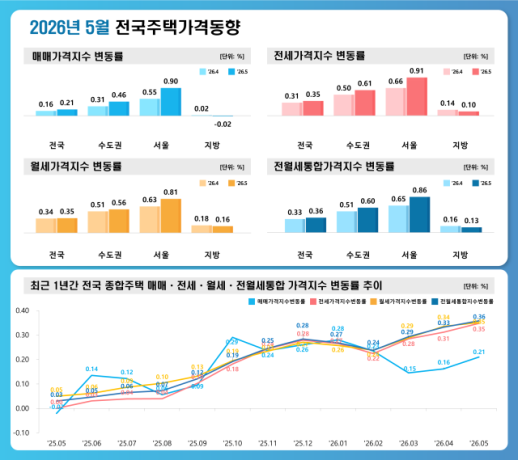 Seoul Housing Prices Rise 0.9% Amid Regional Declines, Deepening Market Polarization Seoul's apartment and rental prices are rising sharply, while regional markets continue to decline, exacerbating polarization in the housing market. According to the Korea Real Estate Agency's report on national housing price trends for May 2026, the average housing sale price across the country increased by 0.21% compared to the previous month. The metropolitan area saw a 0.46% rise, with Seoul's prices climbing 0.90%, while regional markets experienced a slight decline of 0.02%. The increase in Seoul's housing prices is primarily concentrated in desirable areas such as redevelopment zones, transit-accessible locations, and large complexes. The growth rate for Seoul's housing prices expanded from 0.55% in April to 0.90% in May. By district, Seongbuk-gu recorded the highest increase at 1.36%, followed by Songpa-gu (1.19%), Gwangjin-gu (1.18%), Seongdong-gu (1.07%), Seodaemun-gu (1.06%), and Nowon-gu (1.05%), all showing around 1% growth. In contrast, the regional housing market remains stagnant. Gwangju saw a decrease of 0.52%, and Jeju's prices fell by 0.17%, while the five major metropolitan cities overall dropped by 0.09%. Only a few areas, such as Ulsan (0.33%) and Jeonbuk (0.21%), showed any signs of growth. The rental market also reflects a strong trend centered around Seoul and the metropolitan area. National rental prices rose by 0.35%, with the metropolitan area increasing by 0.61% and Seoul's rental prices climbing by 0.91%. Notably, the growth rate for rental prices in Seoul has reached levels comparable to that of sale prices. The Real Estate Agency noted that demand for rentals continues to flow into areas with excellent living conditions, such as large complexes and transit-accessible locations. In the Seoul rental market, Songpa-gu experienced the highest increase at 1.62%, followed by Seongdong-gu (1.44%), Nowon-gu (1.40%), Seongbuk-gu (1.30%), and Dobong-gu (1.13%). The upward trend in monthly rents also persists, with national monthly rental prices rising by 0.35% and Seoul's by 0.81%. In Seoul, demand for monthly rentals is concentrated in areas like Songpa-gu (1.30%), Nowon-gu (1.40%), and Seongdong-gu (1.27%). The Korea Real Estate Agency stated, "Demand is concentrated in new and redevelopment projects in Seoul and the metropolitan area. While some regions are showing a wait-and-see attitude, the overall trend remains upward. The rental market is also experiencing increased demand in transit-accessible and newly built areas, leading to continued rising transactions." Industry experts believe that the simultaneous rise in Seoul's housing prices and rental challenges will likely sustain the polarization between the metropolitan area and regional markets, as well as between new and existing properties. The similar growth rates for sale prices (0.90%) and rental prices (0.91%) in Seoul are interpreted as a signal of ongoing demand from actual buyers.* This article has been translated by AI. 2026-06-15 14:03:00
 -
 Government to Inspect 42 Military Explosive Facilities Following Hanwha Aerospace Incident The government is launching safety inspections of military explosive handling facilities in response to the explosion at Hanwha Aerospace's Daejeon site. On June 15, the Ministry of Employment and Labor announced that it will conduct joint inspections of these facilities in collaboration with the Defense Acquisition Program Administration and the National Fire Agency. This initiative follows the explosion that occurred on June 1 at Hanwha Aerospace's Daejeon facility, which resulted in the deaths of five workers and injuries to two others. The Ministry will inspect 42 military explosive handling facilities nationwide. The inspection teams will focus on the safety management of all areas handling military explosives, including manufacturing, storage, and testing, and will verify whether explosives are being handled in unauthorized areas. The inspections will particularly emphasize compliance with the Industrial Safety and Health Act regarding the management of flammable and explosive materials, adherence to the Defense Acquisition Act concerning explosive handling facility standards, and compliance with the Hazardous Materials Safety Management Act regarding the storage and handling of hazardous materials. If any violations are detected, the government plans to take strict action in accordance with relevant laws. In addition to addressing legal violations, the Ministry will actively recommend improvements to enhance safety levels on-site and will guide the implementation of these improvements. Kim Young-hoon, Minister of Employment and Labor, stated, "Handling explosives can lead to significant casualties from even minor oversights, and there are no less dangerous tasks at these facilities. We will thoroughly inspect the risk factors on-site using the expertise of relevant agencies."* This article has been translated by AI. 2026-06-15 14:03:00
 -
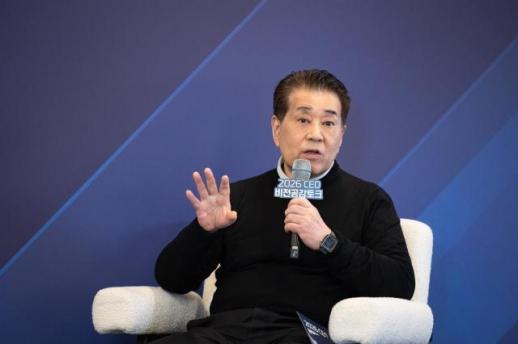 POSCO Chairman Jang In-hwa Commits to Restoring Trust After Shin Ansan Line Incident Jang In-hwa, Chairman of POSCO Holdings, announced on June 15 that the company will comprehensively review its safety management system and strengthen measures to prevent future incidents following an industrial accident at the Shin Ansan Line construction site. During a safety management review meeting led by Minister of Employment and Labor Kim Young-hoon, Jang emphasized, "We will mobilize all available resources, including securing safety budgets and related investments, to restore public trust in industrial safety across all business sites. We will ensure that similar accidents do not occur again." The meeting was convened in response to the industrial accident that occurred on June 9 at the Shin Ansan Line construction site, where POSCO E&C is working on the 3-2 section. The Ministry of Employment and Labor urged POSCO Group to reform its safety management practices and implement rigorous measures to prevent recurrence. Attendees included Jang, Yoo In-jong, President of POSCO Safety Solutions, Lee Hee-keun, President of POSCO, and Song Chi-young, President of POSCO E&C, who reported on safety measures specific to their respective companies and strategies to eliminate repeated accidents at the same sites. Minister Kim stressed the need for special measures at particularly hazardous sites like the Shin Ansan Line, advocating for increased safety investments and practical improvements, such as hiring more safety and health managers to ensure effective safety activities on-site. In response, Jang stated, "The Shin Ansan Line site, which reaches a depth of 70 meters, poses significantly higher risks than typical construction sites. We will convert all safety personnel to full-time positions and deploy additional staff beyond legal requirements." He also committed to concentrating supervisory personnel from world-class safety companies at all Shin Ansan Line sites to ensure thorough management until the project is completed, stating, "We will do everything possible to prevent similar accidents from happening again." In light of this incident, POSCO Group plans to reassess the safety management systems across all its subsidiaries, including construction and steel, and to further enhance its safety management framework. A POSCO Group representative emphasized, "We will make every effort to create a safer workplace so that not a single worker fails to return home from work, and to become a POSCO Group that earns the trust of the public." 2026-06-15 14:03:00