


Latest by
-
 August Auto Exports Plunge 29.8% Amid Strikes and Production Cuts Last month, South Korea's auto exports fell nearly 30%, accompanied by declines in production and domestic sales. The shift in summer vacation timing compared to last year reduced working days, and strikes at some companies disrupted production.According to the Ministry of Trade, Industry and Energy's report on the '2026 August Automotive Industry Trends' released on September 17, the value of auto exports in August was $3.851 billion, a 29.8% decrease compared to the same month last year. The number of vehicles exported dropped to 146,499 units, down 26.9%.Exports decreased across all regions. Exports to North America, the main market, fell to $1.835 billion, a 28.2% decline. Exports to the United States alone were $1.478 billion, down 29.5%. The European Union saw a 16.8% decrease, while exports to Asia dropped by 41.9%, the Middle East by 23.6%, and Latin America by 12.9%.Although exports of eco-friendly vehicles also declined, the drop was less severe than that of overall auto exports. The number of eco-friendly vehicles exported was 58,126 units, down 16.4%, with export value at $1.722 billion, a 20.9% decrease. By vehicle type, hybrid car exports totaled 35,723 units, and electric vehicle exports were 21,404 units, reflecting decreases of 17.5% and 5.0%, respectively, from a year earlier.Production volume fell to 206,064 units, a 35.8% decrease. The shift in the industry's summer vacation from late July last year to early August this year significantly reduced the average number of working days by four. Additionally, production disruptions due to strikes at some companies compounded the issue.Domestic sales also saw a decline, totaling 109,920 units, down 20.8%. Sales of domestic cars fell by 28.5% to 78,881 units, while imports increased by 9.0% to 31,039 units. Sales of eco-friendly vehicles in the domestic market were 68,808 units, a 2.3% decrease. Hybrid sales dropped by 17.6% to 36,102 units, while electric vehicle sales rose by 27.6% to 31,060 units. Eco-friendly vehicles accounted for 62.6% of total domestic sales, maintaining a steady trend.From January to August this year, cumulative auto export value reached $46.013 billion, a 3.5% decrease compared to the same period last year. Cumulative production was 2,668,941 units, down 2.9%, and domestic sales totaled 1,096,740 units, a 0.7% decline. During the same period, eco-friendly vehicle export value increased by 18.2% to $19.664 billion.The Ministry stated, "With wage negotiations at major automakers concluded, we expect production and exports to gradually recover in the second half of the year as we make up for lost production. We will communicate with the industry and provide support to resolve on-site challenges."* This article has been translated by AI. 2026-09-17 11:04:20
 -
Spigen Korea, OpenNote, and MT Recognized for Excellence in Talent Development Spigen Korea, OpenNote, and MT have been recognized as the top companies in human resource development for their integrated talent development systems that link recruitment, evaluation, and training.The Ministry of Employment and Labor and the Korea Industrial Human Resources Corporation held the '2026 Human Resource Development Excellent Institution Certification Ceremony' on September 17 at the Fairmont Ambassador Seoul in Yeouido.The certification for excellent human resource development institutions comprehensively evaluates systems related to human resource management, including recruitment, evaluation, compensation, training, and career development. Since its inception in 2006, 2,661 companies have applied, with 1,319 institutions receiving certification. The evaluation considers not only training results but also how member capabilities are connected to corporate performance and competitiveness.This year's evaluation included companies participating in AI training, outstanding online training providers, and companies investing in pre-employment learning. A total of 95 companies received certification, including 19 in the large enterprise category, 56 in the small and medium-sized enterprise category, and 20 in the pre-employment learning category. Among these, 60 received new certifications, while 35 were re-certified.Certified companies will receive a certificate and plaque. They will also benefit from a three-year exemption from regular labor inspections and additional points when applying for various government support and grants. Additionally, Spigen Korea, OpenNote, and MT, which received the highest scores in their respective categories, will be recognized as the best institutions and receive commendations from the Minister of Labor.Spigen Korea, the top company in the large enterprise category, connects personnel management and training by analyzing individual performance evaluation results and incorporating them into individual development plans. The company has implemented blind recruitment to exclude unrelated information and operates a promotion and compensation system based on performance and capabilities.OpenNote was selected as the top company in the small and medium-sized enterprise category. It focuses its training on competencies needed for future core businesses, such as artificial intelligence, cloud, and energy information technology, linking training outcomes to job application, performance evaluation, and career development.MT, recognized as the best company in the pre-employment learning category, provides training for new hires tailored to practical work, including automation equipment and robotics. The company offers allowances for those who obtain qualifications and conducts site-specific safety training, including risk assessment and electrical safety.Byun Do-in, Director of the Ministry of Labor's Vocational Competency Policy Bureau, stated, "To respond to the rapidly changing industrial environment due to AI and digital transformation, systematic talent development is crucial. We will continue to promote training policies to equip individuals with the necessary competencies for change."* This article has been translated by AI. 2026-09-17 11:04:10
-
Ministry of Land to Hold Safety Management Meeting for High-Speed Rail Ahead of Chuseok The Ministry of Land, Infrastructure and Transport will assess the overall training status of high-speed rail operators and review crowd management and security measures in preparation for the Chuseok holiday.On September 17, the ministry announced that it will hold a "High-Speed Rail Safety Management Meeting" at Suseo Station on September 18.The ministry has conducted three training programs for train operators as part of the integration of high-speed rail services and has reviewed the overall safety management system. This meeting aims to evaluate the performance and compliance of Korea Railroad Corporation (KORAIL) following on-site inspections.First, the meeting will check the status of securing high-speed rail operators in relation to the increased number of train services resulting from the integration, as well as the training of experienced operators to ensure driving expertise.It will also review improvements to training programs for crew members in case of unusual situations, as well as the implementation of necessary enhancements for vehicles, facilities, signals, and communications.During the Chuseok holiday period (September 23-27), the ministry plans to examine measures to strengthen security management against crowd congestion and railway crimes due to the expected increase in rail passengers.Additional safety personnel from KORAIL will be deployed at major stations such as Seoul, Suseo, and Busan, where congestion is anticipated. The ministry will also review measures to maintain order within the stations, including separating passenger flow during boarding and alighting.To address concerns about crimes such as theft and sexual harassment in vulnerable areas (like escalators and transfer corridors), additional railway police will be stationed. The ministry will also assess a monitoring system using AI CCTV to cover blind spots that cannot be managed by on-site personnel alone.Cho Sung-kyun, Director of Railway Safety Policy at the Ministry of Land, stated, "For the integration of high-speed rail to translate into tangible benefits for the public, safety must be firmly supported. The ministry plans to regularly check KORAIL's progress in establishing a system that ensures the expertise of railway personnel (train operators and crew members)."He added, "KORAIL should be fully prepared for crowd management and transportation measures during the Chuseok holiday, which will be the first major holiday since the integration."Meanwhile, KORAIL and SR officially merged on September 1, unifying the SRT brand under KTX, allowing for cross and combined operations between Seoul Station and Suseo Station without distinction between starting and ending points.* This article has been translated by AI. 2026-09-17 11:04:10
-
Government Allocates 16.6 Trillion Won for Livelihood Support Ahead of Chuseok As Chuseok approaches, the financial execution rate for livelihood and vulnerable group support projects has reached 77.9%. Meanwhile, 71.4% of disaster and safety support projects have been executed. The government is focusing on managing the execution of related projects and on-site responses in preparation for increased travel and natural disasters during the fall.On September 17, Jo Yong-beom, Vice Minister of the Ministry of Economy and Finance, chaired the 14th joint meeting on financial execution at the Government Sejong Complex, where he reviewed the execution status and future management plans for livelihood and vulnerable group support projects as well as disaster and safety support projects.On September 1, the government announced the 'Chuseok Livelihood Stabilization Measures' during a Cabinet meeting, focusing on four areas: stabilizing prices of essential goods, alleviating the burden on households, boosting domestic demand, and ensuring public safety. The meeting specifically examined the execution status of projects closely related to the public's livelihood and vulnerable groups in anticipation of increased demand during the Chuseok holiday.For livelihood stabilization and vulnerable group support projects, 16.6 trillion won has been executed out of a total budget of 21.3 trillion won, resulting in a 77.9% execution rate as of the end of August.By category, the execution rate for vulnerable group livelihood stabilization projects was the highest at 83.8%. The revitalization projects for small businesses and traditional markets saw an execution rate of 80.4%, while regional economic revitalization projects had a 76.7% execution rate. Although the execution rate for holiday price burden alleviation projects was relatively low at 57.0%, the government plans to ramp up execution in line with the peak demand period for Chuseok.For disaster and safety support projects, 6.08 trillion won has been executed out of a total budget of 8.48 trillion won, resulting in a 71.4% execution rate. The government aims for a 97.5% execution rate by the end of the year.In the area of natural disasters, 3.84 trillion won has been executed out of 4.91 trillion won, achieving a 78.2% execution rate. Maintenance of national rivers has seen a 71.1% execution rate, while coastal maintenance has reached 55.5%. In the social disaster and safety sector, 2.21 trillion won has been executed out of 3.56 trillion won, resulting in a 62.0% execution rate. Safety and facility improvements for high-speed rail have achieved an 85.7% execution rate, and the introduction and operation of forest helicopters have reached 75.1%.The government is preparing for natural disasters such as typhoons and wildfires in the fall, while also ensuring traffic and public safety during the Chuseok holiday. Plans are in place to address execution challenges for key disaster and safety projects closely related to the public's daily life, including maintenance of national rivers, port and coastal maintenance, and railway maintenance, while managing execution status and on-site response systems before and after Chuseok.Vice Minister Jo stated, "As Chuseok is a peak demand period with significant public movement, it is crucial to manage financial projects closely related to the public's livelihood to ensure that citizens can feel the benefits of these efforts." He added, "Support for vulnerable groups and alleviating the burden on households must be delivered on time to those in need, and all departments should ensure that there are no gaps in public safety during the holiday period by closely monitoring execution status and on-site challenges."The Ministry of Economy and Finance plans to continue monitoring the execution status of key livelihood and safety projects through financial execution meetings and strengthen on-site management.* This article has been translated by AI. 2026-09-17 11:04:10
-
Namsan Cable Car Faces Permanent Monopoly Ban; Reauthorization Every 20 Years Safety management for cable cars and monorails will be strengthened. The duration of business permits will be limited to a maximum of 20 years, and a reauthorization system will be introduced.The Ministry of Land, Infrastructure and Transport announced on the 17th that the revised 'Enforcement Decree of the Rail Transport Act' and 'Enforcement Rules of the Rail Transport Act,' approved at a Cabinet meeting on the 8th, will take effect on the 18th.According to the revised Rail Transport Act, the validity period for rail business permits will now be limited to within 20 years. Previously, businesses could operate indefinitely once they received a permit.Operators must apply for reauthorization to the local government between two years and one year before the permit expires. Local governments will comprehensively consider the purpose and type of operation, operational plans, funding methods, and annual transport volume to determine the duration of the permit or reauthorization.In particular, aging rail facilities that have been in operation for a long time will undergo safety and operational performance reviews during the reauthorization process, allowing for more regular management and oversight than before.Safety management standards will also be enhanced. Rail operators must establish a safety management plan that includes inspection and maintenance plans, personnel management, and emergency manuals. If there are changes or supplements to the plan, they must be submitted to the local government within 30 days.Local governments will review the adequacy of the safety management plans and can order improvements or corrective actions for any deficiencies. If an operator fails to establish a safety management plan or does not comply with corrective orders, they may face business suspensions of 10, 30, or 60 days, or even cancellation of permits or approvals, depending on the number of violations.The reauthorization review process will also consider safety inspection results, user safety, and the adequacy of operational performance. Operators must also submit plans related to environmental conservation and public welfare enhancement.Cho Sung-kyun, Director of Railway Safety Policy at the Ministry of Land, Infrastructure and Transport, stated, "Until now, rail facilities have been managed and supervised at the discretion of operators after the initial business permit was granted, making oversight difficult. We expect that the amendments to the rail transport regulations will enhance the safety, environmental sustainability, and public welfare contributions of rail businesses, thereby strengthening the management and oversight of these operations." 2026-09-17 11:04:10
-
South Korean Athletes Depart for 2026 Aichi-Nagoya Asian Games The South Korean national team for the 2026 Aichi-Nagoya Asian Games departed for Japan on September 17. Led by Yoo Seung-min, president of the Korean Sport & Olympic Committee, and Lee Sang-hyun, head of the delegation, 122 athletes and officials from sports including badminton, road cycling, women's handball, and table tennis are on their way. The competition will take place from September 19 to October 4, featuring 469 gold medals across 43 events. South Korea is sending a total of 1,052 participants, including 792 athletes and 260 officials, competing in 41 sports, excluding cricket and padel.The goal is to secure 40 to 45 gold medals and achieve a third-place finish overall. South Korea aims to maintain its position as the third overall for the third consecutive time, following the 2018 Jakarta-Palembang Games and the 2023 Hangzhou Games, while narrowing the gap with Japan. In Hangzhou, South Korea won 42 gold medals, trailing Japan by 10 medals, which secured 52. Strong performances are expected in archery, swimming, shooting, fencing, taekwondo, and badminton, while contributions from judo, modern pentathlon, and esports will also be crucial to reaching the target.South Korea has long been recognized as a leading sports nation in Asia alongside China and Japan, but it now faces increasing challenges from rapidly developing countries in various sports. Relying solely on a few popular events to boost the overall medal count has its limitations. The current state of South Korean sports is better reflected in the overall competitiveness of its disciplines rather than the achievements of a few stars.Therefore, the success of this competition should not be judged solely by the medal tally. Aichi and Nagoya serve as a stepping stone to the 2028 Los Angeles Olympics. It is essential to assess the current abilities of key athletes like An Se-young, Hwang Sun-woo, Kim Woo-min, Oh Sang-wook, and Woo Sang-hyuk, while also identifying new talent. Athletes who show promise in this competition could emerge as key figures in Los Angeles in two years. Equally important is building a deeper pool of athletes.Areas without medal prospects should not be overlooked. It is crucial to examine sports where the gap with the world has widened and where nurturing promising athletes has stalled. The Asian Games results serve as both a confirmation of strengths and a diagnostic tool revealing weaknesses in South Korea's elite sports. If the focus remains solely on counting medals after the event, the same issues will inevitably recur.Creating an environment where athletes can perform at their best is the responsibility of sports authorities. This competition will be held not only in Nagoya and Aichi Prefecture but also in various regions of Japan. Comprehensive support is needed for travel, accommodation, meals, medical care, and injury management. The performance of athletes who have trained for years should not be compromised by issues outside the competition venue.Public perception of athletes should not be limited to the color of their medals. The time and experiences endured to become national representatives are also valuable assets that South Korean sports must accumulate. While a sober evaluation of performance is necessary, it is unfair to place the entire burden on the athletes. A thorough examination of athlete development and support systems is essential for change in future competitions.This is the first time since the 1994 Hiroshima Games that Japan will host the Summer Asian Games. The goals of securing 40 to 45 gold medals and finishing third overall are clear. However, what South Korea must bring back from Nagoya extends beyond medals. Identifying strengths and weaknesses in South Korean sports and discovering new athletes to carry forward to Los Angeles in two years is a greater challenge. We hope the Taeguk Warriors showcase their prepared skills without regret, and that their challenges mark the beginning of a new chapter for South Korean sports. 2026-09-17 11:04:00
-
Stricter Standards for Past Justice Ministers Applied High moral standards and compliance with the law have historically been required of South Korea's Justice Ministers. Kim Kyung-hwan, the first nominee for Justice Minister under the Moon Jae-in administration, resigned before his confirmation hearing in 2017 after revelations about his unauthorized marriage registration raised questions about his qualifications to oversee law and human rights.Similarly, Kim Tae-jung, who served as Justice Minister during the Kim Dae-jung administration, stepped down just over two weeks after his appointment amid allegations of a bribery scandal known as the 'clothing lobbying' case, which threatened public trust in the justice system.In contrast, Kim Seung-won, the nominee under President Lee Jae-myung, faces unresolved allegations regarding lobbying for the approval of new drug clinical trials. Issues related to drunk driving and his children's fraudulent residency registration also remain. The progressive civic group Participatory Justice stated after the confirmation hearing that while the lobbying allegations are currently under suspension of prosecution, they are not easily dismissed as mere 'targeted investigations' by the prosecution, but rather strongly suspected of being 'unlawful lobbying.' They further noted that his past drunk driving and the residency fraud of his children constitute serious disqualifications for someone who is to uphold the law as Justice Minister.Although not a Justice Minister, the case of Kim Tae-ho, who was nominated as Prime Minister in 2010, is worth revisiting. Kim faced controversy over inconsistencies in his statements regarding when he first met former Taekwang Industrial Chairman Park Yeon-cha, leading to accusations of 'flip-flopping' and 'perjury.' He ultimately resigned four days after the confirmation hearing, stating, 'If there is no public trust, what can I accomplish even if I am appointed as Prime Minister.'During his confirmation hearing on September 15, Kim Seung-won claimed he had never represented a case involving Judge Jeong In-jae, who is linked to the new drug clinical trial approval allegations. However, this was inaccurate; Kim was the legal representative for the plaintiff in a case heard by the Seoul High Court's Civil Division 21 from 2013 to 2014, where Judge Jeong served as an associate judge.The ruling party asserted that 'no serious disqualifications have been confirmed' and adopted the confirmation report unilaterally. However, there were no witnesses or references present at Kim's confirmation hearing.Public opinion also diverges from the ruling party's stance. A survey conducted by the Korea Social Opinion Institute (KSOI) from September 14 to 15 among 1,001 adults aged 18 and older revealed that 52.1% opposed Kim's appointment, while only 25.1% supported it. Among undecided voters, 54.2% opposed the nomination, with only 9.5% in favor.With the President's approval rating dropping to the mid-30s, appointing a nominee opposed by more than half the public necessitates a compelling reason to persuade the populace. President Lee Jae-myung is scheduled to hold a press conference at the Blue House on the morning of September 18, aiming to communicate directly with the public and address key issues amid declining approval ratings. The Blue House has stated that it takes the public's evaluation reflected in the approval ratings 'seriously and with great responsibility.' During this conference, President Lee is expected to provide a clear rationale for why Kim should be appointed as Justice Minister. Without such a process, the repercussions will rest solely on the Lee Jae-myung administration. 2026-09-17 11:04:00
-
Extension of Residency Exemption for Rental Housing in Land Transaction Permit Areas Until End of 2027 The residency exemption for purchasing rental housing in land transaction permit areas has been extended until the end of 2027. The exemption now includes not only the remaining period of current rental contracts but also renewal contracts.The Ministry of Land, Infrastructure and Transport announced on September 17 that the application deadline for the residency exemption, initially set for December 31, 2026, will be extended to December 31, 2027. This measure aims to facilitate transactions for homes where tenants are currently residing, making it difficult for buyers to move in immediately. However, the requirements for homebuyers to be first-time buyers and to reside in the property for two years after moving in will remain unchanged.The Ministry plans to announce a revision to the relevant real estate transaction reporting law on September 18, with implementation set for October 1. This will apply to all homes that are rented or have lease rights established as of the implementation date.The key changes include the extension of the residency exemption application period and the expansion of its scope. The application period for the residency exemption will now last until December 31, 2027. The extended exemption can be applied for starting October 1, 2026. The requirement to acquire the property within four months of receiving approval remains the same as the measures announced in May.For rental apartments in adjustment target areas, if the mandatory rental period is still in effect or if the transfer of membership status is restricted due to reconstruction or redevelopment in speculative overheating zones, the application period for the residency exemption will be adjusted accordingly.The scope of the residency exemption has also been broadened. Under the previous May measures, the exemption only applied to the remaining period of rental contracts at the time of implementation. Now, one renewal contract, for a maximum of two additional years, will also be recognized.If there is no renewal contract, the residency exemption will apply until the end of the initial rental contract as of the implementation date, allowing for a maximum move-in period until September 30, 2028. If there is a renewal contract, the exemption will extend until the end of the renewal contract period, provided that the renewal contract is signed before applying for the residency exemption and starts between October 1, 2026, and December 31, 2027.This measure allows for a maximum move-in exemption of up to three years and three months. The Ministry has stated that buyers must move in by 2029 at the latest.The requirements for buyers remain the same. Buyers must have maintained their status as first-time homebuyers since May 12, 2026, and must reside in the property for two years after moving in.While maintaining the principle of residency requirements, this measure aims to alleviate the disruption in transactions for homes currently occupied by tenants, balancing the circulation of listings in land transaction permit areas with tenant housing stability.Kim I-tak, the First Vice Minister of Land, Infrastructure and Transport, stated, “This measure preserves the principle of residency under the land transaction permit system while addressing the practical difficulties in the transaction process for rented homes and enhancing tenant housing stability. We will ensure that the requirements for first-time homebuyers and the two-year residency obligation remain in place to facilitate transactions centered on genuine demand while thoroughly blocking speculative demand.” 2026-09-17 11:04:00
-
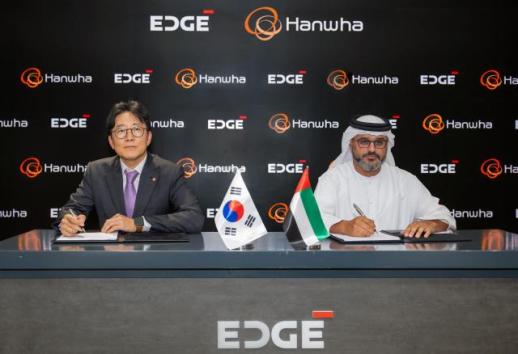 Hanwha, EDGE team up on integrated UAE air defense network SEOUL, September 17 (AJP) - Hanwha Systems and the UAE’s EDGE Group have agreed to jointly develop an integrated air defense network for the UAE. Hanwha Systems said Thursday the two sides signed a term sheet at EDGE headquarters in Abu Dhabi on Tuesday outlining the direction of the project and a phased review of weapons systems that could be introduced. Hanwha Systems has supplied multifunction radars, while Hanwha Aerospace has provided launchers, canisters and missile components for Cheongung-II exports to the UAE in 2022, Saudi Arabia in 2024 and Iraq in 2025. With EDGE, Hanwha plans to expand into a multilayered air defense network covering short-, medium- and long-range threats. “This agreement marks a turning point in the partnership between Hanwha and EDGE, moving beyond one-off weapons supplies toward sharing integrated air defense technologies and industrial capabilities,” Hanwha Systems CEO Yang Ki-won said. “We will gradually expand technology cooperation and localization to help strengthen the UAE’s defense industrial base,” Yang said. EDGE Group CEO Hamad Al Marar said the partnership is focused on expanding the UAE’s independent defense capabilities and local industrial base beyond the procurement of individual weapons systems. “EDGE will work with Hanwha to build a foundation for sustainable industrial cooperation,” Al Marar said. AJP Takeaways - Hanwha Systems and EDGE Group agreed to cooperate on an integrated air defense network for the UAE. - The partnership could include a local joint venture, production, maintenance and other localization efforts. - Hanwha plans to expand from individual weapons sales to a multilayered air defense network covering short-, medium- and long-range threats. 2026-09-17 11:02:00
 -
KG Chemical to Build Tank Terminal in Ulsan, Expanding Energy Infrastructure KG Chemical has announced the launch of its tank terminal project in Ulsan, marking a significant step in its efforts to develop energy infrastructure as a new growth driver following its fertilizer and chemical materials business.The company began basic civil engineering work in September to utilize idle land at its Ulsan plant for the tank terminal. By the end of June next year, it plans to complete the first phase, which includes three to four tanks with a total capacity of 6,500㎘.This construction is the first step in KG Chemical's plan to establish a tank terminal with a total capacity of 200,000㎘ over the next three years. The company aims to sequentially expand storage facilities and logistics infrastructure to significantly enhance the storage and logistics capabilities for liquid cargo.The tank terminal project is part of KG Chemical's long-term strategy to diversify its business portfolio. By leveraging the geographical advantages of its Ulsan plant and the operational expertise accumulated through its fertilizer and chemical businesses, the company aims to secure a stable and sustainable revenue base.KG Chemical plans to develop the tank terminal not just as a simple storage facility rental business but as a core infrastructure supporting the KG Group's eco-friendly energy value chain.In particular, through collaboration with its affiliate KG Eco Solutions, which operates in the eco-friendly fuel sector, the company expects to minimize reliance on external storage facilities while simultaneously improving logistics stability, cost competitiveness, and operational efficiency.A KG Chemical official stated, "The fact that the tank terminal project, which has been meticulously prepared, has entered the actual construction phase is significant. We will complete this first phase without any setbacks and proceed with gradual expansions to realize a central tank terminal with a total capacity of 200,000㎘."Meanwhile, Kim Jae-ik, CEO of KG Chemical, expressed in an interview with this publication in July that the tank terminal project will not merely focus on generating revenue through storage facility rentals but will also strengthen the group's eco-friendly fuel and energy storage and logistics systems.* This article has been translated by AI. 2026-09-17 11:00:00