


Latest by
-
 Korean Lawmakers Clash Over Lee Jin-sook's Conflict of Interest Amid AI and Platform Discussions The National Assembly's Science, Technology, Information, Broadcasting and Communications Committee (STIBCC) conducted a report on the operations of relevant agencies, including the Ministry of Science and ICT, following a heated exchange between ruling and opposition lawmakers regarding Lee Jin-sook of the People Power Party.While inquiries into pressing issues such as artificial intelligence (AI), platforms, and information security were expected, the meeting was marred by ongoing disputes over Lee's conflict of interest, leading to multiple suspensions and criticisms that scientific issues were overshadowed by political strife.On September 8, the STIBCC held a full committee meeting at the National Assembly to review reports from the Ministry of Science and ICT, the Broadcasting and Media Communications Committee, the Nuclear Safety Commission, and the Korea Aerospace Administration.However, from the morning, disputes over Lee's conflict of interest hindered the smooth progress of the meeting. Lawmakers exchanged harsh terms such as 'skunk' and 'loach.' Ultimately, the committee passed a resolution urging Lee to refrain from speaking or voting on matters related to herself, led by the ruling party. In response, members of the People Power Party walked out just before the vote.Following the political skirmish, the afternoon session resumed with government officials acknowledging a lack of legal frameworks to address the expansion of platforms and AI.Kim Jong-cheol, chair of the Broadcasting and Media Communications Committee, stated, "The legal basis for effectively supervising the self-regulatory frameworks of large platform operators is weak," adding that there are insufficient means to enforce transparency reports or investigative submissions from platforms. He emphasized the need for legislative improvements.Concerns were also raised about job losses due to AI, as well as issues of over-dependence and social polarization. Ryu Je-myung, the second vice minister of the Ministry of Science and ICT, noted, "The causal relationship between AI and job loss has not been clearly established," and suggested that the potential for new job creation through AI should also be considered. Kim echoed the need for institutional measures to ensure public trust and safety in the AI industry, calling for legislative support from the National Assembly.The effectiveness of sanctions for data breach incidents was also scrutinized. Ryu confirmed that Tving, a streaming service, failed to report a data breach within the legal timeframe of 24 hours and stated that a fine would be imposed. He added that the Personal Information Protection Commission would conduct a separate investigation and impose sanctions regarding the Tving incident.Concerns were raised about the lower level of accountability for data breaches at national research institutions like the Korea Aerospace Research Institute compared to private companies. Gu Hyuk-chae, the first vice minister of the Ministry of Science and ICT, emphasized that while investigations are ongoing, additional measures will be implemented.Meanwhile, the repeated disruptions during the meeting led to calls for a separation of the broadcasting and telecommunications sectors from the science and technology fields. This suggestion arose from the belief that political conflicts surrounding broadcasting are obstructing discussions on scientific and AI issues.Yu Sang-im, an emeritus professor at Seoul National University and former minister of the Ministry of Science and ICT, expressed regret that during his tenure, discussions on science and technology and information communication issues were often overshadowed by conflicts over broadcasting matters. He advocated for the separation of these sectors to ensure that nationally significant topics, including AI, receive adequate attention.He further stated, "The upcoming National Assembly audit is a crucial process for the public to scrutinize how taxpayer money is being used. If this time is wasted on unproductive conflicts, the audit will inevitably suffer, and the public will ultimately bear the consequences."* This article has been translated by AI. 2026-09-08 17:48:00
 -
Physical AI Investment and Employment Decline in Gaming Industry Global venture capital and employment are increasingly focused on the physical AI sector. In South Korea, a similar trend is emerging, with deep tech companies in semiconductors, manufacturing, and aerospace reporting double-digit employment growth, while the gaming and broader IT sectors are facing layoffs even among large corporations.On September 8, the venture capital platform The VC released its report on '2026 First Half Employment Trends in Korean Startups.' According to the report, the total employment for 4,790 domestic startups, with verified employment data from 2022 to 2025, reached 191,150 in the first half of this year, reflecting an annual growth rate of just 1.2%. This marks a slowdown from last year's annual growth rate of 1.8%.The net employment figure, calculated by subtracting departures from new hires, showed a decrease of 454 positions. In terms of pure hiring, the scale has actually declined compared to last year. Even when expanding the scope to 8,003 companies, the situation remains similar, with annual employment growth rates falling below 1% for two consecutive years.However, the deep tech sector related to physical AI was an exception. The industries with the highest employment growth rates in the first half of this year included manufacturing and chemicals (10.8%, 484 jobs), semiconductors and displays (8.8%, 713 jobs), and aerospace and defense (7.4%, 206 jobs), all closely linked to physical AI.On an individual company level, RealWorld, an industrial robot AI foundation model firm, doubled its workforce from 41 to 82 employees. FuriosaAI, a semiconductor fabless company, and Rebellion also reported double-digit employment increases of 34.2% and 20.2%, respectively.The report also highlighted that securing investment significantly influenced employment outcomes. Companies that attracted investment within the past year saw their employment numbers increase by 10.4% compared to the end of the previous year, while those that did not secure funding experienced a 2.1% decline. Notably, companies receiving early-stage investments, such as seed to Series A, recorded the highest employment growth rate at 22.6%. Given the recent trend of a shrinking early investment market, concerns have been raised that this employment creation effect may weaken in the future.The gaming and content sectors received the worst employment report for the first half of this year. Employment in the gaming sector decreased by 8.9% (839 jobs) compared to the previous year, while the content sector saw a decline of 6.3% (739 jobs). Clover Games filed for bankruptcy in April after a series of unsuccessful new releases, while Kong Studio, once a unicorn, announced voluntary layoffs, reducing its workforce from 413 to 310 employees. Kakao Games' subsidiary XL Games is also reportedly undergoing restructuring, cutting more than 20% of its workforce following voluntary retirement offers.Large gaming companies are not exempt from these trends. NCSoft reduced its headquarters staff by 1,700 last year, Krafton offered voluntary retirement to 200 employees, and Nexon has halted new hiring while reallocating existing staff as part of indirect restructuring.According to market research firm Crunchbase, global venture investment in the physical AI sector reached $47.4 billion (521 deals) in the first half of this year, nearly quadrupling from $12 billion in the second half of last year. This amount has already surpassed the cumulative investment of $41.9 billion from 2022 to 2024. Research firm PitchBook also reported that investment in the robotics and physical AI sector hit a record high of $18.6 billion in the second quarter of this year.In contrast, the gaming industry is entering a cycle of unprecedented layoffs globally. Microsoft announced it would cut an additional 1,600 jobs in its Xbox division, following a previous reduction of the same number. French company Ubisoft and Canadian studio Eidos-Montreal are also implementing significant workforce reductions. Industry estimates suggest that global layoffs in the gaming sector could exceed 14,000 this year, approaching the record high of 15,631 in 2024.* This article has been translated by AI. 2026-09-08 17:44:00
-
Samsung Biologics and Labor Union Fail to Reach Agreement in Mediation Samsung Biologics and its labor union held their first post-dispute mediation on September 8 at the Incheon Regional Labor Relations Commission in Michuhol District, but they were unable to reach an agreement. The union, which has secured the right to strike, is set to participate in a second mediation session on September 15.The mediation took place from 2 p.m. to 4 p.m., focusing primarily on issues related to wage negotiations. The union reportedly proposed a basic wage increase of 6.5%, an additional lump sum of 3 million won, and a performance-based increase of 3%.Concerns have emerged within the union that a lower increase could widen the wage gap with competitors.The company has offered a wage increase of 4.1% and a performance increase of 2.1%. The disparity between the two sides' proposals remains significant. During the mediation, comments were exchanged emphasizing the need for trust, respect, and sincerity in negotiations.The Samsung Biologics union conducted its first-ever general strike in May and has since continued negotiations. Both parties agreed to seek post-dispute mediation in mid-August. This process allows for further mediation after the labor commission's initial mediation concludes, without a set deadline, meaning no immediate resolution was reached on that day. If a mediation proposal is reached during this process, it will have similar effects to a collective agreement.The union has indicated that if the post-dispute mediation fails and differences remain unresolved, there is a possibility of resuming collective action.* This article has been translated by AI. 2026-09-08 17:40:20
-
4-Year-Old Drowns During Swimming Lesson; Babysitter's Responsibility Under Scrutiny A 4-year-old boy drowned during a swimming lesson at an apartment pool in Busan, leading a court to determine that the babysitter who brought the child to the pool had a duty to prevent safety incidents.According to Yonhap News, Judge Jang Gi-seok of the Busan District Court on September 8 suspended a fine of 2 million won for a 20-year-old woman, identified as A, who was charged with negligent homicide.The suspension of the sentence allows for a delay in the imposition of punishment while acknowledging the defendant's circumstances and the severity of the crime.The incident occurred in February 2023 at a swimming pool in an apartment complex in Busanjin District, Busan. The boy, referred to as B, drowned while A was supervising him during the lesson.At the time of the accident, A had dressed B in a swimsuit and flotation devices but was sitting on a poolside chair watching videos on her phone with earbuds in. She only became aware of the incident after B was rescued.B was reportedly unable to surface after his flotation device became caught on a pool ladder while playing with other children, remaining underwater for approximately 2 minutes and 44 seconds.Previously, the swimming instructor received a one-year prison sentence, suspended for two years, while the pool's safety manager was fined 5 million won.The key issue in this trial was whether A had a legal obligation to continuously monitor B during the swimming lesson.A's defense argued that her responsibilities as a babysitter were limited to transporting the child to the pool and preparing for the lesson, and that she was not required to supervise or protect the child during the lesson.In fact, B's guardian stated during the investigation that A was told she could wait while using her phone until the lesson was over.However, the court did not find that the babysitter's contract explicitly included a duty to supervise the child during the lesson.Nonetheless, the court concluded that A had a duty of care based on the circumstances at the time. Judge Jang stated that when a person is responsible for transporting a child to a potentially dangerous swimming lesson, they have an obligation to ensure the child's safety from an appropriate position.While the court recognized A's breach of duty, it also considered that her level of negligence was relatively minor compared to other parties involved in the incident, and noted that B's guardian was not actively seeking punishment against A.* This article has been translated by AI. 2026-09-08 17:40:00
-
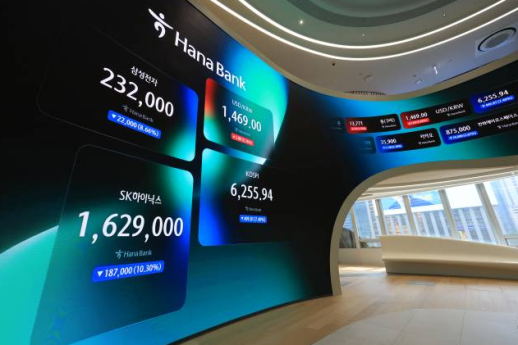 KOSPI closes below 7,000 as higher oil prices wipe out chip-led gains SEOUL, September 8 (AJP) - South Korean stocks gave up a strong early gain on Tuesday, with the country's benchmark index closing below 7,000 points as higher oil prices and caution ahead of U.S. inflation data offset gains in chip stocks and hopes for U.S. investment projects. The KOSPI closed at 6,954.52, down 0.58 percent from the previous session. The index opened above 7,000 and climbed steadily through much of the morning, reclaiming the level intraday for the first time in 15 trading sessions. It rose to an intraday high of 7,171.52 before reversing in the afternoon. Selling intensified near the close and pushed the index as low as 6,951.78. It finished at 6,954.52, nearly 220 points below its intraday high. The early rally was led by chip stocks as investors bet that OpenAI's new generative pre-trained transformer (GPT)-6 Astra model would boost memory demand. Samsung Electronics rose earlier in the session before slipping 0.19 percent to 269,500 won at the close. SK hynix climbed as high as 1,889,000 won, up nearly 6 percent intraday, before giving back most of its gains to finish 0.56 percent higher at 1,793,000 won. SK Square rose 0.53 percent to 1,131,000 won. Nuclear, power-equipment and construction shares also rallied on expectations that South Korean companies could participate in major U.S. power projects under Seoul's US$350 billion investment commitment. Reports have pointed to discussions over as many as eight large nuclear reactors and a gas-fired power project in Texas. Doosan Enerbility jumped as much as 6.37 percent to 93,500 won on hopes for those projects before paring gains to close 1.82 percent higher at 89,500 won. Buying remained strong in other nuclear and construction shares at the close. Daewoo E&C rose 8.47 percent to 19,970 won, while KEPCO E&C surged 16.60 percent to 142,600 won. The market lost momentum later in the day as international oil prices climbed further after an attack on a Saudi Aramco refinery. West Texas Intermediate futures rose above $93 a barrel, while Brent crude topped $97. Investors also turned cautious ahead of U.S. inflation data, with the producer price index due Thursday and the consumer price index on Friday. Despite the late selloff, foreign and institutional investors remained net buyers. Foreign investors bought a net 631.6 billion won ($470 million) and institutions purchased 642.7 billion won, while retail investors sold 3.03 trillion won. Electrical equipment fell 3.33 percent, IT services dropped 3.76 percent and electronic products lost 4.17 percent. Electronic equipment and devices were the weakest group, sliding 4.92 percent. Auto parts, air freight and logistics, and electrical products each fell about 2.9 percent. Losses were broad among other large-cap stocks. Samsung Electro-Mechanics tumbled 5.78 percent to 1,370,000 won. LG Energy Solution fell 3.86 percent to 348,500 won. Hyundai Motor dropped 2.04 percent to 385,000 won. Samsung Biologics declined 1.77 percent to 1,440,000 won, KB Financial fell 1.25 percent to 173,700 won and Samsung Life lost 1.28 percent to 308,000 won. Kia dropped 2.34 percent to 125,400 won, Hyundai Mobis slid 3.94 percent to 415,000 won and LG Electronics fell 4.21 percent to 205,000 won. The junior KOSDAQ followed a similar intraday pattern, reversing an early gain to close 1.25 percent lower at 811.88. It climbed as high as 830.21 in morning trading before turning lower in the afternoon. Institutions sold a net 217.9 billion won, while retail investors bought 149.1 billion won and foreign investors purchased 60.8 billion won. Losses were broad across the market. General services, pharmaceuticals and textiles and apparel stocks each fell more than 1 percent. Machinery and equipment, chemicals and manufacturing stocks also lost more than 1 percent. Metals and entertainment and culture shares ended slightly higher. Nuclear-related shares bucked the broader KOSDAQ decline. Orbitech, which provides nuclear services and inspection, hit the daily ceiling and closed 29.83 percent higher at 6,050 won. Woori Technology, which supplies control and monitoring systems for nuclear power plants, gained 8.15 percent to 11,810 won. Among semiconductor equipment and component shares, Jusung Engineering, which makes semiconductor deposition equipment rose 3.95 percent to 194,600 won. Simmtech, a maker of semiconductor package substrates gained 1.67 percent to 121,800 won. FADU, a fabless chipmaker specializing in SSD controllers and storage solutions, fell 1.78 percent to 104,800 won. Other chip equipment and component makers also finished lower. Wonik IPS fell 1.53 percent to 115,800 won. EO Technics dropped 2.08 percent to 446,500 won, while ISC declined 1.61 percent to 183,000 won. Losses were steeper in biotechnology and robotics shares. Alteogen, a biopharmaceutical company known for its drug-delivery platform technology, fell 3.15 percent to 277,000 won. HLB, which develops anticancer drugs, dropped 3.95 percent to 31,650 won, while Rainbow Robotics, a developer of collaborative and humanoid robot platforms, slid 3.35 percent to 433,000 won. In the currency market, the Korean won weakened to 1,345.2 per dollar from 1,340.5 a day earlier. Across the region, Japan's Nikkei 225 fell 1.70 percent to 65,269.33 as a stronger yen weighed on exporters. China's Shanghai Composite rose 0.20 percent to 3,940.55, supported by stronger August exports, while Hong Kong's Hang Seng Index slipped 0.38 percent to 25,317.43 amid caution over rising oil prices and Middle East tensions. With U.S. inflation data due later this week, investors are likely to remain sensitive to energy prices and any signals that could alter expectations for the Federal Reserve's interest-rate path. AJP Takeaways - South Korea's KOSPI closed at 6,954.52 on September 8, 2026, down 0.58 percent, after climbing as high as 7,171.52 earlier in the session before surging oil prices and caution ahead of U.S. inflation data erased the day's gains. - Semiconductor shares and U.S.-linked nuclear and power stocks led the early rally, with SK hynix reaching 1,889,000 won intraday and KEPCO Engineering & Construction closing 16.60 percent higher at 142,600 won. - Foreign investors bought a net 631.6 billion won ($470 million) of KOSPI shares and institutions purchased 642.7 billion won, while retail investors sold 3.03 trillion won as the market reversed sharply late in the session. 2026-09-08 17:38:24
 -
Philippine Defense Minister Criticizes China's South China Sea Claims Gilberto Teodoro, the Philippine Defense Minister, criticized China's claims regarding the South China Sea during the Seoul Security Dialogue on September 8, calling it an act of "throwing the United Nations Convention on the Law of the Sea (UNCLOS) on the ground and trampling on it." The multilateral security meeting, aimed at discussing stability and cooperation in the international order, became a platform for open exchanges over the South China Sea disputes.Teodoro participated as a panelist in the first session of the Seoul Security Dialogue (SSD), titled "Co-designing a Stable International Order," hosted by the South Korean Ministry of National Defense. He emphasized the importance of adhering to UNCLOS, stating, "Yet, we see several countries not complying. This is illegal," a remark interpreted as directed at China, which has ongoing conflicts with the Philippines in the South China Sea.The atmosphere intensified when a note was handed to Teodoro during his remarks, claiming that the arbitration ruling regarding the South China Sea was illegal and lacked legal binding force.Teodoro publicly revealed the contents of the note, suggesting it was from the Chinese side, and responded to the assertion that China does not accept or recognize the ruling by saying, "Of course, they lost." He further pointed out that if this was China's position, it was an act of disregarding and trampling on UNCLOS, showing a lack of basic courtesy to the host country, South Korea.The criticism escalated as Teodoro stated, "This is no longer a gray area. It is actual coercion, harassment, and an act of invasion." He added, "I will keep this paper as a souvenir to show how desperate China is and how unconvincing their position is in front of a free audience."The individual who requested the note's delivery was reportedly a military attaché from the Chinese Embassy in South Korea. This attaché asked an event staff member to pass the note to Teodoro, who was mistakenly identified as a Philippine official by the staff.The backdrop of this debate is the 2016 arbitration ruling concerning the South China Sea. The Philippines filed for arbitration in 2013, claiming that China's actions in the South China Sea violated UNCLOS. In 2016, the ruling stated that China's extensive historical claims lacked legal basis. However, China has refused to acknowledge the ruling and continues to assert its claims over most of the South China Sea.* This article has been translated by AI. 2026-09-08 17:36:00
-
South Korea Introduces Rapid Procurement System to Foster New Security Innovation Companies Palantir Technologies is a leading example of an innovative company, gaining global attention for its AI-based battlefield information analysis platform that integrates and manages battlefield data. As modern warfare shifts towards an 'AI-driven combined combat system' involving both manned and unmanned technologies, civil-military technological cooperation is becoming increasingly important. In response, the South Korean government is actively promoting the development of new security innovation companies through public-private partnerships. According to government sources on September 8, the Ministry of SMEs and Startups, the Ministry of Economy and Finance, the Ministry of National Defense, and the Defense Acquisition Program Administration have formed a 'Working Group for Supporting New Security Innovation Companies' to discuss the identification and support of these firms. The government aims to nurture five companies with a valuation of over 1 trillion won and 50 companies with sales exceeding 100 billion won by 2030. A key priority for fostering new security innovation companies is the introduction of a 'rapid procurement system.' This system is essential for quickly connecting contracts and purchases to the products and technologies of innovation companies related to new security. During a strategy meeting on fostering future new security innovation companies held at the Blue House in June, it was decided to amend the 'National Contract Act' and establish the 'Defense Advanced Power Business Act' to facilitate the swift introduction of products and technologies from these companies. Additionally, a special law to support the discovery and nurturing of new security innovation companies will be enacted. The Ministry of Economy and Finance plans to establish a rapid procurement system that allows for simultaneous research and development agreements and purchase contracts, enabling the swift introduction of advanced private technologies into public institutions and the military. On August 31, 16 lawmakers, including Kim Byeong-joo of the Democratic Party and Yoo Yong-won of the People Power Party, proposed the 'Defense Advanced Power Business Act.' This act is positively viewed for its provision of a separate procurement system aimed at quickly introducing rapidly changing advanced technologies such as AI, drones, robots, and software into the military, thereby alleviating the rigidity of the existing procurement system. The proposed legislation includes a specialized procurement system and procedures for advanced power systems, emphasizing the priority deployment of 'minimum functional products' that meet core mission requirements, iterative performance improvements, and rapid purchases through certification lists. The U.S. Defense Innovation Unit (DIU) utilizes a flexible prototype contracting method called Commercial Solutions Opening (CSO) to continuously connect military challenges with commercial technologies, with prototype contracts being finalized in as little as 60 to 90 days. Jang Won-jun, a professor at Jeonbuk National University specializing in advanced defense industries, stated, "To create a 'Korean-style DIU,' we need to establish a so-called 'Defense Advanced Power 365 Platform' that allows startups, small and medium-sized enterprises, and large corporations to propose technologies and products, while the military can continuously express its needs throughout the year." He emphasized that minimum functional products should be deployed within 1 to 2 years, and contracts should be finalized within 90 days after selecting a contractor, barring special circumstances such as security and safety verifications. Professor Jang also noted, "Rapid procurement fundamentally involves trying quickly, validating in real environments, and if failures occur, stopping early to pivot to alternatives. While strict penalties should be imposed for fraud, misappropriation, or misuse of project funds, bona fide technical failures that occur during normal technology development processes should generally be exempt from participation restrictions or project fund recovery."* This article has been translated by AI. 2026-09-08 17:32:10
-
Government Revitalizes Vacant Urban Areas with Youth and Cultural Initiatives The government is set to revitalize vacant urban areas by filling them with people and cultural content.The Ministry of SMEs and Startups, the Ministry of Land, Infrastructure and Transport, and the Ministry of Culture, Sports and Tourism announced on September 8 that they will launch the 'Urban RE:CORE Project' pilot program starting next year.This initiative aims to not only renovate vacant commercial spaces and unused buildings in local urban areas but also to support both physical spaces and cultural content, thereby restoring the core functions of these areas through inter-ministerial collaboration.The project will target urban decline areas as defined by the Special Act on Urban Regeneration, focusing on regions identified in current urban and county master plans where vacant commercial properties are concentrated and urgently need revitalization.The Ministry of Land will acquire vacant commercial properties or enter into long-term lease agreements to transform them into 'Revitalized Urban Commercial Spaces.'These vacant spaces will be remodeled for use as studios for youth and cultural artists, startup spaces, co-working offices, and pop-up stores, with rental support provided during the project period to ensure stable operations for tenants. After the project concludes, local governments will be required to include plans for a minimum 10-year lease period and rental increase caps in their urban regeneration revitalization plans to sustain the revitalization effects.Unused public facilities, vacant motels, and large-scale vacant commercial properties in urban areas will be developed into specialized hubs tailored to local characteristics. These may include cultural and artistic centers, startup support and incubation facilities, commercial support facilities, and spaces for local brand exhibitions and sales.The specialized hubs will be linked with individual vacant commercial properties to spread vitality throughout the urban area. Additionally, the government plans to enhance infrastructure, such as parking lots, which are lacking in these areas, and improve the streetscape through signage and exterior renovations, as well as nighttime lighting and themed street developments.This approach aims to create a comprehensive urban regeneration model that connects specialized hubs, vacant commercial spaces, and specialized streets, moving beyond isolated support for individual buildings.The Ministry of Culture will promote the 'Cultural Content Activation Project for Urban Regeneration' in conjunction with spatial revitalization. This initiative will identify and develop cultural content that can represent the urban area by utilizing local cultural and human resources, providing step-by-step support from creation to distribution. The developed content will be showcased at local festivals, cultural facilities, commercial areas, and online platforms, as well as at the specialized hubs and revitalized urban commercial spaces created through the Ministry of Land's initiatives.To encourage participation from cultural cities that have completed their national funding, the government plans to grant additional points during the selection evaluation process, allowing them to spread their accumulated cultural resources and planning capabilities to urban areas. Currently, there are 37 cities designated as cultural cities by the Minister of Culture under the Regional Cultural Promotion Act.In the initial phase of the project, pop-up stores featuring familiar content will be opened to provide local residents with diverse cultural experiences and business opportunities for local content companies. Alongside the pop-up stores, programs tailored to local characteristics, such as community experience programs and masterclasses for creators, will also be operated.The government plans to initially select one or two locations in each of the four regions outside the metropolitan area and gradually increase this to two or three locations per region by 2029.Selected areas will receive project funding of up to approximately 36.5 billion won per region. The Ministry of Land will provide up to 21 billion won in national funding for each selected area over four years, with a total project budget, including matching local funds, reaching a maximum of 30 billion won, as reflected in the government's proposal for a super-regional special account. The Ministry of Culture has also committed to providing up to 3.24 billion won in national funding.The Ministry of SMEs will prioritize selected areas that participate in existing programs such as the 'Local Commercial District Development Project,' 'Traditional Market Development Project,' and 'Small Business Cultural Innovation Support.'A preliminary project briefing for local governments will be held on the 17th, and the selection process will begin as soon as the budget is finalized.Acting Minister of SMEs and Startups Noh Yong-seok stated, "Through this project, we aim to create a new model for local commercial growth that combines the unique resources of urban areas with local startups, enabling youth to dream of the future, transforming individual businesses into thriving commercial districts, and fostering balanced growth led by the community through revitalized commercial areas."* This article has been translated by AI. 2026-09-08 17:32:10
-
SK Broadband Launches 'B tv+ max' with 300,000 Content Options SK Broadband announced on September 7 that it will launch an all-in-one subscription service, 'B tv+ max,' which offers access to over 300,000 content options and 255 live channels.B tv+ max enhances the existing B tv subscription service by adding content from the three major broadcasters: KBS, MBC, and SBS. The service provides a wide range of genres, including terrestrial, comprehensive channels, cable, movies, kids' programming, animation, and documentaries.The new service also simplifies the process of finding content across various online video services (OTT), IPTV, and cable. Users can easily navigate live channels and video-on-demand (VOD) options from a dedicated home screen upon turning on their TV.Content tailored for different family members has been strengthened. Parents can enjoy terrestrial dramas and current affairs programs, while those in their 30s and 40s can access movies and entertainment shows. Children can enjoy kids' programming and animation, all within a single service. This broad offering aims to reduce the financial burden of multiple subscriptions across different platforms.The service includes artificial intelligence (AI) personalized recommendations and curation features. It suggests content based on users' viewing history and patterns, and offers curated selections based on various criteria such as film festivals, seasons, directors, actors, genres, emotions, and broadcast days.Subscribers can also access works not available on major OTT platforms like Netflix, Tving, and Disney+. This includes films released in theaters this year, such as 'The King and the Man,' 'Salmon,' and 'Crayon Shin-chan,' as well as 'The Fairy of Jangsu Bathhouse' and 'Pororo Season 9.'Additionally, the service is linked to the YouTube channel 'PiaKia,' run by film critic Lee Dong-jin, which provides recommended films and review videos.Users can register up to four mobile devices and watch content simultaneously on TV and mobile. Subscribers will also have opportunities to participate in cultural and sports events, including concerts, musicals, and KBO postseason and All-Star games. The subscription fee is an additional 6,600 won on top of the IPTV live channel fee.* This article has been translated by AI. 2026-09-08 17:32:00
-
Han Dong-hoon and Opposition Clash Over Kim Seung-won's Allegations Independent lawmaker Han Dong-hoon and the Democratic Party are engaged in a heated exchange over allegations involving Kim Seung-won, the nominee for Minister of Justice, regarding solicitation for clinical trial approvals. Han has intensified his offensive by releasing additional text messages, labeling the situation as the 'Democratic Party Brothers Gate,' while the Democratic Party has countered by questioning the source of the information and the manner of its disclosure.According to political sources on September 8, Han revealed text messages from a female broker, Yang, who mentioned Kim and other Democratic politicians in relation to the clinical trial approval allegations in October 2021.Han characterized the situation as 'Democratic Party Brothers Gate,' raising the stakes in his accusations. On his Facebook page, he stated, "More Democratic brothers are coming out. The poison lobbying gate is the 'Democratic Party Brothers Gate.'"In response, the Democratic Party criticized the source and method of Han's disclosures. Han Byung-do, the party's floor leader, stated during a morning meeting, "It is unacceptable to distort facts with materials that do not even disclose their source under the pretext of verification, and to use selectively edited recordings. This is typical political prosecution-style cabinet politics that only brings out information favorable to oneself."Democratic Party leader Kim Min-seok also criticized Han, calling him an "immature attention seeker." He added during an official YouTube appearance, "He will do anything to attract attention, even if it backfires on him." Fellow lawmaker Song Young-gil joined in, saying, "Stop acting like a private investigator and engage in proper politics. It seems like he is struggling to establish his presence without shedding his special prosecutor identity."In response, Han retorted, "Kim Min-seok, Song Young-gil, Han Byung-do, and other Democratic brothers, keep pushing. Is there nothing else to say besides personal attacks? Will you still push for Kim Seung-won? This is what Democratic Party-style drum politics looks like," he posted on Facebook. Additionally, Han continued to criticize lawmakers Park Joo-min and Park Ji-won on his social media.* This article has been translated by AI. 2026-09-08 17:32:00