


Latest by
-
 2027 College Scholastic Ability Test Sees 551,864 Applicants Amid Shift in Demographics A total of 551,864 applicants have registered for the 2027 College Scholastic Ability Test (CSAT), scheduled for November 19. While the overall number of applicants has decreased slightly compared to last year, the number of current high school seniors applying has dropped by over 16,000. In contrast, the number of graduates (N students) applying has surged by more than 13,000, pushing the graduate ratio above 31%. This shift, along with a trend toward social studies and a significant increase in the selection of 'Probability and Statistics' in math, is expected to introduce considerable variables into this year's admissions landscape.According to the Korea Institute for Curriculum and Evaluation, the total number of CSAT applicants stands at 551,864, a decrease of 2,310 (0.4%) from the previous year (554,174). However, a closer look at the composition reveals a stark contrast between current students and graduates. The number of current high school seniors applying is 355,391, down by 16,506 (4.4%) from last year, accounting for only 64.4% of total applicants.On the other hand, the number of graduates applying has increased to 173,706, up by 13,784 (8.6%) from the previous year, expanding their share to 31.5%. Additionally, the number of other applicants, including those taking the high school equivalency exam, has risen by 412 (1.8%) to 22,767 (4.1%).As a result, the combined ratio of graduates and equivalency exam takers, referred to as 'N students,' now accounts for 35.6% of all applicants, which is likely to significantly impact competition for top-tier universities. In terms of gender distribution, male applicants number 283,216 (51.3%), while female applicants total 268,648 (48.7%), with decreases of 528 for males and 1,782 for females compared to last year.Examining the subject selection, all 551,864 applicants submitted applications for the mandatory Korean history subject. Following that, 545,251 (98.8%) applied for the Korean language subject, 537,066 (97.3%) for English, 531,676 (96.3%) for the inquiry subject, and 518,939 (94.0%) for math. The second foreign language/Chinese character subject saw 122,209 (22.0%) applicants. Notably, the number of applicants for the second foreign language/Chinese character subject increased significantly by 18.3% (18,707) from the previous year, while applicants for the inquiry subject decreased by 5,199 (1.0%).In major subject selections, trends indicate a clear preference for specific subjects due to the desire to reduce exam burden.In the Korean language subject (with 545,251 applicants), 407,493 (74.7%) chose 'Speech and Writing,' while 137,758 (25.3%) opted for 'Language and Media.' In the math subject (with 518,939 applicants), 336,539 (64.9%) selected 'Probability and Statistics,' dominating the choices, while 168,199 (32.4%) chose 'Calculus,' and 14,201 (2.7%) selected 'Geometry.'In the inquiry subject (with 531,676 applicants), 98.6% or 524,234 chose the maximum of two subjects, with 527,255 (99.2%) selecting social and scientific inquiry, and 4,421 (0.8%) opting for vocational inquiry. Among the social and scientific inquiry applicants (527,255), 367,073 (69.6%) took two social inquiry subjects, a significant increase from 61.0% last year. Conversely, the number of those taking two scientific inquiry subjects dropped sharply to 75,036 (14.2%) from 120,692 (22.7%) the previous year. Cross-applicants who chose one social inquiry and one scientific inquiry subject totaled 85,146 (16.1%).In terms of specific subjects, 'Society and Culture' in social inquiry had the highest selection rate at 298,188 (56.6%), while 'Earth Science I' in scientific inquiry was chosen by 82,792 (21.7%). In vocational inquiry, 96.8% (4,280) selected the common subject 'Successful Career Living.' Among second foreign language/Chinese character applicants, 32.1% (38,954) chose 'Japanese I.'Additionally, the newly introduced online pre-application system for the CSAT this year was utilized by 93.9% of all applicants, totaling 518,214. By category, 99.1% of current student applicants and 84.6% of graduates and other applicants used the online pre-application system.* This article has been translated by AI. 2026-09-08 17:12:00
 -
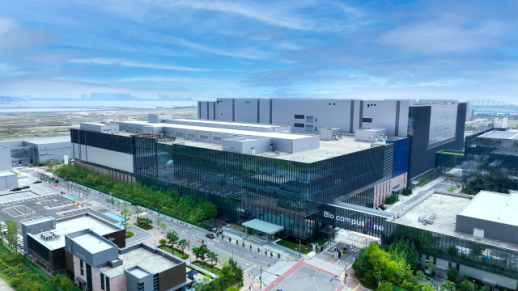 Samsung Biologics, union to bargain under mediators' watch SEOUL, September 08 (AJP) - Samsung Biologics and its labor union agreed to hold further bargaining under the watch of state mediators, carrying a wage dispute at the South Korean contract drug manufacturer into a second mediation session on Sept. 15. The two sides are to read through their collective agreement clause once more, with management tabling a proposal and giving reasons for any demand it rejects, the union said in a statement on Tuesday. The announcement comes right after the first post-mediation session at the Incheon Regional Labor Relations Commission. "Post-mediation has no particular limit on the number of sessions, so it does not look likely to wrap up today," the union said ahead of the meeting. The next session is set for 2 p.m. on Sept. 15. Talks first collapsed on March 23, prompting a partial walkout in late April and a full strike from May 1 to 5, the first in the company's history. The union has since refused overtime and holiday shifts. The revised Trade Union Act took effect on March 10, curbing company damage claims against striking workers and widening the grounds on which unions may lawfully press a dispute. AJP Takeaways - Samsung Biologics and its labor union agreed on Sept. 8, 2026, to hold additional bargaining sessions observed by mediators at the Incheon Regional Labor Relations Commission, with a second post-mediation session scheduled for Sept. 15, 2026. - The dispute over pay and personnel rules escalated after mediation collapsed on March 23, 2026, producing a partial strike in late April and the company's first full walkout from May 1 to 5, 2026, followed by a work-to-rule campaign refusing overtime and holiday shifts. - Samsung Electronics unions called off an 18-day strike on May 20, 2026, after post-mediation at the National Labor Relations Commission, while South Korea's revised Trade Union and Labor Relations Adjustment Act, the Yellow Envelope Act, took effect on March 10, 2026, limiting damage claims against strikers. 2026-09-08 17:11:19
 -
Decline in Academic Performance Among Students Raises Concerns South Korea has maintained high scores in the Programme for International Student Assessment (PISA), which evaluates 15-year-old students worldwide. However, a closer look reveals alarming signs of declining academic performance. The reading scores have significantly dropped, and the proportion of low-performing students in science, math, and reading has surged.Education experts emphasize the need for tailored national support and financial investment to reduce the widening academic gap and improve basic skills.On September 8, the Organisation for Economic Co-operation and Development (OECD) officially released the results of the PISA 2025, which assessed approximately 760,000 students from 91 countries. South Korean students outperformed the OECD average in all three subjects, ranking among the top three in science, the top nine in reading, and the top two in math among 38 member countries.Notably, in the newly introduced area of learning in a digital world (computational problem-solving), South Korea ranked between second and fifth among OECD countries, demonstrating strong digital capabilities.Score Decline and Increase in Low Performers: A Warning Hidden Behind High RankingsWhile the overall results appear impressive, a comparison with the previous assessment, PISA 2022, reveals a clear decline in academic performance. The average scores for South Korea fell by 2 points in science (from 528 to 526) and 5 points in math (from 527 to 522), with a significant drop of 14 points in reading (from 515 to 501).Most concerning is the distribution of achievement levels. The number of top-performing students has decreased while the number of low-performing students has increased, exacerbating the phenomenon of academic polarization.In reading, the percentage of students at the highest achievement level (Level 5 and above) fell from 13.3% to 10.3%, while those at the lowest level (Level 1 and below) surged from 14.7% to 17.8%. In science, the top performers decreased from 15.7% to 14.6%, while low performers increased from 13.7% to 14.2%. In math, both top (from 22.9% to 23.2%) and low performers (from 16.2% to 18.6%) increased, but the rise in low performers was more pronounced, highlighting a widening achievement gap.Education Ministry: Inclusivity and Fairness Exceed OECD Averages; Reading Education to ExpandThe Ministry of Education positively assessed the results, stating that the impact of students' economic, social, and cultural backgrounds on science achievement (7.7%) is lower than the OECD average (11.6%), indicating higher educational fairness. The inclusivity indicator, which reflects the percentage of students achieving high performance regardless of their background, stood at 80.1%, significantly above the OECD average of 65%.However, regarding the increase in low-performing students and the sharp decline in reading scores, the ministry acknowledged the need to explore support measures to ensure students develop adequate reading and math skills. They pledged to enhance reading education linked to classroom instruction and continue supporting inquiry- and problem-solving-based learning.Teachers' Union: Dedicated Efforts of Schools and Educators Must Be Supported with Tailored AssistanceIn the education sector, calls for more fundamental measures have emerged. The Korean Federation of Teachers' Associations noted that the high levels of inclusivity and fairness are a result of the dedicated efforts of schools and educators, which have helped buffer some of the disparities stemming from challenging circumstances.However, the federation cautioned against complacency with merely maintaining high rankings, urging that the signs of academic decline, such as the increasing percentage of middle school students falling short in math basics, should not be taken lightly. They expressed particular concern over the significant achievement gaps among students within the same school, especially in science.The federation called for a detailed national diagnostic and support system to identify and assist students lacking basic skills early on, advocating for smaller class sizes to allow teachers to closely monitor each student and an expansion of dedicated teachers for basic skills.* This article has been translated by AI. 2026-09-08 17:08:00
-
Seoul Security Dialogue Focuses on Defense Diplomacy with 10 Nations The Ministry of National Defense engaged in a series of bilateral meetings with defense leaders from ten countries during the 15th Seoul Security Dialogue, emphasizing the importance of defense diplomacy. Minister Ahn Gyu-baek highlighted the need for strong deterrence, military communication, and strategic restraint to prevent crises from escalating into war, underscoring the significance of multilateral cooperation.Following a meeting with the Philippine defense minister the previous day, Ahn held bilateral talks with defense ministers from Uganda, Papua New Guinea, and the Czech Republic. The Deputy Minister of Defense also met with counterparts from Kenya and Mongolia the day before, continuing discussions with officials from Japan, Malaysia, Finland, and Singapore on the same day. This defense diplomacy encompasses four ministerial-level countries and six deputy ministerial-level countries across Asia, Europe, Africa, and the Pacific.In his opening remarks at the Seoul Security Dialogue, Ahn identified the weakening of rules and trust that have historically managed power conflicts as a root cause of the crises facing the international community. He noted that the prolonged wars in Europe and the Middle East, along with the competition among major powers in economic, technological, energy, and supply chain domains, have made the stability of the international order a matter of national interest directly linked to the safety and prosperity of the South Korean people.Ahn stated, "Stability is not the absence of conflict," emphasizing the need for a collective ability to manage competition and prevent conflicts from escalating into war, even when interests differ. He proposed that the first task is to balance strong deterrence with strategic restraint, making it clear that benefits cannot be gained through invasion and coercion while also ensuring channels for military communication and exit strategies in crises.Ahn warned, "If military communication channels are closed and there are no exits from crises, even strong military power can increase the risk of miscalculation and escalation," adding that strategic restraint is not a sign of weakness but rather the highest level of confidence and responsibility that a powerful nation can demonstrate.He also outlined a vision for connecting bilateral, trilateral, and multilateral cooperation into a single international safety net. He explained that bilateral cooperation provides trust and execution capability, trilateral cooperation offers speed and flexibility, and multilateral frameworks support legitimacy, norms, and sustainability, thus necessitating their organic linkage.Ahn emphasized that alliances should not be walls that block each other but rather strong supports that lean on one another. He called for international organizations and regional security systems to be interconnected to respond collectively to security, economic, technological, and humanitarian crises. He proposed that rules, responsibilities, restraint, and practicality should form the foundation of a new order, advocating for building possible cooperation rather than waiting for complete agreements.This vision continued in the first session of the main conference themed 'Joint Design for a Stable International Order.' Ahn participated in a panel discussion with Czech Deputy Prime Minister and Defense Minister Jaromir Juna and Philippine Defense Minister Gilberto Teodoro, discussing cooperation directions to address the instability of the international order and complex crises.Ahn noted, "Europe and the Indo-Pacific region are already a single strategic space," citing military cooperation between North Korea and Russia as a prime example. He pointed out that North Korea's accumulated military experience and know-how in Europe also impact security in the Korean Peninsula and the Indo-Pacific, with energy supply chains, advanced technologies, and nuclear threats closely linking the two regions.He affirmed South Korea's commitment to actively connecting different cooperation frameworks based on the South Korea-U.S. alliance and trilateral cooperation with the U.S. and Japan, as well as partnerships with NATO, the Indo-Pacific, and ASEAN.Ahn also emphasized the need for practical contributions to support international roles. He stated that South Korea would utilize its defense capabilities, advanced technologies, and experiences gained from peacekeeping operations, mine response, and recovery and reconstruction processes to enhance collective safety and resilience in the international community.On the Korean Peninsula, Ahn pledged to maintain strong deterrence while managing military tensions and restoring dialogue and trust. He stated, "We will establish multiple safety devices to prevent crises and escalation, moving toward a stable peace that does not require fighting," aiming to develop peace on the Korean Peninsula into a contribution to stability in Northeast Asia and global peace.He concluded, "The strength of defense is not limited to the ability to win wars; it is only complete when it sustains order to prevent wars from occurring."The 15th Seoul Security Dialogue commenced on September 7 at The Grand Lotte Seoul, starting with a working group meeting on cyber and space security. The main theme, 'In an Era of Chaos, for New Coexistence,' will guide discussions on international security crisis responses and cooperation strategies through the main conference and special sessions until September 9.* This article has been translated by AI. 2026-09-08 17:04:00
-
Samsung and TSMC Accelerate Adoption of ASML's Next-Generation EUV Equipment As demand for artificial intelligence (AI) semiconductors surges, major global semiconductor companies, including Samsung Electronics and Taiwan's TSMC, are rapidly adopting advanced equipment from Dutch semiconductor manufacturer ASML. The 'High Numerical Aperture (High NA) Extreme Ultraviolet (EUV)' technology, capable of drawing finer circuits than before, is emerging as a key component in next-generation semiconductor production.According to Bloomberg on September 8, Samsung and TSMC plan to begin mass production with ASML's High NA EUV equipment in 2028 and 2030, respectively.The High NA EUV equipment is considered essential for cutting-edge semiconductor manufacturing. By increasing the numerical aperture (NA) of light, it can gather light from a wider angle, allowing for the implementation of finer circuit patterns on wafers. This technology reduces the number of exposures required for certain processes, enhancing semiconductor miniaturization and production efficiency. The cost of each unit is estimated at around $400 million.With Intel already utilizing this equipment, major semiconductor firms worldwide are beginning to leverage next-generation EUV technology.Additionally, Samsung, TSMC, Intel, and ASML are collaborating to develop technology that expands the size of photomasks used in semiconductor manufacturing from the current 6 inches to 12 inches.Photomasks are design plates used to repeatedly imprint circuit patterns onto semiconductor wafers. The semiconductor industry has relied on 6-inch photomasks for decades, but as circuits become increasingly intricate and the demand for large, complex chips like AI semiconductors grows, the limitations of the existing photomask size have become more pronounced.According to ASML, applying the new technology could increase the production throughput of High NA EUV equipment by up to 40% while simplifying the design process. Marco Peters, ASML's Chief Technology Officer, stated, "The advancement of High NA EUV technology is crucial for the mass production of semiconductors, and customers are recognizing the advantages of High NA EUV equipment over existing technologies."Transitioning to 12-inch photomasks has been technically complex and costly, making it difficult to pursue until now. However, as demand for AI semiconductors rapidly increases, ASML's key clients, including Samsung, TSMC, and Intel, are pooling resources to develop 12-inch photomask technology to enhance productivity and reduce costs.Notably, TSMC has been cautious about adopting High NA EUV equipment due to cost-to-productivity concerns, but the surge in AI semiconductor demand has prompted a more aggressive pursuit of next-generation production technologies. TSMC plans to introduce High NA EUV equipment using existing 6-inch photomasks starting in 2030, followed by a phased implementation of 12-inch photomask technology.TSMC CEO Wei Zhejia remarked, "We have collaborated to solve technical issues in the semiconductor industry, and it is crucial to overcome these challenges before they lead to cost problems."Bloomberg noted that TSMC's adoption of High NA EUV equipment, which accounts for about 16% of ASML's total revenue, is significant for ASML.ASML is the only company in the world capable of producing EUV lithography equipment, which is essential for manufacturing the world's most advanced AI accelerators and semiconductors. ASML anticipates that demand for High NA EUV equipment will continue to grow as semiconductor process technology advances. 2026-09-08 17:04:00
-
LH to Supply 20,000 Rental Housing Units in Seoul Over Three Years The Korea Land and Housing Corporation (LH) plans to supply 20,000 rental housing units in downtown Seoul over the next three years. This initiative aims to increase the availability of newly constructed rental units for young people and newlyweds, who are in high demand for urban housing.On September 8, LH held a field meeting at a newly constructed rental youth housing facility in Jongno-gu, Seoul, to discuss ways to expand the supply of youth housing in the city.Attendees included Kim I-tak, First Vice Minister of Land, Infrastructure and Transport; lawmakers Kim Nam-kun, Oh Gi-hyung, and Lee Yong-sun; LH President Lee Seong-hoon; and over 20 youth council members. Participants toured the new rental youth housing to assess the layout, finishes, and built-in appliances before engaging in discussions.Purchase rental housing is characterized by affordable rents in urban areas, near transportation hubs, and close to workplaces. The rent for first-priority applicants is set at about 40% of the market rate, with a maximum stay of 10 years, extendable to 20 years for married couples. Rent increases are capped at 5%.Due to its accessibility to public transportation and favorable rental conditions, purchase rental housing in Seoul is highly sought after by young people. Last year, the average competition ratio for rental applications among young people in Seoul was 130 to 1, significantly higher than the national average of 50 to 1.To address the housing needs of young people, LH is improving the purchase rental program and accelerating the supply rate. During the meeting, strategies were introduced to reduce financial burdens on developers, including initial funding support for land purchases and phased payments for acquisition costs. Priority points will be awarded for securing prime locations near universities and areas with high demand from young people.Over the next three years, LH plans to supply 20,000 rental housing units in downtown Seoul, equivalent to the size of the Bucheon Daejang District. This includes approximately 15,000 units for young people and around 3,400 units for newlyweds, with a strategy to distribute them across various regions to meet diverse housing needs.As rental costs in Seoul remain high, the expansion of purchase rental housing is expected to alleviate the financial burden on young residents and address the demand for proximity to workplaces.LH President Lee Seong-hoon stated, “Newly constructed purchase rental housing can be developed from site selection to occupancy in 1 to 2 years, making it a key solution for stabilizing the rental market quickly. We will strive to provide more quality homes in desirable locations for young people, faster and in greater numbers.”During the panel discussion that followed the meeting, participants agreed that high rental costs and a lack of available units in urban areas are core issues contributing to housing insecurity for young people. Attendees suggested expanding support to include middle-class youth.Lawmaker Kim Nam-kun pledged, “I will actively support legislation and budget reviews to ensure that newly constructed purchase rental housing becomes a reliable housing alternative for young people.”* This article has been translated by AI. 2026-09-08 17:00:00
-
South Korea's Foreign Minister to Meet Uganda's Deputy Prime Minister South Korea's Foreign Minister Cho Hyun will meet with Uganda's Deputy Prime Minister Chrispus Walter Kiyonga on September 10.Park Doo-soon, spokesperson for the Ministry of Foreign Affairs, announced during a regular briefing in Seoul that Kiyonga is visiting South Korea as the chief representative for the 'Korea-Uganda Trade and Investment Forum,' co-hosted by the Korea International Trade Association and the Ugandan Embassy in South Korea.During the meeting, the two ministers are expected to discuss ways to enhance practical cooperation between the two countries, including the outcomes of the trade and investment forum, economic collaboration, energy cooperation such as nuclear power, and development assistance.Additionally, they will address cooperation between South Korea and Africa ahead of the 2029 Korea-Africa Summit, as well as exchange views on major international issues and collaboration on the global stage. 2026-09-08 16:56:00
-
Ruling Party Pushes for Constitutional Amendment Amid Opposition Kim Min-seok, leader of the Democratic Party, has expressed intentions to pursue a constitutional amendment, but Jung Jeom-sik, the floor leader of the People Power Party, has firmly stated, "There will be no amendment under this government." While the Democratic Party has launched an internal committee to expedite the amendment process, it is expected that the proposal will struggle to pass in the National Assembly due to opposition from the ruling party.According to political sources on September 8, the People Power Party claims that the ruling party's push for an amendment is motivated by President Lee Jae-myung's desire to extend his term and delay his trial. During a representative speech at the National Assembly, Jung emphasized, "The People Power Party makes it clear: there will be no amendment under this government," adding, "We will not discuss amendments with those who are clearly committing unconstitutional acts and seeking personal gain through amendments."He further criticized President Lee, who has mentioned a two-term amendment, saying, "He will never say, 'I will not seek re-election' or 'I will face trial.'" Jung questioned whether the amendment is intended to extend the president's term and delay his trial, suggesting it is being used as a tool for self-protection.On the previous day, Representative Jang Dong-hyuk also commented on the ruling party's amendment efforts, stating, "While they claim to use the 5.18 and Busan uprisings as justification, their true intention is to restructure power." He asserted that President Lee would argue that a 'constitutional amendment for re-election' is what the public desires. Jang challenged the Democratic Party to secure a declaration from the president stating that re-election is not an option if they truly wish to pursue an amendment.In contrast, Kim Min-seok responded to Jung's opposition to the amendment, saying, "He has placed one or two conditions on the amendment, but I do not see them as significant obstacles." During a meeting with Jeong Dae-cheol, president of the Korea Constitutional Society, he reiterated the party's commitment to addressing the amendment issue with an open attitude while upholding democratic principles.Previously, he stated in his representative speech that the party would pursue a feasible amendment reflecting the changes of the times and the demands of the people while adhering to the procedural spirit of the current constitution and laws. He called for the People Power Party to join in the amendment process, emphasizing that including the 5.18 democratization movement and the Busan uprising in the constitutional preamble is the "starting point" for the amendment.Regarding the restructuring of power, he mentioned, "We can go as far as the public desires," indicating that the scope of the amendment would be left to public consensus amid ongoing controversy over the president's re-election issue.The Democratic Party plans to intensify discussions on the amendment through its internal committee. Kim Tae-nyeon, the head of the amendment committee, stated on August 31, "Now is the right time for an amendment. We will first agree on the timing for a national referendum with other parties and aim to hold the referendum by the first half of next year, at the latest, one year before the next general election."However, with the People Power Party firmly opposing the amendment, it remains to be seen whether discussions will progress. A constitutional amendment requires the approval of two-thirds of the National Assembly members (200 seats). Without the cooperation of the People Power Party, passing an amendment is impossible. Previous attempts at constitutional amendments in the first half of the 22nd National Assembly were thwarted by opposition from the People Power Party. A Democratic Party lawmaker remarked to Aju Economy, "Given the People Power Party's stance, it seems unlikely that an amendment will pass in the second half of the National Assembly. We may end up only discussing it without any resolution." 2026-09-08 16:48:00
-
 AI makes Korea richer, but leaves its youth behind SEOUL, September 08 (AJP) - On paper, South Korea has rarely looked richer. For its young people, it has rarely been harder to get a foothold. Real gross national income jumped 15.6 percent in the second quarter from a year earlier, the strongest increase since the fourth quarter of 1988, while per-capita GNI now has a strong chance of topping $40,000 for the first time. Much of the lift has come from the AI chip boom, which is showering export income and corporate profits on an economy dominated by Samsung Electronics and SK hynix. Yet the same AI transition is proving far less generous to young Koreans trying to enter the labor market. Youth employment fell for a 45th consecutive month in July. Another decline in August, when the government releases its latest employment report Wednesday, would stretch the contraction to nearly four years. The contrast is becoming one of the starkest fault lines in South Korea's AI-led expansion: the industries generating extraordinary export earnings are highly capital-intensive, while technological change and a shift toward experienced hiring are narrowing the traditional entry routes into corporate Korea. Total employment increased by 108,000 from a year earlier to 29.14 million in July. The number of employed people aged 15 to 29, however, fell by 191,000 to 3.44 million. The youth employment rate dropped 1.6 percentage points to 44.2 percent, while the unemployment rate rose 1.3 percentage points to 6.8 percent. A shrinking youth population explains only part of the fall. At the other end of the economy, exports jumped 68.7 percent from a year earlier to $98.25 billion in August, the third-highest monthly total on record, according to the Ministry of Trade, Industry and Resources. Semiconductor exports surged 209 percent to a record $46.65 billion as higher capital expenditure by global technology companies sustained demand for artificial intelligence infrastructure. The boom, however, does not translate easily into headcount. Bin Hyun-jun, director general of the Social Statistics Bureau at the Ministry of Data and Statistics, said at the July employment briefing that semiconductors have a relatively low employment multiplier and require large-scale capital equipment. He said the industry's structure limits the amount of hiring generated by increases in production and exports. A manufacturing recovery that skips the young More recent administrative data suggest the divergence persisted into August even as insured employment in manufacturing began to recover. Employment insurance subscribers increased by 278,000 from a year earlier to 15.91 million in August, according to the Ministry of Employment and Labor. Manufacturing subscribers rose by 2,000, their first annual increase in 15 months. Younger workers again moved in the opposite direction. Enrollment among workers aged 29 or younger fell by 55,700, or 2.4 percent, extending its decline to 48 consecutive months since September 2022. Young subscribers fell by 23,000 in manufacturing and 13,000 in information and communications, leaving them behind even as overall manufacturing enrollment returned to growth. The mismatch suggests that stronger factories and exports alone may no longer be enough to restore the traditional employment pipeline for young Koreans. Changes in recruitment practices provide another part of the explanation. Bin said the shift from large-scale annual recruitment toward rolling and experienced-hire recruitment has made employment conditions more difficult for young people than under the previous hiring system. South Korea's major commercial banks offer one example. KB Kookmin Bank, Shinhan Bank, Hana Bank and Woori Bank recruited 485 entry-level employees in the first half, down 18.5 percent from 595 a year earlier. Bank officials have cited the expansion of mobile and internet banking and lower demand for branch-based work as factors reducing traditional staffing needs. Recruitment has increasingly shifted toward specialized positions. KB Kookmin separates recruitment for IT and AI-platform development roles, while Hana created a regular experienced-hire track last year for specialists in areas including AI, data analysis and digital technologies. The pattern leaves new graduates facing a familiar contradiction: companies say they need more AI talent, but increasingly want workers who already have the experience to apply it. AI and a broken first rung The Bank of Korea has found signs that technological change itself may be adding to the pressure on entry-level employment. Youth employment fell by 285,000 between June 2022 and June 2026, according to a recent BOK Issue Note. Industries highly exposed to AI accounted for 268,000, or 94 percent, of the decline. Employment fell particularly sharply among young workers in information services, publishing, computer programming and professional services. Workers in their 50s, by contrast, continued to gain jobs in the same industries. The BOK described the pattern as consistent with "seniority-biased technological change," in which technological change affects junior and experienced workers differently. Industries with a higher share of AI use for automation recorded larger declines in youth employment, while no comparable pattern emerged where AI was primarily used to augment human work. The finding runs against the assumption that younger, more digitally fluent workers should be the natural winners from rapid technological change. AI may instead be eating into the first rung of the career ladder. Junior workers have traditionally performed research, basic analysis, documentation, coding and other tasks through which they gain experience. Generative AI can perform or accelerate many of those functions, potentially allowing companies to get more output from smaller teams of experienced employees. Education has offered little insulation. Since November 2022, the unemployment rate has averaged 7.0 percent among young people with a bachelor's degree or higher, compared with 5.4 percent among those with an associate degree or lower. The BOK cautioned that its findings do not establish that AI caused the decline in youth employment. The unwinding of pandemic-era overhiring, companies' growing preference for experienced recruits, weaker in-house training and changes in working practices may also have contributed, with AI potentially accelerating trends already underway. Waiting longer for the first job The difficulty of entering the labor market is also visible in a supplementary youth survey by the Ministry of Data and Statistics. Among people aged 15 to 29 who had graduated from, withdrawn from or otherwise completed their final level of education, 84.8 percent had ever been employed as of May, down 1.6 percentage points from a year earlier. Those whose first job was paid employment took an average of 11.2 months to find work. Longer-term exclusion is becoming more visible as well. Among young people who had completed their education but remained without work, 605,000 had been out of employment for at least one year. They accounted for 48.6 percent of the group, the highest share since 2009. Another 241,000 had been without work for at least three years, accounting for a record 19.4 percent since the series began in 2007. Kim Rak-hyun, director of the ministry's Employment Statistics Division, said ratios were more informative than absolute numbers when assessing long-term youth joblessness because the population aged 15 to 29 itself is shrinking. There are tentative signs that some young people may be moving back toward the labor market. The number classified as "resting," meaning they were outside employment and were neither actively studying nor seeking work, fell by 69,000 from a year earlier to 367,000 in July. The decline extended to six months. Newly registered job seekers aged 29 or younger on the government's Work24 platform increased by 1,800 from a year earlier in August, even as new registrations across all age groups fell by 1,000. Neither measure shows whether renewed labor-market participation is translating into actual employment. Government tries to rebuild the entry route The government has acknowledged that the weakness is spreading beyond the youngest workers. Its youth employment recovery plan released Aug. 28 showed that the employment rate for people aged 20 to 24 fell from 46.0 percent in 2022 to 43.6 percent in 2025. The rate for those aged 25 to 29, previously more resilient, also began declining in 2025. The government cited a lack of experience, labor-market duality and career disruption around the pandemic among the barriers to entry. It pledged to train more than 300,000 people for advanced and youth-preferred industries and create more than 300,000 jobs and startup opportunities by 2030. Training more workers for advanced industries, however, will not by itself resolve the mismatch if those industries continue expanding output faster than employment or increasingly reserve new positions for experienced recruits. The Ministry of Data and Statistics is scheduled to release its August employment report at 8 a.m. Wednesday. Another decline in the number of employed people aged 15 to 29 would extend the current contraction to 46 months. The youth employment rate, unemployment rate and number of young people classified as resting will offer clues as to whether tentative signs of renewed job-seeking are finally translating into work. The larger question is harder. South Korea is becoming richer on the back of AI, semiconductors and an export machine operating at unprecedented scale. The test now is whether the boom can rebuild the bottom rung of the career ladder — or leave a generation of young Koreans watching the country's newfound prosperity from outside. AJP Takeaways - South Korea's AI and semiconductor boom is lifting national income and exports, but youth employment fell for a 45th consecutive month in July and another decline in August would extend the slump to 46 months. - South Korea's manufacturing employment insurance enrollment returned to growth in August for the first time in 15 months, while enrollment among workers aged 29 or younger fell by 55,700 and declined sharply in manufacturing and information and communications. - The Bank of Korea found that AI-high-exposure industries accounted for 268,000, or 94 percent, of the decline in youth employment between June 2022 and June 2026, while cautioning that the evidence does not establish that AI caused the decline. - South Korea's young labor-market entrants are taking an average 11.2 months to secure a first paid job, while 19.4 percent of young people who completed their education but remained unemployed had been without work for at least three years, the highest share since the series began in 2007. 2026-09-08 16:43:47
 -
 Hormuz contribution stays undecided as Iran warns Seoul SEOUL, September 08 (AJP) - The government does not accept the assessment that its own handling of an attack on a South Korean cargo ship in May left an opening for Iran's warning to Seoul this week, the Ministry of Foreign Affairs said Tuesday. That warning came on Sept. 7. Iranian foreign ministry spokesperson Esmaeil Baqaei posted a statement written in Korean on his X account, telling South Korea that any country stationing forces or joining operations in the Persian Gulf and the Strait of Hormuz would be treated as directly backing an act of aggression and would face serious consequences. The post carried an image with a single line in Korean, "dangerous choices carry a price." Baqaei opened by noting that ties between Iran and South Korea run back more than 64 years and have rested on mutual respect. South Korea has consulted every country involved since the crisis began, on passage through the strait and on stabilizing the situation, the Ministry of Foreign Affairs (MOFA) said. It has also continued to discuss what it called practical and military contributions toward that goal. That wording carries weight. MOFA's standing position is that the government is in close consultation with the international community on ways to restore free navigation in the strait and support peace and stability in the Middle East, and that no specific contribution has been decided. The Ministry of National Defense said on Sept. 4 that reports of a decision to deploy were not accurate and that nothing had been settled. MOFA held that same line Tuesday while calling the contributions under discussion military ones. What is under review has been reported in detail. South Korean outlets including Herald Business reported in early September, citing government and military sources, that the government was weighing the P-8A Poseidon maritime patrol aircraft, a navy logistics support ship and an explosive ordnance disposal team. The 11,000-ton Soyang has been named in that reporting as the ship under consideration. A senior Cheong Wa Dae official told reporters on Sept. 4 that combat and non-combat options were being examined together, and that nothing was fixed. A deployment would be South Korea's first at U.S. request since the Zaytun division went to Iraq in 2004. It would need a decision by the National Security Council, a cabinet vote and the consent of the National Assembly. At the center of the criticism is the Namu, a multipurpose carrier operated by HMM. The ship was struck on May 4 while at anchor off Umm Al Quwain in the United Arab Emirates, with six South Korean and 18 foreign crew aboard. None were hurt. Officials first discussed the blast as a possible fire. On May 10, the government announced that a joint investigation had found the vessel was hit from outside by unidentified flying objects. Cheong Wa Dae condemned the strike the next day and said an attack on a civilian ship could never be accepted. It has never named who carried it out. That gap, between the early account and the later finding, is what critics point to. President Donald Trump pressed Seoul directly in the days after the strike. He wrote on Truth Social that Iran had attacked ships belonging to countries with no direct stake in the shipping operation, among them a South Korean cargo ship, and said it was time for South Korea to join. He has said in public remarks since then that Seoul turned down his requests for help on Iran. Countries importing large volumes of Middle Eastern crude, he has argued, should take on the work of keeping the strait open themselves. Japan and other governments carry comparable exposure in the strait. On why the pressure from Washington has fallen most visibly on Seoul, MOFA declined to read American motives, saying a comment on them would not be appropriate. Free passage for all vessels and stability across the region are goals the international community shares, the ministry said, and South Korea is in close contact with other governments to reach them. MOFA took the same position on the argument that friction over investment commitments and commercial disputes with the United States is now returning as a security bill. The two governments consult at every level, it said, and work through each issue as it arises. Tuesday's briefing followed an earlier warning from Tehran. On Sept. 4, a senior Iranian official handling security and political affairs told Iran's Fars news agency and the Lebanese outlet Al Mayadeen that South Korea should not yield to American pressure to cooperate with what he called an illegal military operation. If South Korea acts against Iran in the Strait of Hormuz, he said, Tehran will regard it as direct military participation in a war of aggression against the country. AJP Takeaways - Esmaeil Baqaei, Iran's foreign ministry spokesperson, posted a Korean-language warning on X on Sept. 7 that stationing forces or joining operations in the Persian Gulf and the Strait of Hormuz would be treated as backing an act of aggression. - South Korea's Ministry of Foreign Affairs said Tuesday it disagrees with the assessment that its handling of the May attack on the HMM Namu left an opening for that pressure. - The Ministry of National Defense said on Sept. 4 that reports of a decision to deploy were not accurate and that nothing had been settled. - Cheong Wa Dae condemned the May 4 strike on the Namu and has never named who carried it out. 2026-09-08 16:42:50