


Latest by
-
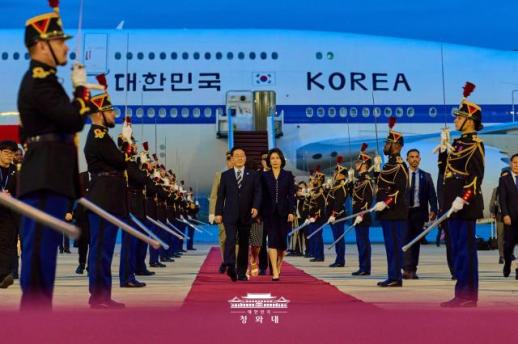 Lee second-term question looms over Assembly session SEOUL, September 08 (AJP) - South Korean President Lee Jae Myung may be in France this week, but back home the political heat is rising over a question the opposition wants him to answer himself. Will he rule out another presidential run if constitutional reform moves forward? Main opposition People Power Party (PPP) wants a clear answer before going into any discussion for constitutional revision. PPP floor leader Jeong Jeom-sig during his parliamentary address at the National Assembly Tuesday accused Lee of leaving open the possibility of extending his time in office through constitutional revision. “The president has also mentioned a constitutional amendment introducing a two-term presidency. But he never says, ‘I will not seek reelection’ or ‘I will stand trial,’” Jeong said. “Is the intention to extend his term through constitutional revision and use that to delay his trials?” Jeong went on to declare that his party would reject constitutional negotiations with the administration. “There will be no constitutional amendment under this government,” he said. “We will never discuss constitutional revision with forces that commit clear unconstitutional acts and seek private interests through constitutional revision.” The remarks marked one of the opposition’s strongest attempts yet to link the long-running debate over South Korea’s presidential system to Lee’s own political future. Earlier in the day, Hong Ihk-pyo, senior presidential secretary for political affairs, rejected suggestions that Lee was considering another presidential term. “The president has never even thought about such a thing,” Hong said during an appearance on the YouTube program “Kim Ou-joon’s News Factory,” expressing regret that the controversy continued despite explanations from the presidential office. Hong said Lee was expected to make his position clearer himself when an appropriate opportunity arose. Hong also said Lee had discussed the issue during an April meeting with then-Democratic Party (DP) leader Jung Chung-rae and PPP leader Jang Dong-hyeok. According to Hong, Lee said at the time that he had “no thoughts” of seeking another term and questioned the point of publicly declaring he would not do something he had no intention of doing. The dispute comes as constitutional revision has again moved toward the center of South Korean politics. DP leader Kim Min-seok said in his parliamentary group speech Monday that the ruling party would pursue “realistically achievable constitutional reform” reflecting changes in society and public demand, including possible changes to the country’s power structure. Lee has long supported replacing South Korea’s current single five-year presidential term with a system allowing presidents to serve more than one term. As a DP presidential candidate on Jan. 18, 2022, Lee said in an MBN interview that a four-year, two-term presidency with dispersed presidential powers was necessary to strengthen political accountability. “Five years is not enough time to plan policies, implement them and see the results,” Lee said, adding that he would be prepared to shorten his own term by one year if political agreement could be reached on constitutional revision. “If an agreement is possible now, even if I become president, I think it would be desirable to amend the Constitution in that way even if it means shortening my term by one year,” he said. Lee returned to the issue during the 2025 presidential campaign. On May 18 that year, he proposed a four-year presidency allowing consecutive reelection as part of a broader constitutional reform package intended to strengthen presidential accountability while dispersing presidential powers. He argued that allowing voters to judge an incumbent after four years would effectively create a midterm evaluation of the administration. Lee also said at the time that the change would not apply to the president elected in the 2025 election. “The current Constitution explicitly states that a constitutional amendment does not apply to the president serving at the time,” Lee told reporters in Gwangju after attending a May 18 pro-democracy commemoration. The issue resurfaced after Lee took office. On Aug. 14, Lee wrote on X that his position remained unchanged, saying the presidential term should be changed to either a four-year, two-term system or a four-year system allowing consecutive reelection so that voters could conduct an interim assessment of a president’s performance. He also called for transferring some presidential powers, including authority involving the Board of Audit and Inspection, the nomination of the prime minister and some appointments, to the National Assembly, while strengthening local autonomy and fundamental rights. “Changing the presidential term to a four-year two-term or four-year renewable system to enable responsible politics through an interim evaluation, while strengthening local autonomy and the fundamental rights of citizens, is my campaign pledge and has been my consistent position,” Lee said. He reiterated that he would accept shortening his term if necessary to achieve constitutional reform, saying that had been his official position during the 2022 presidential campaign and remained unchanged. Lee’s use of both “two-term” and “consecutive reelection” systems has helped fuel the latest political dispute. In Korean constitutional debate, a two-term system can allow a former president to return after leaving office, while a consecutive-term system refers specifically to an incumbent immediately running for another term. The legal barrier to Lee benefiting from such a change is substantial under the current Constitution. Article 128, Paragraph 2 of the Constitution states that an amendment extending a president’s term or allowing presidential reelection “shall not be effective for the President in office at the time of the proposal” for the amendment. That means a constitutional amendment proposed while Lee is serving as president could not, under the current provision, simply give him the right to extend his existing term or seek reelection under the newly created system. The Constitution also requires an amendment to win support from at least two-thirds of all National Assembly members before being put to a national referendum, making cooperation across party lines effectively indispensable. AJP Takeaways - PPP sets condition for constitutional reform talks: The People Power Party says it will not engage in constitutional revision discussions unless President Lee Jae Myung personally rules out seeking another presidential term. - Lee has consistently backed a two-term presidency: Lee has supported replacing South Korea’s single five-year term with a four-year system allowing reelection, while repeatedly saying any change should not benefit the sitting president. - Constitution itself limits Lee’s options: Article 128 bars constitutional amendments extending presidential terms or permitting reelection from benefiting the president in office when the amendment is proposed, while any revision would also require bipartisan support in the National Assembly. 2026-09-08 16:40:56
 -
 Intel Foundry and ASML Announce High NA EUV Production Milestone Intel Foundry and ASML have announced the successful application of their next-generation lithography technology, High NA (Numerical Aperture) Extreme Ultraviolet (EUV) process, in production, along with their future technology roadmap.On September 8, the companies shared their collaboration status at the SPIE Photomask Technology + Next-Generation EUV conference held in Monterey, California.The technology has been applied to over 1 million wafers, including some layers of the next-generation processor, Panther Lake. An Intel Foundry representative stated, "We have achieved results that meet expectations in overlay precision, throughput, and operational efficiency."Notably, products produced using High NA in the Intel 18A process have demonstrated performance equal to or exceeding that of products based on the existing 0.33 NA NXE platform.To support customers, the companies are providing a 'layered placement' plan, stitching technology, and process design kit solutions that leverage the advantages of High NA while maintaining the existing 6-inch mask specifications.Over the past three years, the two companies have led the 'Large Mask Format Initiative' to integrate the mask ecosystem, providing short-term support based on 6-inch masks while transitioning to the future 6x12-inch large mask format.Christophe Fouquet, CEO of ASML, praised Intel Foundry as a key leader in the adoption of High NA, commending their efforts in standardization and mask innovation.Naga Chandrasekaran, co-general manager of Intel Foundry, also stated, "We will continue to drive infrastructure development for the expansion of High NA EUV in collaboration with ASML and the broader industry ecosystem."* This article has been translated by AI. 2026-09-08 16:40:10
 -
Check This Week: Free Vehicle Inspections and Coupons from Five Major Automakers As the Chuseok holiday approaches, major automakers in South Korea are offering free vehicle inspections.According to the Korea Automobile Mobility Industry Association, five domestic automakers—Hyundai, Kia, GM Korea, Renault Korea, and KG Mobility (KGM)—will provide free vehicle inspection services ahead of the holiday.The inspection period for Hyundai, Kia, and Genesis customers is set for September 21 to 23. Hyundai and Genesis customers can access services at 1,203 Blue Hands locations nationwide, while Kia customers can visit 750 Auto Q centers. However, Hyundai's direct-operated High-Tech Centers and Kia's direct-operated service centers are excluded from this offer.To receive the inspection, customers must first obtain a coupon. Free inspection coupons will be issued on a first-come, first-served basis through the official applications of Hyundai, Kia, and Genesis from September 9 to 11. Hyundai and Genesis will start coupon downloads at 10 a.m. on September 9, with Genesis warning that coupons may run out quickly.The inspection will cover various items, including engine oil, brake fluid, coolant, battery, tire wear and pressure, air conditioning, lighting, brake pads, and washer fluid. It is important to note that while the inspection service is free, any repairs or parts replacements resulting from the inspection will not be covered.Other automakers are also participating in the free inspection initiative. GM Korea will offer services at three maintenance technology centers and 372 partner service centers from September 21 to 23, while KGM will provide inspections at two direct-operated service centers and 56 partner centers during the same period.Renault Korea will conduct free inspections over five days from September 17 to 23 at seven direct-operated service centers and 354 partner centers. The inspection items for these companies will include the engine, air conditioning, tires, brakes, coolant, various oils, wipers, and fuse status.The five automakers will also operate emergency response teams during the Chuseok holiday period. In the event of vehicle breakdowns or traffic accidents, they will provide quick service at nearby repair shops.* This article has been translated by AI. 2026-09-08 16:40:00
-
Hong Jun-pyo Warns of Plummeting Approval Ratings for President Lee Hong Jun-pyo, the former mayor of Daegu, commented on the controversy surrounding President Lee Jae-myung's nominations of Kim Seung-won for Minister of Justice and Yong Hye-in for Minister of Gender Equality and Family, stating, "If this continues, the approval rating could plummet to the 20% range."On September 8, Hong expressed on his social media that he viewed President Lee's pragmatism as a project to overcome both conservative and progressive parties. He criticized the nomination of a justice minister candidate involved in what he termed 'barmaid politics' and the Democratic Party's insistence on calling it a civil complaint, saying, "I thought it was difficult to expect anything more from a government that treats national affairs as a joke."Kim is under suspicion for allegedly soliciting the approval of clinical trials for a COVID-19 treatment from the then-head of the Food and Drug Administration, Kim Kang-rip, through a broker named Yang in 2021.In response, Kim stated while arriving at his confirmation hearing preparation office in Jongno, "I have never made any improper requests to the FDA, nor has the review process been unfair due to me. That fact is clearly stated in the prosecutor's decision document."Regarding the act of conveying a civil complaint, he said, "I only called the FDA once, and that day I exchanged related text messages. I have never met the FDA head," asserting that he merely communicated the complaint neutrally.On his relationship with broker Yang, he explained, "I first met her as a customer at a restaurant or café frequented by legal professionals, and after that, we had no significant interaction until I took on a labor standards case and provided legal representation. It is true that I have respected her as a successful female entrepreneur and have maintained a friendly relationship as a junior colleague."Hong also criticized the ministerial candidate for the family ministry, who has faced controversies over dual roles, self-appointments of spouses, receipt of government subsidies, and the tacit approval of gender discrimination by the Basic Income Party, calling her a "childish and reckless candidate."He emphasized that the ongoing controversies surrounding ministerial candidates could lead to a decline in President Lee's approval ratings, stating, "If this continues, President Lee's approval rating could drop to the 20% range, especially with young people leaving in droves."Indeed, President Lee's approval ratings have been on a downward trend for eight consecutive weeks. According to a survey conducted by Realmeter from August 31 to September 4 among 2,510 voters aged 18 and older nationwide, his approval rating fell by 1.5 percentage points to 37.4% compared to the previous week.The disapproval rating rose to 59.5%, an increase of 0.8 percentage points from the previous week, remaining outside the margin of error for six consecutive weeks. The percentage of respondents who answered 'don't know' was 3.1%.Realmeter noted, "The Democratic Party's decline in support is attributed to controversies over the qualifications of ministerial candidates, tensions surrounding the merger with the Justice Party, and internal strife over ethical oversight of the leadership."This survey was conducted using a 100% automated response method, with a margin of error of ±2.0 percentage points at a 95% confidence level and a response rate of 4.2%.* This article has been translated by AI. 2026-09-08 16:36:00
-
Increased Urban Renewal Projects Face Declining Competition for Contracts Seoul is accelerating its urban renewal and redevelopment efforts through rapid integrated planning and increased floor area ratios. However, many projects are experiencing a lack of competitive bidding during the contractor selection phase. This trend is attributed to construction companies weighing profitability and the likelihood of securing contracts against rising construction and financing costs. The repeated failures and re-bidding processes are also putting pressure on the speed of supply.As of the end of July, there are 311 sites designated for rapid integrated planning in Seoul. By the end of August, planning has been completed for 197 sites, including areas around Sinjeong 4-dong and Sadang-dong.Seoul is working to shorten the planning period and expand floor area ratio incentives in areas lacking profitability. In the Sinjeong 4-dong area, a profitability correction coefficient of 1.63 will be applied to develop 2,170 housing units, while a coefficient of 1.17 will be used in Sadang-dong for 970 units. The city aims to start construction on 310,000 housing units by 2031.As of August 10, among the 25 urban renewal projects secured by the top 10 construction firms in Seoul, only three projects—Apgujeong 5 District, Shinbanpo 19 and 25, and Seongsu Strategic Maintenance Area 4—saw multiple bidders. The remaining 22 projects (88%) were awarded without competition.Even large-scale projects are not immune to this trend. The reconstruction of the Yeouido Shimbun Apartments, with a total construction cost of 2.16 trillion won, failed to attract any bidders in the first round, with only Samsung C&T participating. Although seven construction firms attended the initial site briefing, only one remained for the actual bidding. In the second site briefing on September 3, Samsung C&T was again the sole participant. The estimated construction cost is set at 1.15 million won per 3.3 square meters.The Mokdong 10 Complex, with a total construction cost of 2.61 trillion won, also saw Hyundai Engineering & Construction as the only participant in two bidding rounds, leading to a shift to a negotiated contract process. Hyundai was selected as the preferred bidder on August 26, with an estimated construction cost of 990,000 won per 3.3 square meters and a bid deposit of 60 billion won. The Seongsu 3 District redevelopment, valued at 1.83 trillion won, also faced two failed bids with only Samsung C&T participating.This situation contrasts sharply with the past, when two to three construction firms would compete fiercely, offering exceptional conditions such as deferred payment of contributions and relocation support. This year, in Apgujeong, Hyundai secured District 3 and Samsung C&T secured District 4 through single bids.According to the Korea Construction Technology Research Institute, the construction cost index reached 138.59 (preliminary) in July, marking a 0.18% increase from the previous month and a 5.78% increase from the same month last year, setting a record high. Construction costs have risen by 38.6% compared to 2020.Additionally, companies must prepare hundreds of millions of won in deposits from the bidding stage, along with significant costs for specialized designs, financial proposals, and bidding personnel. If they fail to secure a contract, recovering design and promotional costs becomes difficult, leading firms to shy away from projects perceived as low probability from the outset.Improving the profitability of the project for the association does not directly translate to improved profitability for the contractor. While increasing the floor area ratio and profitability correction coefficients help reduce the burden on association members by increasing the volume of general sales, contractors must separately consider construction costs, financing costs, construction duration, and marketability. The need for re-bidding and negotiations for negotiated contracts further extends the time required for contractor selection.Lee Eun-hyung, a researcher at the Korea Construction Policy Institute, stated, “Due to the prolonged high interest rates and rising construction costs, construction firms are increasingly avoiding reckless bidding competition. They are adopting a strategy of selective bidding to focus on projects with higher profitability.” He added, “Given that construction cost issues are unlikely to ease in the near future, the trend of selective bidding is expected to continue.”* This article has been translated by AI. 2026-09-08 16:32:00
-
Syangyong Construction Signs Contract for Housing Project in Seongbuk-gu, Seoul Syangyong Construction has committed to utilizing its extensive construction expertise for a new housing project in Seongbuk-gu, Seoul.On September 8, Syangyong Construction announced that it signed a construction contract for a transit-oriented housing project in Donam-dong, Seongbuk-gu, on August 31.The project will develop a 13,043-square-meter site into a residential complex consisting of seven buildings with 574 units, along with commercial and community support facilities. The total construction cost is estimated at 215 billion won.The project received approval for the establishment of the Donam-dong Transit-Oriented Housing Association in April 2017. In 2023, a district unit plan was finalized for the construction of transit-oriented and public rental housing, with completion targeted for 2031.The residential units will include 102 units of 50 square meters, 286 units of 59 square meters, 28 units of 70 square meters, and 158 units of 84 square meters, totaling 574 units. Among these, 410 units will be allocated for association members, 49 units for general sale, and 115 units for public rental. The complex is located near Gileum Station on Line 4.A representative from Syangyong Construction stated, “We will mobilize our accumulated housing construction know-how and technology from both domestic and international projects to create a 574-unit residential complex, 'The Platinum,' in the heart of Seoul. We will do our utmost to present a differentiated residential community that satisfies our members.”* This article has been translated by AI. 2026-09-08 16:32:00
-
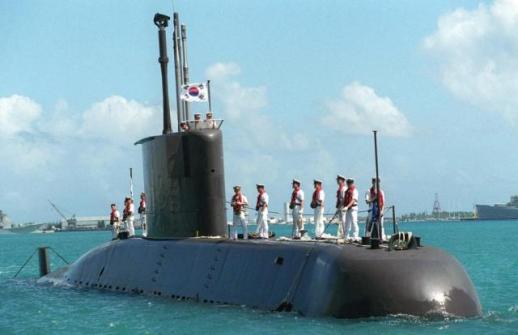 Seoul's nuclear sub project reaches IAEA, yet nowhere with Washington SEOUL, September 08 (AJP) - South Korea has moved to clear a major safeguards hurdle for its nuclear-powered submarine program, formally opening consultations with the International Atomic Energy Agency. But substantive negotiations cannot advance far until Washington provides clearer guidance on how Seoul can secure nuclear fuel for the submarines. IAEA Director General Rafael Grossi said Monday that South Korea "has formally notified the Secretariat of its intention to start consultations" on an arrangement under Article 14 of its Comprehensive Safeguards Agreement with the agency. Seoul has also submitted relevant declarations to the IAEA and reaffirmed its commitment to meeting its obligations under the Nuclear Non-Proliferation Treaty, the safeguards agreement and the Additional Protocol, Grossi said. He added that he expects consultations to continue "in the same spirit of transparency." The notification represents a concrete step forward from June, when Grossi described discussions with Seoul as being at a preliminary stage. South Korea is not negotiating a new safeguards agreement with the IAEA. The two sides must instead work out a separate arrangement under Article 14 of their existing agreement, which has governed the application of nuclear safeguards in South Korea since 1975. Article 14 allows nuclear material normally subject to IAEA safeguards to be used in a non-proscribed military activity such as naval nuclear propulsion, provided South Korea and the agency agree on how the temporary non-application of safeguards will work. Under the existing agreement, the arrangement must set out, as far as possible, the period or circumstances during which safeguards will not apply and require Seoul to keep the IAEA informed of the quantity and composition of the nuclear material involved. Normal safeguards would have to be reapplied once the nuclear material is returned to a peaceful nuclear activity. The negotiations could cover the submarine reactor, nuclear fuel and shore-based infrastructure while establishing mechanisms to protect sensitive military information. Grossi stressed in June that the safeguards framework would depend on the specific submarine design, fuel and supporting infrastructure. Establishing a system capable of addressing proliferation concerns would therefore take time, he said. Australia offers a glimpse of how lengthy and technically detailed the process could become. Australia began formal negotiations with the IAEA on an Article 14 arrangement in May 2023, but the talks remained ongoing as of June this year. The two sides have discussed issues including advance notification, reporting and verification, the duration and circumstances of the arrangement, the point at which normal safeguards would resume and safeguards for facilities and sites associated with the submarine program. South Korea could face a similarly detailed process before reaching a final arrangement. Yet the bigger unresolved issue lies outside the IAEA: how South Korea and the United States will reach an agreement on securing nuclear fuel for the submarines. The government plans to use uranium enriched to below 20 percent and launch its first nuclear-powered submarine in the mid-2030s, with operational deployment planned for the late 2030s. Washington formally backed Seoul's submarine ambitions following the summit between President Lee Jae Myung and U.S. President Donald Trump last October. A joint fact sheet released in November said the United States had approved South Korea's construction of nuclear-powered attack submarines and would work with Seoul on requirements for the project, including ways to source the fuel. Turning that political commitment into an actual fuel supply arrangement has proved more complicated. The Foreign Ministry said in June that nuclear fuel for submarines constitutes a military use of nuclear energy and therefore needs to be handled separately from negotiations over South Korea's civilian uranium enrichment and spent fuel reprocessing rights under the bilateral nuclear cooperation agreement. The government has said importing submarine fuel from the United States is among the options under consideration and that a separate arrangement with Washington would be needed. Yet bilateral security negotiations, including discussions concerning the nuclear-powered submarine program, have stalled. A presidential official said last week that South Korea-U.S. negotiations on security issues were "not currently progressing," referring in part to Seoul's plan to build nuclear-powered submarines under last year's bilateral agreement. The official did not elaborate on what was holding up the talks or when substantive negotiations on the submarine program might resume. "It is possible to operate a submarine using the kind of nuclear fuel used in nuclear power plants," Suh Kune-yull, an emeritus professor of nuclear engineering at Seoul National University, said, noting that submarine fuel options are not limited to highly enriched uranium and that higher enrichment mainly allows a reactor to operate longer before refueling. South Korea therefore does not necessarily need the highly enriched uranium used by U.S. nuclear submarines, he said, although the fuel concentration ultimately chosen would have implications for reactor design, endurance and refueling requirements. Suh also stressed that securing the fuel itself is only part of the issue. "What to do with it afterward is another issue, and discussions would have to follow," Suh said, referring to the handling of spent nuclear fuel after its use aboard the submarines. The IAEA notification moves Seoul's nuclear-powered submarine program into a more formal safeguards phase, but it resolves neither the technical details of that framework nor the more immediate question of fuel access. Progress toward an operational submarine will ultimately depend on two negotiations moving forward in parallel: a detailed Article 14 arrangement with the IAEA and a separate deal with Washington that gives South Korea a viable source of nuclear fuel. AJP Takeaways - South Korea has formally started IAEA consultations on safeguards for its nuclear-powered submarine program. - The main hurdle remains securing nuclear fuel through a separate agreement with the United States. - Seoul must advance both IAEA safeguards talks and U.S. fuel negotiations before the program can move forward. 2026-09-08 16:29:02
 -
Park Ji-hyun Joins Global Basketball League 'Project B' with First Camp in Seoul The global tour-based professional basketball league 'Project B,' set to launch in 2027, has announced the addition of South Korean star Park Ji-hyun, who currently plays for the Los Angeles Sparks, marking the start of its first season in Seoul.On September 8, Project B revealed that it will hold its inaugural official training camp in Seoul from January 6 to 12, 2027. The camp will gather players from around the world, along with coaching staff and officials, to begin preparations for the league's first season.Project B aims to create a player-centered structure that allows athletes to directly participate in the league's long-term value. Unlike traditional location-based professional leagues, it will feature top players forming teams that compete in major cities across Asia, Europe, and the Americas. The league plans to combine high-level basketball games with local culture and entertainment, expanding into a global sports platform.The first season will tour seven cities, with each event lasting around ten days. Tokyo, Japan, and Valencia, Spain, have been confirmed as host cities. The Tokyo event will take place from March 26 to April 4, 2027, at the Toyota Arena, while the Valencia event is scheduled for March 12 to 22, 2027, at the La Fonteta Arena. Additional host cities have yet to be announced.The training camp will be based at the Park Hyatt Seoul in Gangnam. Project B plans to go beyond simple preseason training by launching various content, cultural, and community programs in Seoul, showcasing a new global basketball experience.Park Ji-hyun's participation is particularly noteworthy. As the third South Korean player to compete in a regular season game in the WNBA, she is currently with the Los Angeles Sparks and will engage in her first official activities with new teammates during the training camp in Seoul."The fact that Project B is holding its training camp in Seoul is especially meaningful to me," Park said. "Korea is my hometown. I am proud that my fellow players from around the world will experience the energy, culture, and passion for basketball in Korea. I look forward to welcoming everyone in Seoul and starting this new journey together."Park's involvement and the training camp in Seoul reflect Project B's focus on the Asian market.Jeff Prentice, co-founder and CEO of Project B, stated, "Deciding to start Project B's new journey in Seoul demonstrates our long-term commitment to Korea and our belief that Asia will be a crucial hub for the future of global basketball. We are very proud to have the world's best players and Korea's top talent come together in a country with a deep passion for basketball." He added, "Korea is currently leading global culture. The music, fashion, beauty, food, and entertainment emerging from Seoul are influencing people worldwide, and our players will have the opportunity to experience this rich culture firsthand."* This article has been translated by AI. 2026-09-08 16:28:10
-
KOSPI Peaks at 7,170 but Closes Below 7,000 The KOSPI index surged to 7,170 during trading but ultimately closed below 7,000, erasing its gains in the afternoon session. The index initially showed strong performance, driven by semiconductor and nuclear power stocks, but faced pressure from rising international oil prices and trade uncertainties, resulting in a 'strong start, weak finish' trend.According to the Korea Exchange, the KOSPI closed at 6,954.52, down 40.87 points (0.58%) from the previous trading day. It briefly exceeded 7,100, reaching a high of 7,170.09, but quickly lost ground in the afternoon, ultimately turning negative. The difference between the intraday high and the closing price was over 215 points. In the securities market, foreign and institutional investors recorded net purchases of 644.9 billion won and 649.6 billion won, respectively, while individual investors sold off 3.0534 trillion won.Large-cap semiconductor stocks, which led the index's morning rise, also lost momentum in the latter part of the session. Samsung Electronics peaked at 279,000 won but closed down 0.19% at 269,500 won. SK Hynix rose to 1,889,000 won during the day but ended up gaining only 0.56%, closing at 1,793,000 won.Most of the top market capitalization stocks showed weakness. Samsung Electro-Mechanics fell 5.78%, LG Energy Solution dropped 3.86%, Hyundai Motor declined 2.04%, Samsung Biologics decreased 1.77%, KB Financial fell 1.25%, and Samsung C&T was down 0.52%.The KOSDAQ index also closed lower, down 10.31 points (1.25%) at 811.88. While individual and foreign investors made net purchases of 149 billion won and 61.8 billion won, respectively, institutions sold off 217.8 billion won.Lee Kyung-min, a researcher at Daishin Securities, noted, "Foreign and institutional investors have continued net buying for four consecutive trading days, supporting the index's rise, but some gains were given back in the afternoon. The ongoing conflict between the U.S. and Iran, coupled with news of attacks on Saudi Arabian oil facilities, has sustained upward pressure on international oil prices, weakening the appetite for risk assets."He added, "The deepening trade conflict between the U.S. and Canada also poses a burden. With the U.S. inflation data set to be released this week, caution remains, and the persistent strength of the yen has raised concerns about the unwinding of yen carry trades."* This article has been translated by AI. 2026-09-08 16:28:00
-
MUSINSA Begins IPO Process for KOSPI Listing The fashion platform MUSINSA has officially initiated its initial public offering (IPO) process by applying for a preliminary listing review on the KOSDAQ. As MUSINSA's KOSPI listing becomes more tangible, interest is growing in the steps a company must take to enter the stock market.MUSINSA Files for Preliminary Listing ReviewAccording to the Korea Exchange, MUSINSA submitted its application for the preliminary listing review for its shares on September 7. The joint lead underwriters for the offering are Korea Investment & Securities and Citigroup Global Markets.Founded in June 2012, MUSINSA is an online fashion platform that generates revenue through e-commerce, primarily selling clothing. It operates the 'MUSINSA Store,' along with the women's fashion platform '29CM' and its private brand 'MUSINSA Standard.' As of the application date, MUSINSA's shares are held by CEO Jo Man-ho and 26 others, who collectively own 54.2% of the company.The preliminary listing review assesses whether a company meets the requirements for actual stock market listing. The exchange evaluates both quantitative and qualitative criteria, including financial stability, business continuity, management transparency, and investor protection.After the review, the listing committee will notify the company of the results. However, passing the preliminary review does not guarantee immediate entry into the stock market, similar to how passing an entrance exam does not complete the registration process. Following this, a public offering process for general investors will take place.Before the preliminary review, several preparatory steps must be completed, including appointing a designated auditor, signing contracts with lead underwriters, revising the company’s articles of incorporation, and establishing a stockholder association. Preliminary discussions with the exchange regarding the listing are also part of this stage.Post-Review Steps Include Public Offering and AllocationDuring the public offering phase, the company must first submit a securities registration statement to the Financial Services Commission. This statement includes essential information for investors, such as the company's business details, financial data, offering size, and structure. Following this, demand forecasting will be conducted for institutional investors to determine the offering price.Once the offering price is set, subscriptions will be opened for general investors, and shares will be allocated. After the subscription period ends, the investment funds will be collected, and the company will report the issuance results. This process leads to the final steps of the listing.The last stage is the actual listing on the exchange. After completing the public offering process, the company will apply for a new listing with the exchange. Once all necessary procedures are completed, investors will be able to trade the shares on the designated date.Company Valuation Also in Focus: "Profitability Defense is Key"If MUSINSA proceeds with its listing, it will follow this outlined process. Notably, for larger companies that attract significant market interest, factors such as company valuation, offering size, and existing shareholder equity structure become critical considerations during the listing process.However, the specifics of the listing plan, timeline, and offering structure may vary based on decisions made by the company, underwriters, and the exchange's review. Oh Rin-ah, a researcher at LS Securities, stated, "In the upcoming IPO process, maintaining the current revenue growth rate of around 20% while ensuring stable profitability will be crucial evaluation criteria."MUSINSA is reportedly aiming for a listing in the first half of next year. The market estimates the company's valuation to be around 8 trillion won. Internally, MUSINSA has valued itself at approximately 10 trillion won, but it is expected to target around 8 trillion won during the offering process, applying a discount rate considering market conditions and investor protection.* This article has been translated by AI. 2026-09-08 16:28:00