


Latest by
-
 Korean Company Kolmar Makes History at Premiere Vision Paris, Showcasing Color Technology Korean company Kolmar has made history by participating in the world's largest fashion and textile exhibition, Premiere Vision Paris, showcasing its color technology as the first domestic cosmetics company to do so.Kolmar announced on September 4 that it was invited to participate in Premiere Vision Paris, held from September 1 to 3 in Paris, France, marking a first for the Korean cosmetics industry.Premiere Vision Paris is the largest exhibition of fashion and textile materials globally. It features companies that have undergone rigorous selection, presenting the latest colors, materials, and design trends for the global fashion industry each season. The event covers the entire fashion industry, including yarns, fabrics, designs, accessories, and leather, and has recently expanded its collaboration scope to include the beauty sector.This year's event featured eight specialized areas, including yarns, fabrics, designs, accessories, leather, and smart creations, with over 900 companies from around the world participating.To broaden the intersection of fashion and beauty, a 150-square-meter 'Cosmetic Village' was introduced for the first time, where more than ten beauty companies, including French firms, showcased cosmetics and related technologies.In addition to the Cosmetic Village, Kolmar set up a standalone booth in the main area to introduce seasonal trends. The company presented color products under the theme 'Beauty meets Fashion,' incorporating the 2027-2028 autumn/winter trends into cosmetics. They displayed 27 trend colors in a canvas format and introduced products inspired by textures and formulations from fashion.Kolmar also organized a program for attendees to experience its color technology firsthand. Representatives from global fashion companies and luxury brands had the opportunity to mix their desired colors or try lip products, allowing them to experience Kolmar's research and development capabilities directly.A Kolmar representative stated, 'This Premiere Vision Paris was an opportunity to showcase Kolmar's technological prowess and color development capabilities to the global market. We will continue to strengthen our color competitiveness and introduce innovative products that incorporate advanced technologies.'* This article has been translated by AI. 2026-09-04 17:40:00
 -
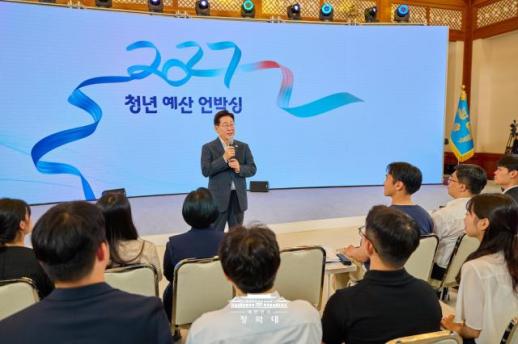 Cabinet reshuffle turns into political headache for South Korea's Lee SEOUL, September 04 (AJP) - The roster for President Lee Jae Myung’s 2.0 reshuffle has generated a rumpus before the nominees even arrive at South Korea’s legislative confirmation hearings, denting the already fragile popularity of the presidency. According to the latest Gallup Korea poll, 40 percent of respondents positively assessed Lee’s job performance, while 51 percent gave a negative assessment. The positive rating was the lowest since he took office, while the negative rating was the highest. Among respondents in their 20s, the negative rating stood at 51 percent, more than double the positive rating of 25 percent. The proportion of respondents who cited “personnel appointments” as a reason for their negative assessment rose ninefold to 9 percent from 1 percent in the previous survey. On Sunday, the presidential office named six Cabinet replacements, including new finance and land ministers through promotions from within the government, as Lee seeks to strengthen his economic team and tackle housing issues. What has struck the loudest discord, however, are the political recruits. Rep. Kim Seung-won of the Democratic Party (DP), the nominee for justice minister, is under fire over his previous support for withdrawing indictments against President Lee Jae Myung and a separate lobbying allegation. The withdrawal of indictments refers to prosecutors dropping indictments in criminal cases in which Lee had been charged. The five criminal trials involving Lee were suspended after he took office, but the indictments themselves remain in place. Kim served as a co-chair when a group of 105 DP lawmakers advocating withdrawal of the indictments was launched in February. “The justice minister does not have direct authority over the matter, and I have no intention of directing it through the prosecutor general,” Kim said Thursday when a reporter asked about his position on withdrawing the indictments as he arrived for the first time at his confirmation hearing preparation office in Jongno-gu, Seoul. “The fact that Kim cares more about the president than the people alone makes him unqualified to serve as justice minister,” Rep. Kim Tae Kyu of the People Power Party (PPP) said. “If he becomes minister, he will be nothing more than President Lee Jae Myung’s personal lawyer,” Kim said. “If Kim becomes justice minister and pushes ahead with withdrawing the indictments, there will be an enormous storm,” Yoo Seong-min, a former four-term lawmaker and former floor leader of the PPP, said. Kim Seung-won is separately facing renewed scrutiny over allegations that he lobbied the Ministry of Food and Drug Safety. Kim told reporters Monday that prosecutors had conducted an intensive three-year investigation starting in 2021 involving more than 10 prosecutors but ultimately decided not to indict him over the allegations. “I believe that was unfair because I should have been cleared of wrongdoing, but prosecutors instead suspended the indictment based on some of my actions,” Kim said. “I filed a constitutional complaint last year, and I understand that the Constitutional Court is currently reviewing the case,” Kim said. “I want to clear up the injustice to the very end.” “The allegations involving improper solicitation of the Ministry of Food and Drug Safety are decisive evidence that Kim is unfit to serve as minister,” Rep. Kim Tae Kyu of the PPP said. DP lawmakers defended Kim. "The person accused of making the solicitation was acquitted at trial, so it is clear that Kim was also innocent of any wrongdoing," said Rep. Jin Seong-joon, a three-term lawmaker of the DP. Another major controversy surrounds Yong Hye-in, a Basic Income Party lawmaker nominated for gender equality and family minister. Questions have centered on her decision to retain her proportional-representation National Assembly seat while serving as minister and accusations that her party has effectively been run as a “family-run party.” Yong was elected twice in a row as a proportional-representation lawmaker, in 2020 and 2024, through Democratic Party-led proportional coalition parties. She has said she will not give up her parliamentary seat even if she becomes minister, drawing criticism from the opposition and some in the broader progressive bloc that the arrangement would amount to excessive preferential treatment. Yong’s spouse worked as a party official for the Basic Income Party and received one of the highest salaries among party employees, while questions were also raised over the party awarding policy research projects to insiders. “Yong was never qualified to be a lawmaker in the first place, and her two terms as a proportional-representation lawmaker through tricks involving satellite parties and party withdrawals, along with running the party like a family business, make her a symbol of the hypocrisy and greed of the left,” Yoo Seong-min said. “As a member of the Gender Equality and Family Committee, I have been looking into nominee Yong Hye-in, and there are many problems,” Rep. Kim Gunn of the PPP said. Explaining why she intends to retain her proportional-representation seat, Yong cited the fact that she is the Basic Income Party’s only incumbent lawmaker. “If I, the party’s only National Assembly member, resign, the Basic Income Party would face the difficulty of becoming a party without parliamentary representation,” Yong said Monday. She also said she was aware of concerns that retaining her parliamentary seat could be seen as a privilege or benefit and asked for understanding of the circumstances facing a minor party. In response to criticism that she had received preferential treatment by being elected twice through Democratic Party-led proportional coalition parties, she said she had already informed her party that she would not run for a proportional-representation seat in the next general election. The party pushed back against the “family-run party” controversy surrounding Yong’s spouse. “This criticism goes beyond the minimum bounds of propriety,” Moon Mi-jung, acting leader of the Basic Income Party, said, explaining that Yong’s spouse had played a major role in the party’s growth since its founding. Jin also defended Yong against criticism over her parliamentary seat and her husband’s role in the party. "As for Yong, there is no particular reason why the issue of lawmakers concurrently seving as Cabinet ministers should be judged more strictly simply because she is a proportional-representation lawmaker," Jin said. "The controversy over the party being a 'family-run party' is also not difficult to understand, given the Basic Income Party is a small party with limited organizational capacity and resources and that both Yong and her husband has long been dedicated activist," Jin added. The other four nominees have attracted less controversy. Lee Hyoung Il, first vice minister of finance and economy, was nominated to serve as deputy prime minister and minister of economy and finance; Kang Shin-chul, former deputy commander of the South Korea-U.S. Combined Forces Command (CFC), was nominated for defense minister; Rep. Lee So-young of the DP was nominated for minister of SMEs and startups; and Hong Jee-sun, vice minister for transport, was nominated for minister of land, infrastructure and transport. “This Cabinet reshuffle has three key features: youth, expertise and stronger reformist-progressive solidarity,” DP leader Kim Min-seok said Sunday at the opening of Rep. Kim Yoon’s constituency office in Gyeonggi Province. “Taken together, they fit perfectly with our party’s push to broaden its focus on people’s livelihoods and pragmatism.” The opposition criticized not only individual nominees but also the overall scale and substance of the reshuffle. “At a time when President Lee Jae Myung’s approval rating is falling, a reshuffle that replaces only six ministers shows no sense of crisis and is complacent,” Yoo said. “Rep. Lee So-young is a perspicacious lawmaker, while the other three nominees are simply bureaucrats who are good at following the president’s orders,” Yoo added. “This reshuffle is disappointing,” five-term lawmaker Rep. Yoon Sang-hyun said. “The economic achievements of this administration were made possible by businesses, but the government mistakenly believes they were achieved through its own ability.” “The Lee Jae Myung administration mistook good fortune for competence, became arrogant and has now been hit by falling approval ratings,” Yoon said. Kim Seung-won and Yong Hye-in could not be reached for separate comments. Whether Kim and Yong make it through the confirmation hearings will depend partly on how convincingly they answer the allegations surrounding them. The political cost, however, may already be showing. Gallup’s latest survey suggests personnel appointments are becoming a more visible source of dissatisfaction with Lee, turning a reshuffle intended to refresh his government into another test for a presidency already struggling to hold public support. AJP Takeaways - President Lee Jae Myung’s approval rating fell to a record-low 40 percent as controversy over his second Cabinet reshuffle intensified. Gallup Korea found negative assessments rose to 51 percent, with personnel appointments increasingly cited as a reason for dissatisfaction. - Justice minister nominee Kim Seung-won and gender equality and family minister nominee Yong Hye-in have emerged as the most contentious picks. Kim faces criticism over past lobbying-related allegations and support for dropping indictments against Lee, while Yong has drawn scrutiny over proportional representation and claims that the Basic Income Party operates as a “family party.” - Democratic Party lawmakers have defended both nominees, arguing the allegations do not disqualify them from office. Jin Seong-joon said Kim should not be considered culpable after the person involved in the solicitation case was acquitted, while describing criticism of Yong as excessive given the Basic Income Party’s small size and limited resources. 2026-09-04 17:33:23
 -
France's Dragon Ball Theme Park Faces Licensing Issues, Toei Confirms No Approval A proposed Dragon Ball theme park near Paris has generated significant interest, but it has been revealed that the relevant rights holders in Japan have not granted permission for the use of the Dragon Ball intellectual property (IP).Toei Animation recently stated, "Neither we nor the rights holders have granted any licenses regarding this matter, and we are not aware of any facts to the contrary."The controversy stems from a large-scale entertainment development project being pursued by France and Saudi Arabia.The Qiddiya Investment Company (QIC), affiliated with the Saudi Arabian Public Investment Fund, is working on a complex that will include entertainment, lodging, cultural, and sports facilities in the area of Sergy-Pontoise, about 30 kilometers from Paris.The project is estimated to cost around €6 billion (approximately $9.4 billion) and includes plans for up to three theme parks and various other facilities.While the official announcements from the French presidency and QIC did not specifically mention the name 'Dragon Ball,' it was widely reported that the construction of a Dragon Ball theme park was effectively confirmed following the project announcement.Subsequently, aides to French President Emmanuel Macron explained that the project is inspired by the world of the popular Japanese manga and anime 'Dragon Ball Z.' Valérie Pécresse, president of the Île-de-France regional council, also shared on social media that "Dragon Ball is coming to Île-de-France."However, French daily Le Monde reported that QIC has not secured a license to use Dragon Ball characters and trademarks from the relevant Japanese rights holders. This was further clarified when Toei Animation issued an official statement a few days later.Toei also stated that the concept art and videos related to the theme park mentioned in reports are unrelated to the French project, explaining that these materials are from the officially announced Dragon Ball theme park in Saudi Arabia's Qiddiya City, which was revealed in March 2024.In contrast to the French initiative, the Dragon Ball theme park in Saudi Arabia is an officially announced project between Toei Animation and QIC. It will feature seven zones representing the Dragon Ball universe and more than 30 attractions, including a large roller coaster modeled after the 'Shenron' dragon, standing approximately 70 meters tall.The large-scale entertainment development project in Sergy-Pontoise is not entirely canceled. However, the use of the name 'Dragon Ball,' its characters, and its universe in the project will require resolving licensing issues with the Japanese rights holders.It is also important to note that the rights to Dragon Ball are not solely held by Toei Animation. Multiple rights holders, including the original publisher Shueisha and Bird Studio, founded by the late Akira Toriyama, are involved.* This article has been translated by AI. 2026-09-04 17:32:00
-
Minister Kim Yoon-deok Engages with Local Businesses at Jeonbuk-Saemangeum R&D Briefing The Ministry of Land, Infrastructure and Transport announced that Minister Kim Yoon-deok attended the 'Jeonbuk-Saemangeum Land and Transportation R&D Briefing' at Jeonbuk National University's 77th Anniversary Hall on September 4, where he engaged with local businesses and researchers. This event was organized to address inquiries from local companies regarding participation in national R&D and demonstration projects, following a business meeting held on July 22 in Saemangeum. Participants in the previous meeting included representatives from investment companies in Saemangeum, such as Hyundai Motor Group and LS ENF, as well as local businesses and university officials. They proposed expanding government support for research and development and demonstration projects. At that time, Minister Kim stated, “It is time to resolve the distrust that has arisen during the Saemangeum development process and to build solid trust. We will support large-scale investments by companies to lead to the growth of local businesses.” During the briefing, the Saemangeum Development Agency presented the current status of investments and cooperative efforts, while the Ministry of Land outlined its investment directions for Land and Transportation R&D this year. The Korea Agency for Land and Infrastructure Technology Advancement provided guidance on how local businesses and researchers can participate in R&D and access support programs. Minister Kim emphasized, “This briefing was created to fulfill our promises regarding the requests of local businesses. The Ministry will serve as a strong channel to ensure that the potential of excellent local companies and researchers is not limited by barriers to information.”* This article has been translated by AI. 2026-09-04 17:32:00
-
AI Era for Workers: 38 Universities Collaborate to Enhance AI and Digital Skills The rapid advancement of artificial intelligence (AI) and digital transformation is prompting universities and the government to enhance the job skills of workers. To improve the quality of adult lifelong learning and expand advanced technology education tailored to the field, 38 universities across the country gathered to establish a cooperative framework.On September 4, the Ministry of Education and the National Institute for Lifelong Education (NILE) announced that they held the '2026 Training for AI and Digital (AI&D) Program Officials' at the Ferum Hall in Seoul, attended by over 80 representatives from the participating universities.This training was designed to equip workers with the AI and digital skills immediately needed in the industry, laying the educational foundation for universities and promoting transparent project management.The event featured a plaque presentation ceremony for 13 newly joined universities designated as 'AID Leading Universities.' The newly selected institutions include Kyeongwon University of Arts, Dongguk University, Myongji University, Myongji University of Applied Sciences, National Kumi University of Technology, Choonhae College of Health Sciences, Woosong University, Chosun University of Science and Technology, Korea National Open University, Daegu Haany University, Sogang University, Seoul Digital University, and Soonchunhyang University.During the first-year best practice sharing session, existing participating universities shared their valuable on-site experiences. Myongji University presented a 'bundled course' model that connects multiple subjects, while Busan Digital University showcased a successful 'intensive camp' that rapidly enhances skills. Participants discussed practical cooperation methods for mutual growth among universities by sharing experiences in designing and operating field-oriented educational programs.Beyond simple case sharing, intensive training for smooth and transparent project operations was also conducted. NILE provided guidance on the 'AID Program Operation Manual and Quality Management Guidelines,' and a professional accounting firm offered training on managing government subsidies and addressing audit issues, reinforcing the transparency and integrity of project funding.Having achieved significant success in its first year with over 16,000 adult learners participating, NILE plans to expand the scale and benefits of the program this year.Kim Wol-yong, President of the National Institute for Lifelong Education, emphasized, 'AI and digital technologies are rapidly changing the way we work and the standards for job skills. Building on this success, we will actively support 38 universities, 17 regions, and over 20 job categories this year to ensure that workers acquire tailored AI and digital skills.'NILE aims to use this training as a stepping stone to strengthen close cooperation with participating universities and continuously expand a field-centered lifelong learning environment in AI and digital skills, enabling adult learners to respond proactively to the rapidly changing job landscape.* This article has been translated by AI. 2026-09-04 17:24:00
-
South Korea to Train 1,600 Manufacturing AI Workers, Extends Internship Program The South Korean government plans to more than double the training of practical workers in manufacturing AI to support the transition of small businesses to artificial intelligence. It will also enhance support for young workers in local small enterprises to address labor shortages.The Ministry of SMEs and Startups announced on September 4 that it has established the "5th Basic Plan for Workforce Support in Small Enterprises (2026-2030)."The government will focus on three main areas for workforce support: tailored training and supply based on field demand, creating a desirable working environment in small businesses, and strengthening infrastructure to alleviate job mismatches.Initially, the training scale for practical workers needed for developing manufacturing AI solutions in small manufacturing companies will expand from 600 this year to over 1,600 next year. The duration of internships for small business employment will also increase significantly from three months this year to 12 months next year.Next year, a new "Manufacturing AI Fellow Training Program" will be launched, targeting 500 individuals who will undergo specialized AI training at four major science and technology institutes, including the Korea Advanced Institute of Science and Technology (KAIST). Graduates will receive micro-credentials in manufacturing AI transition and will be connected to job opportunities in manufacturing companies. The government plans to increase the number of industry-specialized AI contract departments from 10 this year to 30 by 2030.A Manufacturing AI Education Center will be established at the Small and Medium Business Training Institute, providing hands-on AI training to 10,000 employees of small businesses annually.To address the shortage of research personnel in local small businesses, the proportion of hiring support allocated to non-capital region companies in the small business research personnel recruitment support program will increase from 50% to 60% this year. Small manufacturing companies in the AI sector will receive support for hiring up to two new research personnel.Starting next year, the government will introduce a "Preferential Track for Young Workers in Local Small Businesses" under the Youth Future Savings program to support long-term employment and asset formation for young workers. The Youth Job Leap Grant currently provides up to 7.2 million won over two years for young individuals who have worked for more than six months in non-capital region small businesses, with plans to significantly increase the support limit next year.To assist middle-aged individuals in re-employment, the criteria for businesses required to provide re-employment support services to those nearing retirement will gradually lower from 1,000 employees to 500 by next year and to 300 by 2029.The government will also develop a comprehensive support roadmap for small businesses to effectively utilize foreign workers, covering everything from recruitment to residency and settlement.To create safe and smart workplaces in small businesses, the financial support ratio for preventing accidents such as falls, entrapments, and collisions in workplaces with fewer than 10 employees will be increased to a maximum of 90%. Additionally, the scope of workplaces subject to the obligation to appoint safety and health managers under the Industrial Safety and Health Act will be expanded from those with 50 or more employees.The Business Personnel Support Center, which provides job information for small businesses and connects job seekers, will increase to 34 locations this year and establish a cooperative system with local employment centers and universities.A new initiative called "Youth Playground" will be established to introduce promising small businesses to young job seekers and provide advice from experienced entrepreneurs to those preparing to start their own businesses.Next year, the government will open small business training institutes in Gwangyang, Jeollanam-do, and Jeonju, Jeollabuk-do, to support workforce training in region-specific industries. The Jeollanam-do institute will focus on semiconductors, aerospace, and petrochemicals, while the Jeollabuk-do institute will specialize in future vehicles and cultural content.Noh Yong-seok, First Vice Minister of the Ministry of SMEs and Startups, stated, "I hope the 5th Basic Plan for Workforce Support in Small Enterprises serves as an opportunity for a transformation that creates small businesses where talent is sought and nurtured. We will work together with relevant ministries to ensure that talented individuals working in small businesses can open the door to an irreplaceable future for South Korea."* This article has been translated by AI. 2026-09-04 17:24:00
-
Special Prosecutors Appeal Two-Year Sentence for Unification Church Leader Han Hak-ja Kim Gun-hee's special prosecutor team has appealed the two-year prison sentence handed down to Han Hak-ja, the leader of the Unification Church, for allegedly providing money to Kim Gun-hee and others.The special prosecutors stated on September 4 that they submitted the appeal to the 27th Criminal Division of the Seoul Central District Court, led by Judge Woo In-seong, citing "improper sentencing and a misunderstanding of legal principles regarding the investigation subjects" in the first trial ruling.They criticized the first trial for considering Han's vague and abstract claims of efforts for world peace as favorable circumstances for sentencing. They argued that the motive for the crime, which was to expand the Unification Church's influence and political power, was incorrectly deemed a favorable circumstance unrelated to personal gain.The special prosecutors emphasized that the combined sentence of two years for Han and former World Headquarters Director Yoon Young-ho, who received a confirmed sentence of one year and six months from the Supreme Court and an additional six months in the first trial, is "difficult to understand." They also contested the first trial's dismissal of charges related to the solicitation of evidence destruction, arguing that it contradicts the clear wording of legal provisions. They expressed that the dismissal of charges related to embezzlement in connection with political campaign funding for overseas politicians was also unjust.Additionally, the special prosecutors filed an appeal against the decision to extend Han's release from custody. The first trial court accepted Han's request for an extension on September 1, prolonging the release period from the initial deadline of 6 p.m. on September 2 to 6 p.m. on September 30.Han was indicted for allegedly delivering 100 million won in political funds to former People Power Party lawmaker Kwon Seong-dong in January 2022, requesting support for the Unification Church from the Yoon Suk-yeol administration, and for giving expensive jewelry and a Chanel bag to Kim Gun-hee through Jeon Seong-bae, known as "Geonjin Beopsa," in July of the same year, in exchange for favors regarding church matters.In the first trial, held on August 31, Han was sentenced to one year in prison for violating political funding laws and one year for violating the Anti-Graft Act and embezzlement. Han has not yet filed an appeal against this ruling.Previously, the special prosecutors had sought a total sentence of 13 years, including five years for the political funding law violation and eight years for the other offenses, during the closing arguments.* This article has been translated by AI. 2026-09-04 17:16:10
-
Seoul Philharmonic and Prague Philharmonic Choir Form Partnership The Seoul Philharmonic Orchestra (SPO) is partnering with the renowned Prague Philharmonic Choir to foster global classical collaboration between South Korea and the Czech Republic.According to the SPO, the two organizations signed a Memorandum of Understanding (MOU) on August 31 at the Concertgebouw in Amsterdam, one of the world's top three concert halls.Attendees at the signing ceremony included SPO CEO Jeong Jae-wal and Prague Philharmonic Choir representative David Mareček, along with key officials from both institutions, who shared their vision for future collaboration. Following the signing, the two organizations performed Beethoven's Symphony No. 9 on the Concertgebouw stage, marking the conclusion of the Amsterdam Summer Music Festival and providing a profound experience for global classical music enthusiasts.In 2027, the two organizations plan to hold two joint performances in Seoul.Jeong Jae-wal, CEO of the SPO, expressed his excitement about the partnership, stating, "I am pleased to begin this meaningful collaboration with the Prague Philharmonic Choir, which has a rich tradition and outstanding musicality. Based on the artistic synergy between our institutions, we aim to deliver deep emotional experiences to audiences in Seoul, Prague, and beyond, opening new horizons for global cultural and artistic exchange."David Mareček, representative of the Prague Philharmonic Choir, remarked, "Through our close partnership with the world-class SPO, we will contribute to the cultural and artistic development of both countries and actively collaborate to present the highest level of joint performances to our audiences."Meanwhile, the SPO recently completed a European tour and is set to perform Smetana's 'My Country' in its entirety at the Prague Spring International Music Festival in May 2024, marking the first time a non-European orchestra will open the festival.* This article has been translated by AI. 2026-09-04 17:12:10
-
Lee So-young Envisions a Regulatory Reform Ministry as Small Business Minister Nominee “In various business areas for venture companies, regulations act as obstacles that fundamentally block business operations, which is a painful reality in our South Korea.” Lee So-young, the nominee for Minister of the Ministry of SMEs and Startups, diagnosed the current situation of venture companies on September 4, following her first visit to the Korea Federation of Small and Medium Businesses in Yeouido, Seoul, where she met with Chairman Kim Ki-moon and other officials. On August 31, she stated, “If appointed as minister, I will ease unreasonable regulations with the mindset of a regulatory reform minister, beyond just support policies for small and venture businesses.” Her direction for regulatory reform is gradually taking shape. The nominee remarked, “Regulatory reform does not mean eliminating all traffic lights on the road. It involves retaining necessary regulations while rationalizing unnecessary and unreasonable ones.” She added, “I believe that a certain level of protection is necessary in the relationship between large enterprises and small businesses, as well as between large enterprises and small merchants, and that reasonable regulations are needed in that context.” Lee emphasized, “The essence of the regulatory reform I am advocating is to prevent comprehensive or ex-post regulations from blocking new services, products, or initiatives for venture companies.” Lee has been involved in the National Assembly's startup research group 'Unicorn Farm' since its inception, leading discussions on regulations surrounding new industries such as Tada, and advocating for improvements to regulations that hinder innovative companies like LawTalk. She has also proposed reasonable legislative alternatives to excessive regulations on non-face-to-face medical platforms, accumulating expertise in startup and venture policy. In 2023, she was the lead sponsor of a bill to amend the Attorney-at-Law Act, which aimed to transfer the authority over lawyer advertising regulations from the Korean Bar Association to presidential decree. At that time, Lee and other members of 'Unicorn Farm' worked to clarify regulations on lawyer advertising, which had been controversial due to their limitation to ‘newspapers, magazines, broadcasting, and computer communications.’ The expectation was that if the Ministry of Justice, rather than the Bar Association, regulated the types of advertising prohibited, it would reduce unnecessary regulations that hinder the emergence and development of the legal tech industry. Lee described the amendment as “a bill aimed at clearly organizing lawyer advertising regulations to allow legal consumers to choose lawyers through various channels,” expressing hope that it would lay the groundwork for the development of the legal tech industry by eliminating unnecessary conflicts and regulations. She noted that enhancing the competitiveness of small and venture businesses through regulatory reform would enable them to play a larger role in the government's growth projects. On that day, she stated, “I will specifically reflect the role and support measures for small and venture businesses in the government's three mega projects, seven SEED initiatives, and five poles and three special growth engines as part of the national growth strategy.” She acknowledged that “it is true that the national growth strategy has been centered around large enterprises as anchors,” and emphasized the need to clarify and specify the role of small and venture businesses in these three national strategies to ensure that the lives of all citizens change and new opportunities arise. Lee stressed the importance of considering where and how small and venture businesses can contribute to the three mega projects, including semiconductors, AI, and data centers, and what support and special measures are necessary for them. She also pointed out that the seven SEED projects aimed at fostering new technologies, such as renewable energy and small modular reactors (SMRs), should include considerations for how developed technologies can be delivered to and utilized by small and venture businesses as part of the national strategy. Furthermore, she emphasized that regional growth strategies should expand from a focus on large enterprises to include small and venture businesses. Lee stated, “In the five poles and three special growth engine strategy, we need to closely examine which small and venture businesses are present alongside anchor large enterprises in each region and sector, ensuring that the national strategy encompasses not just industrial strategies but also corporate strategies.” * This article has been translated by AI. 2026-09-04 17:12:00
-
Government and Party Accelerate 'Mega Special Zone Law' Initiative The government and the Democratic Party of Korea have launched an accelerated effort to process the 'Mega Special Zone Law' by the end of the year, which aims to establish a regulatory framework for the development of non-capital regions. The party emphasized the need for the special law to include not only regulatory exemptions but also support measures for transportation and cultural infrastructure. They stated that they would seek a social consensus on easing labor regulations, including exceptions to the 52-hour workweek.On September 4, the Democratic Party and the government held a meeting of the Mega Growth Special Committee at the National Assembly. Attendees included Kim Min-seok, the committee chair and party leader, Lim Gi-geun, head of the Office for Government Policy Coordination, and Moon Sin-hak, Deputy Minister of Trade, Industry and Energy.Kim explained that the 'Mega Growth Special Committee' encompasses three major mega projects focused on relocating semiconductor production outside the capital region, promoting local-led growth through five key areas, and developing strategies for the capital region. He stressed that areas like northern Gyeonggi Province, Incheon, and the border regions of Gangwon, which have been overlooked due to their proximity to Seoul, should not be neglected again.He further noted that the existence of a special committee within the party is necessary to address governance, specialization, and the concerns of the private sector, stating, "In the era of local autonomy, it is difficult to achieve results solely through government leadership. The five pillars—central government, local governments, the National Assembly, local councils, and civil society—must work together on mega growth initiatives."Kim emphasized the importance of addressing transportation and education issues in newly developed areas, saying, "Often, after developing a new city, the transportation and education problems in that area remain unresolved over time. We must ensure that these aspects are carefully considered together." He cited the case of Gwangju-Jeonnam Integrated Special City, where the party has established a '30-Minute Commute Task Force' and a 'Cultural Infrastructure Big Deal Task Force.'He added that even with mega projects, if there are areas where semiconductor data centers are not established, it is crucial to simultaneously consider how to address these issues to maintain community acceptance.Kwon Chil-seung, the committee's vice chair, stated, "It is time to establish a regulatory framework that includes bold regulatory innovations and comprehensive support measures," expressing hope that the discussions would lead to a more refined Mega Special Zone Law.He acknowledged the various opinions within the party regarding labor-related exemptions and the concerns raised by labor groups, stating, "To harmonize regulatory innovation that enhances corporate competitiveness with the protection of workers' rights, a social consensus process that gathers the opinions of various stakeholders is necessary. We will work to build broad support at the National Assembly level."Lim Gi-geun, head of the Office for Government Policy Coordination, remarked, "Local-led growth and a national land transformation are not mere slogans but survival strategies that will determine the present and future of South Korea. The government will actively communicate with the National Assembly and the party to make every effort to enact the Mega Special Zone Law by the end of the year."* This article has been translated by AI. 2026-09-04 17:12:00