

[Xinhua / Yonhap]
Director Hong SangSoo (1st R), actress Kim Minhee (C) and actor Hae-hyo Kwon attend a photocall of the film "The Day After" during the 70th Cannes Film Festival at Palais des Festivals in Cannes, France, on May 22, 2017. The film "The Day After" directed by Hong SangSoo will compete for the Palme d'Or on the 70th Cannes Film Festival.
Copyright ⓒ Aju Press All rights reserved.
Related News
-
 Trump, Xi, Putin leave historic photo op
SEOUL, November 19 (AJP) -The leaders of the United States, China and Russia shared a rare three-way photo opportunity at the Asia-Pacific Economic Cooperation (APEC) summit on Wednesday, putting Russian President Vladimir Putin back at the center of a major international gathering for the first time in nine years. Chinese President Xi Jinping and his wife, Peng Liyuan, stood at the center of the group photograph, flanked by U.S. President Donald Trump and Putin. South Korean President Lee Jae Myung and first lady Kim Hea Kyung stood beside Trump. The image marked Putin's first appearance in an APEC leaders' family photo since the 2017 summit in Vietnam, challenging Western efforts to isolate Moscow over its invasion of Ukraine. Tags: APEC, Shenzhen, China, United States, Russia, Vladimir Putin, Lee Jae Myung
-
 Bolton sees a photo-op, not progress, from the Shenzhen summit
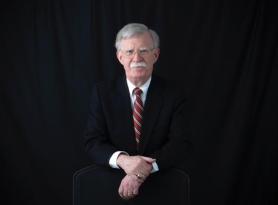
John Bolton, former U.S. national security adviser and ambassador to the United Nations. Photo by Philip Bermingham. Courtesy of John Bolton SEOUL, November 17 (AJP) - The upcoming consequential summit of Donald Trump, Xi Jinping and Vladimir Putin is likely to produce little beyond a "big photo-op", and Trump may yet seek a tete-a-tete with Kim Jong-un in China to steal the show, according to his former security adviser John Bolton. “I don’t rule out something possibly in China later this week,” said Bolton, who served as the National Security Adviser for Trump in his first presidency, in a video interview with AJP ahead of the three-way talks in Shenzhen on the sidelines of the APEC summit. "It appears unlikely. (But) It appeared unlikely they would meet at the DMZ in 2019, but it happened nonetheless.” “What Trump wants is publicity,” he said. “I think Trump wants a big photo opportunity like he wanted photo opportunities with Kim Jong-un.” If Kim does agree to come, Bolton said, he would be seeking gains for himself rather than acting out of goodwill, because the meeting itself “would be another indication of the legitimacy of his regime.” Trump and Putin have both signaled openness to Kim joining them if Xi extends an invitation. Pyongyang has yet to respond. Bolton expects little of substance from the trilateral, given an agenda that could run from Ukraine and North Korea to the espionage allegations now shaking Nvidia. Espionage on the table Bolton said Trump should raise Chinese espionage with Xi. The issue has drawn attention through allegations surrounding Alice Huang, a former executive of Megaspeed, a Singapore-based buyer of advanced Nvidia chips that has been investigated over suspected diversion of those chips to China. Huang has been reported to have had a relationship with Nvidia co-founder Jensen Huang, who stepped down as chief executive last week. “I suspect that the problem of Chinese economic espionage is much greater than we expected,” Bolton said. “China has built a business model on stealing foreign intellectual property from countries all over the world,” he said, adding that “what China is doing is a big threat not just to the United States but to all of its friends and partners as well.” Megaspeed has disputed allegations about its operations and launched an internal investigation. Beijing has rejected the espionage allegations as groundless. No new prize in Pyongyang Bolton doubted that another Trump–Kim meeting would advance denuclearization. He saw no sign that North Korea was prepared to give up its arsenal and argued that Trump’s appetite for attention could produce another encounter without meaningful concessions. Trump and Kim met in Singapore in 2018, in Hanoi in February 2019 and at the Demilitarized Zone dividing the Korean Peninsula in June 2019. In Bolton’s view, those meetings have left Trump searching for a new setting that could generate comparable attention. “The only thing left to make new news is for Trump to go to Pyongyang, which I think would be a mistake,” he said. He was equally skeptical that South Korean President Lee Jae Myung could reshape the diplomatic landscape with a dramatic initiative. Asked about a possible diplomatic “Hail Mary,” a long-shot attempt to break out of Seoul’s limited room for maneuver, the American football enthusiast offered little encouragement. “It is unlikely that any kind of Hail Mary pass that he might want to throw would be successful,” he said. “Given the nature of his administration, he might rely too much on North Korea being a good-faith negotiator, which I don’t think it is.” Bolton argued that years of insufficient pressure had allowed North Korea to build up its nuclear and ballistic missile capabilities, leaving little reason to expect Kim to reverse course on his own. His criticism of Trump’s diplomacy stopped short of the decision to walk away from Hanoi without a deal. Bolton defended that decision, saying the pressure to produce an agreement should never have outweighed the goal of preventing North Korea from acquiring nuclear weapons it could deliver against its targets. “Before Hanoi, Trump realized that he should not feel under pressure to make an agreement with Kim Jong-un that would not advance the goal of preventing North Korea from achieving deliverable nuclear weapons,” he said. “I think he did the right thing in Hanoi by rejecting the proposal that Kim Jong-un put forward.” The failure, he argued, lay in the sanctions campaign around the talks. “The problem was that all the countries that were concerned about North Korea’s nuclear capability — the U.S., South Korea and Japan — did not really apply maximum pressure in the sanctions campaign,” he said. He suspected that Russian and Chinese assistance to Pyongyang had grown in recent years, making it harder to constrain its weapons programs. Bolton rejected the idea that Washington should accept verifiable limits on missiles capable of reaching the U.S. mainland while leaving intact the nuclear forces that threaten South Korea and Japan. Such a deal, he argued, would serve Pyongyang’s aim of splitting the United States from its allies. “Trump made a mistake in 2019 by downplaying North Korean short-range missile testing even though it was in violation of U.N. Security Council sanctions,” he said. “You can learn a lot from a short-range missile test that you can use for longer-range missiles as well.” John Bolton, former U.S. national security adviser and ambassador to the United Nations, speaks during a video interview with AJP on Nov. 16, 2026. Screenshot from AJP’s Zoom interview Kim between Beijing and Moscow Bolton did not expect an early end to Russia’s war in Ukraine to reduce Kim’s value to Moscow. “I don’t see an end to the war in Ukraine in the near term,” he said, arguing that Russia remained determined to keep fighting. “Kim Jong-un has, unfortunately, done a good job of replicating what his grandfather was able to do to position the North between China and Russia.” The decline of Russian influence after the Soviet collapse had left Pyongyang dependent on China as its main external backer, he said. Renewed ties with Moscow have restored Kim’s ability to play the two powers against each other, creating “a big advantage for Kim and a big problem for the rest of us.” “I’m not sure there’s much to obtain in negotiations,” he said. “I think more pressure on the North is necessary.” He argued that Kim’s turn toward Russia was partly an effort to extract more economic aid from both Moscow and Beijing. An earlier chance to work with China to pressure Pyongyang had passed, he said, but North Korea’s economic weakness at home remained potential leverage. “We should not ignore the reality that the economic situation in North Korea for the overwhelming majority of its citizens remains very grim,” he said. “That could be the leverage to bring down the Kim Jong-un regime, which I think should be the ultimate objective, because the reunification of the Korean Peninsula is the best outcome. That is unlikely to happen through the use of military force but could happen through continued economic pressure. I think it’s still a realistic objective.” Nuclear deterrence in a three-power world On deterrence, Bolton reaffirmed his support for redeploying U.S. tactical nuclear weapons to South Korea. He argued that their presence would warn Pyongyang, Beijing and Moscow against trying to change the regional status quo by force. Such a deployment, he said, would force Kim to weigh the possibility of a nuclear response, including against his command post, if he launched a conventional campaign to reunify the peninsula under North Korean rule. “It would solidify deterrence,” Bolton said. “Obviously, the South Korean government has to agree with that. I think, from the point of view of strategic defense analysis, there is a very strong argument for it.” He argued that China’s expanding nuclear arsenal posed a strategic challenge that Washington and its allies could not afford to leave unresolved. Cold War thinking on deterrence, warhead numbers and arms control rested on a rivalry between two nuclear powers, he said. China’s rise is creating a three-power nuclear environment in which those assumptions no longer hold. Bolton expected Beijing to resist any talks that could constrain its push to bring its nuclear capabilities closer to those of the United States and Russia. Asked what the 1956 Suez crisis, which he studied as an undergraduate at Yale, could teach leaders heading into talks with Beijing and Moscow, Bolton returned to alliance solidarity. In his view, the split between the Eisenhower administration and Britain, France and Israel weakened Western influence and opened the door for the Soviet Union. “The lesson of Suez for the U.S. is: Stick with your allies.”
-
APEC Leaders' Group Photo Highlights: What Will They Wear?
One of the anticipated scenes at this year's Asia-Pacific Economic Cooperation (APEC) summit in Shenzhen is the group photo of the leaders from various countries.At APEC summits, it has become customary for leaders to wear outfits that reflect the ethnic and cultural characteristics of the host country during the group photo. For the host nation, this is an opportunity to showcase its culture and traditions while promoting its fashion and manufacturing industries.In the past, China showcased the modified 'Tang suit' at the 2001 Shanghai APEC and the 'New Zhongzhuang,' which prominently featured traditional silk Songjin, at the 2014 Beijing APEC. The New Zhongzhuang is a modern reinterpretation of traditional Chinese clothing. Both outfits share the commonality of combining traditional Chinese culture with Western modern design.Shenzhen is a city known for its competitive edge in high technology and a robust clothing industry supply chain. There is keen interest in whether this year's APEC will feature outfits that blend Chinese and Western styles, similar to those from Shanghai and Beijing, or if it will introduce a new Chinese style that combines 'technology and fashion' while highlighting regional characteristics.Shenzhen has established a strong fashion industry ecosystem in China, with numerous clothing brands and designers. In fact, among the 11 designers who participated in the costume design for the 2014 Beijing APEC, two were from Shenzhen.According to the People's Daily, as of 2023, Shenzhen has over 2,500 clothing brand companies, with more than 90% being proprietary brands. This number is the highest among cities in China, and Shenzhen brands account for over 60% of the share in major department stores across the country.From a traditional cultural perspective, Guangdong Province, where Shenzhen is located, is home to the national intangible cultural heritage of traditional silk 'Xiangyunsha.' Also known as 'soft gold,' Xiangyunsha is silk dyed with the juice of the vine plant Shulang, which undergoes a complex process of secondary dyeing with mud and sun drying. It is characterized by its lightweight and breathable qualities, providing a cool and comfortable wearing experience.Recently, there has been a trend in China combining traditional culture with modern design known as 'Guochao.' Attention is focused on whether the Shenzhen APEC will showcase outfits that embody China's cultural identity while integrating advanced technology and modern sensibilities.The tradition of APEC leaders wearing traditional attire for group photos began at the 1993 meeting in Seattle, USA. This became an official tradition after then-President Bill Clinton gifted leather flight jackets to the leaders.At the 2005 Busan APEC, leaders also wore traditional Korean attire, the durumagi, for their group photo. However, in the 2010s, some meetings saw leaders opting for suits or scarves instead of traditional attire due to concerns about cultural differences and the perception of the event as formal. At last year's Gyeongju APEC, President Lee Jae-myung and leaders from 21 countries posed for a group photo wearing jade-colored shawls.* This article has been translated by AI.