

[LG Mobile Global YouTube channel]
SEOUL -- In a video clip that invites media to the launch of its new smartphone at next month's Mobile World Congress (MWC) in Barcelona, LG Electronics implied a new interface that allows users to operate the phone without touching the screen. The invitation sparked speculation that LG's new G8 smartphone would be unveiled in Spain.
The 10-second video reveals hidden characters only by hand gestures, and the paper placed on the floor moves. A message reading "Good-bye Touch" appears with a hand making sweeping motions above a white piece of paper, followed by date and place.
According to leaked information, G8 is likely to come with dual front and triple rear cameras and a droplet notch. The notch design display, which has an island on the top edge to house a speaker, selfie cameras and sensors, has become the norm for smartphones, but some makers have adopted the droplet notch which only houses a single-lens camera to minimize the black island.
G8 is expected to feature a 4K display. LG has a lineup of undisclosed smartphones using crystal sound and other new technologies such as a dual connected display screen. LG Display, a leading flat panel maker, has developed crystal sound technology that uses the display panel in a similar way to that of a speaker's diaphragm to create sound with a magnet and a coil.

Copyright ⓒ Aju Press All rights reserved.
Related News
-
 Samsung joins the AI eyewear race
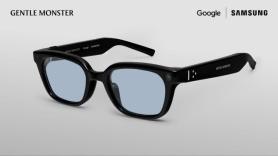
Samsung Electronics' Intelligent Eyewear/ Courtesy of Samsung Electronics SEOUL, November 13 (AJP) - Smart glasses are drawing scrutiny over cheating risks in exam halls while emerging as a new battleground for consumer technology. Samsung Electronics is joining the race with AI-powered eyewear developed alongside Google, Gentle Monster and Warby Parker. The South Korean tech giant unveiled 30 models in New York on Thursday, betting that Google's Gemini AI assistant and its Galaxy ecosystem can help turn everyday eyewear into a hands-free computing device. Unlike conventional smart glasses focused on photography and audio, Samsung's new eyewear is designed to serve as a hands-free AI assistant, allowing users to ask questions about their surroundings, translate foreign-language menus and receive navigation guidance through Google's Gemini. The glasses can also photograph meeting notes on a whiteboard and generate summaries that are saved directly to Samsung Notes on a connected Galaxy smartphone. The launch underscores Samsung's push to extend its Galaxy ecosystem into wearable AI devices, using a split-computing architecture that shares processing tasks between the glasses and a connected phone. Weighing approximately 41 grams, the eyewear features a 12-megapixel camera, two open-ear speakers and four microphones, powered by Qualcomm's Snapdragon AR1 Gen 1 platform. Samsung claims up to nine hours of battery life on a single charge and up to 72 hours with the charging case. Samsung Electronics' Intelligent Eyewear/ Courtesy of Samsung Electronics The company has also introduced privacy safeguards, including an external recording indicator that automatically disables the camera if obstructed. In South Korea, only the Gentle Monster collection will be available at launch, priced between 650,000 won and 700,000 won ($440–$475). Both brands' collections will be sold in the United States. Preorders began Thursday, with the glasses scheduled to reach stores on Dec. 10.
-
 Solus Advanced Materials Reports 3rd Quarter Operating Loss of 30.1 Billion Won
Solus Advanced Materials reported an increase in revenue for the third quarter of this year, driven by growth in its battery foil and organic light-emitting diode (OLED) businesses, but it continued to face operating losses.On November 12, Solus Advanced Materials announced that its consolidated revenue for the third quarter reached 125.5 billion won, with an operating loss of 30.1 billion won. Revenue increased by 83.1% compared to the same period last year (68.5 billion won), but the operating loss widened from 26 billion won in the previous year.By business segment, battery foil revenue surged to 91.6 billion won, marking a 151.6% increase from 36.4 billion won in the same quarter last year, achieving the highest quarterly revenue to date. This growth was driven by increased demand from global battery and electric vehicle customers.However, energy costs rose significantly, with the average electricity price on the Hungarian Power Exchange (HUDEX) increasing from 109.2 euros per megawatt-hour in the second quarter to 151.1 euros in the third quarter, a rise of about 38%. Increased costs, including depreciation, also impacted profitability.The OLED business also achieved record quarterly revenue, with third-quarter sales reaching 33.9 billion won, up 5.6% year-on-year and 26.0% from the previous quarter. The expansion of R-prime supply for mobile devices and increased HBL supply due to the resumption of smartphone production by Chinese clients were key factors.Solus Advanced Materials aims to maintain its overall revenue growth while accelerating profitability improvements in its battery foil business. To this end, the company is negotiating price increases with most of its battery foil customers. Agreements have already been reached with some major clients, and the increased prices are expected to be reflected in the fourth-quarter results. Negotiations with remaining customers are ongoing, with plans for further gradual price increases next year.Additionally, Solus Advanced Materials anticipates that changes in market conditions, particularly in Europe and North America, will present new growth opportunities for its battery foil business.In Europe, the European Commission is strengthening its 'Made in Europe' policy through the Industrial Acceleration Act (IAA), which encourages local production and supply chain development. This policy direction is expected to enhance the competitiveness of companies with local production capabilities.In the North American market, the growing demand for energy storage systems (ESS) is emerging as a new growth opportunity. As the battery market expands from electric vehicles to ESS due to increased energy storage demand and infrastructure development, the company plans to actively respond to changes in customer demand.CEO Kwak Geun-man stated, "We plan to complete negotiations for price increases with our battery foil customers without any issues and respond flexibly to market changes, such as the growing demand for electric vehicles in Europe and ESS in North America. We will focus on continuously improving profitability through sequential price increases next year and achieving a turnaround to profitability."* This article has been translated by AI.
-
Myeongdong Vendors Tackle Trash Problem with 'K-Hospitality'
Myeongdong street vendors in Seoul are taking the initiative to collect empty drink cups and food packaging from foreign tourists. As international visitors return post-COVID-19, the streets have become cluttered with trash. The Seoul Tourism Foundation and the Namdaemun Police are expanding this voluntary effort into a campaign aimed at addressing the waste issue through hospitality.◆ Myeongdong Sees Surge in Tourists, Trash Concerns GrowAccording to estimates based on mobile data from the Korea Tourism Data Lab, the number of foreign tourists in Myeongdong plummeted from 743,914 in 2020 to just 40,960 in 2021. However, the numbers rebounded sharply, with over 9.77 million foreign visitors recorded in 2023 and 14.3 million last year. By September of this year, approximately 12.9 million tourists had already visited, surpassing 90% of last year's total.As tourist numbers surged, so did complaints. The Seoul Tourism Complaint Center received 644 complaints in 2023, more than triple the 208 received in the previous year. By October of this year, 788 complaints had already been filed, exceeding last year's total.In Myeongdong, trash has become a significant issue. Among the complaints received by the Namdaemun Police through banners and posters, 31.6% were related to street vendors in Myeongdong. Requests for stricter enforcement against littering and improper waste disposal were common, similar to the 30% of complaints related to homelessness in the Seoul Station area.The problem of waste due to overtourism is not unique to Myeongdong; it is a common concern in major tourist destinations worldwide. In 2018, Florence, Italy, introduced fines of up to 500 euros for eating in public areas due to littering issues. Thailand banned smoking and littering on 24 popular beaches, imposing fines of up to 100,000 baht or a year in prison for violations. Similarly, Shibuya in Tokyo began imposing a 2,000 yen fine for littering in June.◆ Vendors Initiate 'Clean Myeongdong Campaign' with Support from AuthoritiesUnlike overseas examples that rely on fines and regulations, Myeongdong has sought solutions through hospitality and cooperation. The 'Clean Myeongdong Campaign' is a joint effort between the Seoul Tourism Foundation and the Namdaemun Police, working alongside street vendors. While it may seem that installing public trash bins would solve the problem, past experiences showed that large bins quickly overflowed, causing odors and aesthetic issues.The Namdaemun Police's Crime Prevention Team discovered the vendors' voluntary efforts to collect trash from tourists during a security needs assessment earlier this year. Since March, they have initiated a trash collection campaign. To enhance publicity, the police collaborated with the Seoul Tourism Foundation, which was already focused on improving the reception of foreign tourists. The two organizations signed a memorandum of understanding on October 20 to expand the campaign both online and offline.The Seoul Tourism Foundation, in collaboration with the city, created new multilingual signs distributed to 346 street vendors in Myeongdong. The signs feature the phrase 'WE'LL TAKE YOUR TRASH' prominently, along with an illustration of a pink trash bin, making them easily visible to foreign visitors. Vendors displaying these signs will accept trash from tourists, regardless of where the items were purchased.The campaign is also promoted at six tourist information centers and 15 tourist kiosks operated by the Seoul Tourism Foundation. Online, they partnered with creator HelpYoon to document the campaign. A video showcasing tourists returning empty cups to vendors, who gladly accept them, was released earlier this month on VisitSeoulTV and HelpYoon's channel, garnering 2.85 million views within a day.Thanks to the efforts of the vendors, the campaign has gained traction. Vendors have committed to accepting all trash from their stalls. Han Du-hee, who has operated a stall in Myeongdong for 18 years, stated, "All vendors believe that customer satisfaction is vital for our business. That's why we clean up instead of relying on trash bins. We even cover the cost of the recycling bags, which amount to about 1,250 won per day, and accept trash from other stalls as well."Another vendor, Park Jeong-soo, added, "We approach tourists with a welcoming attitude and offer to take their trash. Thanks to the campaign signs, foreign tourists who were hesitant to dispose of their trash now feel comfortable handing it over to us. By removing large trash bins and having vendors collect waste directly, Myeongdong has become noticeably cleaner."On a busy Thursday evening, the streets of Myeongdong, filled with foreign tourists, were nearly free of litter. Tourists expressed their appreciation for the campaign. Elisa from France remarked, "I saw the campaign on social media. It's a fantastic idea. Over time, as this culture becomes established, foreign tourists will feel comfortable asking vendors where to dispose of their trash."Weikai from Malaysia noted, "I've visited tourist spots in other countries, but I've never seen this kind of culture. I think it's a great campaign. It's nice to have someone take care of the trash for us."◆ Focus on Readiness Over Visitor NumbersThe Ministry of Culture, Sports and Tourism estimates that the number of foreign tourists visiting South Korea has surpassed last year's record of 18.94 million as of October 27. With the anticipated milestone of 20 million visitors approaching, tourism policies are shifting focus from sheer numbers to safety, cleanliness, and convenience.Kim Byeong-min, the newly appointed head of the Seoul Tourism Foundation, emphasized the importance of 'safety and cleanliness' as prerequisites for enhancing nighttime tourism. The foundation's support for this campaign and the expansion of a multilingual reporting system align with this goal.Kim stated, "The Clean Myeongdong Campaign is an exemplary case of public-private cooperation that addresses both tourist convenience and local residents' everyday inconveniences. If this initiative spreads to other street vendors and night markets in Seoul and becomes a cultural norm, it could significantly enhance the city's competitiveness."The Namdaemun Police are also focusing on ensuring safety, a key aspect of readiness. As tourist numbers increase, misunderstandings arising from language barriers, such as billing errors, often lead to theft or loss reports. To address this, the police developed a multilingual reporting QR code for tourists who may not know the emergency number or have difficulty communicating. Scanning the QR code automatically recognizes the smartphone's language settings and provides instructions for reporting emergencies and handling lost items in eight languages.The Seoul Tourism Foundation plans to include this QR code in maps designed for foreign tourists, multilingual tourism brochures, and promotional videos to enhance safety measures.Namdaemun Police Chief Ham Gyeong-cheol stated, "We focused on improving access to security services in Myeongdong, a must-visit destination for foreign tourists seeking K-beauty, K-food, and K-fashion. We will continue to work closely with local vendors and relevant organizations to maintain the cleanliness and safety of Myeongdong."* This article has been translated by AI.