
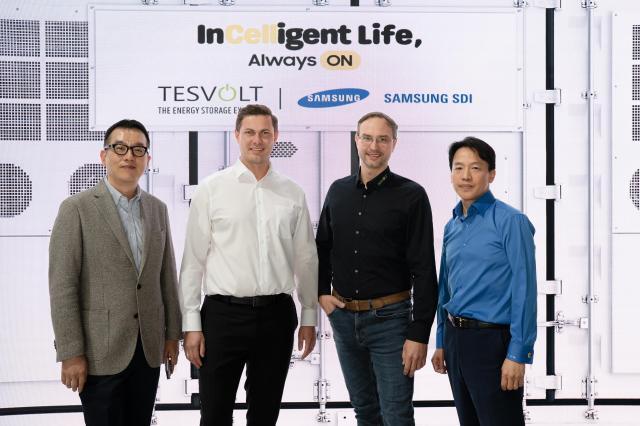
While the company did not disclose the value or exact timing of the deal, a Samsung SDI spokesperson confirmed that executives from both firms met on May 8 regarding the agreement. The contract will see Samsung SDI deliver its flagship battery solution, the Samsung Battery Box, to Tesvolt by the end of June.
The deal builds on a longstanding partnership between the two companies, which began in 2017. According to Samsung SDI, the agreement could serve as a springboard for deeper collaboration, with further supply negotiations and joint marketing efforts planned for upcoming energy storage projects.
Samsung SDI also noted during its first-quarter earnings call that it has already secured orders accounting for approximately 90 percent of its planned energy storage system battery production for 2025.

Kim Dong-young
Kim Dong-young is a bilingual journalist at AJU Press (AJP), covering Korean tech, energy, and bio/pharma.
He reports from the field at events like CES and APEC, runs AJP's YouTube channels,
and is pursuing a master's at Sogang's MOT program.
Copyright ⓒ Aju Press All rights reserved.
Related News
-
 Energy storage setback deepens woes for South Korean battery makers
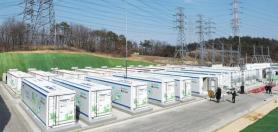
ESS facility in Gyeongsan, North Gyeongsang Province/ Courtesy of the Korea Electric Power Corporation SEOUL, April 2 (AJP) - South Korean battery manufacturers are confronting a sharp downturn in their energy storage system (ESS) divisions, compounding the challenges of an electric vehicle market slowdown, industry analysts said Wednesday. LG Energy Solution is projected to see ESS revenue fall by more than 40 percent from the previous quarter, with estimates placing the figure between 353 billion and 363 billion won ($240 million to $247 million), according to multiple securities firms. “The ESS sector anticipates a significant revenue decline and a shift to operating losses due to seasonal factors,” said Lee Jin-myung, an analyst at Shinhan Securities. Samsung SDI, another major manufacturer, is facing similar headwinds. Analysts forecast a roughly 31 percent decline in its ESS division revenue quarter-on-quarter, bringing it to approximately 500 billion won. Once considered a stabilizing force amid the volatile electric vehicle battery market, ESS sales are now under pressure. High battery costs, inadequate charging infrastructure, and diminishing government subsidies have tempered consumer enthusiasm for electric vehicles, exacerbating financial strains across the industry. The convergence of these struggles has cast a shadow over the first-quarter earnings outlook. LG Energy Solution’s operating profit is projected to plunge 75 percent year-on-year to 39.5 billion won, while Samsung SDI is expected to post an operating loss of 328.7 billion won. In response, battery makers are shifting their focus to large-scale projects with steadier demand and accelerating production in North America, where energy storage needs are surging. LG Energy Solution plans to begin production of lithium iron phosphate (LFP) batteries for ESS applications at its Holland, Michigan, facility this year. Samsung SDI, meanwhile, is exploring U.S. manufacturing options to expand its presence. SK On, another South Korean battery maker, is also moving into the ESS market. Company President Lee Seok-hee recently told shareholders that SK On aims to secure business results in the ESS market by the end of the year and pursue U.S. market entry opportunities.
-
 US bill targeting Chinese batteries may open opportunities for Korean firms
BYD, CATL logos/ Reuters-Yonhap SEOUL, March 12 (AJP) - The U.S. House of Representatives on Monday approved the "Reducing Dependency on Foreign Adversary Batteries Act," marking a significant shift in U.S. policy by establishing the first non-tariff barrier against Chinese battery manufacturers. The legislation, which now heads to the Senate, would prohibit the use of batteries from six leading Chinese companies in projects involving the Department of Homeland Security (DHS) or funded by the agency. The bill specifically targets CATL, BYD, Envision Energy, EVE, Hithium Energy, and Gotion High-Tech. If enacted, the law would take effect in October 2028, barring these companies from DHS-related projects and closing potential loopholes that might allow circumvention through third countries. Given bipartisan support in the House and growing momentum for stronger measures against China, the bill is widely expected to pass the Senate. The United States already imposes a 45 percent tariff on Chinese batteries and bans electric vehicle imports from China. Some Chinese firms have sought to bypass tariffs by establishing local production facilities for energy storage systems (ESS) and other battery applications. However, this legislation could neutralize those efforts by specifically prohibiting batteries from the named companies. While the regulatory authority falls under DHS rather than the Department of Energy, which oversees most battery projects, this marks the first direct U.S. government restriction on Chinese battery purchases and could pave the way for further non-tariff barriers. "If the U.S. strengthens non-tariff barriers against Chinese batteries, private American companies will inevitably shift away from Chinese products to mitigate risks," said a source from South Korea’s battery industry. The decision is expected to have immediate implications for the U.S. energy storage market, potentially redirecting orders to South Korean manufacturers such as LG Energy Solution, Samsung SDI, and SK On, as well as Japan’s Panasonic. LG Energy Solution has already begun mass production of lithium iron phosphate (LFP) batteries for ESS, while Samsung SDI and SK On are preparing to launch their own LFP production lines.
-
 Korea eyes LMR batteries for EVs to bridge gap between range, affordability
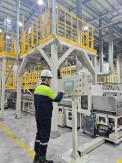
POSCO Future M technician tests a lithium manganese-rich (LMR) battery at a plant in Sejong, May 27, 2025. Yonhap SEOUL, June 02 (AJP) - South Korea’s battery manufacturers are fast-tracking efforts to commercialize lithium manganese-rich (LMR) batteries, a next-generation chemistry that industry leaders see as a crucial middle ground between cost-efficiency and performance in electric vehicle (EV) technology. The push marks a strategic pivot for an industry long dominated by two competing battery types: nickel-cobalt-manganese (NCM) batteries, prized for their high energy density but saddled with soaring material costs, and lithium iron phosphate (LFP) batteries, favored for affordability and safety yet constrained by lower energy output. For years, South Korean companies such as LG Energy Solution and Samsung SDI have focused on high-nickel NCM and its aluminum-infused variant, NCMA, which supply premium EVs with extended range and rapid charging capabilities. Meanwhile, Chinese manufacturers — led by CATL and BYD — have consolidated their lead in LFP technology, which now powers a significant portion of global EV fleets. But as automakers face price volatility in raw materials and seek more diversified, geopolitically stable supply chains, Korean firms are charting a third path. The LMR battery, which incorporates high levels of manganese — up to 65 percent — while minimizing or eliminating cobalt and significantly reducing nickel content, is emerging as a promising candidate. "LMR technology allows us to maintain competitive energy performance while sharply lowering dependence on high-cost materials like cobalt," said an executive at LG Energy Solution, which holds more than 200 patents related to the chemistry. Energy density has long defined battery competitiveness. LFP batteries, while safe and inexpensive, generally offer about 160 watt-hours per kilogram (Wh/kg), limiting their appeal in range-sensitive vehicle segments. High-nickel NCM and NCMA cells can exceed 250 Wh/kg but come at a material premium, often relying on cobalt sourced from politically sensitive regions. LMR batteries aim to occupy the middle ground, offering energy densities of roughly 210–220 Wh/kg — enough to support long-range EVs — while slashing reliance on cobalt entirely and reducing nickel content to around 35 percent, compared to the 85 percent in many current NCMA cells. The concept is not new. Researchers first explored LMR chemistries in the 1990s, but early designs were plagued by technical hurdles: voltage fade, cathode degradation, and shortened cycle life. Recent advances in particle engineering, doping agents, and protective coatings have revived commercial interest. General Motors, which has collaborated with LG Energy Solution through its Ultium Cells joint venture in the United States, has tested LMR battery prototypes across 1.4 million miles of simulated driving. The company says the results show cycle life on par with today’s high-performance batteries. GM plans to adopt prismatic cell formats for its LMR packs, a shift that could streamline battery architecture and reduce component count by up to 50 percent. LG Energy Solution is targeting 2028 for mass production, with early deployment expected in large-format vehicles such as the Chevrolet Silverado EV and Cadillac Escalade IQ — both projected to achieve more than 400 miles (644 kilometers) of range on a single charge. Other Korean players are moving in parallel. POSCO Future M has completed pilot-scale production of LMR cathode materials at its Sejong R&D facility and aims to begin full commercial output by the end of 2025. The company plans to offer a product line tailored for both entry-level and premium EV platforms. As global automakers recalibrate in response to tightening emissions rules, fluctuating commodity markets, and growing demand for energy security, South Korea’s battery industry appears to be embracing a dual-track strategy: maintaining high-nickel NCMA for luxury and high-performance segments, while positioning LMR as a flexible, lower-cost alternative that may help democratize long-range EVs. If successful, the effort could challenge China’s dominance in affordable battery technologies — and reshape the global EV battery landscape.