

The United States is investigating suspected cyberattacks against as many as 50 vessels carrying oil, gas and other hazardous cargo, The Wall Street Journal reported Monday. U.S. officials suspect possible Iranian involvement, while also considering Russia as a potential culprit.
Some vessels received bomb threats, and U.S. Coast Guard cybersecurity teams were dispatched to at least four ships approaching American ports. Attribution remains unresolved: a Trump administration official said investigators had found no evidence linking Iran to the attacks.
The incidents add to a sharp increase in reported maritime cyber threats.
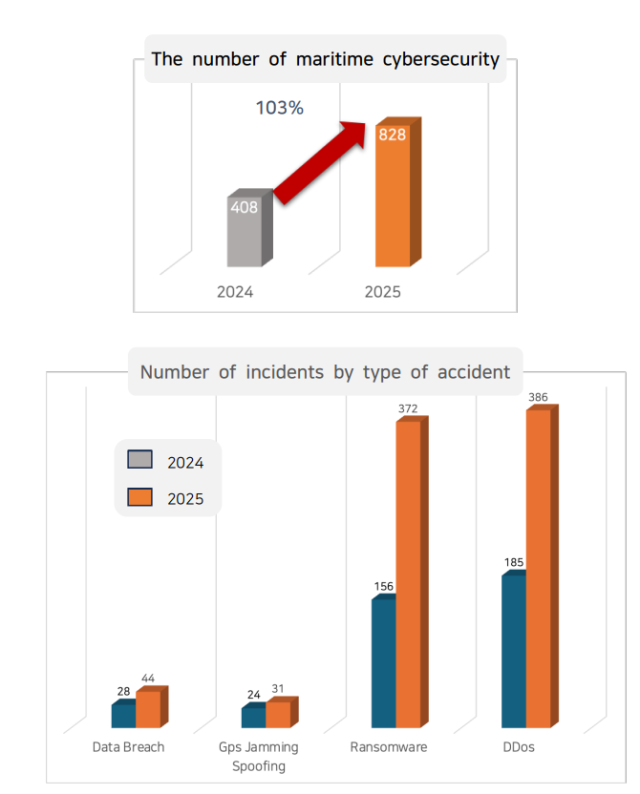
Israeli cybersecurity company Cydome separately reported a 150 percent increase in incidents involving maritime operational technology — the systems that control or monitor physical equipment — in 2025.
Electronic interference has also intensified around the Strait of Hormuz, a critical passage for global energy shipments.
According to Lloyd’s List Intelligence, 2,694 vessels experienced GPS interference in the Persian Gulf and Gulf of Oman during the Iran war’s first eight days, from Feb. 28 to March 7. It recorded 3,719 interference incidents, with the number of vessels affected daily rising from 283 to 559 over that period.
Incorrect positioning information could lead crews off course or into another country’s territorial waters. A vessel’s Automatic Identification System, which broadcasts its identity and location, can also be manipulated or disrupted, creating confusion over ship movements.
The risks extend beyond navigation.
“Ships are increasingly connected to the outside world through satellite communications and other wireless networks,” said Kim Ho-won, a professor at Pusan National University’s School of Computer Science and Engineering.
“As those connections expand, the opportunities for cyberattacks also increase.”
Attackers could manipulate onboard monitoring systems, potentially increasing fuel consumption, Kim said. More serious interference could affect a vessel’s operation.
“If communication systems or sensor inputs are disrupted, the consequences can affect a ship's actual movement,” he said. “Interference with engines or other onboard systems could ultimately create physical safety risks.”
The exposure matters particularly to South Korea, a major shipbuilding nation whose economy depends heavily on maritime trade. Ships carried 99.7 percent of its import and export cargo by weight in 2023, according to the Ministry of Oceans and Fisheries.
Yet the country’s shipbuilding strength has not necessarily translated into equivalent capabilities in securing onboard electronics, Kim said.
Korean shipyards have traditionally focused on vessel construction, while established European manufacturers supply many navigation, automation and control systems. Shipowners often specify the equipment, leaving yards to integrate products from different suppliers.
Norway’s Kongsberg Maritime, for example, supplies systems ranging from integrated bridges and engine monitoring to digital fleet management, with maintenance and technical support throughout a vessel’s operating life. It has also developed cybersecurity protections and tested products against international cyber resilience requirements.

“Cybersecurity needs to be strengthened not only on ships but also at ports,” Kim said. “Ports operate a wide range of IT and operational systems, including cranes, and those systems also need protection.”
Modern ports rely on interconnected networks to coordinate cargo movements and automated equipment. An attack could interrupt loading and unloading even when the vessels themselves remain operational.
South Korea has been strengthening its defenses through a dedicated cybersecurity center under the Ministry of Oceans and Fisheries. In July, the ministry introduced specialized training with Korea Maritime and Ocean University, including simulated attacks on electronic navigation systems.
“Cybersecurity capabilities among maritime workers are no longer optional but essential,” Lee Min-jung, acting director-general of the ministry’s Maritime Safety Bureau, said at the time.
A ministry official nevertheless cautioned against assuming that hackers could readily seize control of a ship.
“Ships still rely heavily on manual controls, and autonomous navigation has yet to be widely adopted. Unlike aircraft, this makes it more difficult for hackers to take control of a vessel through cyberattacks,” the official said.
Comprehensive public data on how many existing Korean commercial vessels have adequate cybersecurity protection remains unavailable.
Maritime cybersecurity is still developing worldwide. Satellite internet and remote monitoring have connected equipment that was once relatively isolated, expanding the potential points of attack.
For shipping companies and ports, the danger need not involve a hacker taking the helm. Disrupted navigation, disabled monitoring or stalled cargo operations could be enough to interrupt trade.

Kim Hee-su
Kim Hee-su is a bilingual reporter at AJU Press, covering defense and foreign affairs. Before joining AJP in 2025, she worked at The Korea Times, where she wrote interview stories, including a profile of North Korean defector Kim Gum-hyok, and produced digital content. She also previously worked as a researcher for KBS News 9’s International News Department, supporting correspondents in 10 countries around the world. She graduated from the University of Toronto in Canada with a double major in Book and Media Studies and East Asian Studies.
Copyright ⓒ Aju Press All rights reserved.
Related News
-
 Nikke falls latest prey to cyberattacks on Korean entities
Graphics by Kim Dong-young/ Courtesy of Shift Up SEOUL, November 05 (AJP) - Nikke is a shooter in which android heroines battle invading machines to save humanity. But their guns were of no use against the hackers who slipped through the game's PC launcher this fall, joining a cyberattack barrage hitting South Korean businesses and institutions from banks to universities. The PC launcher for "Goddess of Victory: Nikke," one of South Korea's biggest game exports, became a gateway for malicious software that could put players' saved passwords, cryptocurrency wallets and work credentials within an attacker's reach. Four script files downloaded by the launcher from publisher Level Infinite's content delivery network (CDN) were altered on Sept. 27. The compromised files remained in circulation for more than five weeks, although when they began delivering malware is disputed. Level Infinite's timeline puts the start of malware distribution at Oct. 30. Independent researcher MotherSphere's analysis cites evidence of the remote-access agent running as early as Oct. 23. The distinction matters: the period during which files were compromised does not establish that every player was exposed to active malware throughout that time. The incident affected the PC launcher, not the mobile version, according to the publisher. Nikke, in which players command android heroines against a machine invasion, has drawn more than 45 million downloads since its 2022 launch, combining accessible controls, a sprawling story and anime-style characters. The altered files could install a remote-access tool called K2F capable of collecting browser passwords, session cookies, developer credentials and data from 28 browser cryptocurrency wallet extensions, according to MotherSphere's analysis published on GitHub. Edited and compiled by AJP. Graphics AI Assisted Its reach extended beyond game accounts. The tool could execute commands, read files and take screenshots, potentially exposing information stored elsewhere on an infected computer. "Once again, we offer our deepest apologies for the distress we have caused," Kim Hyung-tae, chief executive of developer Shift Up, said in a post on X. Neither Shift Up nor Level Infinite, a Tencent Holdings unit, has disclosed how many PCs were infected or whether cryptocurrency was stolen. "Whether you play a game, shop online or send an email, once your PC is taken over, you have to assume everything inside it is taken over," said Park Choon-sik, a professor of information security at Seoul Women's University. Park questioned whether accountability for unsafe software had kept pace with its potential to cause harm. "Have you ever seen anyone get a recall for a software, like PC game?" he said. Players sounded the public alarm before the publisher did. Meme reusing original scene from "Goddess of Victory: Nikke"/ Captured from X user Nicotine Gaming 2's post Level Infinite replaced three compromised files shortly after 2 a.m. on Nov. 4, roughly 10 hours before its public notice, according to MotherSphere's timeline. Copies of the fourth remained on some distribution servers until around midday. Even the launcher carried a warning before the publisher's announcement. A third party registered the malware's fallback domain, insightjs.org, and used it to display a security advisory. The warning appeared inside the launcher, urging players to close it. The identity of whoever posted it remains unknown. "Game companies tend to budget only for making a game and the problems that may come up until then," said Kim Jung-tae, a professor at the School of Game at Dongyang University. "They fail to think through the live service that follows." Kim said companies needed to prepare more thoroughly for the security demands of operating games long after release. "The company has to fulfill its duty, but users need to take special care too," he said. In this case, however, the identified route of infection was the game's official launcher downloading compromised files from its publisher's distribution network. Level Infinite said it introduced a malware detection and removal feature in the PC client at 8 a.m. Thursday. It also advised affected players to change account passwords and replace exposed access keys or tokens, preferably using an unaffected device. Attacks that hijack a game's official distribution path are "a far more serious supply-chain security problem" than ordinary account hacking, said Hwang Suk-jin, a professor at Dongguk University's graduate school of international affairs and information security. Edited and compiled by AJP. Graphics AI Assisted "A gamer's PC can become a starting point for breaking into corporate systems, not just for stealing financial assets," Hwang said, calling for supply-chain security and software integrity checks on par with those in the financial sector. In Nikke, commanders hold the line against invading machines. This time, the invader came through the launcher. AJP Takeaways - Four JavaScript files that the PC launcher of Shift Up’s “Goddess of Victory: Nikke” loads from Level Infinite’s content delivery network were altered by a third party on Sept. 27, 2026, Level Infinite said on Nov. 4, 2026. - The remote-access malware could steal browser passwords, session cookies, developer keys and data from 28 browser cryptocurrency wallets. - The number of infected PCs and any financial losses have not been disclosed. - Level Infinite replaced the altered files on Nov. 4, 2026, and added a malware scanner to the Nikke PC client on Nov. 5, 2026.
-
 Cyberattacks on Public Institutions Surge 40% in Two Years
Cyberattacks targeting public institutions have surged over 40% in the past two years. The Korea Inclusive Finance Agency (KIFA) alone has faced an average of 630,000 attacks per day, raising alarms about security.On October 21, Jeong Tae-ho, a member of the National Assembly's Finance and Economy Planning Committee, analyzed data on cyberattacks against 257 public institutions. Last year, the total number of attempted cyberattacks reached 542,052,246.Yearly trends show that attacks on public institutions increased from 283,917,150 in 2021 to 325,844,954 in 2022, 383,197,091 in 2023, and 436,237,916 in 2024. From January to August this year, there were 267,348,056 attacks, continuing the upward trend.The increase in attacks last year was 24.3%, significantly higher than the 13.8% increase projected for 2024. Compared to 2023, the number of attacks has surged by 41.5% over two years.The most common type of attack last year was Distributed Denial of Service (DDoS), accounting for 75.3% of all incidents with 484,296,833 occurrences. Other types included unauthorized access attempts (65,608,382 incidents, 12.1%), information gathering attempts (23,733,492 incidents, 4.4%), and system privilege escalation attempts (540,217 incidents, 1.0%).The KIFA was the most targeted institution, receiving 1,314,170,000 attack attempts from 2021 to August this year, which represents 58.7% of the total attacks on all 257 institutions (2,238,590,000). This averages to about 630,000 attacks per day.KIFA's attack attempts increased from 156,470,000 in 2021 to 206,700,000 in 2022, 306,500,000 in 2023, and 311,180,000 in 2024, with a slight decrease last year. From January to August this year, there were 152,630,000 attempts.KIFA is responsible for policy financing for low-income and low-credit individuals, raising concerns about the potential exposure of sensitive economic information, such as income, debt, and delinquencies, in the event of a data breach.Attempts to breach KIFA's data reached 961,643 from January to August this year, the highest since 2021, accounting for 45.5% of all public institution data breach attempts (2,112,838).Despite the increasing sophistication and scale of cyberattacks, the IT infrastructure of public institutions is severely outdated. Among the 257 public institutions, 32.8% of the 45,459 computers are beyond their useful life, totaling 14,894 outdated devices.Notably, 119 out of 120 servers (99.1%) at the Korea Consumer Agency are outdated. The agency faced 5.1 million attacks last year, ranking eighth among all institutions. The Game Rating and Administration Committee, another frequent target, has 30 out of 45 servers (66.7%) and 8 out of 10 storage devices outdated.Jeong emphasized that the increasing cyberattacks on public institutions, coupled with outdated IT equipment, heighten security vulnerabilities. He urged for proactive measures to replace old equipment and strengthen security systems to protect citizens' personal information and ensure stable public services.In response to the rising incidents of data breaches and ransomware attacks in the public sector, the government announced a plan on October 1 to enhance accountability in public sector cybersecurity. Under this plan, if a significant data breach occurs in a public institution, the responsibility will extend beyond the operational staff to include senior management and heads of institutions.* This article has been translated by AI.
-
 No panic or bank runs after sweeping cyberattacks on Korean lenders
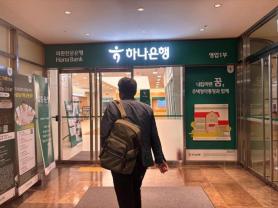
A customer enters Hana Bank's headquarters in Myeong-dong, central Seoul, on Oct. 6, 2026. AJP Ryu Yuna SEOUL, October 06 (AJP) — Business continued as usual at South Korean bank branches Tuesday after a wave of cyberattacks disclosed over the long holiday weekend. For most customers, the immediate concern was whether their money was still there. Few cared to change their passwords or other account details, let alone withdraw their money. The breaches exposed a gap between banks’ heavily guarded transaction systems and the employee and partner services supporting them. Shinhan, KB Kookmin and Hana spent nearly 124 billion won ($92 million) on cybersecurity last year, yet attackers penetrated those peripheral systems and stole personal information. Cho, a resident doctor in his 30s, checked his account after hearing the morning news. “All I needed to know was if my money was still there,” he said. Hyun, a welfare center worker in her 30s, learned of the breach through a banking app notice. “I was worried about whether my money was safe,” she said. “I'm also wondering whether I should change my banking app and account passwords.” Authorities said last Thursday that no direct financial losses had been reported, but warned that stolen information could be used in phone scams and fraudulent text messages. Timeline of cyberattacks targeting KB Kookmin Bank, Shinhan Bank and Hana Bank between Sept. 27 and Oct. 6, 2026. Source: Bank incident reports submitted to the National Assembly, Financial Services Commission (FSC), and National Office of Investigation. The banks’ main internet and mobile banking transaction systems were not breached. The attacks instead exposed customer information through loan inquiry pages, mobile employee tools and an outside sales-support system. Shinhan reported that 25,727 customers’ information was exposed. KB Kookmin reported 119 affected customers and employees, while Hana reported 89 customers. The pattern raises questions about whether banks gave these smaller systems the same scrutiny as their core banking services. Cybersecurity spending, attack detection times and data exposure at Hana Bank, KB Kookmin Bank and Shinhan Bank following the recent cyberattacks. Source: Financial Supervisory Service, bank incident reports and financial authorities. According to Financial Supervisory Service data submitted to People Power Party lawmaker Lee Yang-soo, Hana spent 53 billion won on information security in 2025, KB Kookmin 39.3 billion won and Shinhan 31.68 billion won. The figures cover personnel, infrastructure and other services, without showing how much went toward the systems that were compromised. At KB Kookmin, almost 68 hours passed between the first intrusion and the bank recognizing the incident. Attackers accessed RM Agent and PB Agent, mobile support tools for employees, from late Sept. 27 until about 6 p.m. on Sept. 29. The bank recognized the incident around 7 p.m. the following day — roughly 25 hours after the attacks had stopped. The breach affected 99 customers and 20 employees, according to material submitted to the National Assembly. Exposed information included names, mobile phone numbers and some encrypted resident-registration numbers. Shinhan detected suspicious activity about 15 hours after the first access on the evening of Sept. 28. Blocking an IP address did not end the attack: intruders continued targeting six services, switching addresses as the bank blocked them. The attackers repeatedly entered different customer numbers to locate valid records, using IP addresses traced to eight countries. The bank made its final IP block shortly after midnight on Sept. 30. Exposed data included loan application information, names, phone numbers and some identity-verification information. At Hana, attackers targeted ODS, a system employees use to process customer paperwork outside branches. The attack lasted more than 10 hours on Sept. 30, and the bank identified the leak early on Oct. 2 — about 42 hours after the intrusion began. Hana said the server was separated from its transaction systems and that no account balances or transaction histories were exposed. The breaches came despite established security programs and, in Shinhan’s case, top regulatory assessment scores. Shinhan said in its half-year report that it had received an S grade with 100 points in the Financial Services Commission’s assessment of personal credit information management and protection, its sixth consecutive year with the top grade. It also holds domestic and international information-security certifications. KB Financial Group opened a cybersecurity center in January, pairing teams that simulate attacks with teams responsible for monitoring and defense. Hana says its integrated security monitoring center operates around the clock. Regulators are now pressing firms to examine the less visible systems connecting banks with employees, contractors and loan brokers. Following an on-site investigation launched after Shinhan’s Sept. 30 report, authorities shared attacker IP addresses and methods across the sector on Oct. 2. At a wider meeting on Oct. 4, the FSC and FSS ordered checks of all internet-facing systems, particularly authentication, access controls and vulnerabilities. Firms were told to block unnecessary external connections, limit permissions for essential access and check whether support services unnecessarily stored or exposed personal credit information. Authorities also called for prompt customer notification, compensation for losses and protection against follow-on scams. Banks and card companies were given until Tuesday to complete their reviews. Securities firms, insurers, savings banks and electronic financial businesses have until Thursday. Authorities are examining whether AI helped automate the attacks, although its precise role remains unconfirmed. Regulators urged firms to strengthen AI-based defenses and adopt zero-trust security, which requires verification rather than assuming a user or device can be trusted. Police said Tuesday they had formally opened a case under the Information and Communications Network Act and assigned a 28-member cyberterror investigation team. For the time being, consumers are opting to sit tight. “I haven't changed anything since,” said Lee, a consultant in their 50s. “I just thought the banks would strengthen security.” A university student who declined to be named said he had heard little discussion of the breaches. “I don't think the leaked information is likely to be mine,” he said.