
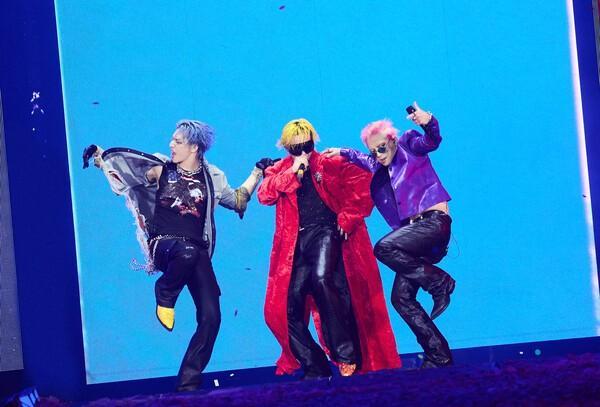
SEOUL, November 24 (AJP) - K-pop has entered a phase of stagnation amid fading enthusiasm for the all-too-familiar idol model, and labels are trying to sustain revenue by commercializing their intellectual property.
HYBE, SM Entertainment, JYP Entertainment and YG Entertainment are expanding into gaming, artificial intelligence, fashion, education and digital platforms.
The results remain uneven: merchandise and licensing are growing, while ventures further removed from the artists themselves have yet to prove their commercial value.
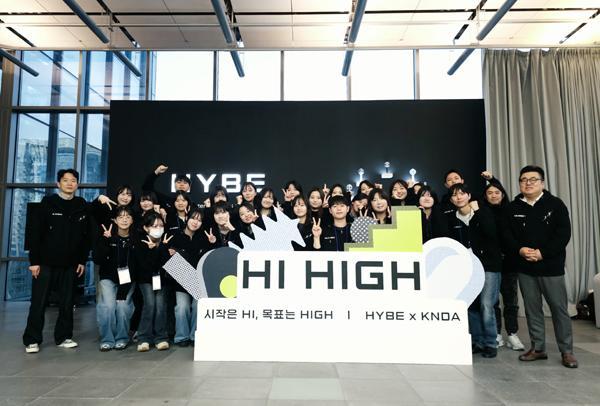
A smaller example of that expansion came Monday, when HYBE announced the completion of “HI, HIGH,” a 12-week, government-backed program that trained 28 young adults in content planning, filming and editing under the K-New Deal Academy initiative.
The broader push coincides with renewed hopes that China will ease its decade-long restrictions on Korean cultural content, opening another route to growth for entertainment companies and related industries.
The four major labels are pursuing increasingly distinct strategies.
HYBE has invested in gaming and AI-powered voice technology alongside Weverse, its global fan platform. Weverse’s monthly active users averaged 14.22 million in the third quarter, slightly below the second quarter’s record of 14.43 million.
Earlier this month, HYBE also announced a partnership with U.S. talent agency Creative Artists Agency to explore fashion, film and brand-related businesses.
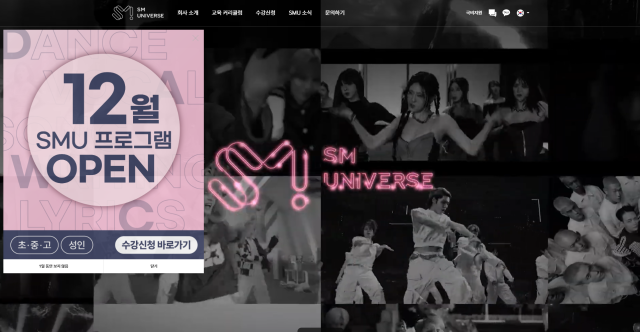
SM is expanding into education through SM UNIVERSE and content production using AI and extended reality. YG has identified character merchandise, gaming and food and beverage licensing as areas for intellectual property expansion. JYP is building its merchandise and digital fan businesses through subsidiary Blue Garage.
JYP’s SKZOO characters, modeled after members of Stray Kids, illustrate the appeal: artists’ identities can generate sales of toys, clothing and accessories even between music releases.
Recent earnings show where that strategy is paying off.
HYBE posted record third-quarter revenue of 1.53 trillion won, up 109.8 percent from a year earlier, driven by BTS’s world tour.
Concerts generated 726.8 billion won, while merchandise and licensing revenue rose 98.7 percent to a record 334.6 billion won. Together, the segments accounted for about 70 percent of sales.
SM’s merchandise and licensing revenue increased 23.5 percent to 62.1 billion won, becoming its largest revenue category even as total revenue fell 9.5 percent to 291.1 billion won. JYP’s merchandise revenue climbed 46.7 percent to 58.6 billion won as overall revenue reached a record 267.5 billion won.
Gaming has been less lucrative.
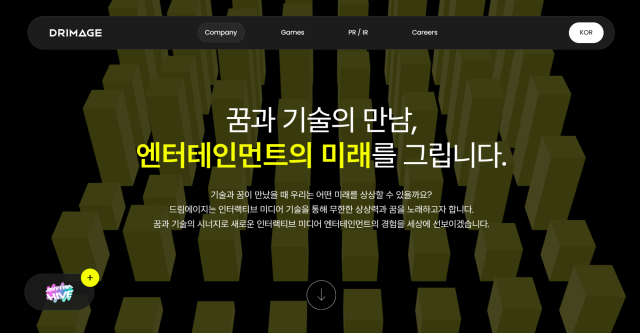
Drimage, HYBE’s gaming subsidiary formerly known as HYBE IM, recorded revenue of 44.8 billion won and a net loss of 28.6 billion won in the first nine months of 2026, extending a run of annual losses into a fifth year. It has since begun cutting staff and winding down low-earning games.
The contrast exposes the limits of diversification. An established fan base can support merchandise sales, but success in gaming requires different technology, development expertise and investment decisions.
Despite HYBE’s record earnings, Samsung Securities lowered its target price from 280,000 won to 235,000 won on Nov. 4.
“We maintained a 50 percent valuation premium over industry peers, given HYBE's potential for global expansion and the success of new IP,” said Samsung Securities analyst Choi Min-ha.
China offers another potential source of expansion, although access remains uncertain.
South Korea and China announced the substantive conclusion of their free trade agreement services and investment negotiations on Nov. 18, alongside a summit in Shenzhen. The agreement still requires legal review, formal signing and ratification.
China agreed to grant Korean films and games most-favored-nation treatment and expand joint production opportunities to dramas, animation, variety shows and documentaries. Large-scale K-pop concerts in mainland China were not explicitly included.
For Alia Zhou, a 36-year-old Beijing resident, the restrictions mean traveling abroad to see her favorite performers.
“I want to see BTS and BIGBANG perform. Since I travel to the United States frequently, I try to catch their concerts while I'm there,” Zhou told AJP. “But it's really inconvenient. I would be able to attend concerts much more frequently if they were held in mainland China.”
The labels have been preparing. HYBE established a Beijing subsidiary in 2025, while SM announced a joint venture with Tencent Music Entertainment in August to develop Chinese artists. JYP has pursued similar localization strategies.
Revenue would take longer to follow.
“Even after concerts receive approval, staging them takes time,” said SK Securities analyst Park Jun-hyung. With preparations typically beginning six months in advance, major mainland performances might not take place until 2028 even if an agreement is reached next year, he said.
Renewed cultural exchange could also benefit Korean beauty brands. Zhou regularly visits Korea to buy makeup, Beauty of Joseon skincare products and facial masks, with Olive Young becoming a favorite shopping destination.
The cosmetics industry, however, has already diversified its markets. China accounted for about 14 percent of Korean cosmetics exports in the first nine months of 2026, down from roughly half in 2021.
October exports reached a record for the month at $1.44 billion, up 57.5 percent and led by the United States. Shipments to China rose 31.6 percent, their fifth consecutive monthly increase.
Companies are rebuilding their local presence. APR’s Medicube brand was available in about 1,500 Chinese retail outlets as of November, while LG Household & Health Care and Amorepacific are restructuring their businesses there.
For K-pop labels, China could similarly broaden the customer base. The harder task remains generating earnings that depend less on the next tour or comeback of their biggest stars.

Joonha Yoo
Joonha Yoo is a bilingual journalist at AJU Press (AJP), covering music, culture, entertainment and Korea’s automotive industry.
Raised in Fort Collins, Colorado, he often writes from the scene, bringing firsthand detail to stories ranging
from BTS comeback concerts to unique cultural events that catch the world's eye.
Copyright ⓒ Aju Press All rights reserved.
Related News
-
 Trailer for upcoming K-pop film unveiled ahead of release
SEOUL, November 24 (AJP) - A trailer for American filmmaker Benson Lee's upcoming film "K-Pop: The Debut" has been unveiled ahead of its release in South Korea slated for early next year. According to the film's distributor Lotte Entertainment, the coming-of-age musical drama follows a young woman who moves to Seoul to pursue her dream of becoming a K-pop star rather than attending medical school. After struggling at a global audition, she perseveres through intensive training and fierce competition to discover her own talent. The film stars Eric Nam, Im Si-wan, Kang So-ra, Sung Joon, and Yoo Ji-tae. Its trailer features "Epiphany," a solo song by BTS member Jin, while the soundtrack will also include several popular K-pop hits. The film is scheduled to hit local theaters here sometime in February. Tags: K-pop, BTS, Benson Lee, films, global audition
-
HYBE America Film 'K-Pop Superstar' Set for February Release
The Hollywood film 'K-Pop Superstar,' centered around a global audition for a K-Pop girl group, has unveiled its first trailer.According to distributor Lotte Entertainment on the 24th, director Benson Lee's new film 'K-Pop Superstar' is confirmed to be released in domestic theaters in February next year, along with the first trailer. The story follows a girl named 'Lizzy' (played by Yoo Ji-young), who chooses music over medical school and moves to Seoul to participate in a global K-Pop audition, discovering her potential along the way.The released trailer vividly captures the intense survival competition for the birth of a K-Pop girl group. With big dreams, Lizzy faces challenges after receiving the lowest score on her first mission, but the process of finding her unique style unfolds at a fast pace through rigorous practice and competitions.The film also features a dazzling cast and cameo lineup. Yoo Ji-young, who gained attention for her voice acting as Joy in the film 'K-Pop Demon Hunters,' takes on the lead role of Lizzy, showcasing her acting, singing, and dancing skills. Joining her are actors from both Korea and the U.S., including Eric Nam, Yoo Ji-tae, Im Si-wan, Sung-jun, Kang So-ra, and Lee Ah-in from Momoland, as well as Tony Revolori and Gia Kim, enhancing the film's quality.There is plenty for K-Pop fans to enjoy. The trailer includes Lizzy's audition song, 'Epiphany,' a solo track by BTS member Jin, adding to the immersion. The main film will feature numerous cameos from popular artists such as Joshua from Seventeen, Jay and Jake from ENHYPEN, KATSEYE, Hwasa, Sandara Park, ILLIT, and Tablo, along with hit songs from global K-Pop groups like BTS, Le Sserafim, IVE, Aespa, and TWICE.Meanwhile, the Hollywood film 'K-Pop Superstar,' which captures the fierce competition and growth narrative reminiscent of actual K-Pop auditions, will meet audiences in February next year.* This article has been translated by AI.
-
 SM Classics takes K-pop orchestras beyond Asia
Girls' Generation's Yuri serves as moderator during the "SM CLASSICS LIVE in TAIPEI" orchestral concert at the National Concert Hall in Taipei on Nov. 14–15, 2026. Courtesy of SM Entertainment SEOUL, November 17 (AJP) - SM Entertainment's classical music label SM Classics has completed four orchestral concerts in Hanoi and Taipei, including a sold-out show in Vietnam, as it prepares to expand its K-pop concert series to Hong Kong and Canada next year, the company said Tuesday. The "SM CLASSICS LIVE" series reimagines songs by SM artists as classical and orchestral performances, bringing familiar K-pop melodies to international concert halls. The Hanoi concert took place at Ho Guom Opera House on Nov. 5 as part of the Korean government's 2026 Korea Season cultural exchange program. Conductor Yuwon Kim led the Vietnam National Symphony Orchestra, joined by Super Junior's Ryeowook and violinist Jung Hyun-jun. The program included orchestral arrangements of NCT Dream's "Never Goodbye" and EXO-K's "MAMA," alongside Korean and Vietnamese folk songs. A panoramic view of the "SM CLASSICS LIVE in TAIPEI" orchestral concert at the National Concert Hall in Taipei on Nov. 14–15, 2026, featuring classical arrangements of SM Entertainment's K-pop hits. Courtesy of SM Entertainment The tour continued with three performances at Taipei's National Concert Hall on Nov. 14 and 15, featuring Taiwan's National Symphony Orchestra under conductor Thanapol Setabrahmana. Girls' Generation's Yuri hosted the Taipei concerts, while Ryeowook appeared as a soloist at all four performances across the two cities. The Taipei program featured orchestral interpretations of TVXQ!'s "Rising Sun," Taeyeon's "U R" and Red Velvet's "Psycho." SM Classics will next perform at the 55th Hong Kong Arts Festival from March 12 to 14, 2027, followed by two concerts at Toronto's Roy Thomson Hall on June 29 and 30. The Hong Kong performances will feature Ryeowook and Red Velvet's Wendy, while Wendy will also join the Toronto Symphony Orchestra for the Canadian concerts. The upcoming shows extend a tour that has already visited Seoul, Tokyo, Vienna, Singapore and Bangkok, as SM seeks to bring its K-pop catalog to audiences through classical music.