

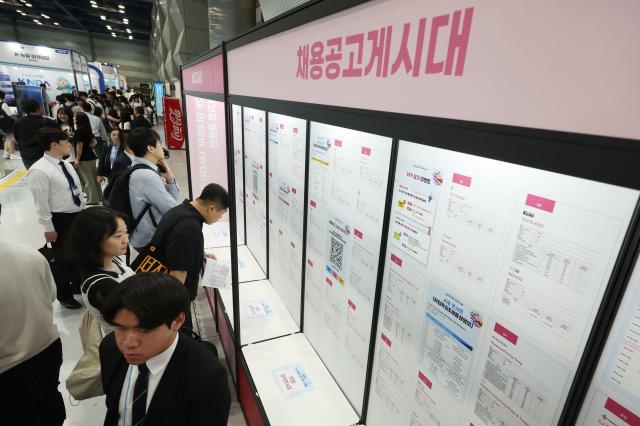
According to the Ministry of Employment and Labor's report on labor market trends based on May 2026 employment administrative statistics, the number of regular employment insurance subscribers reached 15,848,000 at the end of last month, an increase of 268,000 (1.7%) compared to the same period last year. The increase in employment insurance subscribers has consistently been in the high 200,000s for five months since January.
The rise in employment insurance subscribers is primarily due to steady growth in the service sector. The number of service sector subscribers reached 11,113,000, an increase of 284,000 (2.6%) from a year ago. The health and welfare sector saw the largest increase with 114,000 new subscribers, followed by accommodation and food services (55,000), business services (24,000), and educational services (22,000).
In contrast, the manufacturing sector has experienced a decline for the past year. Last month, the number of manufacturing subscribers was 3,840,000, a decrease of 10,000 (-0.3%) from the previous year. While there were increases in shipbuilding and boat manufacturing (3,700), other transportation equipment manufacturing (5,100), and electronics (4,100), declines were noted in metal processing (4,000), textile products (3,200), and rubber and plastics (2,600).
Notably, the automotive manufacturing sector, which had been on the rise, shifted to a decline in March and saw an expanded decrease of 2,000. Cheon Gyeong-ki, head of the Ministry of Labor's Future Employment Analysis Division, stated, "Both parts manufacturing and finished vehicle manufacturing are showing a declining trend. The large fire at an automotive parts factory in Daejeon in March likely impacted parts production."
The construction sector also saw a decrease of 8,500 subscribers (-1.1%), bringing the total to 745,000, marking a decline for 34 consecutive months. The decrease is primarily centered in the general construction sector (8,600), although the rate of decline has been slowing, according to the ministry.
By gender, male subscribers numbered 8,662,000, while female subscribers totaled 7,186,000, reflecting increases of 85,000 and 183,000, respectively. By age group, there were increases among those in their 30s (84,000), 50s (46,000), and those aged 60 and over (207,000), while there were decreases among those aged 29 and under (-65,000) and in their 40s (-5,000). The decline among young subscribers has continued for 45 consecutive months since September 2022.
Cheon noted, "Typically, the population under 29 has been decreasing by around 100,000, so a decline of 65,000 in subscribers indicates that the employment situation is being maintained. However, the slight expansion of declines in manufacturing, information and communication, and transportation and warehousing sectors last month likely affected the youth as well."
The number of new applicants for jobseeker benefits was 79,000, a decrease of 6,000 (-7.2%) compared to last year, marking a reduction for four consecutive months. The number of beneficiaries was 630,000, down by 40,000 from the previous year, and the total payout was 1.03 trillion won, a decrease of 78 billion won (-4.1%).
The job vacancy ratio, which indicates the number of job openings per job seeker, rose slightly to 0.42 from 0.37 in the same month last year.
* This article has been translated by AI.

Copyright ⓒ Aju Press All rights reserved.