
LG Electronics is taking significant steps to expand the resource recycling ecosystem for home appliances. The company plans to recover and recycle waste refrigerants from its products and is also moving forward with a pilot program for refurbished products.
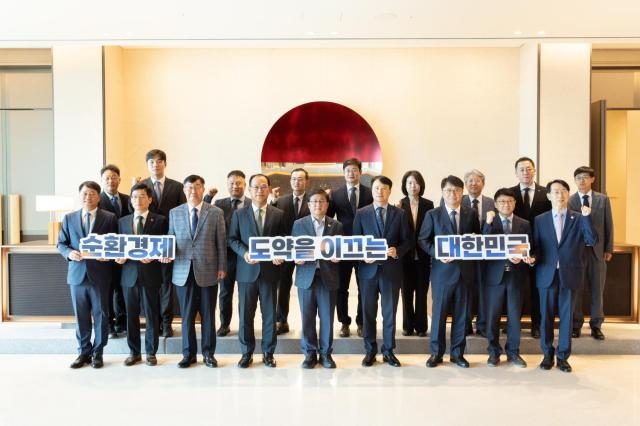
On June 19, LG Electronics signed an agreement at the POSCO Center in Gangnam, Seoul, with the Ministry of Climate, Energy and Environment and representatives from 16 participating companies, including POSCO and Hyundai Steel, to support leading companies in the circular economy and industrial complex development.
This agreement aims to promote the use of recycled materials and reduce waste in four sectors: electronics, semiconductors, steel, and food.
In the electronics sector, LG Electronics has formed a consortium with LX Pantos, Chilseo Recycling Center, Owon Alutech, and Gyeongnam Techno Park to advance these initiatives.
As part of this effort, the consortium will focus on establishing a waste appliance recovery and management system through LX Pantos, extracting refrigerants at the Chilseo Recycling Center, developing waste refrigerant purification technology with Owon Alutech, and standardizing management in collaboration with local governments through Gyeongnam Techno Park.
LG Electronics aims to increase its annual waste refrigerant recovery to 81 tons by 2030, which is approximately seven times the amount expected in 2024. This amount could supply around 100,000 6-pyeong wall-mounted air conditioners and is projected to reduce greenhouse gas emissions by about 150,000 tons, equivalent to the annual emissions of approximately 30,000 passenger cars. The purified high-purity recycled refrigerants will be reused in the production of new products and for after-sales service.
The company is also intensifying its pilot program for refurbished products. It plans to standardize the entire process from recovery to verification, ensuring strict quality inspections to provide warranties equivalent to new products. Verified refurbished appliances will be prioritized for sale through LG Electronics' business portal as part of a support policy for small businesses.
Recently, LG Electronics has been implementing various ESG management initiatives, including the "Battery Return" campaign to collect waste batteries from vacuum cleaners and reducing plastic use in OLED TVs. The company extracts rare metals such as lithium and nickel from collected waste batteries for resource recovery and has reduced plastic usage in OLED TVs to 40% of that used in LCD TVs by applying composite fiber materials.
As a result, LG Electronics has been recognized for three consecutive years as being in the "Top 1%" in corporate sustainability assessments by S&P Global. The company has also been included in the Dow Jones Sustainability Index (DJSI) World for 14 consecutive years and has received an "AA" rating in the MSCI ESG assessment, highlighting its achievements recognized by global institutions.
Baek Seung-tae, Head of LG Electronics HS Business Division, emphasized, "We will provide customers with unprecedented experiences through new products and solutions while realizing a sustainable future through carbon reduction and resource recycling."
* This article has been translated by AI.
Copyright ⓒ Aju Press All rights reserved.